

- Local time
- 12:30
- Currency
- Mauritanian Ouguiya (MRU)
- Capital
- Nouakchott
- Calling code
- +222
- Drive on the
- right
Overview
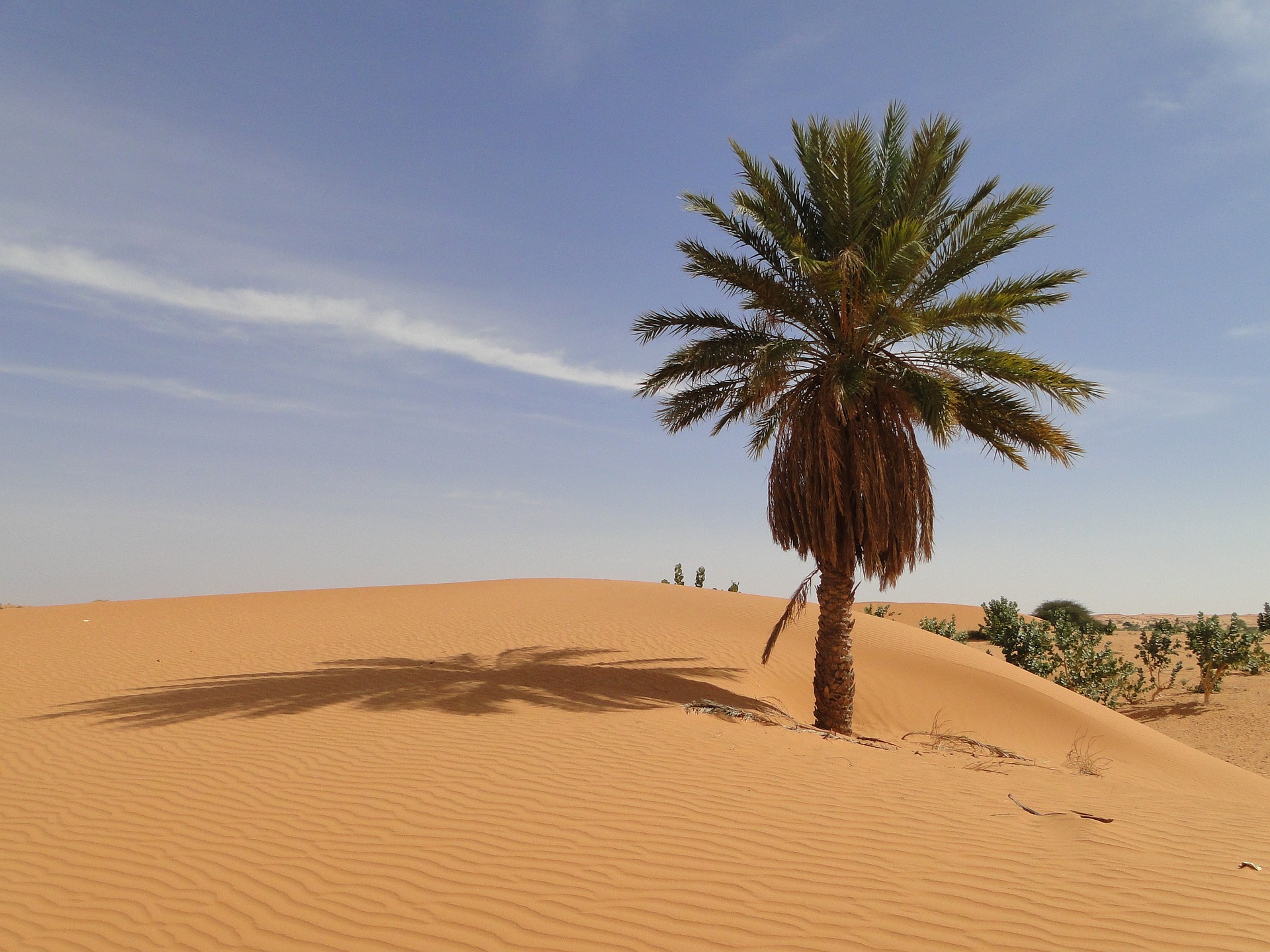
Mauritania is desert and ocean: the Adrar's dunes and old towns, Banc d'Arguin's birds. Large areas are off limits, so read the official advice first.
Before you plan: Canada advises against non-essential travel to the whole country because of the threat of terrorism, the US rates it Level 3 (reconsider travel) and the UK advises against all travel to the east and to the border with Mali, and against all but essential travel to large parts of the rest of the country. Kidnapping is a real risk, and Westerners are a preferred target. The section on safety below has the details.
Mauritania is a land of desert and ocean. In the Adrar, around Atar, the Sahara looks as you imagine it: seas of dunes, rocky plains, flat-topped hills and oases in narrow canyons. Here stand Chinguetti, an old trading town and centre of Islamic learning, and Ouadane, listed together by UNESCO as World Heritage. On the coast, Banc d'Arguin National Park, also UNESCO-listed, has dunes that run into the sea and millions of migrating birds.
The Islamic Republic of Mauritania follows Islamic law closely: alcohol and pork are illegal for everyone. Arabic is the official language, with Hassaniya as the everyday dialect; French is widely used in business and government, and little English is spoken.
- Chinguetti: An old trading town and centre of Islamic scholarship, a UNESCO World Heritage Site, with a historic library.
- Ouadane: Another historic town of the Adrar, listed by UNESCO together with Chinguetti.
- The Adrar by 4x4: Rocky tracks and narrow canyons leading to oases used by Saharan traders for centuries.
- Banc d'Arguin National Park: A UNESCO-listed coast where millions of migrating birds stop each year.
- Fishing with dolphins at Nouamghar: Local fishermen work with dolphins to drive fish into the shallows.
- The iron ore train: A train of iron ore wagons with one passenger carriage, from Nouadhibou into the desert.
Places to visit
- City
- Town
- Park
- Area
Cities
- Nouakchott: The capital and one of the largest cities of the Sahel, with the main airport and markets.
- Nouadhibou: The second city, on the coast near Western Sahara, and the start of the iron ore railway. Canada advises against all travel within 25 km of the northern borders, which includes Nouadhibou; the UK excludes the city from its advice.
- Atar: The capital of the Adrar region and the main town on the Adrar Plateau.
- Chinguetti: A UNESCO-listed desert town, home of the Chinguetti Mosque and a historic library.
- Tichit: A village at the foot of the Tagant Plateau, known for its traditional architecture and the Dhar Tichitt archaeological sites. Tichit lies east of Tidjikja, in the part of Tagant where Canada advises against all travel, and Canada reports armed rebels beyond a line through Oualata, Tichit and Ouadane.
Beyond the cities
- Ouadane (town): A historic town of the Adrar, a UNESCO World Heritage Site with Chinguetti. It lies on the line through Zouérat, Ouadane and Tidjikja east of which Canada advises against all travel; the UK excludes the town from its advice.
- Adrar Plateau (area): Dunes, rocky desert, canyons and oases, the main desert destination.
- Banc d'Arguin National Park (park): A coastal national park and UNESCO World Heritage Site, a breeding ground for migratory birds.
- Nouamghar (town): A place on the coast where fishermen and dolphins drive fish into the shallows together.
Regions
- Coastal Mauritania
- Sahelian Mauritania
- Saharan Mauritania
Things to do
See
- Chinguetti and its libraries Chinguetti: A town of trade and Islamic scholarship whose architecture has changed little in almost a thousand years; visit the Hamoni library.
- Ouadane Ouadane: A historic town of the Adrar, part of the same UNESCO World Heritage Site as Chinguetti.
- Birds of Banc d'Arguin Banc d'Arguin National Park: Millions of migrating birds use this stretch of the central coast every year.
- Fishermen and dolphins Nouamghar: Fishermen communicate with dolphins to drive fish into shallow water, where they net them.
Do
- 4x4 trip through the Adrar Atar: Off-piste across rocky ground and through narrow canyons to the oases. The UK advises travelling in convoy with an experienced guide.
- The iron ore train Nouadhibou: A long train of ore wagons from the coast into the desert. Ride only in the passenger carriage: travelling in the ore wagons is illegal and dangerous, the UK says.
Eat
- Mechui: Grilled sheep, a little more expensive than everyday dishes.
Drink
- Tea in a Mauritanian home: Three glasses served over about an hour; leaving before the second is impolite.
Shop
- Tie-dyed fabric: Hand-dyed cloth for veils and boubous, sold all over the country; Kaedi is famous for it. Bargain hard.
Itineraries
Nouakchott, Atar and Chinguetti in 6 days (6 days)
- Nouakchott (1 night): Arrival in the capital; the N1 road leads north to Atar.
- Atar (2 nights): Base for the Adrar; travel outside towns in convoy with an experienced guide, as the UK advises.
- Chinguetti (3 nights): The old town, its libraries and the dunes. Check first that the area is open: the army sometimes closes parts of the Adrar.
Holidays and events
- 1 January 2026 · New Year's Day
- 1 May 2026 · Labour Day
- 25 May 2026 · Africa Day
- 28 November 2026 · Independence Day
Getting there and around
| Main airports | NKC, NDB |
|---|
Getting there
By air: most flights land at Nouakchott-Oumtounsy (NKC). Wikivoyage lists Air France from Paris, Royal Air Maroc from Casablanca, Turkish Airlines from Istanbul, Tunisair from Tunis, Air Algérie from Algiers, Binter Canarias from Gran Canaria and Mauritania Airlines from several West African capitals. In July 2026 AeroRoutes reported Asky Airlines flights from Lomé via Conakry. Nouadhibou (NDB) has flights from Gran Canaria.
From Senegal: the two main crossings are Rosso, by ferry across the Senegal River (9:00 to 17:00 only), and the Diama dam, whose road can be impassable in the rainy season. Long delays are common, and crossing the river by pirogue is illegal. From Western Sahara: the road reaches Nouadhibou through a buffer zone with no paved road and with landmines; stay on the used tracks. The UK advises against all travel within 25 km of the Mali border. Officials at the border may ask for payments.
Getting around
Roads: four main roads leave Nouakchott, towards Atar (N1), Nouadhibou (N2), Néma (N3) and Rosso (N4); most other roads are sand tracks. Use a 4WD, avoid driving at night and check the tide times on coastal roads. Between midnight and 5:00, intercity traffic is banned for vehicles carrying passengers and for goods vehicles over 3.5 tonnes. Outside towns, including to Chinguetti and Tichit, the UK advises travelling in convoy with an experienced guide, with enough water, fuel and supplies, and telling someone your plans. Canada recommends renting a car with a driver. It also says you must carry an International Driving Permit, while the UK says you can drive on a UK photocard licence.
Police and army checkpoints are frequent: carry plenty of copies of your passport, as you may hand over several a day. Public transport is unsafe and unreliable, says Canada; in towns use trusted taxis booked through your hotel.
The iron ore train runs daily between Nouadhibou, Choum and Zouérat. It has one passenger carriage, and a second-class ticket cost 300 MRU in 2025. Riding in the ore wagons is illegal and risky, with no medical help nearby.
Flying to Mauritania? PartnerCompare fares and find the cheapest datesSearch flightsWhere to stay
- Hotels: The best hotels are only in Nouakchott and Atar; regional capitals usually have at least one hotel, often expensive for what you get.
- Auberges and campsites: Beds or mattresses for little money in the Adrar and Nouadhibou.
- Family stays: If a local invites you, expect a foam mat on the floor and a latrine.
Canada advises choosing hotels with robust security measures, since hotels and places frequented by foreigners could be targets of attack.
Eat and drink
Dishes to try
- Chebujin: Fish and rice, the standard dish of the south.
- Rice and meat, or couscous: The usual meal in the north.
- Mechui: Grilled sheep; look for carcasses hanging by the roadside.
Drinks
- Tea: Served after meals in three glasses; in a home, stay at least until the second.
- Bottled water: Sold widely and a good idea for visitors.
Restaurants in Nouakchott mostly serve pizza, burgers, sandwiches, salads and Lebanese dishes. Elsewhere you eat local food in simple places, where hygiene is often low; shops everywhere sell bread, biscuits and drinks. Alcohol and pork are illegal for everyone, and bringing them into the country can lead to a fine or arrest. Eat with your right hand.
Entry requirements and visas
| Passport validity | At least 6 months after the date you arrive (UK) |
|---|
| Passport | Entry | Max stay | Notes |
|---|---|---|---|
| United Kingdom | Evisa | Since 5 January 2025 there is no visa on arrival. Apply online well in advance, print the e-visa and pay the fee on arrival in exact cash, in euros or US dollars. | |
| Canada | Evisa | You need a visa or an e-visa before you arrive. |
Other nationalities: check the official source below.
Since 5 January 2025 you can no longer get a visa on arrival. Apply online for an e-visa well before your trip, through the website of the national agency for the population register (ANRPTS), print it and bring the exact fee in cash, in euros or US dollars: no change or receipt is given. The Mauritanian embassy in London does not issue visas.
You need a yellow fever certificate if you come from a country with risk of yellow fever. Bags are scanned at Nouakchott airport: alcohol and pork products are confiscated, and you can be fined or arrested. You cannot take ouguiyas out of the country. Rules depend on your passport and can change: check the official link or the embassy of Mauritania before you book.
Money and payments
| Currency | Mauritanian Ouguiya (MRU) |
|---|---|
| Cards | Rare |
The currency is the ouguiya (MRU), written UM. Since 1 January 2018 one new ouguiya equals ten old ones, and some prices are still written the old way. Mauritania is mainly a cash economy: only a few hotels in Nouakchott and Nouadhibou take cards, sometimes only Visa. Some ATMs in these two cities accept foreign cards, but in the regions do not count on them.
Bring euros or US dollars, which you can change at banks, some hotels and official exchange offices; pounds get a very poor rate. Taking ouguiyas out of the country is illegal. Canada says there is no limit on the foreign currency you bring in, but you should declare it on arrival, and you cannot take out more than you declared.
Health
| Required vaccines | Yellow fever, only if you arrive from a country with risk of yellow fever (age 1 year or older) |
|---|---|
| Recommended vaccines | Routine vaccines, including measles (MMR) and diphtheria, Hepatitis A, Hepatitis B, Typhoid, for most travellers, Yellow fever, for travellers aged 9 months or older going south of the Sahara, Meningococcal disease, for the meningitis belt in the dry season (roughly December to June), Rabies, for some travellers: rabid dogs are common, Mpox, for travellers at risk of sexual exposure |
| Malaria | Widespread |
| Tap water | Not safe |
The CDC recommends malaria prevention medicine for all areas except Dakhlet Nouadhibou and Tiris Zemmour, in the north, where there is no transmission. Dengue and Rift Valley fever are also present. In the desert you can become dehydrated without noticing, so drink plenty of bottled water. See a travel health professional at least a month before you go.
Medical care is extremely limited, especially outside Nouakchott and Nouadhibou. Clinics expect payment, sometimes in euros or dollars, and may not accept foreign insurance. Many medicines are fake or hard to find, so bring enough of your own. The ambulance number is 101, but calls may not be answered. Get insurance that covers medical evacuation.
This is general information, not medical advice: check with a travel health professional before you go.
Safety
- United States: Level 3: Reconsider Travel (2026-10-20)
- Canada: Avoid non-essential travel (2026-10-20)
- United Kingdom: Advises against all travel to parts of the country (2026-10-20)
Canada advises against non-essential travel to the whole country because of the threat of terrorism, particularly against Western interests, and the US rates Mauritania Level 3. The UK advises against all travel east of a line through Kankossa, Akhreijit, Ghallaouia, Zouérat and Fdérik, and within 25 km of the Mali border, and against all but essential travel to the rest of Tiris Zemmour, Assaba, Hodh el Gharbi, Gorgol and Guidimaka and to parts of Adrar and Tagant. The Adrar west of a line from Choum to Ouadane, the town of Ouadane and the road from Tidjikja to Tichit are among the areas outside that advice. The UK also advises against all but essential travel within 25 km of the Western Sahara border, except the Nouakchott to Nouadhibou road and the city of Nouadhibou. Canada draws a wider line: it advises against all travel to Tiris Zemmour, Hodh El Gharbi and Hodh Ech Chargui, to the parts of Adrar, Tagant, Assaba and Guidimakha east of a line through Zouérat, Ouadane, Tidjikja, Kiffa and Sélibaby, and to areas within 25 km of the northern borders. The army has declared military zones in the north-east, and anyone entering them will be treated as a military target.
The risk of kidnapping is high, and Westerners are a preferred target: travel with a reputable escort and vary your routes and times. Crime is moderate but rising. Robberies at knifepoint happen on unlit, isolated beaches in Nouakchott and in the Le Cinquième, Dar Naim and Cité Plage districts; avoid unpatrolled beaches. Women travelling alone face harassment and should move in groups.
Demonstrations happen, often on Fridays between 13:00 and 15:00, after prayers: stay away from them and from mosques at that time. There are landmines along the border with Western Sahara. In the desert, travel in convoy with an experienced guide and enough supplies. The British Embassy in Nouakchott cannot offer consular services in person; UK nationals get help from Dakar.
Customs and etiquette
Islam is the only religion recognised for citizens, and its practices shape the law. Trying to convert people, or taking part in non-Islamic gatherings that the authorities have not authorised, is illegal, and blasphemy carries a maximum penalty of death. During Ramadan do not eat, drink, smoke or chew gum in public in the daytime, even in your car.
Dress modestly away from the beach: women should cover their shoulders and avoid short skirts, and a headscarf is wise; men should not wear shorts or sleeveless tops. Greet people with salaam alaykum. Do not offer to shake hands with someone of the opposite sex: follow their lead, or put your hand on your heart. Avoid touching your partner in public. Eat with your right hand, and in markets bargain with a smile.
Ask before photographing people, and never photograph security forces, military sites, airports, government buildings or religious buildings. Carry copies of your ID, especially outside Nouakchott. Same-sex relations are illegal, with the death penalty for men; sex outside marriage is also illegal. Drug laws are severe, and possessing drugs can lead to prison.
Language
| Official languages | Arabic |
|---|---|
| English | Limited |
| Hello (peace be upon you) | Salaam alaykum |
|---|---|
| Foreigner, said of white visitors | Nasrani, Toubab |
What to pack
- Printed e-visa and the exact fee in euros or dollars: The fee is paid in cash on arrival, without change.
- Many copies of your passport: Police checkpoints may keep several copies a day.
- Euros or US dollars in cash: Cards are rarely accepted and ATMs are unreliable outside the two main cities.
- Enough of your medicines: Many medicines are fake or hard to find.
- A scarf: Against the dust on the iron ore train, and to cover your head as a courtesy.
- Clothes that cover arms and legs: Expected away from the beach, for both women and men.
- A satellite phone for the desert: There is no mobile network in remote areas; phones can be rented.
Quick reference
Country facts
| Capital | Nouakchott |
|---|---|
| Population | 5,315,065 (2025) |
| Area | 1,030,700 km² |
| Time zone | Africa/Nouakchott (UTC+0) |
| Calling code | +222 |
| Driving side | right |
Staying connected
| SIM and eSIM | Three mobile networks, Mattel, Mauritel and Chinguitel, all with prepaid plans and 3G or 4G data at good speeds. |
|---|---|
| Wi-Fi | Internet cafés in Nouakchott and Nouadhibou have fast connections; elsewhere they are slower. |
Useful apps
- Classride: Ride-hailing in Nouakchott
Emergency numbers
| Police | 117 (UK) or 17 (Canada) |
|---|---|
| Ambulance | 101 |
| Fire | 118 (UK) or 18 (Canada) |
Frequently asked questions
Is it safe to travel to Mauritania?
Canada advises against non-essential travel to the whole country and against all travel to the north and east, the US rates it Level 3 and the UK advises against all travel to the east and the Mali border. Read the official advice before making any plans.
Can I get a visa on arrival in Mauritania?
No, not since 5 January 2025. Apply for an e-visa online before you go and pay the fee on arrival in exact cash. Check the official link or the embassy before you book.
Is alcohol allowed in Mauritania?
No. Alcohol and pork are illegal for everyone, and bags are scanned at Nouakchott airport.
Do I need malaria tablets for Mauritania?
The CDC recommends them for all areas except Dakhlet Nouadhibou and Tiris Zemmour in the north. Ask a travel health professional.
Can I pay by card in Mauritania?
Rarely. Only a few hotels in Nouakchott and Nouadhibou accept cards, so bring euros or US dollars in cash.
More Travel Stories from Africa
 Morocco
 Cabo Verde +1
 Colombia +1
Sources This guide was last checked on · 19 sources
- Wikivoyage: Mauritania · Overview, Places to visit, Things to do, Itineraries, Getting there and around, Where to stay, Eat and drink, Money and payments, Health, Customs and etiquette, Language, What to pack, Staying connected, Frequently asked questions
- Wikidata: Mauritania · Overview, Places to visit, Money and payments, Country facts
- UK FCDO: Mauritania warnings and insurance (updated 19 October 2026) · Overview, Safety, Frequently asked questions
- Government of Canada: Mauritania travel advice (updated 9 October 2026) · Overview, Places to visit, Itineraries, Getting there and around, Where to stay, Entry requirements and visas, Money and payments, Health, Safety, Customs and etiquette, What to pack, Emergency numbers, Frequently asked questions
- UK FCDO: Mauritania safety and security (updated 19 October 2026) · Things to do, Itineraries, Getting there and around, Eat and drink, Entry requirements and visas, Money and payments, Safety, Customs and etiquette, What to pack, Frequently asked questions
- UK FCDO: Mauritania regional risks (updated 19 October 2026) · Itineraries, Getting there and around, Safety
- Nager.Date: public holidays in Mauritania, 2026 · Holidays and events
- AeroRoutes: Asky Airlines 2HJUL26 Additional Network Changes · Getting there and around
- UK FCDO: Mauritania entry requirements (updated 19 October 2026) · Entry requirements and visas, What to pack, Frequently asked questions
- CDC Travelers' Health: Mauritania · Entry requirements and visas, Health, Frequently asked questions
- ISO 4217 (SIX), published 2026-09-17 · Money and payments
- Wikidata: Mauritanian ouguiya (MRO) · Money and payments
- UK FCDO: Mauritania health (updated 19 October 2026) · Health, What to pack
- UK FCDO: Mauritania getting help (updated 19 October 2026) · Health, Emergency numbers
- US Department of State: Mauritania travel advisory · Safety
- UK FCDO: Mauritania travel advice · Safety
- World Bank, SP.POP.TOTL · Country facts
- World Bank, AG.LND.TOTL.K2 · Country facts
- IANA Time Zone Database, zone.tab · Country facts
Suggest an update
Travel rules, prices and timetables change. If something in this guide is out of date, tell us: we check every suggestion against an official source before changing the page.