

- Local time
- 17:03
- Currency
- Cape Verdean Escudo (CVE)
- Capital
- Praia
- Calling code
- +238
- Drive on the
- right
Overview
Ten volcanic islands in the Atlantic: beaches and water sports on Sal and Boa Vista, hiking on Santo Antão and the volcano of Fogo.
Cabo Verde is an archipelago of ten main islands in the Atlantic, about 570 km off the coast of Senegal. The islands are very different from one another. Sal and Boa Vista are dry and sunny, with long sandy beaches and big resorts; Santo Antão is the island for hiking, with the Cova valley in an old crater; Fogo is a volcano that last erupted in 2014, with vines in its crater and coffee on its slopes; and Santiago holds the capital, Praia, and Cidade Velha, the first European town in the tropics and a UNESCO World Heritage site. Mindelo on São Vicente is the cultural capital.
Most people are of mixed African and Portuguese descent, and Kriolu, a Portuguese-based creole, is the everyday language. Rain is scarce and falls mostly between August and October. Island hopping takes planning, because flights and ferries are often delayed or cancelled. No part of the country is under a travel warning from the UK.
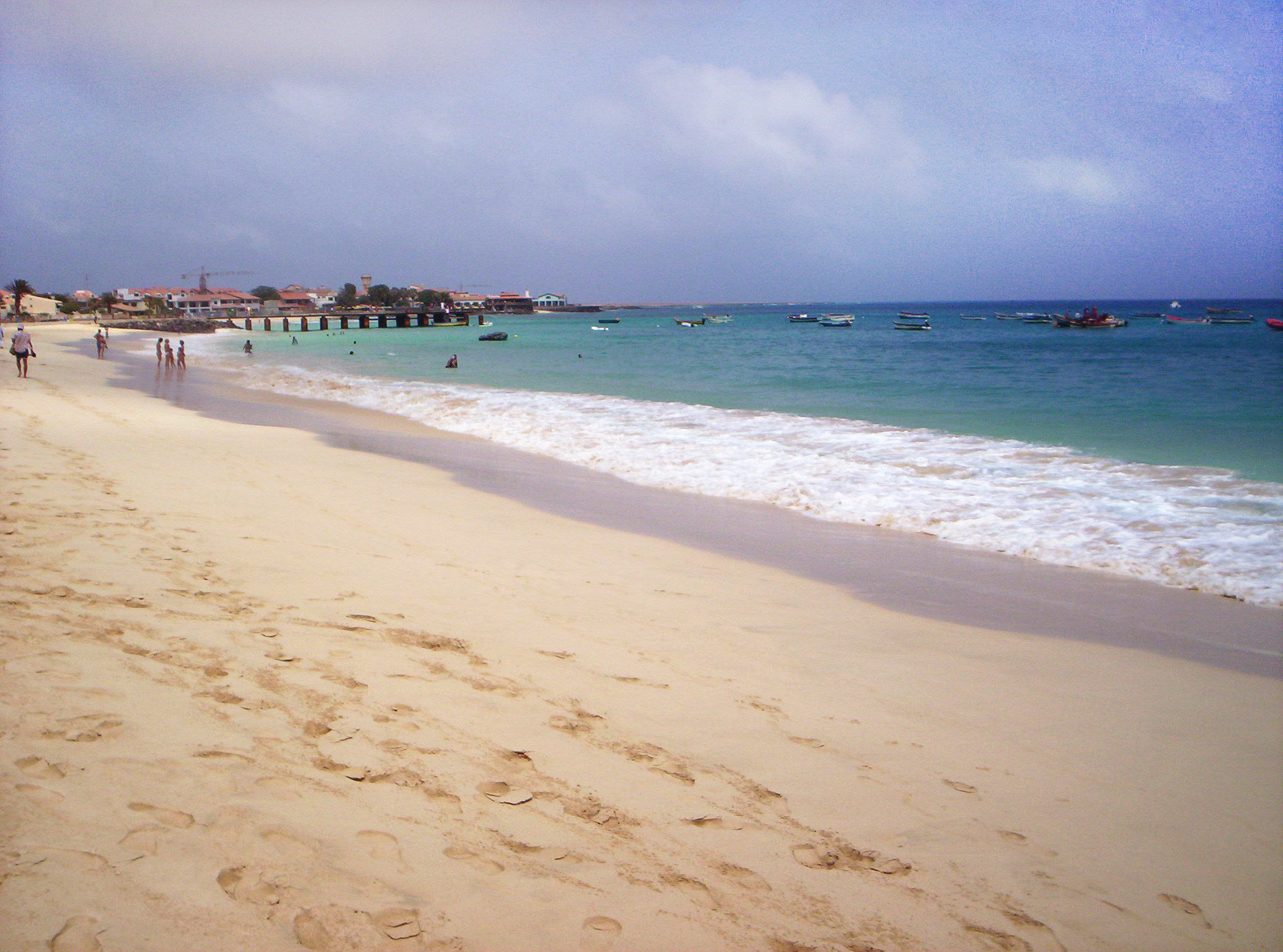
- Sal and Boa Vista: Sunny, dry islands with long sandy beaches, resorts and water sports.
- Santo Antão: The hiking island, with the Cova valley in the crater of an extinct volcano and canyoning.
- Pico do Fogo: An active volcano with a unique landscape, best explored on foot or on horseback.
- Cidade Velha: The first European town in the tropics, a UNESCO World Heritage site on Santiago.
- Mindelo: The port city of São Vicente and the cultural capital, probably the liveliest town in the country.
- Brava: A small, hilly island reached by ferry from Fogo, good for getting away from it all.
Places to visit
- City
- Island
- Mountain
Cities
- Praia: The capital, on Santiago, with the town hall, the cathedral and the Palace of Justice.
- Mindelo: The port city of São Vicente and the cultural capital, probably the liveliest in the country.
- Cidade Velha: The historic first capital on Santiago, a UNESCO World Heritage site.
- Santa Maria: The main tourist area of Sal, at the south of the island.
- Espargos: The capital of Sal, where the airport is.
- Assomada: The seat of the municipality of Santa Catarina, on Santiago.
- São Filipe: The main town of Fogo.
Beyond the cities
- Pico do Fogo (mountain): The active volcano of Fogo; the trail to the summit is demanding and not for children.
- Sal (island): The sunniest island, hot and dry, with miles of sandy beaches and many resorts.
- Boa Vista (island): The easternmost island, with even finer beaches than Sal.
- Santo Antão (island): The second largest island, known for hiking; it has no working airport.
Regions
- Santiago: The first island settled, with the capital Praia, the old capital Cidade Velha and most of the population.
- Sal: The sunniest island, with great beaches, water sports and plenty of resorts.
- Boa Vista: Even finer beaches.
- São Vicente: The island of Mindelo, the cultural capital; uninhabited Santa Luzia is a day trip from here.
- Santo Antão: Great hiking.
- Fogo: A volcano island that last erupted in 2014, with vines in the crater and coffee on its slopes.
- Brava: A small, very hilly island reached by ferry from Fogo a few times a week.
- Maio: One of the islands that see almost no rain.
Things to do
See
- Cidade Velha Santiago: Walk through the first European town in the tropics, a UNESCO World Heritage site.
- Praia's old centre Praia: The town hall, the cathedral and the Palace of Justice in the capital.
Do
- Climb Pico do Fogo Fogo: A demanding walk to the summit of the volcano; you need to be fit, and it is not for children.
- Hiking on Santo Antão Santo Antão: Trails across the island, including the Cova valley in an old crater; consider an experienced guide.
- Canyoning Santo Antão: One of the activities offered on Santo Antão.
- Kite surfing and windsurfing: Offered on some of the islands, along with jet skis and other water sports.
- Diving and game fishing: Offered on several islands, along with other water sports.
Eat
- Cachupa: The national dish of maize and potato, often with fish or chicken.
Drink
- Wine of Fogo Fogo: Red, white and rosé wines grown in the volcano's crater, for example under the Chã label.
After dark
- Mindelo Mindelo: The cultural capital and probably the liveliest town in the country.
Itineraries
Santiago and Fogo in 7 days (7 days)
- Praia (3 nights): The capital, a day in Cidade Velha and a trip to Assomada.
- São Filipe (4 nights): By ferry or plane to Fogo; climb the volcano and taste the wine. Ferries to Fogo are often disrupted.
Sal and São Vicente in 7 days (7 days)
- Santa Maria (4 nights): Beaches and kite surfing; swim only where there is a lifeguard.
- Mindelo (3 nights): Fly with CV Sky; the town, and a day trip to uninhabited Santa Luzia.
Holidays and events
- 1 January 2026 · New Year's Day
- 13 January 2026 · Democracy Day
- 20 January 2026 · Heroes' Day
- 1 May 2026 · Labour Day
- 1 June 2026 · Youth Day
- 5 July 2026 · Independence Day
- 15 August 2026 · Assumption Day
- 1 November 2026 · All Saints' Day
- 25 December 2026 · Christmas Day
Getting around
| Main airports | SID, RAI, BVC, VXE |
|---|---|
| International driving permit | Recommended |
Between islands you fly with CV Sky, which has daily flights to most islands, or take the CV Interilhas ferries, which are cheaper but less reliable. Flights sell out in advance, especially when ferries are not running, and timetables change at short notice, so leave a buffer day before an international flight. The sea can be rough, and crossings to Fogo and Brava are often disrupted. Brava and Santo Antão have no working airport.
On the islands, aluguers, shared pick-ups and vans with fixed fares, run along the main roads and stop when you ask; Canada warns that public transport is unreliable and accidents are common. Use official taxis from ranks or called by your hotel: they are cream or tan, and blue and yellow on Sal and Boa Vista. Taxis are not metered. Driving: roads are narrow, often cobbled, and unpaved on the smaller islands; lighting is poor and drink-driving is common, especially on Sundays and holidays, so avoid driving after dark. A UK photocard licence is valid for 6 months, and Canada advises carrying an International Driving Permit. Wear a helmet on scooters and quad bikes: it is the law. Cobbled streets are hard work for wheeled luggage.
Flying to Cabo Verde? PartnerCompare fares and find the cheapest datesSearch flightsWhere to stay
- Resorts: The largest hotels are on Sal and Boa Vista, many sold as all-inclusive packages.
- Hotels and guesthouses: Plentiful across the archipelago.
Keep windows and doors locked and use the hotel safe. Power cuts happen regularly, and not all buildings have generators. Mid-range hotels often accept euros, while high-end hotels take cards.
Eat and drink
Dishes to try
- Cachupa: The national dish, made with maize and potato, often with fish or chicken.
- Fresh fish: Tuna and wahoo, a firm white fish, are common.
- Lagostada: A lobster dish.
- Tosta mista: A toasted ham and cheese sandwich, found everywhere.
Drinks
- Strela: The local lager, served ice-cold.
- Fogo wine: Red, white and rosé wines made on Fogo.
Seafood is the strength of the islands. European food is common everywhere, and Italian restaurants are popular on Sal; vegetarians can usually get an omelette or a salad. Most food is imported, so prices are moderate to high.
Entry requirements and visas
| Passport validity | At least 6 months after the date you arrive |
|---|
| Passport | Entry | Max stay | Notes |
|---|---|---|---|
| United Kingdom | Eta | 30 days | No visa for visits up to 30 days, but pre-register and pay the airport security fee (TSA) online at least 5 days before you arrive. |
| Canada | Eta | 30 days | No visa up to 30 days; you need an ETA, obtained by pre-registering and paying the airport security fee at least 5 days before arrival. |
| EU / EEA | Visa free | Wikivoyage says EU citizens need no visa but pay an entry fee; pre-register on the EASE platform. | |
| United States | Visa on arrival | Wikivoyage says other nationalities can get a visa on arrival; check the EASE platform before you travel. | |
| Australia | Visa on arrival | Wikivoyage says other nationalities can get a visa on arrival; check the EASE platform before you travel. |
Other nationalities: check the official source below.
The UK and Canada say you must pre-register online and pay the airport security fee (TSA) on the government's EASE platform at least 5 days before arriving, and bring the confirmation. From 1 July 2026, the UK says, anyone who has not pre-registered pays double the fee at the border. Tour operators can sometimes do this for you; children aged one and under are exempt. UK and Canadian visitors can stay up to 30 days without a visa.
Children under 18 travelling alone or with someone who is not their parent or guardian need a letter of authorisation in Portuguese, with a notarised signature. You need a yellow fever certificate only if you arrive from a country with yellow fever risk. Rules depend on your passport and can change: check the EASE platform or a Cabo Verde embassy before you book.
Money and payments
| Currency | Cape Verdean Escudo (CVE) |
|---|---|
| Cards | Limited |
The currency is the Cabo Verde escudo (CVE), fixed to the euro at 110 escudos. On Sal and Boa Vista euros are widely accepted, though change may come in escudos, and many mid-range hotels take euros at a fair rate. You can change major currencies at the airports of Sal and Praia and at banks in larger towns, where ATMs accept Visa, Mastercard and Maestro. High-end hotels and some restaurants take cards; elsewhere, pay in escudos.
Costs and budget
- Aluguer shared ride: 50-600 escudos, depending on distance
- Bottled water, 1.5 litres: about 70 escudos
- Bottled water, 10 litres: about 400 escudos
- Prepaid SIM with about 7 GB of data (July 2022): about 1,000 escudos
Because most goods are imported, the cost of living is moderate to high. On Sal and Boa Vista prices can match those of Caribbean resorts, while Santiago is the cheapest island. Flights between islands cost more than ferries. The prices here are those listed on Wikivoyage when we read it in October 2026.
Health
| Required vaccines | Yellow fever certificate, only if you arrive from a country with yellow fever risk (from 1 year of age) |
|---|---|
| Recommended vaccines | Routine vaccines, including measles (MMR), Hepatitis A, Hepatitis B, Typhoid |
| Malaria | None |
| Tap water | Varies |
The CDC does not list malaria for Cabo Verde, and Wikivoyage reports that the WHO declared it eliminated in 2024. Mosquitoes do spread dengue: the government raised its warning level for dengue on Santiago, Fogo and Brava, and Wikivoyage notes a risk of Zika. The UK also reported more cases of shigella and salmonella in returning travellers, so wash your hands and take care with food and water. In resorts tap water is usually desalinated and safe; elsewhere it can be contaminated by poor storage, so drink bottled water. Altitude sickness is a risk on Fogo.
Healthcare is basic and limited, and some medicines are hard to find: bring enough of your own. The largest hospitals are in Praia and Mindelo, and facilities on Boa Vista are particularly limited. There is no sea rescue or air evacuation service, and evacuation from Brava and Santo Antão is very difficult, so get insurance that covers it; the UK GHIC card is not accepted. For an ambulance, dial 130; for the police, 132.
This is general information, not medical advice: check with a travel health professional before you go.
Safety
- United States: Level 1: Exercise Normal Precautions (2026-10-20)
- Canada: Exercise a high degree of caution (2026-10-20)
- United Kingdom: No advice against travel (2026-10-20)
No part of Cabo Verde is under a travel warning from the UK; Canada advises a high degree of caution because of crime. Pickpocketing, bag snatching and muggings happen mostly in Praia, Mindelo and on Sal and Boa Vista, at markets, festivals and on beaches, sometimes by groups of children. Do not walk alone at night, avoid unlit and isolated areas and the hillside staircases between neighbourhoods in towns such as Praia, and use the hotel safe.
The sea is the biggest danger: currents and waves are strong and several people drown every year, especially in Praia and on Sal. Swim only on beaches with a lifeguard and follow the flags: red means do not go in, yellow means you can wade but not swim. Quad biking counts as an extreme sport for most insurers. Fogo's volcano is active, earthquakes occur on Brava, Fogo and Santo Antão, the rains from mid-August to mid-October can cause floods and landslides, and dust storms from December to February can disrupt flights.
Customs and etiquette
People are polite and friendly, and any effort to speak Kriolu or Portuguese is appreciated. In markets it is normal to bargain. Drug penalties are severe: pack your own luggage and never carry anything for someone else. If you plan to buy property, get independent legal advice first, as British buyers have had problems.
Language
| Official languages | Portuguese |
|---|---|
| English | Limited |
| Good morning | Bom dia bohm DEE-uh |
|---|---|
| Hello | Olá oh-LAH |
| Please | Por favor poor fuh-VOHR |
| Thank you (said by a man / a woman) | Obrigado / Obrigada aw-bree-GAH-doo / aw-bree-GAH-duh |
| Yes / No | Sim / Não seem / nuhnw |
| Do you speak English? | Fala inglês? FAH-luh een-GLIHSH |
| How much is this? | Quanto custa isto? KWUHN-too KOOSH-tuh EESH-too |
| Stop! (to get off an aluguer) | Para! |
What to pack
- EASE pre-registration confirmation: You must show it on arrival, or pay double the airport security fee.
- Travel insurance with evacuation: Healthcare is basic, and the UK GHIC card is not accepted.
- Enough of your own medicines: Some medicines are in short supply or unavailable.
- Euros: Widely accepted on Sal and Boa Vista, and easy to change elsewhere.
- Torch: Streets are poorly lit at night, and power cuts are common.
- A spare day and a toothbrush in your hand luggage: Island flights and ferries are often delayed or cancelled.
- Bag or backpack rather than a wheeled case: Cobbled streets are rough on small wheels.
Quick reference
Country facts
| Capital | Praia |
|---|---|
| Population | 527,326 (2025) |
| Area | 4,030 km² |
| Time zone | Atlantic/Cape_Verde (UTC-1) |
| Calling code | +238 |
| Driving side | right |
Staying connected
| SIM and eSIM | Prepaid SIM cards from CVMovel and Unitel T+ are sold widely; ask the shop to activate the card and the data plan. There is mobile coverage in all cities and most towns, with 4G in populated areas. |
|---|---|
| Wi-Fi | Power cuts can interrupt phone and internet services. |
Emergency numbers
| Police | 132 |
|---|---|
| Ambulance | 130 |
| Fire | 131 |
Frequently asked questions
Do I need a visa for Cabo Verde?
UK and Canadian visitors need no visa for up to 30 days, but everyone must pre-register and pay the airport security fee online at least 5 days before arrival. Check the rules before you book.
Is there malaria in Cabo Verde?
The CDC does not list it, and the WHO declared it eliminated in 2024. Dengue is present on some islands, so avoid mosquito bites.
Is it safe to swim in Cabo Verde?
Only on beaches with a lifeguard: currents are strong and several people drown every year.
Can I pay in euros in Cabo Verde?
Often on Sal and Boa Vista, and in many mid-range hotels; elsewhere you pay in escudos.
Can I drink the tap water in Cabo Verde?
In resorts it is usually desalinated and safe; elsewhere drink bottled water.
What language is spoken in Cabo Verde?
Portuguese is official and Kriolu is spoken every day. Many young people in towns speak English, but older and rural people often do not.
More Travel Stories from Africa
 Kenya
Sources This guide was last checked on · 16 sources
- Wikivoyage: Cape Verde · Overview, Places to visit, Things to do, Itineraries, Getting around, Where to stay, Eat and drink, Entry requirements and visas, Money and payments, Costs and budget, Health, Safety, Customs and etiquette, Language, What to pack, Staying connected, Frequently asked questions
- Wikidata: Cabo Verde · Overview, Places to visit, Money and payments, Country facts
- UK FCDO: Cape Verde travel advice (updated 28 July 2026) · Overview, Safety
- Government of Canada: Cabo Verde travel advice (updated 26 May 2026) · Overview, Things to do, Getting around, Where to stay, Entry requirements and visas, Money and payments, Health, Safety, Customs and etiquette, What to pack, Staying connected, Frequently asked questions
- UK FCDO: Cape Verde safety and security · Things to do, Itineraries, Getting around, Where to stay, Safety, Customs and etiquette, Frequently asked questions
- Nager.Date: public holidays in Cabo Verde, 2026 · Holidays and events
- UK FCDO: Cape Verde health · Getting around, Health, What to pack
- UK FCDO: Cape Verde entry requirements · Entry requirements and visas, What to pack, Frequently asked questions
- CDC Travelers' Health: Cape Verde · Entry requirements and visas, Health, Frequently asked questions
- ISO 4217 (SIX), published 2026-09-17 · Money and payments
- UK FCDO: Cape Verde getting help · Health, Emergency numbers
- US Department of State: Cabo Verde travel advisory · Safety
- Wikivoyage: Portuguese phrasebook · Language
- World Bank, SP.POP.TOTL · Country facts
- World Bank, AG.LND.TOTL.K2 · Country facts
- IANA Time Zone Database, zone.tab · Country facts
Suggest an update
Travel rules, prices and timetables change. If something in this guide is out of date, tell us: we check every suggestion against an official source before changing the page.