

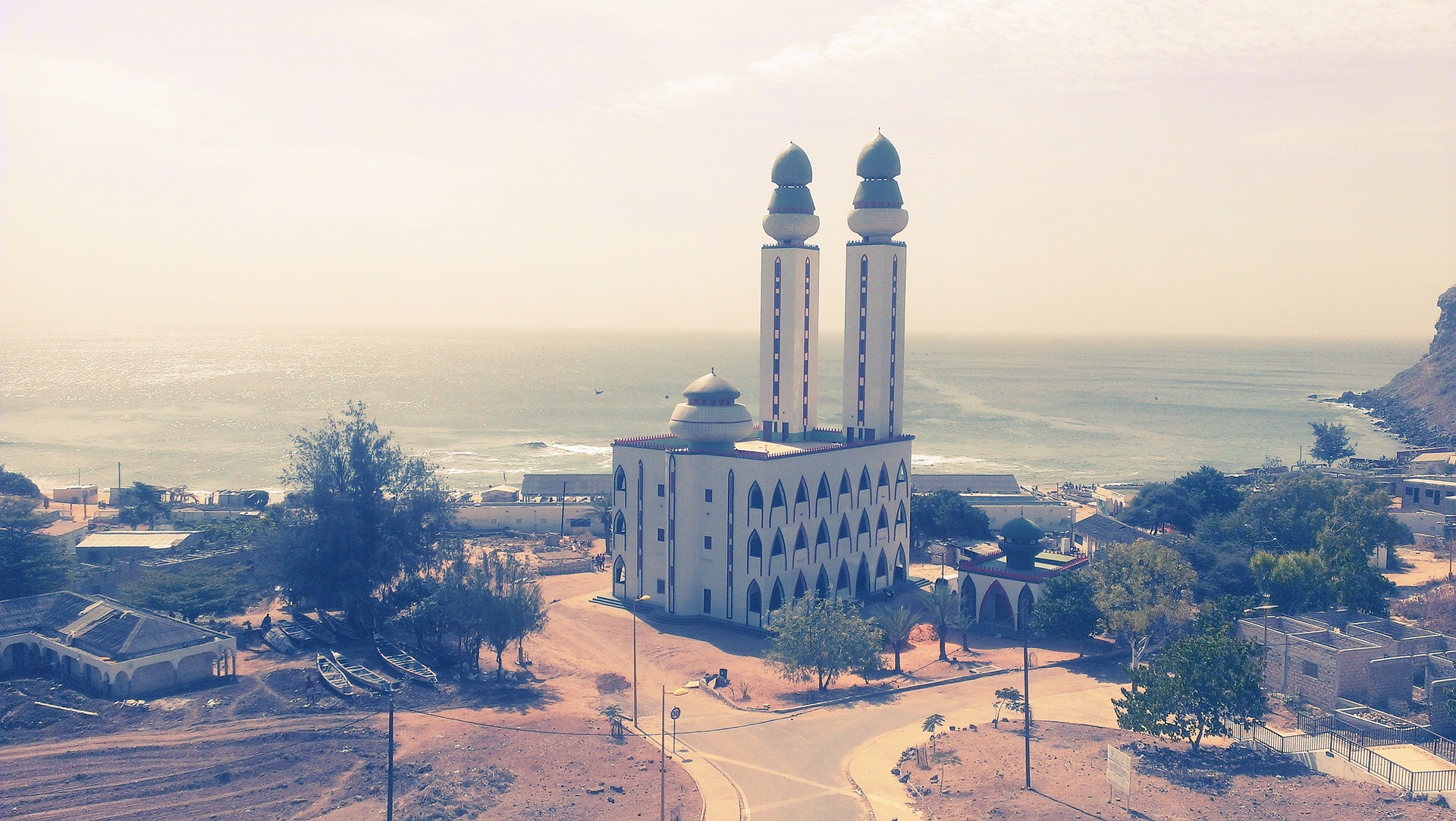
- Local time
- 18:11
- Currency
- West African CFA Franc (XOF)
- Capital
- Dakar
- Calling code
- +221
- Drive on the
- right
Overview
Gorée Island, colonial Saint-Louis, Lac Rose and the bird reserves of Djoudj and the Saloum Delta, in the westernmost country of Africa.
Senegal, a former French colony, is the westernmost country of the Old World. It is mostly low, rolling plains, rising to foothills only in the south-east. The Wolof are the largest of many peoples, and almost everyone speaks Wolof, while French is the official language. About 92% of Senegalese are Muslim, though the state is secular and religious tolerance runs deep.
History is close at hand. The Portuguese landed on Gorée Island in 1444, and the coast became one of the early ports of the Atlantic slave trade; France set up its first post at Saint-Louis, later the capital of French West Africa. Independence came in 1960. Inland, the Senegambian stone circles are a UNESCO World Heritage Site, and national parks such as Niokolo-Koba and the bird sanctuary of Djoudj protect wildlife.
Canada asks for a high degree of caution because of crime, the US rates Senegal Level 1 (exercise normal precautions) and the UK has no advice against travel. Take particular care in the Casamance, south of The Gambia, and near the borders with Mali and Mauritania; the safety section below has the details.
- Gorée Island: The island off Dakar where the Portuguese first landed in 1444, reached by ferry.
- Saint-Louis: The former capital of Senegal and of French West Africa.
- Lac Rose: A pink lake, known as the finish of the Dakar rally.
- Djoudj National Bird Park: One of the country's nature reserves, for birdwatching.
- Niokolo-Koba National Park: A major national park and international biosphere reserve.
- Stone circles of Senegambia: UNESCO-listed stone circles that may date back to the 3rd century BC.
Places to visit
- City
Cities
- Dakar: The capital, with the international airport, the ferries to Gorée and Ziguinchor, and both Senegalese and western restaurants.
- Saint-Louis: The first French trading post and former capital of Senegal and French West Africa, gateway to the dry north.
- Thiès: One of the main towns of the Cap Vert-Thiès region, with restaurants serving Senegalese and western food.
- Touba: The centre of the Mouride brotherhood and site of the Grand Magal pilgrimage.
- Ziguinchor: A town linked to Dakar by ferry.
Beyond the cities
- Gorée Island (island): A small island off Dakar, first reached by the Portuguese in 1444, with a ferry from the city.
- Lac Rose (area): A lake known for its pink colour and as the finish of the Dakar rally.
- Djoudj National Bird Park (park): The national bird park.
- Saloum Delta (park): One of the country's nature reserves.
- Niokolo-Koba National Park (park): A major national park and international biosphere reserve.
- Fathala Reserve (park): A reserve at Karang, just north of the Gambian border, with giraffes, rhinos and antelopes.
- Joal-Fadiout (island): Fadiout island and the town of Joal.
- Karabane (island): One of the islands Wikivoyage recommends, with Gorée and Fadiout.
- Senegambian stone circles (site): UNESCO-listed stone circles at sites such as Nioro du Rip and Keur Ali Lobé.
Regions
- Cap Vert-Thiès: Dakar and its peninsula, with Thiès.
- Northern Senegal: The UK asks for particular care in remote areas near the border with Mauritania.
- Central Senegal
- Casamance: The region south of The Gambia. Canada advises travelling overland only by day, on main roads and in convoy.
- Tambacounda Region: The UK and Canada warn about the border areas with Mali.
Things to do
See
- Gorée Island Dakar: Take the ferry from Dakar to the island where European trade on this coast began; pickpockets are active at the ferry terminal.
- Saint-Louis: The old capital of French West Africa, at the edge of the arid north.
- Lac Rose: The pink lake where the Dakar rally ends.
- Stone circles of Senegambia: UNESCO-listed circles at Nioro du Rip, Keur Ali Lobé and other sites.
Do
- Nature reserves: The national bird park of Djoudj, the Saloum Delta and the Palmarin reserve.
- Mini-safari at Fathala: A 3-hour drive in your own car or a hired off-road vehicle to see giraffes, rhinos, elands and antelopes.
- Niokolo-Koba National Park: One of the major parks; keep your distance from animals and follow the wardens' advice.
- Fishing: Wikivoyage counts Senegal among the best places in the world to fish.
Eat
- Ceebu jen with a family: The national dish of rice and fish, best eaten with your hands from a shared bowl.
Itineraries
Dakar, Gorée and Ziguinchor by sea in 5 days (5 days)
- Dakar (3 nights): The capital and a trip to Lac Rose.
- Gorée Island (0 nights): A day trip by ferry from Dakar.
- Ziguinchor (2 nights): By ferry from Dakar; choose a reputable company and check the life jackets, as Canada advises.
Climate and best time to visit
| Jan | Feb | Mar | Apr | May | Jun | Jul | Aug | Sep | Oct | Nov | Dec | |
|---|---|---|---|---|---|---|---|---|---|---|---|---|
| Max °C | 25 | 25 | 25 | 25 | 26 | 29 | 30 | 30 | 31 | 31 | 30 | 27 |
| Min °C | 18 | 18 | 18 | 19 | 21 | 24 | 25 | 25 | 25 | 25 | 23 | 21 |
| Rain mm | 2 | 1 | 0 | 0 | 0 | 10 | 55 | 156 | 131 | 24 | 0 | 0 |
Senegal is tropical, with a rainy season and a long dry season. In Dakar, on the coast, almost no rain falls from November to May, and the rains are concentrated from July to September, with about 156 mm in August and 131 mm in September. Sources differ on the exact span of the wet season: the UK gives June to September, Canada July to October; heavy rain can cause floods and damage roads. In the dry season the harmattan, a dry wind, blows.
December to March is the mildest time in Dakar, with average highs of about 25 to 27 °C and lows of about 18 to 21 °C. From June to November the average highs rise to between 28 and 31 °C, with warm nights of about 23 to 25 °C. Inland, in the arid north around Saint-Louis and the Ferlo, drink several litres of water a day.
Holidays and events
- 1 January 2026 · New Year's Day
- 4 April 2026 · Independence Day
- 6 April 2026 · Easter Monday
- 1 May 2026 · Labour Day
- 14 May 2026 · Ascension Day
- 25 May 2026 · Whit Monday
- 15 August 2026 · Assumption Day
- 1 November 2026 · All Saints' Day
- 25 December 2026 · Christmas Day
Getting around
| Main airports | DSS |
|---|---|
| International driving permit | Recommended |
Between towns the usual transport is the sept place, a shared station wagon for seven passengers. Fares on common routes are fixed, but agree the price, including a fee for luggage, before you set off, and buy two seats if you want more room. In Dakar, Dakar Dem Dikk runs the buses, but Canada advises avoiding buses because of accidents and overcrowding. Use official yellow and black taxis, which have no meter, so agree the fare first, and avoid motorcycle taxis (jakarta).
Driving: main roads are mostly good, minor roads can be very poor, and outside the cities you may need a four-wheel drive in the rainy season. Driving standards are low and roads are poorly lit, so avoid driving at night between cities. You can drive with a UK licence for up to 6 months; the UK says a 1968 international driving permit can help as a translation. Car hire is available in Dakar, at the airport and sometimes in Mbour and Saly. If you have an accident, call the police on 17 and do not move the car until they allow it. In the Casamance, travel only by day, on main roads and in convoy if possible.
Flying to Senegal? PartnerCompare fares and find the cheapest datesSearch flightsEat and drink
Dishes to try
- Ceebu jen (thieboudienne): The national dish of rice and fish, in a red or a white version; the diagga version comes with extra sauce and fish balls.
- Maafe: A rich peanut sauce with meat, served over rice.
- Yassa: An onion sauce served with rice and chicken (yassa poulet) or fried fish (yassa jen).
Drinks
- Kirene: The most common bottled water, made in Senegal.
Senegalese food is easy to find in restaurants and markets. Western meals are served in Dakar, Thiès, Saint-Louis and other towns and near the big hotels of the Petite Côte. Be careful with food cooked at the roadside. Bars and restaurants usually serve alcohol, but drunkenness is considered offensive. Do not drink tap water or dishes made with it.
Entry requirements and visas
| Passport validity | At least 6 months beyond the date you leave Senegal (Canada); the UK asks for 6 months after the date you arrive |
|---|
| Passport | Entry | Max stay | Notes |
|---|---|---|---|
| United Kingdom | Visa free | 90 days | Up to 3 months; show proof of onward travel and of your accommodation. |
| Canada | Visa free | 90 days | Stays of 90 days or less, for tourism, business or study. |
Other nationalities: check the official source below.
UK and Canadian citizens can visit for up to 90 days without a visa. Border officials may ask for proof of onward travel and of where you are staying, and can refuse entry without it. To stay longer, you must register with the authorities for a foreigner's card (carte d'étranger) before the 90 days run out.
You need a yellow fever certificate if you arrive from a country with yellow fever risk, even after a transit through one of its airports; babies aged 9 months and under are exempt. Because of the risk in Senegal, you may also need the certificate for your next country. Rules depend on your passport and can change: check with the Senegalese embassy before you book.
Money and payments
| Currency | West African CFA Franc (XOF) |
|---|---|
| Cards | Limited |
The currency is the West African CFA franc (XOF), fixed at 655.957 francs to the euro and shared with seven other countries. Dakar has ATMs that take foreign cards, Ecobank among them, but there are few elsewhere, withdrawal limits can be low and machines often run out of money. Larger hotels and restaurants used to tourists accept cards, and the mobile payment apps Orange Money and Wave are widely used.
Change money only at ATMs or reputable bureaux, as fake notes are a risk. Break the 5,000 and 10,000 franc notes from ATMs into small bills as soon as you can: many sellers and taxi drivers have no change.
Health
| Required vaccines | Yellow fever, if you arrive from a country with yellow fever risk, including airport transits (babies aged 9 months and under are exempt) |
|---|---|
| Recommended vaccines | Routine vaccines, including measles (MMR) and diphtheria, Polio: one adult booster (Canada), Yellow fever, for all travellers aged 9 months or older, Hepatitis A, Hepatitis B, Typhoid, for most travellers, Meningococcal, for the meningitis belt in the dry season (roughly December to June), Rabies, for some travellers: rabid dogs are common |
| Malaria | Widespread |
| Tap water | Not safe |
The CDC lists malaria throughout Senegal and recommends prescription medicine to prevent it. Mosquitoes also spread dengue, Zika and chikungunya, so use repellent and a mosquito net; Canada advises pregnant women to discuss Zika with a doctor before going. Avoid swimming in fresh water because of schistosomiasis. Talk to a travel health professional at least a month before you go (Canada suggests 6 weeks).
Medical facilities in Dakar are reasonable but limited elsewhere, and pharmacies in the major cities accept UK prescriptions. Drink bottled water and carry rehydration salts, sold cheaply in pharmacies, especially in the hot months. Get insurance that covers treatment and repatriation. For an ambulance, call 15.
This is general information, not medical advice: check with a travel health professional before you go.
Safety
- United States: Level 1: Exercise Normal Precautions (2026-10-20)
- Canada: Exercise a high degree of caution (2026-10-20)
- United Kingdom: No advice against travel (2026-10-20)
Canada asks for a high degree of caution because of crime, the US rates Senegal Level 1 and the UK has no advice against travel. Robberies, burglaries and assaults have become more common in Dakar, some with weapons, and hotels used by foreigners have been robbed. Bag snatching from passing motorbikes is frequent. Canada singles out Yoff beach, Independence Square, the Gorée ferry terminal and the Corniche in the evening. Walk facing the traffic, do not carry your bag across your body, avoid walking after dark and use the hotel safe. Be wary of people who claim to have met you or offer to guide you.
In the Casamance, Canada notes that a peace agreement was signed in February 2025 but some armed groups remain active, especially near the Gambian border, and landmines remain in some areas. The UK says the risk is lower in the main tourist areas. Travel overland only by day, on main roads and in convoy if possible. Near the borders with Mali and Mauritania, both governments warn of terrorist groups and kidnapping.
Demonstrations are frequent in Dakar and other cities and can turn violent; foreigners have been prosecuted for joining unauthorised protests. Coastal currents are strong and beaches are unsupervised. Carry ID or a copy of your passport, as police check papers.
Customs and etiquette
Always greet people, with "salaam aleikum" rather than bonjour: not greeting is very rude. Shake hands with the right hand, never the left, and do not be offended if someone of the opposite sex does not take your hand; clasp your hands to your heart instead. Never beckon someone directly. Take off your shoes before entering a mosque. Religion is a popular topic of conversation, and interfaith marriages are common.
Senegal is mostly Muslim, so dress modestly: clothes shorter than the knee are seen as inappropriate, though tourist areas are more relaxed. During Ramadan, avoid alcohol and revealing clothes in public. Kissing as a greeting is fine, romantic kissing in public is not. Same-sex relations are illegal, and a law of March 2026 raised prison sentences to between 5 and 10 years. Drug penalties are severe, with up to 20 years for trafficking. The Grand Magal pilgrimage to Touba, next expected on 23 July 2027, brings heavy traffic and full hotels.
Language
| Official languages | French |
|---|---|
| English | Limited |
| Peace be with you (hello) | Salaam aleikum |
|---|---|
| And unto you peace (reply) | Waleikum salaam |
| Shared seven-seat taxi | Sept place |
| City minibus | Car rapide |
What to pack
- Return ticket and booking confirmation: Border officials can refuse entry without proof of onward travel and accommodation.
- Yellow fever certificate: Required if you arrive from a risk country, and possibly for your next destination.
- Mosquito net and DEET repellent: Malaria is present throughout the country.
- Rehydration salts: Dehydration is a risk, even in Dakar in the warm months.
- Clothes that cover the knees: Shorter clothes are seen as inappropriate outside tourist areas.
- A copy of your passport: Police check papers, and the original is safer in the hotel safe.
- Small banknotes: Many sellers and taxi drivers have no change.
Quick reference
Country facts
| Capital | Dakar |
|---|---|
| Population | 18,931,966 (2025) |
| Area | 192,530 km² |
| Time zone | Africa/Dakar (UTC+0) |
| Calling code | +221 |
| Driving side | right |
Emergency numbers
| Police | 17 |
|---|---|
| Ambulance | 15 |
| Fire | 18 |
Frequently asked questions
Do I need a visa for Senegal?
Not for up to 90 days with a UK or Canadian passport, but you may be asked for proof of onward travel and accommodation. Check with the Senegalese embassy before you book.
Do I need a yellow fever vaccination for Senegal?
The certificate is required if you arrive from a country with yellow fever risk, and the CDC recommends the vaccine for all travellers aged 9 months or older.
Is there malaria in Senegal?
Yes, throughout the country. The CDC recommends prescription medicine to prevent it.
Can I use my bank card in Senegal?
In Dakar, ATMs take foreign cards and larger hotels and restaurants accept them; elsewhere bring cash, and break large notes into small ones.
When is the best time to visit Senegal?
December to March, when Dakar is dry and mild, with highs of about 25 to 27 °C.
Is it safe to visit the Casamance?
The UK says the risk is lower in the main tourist areas. Canada advises travelling overland only by day, on main roads and in convoy.
More Travel Stories from Africa
 Colombia +1
 Kenya
Sources This guide was last checked on · 17 sources
- Wikivoyage: Senegal · Overview, Places to visit, Things to do, Itineraries, Climate and best time to visit, Getting around, Eat and drink, Money and payments, Health, Safety, Customs and etiquette, Language, What to pack, Frequently asked questions
- Wikidata: Senegal · Overview, Places to visit, Money and payments, Country facts
- Government of Canada: Senegal travel advice (updated 15 October 2026) · Overview, Places to visit, Things to do, Itineraries, Climate and best time to visit, Getting around, Entry requirements and visas, Health, Safety, Customs and etiquette, What to pack, Frequently asked questions
- US Department of State: Senegal travel advisory · Overview, Safety
- UK FCDO: Senegal regional risks · Overview, Places to visit, Getting around, Safety
- WMO World Weather Information Service: Dakar · Climate and best time to visit
- UK FCDO: Senegal safety and security · Climate and best time to visit, Getting around, Eat and drink, Money and payments, Safety, Customs and etiquette, Frequently asked questions
- Nager.Date: public holidays in Senegal, 2026 · Holidays and events
- UK FCDO: Senegal entry requirements (updated 15 October 2026) · Entry requirements and visas, Health, What to pack, Frequently asked questions
- ISO 4217 (SIX), published 2026-09-17 · Money and payments
- CDC Travelers' Health: Senegal · Health, Frequently asked questions
- UK FCDO: Senegal health · Health
- UK FCDO: Senegal travel advice · Safety
- World Bank, SP.POP.TOTL · Country facts
- World Bank, AG.LND.TOTL.K2 · Country facts
- IANA Time Zone Database, zone.tab · Country facts
- UK FCDO: Senegal getting help · Emergency numbers
Suggest an update
Travel rules, prices and timetables change. If something in this guide is out of date, tell us: we check every suggestion against an official source before changing the page.