

- Local time
- 14:30
- Currency
- Zambian Kwacha (ZMW)
- Capital
- Lusaka
- Calling code
- +260
- Drive on the
- left
Overview
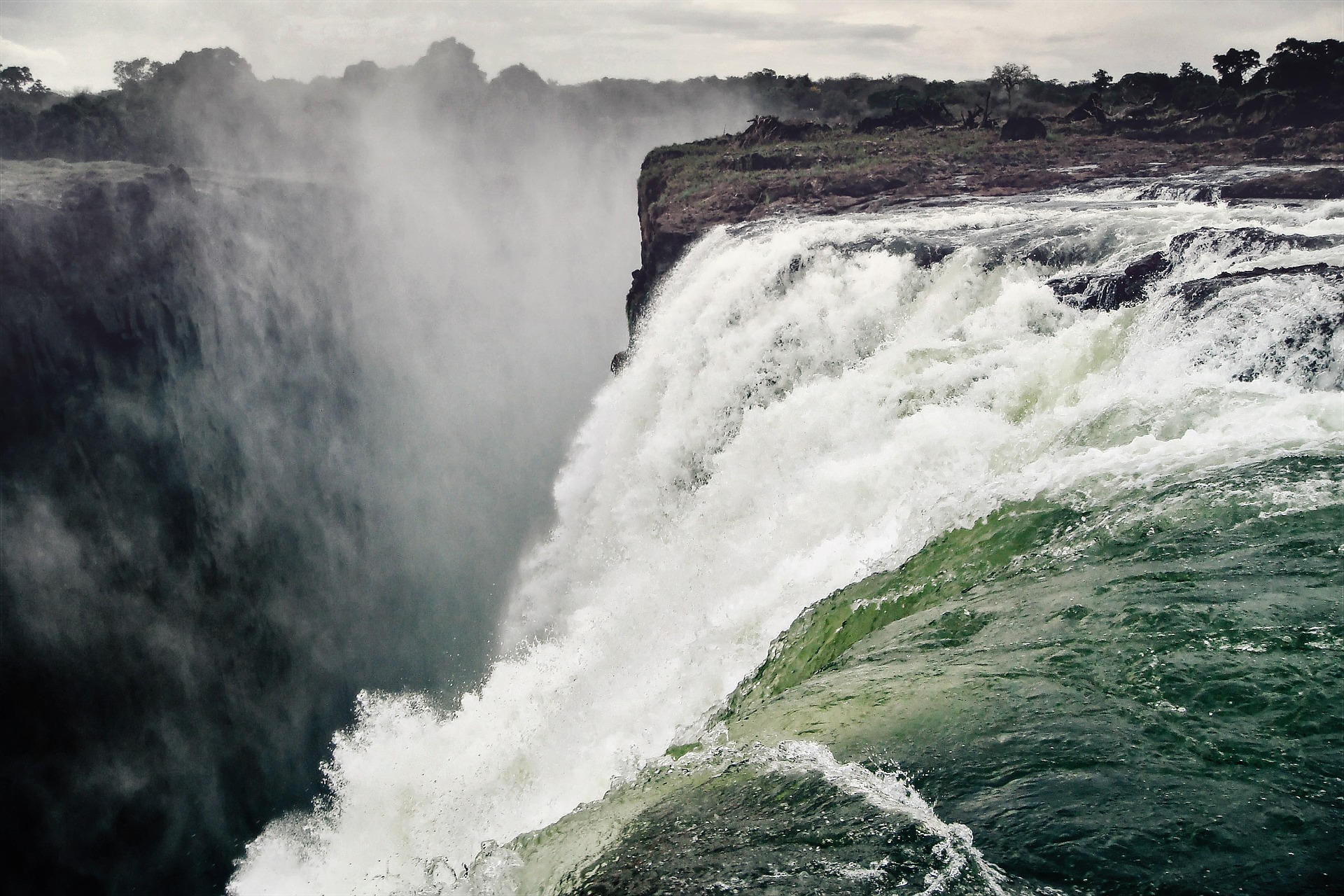
Victoria Falls from the Zambian side and some of the best safaris in the world, in South Luangwa, Lower Zambezi and Kafue.
Zambia is a large, landlocked country at high altitude. Its two big draws are the national parks and Victoria Falls, one of the largest waterfalls in the world, a UNESCO World Heritage Site on the border with Zimbabwe, reached from Livingstone. The parks are less commercial than in Kenya or South Africa: South Luangwa is the most famous, North Luangwa is quieter and known for buffalo herds and lion prides, and Lower Zambezi, a former presidential reserve, has hardly any roads.
Distances are long and roads can be poor, so plan plenty of time, or use domestic flights to the parks. Lusaka, the capital, and the mining towns of the Copperbelt are the main cities. Traditional ceremonies, such as the Kuomboka of the Lozi people around Easter, are another reason to come, though their dates change from year to year.
English is the official language, and many people in towns speak it. The US and Canada advise normal precautions and the UK does not advise against travel; Canada asks for extra care within 20 km of the borders with Angola, the DRC and Mozambique.
- Victoria Falls: One of the world's largest waterfalls, seen from Livingstone.
- South Luangwa National Park: Zambia's best-known park, with dense and varied wildlife.
- Lower Zambezi National Park: Untouched wilderness with very few dirt roads.
- North Luangwa National Park: Far fewer visitors, big buffalo herds and lion prides.
- Kasanka bat migration: Millions of bats over the park late in the year.
- Kuomboka ceremony: The Lozi king travels by a flotilla of barges to his wet-season palace, around Easter.
Places to visit
- City
- Park
- Historic site
Cities
- Lusaka: The capital and largest city, with busy outdoor markets.
- Livingstone: The gateway to Victoria Falls, with an international airport.
- Chipata: Capital of Eastern Province, a supply stop near the Malawi border.
- Kitwe: A mining city in the Copperbelt and the second largest in Zambia.
- Ndola: The administrative capital of the Copperbelt, with an international airport.
- Kabwe: A large town halfway between Lusaka and Ndola.
- Kasama: Capital of Northern Province, cooler because of its altitude.
- Mongu: The largest town in the Zambezi Basin.
Beyond the cities
- Victoria Falls (site): One of the largest waterfalls in the world, on the border with Zimbabwe.
- South Luangwa National Park (park): One of Africa's great safari parks; the Nsefu sector is often called its most beautiful part.
- Mfuwe (town): A large village near the main gate of South Luangwa, with lodges, campsites and Proflight flights.
- North Luangwa National Park (park): A quieter park known for large buffalo herds and lion prides.
- Lower Zambezi National Park (park): A former presidential hunting reserve, now wilderness without mass tourism.
- Kafue National Park (park): The largest national park in Zambia, west of Lusaka.
- Kasanka National Park (park): A park famous for its seasonal migration of millions of bats.
- Lochinvar National Park (park): An excellent park for birdwatching.
- Blue Lagoon National Park (park): An easy-to-reach park with lechwe, zebra and buffalo.
Regions
- Central Zambia
- Copperbelt
- Eastern Zambia
- Northern Plateau
- Zambezi Basin
Things to do
See
- Victoria Falls Livingstone: The falls are biggest early in the dry season. When the river is low, the Devil's Pool on the edge of the drop allows fairly safe swimming: Livingstone Island opens in July and the pool a few weeks later.
- Bat migration at Kasanka Kasanka National Park: An estimated 8 million bats fly overhead, around October and November.
- Buffalo and lions in North Luangwa North Luangwa National Park: Huge herds of buffalo and big lion prides in a park with far fewer visitors.
- Shiwa Ng'andu: A country mansion built by a British settler about a century ago near Mpika, with hot springs nearby.
- Traditional ceremonies: Kuomboka in Western Province around Easter, Ncwala near Chipata on 24 February, Kulamba near Chipata in August.
Do
- Safari in South Luangwa South Luangwa National Park: Lions, leopards, elephants and giraffes; the park opens at 06:00 and private cars can stay until 18:00.
- Canoeing on the Zambezi: For fit travellers, down the river as far as the Mpata Gorge.
Eat
- Nsima and relish: The national staple, a thick maize porridge rolled into balls by hand and dipped in stews of meat, fish or greens.
Drink
- Mosi or maheu: Mosi is the best-known local lager; maheu is a sweet, slightly gritty maize drink sold in many flavours.
Shop
- Lusaka's markets Lusaka: Busy outdoor markets; bargain with curio sellers, whose first price is often double what they will accept.
Itineraries
South Luangwa by road from Lusaka in 7 days (7 days)
- Lusaka (1 night): Stock up before the drive east along the Great East Road.
- South Luangwa National Park (4 nights): Via Petauke and the gravel roads through Malama, only with a well-equipped 4x4; stay in the lodges and camps around Mfuwe and visit the Nsefu sector.
- Chipata (1 night): About 2 hours from Mfuwe: supplies and fuel, 20 minutes from the Malawi border.
Victoria Falls and Kafue in 7 days (7 days)
- Livingstone (3 nights): The falls, and the Devil's Pool in season.
- Kafue National Park (3 nights): By Proflight to Lufupa, or by road with a 4x4.
- Lusaka (0 nights): The international flight home.
Climate and best time to visit
| Jan | Feb | Mar | Apr | May | Jun | Jul | Aug | Sep | Oct | Nov | Dec | |
|---|---|---|---|---|---|---|---|---|---|---|---|---|
| Max °C | 27 | 27 | 27 | 27 | 25 | 23 | 23 | 26 | 29 | 31 | 30 | 27 |
| Min °C | 17 | 17 | 17 | 15 | 13 | 11 | 10 | 12 | 15 | 18 | 18 | 17 |
| Rain mm | 229 | 179 | 89 | 29 | 2 | 0 | 0 | 0 | 1 | 13 | 73 | 183 |
Zambia lies in the tropics, but its altitude gives it clear seasons. From May to August it is dry and cool: in Lusaka the average maximum is about 23 to 26 °C and nights drop to around 10 °C in June and July, with no rain at all from June to August. From September to November it gets hot, up to an average high of about 31 °C in Lusaka in October, and more in the low valleys such as the Zambezi. The wet season runs from December to April, with the most rain in January, about 230 mm in Lusaka.
May to August is the most comfortable time to visit, and September suits game viewing if you can take the heat. Come early in the dry season for birds and for Victoria Falls at its fullest, later on for game drives, when the bush has dried and animals gather at the remaining water. In the wet season many unpaved roads become impassable and many safari lodges close.
Holidays and events
- 1 January 2026 · New Year's Day
- 9 March 2026 · International Women's Day
- 12 March 2026 · Youth Day
- 3 April 2026 · Good Friday
- 4 April 2026 · Holy Saturday
- 5 April 2026 · Easter Sunday
- 6 April 2026 · Easter Monday
- 28 April 2026 · Kenneth Kaunda's Birthday
- 1 May 2026 · Labour Day
- 25 May 2026 · African Freedom Day
- 6 July 2026 · Heroes' Day
- 7 July 2026 · Unity Day
- 3 August 2026 · Farmers' Day
- 19 October 2026 · National Day of Prayer
- 26 October 2026 · Independence Day
- 25 December 2026 · Christmas Day
Getting there and around
| Main airports | LUN |
|---|
Getting there
By air: Lusaka (LUN) is the main international airport, with flights from Johannesburg, Nairobi, Addis Ababa, Dubai, Doha, Istanbul and other cities. Livingstone has direct flights from Johannesburg, Nairobi and Cape Town, and Ndola from Johannesburg, Nairobi, Addis Ababa and Dar es Salaam. The departure tax for international flights, the equivalent of USD 25 (2026), is normally included in the ticket.
By land: the main road crossings are at Livingstone and Chirundu from Zimbabwe, Chipata from Malawi, Kazungula from Botswana, Katima Mulilo from Namibia and Nakonde from Tanzania. Expect taxes and slow formalities if you drive in. The TAZARA railway links Kapiri Mposhi with Dar es Salaam in Tanzania twice a week, a scheduled journey of 38 hours.
Getting around
Zambia is big and roads are slow, so allow plenty of time. Proflight flies to Livingstone, Mfuwe (for South Luangwa), Ndola, Kitwe, Kasama and Lufupa in Kafue: it is the fastest way around, but expensive. For buses, use the larger coach companies: the UK and Canada describe minibuses as overcrowded and badly maintained, and Canada says they are frequently involved in accidents, some of them fatal. Trains are slow and unreliable. Canada says to use only licensed taxis chosen by a hotel or restaurant or from an official stand; ride-hailing apps work in Lusaka and some major cities.
Driving: traffic keeps to the left. Main roads are generally maintained, but many have deep potholes, and from about November to April floods can wash away roads and bridges; a 4x4 is needed on dirt roads in the rains. Do not drive outside towns after dark. Fatal crashes are frequent, especially on the Great East Road, the Great North Road and Kafue Road, and there are very few ambulances or tow trucks. At police checkpoints, if asked to pay a fine on the spot, ask for a written fine or go to the police station. The UK and Canada say you can drive on a UK photocard or Canadian licence for up to 90 days; for longer you need an International Driving Permit or a Zambian licence. Hire companies often ask for a permit anyway. Canada says vehicles must carry two metallic emergency triangles, white reflector stickers in front and red ones behind, or you risk heavy fines.
Flying to Zambia? PartnerCompare fares and find the cheapest datesSearch flightsWhere to stay
- Safari lodges and camps: From all-inclusive lodges to campsites run by safari operators; many close in the wet season.
- Hotels: International hotels in Lusaka and Livingstone, and independent hotels in the towns.
- Budget lodges: Found in many towns; ask around when you arrive.
- Backpackers' hostels: A handful around the country, with dorms, double rooms and camping.
Outside the big cities and tourist areas, good accommodation is hard to find and electricity is not guaranteed. Many places have electric fences, gates and guards: check the security before you book. Water shortages and long power cuts are common across the country, so ask how your lodging copes with them.
Eat and drink
Dishes to try
- Nsima: A thick maize porridge, rolled into balls with your right hand and dipped into a relish.
- Relishes: Stews of beef, chicken or fish, or of beans, peanuts, pumpkin leaves (chibwabwa) and okra.
- Kapenta: Tiny dried fish, a common relish.
Drinks
- Maheu: A sweet, slightly gritty drink made from maize meal, sold in banana, chocolate and orange flavours.
- Mosi: The best-known local lager; Eagle is stronger, and Zambezi Lager is worth trying.
- Chibuku: The factory-made version of the local maize beer, sour like thin porridge.
| Tipping | Not required but often expected; better restaurants usually add a 10% service charge or expect a similar tip, and guides and porters expect a tip. |
|---|
Traditional meals are built on nsima with a relish, eaten with your right hand; outside the cities you will often wash your hands in a bowl of water rather than at a sink. In Lusaka and Livingstone you can find most cuisines, and fast food is popular. Avoid kachasu, a home-distilled spirit.
Tap water is generally not safe unless boiled: drink sealed bottled water. Because of the mining spill of February 2025, do not eat fish from the Kafue River near the Chambishi Stream and Mwambashi River.
Entry requirements and visas
| Passport validity | At least 6 months after the date you arrive, with 2 blank pages (UK); at least 6 months beyond the date you leave, with 3 blank pages (Canada) |
|---|
| Passport | Entry | Max stay | Notes |
|---|---|---|---|
| United Kingdom | Visa free | 90 days | 90 days in total in any 12 months; you must show a return or onward ticket and enough money. |
| Canada | Visa free | 90 days | 90 days per calendar year, but officials may grant only 30: check the stamp in your passport. |
Other nationalities: check the official source below.
UK and Canadian tourists do not need a visa for up to 90 days a year. Make sure your passport is stamped and that the number of days granted matches your plans, since overstaying can mean fines or arrest. The KAZA UNIVISA (USD 50 in 2026, valid 30 days) covers Zambia and Zimbabwe and day trips into Botswana; you can apply online or get it at Lusaka and Livingstone airports and at the Victoria Falls and Kazungula borders.
You need a yellow fever certificate only if you arrive from, or transit for more than 12 hours through, a country with yellow fever risk. Canada warns that some prescription and over-the-counter medicines are controlled substances in Zambia and that travellers have been charged with drug trafficking: check your medicines and, if needed, apply for an import permit at least two weeks before you travel. Wikivoyage reports arrests of tourists carrying diphenhydramine, an antihistamine sold as Benadryl, which is restricted in Zambia. The UK says Zambia may introduce health screening or entry restrictions for travellers arriving from regions affected by Ebola. Rules depend on your passport and can change: check the official link or the Zambian embassy before you book.
Money and payments
| Currency | Zambian Kwacha (ZMW) |
|---|---|
| Cards | Common |
The currency is the Zambian kwacha (ZMW, written ZK). ATMs in all the main towns take Visa and Mastercard and give only kwacha, and cards are accepted in larger supermarkets, shops, restaurants and hotels in the big towns and at safari lodges. Pay taxis in kwacha. Canada reports card and ATM fraud and power cuts that can shut down ATMs, so use machines inside banks and keep some cash, and carry kwacha when you travel to rural areas.
US dollars (USD) are widely used for larger tourist payments. Bring new, large-headed notes, ideally USD 50 and 100, since old ones are refused and small ones get a worse rate. Banks and bureaux change at most USD 1,000 a day per person. Avoid changing money with groups of men on the street.
Health
| Required vaccines | Yellow fever: only for travellers aged 1 year or older arriving from, or transiting more than 12 hours through, a country with yellow fever risk |
|---|---|
| Recommended vaccines | Routine vaccines, including measles (MMR), Polio: a single adult booster if you were vaccinated as a child, Hepatitis A, Hepatitis B, for unvaccinated travellers under 60, Typhoid, for most travellers, Rabies, for some travellers: rabid dogs are common, Cholera, to consider for areas of active transmission, Mpox, for travellers at risk of sexual exposure |
| Malaria | Widespread |
| Tap water | Not safe |
Malaria is present throughout Zambia, and the CDC recommends prescription medicine to prevent it: cover up and use repellent, especially at dusk. Cholera transmission is widespread, so take care with food and water. See a travel health professional at least 6 to 8 weeks before you go. Avoid swimming in lakes and rivers, because of schistosomiasis and dangerous animals.
In February 2025 a mine released waste with heavy metals into the Chambishi Stream and the Mwambashi and Kafue rivers: avoid bathing there and avoid untreated water and fish from the area, since boiling does not remove heavy metals. Medical care is of a lower standard than in the UK and basic in rural areas, so carry a medical kit and insurance that covers evacuation. HIV prevalence among adults is about 11%. For an ambulance, call 992.
This is general information, not medical advice: check with a travel health professional before you go.
Safety
- United States: Level 1: Exercise Normal Precautions (2026-10-20)
- Canada: Take normal security precautions (2026-10-20)
- United Kingdom: No advice against travel (2026-10-20)
The UK says that cities and the main game parks are generally safe by day. Petty theft is common, and violent crime, including armed robbery and carjacking, occurs mostly in Lusaka and the Copperbelt, especially after dark. Arrange transport rather than walking at night, keep car doors locked and windows closed, ignore anyone trying to flag you down, and use ATMs inside banks. Drink spiking happens in bars and nightclubs in Lusaka.
Canada advises a high degree of caution within 20 km of the borders with Angola, the DRC and Mozambique because of possible landmines, and crime near the DRC border, which the UK notes is not marked on the ground. Stay on main roads there. Demonstrations happen occasionally, especially around elections: keep away and never cross a protesters' roadblock.
In the parks, wild animals often enter camps: follow your guides, do not walk around at night and never leave children alone. Adventure sports around Victoria Falls have caused serious accidents. Water shortages and long power cuts are common, so carry a torch, a power bank and some water.
Customs and etiquette
Always greet people and ask how they are before you ask anything: going straight to the point seems rude. Handshakes are gentle and can last a whole conversation; holding your right wrist with your left hand as you shake shows respect. Do not point with your index finger, and do not hold eye contact for long. Away from Lusaka, women should avoid shorts and short skirts. Children may call out mzungu (white person): it is curiosity, not hostility.
Same-sex relations are illegal and carry long prison sentences, up to life according to Canada. Pornography and drugs, including marijuana, are illegal: possessing pornography can mean jail or deportation, and Canada warns of long jail sentences or deportation for drugs. Do not photograph airports, ports, military sites, government buildings or people in uniform, and ask before photographing individuals. Drones need authorisation from the Zambian Civil Aviation Authority. Do not buy products from protected wild animals, and note that exporting gemstones or precious metals needs a government permit. Carry ID, as officials can ask for it at any time: Canada says a certified photocopy will do, and the UK advises a copy of your passport's photo page and entry stamp.
Language
| Official languages | English |
|---|---|
| English | Common |
What to pack
- Passport valid 6 months, with 2 or 3 blank pages: Zambia needs space for entry stamps.
- Return or onward ticket: Officials can ask for it, with proof of funds.
- Malaria tablets and repellent: Malaria is present throughout the country.
- New US dollar notes of 50 and 100: Older notes are refused and small ones get a worse rate.
- Torch and power bank: Power cuts are common and can be long.
- A basic medical kit: Rural medical facilities are basic.
- Allergy medicine without diphenhydramine: Wikivoyage reports arrests of tourists carrying it.
Quick reference
Country facts
| Capital | Lusaka |
|---|---|
| Population | 21,913,874 (2025) |
| Area | 743,390 km² |
| Time zone | Africa/Lusaka (UTC+2) |
| Calling code | +260 |
| Driving side | left |
Staying connected
| SIM and eSIM | Three main mobile operators: Airtel, with the largest network, MTN and Cell Z. Local SIM cards are cheap; rural coverage can be patchy and roaming is expensive. |
|---|---|
| Wi-Fi | Most hotels and backpackers' hostels offer free internet to guests; power cuts can affect networks. |
Emergency numbers
| Police | 991 |
|---|---|
| Ambulance | 992 |
| Fire | 993 |
Frequently asked questions
Do I need a visa for Zambia?
Not as a UK or Canadian tourist, for up to 90 days a year; Canada notes officials may grant only 30 days. Check the official link or the Zambian embassy before you book.
What is the KAZA UNIVISA?
A shared visa for Zambia and Zimbabwe that also allows day trips to Botswana. It cost USD 50 in 2026 and is valid for 30 days.
When is the best time to visit Zambia?
May to August, in the cool dry season, is the most comfortable; September is hot but good for game drives. Come early in the dry season for birds and a full Victoria Falls.
Can I drink the tap water in Zambia?
Not unless it is boiled. Drink sealed bottled water. Near the Chambishi Stream and where the Mwambashi and Kafue rivers meet, avoid untreated local water: boiling does not remove the heavy metals from the 2025 mine spill.
Can I pay by card in Zambia?
Yes, in larger supermarkets, shops, restaurants and hotels in the big towns and at safari lodges, and ATMs in all main towns take Visa and Mastercard. Carry kwacha in rural areas.
Do I need a yellow fever vaccination for Zambia?
Only if you arrive from, or transit for more than 12 hours through, a country with yellow fever risk.
More Travel Stories from Africa
 Morocco
 Cabo Verde +1
 Colombia +1
Sources This guide was last checked on · 18 sources
- Wikivoyage: Zambia · Overview, Places to visit, Things to do, Itineraries, Climate and best time to visit, Getting there and around, Where to stay, Eat and drink, Entry requirements and visas, Money and payments, Health, Safety, Customs and etiquette, Language, What to pack, Staying connected, Frequently asked questions
- Wikidata: Zambia · Overview, Places to visit, Money and payments, Country facts
- US Department of State: Zambia travel advisory · Overview, Safety
- Government of Canada: Zambia travel advice (updated 13 October 2026) · Overview, Itineraries, Getting there and around, Where to stay, Eat and drink, Entry requirements and visas, Money and payments, Health, Safety, Customs and etiquette, What to pack, Staying connected, Frequently asked questions
- UK FCDO: Zambia safety and security · Overview, Getting there and around, Safety, Customs and etiquette
- Wikivoyage: Livingstone · Things to do
- WMO World Weather Information Service: Lusaka · Climate and best time to visit
- Nager.Date: public holidays in Zambia, 2026 · Holidays and events
- UK FCDO: Zambia entry requirements (updated 1 June 2026) · Getting there and around, Entry requirements and visas, What to pack, Frequently asked questions
- UK FCDO: Zambia health · Eat and drink, Health, What to pack, Frequently asked questions
- CDC Travelers' Health: Zambia · Entry requirements and visas, Health, What to pack, Frequently asked questions
- ISO 4217 (SIX), published 2026-09-17 · Money and payments
- UK FCDO: Zambia travel advice · Safety
- UK FCDO: Zambia regional risks · Safety
- World Bank, SP.POP.TOTL · Country facts
- World Bank, AG.LND.TOTL.K2 · Country facts
- IANA Time Zone Database, zone.tab · Country facts
- UK FCDO: Zambia getting help · Emergency numbers
Suggest an update
Travel rules, prices and timetables change. If something in this guide is out of date, tell us: we check every suggestion against an official source before changing the page.