

- Local time
- 18:04
- Currency
- Moroccan Dirham (MAD)
- Capital
- Rabat
- Calling code
- +212
- Drive on the
- right
Overview
Morocco puts old walled medinas, the High Atlas, Atlantic beach towns and Saharan dunes within a few hours' flight of Europe's main cities.
For many travellers Morocco is the first step into Africa, and an easy one: the main European cities are a few hours away by plane, and ferries from Spain arrive in Tangier. The old imperial cities are the core of most trips. Fez keeps a huge medieval medina and the Qarawiyyin University, Marrakech has its maze of souks and the square of Jemaa el-Fnaa, which fills with food stalls at dusk, and Meknes is a calmer base for the Roman ruins of Volubilis. Rabat, the capital, is relaxed and easy to visit.
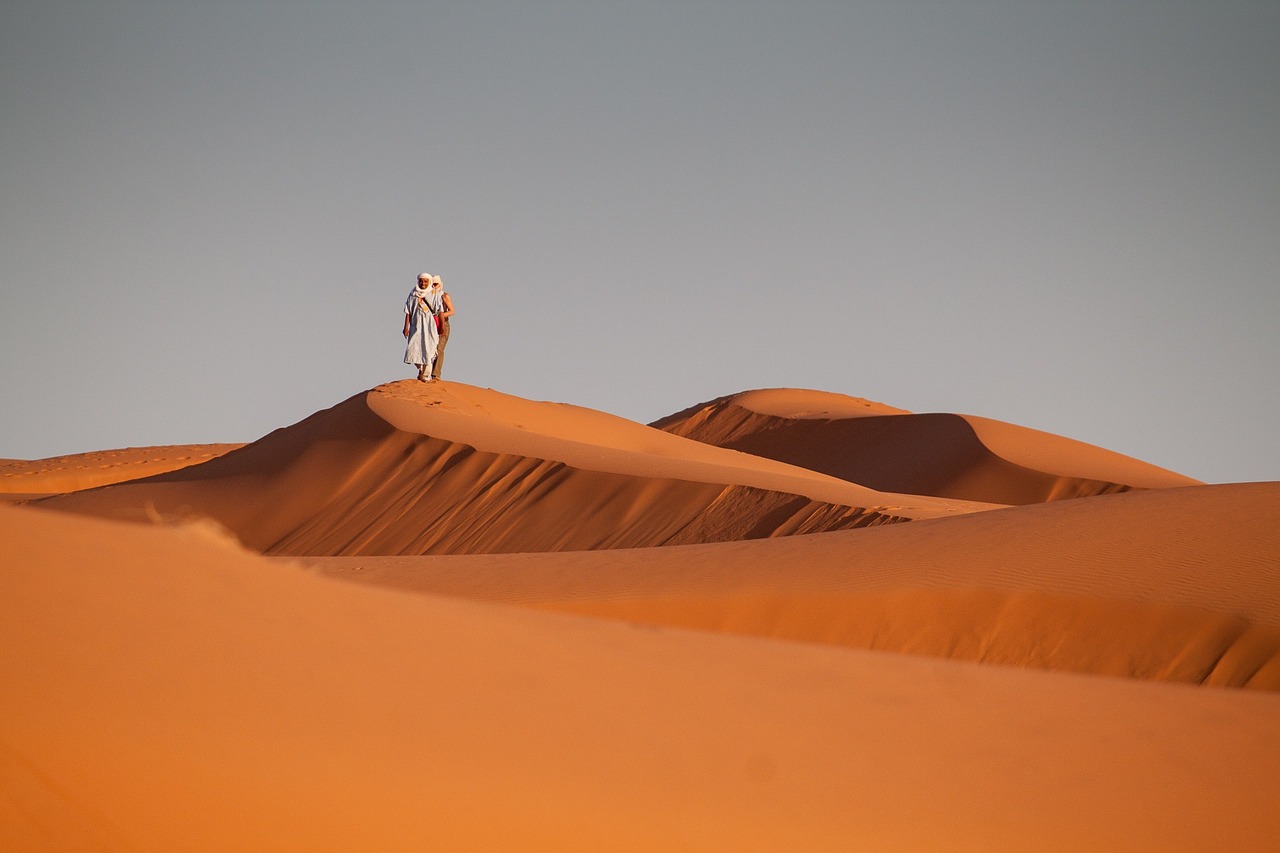
Away from the cities the scenery changes quickly. Trekkers head for the High Atlas and Mount Toubkal, the highest peak in North Africa, while Merzouga and M'Hamid are the starting points for camel or 4x4 trips into the dunes of the Sahara. On the coast you can choose between laid-back medina towns such as Essaouira and Asilah and the beach resort of Agadir.
Arabic and Berber are the official languages and French is widely used. Morocco is an Islamic country, which shapes dress, behaviour and the rhythm of the year, above all during Ramadan. Canada advises a high degree of caution because of the threat of terrorism and the US rates Morocco Level 2. Canada also advises against travel near the closed border with Algeria and in parts of Western Sahara. The section on safety below has the details.
- Marrakech: The souks of the medina, the Saadian Tombs and the square of Jemaa el-Fnaa at dusk.
- Fez: A former capital with a medieval medina, the Bou Inania Madrasa and leather tanneries.
- Erg Chebbi: Sahara dunes near Merzouga, with camel rides and nights in desert tents.
- High Atlas and Toubkal: Treks past adobe villages, and the climb to North Africa's highest peak from Imlil.
- Aït-Benhaddou: A fortified mud-brick village used as a set for films such as Lawrence of Arabia and Gladiator.
- Chefchaouen: A blue-washed town and a base for walks in the Rif Mountains.
Places to visit
- City
- Town
- Mountain
- Historic site
Cities
- Rabat: The capital, relaxed and free of hassle, with a 12th-century tower and minaret.
- Casablanca: The modern port city where most flights land, with the Hassan II Mosque and an art deco centre.
- Marrakech: The "Red City": souks, palaces and the evening food stalls of Jemaa el-Fnaa.
- Fez: A former capital whose medieval medina holds the Qarawiyyin University.
- Meknes: A walled city with a Spanish-Moorish centre, calmer than Fez and close to Volubilis.
- Tangier: The port where most ferries from Spain arrive, long a magnet for artists and writers.
- Tetouan: A northern city with beaches nearby, the gateway to the Rif Mountains.
- Ouarzazate: Known as the capital of the south, an old town that tourism has not spoiled.
- Agadir: A modern resort known for its beaches rather than for history.
Beyond the cities
- High Atlas (mountain): Mountains for hiking, skiing and Berber culture.
- Toubkal (mountain): North Africa's highest mountain, climbed from the village of Imlil.
- Merzouga (town): The village at the edge of the Erg Chebbi dunes, a starting point for camel trips.
- M'Hamid (town): A desert settlement near the quieter dunes of Erg Chigaga.
- Tinghir (town): An oasis town near the Todra gorge, at the foot of the High Atlas.
- Volubilis (site): The largest Roman ruins in Morocco, 30 km north of Meknes, next to Moulay Idriss.
- Aït-Benhaddou (site): A fortified, mostly abandoned mud-brick village, often used as a film set.
- Chefchaouen (town): A blue-washed town, an old favourite of travellers and a base for the Rif Mountains.
- Essaouira (town): A coastal medina town with a sea breeze and summer beaches.
Regions
- Mediterranean Morocco: The north coast, next to the Spanish enclaves, and the country's main gateway by sea.
- North Atlantic Coast: Rabat and Casablanca, where most travellers arrive.
- South Atlantic Coast: Beach towns such as Essaouira and Agadir.
- High Atlas: Marrakech and the mountains, home to much of the Berber population.
- Middle Atlas: The Middle Atlas mountains and the area around them, including Fez and Meknes.
- Saharan Morocco: The desert, the least populated part of the country.
- Anti Atlas: Taroudant and another stretch of the Sahara.
Things to do
See
- The medina of Fez Fez: Narrow medieval lanes, city gates, the Bou Inania Madrasa and a traditional leather tannery.
- Hassan II Mosque Casablanca: A huge modern mosque by the sea; the colonial and art deco centre is also worth an afternoon.
- Volubilis Meknes: Roman ruins 30 km north of Meknes, next to the holy town of Moulay Idriss.
- Todra gorge Tinghir: A gorge near Tinghir, worth a stop on the way to the desert.
Do
- Climb Toubkal High Atlas: Start from Imlil and pass adobe villages; the UK advises hiring a professional guide.
- A night in the dunes Merzouga: Ride a camel into Erg Chebbi and sleep in a desert tent; Erg Chigaga near M'Hamid is less crowded.
- A hammam: Choose a tourist hammam where staff scrub you, or a local one where you bring your own mitten and towel.
Eat
- Harira and mint tea: The lentil and chickpea soup most Moroccans eat every week, and the mint tea you will be offered every day.
Shop
- Bargaining in the souks: Expected everywhere: never name a price you are not ready to pay, and walk away if the price does not move.
After dark
- Jemaa el-Fnaa at dusk Marrakech: The square fills with food stalls, storytellers, magicians and dancers as evening falls.
Itineraries
The imperial cities by train in 10 days (10 days)
- Marrakech (3 nights): The medina, the souks and Jemaa el-Fnaa.
- Casablanca (1 night): By train on the line to Rabat and Fez; see the Hassan II Mosque.
- Rabat (1 night): The capital, on the same line.
- Meknes (2 nights): With a day trip to Volubilis, 30 km north.
- Fez (3 nights): The huge medieval medina.
From Marrakech to the Sahara in 6 days (6 days)
- Marrakech (2 nights): The usual base for tours to the desert.
- Ouarzazate (1 night): The capital of the south.
- Tinghir (1 night): For the Todra gorge.
- Merzouga (2 nights): A camel or 4x4 trip into Erg Chebbi, with a night in a desert tent.
Climate and best time to visit
| Jan | Feb | Mar | Apr | May | Jun | Jul | Aug | Sep | Oct | Nov | Dec | |
|---|---|---|---|---|---|---|---|---|---|---|---|---|
| Max °C | 17 | 18 | 20 | 21 | 24 | 26 | 27 | 28 | 27 | 25 | 21 | 19 |
| Min °C | 7 | 8 | 10 | 11 | 13 | 16 | 18 | 18 | 17 | 14 | 11 | 9 |
| Rain mm | 81 | 61 | 63 | 42 | 18 | 4 | 0 | 1 | 14 | 55 | 94 | 90 |
On the Atlantic coast the weather is mild all year. In Rabat the average maximum rises from about 17 °C in January to about 28 °C in August, and the average minimum never drops much below 7 °C. Summer is almost dry, with less than 4 mm of rain a month from June to August, while most rain falls from November to January, with 80 to 95 mm a month.
Do not count on that mildness everywhere. Wikivoyage warns that winter nights can drop to around zero, and many homes, cheap hotels and buses have no heating, so pack warm layers. Heavy winter rain can bring flash floods to the mountains and river valleys, and summer brings a risk of wildfires and, in the desert, sandstorms.
April, May, September and October suit most trips. Wikivoyage suggests April for the imperial cities, February for desert treks and July for the beaches of Essaouira; July and August are the peak tourist season.
Holidays and events
- 1 January 2026 · New Year's Day
- 11 January 2026 · Proclamation of Independence
- 14 January 2026 · Amazigh New Year
- 1 May 2026 · Labour Day
- 30 July 2026 · Enthronement
- 14 August 2026 · Zikra Oued Ed-Dahab
- 20 August 2026 · Revolution of the King and the People
- 21 August 2026 · Youth Day
- 6 November 2026 · Green March
- 18 November 2026 · Independence Day
Getting around
| International driving permit | Required |
|---|
Trains run by ONCF are the best way between the main cities. The Al Boraq high-speed train links Tangier with Casablanca via Kenitra and Rabat in about 2 hours 20 minutes, and another line connects Marrakech, Casablanca, Rabat, Meknes and Fez. Trains are often late, so leave a margin, and buy tickets from ONCF rather than from resellers. For the rest of the country, the coaches of CTM and Supratours cover almost everywhere: buy your ticket at the station window, not from touts. Domestic flights are run by Royal Air Maroc and Air Arabia, and since 2024 also by Ryanair on some routes.
Taxis: a petit taxi works only inside a town and should use the meter; if it does not, agree the fare before you get in. A grand taxi is a shared car between towns, with a semi-fixed fare split between passengers. The UK warns that taxis booked through ride-hailing apps may be unlicensed and uninsured.
Driving: UK drivers need the 1968 International Driving Permit together with their licence, and a green card from their insurer. Any alcohol in your blood is an offence. Avoid driving at night, when poor lighting, pedestrians and animals make roads dangerous, and expect frequent police checkpoints: keep your ID and vehicle papers with you. After an accident, both drivers fill in a constat amiable form. If you bring your own car, you must leave the country with it.
Flying to Morocco? PartnerCompare fares and find the cheapest datesSearch flightsWhere to stay
- Riads: Traditional houses around an inner courtyard, usually with six rooms or fewer, common in the medinas of Marrakech, Essaouira and Fez.
- Auberges: Small, family-run inns in mud-brick kasbah style, found in the countryside and small towns.
- Gîtes d'étape: Simple country inns for trekkers, with a meal and a hot shower.
- Hotels: Rated from one to five stars; the cheapest are usually in the medina, newer ones in the ville nouvelle.
- Youth hostels: Affiliated with Hostelling International, in the major cities.
- Desert bivouacs: Nomad wool tents with mattresses and blankets, near the dunes.
- Campsites: Found near almost every town, often outside the centre; wild camping is illegal.
Breakfast is usually included, and often dinner too. In cheaper hotels hot water can be unreliable or cost extra. In coastal towns furnished apartments are the norm for Moroccan holidaymakers, so they are easy to find, but prices rise sharply in summer and in the European holiday periods. In the medinas many hotels let you sleep on the roof terrace in hot weather for a small fee.
Eat and drink
Dishes to try
- Tagine: Meat, fish or vegetables cooked in a clay pot; chicken with preserved lemon and lamb with prunes and almonds are classics.
- Couscous: Steamed semolina; for the real thing, look for the restaurants that make it on Fridays.
- Harira: Soup of lentils, chickpeas, tomato and lamb stock, eaten to break the fast during Ramadan.
- Pastilla: Flaky pastry filled with meat, usually chicken, topped with sugar and cinnamon.
- Grilled fish: Fresh and cheap in the fishing towns of the south coast.
- Msemen and sfenj: Layered pastry pancakes and fried doughnuts, sold on the street for breakfast and snacks.
Drinks
- Mint tea: Green tea with fresh mint, offered at least once a day and polite to accept.
- Fresh juice: Orange is the classic at street stands, pomegranate in winter.
- Local beer and wine: Casablanca, Flag Special and Stork beers, and Moroccan wines, sold in licensed places.
Outside the big cities Moroccans rarely eat out, so restaurant menus repeat the same few dishes; cheap eateries and market stalls serve stews and soups such as bissara. Rotisserie chicken shops and sandwich stalls make cheap meals. During Ramadan most restaurants close at lunchtime, except those that cater to tourists.
Alcohol is legal only in licensed restaurants, bars and hotels, and can be bought in licensed shops for private use; drinking in the street is illegal. The UK warns of deaths from drinks containing methanol. Cafés and bars are mostly frequented by men, and women on their own may feel more at ease in a pastry shop or restaurant.
Entry requirements and visas
| Passport validity | At least 3 months after the date you arrive (UK); at least 6 months beyond the date you leave (Canada). The passport must not be damaged |
|---|
| Passport | Entry | Max stay | Notes |
|---|---|---|---|
| United Kingdom | Visa free | 90 days | For tourism; extensions are requested at a Moroccan police station. |
| Canada | Visa free | 90 days | For stays of less than 90 days; ask the police at least 15 days before the limit if you want to stay longer. |
| United States | Visa free | 90 days | US citizens are on the visa-free list, according to Wikivoyage. |
| Australia | Visa free | 90 days | Australian citizens are on the visa-free list, according to Wikivoyage. |
| EU / EEA | Visa free | 90 days | Wikivoyage lists citizens of Schengen countries, Ireland and Croatia; check if you hold another EU passport. |
Other nationalities: check the official source below.
British and Canadian visitors can stay up to 90 days without a visa, and Wikivoyage lists US, Australian and Schengen passports among the visa-free ones. If you overstay, Canada warns that you will have to remain until you see a prosecutor and pay a fine.
Make sure your passport is in good condition, as travellers with damaged passports have been refused entry, and check that it gets an entry stamp: without one, leaving can be difficult. You must declare foreign currency worth 100,000 dirham or more on arrival and departure. If you arrive with a car, you must leave with it. Rules depend on your passport and can change: check with the Moroccan embassy or consulate before you book.
Money and payments
| Currency | Moroccan Dirham (MAD) |
|---|---|
| Cards | Limited |
The Moroccan dirham (MAD) is a closed currency: you cannot easily buy or sell it outside Morocco, and Wikivoyage notes that tourists may take only a small amount across the border. Bring euros or US dollars to change, or use ATMs, which you will find near tourist hotels and in the modern districts but only a few inside the medinas. In small towns ATMs may run dry at weekends, so withdraw on Friday.
Cash rules in markets, taxis and small hotels, and doctors usually want cash too. Keep small notes, since change is often short. Card fraud and thefts at ATMs are common, so cover the keypad and keep your card in sight. Keep your exchange receipts: you may need them to change leftover dirham back before you fly. Defacing banknotes is illegal.
Health
| Required vaccines | Polio certificate, only if you arrive from a country affected by polio (UK FCDO) |
|---|---|
| Recommended vaccines | Routine vaccines, including measles (MMR), Hepatitis A, Hepatitis B, Typhoid, for most travellers, Rabies, for some travellers: rabid dogs are common |
| Malaria | None |
| Tap water | Not safe |
Yellow fever vaccine is not required or recommended, and the CDC does not list malaria for Morocco. You need a polio certificate only if you come from a country affected by polio. Ask a travel health professional about the recommended vaccines at least a month before you go. Other risks named by the CDC, Canada and the UK include leishmaniasis, spread by sand flies, schistosomiasis and leptospirosis in fresh water, and altitude sickness in the mountains.
Wikivoyage advises drinking bottled water, with a sealed cap, rather than tap water. Stray dogs are common: do not feed or approach them, and get medical help at once after a bite or scratch. Henna tattoos can cause painful allergic reactions.
Public hospitals offer limited care; private clinics in Casablanca, Marrakesh and Rabat are better, and they usually want payment in cash. Pharmacies are open 24 hours in every city. Bring enough of any prescription medicine for the whole trip, and get insurance that covers medical evacuation. For an ambulance, call 150.
This is general information, not medical advice: check with a travel health professional before you go.
Safety
- United States: Level 2: Exercise Increased Caution (2026-10-20)
- Canada: Exercise a high degree of caution (2026-10-20)
- United Kingdom: No advice against travel (2026-10-20)
Canada advises a high degree of caution because of the threat of terrorism, and the UK says terrorists are likely to try to carry out attacks, including in places visited by tourists. Canada advises against all travel within 20 km of the border with Algeria, which is closed, and near the Berm, the military line in Western Sahara, where unexploded mines remain. Canada advises against non-essential travel to the rest of Western Sahara and warns of a kidnapping risk in remote areas near the borders, so do not hike alone in remote mountains.
Petty crime is the most common problem: pickpocketing, bag-snatching and thefts from motorbikes in the medinas, markets and beaches. There have been knife robberies; do not resist. Avoid quiet areas after dark and keep valuables out of sight. Fake guides are common in the medinas: use only guides with an official badge. Agree prices in advance and refuse "free gifts", which often end in a demand for money.
Many beaches have no lifeguards and strong currents. Book activities through reputable agents, and hot-air balloon trips only with licensed operators; wear a helmet on a quad bike. Morocco has earthquakes: read the safety instructions in your hotel. Avoid demonstrations, and do not photograph military or security sites.
Customs and etiquette
Morocco is an Islamic country, and its laws reflect that. Dress modestly: long trousers and sleeved shirts for men, and no see-through or very short clothes for women; swimwear is fine at hotels and beach clubs. Public displays of affection can lead to arrest. During Ramadan (the next one starts in February 2027) avoid eating, drinking or smoking in public during the day. Remove your shoes before entering a mosque.
Greet people with salaam alaykum, shake hands with someone of the opposite sex rather than kissing their cheeks, and give and take with the right hand. Older people expect respect, such as your seat on a bus. Always ask before photographing people, especially children. The law protects the King and national symbols from criticism, so keep political opinions to yourself. Trying to convert Muslims is illegal, and so are same-sex relations. Drug laws are strict, including for cannabis.
Language
| Official languages | Arabic, ber |
|---|---|
| English | Limited |
| Hello | Salam |
|---|---|
| Peace be upon you (formal greeting) | Salaam alaykum |
| Thank you | Shukran |
| Thank you (Tamazight) | Tanmirt |
| No, thank you | La shokran |
| Enjoy and relax (before drinking tea) | Ba saha ou raha |
| God willing | Insha Allah |
| Go away! | Seer f'halek |
What to pack
- An undamaged passport: Travellers with damaged passports have been refused entry.
- 1968 International Driving Permit: UK drivers need it with their licence, and can only buy it in the UK.
- Small notes in dirham: Taxis, shops and even hotels are often short of change.
- Modest clothes: Long sleeves and trousers avoid offence and unwanted attention.
- Warm layers: Winter nights can drop to around zero, and heating is rare.
- Closed shoes: Medina streets are often dirty; keep sandals for the beach.
- Toilet paper: Often missing, even in hotels and restaurants.
- Prescription medicines for the whole trip: Some medicines are hard to find in Morocco.
Quick reference
Country facts
| Capital | Rabat |
|---|---|
| Population | 38,430,770 (2025) |
| Area | 446,300 km² |
| Time zone | Africa/Casablanca (UTC+0) |
| Calling code | +212 |
| Driving side | right |
Electricity and plugs
| Plug types | C, E |
|---|---|
| Voltage | 220 V |
| Frequency | 50 Hz |
Staying connected
| SIM and eSIM | Three networks: Maroc Telecom, Orange and Inwi. Coverage is good in towns and most of the countryside, with Maroc Telecom strongest in rural areas. SIM cards are sold in phone shops, sometimes against ID; airport stalls charge much more, and eSIMs are available. |
|---|---|
| Roaming | Roaming with foreign SIM cards is expensive for most visitors, so a local card is usually the better choice. |
| Wi-Fi | Almost every café and restaurant offers free wifi. |
Emergency numbers
| Police | 190 |
|---|---|
| Ambulance | 150 |
| Fire | 150 |
Frequently asked questions
Do I need a visa for Morocco?
Not for tourist stays of up to 90 days if you are British or Canadian, and Wikivoyage lists US, Australian and Schengen passports as visa-free too. Check with the Moroccan embassy before you book.
Is Morocco safe for travellers?
Canada advises a high degree of caution because of terrorism and the US rates Morocco Level 2. Canada advises against travel near the border with Algeria and in parts of Western Sahara. Petty theft and scams are the most common problems in the cities.
Can I buy dirham before I travel?
Not easily: the dirham is a closed currency. Change euros or US dollars in Morocco or use an ATM, and keep your exchange receipts to change money back.
Can I drink the tap water in Morocco?
Wikivoyage advises drinking bottled water with a sealed cap instead.
Can I drink alcohol in Morocco?
Yes, in licensed bars, restaurants and hotels. Drinking in the street is illegal.
When is the best time to visit Morocco?
April, May, September and October suit most trips. The coast is dry and warm in summer, while winter nights can drop to around zero.
More Travel Stories from Africa
 Kenya
Sources This guide was last checked on · 17 sources
- Wikivoyage: Morocco · Overview, Places to visit, Things to do, Itineraries, Climate and best time to visit, Getting around, Where to stay, Eat and drink, Entry requirements and visas, Money and payments, Health, Safety, Customs and etiquette, Language, What to pack, Electricity and plugs, Staying connected, Frequently asked questions
- Wikidata: Morocco · Overview, Places to visit, Money and payments, Country facts, Electricity and plugs
- Government of Canada: Morocco travel advice (updated 26 May 2026) · Overview, Getting around, Eat and drink, Entry requirements and visas, Money and payments, Health, Safety, Customs and etiquette, Frequently asked questions
- US Department of State: Morocco travel advisory · Overview, Safety, Frequently asked questions
- UK FCDO: Morocco regional risks · Overview, Getting around, Safety
- UK FCDO: Morocco safety and security (updated 19 August 2026) · Things to do, Climate and best time to visit, Getting around, Eat and drink, Money and payments, Safety, Customs and etiquette, What to pack, Frequently asked questions
- WMO World Weather Information Service: Rabat-Sale · Climate and best time to visit
- Nager.Date: public holidays in Morocco, 2026 · Holidays and events
- UK FCDO: Morocco entry requirements (updated 19 August 2026) · Entry requirements and visas, Money and payments, Health, What to pack, Frequently asked questions
- ISO 4217 (SIX), published 2026-09-17 · Money and payments
- CDC Travelers' Health: Morocco · Health
- UK FCDO: Morocco health · Health
- UK FCDO: Morocco travel advice · Safety
- World Bank, SP.POP.TOTL · Country facts
- World Bank, AG.LND.TOTL.K2 · Country facts
- IANA Time Zone Database, zone.tab · Country facts
- UK FCDO: Morocco getting help · Emergency numbers
Suggest an update
Travel rules, prices and timetables change. If something in this guide is out of date, tell us: we check every suggestion against an official source before changing the page.