

- Local time
- 15:30
- Currency
- Malagasy Ariary (MGA)
- Capital
- Antananarivo
- Calling code
- +261
- Drive on the
- right
Overview
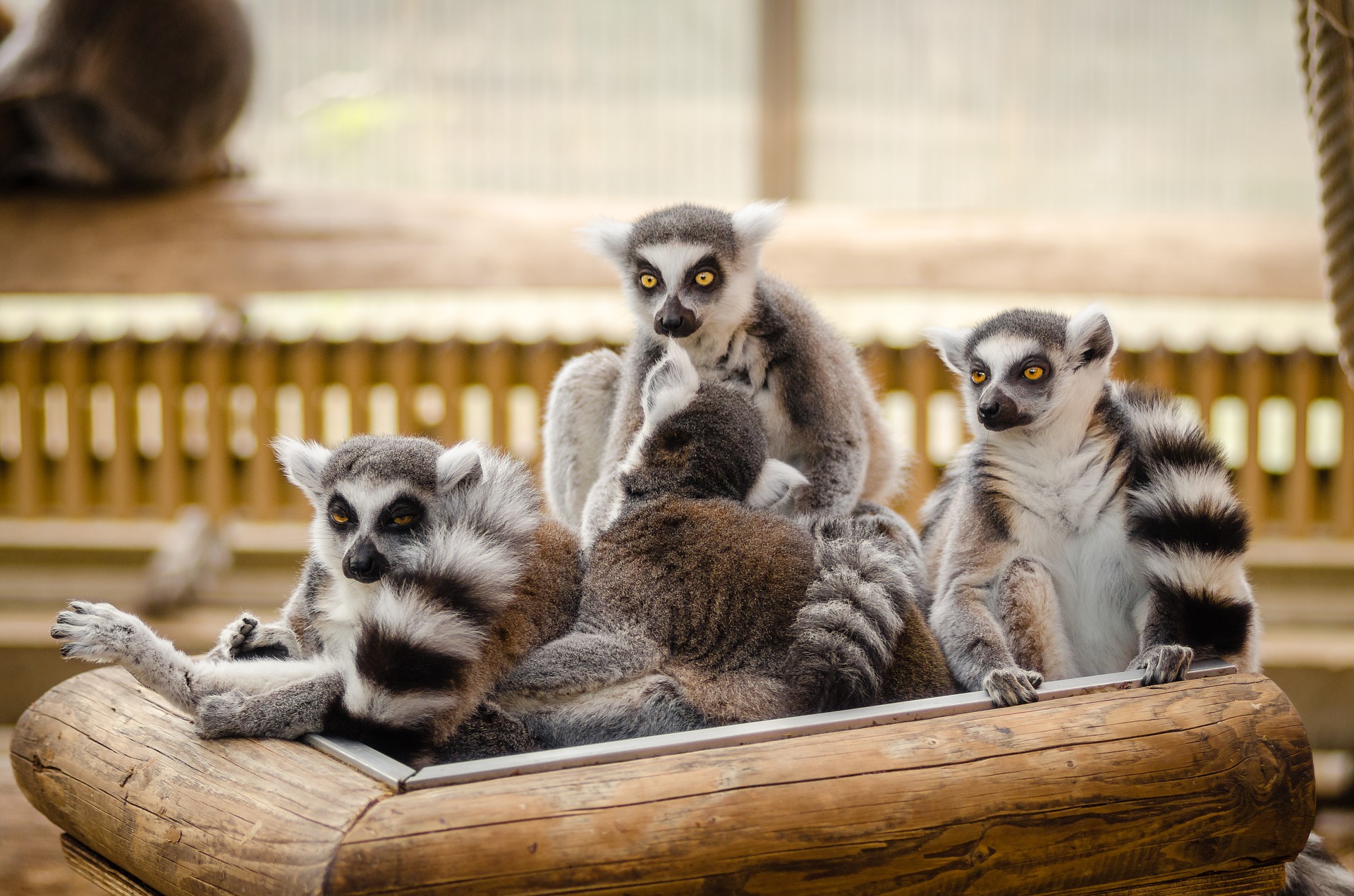
Madagascar is for wildlife lovers: lemurs, baobabs, rainforest and the limestone pinnacles of the Tsingy. Roads are slow, so plan fewer, longer stops.
Madagascar is a large island in the Indian Ocean, off the east coast of Africa. Its long isolation shows in its nature: over 90% of its wildlife and 80% of its plants live nowhere else. Look out for more than 100 species of lemurs, ancient baobabs and the spiny forests of the south. The windward east has rainforest, while the west and south have dry forest, thorn forest and desert scrub. Most visitors come for the wildlife, in national parks and private reserves.
The Malagasy people have Austronesian roots, with later arrivals from East Africa and Arab, Indian and Chinese immigrants, and the island has 18 ethnic groups; the Merina of the central highlands are the largest. Malagasy is spoken across the island, French is the second official language, and the country became independent from France on 26 June 1960.
Most roads are poor and slow, so domestic flights save a lot of time, and car rentals usually come with a driver. Canada asks you to exercise a high degree of caution because of crime, and the UK and Canada name roads and beaches where robberies happen: read the safety section before you plan a route.
- Tsingy de Bemaraha: A UNESCO-listed reserve of razor-sharp limestone pinnacles, forest and lemurs, north of Morondava.
- Avenue of the Baobabs: A grove of giant baobabs about 45 minutes north of Morondava, at its best at sunset.
- Andasibe-Mantadia National Park: A national park a few hours from the capital on a paved road, while other parks take days to reach.
- Rainforests of the Atsinanana: Six national parks along the east, together a UNESCO World Heritage Site.
- Nosy Be: An island with an international airport, diving and snorkelling.
- Wind sports near Antsiranana: Kitesurfing and windsurfing near Diego (Antsiranana), in the far north, with steady wind from April to November.
Places to visit
- City
- Island
- Park
- Historic site
Cities
- Antananarivo: The capital, called Tana by locals, and the main international gateway.
- Toamasina: Also called Tamatave, on the east coast, linked to the capital by the RN2; boats to Sainte Marie leave from this area.
- Mahajanga: A town on the west coast, at the end of the RN4 from the capital.
- Antsiranana: Also known as Diego, in the far north, with strong wind for kitesurfing from April to November.
- Morondava: The west coast base for the Avenue of the Baobabs and the Tsingy de Bemaraha.
- Toliara: Also called Tuléar, on the west coast at the end of the RN7 from the capital, with diving nearby.
- Taolagnaro: Also known as Fort Dauphin, on the south-east coast; the UK advises you to get there by air.
- Fianarantsoa: A town linked to the capital by Cotisse Transport services; the RN13 runs from here to Toliara.
Beyond the cities
- Tsingy de Bemaraha (park): A UNESCO World Heritage Site of limestone pinnacles, about 180 km north of Morondava; access is restricted.
- Avenue of the Baobabs (site): More than a dozen giant baobabs, some over 800 years old, near Morondava.
- Andasibe-Mantadia National Park (park): A national park a few hours from the capital by paved road.
- Ranomafana National Park (park): One of the six parks of the UNESCO-listed Rainforests of the Atsinanana.
- Andringitra National Park (park): Part of the UNESCO-listed Rainforests of the Atsinanana.
- Masoala National Park (park): Part of the UNESCO-listed Rainforests of the Atsinanana.
- Nosy Be (island): An island with an international airport and good diving; outside Nosy Be, dive equipment may be below standard.
- Nosy Tanikely (island): An island near Nosy Be with corals in very good condition.
- Sainte Marie (Nosy Boraha) (island): An island off the east coast, reached by ferry from the Toamasina area.
Regions
- Antananarivo Province
- Antsiranana Province
- Fianarantsoa Province
- Mahajanga Province
- Toamasina Province
- Toliara Province
Things to do
See
- Tsingy de Bemaraha Morondava: Walk among the limestone pinnacles of a 152,000-hectare UNESCO reserve, home to seven lemur species including the white Decken's sifaka. The areas open to visitors change from time to time.
- Sunset at the Avenue of the Baobabs Morondava: Giant Adansonia grandidieri trees, some over 30 metres tall, 45 minutes north of town.
- Rainforests of the Atsinanana: Six national parks along the east, among them Masoala, Ranomafana and Andringitra, listed together by UNESCO.
Do
- Wildlife at Andasibe-Mantadia Andasibe-Mantadia National Park: A national park a few hours from the capital on a paved road, while other parks take days of driving and trekking.
- Diving and snorkelling Nosy Be: The corals at Nosy Tanikely are in very good condition. Outside Nosy Be equipment may be below standard, and the nearest hyperbaric chamber is across the Mozambique Channel.
- Kitesurfing and windsurfing Antsiranana: Near Diego, in the far north, a wind of about 30 knots blows steadily from April to November.
Eat
- Rice and laoka at a hotely: The cheapest meal: a plate of rice with a side of chicken, beans or pork cost about 3,000 Ar in 2020.
Drink
- Three Horses Beer: Madagascar's own beer, sold at most roadside stands and bars in towns.
Shop
- Vanilla and spices: Cheaper than in Europe and of good quality. Keep the receipts: you can take out up to 2 kg of vanilla and 1 kg of pepper or cloves.
Itineraries
Antananarivo and the rainforest of Andasibe in 4 days (4 days)
- Antananarivo (2 nights): Arrival, rest and the capital.
- Andasibe-Mantadia National Park (2 nights): A few hours from the capital on a paved road, for wildlife walks.
Morondava, the baobabs and the Tsingy in 5 days (5 days)
- Morondava (3 nights): The Avenue of the Baobabs at sunset, 45 minutes north.
- Tsingy de Bemaraha (2 nights): About 180 km north of Morondava. The UK advises a recognised tour operator for travel in the west between Besalampy and Morombe.
Climate and best time to visit
| Jan | Feb | Mar | Apr | May | Jun | Jul | Aug | Sep | Oct | Nov | Dec | |
|---|---|---|---|---|---|---|---|---|---|---|---|---|
| Max °C | 26 | 26 | 26 | 25 | 24 | 21 | 21 | 21 | 24 | 26 | 27 | 27 |
| Min °C | 17 | 17 | 17 | 16 | 14 | 12 | 11 | 11 | 12 | 14 | 16 | 17 |
| Rain mm | 326 | 255 | 160 | 50 | 16 | 4 | 7 | 8 | 9 | 42 | 112 | 212 |
Madagascar has two seasons: hot and rainy from November to April, cooler and dry from May to October. In Antananarivo, in the central highlands, almost all the rain falls in the wet season: January is the wettest month with about 326 mm, while from June to September each month gets less than 10 mm. Average highs stay between about 20 °C in July and 27 °C in November and December.
The dry season, May to October, is sunny and pleasant, but the mornings are chilly in the highlands: in July the average minimum in the capital is 10.5 °C. The east coast is the wettest part of the island, and cyclones can hit from November to April, especially on the coast.
Holidays and events
- 1 January 2026 · New Year's Day
- 29 March 2026 · Martyrs' Day
- 6 April 2026 · Easter Monday
- 1 May 2026 · Labour Day
- 14 May 2026 · Ascension Day
- 25 May 2026 · Whit Monday
- 26 June 2026 · Independence Day
- 15 August 2026 · Assumption Day
- 1 November 2026 · All Saints' Day
- 25 December 2026 · Christmas Day
Getting there and around
| Main airports | TNR, NOS |
|---|---|
| International driving permit | Required |
Getting there
By air: international flights land at Antananarivo (TNR) or Nosy Be (NOS). Wikivoyage lists flights with Madagascar Airlines from Paris and Marseille, Air France via Paris, Airlink from Johannesburg, Air Austral via Réunion, Air Mauritius via Mauritius, Kenya Airways via Nairobi, Ethiopian via Addis Ababa, Turkish Airlines via Istanbul and Emirates from Dubai.
By sea: there is no regular passenger service. The ferry link between Toamasina, Réunion and Mauritius has been suspended since December 2014.
Getting around
Domestic flights are the quick way to cover the island: Madagascar Airlines serves 11 destinations. Avoid tight connections and confirm your flight the evening before. The UK advises flying to Fort Dauphin (Taolagnaro) rather than going by road.
Roads are mostly poor, and in the rainy season many secondary roads can only be used with a 4WD; bridges are often washed away. Most car rentals include a driver, which Canada also recommends. Canada warns that after an accident causing injury or death you must stay in Madagascar, at your own expense, until the court case is over. Do not drive after dark: armed robberies happen on main roads, especially at night, and the UK and Canada name stretches of the RN1, RN7, RN10, RN13, RN27, RN34 and RN35. UK drivers need an international driving permit as well as their licence; Canada says its drivers can use their own licence or an international permit for up to 3 months. Traffic drives on the right.
Public transport: the UK and Canada advise against the shared minibuses called taxi-brousse, because of accidents and robberies, and Canada also against the city buses (taxi-be). Use hotel or pre-booked taxis. Private operators listed by Wikivoyage include Cotisse Transport, with services to Mahajanga, Morondava, Fianarantsoa and Toamasina, and Besady Plus, whose buses leave on time and run from the capital to Nosy Be and Sainte Marie with the sea crossing included. Canada says rail services are very limited, slow, often overcrowded and unreliable. Armed robbers have boarded boats on the Tsiribihina River, and you should get local advice before taking a ferry to Sainte Marie or along the west coast.
Flying to Madagascar? PartnerCompare fares and find the cheapest datesSearch flightsWhere to stay
- Resorts and upscale hotels: Luxury resorts often quote prices per person; mosquito nets and private bathrooms are standard.
- Mid-range and budget hotels: Prices are usually per room; in cheaper places you may need your own mosquito net.
- Backpacker hostels: Found in a few places only.
Quality varies a lot across the country, from dormitory rooms to five-star resorts. Canada advises choosing accommodation with good security and locking doors and windows at night.
Eat and drink
Dishes to try
- Rice with laoka: Rice with a side dish such as chicken, beans or pork, the standard meal of a hotely, the cheapest kind of eatery.
- Homemade yoghurt: Sold by the glass alongside a hotely meal.
- Bananas and rice cakes: The everyday street food, found everywhere.
- Steak-frites: On restaurant menus in the larger towns.
Drinks
- Coffee: Good and usually made by the cup, served very sweet with condensed milk.
- Three Horses Beer (THB): The local beer.
- Bonbon Anglais: A bubblegum-flavoured soda, sometimes sold as limonade.
- Rum and crème de coco: Home-brewed in many flavours.
- Ranon'apango: Rice water, made with the water used to cook rice, so it has been boiled.
| Tipping | Wikivoyage suggests about 10% in restaurants and bars, rounding up taxi fares, and a daily tip for a driver or a park guide. |
|---|
Do not drink the tap water: drink boiled or bottled water and avoid ice. Bottled water is easy to find in towns, but plan ahead for rural areas. Supermarket chains such as Super U, Score, Leader Price and Supermaki are well stocked.
Entry requirements and visas
| Passport validity | At least 6 months after the date you arrive, with at least 2 blank pages |
|---|
| Passport | Entry | Max stay | Notes |
|---|---|---|---|
| United Kingdom | Visa free | 15 days | Pay a 10-euro administration fee on arrival and show an onward or return ticket. For longer stays, buy a 30- or 60-day tourist visa on arrival (cash in USD, EUR or MGA) or apply to the embassy in London; you can extend to 90 days in total. |
| Canada | Visa free | 15 days | A tourist visa is required for stays of more than 15 and up to 90 days; a 30- or 60-day visa is available on arrival at Antananarivo airport, paid in cash in USD, EUR or MGA. |
Other nationalities: check the official source below.
UK and Canadian citizens can visit for up to 15 days without a visa; the UK says you pay a 10-euro fee on arrival. For longer stays you can get a 30- or 60-day tourist visa at the airport, paid in cash, with a return ticket and a passport with two blank pages. Queues at the airport visa desk can be long. Overstaying can lead to detention or deportation.
You need a yellow fever certificate if you arrive from a country with risk of yellow fever, including airport transits of more than 12 hours there. Travellers who have been in a country affected by Ebola in the previous 21 days may be refused entry, and everyone fills in a health declaration. A child under 18 leaving Madagascar without one or both parents needs written consent from the absent parent.
Customs: you cannot bring in any food, fruit included. You can bring up to 400,000 Malagasy ariary (MGA) and must declare foreign cash of 7,500 euros or more. Rules depend on your passport and can change: check the official link or the embassy of Madagascar before you book.
Money and payments
| Currency | Malagasy Ariary (MGA) |
|---|---|
| Cards | Limited |
The currency is the Malagasy ariary (MGA), written Ar. Cards are accepted by many hotels, restaurants and shops in Antananarivo and Nosy Be, sometimes with a surcharge of up to 8%. ATMs in the larger towns accept Visa and, at some banks, Mastercard; the usual limit is 400,000 Ar per withdrawal, and machines are often out of service. Carry a reserve in US dollars or euros.
Some hotels quote prices in euros; agree the exchange rate before you pay that way. There is a 24-hour exchange office at Ivato airport. Keep small notes for everyday payments and avoid carrying large sums of cash, as Canada advises. Canada adds that some banks will not change ariary back into foreign currency, that you must declare foreign currency above 10,000 euros on arrival and that you may not take ariary out of the country; the UK gives a declaration threshold of 7,500 euros.
Health
| Required vaccines | Yellow fever, only if you arrive from a country with risk of yellow fever (age 9 months or older, including transits of more than 12 hours), Polio, in some circumstances (UK FCDO) |
|---|---|
| Recommended vaccines | Routine vaccines, including measles (MMR), Hepatitis A, Hepatitis B, Typhoid, for most travellers, Rabies, for some travellers: rabid dogs are common, Mpox, for travellers at risk of sexual exposure |
| Malaria | Widespread |
| Tap water | Not safe |
The CDC recommends malaria prevention medicine everywhere except in Antananarivo, where transmission is rare and only bite prevention is needed. Dengue, chikungunya and plague are also present, and schistosomiasis is a risk in fresh water. Rabies vaccine after a bite may only be available in larger towns. See a travel health professional at least a month before you go.
Tap water is unsafe: drink boiled or bottled water. Hospitals in Antananarivo handle only routine operations, and patients needing complex surgery are flown to Mauritius, South Africa or Réunion; outside the capital care is very limited, and private clinics expect cash on the spot. Get insurance that covers medical evacuation. For an ambulance, call 117 from a mobile or 17 from a landline.
This is general information, not medical advice: check with a travel health professional before you go.
Safety
- United States: Level 2: Exercise Increased Caution (2026-10-20)
- Canada: Exercise a high degree of caution (2026-10-20)
- United Kingdom: No advice against travel (2026-10-20)
The US rates Madagascar Level 2 and Canada asks you to exercise a high degree of caution because of the high crime rate and the potential for political instability; the UK does not advise against travel. Theft and robbery are common: in Antananarivo, Canada names the steps up to the Rova, Avenue de l'Indépendance and Analakely market among the places to watch your belongings. Do not walk around after dark, use hotel or pre-booked taxis, and keep phones and cash out of sight.
Beaches and parks: violent robberies have happened even by day on isolated beaches and in parks. The UK and Canada name Nosy Be, Ankify, Ambanja, the beaches around Toliara, Sainte Marie, Pic Saint Louis at Fort Dauphin and Isalo. Do not go alone, take local advice and hire only guides accredited by the Ministry of Tourism, who carry a badge.
Roads: armed robberies happen on main roads, especially at night. In the south, the UK advises a recognised tour operator in the area between Ihosy, Toliara and Fort Dauphin, and a flight to Fort Dauphin; in the west it says the same for the area between Besalampy and Morombe. People have posed as police: ask for ID. Demonstrations can turn violent, so stay away from them. Riptides are common, and there are sharks near Toamasina and Manakara. The cyclone season runs from November to April.
Customs and etiquette
Daily life, especially in the countryside, follows local taboos called fady, which change from region to region: they can forbid certain foods, colours of clothing or bathing in a river or lake. Ask your guide or tour operator, and respect them even when they seem strange. Before a longer stay in a village, check whether you should first meet the head of the local authority (Fokontany) and the village elder.
Address older people and officials as tompoko, the polite form for sir or madam. Always ask before taking photos, never photograph a tomb without permission, and do not photograph police or security staff, or military and government installations. Carry your passport, because police check ID and do not always accept copies.
Buying protected plants and animals, or products made from them such as rosewood, is illegal, and Canada says you need an export permit for gems and gold jewellery, wooden sculptures, rare fossils and vanilla. The UK says you can take out up to 2 kg of vanilla if you declare it and show receipts. Paying for sex is illegal, and laws on sex with minors are strictly enforced. Civilians may not wear camouflage or other military-style clothing, which can lead to detention and fines. Drug offences bring long prison sentences and heavy fines. Same-sex relations are legal from age 21, but public displays of affection can attract negative attention.
Language
| Official languages | Malagasy, French |
|---|---|
| English | Limited |
| Sir / madam (polite address) | Tompoko toom-pook |
|---|---|
| I have nothing | Tsy misy tsee-meesh |
| Go away! | Mandehana! man-day-han |
| Thief! | Mpangalatra! pun-gul-ah-tra |
| Rice water | Ranon'apango RAN-oo-na-PANG-oo |
What to pack
- Passport valid 6 months, with 2 blank pages: Both are entry requirements.
- Cash in euros or US dollars: Visas on arrival are paid in cash, and ATMs are often out of service.
- Yellow fever certificate, if you come from a risk country: Required on arrival.
- Insect repellent and a mosquito net: Malaria is present outside the capital, and cheaper rooms may have no net.
- Prescription medicines in their original containers: Some may not be available in Madagascar.
- International driving permit (UK drivers): Needed with your licence, and you cannot buy it outside the UK.
- Power bank: Electricity can be erratic, with rationing in some areas.
Quick reference
Country facts
| Capital | Antananarivo |
|---|---|
| Population | 32,740,678 (2025) |
| Area | 581,800 km² |
| Time zone | Indian/Antananarivo (UTC+3) |
| Calling code | +261 |
| Driving side | right |
Staying connected
| SIM and eSIM | Airtel, Orange and Telma sell prepaid SIM cards, also at the airport, where buying and activating one takes a few minutes. 4G is fast where there is coverage, but not everywhere. |
|---|---|
| Wi-Fi | Most hotels have Wi-Fi, and there are internet cafés in the main towns. |
Emergency numbers
| Emergency | 117 from a mobile, 17 from a landline |
|---|---|
| Fire | 118 from a mobile, 18 from a landline |
Frequently asked questions
Do I need a visa for Madagascar?
UK and Canadian citizens can stay up to 15 days without a visa (the UK says you pay a 10-euro fee on arrival). For longer stays you can buy a 30- or 60-day visa at the airport, in cash. Check the official link or the embassy before you book.
Do I need malaria tablets for Madagascar?
The CDC recommends malaria prevention medicine for all areas except Antananarivo. Ask a travel health professional which one suits you.
Can I drink the tap water in Madagascar?
No. Drink boiled or bottled water and avoid ice.
When is the best time to visit Madagascar?
The dry season, from May to October, is sunny and pleasant; November to April is hot and rainy, with cyclones possible on the coast.
Can I use my bank card in Madagascar?
In Antananarivo and Nosy Be many hotels, restaurants and shops take cards, sometimes with a surcharge. ATMs in the larger towns are often out of service, so carry a reserve of euros or dollars.
Is it safe to travel by road in Madagascar?
Roads are poor and armed robberies happen, especially at night. Do not drive after dark, avoid taxi-brousse minibuses and, on the routes named by the UK, use a recognised tour operator or fly.
More Travel Stories from Africa
 Morocco
 Cabo Verde +1
 Colombia +1
Sources This guide was last checked on · 17 sources
- Wikivoyage: Madagascar · Overview, Places to visit, Things to do, Itineraries, Climate and best time to visit, Getting there and around, Where to stay, Eat and drink, Money and payments, Customs and etiquette, Language, What to pack, Staying connected, Frequently asked questions
- Wikidata: Madagascar · Overview, Places to visit, Things to do, Money and payments, Country facts
- Government of Canada: Madagascar travel advice (updated 9 October 2026) · Overview, Getting there and around, Where to stay, Entry requirements and visas, Money and payments, Health, Safety, Customs and etiquette, What to pack, Frequently asked questions
- UK FCDO: Madagascar safety and security (updated 9 September 2026) · Overview, Climate and best time to visit, Getting there and around, Safety, Customs and etiquette, What to pack
- UK FCDO: Madagascar entry requirements (updated 9 September 2026) · Things to do, Entry requirements and visas, Money and payments, Health, Customs and etiquette, What to pack, Frequently asked questions
- UK FCDO: Madagascar regional risks (updated 9 September 2026) · Itineraries, Getting there and around, Safety
- WMO World Weather Information Service: Antananarivo · Climate and best time to visit
- Nager.Date: public holidays in Madagascar, 2026 · Holidays and events
- UK FCDO: Madagascar health (updated 9 September 2026) · Eat and drink, Health, What to pack, Frequently asked questions
- CDC Travelers' Health: Madagascar · Entry requirements and visas, Health, Frequently asked questions
- ISO 4217 (SIX), published 2026-09-17 · Money and payments
- UK FCDO: Madagascar getting help (updated 9 September 2026) · Health, Emergency numbers
- US Department of State: Madagascar travel advisory · Safety
- UK FCDO: Madagascar travel advice · Safety
- World Bank, SP.POP.TOTL · Country facts
- World Bank, AG.LND.TOTL.K2 · Country facts
- IANA Time Zone Database, zone.tab · Country facts
Suggest an update
Travel rules, prices and timetables change. If something in this guide is out of date, tell us: we check every suggestion against an official source before changing the page.