

- Local time
- 18:04
- Currency
- São Tomé & Príncipe Dobra (STN)
- Capital
- São Tomé
- Calling code
- +239
- Drive on the
- right
Overview
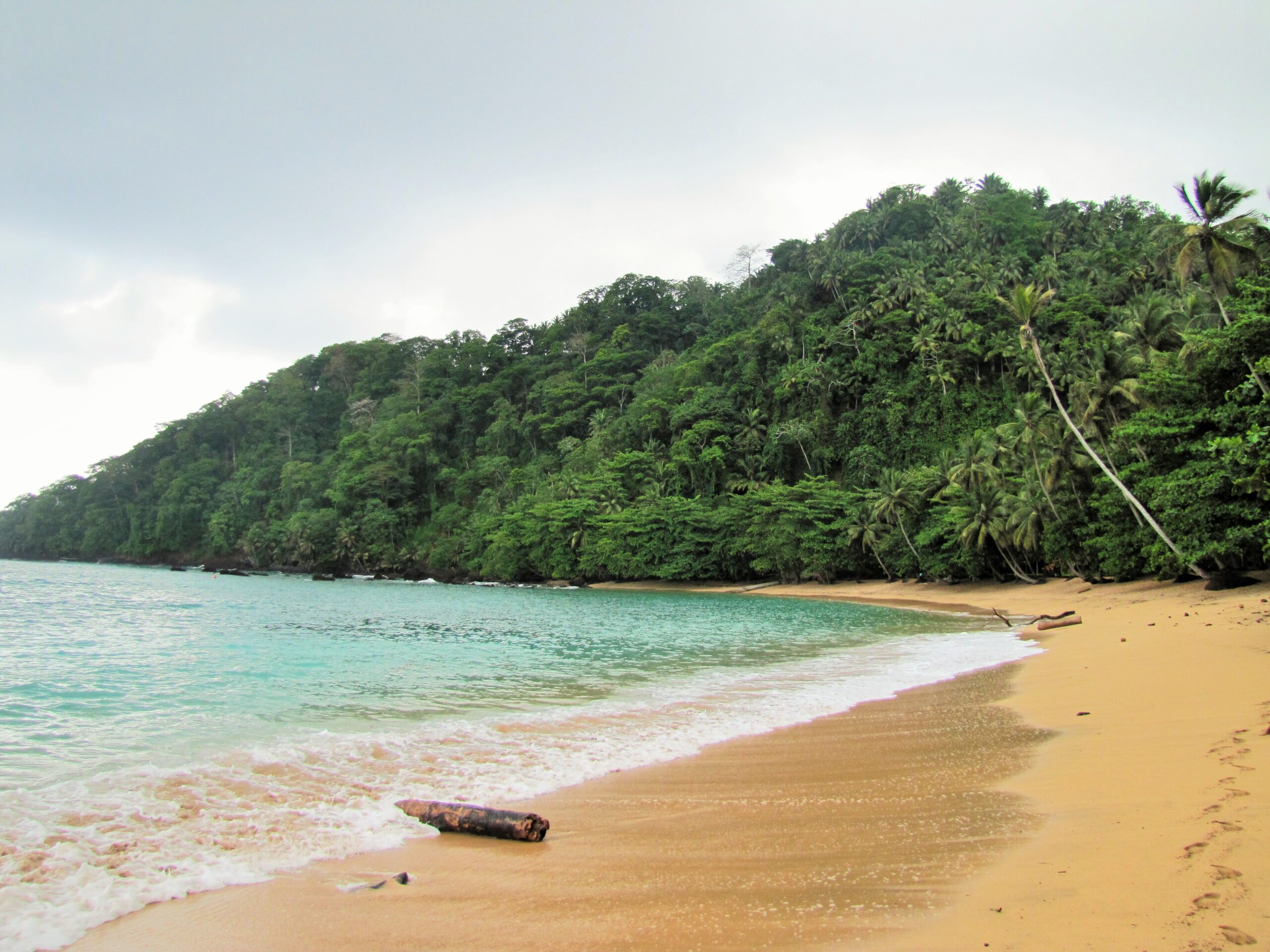
Two rainforest islands on the equator in the Gulf of Guinea, with old cocoa plantations, the peaks and birds of Obo, quiet beaches and few other visitors.
São Tomé and Príncipe is two main volcanic islands, about 259 km apart, in the Gulf of Guinea west of Gabon. It is the second-smallest country in Africa, trees cover almost 90% of the land, and the equator passes just south of São Tomé, through the islet of Ilhéu das Rolas. Few tourists come: Wikivoyage counts about 13,000 visitors in 2016.
The islands were uninhabited until the Portuguese settled them in the late 15th century and brought in enslaved Africans to grow sugar, then coffee and cocoa. A visit to those plantations, the roças, is the highlight of a trip: some are crumbling under the rainforest, others are B&Bs, and six of them became a UNESCO World Heritage Site in 2026. Independence came in 1975. Culture, music and dance mix African and Portuguese roots, and Portuguese is the official language.
Canada advises normal security precautions, the US rates the country Level 2 (exercise increased caution) and the UK has no advice against travel. Plan for two practical points: cash, since foreign cards are of little use, and limited medical care.
- The roças: Colonial cocoa and coffee plantations, six of them a UNESCO World Heritage Site, some now B&Bs.
- Obo National Park: Rainforest interior with guided birdwatching, waterfalls and the 2,024 m Pico de São Tomé.
- Boca do Inferno: A blowhole on the south coast where waves shoot up through the rock.
- Príncipe: The smaller island, with isolated beaches such as Banana Beach and the climb to Papagaio Peak.
- Fort São Sebastião: A fort built in 1575 in the capital, now the National Museum.
- Diving and snorkelling: Coral reefs offshore, with dolphins, green turtles and underwater caves.
Places to visit
- City
- Park
Cities
- São Tomé: The capital and largest city, with a 15th-century cathedral, the National Museum, colonial buildings and a busy market.
- Santo António: The main town of Príncipe, known for its colonial architecture and churches, with several small pousadas.
- Angolares: A village 42 km south-east of the capital, home of the Roça São João dos Angolares and its restaurant.
- Trindade: A town within easy reach of the capital, with the Me-Zochi rum factory behind the church.
Beyond the cities
- Obo National Park (park): The protected rainforest interior of São Tomé, with birds, orchids and waterfalls; on Príncipe it includes Papagaio Peak.
- Pico de São Tomé (mountain): The 2,024 m summit of São Tomé, climbed with a local guide.
- Boca do Inferno (site): A blowhole on the south side of São Tomé island.
- Monte Café (site): An easy-to-reach mountain roça with a coffee museum, part of the UNESCO site.
- Roça Sundy (site): A Príncipe plantation in the UNESCO site, with a plaque to Arthur Eddington's 1919 eclipse observation.
- Ilhéu das Rolas (island): An islet off the south of São Tomé, on the equator, with a resort.
- Bom Bom (island): An islet off Príncipe with a resort, linked by a 230 m wooden walkway.
- Banana Beach (coast): One of the isolated beaches of Príncipe.
Things to do
See
- Visit a roça: The old plantations range from ruins swallowed by the forest to restored B&Bs; Monte Café has a coffee museum.
- Boca do Inferno: Waves enter a sea cave and burst up through the blowhole.
- National Museum São Tomé: Inside Fort São Sebastião, built in 1575.
- Eddington's plaque Roça Sundy: Where Arthur Eddington photographed the 29 May 1919 eclipse, an early test of Einstein's theory of relativity.
Do
- Hike and birdwatch in Obo Obo National Park: With a local guide: over 135 bird species live on the islands, and the south of São Tomé has the widest variety.
- Climb Pico de São Tomé Pico de São Tomé: The island's 2,024 m summit, with a local guide; São Tomé has 109 species of orchids.
- Diving and snorkelling: Reefs with turtles, dolphins and caves. Canada notes that there is no decompression chamber on the islands, so choose a reputable operator.
Eat
- Claudio Corallo chocolate: Tours of the chocolate workshop on request, with tastings; the cocoa grows on his plantation on Príncipe.
Shop
- Local crafts and coffee São Tomé: Coffee, chocolate, spices and carvings at the Ossobó shop opposite the fort, run by a charity, plus baskets everywhere.
Itineraries
São Tomé and Príncipe in 8 days (8 days)
- São Tomé (3 nights): The capital, the National Museum and Monte Café, with a guided day in Obo.
- Angolares (1 night): The south-east coast and Boca do Inferno.
- Santo António (3 nights): Fly to Príncipe on a small plane; hire a driver or a boat for beaches, Roça Sundy and Papagaio Peak.
- São Tomé (1 night): Back for your flight home: international flights do not leave every day.
Holidays and events
- 1 January 2026 · New Year's Day
- 3 February 2026 · Martyrs' Day
- 1 May 2026 · Labour Day
- 12 July 2026 · Independence Day
- 6 September 2026 · Armed Forces Day
- 30 September 2026 · Agricultural Reform Day
- 21 December 2026 · São Tomé Day
- 25 December 2026 · Christmas Day
Getting around
| Main airports | TMS, PCP |
|---|---|
| International driving permit | Required |
On São Tomé there are no buses: taxis, often shared and leaving when full, and motorbike taxis (motoqueiros) are the only public transport. The UK and Canada describe them as often unsafe, and Canada advises avoiding motoqueiros, using marked taxis and agreeing the fare first. Many visitors rent a car or a scooter, which major hotels can arrange, with or without a driver. You must carry an international driving permit.
Roads are paved but full of potholes and unlit outside the capital, with animals and pedestrians on the road; fatal accidents are frequent. Avoid driving in rural areas after dark and fill up before heading somewhere remote. In the rainy season, landslides and floods can make roads impassable.
To Príncipe, most visitors fly from São Tomé on a small 19-seat propeller plane. Locals take an overnight cargo boat of about 10 hours, which is not considered safe; charter boats take about 3½ hours. Príncipe has fewer roads, many unpaved, so people hire a driver or a boat.
Flying to São Tomé and Príncipe? PartnerCompare fares and find the cheapest datesSearch flightsWhere to stay
- Hotels: Only a handful, in the capital.
- Roça guesthouses: Restored plantation houses that now take guests.
- Pousadas: Small B&Bs, including several in Santo António on Príncipe.
- Island resorts: On Ilhéu das Rolas in the south and on Bom Bom off Príncipe.
- Lodges: Small and remote; one near Neves has only five bungalows, so book well ahead.
The choice is small everywhere, so book ahead, especially for the roças and the small lodges.
Eat and drink
Dishes to try
- Fish: The staple, with flying fish in season, served with breadfruit and mashed cooked bananas.
- Búzios: Large land snails, eaten inland; sea snails are common on the coast.
- Tropical fruit: Papaya, mango, pineapple, avocado and bananas grow everywhere.
Drinks
- Creolla and Rosema: The local beers, found everywhere.
- Palm wine: Sold cheaply by roadside vendors inland.
- Local rum: Gravana, dark and sweet, and Me-Zochi, which also makes fruit liqueurs.
- Coffee: Good and cheap in any shop in the capital.
Cooking uses plenty of hot spices. Hotels in the capital serve European food at higher prices, and Portuguese vinho verde is a common choice with fish. Do not drink tap water: boil it or buy bottled.
Entry requirements and visas
| Passport validity | At least 6 months beyond the date you leave (Canada); the UK asks for a passport valid for your whole stay |
|---|
| Passport | Entry | Max stay | Notes |
|---|---|---|---|
| United Kingdom | Visa free | 15 days | Tourism for up to 15 days; a 20-euro entry fee is payable on arrival. |
| Canada | Visa free | 15 days | Visits of less than 15 days; for longer stays, get an eVisa before you arrive. |
| United States | Visa free | 15 days | Up to 15 days according to Wikivoyage. |
| EU / EEA | Visa free | 15 days | EU citizens, up to 15 days according to Wikivoyage. |
Other nationalities: check the official source below.
UK, Canadian, US and EU citizens can visit for up to 15 days without a visa. To stay longer, you need a visa before you travel; Canada points to the eVisa of the country's Migration and Border Service. The UK says you pay an entry fee of 20 euros on arrival, also payable in US dollars or local currency (UK advice updated 10 December 2025).
You need a yellow fever certificate if you arrive from a country with yellow fever risk; the CDC includes airport transits of more than 12 hours. Travellers arriving from countries with Ebola outbreaks may be refused entry. You cannot bring in or take out the local currency. Rules depend on your passport and can change: check with the embassy of São Tomé and Príncipe before you book.
Money and payments
| Currency | São Tomé & Príncipe Dobra (STN) |
|---|---|
| Cards | Rare |
The currency is the new dobra (STN), pegged to the euro. Bring enough cash in euros or US dollars: credit cards work only in major international hotels, and ATMs do not take foreign cards, though you may be able to withdraw cash with a Visa card at the main bank in the capital. Euros, and sometimes dollars, are accepted in larger restaurants and shops.
Banks change euros, US dollars and Central African CFA francs. You may not import or export dobras; foreign currency must be declared on arrival, and you can take out only as much as you brought in. Travellers' cheques are no longer accepted.
Health
| Required vaccines | Yellow fever, only if you arrive from a country with yellow fever risk (from age 1, including transits of over 12 hours, according to the CDC) |
|---|---|
| Recommended vaccines | Routine vaccines, including measles (MMR), Hepatitis A, Hepatitis B, Typhoid, for most travellers, Rabies, for some travellers: rabid dogs are common |
| Malaria | Widespread |
| Tap water | Not safe |
The CDC lists malaria throughout the country and recommends prescription medicine to prevent it, as does Canada. Wikivoyage notes that an eradication programme since 2005 has sharply cut cases in populated areas, but follow the official advice and avoid mosquito bites, which also spread dengue. Avoid swimming in fresh water because of schistosomiasis. Talk to a travel health professional at least a month before you go (Canada suggests 6 weeks).
Medical care is limited and usually needs immediate cash payment. Many conditions need evacuation to Europe, South Africa, Ghana or Gabon, and with no daily international flights this can take time. Get insurance that covers evacuation and bring enough of your medicines in their original containers. For an ambulance, call 222 22 22.
This is general information, not medical advice: check with a travel health professional before you go.
Safety
- United States: Level 2: Exercise Increased Caution (2026-10-20)
- Canada: Take normal security precautions (2026-10-20)
- United Kingdom: No advice against travel (2026-10-20)
Canada advises normal security precautions and the UK has no advice against travel. Crime is generally low, but pickpocketing and bag snatching happen at markets, beaches and busy streets near hotels, and burglaries and armed robberies occur. Do not take valuables to the beach, keep documents in the hotel safe, and avoid deserted beaches and dark areas at night. Wikivoyage reports roadblocks near Santana and scams aimed at tourists in the capital.
Beaches are unsupervised and currents can be strong: ask locals and tour operators where it is safe to swim. Road traffic is hazardous. In the forest, watch out for the black cobra in the south and east of São Tomé; it usually slips away, and antivenom is available in local hospitals. Power cuts are frequent, the phone network is unreliable, and occasional demonstrations can turn violent, so avoid them. The rainy season, from about September or October to May, can bring floods.
Customs and etiquette
Culture mixes African and Portuguese influences, from the ússua and socopé rhythms of São Tomé and the dêxa of Príncipe to the tchiloli, a drama told in music and dance. Football is the most popular sport.
Same-sex relations are legal but not widely accepted, so avoid public displays of affection. Drug penalties are severe: pack your own luggage and never carry anything for others. Photographing airports, military sites and government buildings is prohibited.
Language
| Official languages | Portuguese |
|---|---|
| English | Limited |
| Plantation | Roça |
|---|---|
| Small guesthouse | Pousada |
| Motorbike taxi | Motoqueiro |
| Large land snails | Búzios |
What to pack
- Enough euros or US dollars in cash: Foreign cards do not work at ATMs and are accepted only in big hotels.
- 20 euros for the entry fee: Payable on arrival, according to the UK.
- International driving permit: Required if you plan to drive.
- Insect repellent and antimalarials: The CDC recommends malaria prevention.
- Medicines in their original containers: Many medicines are not available locally.
- Phone charger and an emergency kit: Canada advises them for remote areas, where services are scarce; power cuts are frequent.
Quick reference
Country facts
| Capital | São Tomé |
|---|---|
| Population | 240,254 (2025) |
| Area | 960 km² |
| Time zone | Africa/Sao_Tome (UTC+0) |
| Calling code | +239 |
| Driving side | right |
Emergency numbers
| Police | 113 or 222 |
|---|---|
| Ambulance | 222 |
| Fire | 112 |
Frequently asked questions
Do I need a visa for São Tomé and Príncipe?
Not for up to 15 days with a UK, Canadian, US or EU passport. The UK says there is a 20-euro entry fee on arrival. Check with the embassy before you book.
Can I use my bank card in São Tomé?
Rarely. ATMs do not take foreign cards and only major hotels accept cards, so bring enough euros or US dollars in cash.
Is there malaria in São Tomé and Príncipe?
The CDC lists malaria throughout the country and recommends prescription medicine to prevent it. Ask a travel health professional before you go.
How do I get to Príncipe?
Most visitors take the short flight from São Tomé on a small plane. Charter boats take about 3½ hours; the overnight cargo boat is not considered safe.
Can I drink the tap water?
No. Boil it or drink bottled water.
Is it safe to swim?
Beaches are unsupervised and currents can be strong. Ask locals or your tour operator where it is safe.
More Travel Stories from Africa
 Kenya
Sources This guide was last checked on · 15 sources
- Wikivoyage: São Tomé and Príncipe · Overview, Places to visit, Things to do, Itineraries, Getting around, Where to stay, Eat and drink, Entry requirements and visas, Money and payments, Health, Safety, Customs and etiquette, Language, What to pack, Frequently asked questions
- Wikidata: São Tomé and Príncipe · Overview, Places to visit, Money and payments, Country facts
- Government of Canada: São Tomé and Príncipe travel advice (updated 26 May 2026) · Overview, Things to do, Getting around, Entry requirements and visas, Money and payments, Health, Safety, Customs and etiquette, What to pack, Frequently asked questions
- US Department of State: São Tomé and Príncipe travel advisory · Overview, Safety
- Nager.Date: public holidays in São Tomé and Príncipe, 2026 · Holidays and events
- UK FCDO: São Tomé and Príncipe safety and security · Getting around, Money and payments, Safety, Customs and etiquette
- UK FCDO: São Tomé and Príncipe entry requirements (updated 10 December 2025) · Entry requirements and visas, What to pack, Frequently asked questions
- ISO 4217 (SIX), published 2026-09-17 · Money and payments
- CDC Travelers' Health: São Tomé and Príncipe · Health, Frequently asked questions
- UK FCDO: São Tomé and Príncipe health · Health, What to pack
- UK FCDO: São Tomé and Príncipe travel advice · Safety
- World Bank, SP.POP.TOTL · Country facts
- World Bank, AG.LND.TOTL.K2 · Country facts
- IANA Time Zone Database, zone.tab · Country facts
- UK FCDO: São Tomé and Príncipe getting help · Emergency numbers
Suggest an update
Travel rules, prices and timetables change. If something in this guide is out of date, tell us: we check every suggestion against an official source before changing the page.