

- Local time
- 19:40 (capital)
- Currency
- US Dollar (USD)
- Capital
- Washington, D.C.
- Calling code
- +1
- Drive on the
- right
Overview
From New York and Washington to the Grand Canyon, Yellowstone and the beaches of Florida and Hawaii, the United States suits city breaks, road trips and national parks.
The United States covers a continent and many islands. Most people live along the Atlantic, Pacific and Gulf coasts or by the Great Lakes, and between them lie the Appalachians, the farmland and prairie of the Great Plains, the Rockies, the deserts of the Southwest and the Sierra Nevada and Cascades in the west. Alaska and Hawaii sit apart from the 48 contiguous states, the 'Lower 48'. Yellowstone was the first national park in the world, and more than 60 others protect canyons, forests, glaciers and wildlife.
With over 340 million people (2024), the country is a mix of cultures and strong regional identities: the South feels very different from New England. Distances are huge, so plan time and money for travel between regions: New York City and San Francisco are farther apart than Lisbon and Moscow. Expect miles, gallons and Fahrenheit rather than metric units, and four time zones in the Lower 48 plus two more for Alaska and Hawaii.
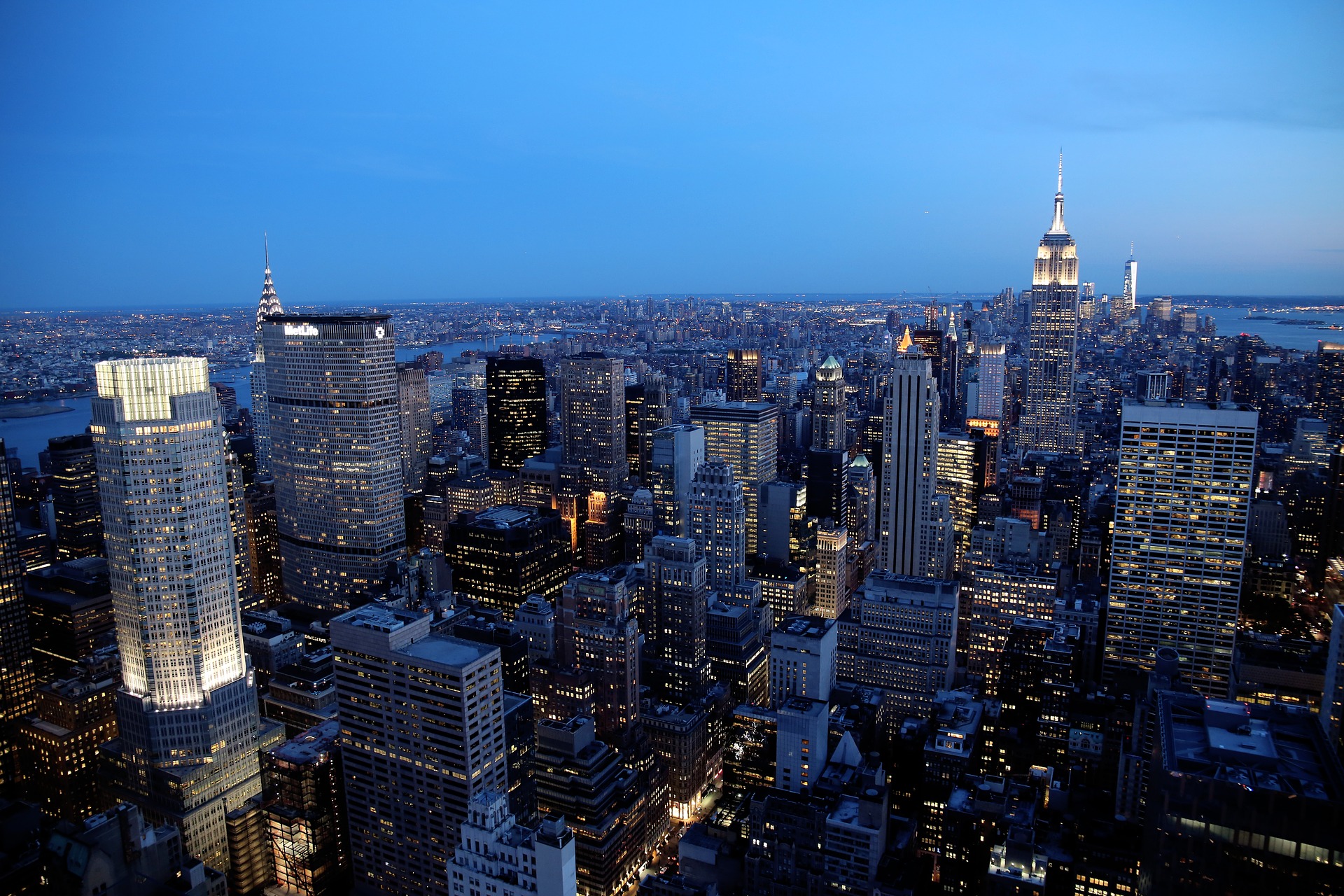
- New York City: The most populous city, with the Manhattan skyline, the Statue of Liberty, Broadway and big museums.
- Washington, D.C.: The capital, with the free Smithsonian museums on the National Mall and the Lincoln Memorial.
- Grand Canyon: One of the longest and most visited canyons in the world.
- Yellowstone National Park: The first national park in the US, home of the Old Faithful geyser.
- San Francisco: The city by the bay, with the Golden Gate Bridge and its fog.
- New Orleans: The birthplace of jazz, with the French Quarter, Creole and Cajun food and Mardi Gras.
Places to visit
- City
- Park
- Historic site
Cities
- New York City: The most populous city in the country, known for its food, arts, architecture and shopping.
- Washington, D.C.: The capital, full of major museums and monuments.
- Boston: Known for its colonial history, its universities and its love of sport.
- Chicago: The heart of the Midwest and a transport hub for the whole country, where the skyscraper was invented.
- Los Angeles: Home of the film industry, with mild weather, beaches and mountains nearby.
- San Francisco: The city by the bay, with the Golden Gate Bridge, lively neighbourhoods and fog.
- Seattle: Museums, seafood, coffee shops and the Space Needle in the Pacific Northwest.
- Miami: A sunny city with a strong Latin and Caribbean culture.
- New Orleans: 'The Big Easy', birthplace of jazz, with the French Quarter and Mardi Gras.
Beyond the cities
- Grand Canyon (park): One of the longest and most visited canyons in the world.
- Yellowstone National Park (park): The first national park in the US, home of the Old Faithful geyser.
- Yosemite National Park (park): El Capitan, Half Dome and giant sequoia trees in the Sierra Nevada.
- Great Smoky Mountains National Park (park): Forested mountains and wildlife in the southern Appalachians.
- Denali National Park (park): A remote park around Denali, the highest peak in North America.
- Mesa Verde National Park (park): Well-preserved cliff dwellings of the Ancestral Puebloans.
- Mount Rushmore National Memorial (site): Four former presidents carved into a cliff, far from any big city.
- Niagara Falls (site): Huge waterfalls on the border with Canada; the US side takes you close to the water.
- Walt Disney World (site): The resort of theme parks in the Orlando area of Florida.
Regions
- New England: Part of the 13 original colonies, with many sites from early American history, seafood and snowy winters.
- Mid-Atlantic: Also part of the 13 original colonies, with many sites from early American history.
- South: Humid and subtropical, home of barbecue, fried chicken, country music and the blues.
- Florida: Warm, sunny beaches, Miami's Latin culture and the theme parks of Orlando.
- Midwest: The heartland around Chicago and the Great Lakes, with cold, snowy winters.
- Texas: Steak, Tex-Mex, barbecue and rodeo, on the Gulf of Mexico.
- Great Plains: Long stretches of flat farmland and prairie in the centre of the country.
- Rocky Mountains: High, cold and snowy mountains with national parks for hiking, camping and skiing.
- Southwest: Hot deserts, canyonlands, cliff dwellings and a strong Spanish and Mexican heritage.
- California: A Mediterranean coast, the Sierra Nevada with Yosemite and Lake Tahoe, and most of the country's wine.
- Pacific Northwest: Volcanoes, rugged coastlines and seafood; cool and damp most of the year, dry in summer.
- Alaska: Glaciers and Arctic tundra; much of the backcountry is reached only by boat or small plane.
- Hawaii: Tropical islands with beaches and active volcanoes in the Pacific.
Things to do
See
- The Smithsonian museums Washington, D.C.: Almost twenty museums, most of them on the National Mall, all free to enter.
- The national parks Yellowstone, Yosemite, Grand Canyon: Most visitors drive the park roads; you can also hike and camp. Consider the annual National Parks and Federal Recreational Lands Pass if you visit several.
Do
- A road trip Route 66, Chicago to Los Angeles: Many natural sights, such as Monument Valley, are almost impossible to reach without a car; most rental companies allow one-way hires.
- A baseball game: The season runs from April to September, with playoffs in October; watching a game is a good way to meet locals.
- Theme parks Orlando and Los Angeles: Disney and Universal run parks in both areas.
Eat
- Barbecue The South and Texas: Ribs, brisket or pork shoulder smoked slowly over wood for hours, with regional sauces.
Drink
- California wine Napa Valley: California makes about 90% of the country's wine; Oregon's Willamette Valley and Washington state are less known.
After dark
- A Broadway musical New York City: Many of the world's best-known musicals have run on Broadway; the Metropolitan Opera is also in the city.
- Country music in Nashville Nashville: 'Music City' and the Grand Ole Opry, the best-known country music venue.
- Jazz and Mardi Gras New Orleans: Live jazz in the city where it was born, and the Mardi Gras celebration on the Tuesday before Ash Wednesday.
Itineraries
Boston, New York and Washington by train in 10 days (10 days)
- Boston (3 nights): Colonial history and the universities.
- New York City (4 nights): Amtrak's Northeast Corridor links the three cities; see a show on Broadway.
- Washington, D.C. (3 nights): The free Smithsonian museums, the Washington Monument and the Lincoln Memorial.
California and the Grand Canyon by car in 12 days (12 days)
- San Francisco (3 nights): The Golden Gate Bridge; one of the few cities where public transport beats driving.
- Yosemite National Park (2 nights): El Capitan, Half Dome and the giant sequoias.
- Los Angeles (4 nights): The film industry, the Hollywood Sign and the beaches.
- Grand Canyon (3 nights): Many natural sights are hard to reach without a car; most visitors drive the park roads.
Miami, Orlando and New Orleans in 10 days (10 days)
- Miami (3 nights): Latin and Caribbean culture, and Cuban food.
- Walt Disney World (3 nights): Disney and Universal parks in the Orlando area.
- New Orleans (4 nights): The French Quarter, jazz clubs, and Creole and Cajun cooking.
Climate and best time to visit
| Jan | Feb | Mar | Apr | May | Jun | Jul | Aug | Sep | Oct | Nov | Dec | |
|---|---|---|---|---|---|---|---|---|---|---|---|---|
| Max °C | 6 | 8 | 13 | 19 | 24 | 29 | 31 | 30 | 26 | 20 | 14 | 8 |
| Min °C | -5 | -3 | 1 | 6 | 11 | 16 | 19 | 18 | 14 | 7 | 2 | -3 |
| Rain mm | 68 | 70 | 86 | 88 | 116 | 101 | 93 | 90 | 100 | 83 | 87 | 75 |
The climate depends completely on where you go, from Arctic tundra in Alaska to tropical weather in Hawaii and South Florida. In Washington, D.C., the reference city here, the average maximum is about 6 °C in January and 31 °C in July, and rain falls in every month. April, May, September and October are the mild months in the capital, with average maximums between about 19 °C and 26 °C, and they avoid both the cold winters and the hot, humid summers of the north-east.
Elsewhere, the deserts of the Southwest average just over 41 °C in summer, while the Rockies are cold and snowy and can see snow almost all year. The coastal Pacific Northwest is cool and damp most of the year, with dry summers from July to September. The Atlantic hurricane season normally runs from June to November and the Pacific season from May to November; tornadoes hit the Great Plains and the Midwest from late spring to early autumn, and wildfires are a danger in dry areas.
Holidays and events
- 1 January 2026 · New Year's Day
- 19 January 2026 · Martin Luther King, Jr. Day
- 16 February 2026 · Presidents Day
- 25 May 2026 · Memorial Day
- 19 June 2026 · Juneteenth National Independence Day
- 3 July 2026 · Independence Day (observed, as 4 July falls on a Saturday)
- 7 September 2026 · Labour Day
- 12 October 2026 · Columbus Day
- 11 November 2026 · Veterans Day
- 26 November 2026 · Thanksgiving Day
- 25 December 2026 · Christmas Day
Getting around
| Main airports | JFK, EWR, ATL, LAX, ORD, SFO, SEA, MIA, IAH |
|---|
Flying is the usual way to cover long distances: coast to coast takes about 6 hours westbound and 5 eastbound. Domestic fares are often high, especially to cities that are not an airline hub. Trains are scarce outside a few corridors; the busiest is the Northeast Corridor from Boston to Washington via New York, Philadelphia and Baltimore, and Amtrak sells a 30-day USA Rail Pass. Long-distance trains around holidays can sell out weeks ahead. Buses (Greyhound, Megabus and smaller companies) are cheap and generally safe, though some city bus stations are in rough areas.
Outside New York City, Chicago, Boston, San Francisco and Washington, travelling without a car is difficult. You drive on the right, and unless a sign says otherwise you may turn right on a red light after stopping. Watch for stopped school buses with red lights: in some states traffic in both directions must stop, and expect arrest for drunk driving. Visitors aged 18 or over can usually drive on their own licence for up to a year, depending on the state; a licence not in English needs an International Driving Permit or a certified translation. UK drivers can use a photocard licence but may also need a 1949 IDP, depending on the state, and can only buy it in the UK. Hire companies may ask for a year of driving experience, a higher minimum age or an IDP. Petrol stations that do not display their prices usually charge much more.
Flying to United States? PartnerCompare fares and find the cheapest datesSearch flightsWhere to stay
- Motels: The most common lodging along the Interstates and in rural areas; simple, and usually no booking needed.
- Hotels: In most cities, from business hotels to large luxury hotels; suburban hotels are often much cheaper than downtown.
- Extended-stay hotels: Suites with kitchens, close to serviced apartments.
- Bed and breakfasts: In converted houses, mostly in rural areas, with breakfast included; most are unmarked.
- Hostels: Few and mainly in tourist areas and big cities; do not count on one in a mid-sized city.
- Campgrounds: State and national park campgrounds are of high quality; RV sites usually need booking.
| Tourist tax | Some cities, such as New York City, add a hotel tax on top of sales tax. |
|---|
Book ahead in the big cities, where prices change a lot with the season and with conventions. At check-in you need photo ID and a credit or debit card in the same name, which the hotel uses for a hold against damage, even if you prepaid; the hold can take days to clear. Check-in is usually from 16:00 and check-out before 11:00. Some hotels do not accept guests under 21 without an older adult. If you are driving between cities, a suburban hotel with free parking usually costs less than a downtown hotel with high parking fees. Watch the extra fees on Airbnb and Vrbo.
Eat and drink
Dishes to try
- Barbecue: Pork or beef ribs, brisket or pork shoulder smoked over wood, best in the South and Texas.
- Hamburgers and hot dogs: The classics of American fast food, on every main road.
- Tex-Mex: The Texan take on northern Mexican food; California has its own Cal-Mex.
- Creole and Cajun cooking: The cuisines of Louisiana and New Orleans.
- Seafood: A speciality of New England and the Pacific Northwest.
- Pizza: In many regional styles of its own, quite unlike pizza in Italy.
- Bagels and pastrami: Jewish deli food, now eaten all over the country.
Drinks
- Craft beer: Microbreweries and brew pubs make beer in many styles.
- Wine: Mostly from California, with Napa Valley the best-known area.
- Bourbon: A whiskey made mainly from corn.
- Coffee: Coffee in breakfast restaurants is lighter than many visitors expect; Seattle and Portland are known for independent coffee shops.
| Tipping | Expected: 18 to 25% in full-service restaurants (about 20% in costly cities such as New York and San Francisco), worked out on the bill before tax; $1 a drink or 15 to 20% at bars; 10 to 20% for taxis. No tip at fast-food counters. Check the bill first, as some restaurants add a service charge. |
|---|
Portions are big, and taking leftovers home in a 'to-go box' is normal. Sales tax is usually added to the bill on top of menu prices. Tap water is served free, often with a lot of ice, and brewed coffee and fountain sodas often come with free refills. Many fast-food and breakfast places do not serve alcohol.
The drinking age is 21: carry photo ID such as your passport, since some bars do not accept a foreign driving licence. Sales usually stop at 2:00, some rural counties are 'dry', and drinking in the street or carrying an open bottle in public is illegal in most places. Vegetarians do well in big cities and college towns, less so in small towns, where vegetable dishes may be cooked with meat.
Entry requirements and visas
| Passport validity | Valid for the length of your stay |
|---|
| Passport | Entry | Max stay | Notes |
|---|---|---|---|
| United Kingdom | Eta | 90 days | ESTA under the Visa Waiver Program, for tourism or business; otherwise a visa. |
| Canada | Visa free | Usually up to 6 months without a visa; declare how long you plan to stay. | |
| Australia | Eta | 90 days | ESTA under the Visa Waiver Program, according to Wikivoyage. |
| EU / EEA | Eta | 90 days | Most EU and EEA countries are in the Visa Waiver Program, according to Wikivoyage; check that yours is, or you need a visa. |
Other nationalities: check the official source below.
Citizens of countries in the Visa Waiver Program, including the UK and Australia, need an approved ESTA (Electronic System for Travel Authorization) before they travel, by air, sea or land, for stays of up to 90 days for tourism or business. Apply online or in the ESTA Mobile app at least 72 hours before you leave; Wikivoyage suggests applying earlier, as some applications take up to 10 days. An ESTA covers several trips over two years, unless your passport expires first, and your passport must be biometric. The 90 days cannot be extended, and a trip to Canada or Mexico does not restart them. Canadians usually visit for up to 6 months without a visa.
You cannot normally use an ESTA if you have been arrested, have a criminal record, have been refused entry or have overstayed before, or if you were in Iran, Iraq, Libya, North Korea, Somalia, Sudan, Syria or Yemen on or after March 2011, or in Cuba on or after 12 January 2021: apply for a visa well in advance, as interview slots are limited. Past use of cannabis can also lead to refusal, even where it is legal. US authorities enforce entry rules strictly; an ESTA or visa does not guarantee entry, and overstaying can mean detention and future bans.
At the border officers take your fingerprints and photo and may search your phone and laptop. Children aged 17 and under travelling alone, with one parent or with another adult should carry a consent letter, preferably in English and notarised. Declare all food and plants, and cash of $10,000 or more. FCDO advice updated in August 2026 reports temporary entry restrictions for travellers recently in the Democratic Republic of the Congo, Uganda or South Sudan. Rules depend on your passport and can change: check the official link before you book.
Money and payments
| Currency | US Dollar (USD) |
|---|---|
| Cards | Widespread |
The currency is the US dollar (USD, $), divided into 100 cents. Foreign currencies are almost never accepted. Visa and Mastercard are taken almost everywhere, American Express and Discover less widely, and contactless payment with Apple Pay or Google Pay is common. Still carry some cash, including $1 and $5 bills for tips: some small businesses take only cash, while others take only cards. Shops may refuse $50 and $100 bills for small purchases.
Prices are shown without sales tax, which is added at the till: usually 5 to 10%, set by state, county and city. Alaska, Delaware, Montana, New Hampshire and Oregon have no state sales tax. ATMs usually give $20 bills and charge cards from other banks a fee; use machines in banks or busy, well-lit places, and cover the keypad. Exchange desks at airports and in tourist areas give poor rates, so it is often better to buy dollars before you travel. Many petrol pumps ask for a US ZIP code, so with a foreign card you pay inside.
Health
| Recommended vaccines | Routine vaccines, including measles (MMR), Hepatitis B, Seasonal flu, Rabies, for some travellers, such as those working with wildlife |
|---|---|
| Malaria | None |
| Tap water | Safe |
No vaccines are required to enter the United States, and there is no yellow fever risk. Canada recommends routine vaccines, hepatitis B and the flu vaccine; check with a travel health professional before you go. Mosquitoes can carry Zika and West Nile virus, and dengue outbreaks have been reported in Florida, mostly in Hillsborough County around Tampa. Ticks spread Lyme disease in woods and fields, mainly in the Northeast, the Mid-Atlantic and the Great Lakes states, so use a repellent that works against ticks. Rabies is present in wild animals, including bats: see a doctor after any bite or scratch. Altitude sickness is a risk in parts of the country.
Medical care is very expensive. Check that your travel insurance covers the US, since some 'worldwide' policies do not; some hospitals ask for a deposit. Ambulances are not free and send a bill later. For problems that are not life-threatening, use an urgent care or walk-in clinic rather than a hospital emergency room. UK prescriptions are not valid in the US. Tap water is generally safe to drink, though quality varies locally. In an emergency, dial 911.
This is general information, not medical advice: check with a travel health professional before you go.
Safety
- Canada: Take normal security precautions (2026-10-20)
- United Kingdom: No advice against travel (2026-10-20)
Pickpocketing and bag snatching happen in city centres and tourist areas. Never leave bags, valuables or passports in a parked car, especially a rental, even in the boot. On highways near airports and tourist sites, some criminals signal drivers to stop for a fake problem with the car, or throw things at the windscreen: do not pull over, but put on your hazard lights and drive slowly to a petrol station, police station or other busy place. Violent crime and gun crime rarely affect tourists; avoid quiet areas alone at night and check unfamiliar neighbourhoods before you go. Card skimming happens, so use ATMs in banks or well-lit public places.
Canada advises extreme vigilance when crossing the border with Mexico by car: use official crossings and avoid driving at night. Protests are common and can turn violent, so keep away. The UK and Canada both warn of a threat of terrorism in crowded places, transport hubs and tourist sites. If police stop your car, pull over safely, keep your hands on the wheel and stay inside unless told to get out. Natural hazards include hurricanes, earthquakes (higher risk in Alaska, California, Hawaii, Oregon, Washington and the Mississippi River Valley), tornadoes, wildfires, flash floods and snowstorms: follow local evacuation orders. When hiking, check the weather, carry a map and leave your plans with someone.
Customs and etiquette
Americans greet with a firm handshake, or a fist bump or hug among friends; kissing on the cheek is rare. After an introduction people quickly move to first names, and 'sir' or 'ma'am' is polite with strangers. Being five minutes late is fine, but call or text if you will be later. Tipping is part of the culture (see Eat and drink). Dress is casual, a little more formal on the East Coast and in the South; nude bathing is illegal outside designated places, and going topless is illegal in some states.
Laws differ from state to state, and you are subject to both state and federal law. Always carry your passport. You must be 21 to buy alcohol or tobacco, and smoking indoors is banned almost everywhere except casinos. Cannabis is illegal under federal law: never take it across state lines, into national parks or onto planes. Race, religion, guns and politics are sensitive topics with people you do not know well, and jokes about race are likely to offend. Be respectful on Native American reservations, where laws and customs can differ, and do not cut across private land: trespassing is a crime.
Language
| English | Widespread |
|---|
What to pack
- Passport: Carry it at all times, along with proof of your permission to be in the US.
- A credit card in your name: Hotels and rental companies hold an amount on it, and many do not accept prepaid cards.
- Plug adapter: Sockets are type A and B at 120 V and 60 Hz; check that your devices accept 120 V.
- Small bills: $1 and $5 bills for tips.
- Insect and tick repellent: Against mosquitoes and the ticks that carry Lyme disease.
- Travel insurance that covers the US: Medical care is very expensive, and some worldwide policies exclude the US.
- TSA-approved luggage lock: Security staff may break other locks to inspect checked bags.
- A clear one-quart bag: Hand-luggage liquids must be in containers of 100 ml or less, all in one bag.
Quick reference
Country facts
| Capital | Washington, D.C. |
|---|---|
| Population | 341,784,857 (2025) |
| Area | 9,147,420 km² |
| Time zone | America/New_York (UTC-4), America/Detroit (UTC-4), America/Kentucky/Louisville (UTC-4), America/Kentucky/Monticello (UTC-4), America/Indiana/Indianapolis (UTC-4), America/Indiana/Vincennes (UTC-4), America/Indiana/Winamac (UTC-4), America/Indiana/Marengo (UTC-4), America/Indiana/Petersburg (UTC-4), America/Indiana/Vevay (UTC-4), America/Chicago (UTC-5), America/Indiana/Tell_City (UTC-5), America/Indiana/Knox (UTC-5), America/Menominee (UTC-5), America/North_Dakota/Center (UTC-5), America/North_Dakota/New_Salem (UTC-5), America/North_Dakota/Beulah (UTC-5), America/Denver (UTC-6), America/Boise (UTC-6), America/Phoenix (UTC-7), America/Los_Angeles (UTC-7), America/Anchorage (UTC-8), America/Juneau (UTC-8), America/Sitka (UTC-8), America/Metlakatla (UTC-8), America/Yakutat (UTC-8), America/Nome (UTC-8), America/Adak (UTC-9), Pacific/Honolulu (UTC-10) |
| Calling code | +1 |
| Driving side | right |
Electricity and plugs
| Plug types | A, B |
|---|---|
| Voltage | 120 V |
| Frequency | 60 Hz |
Staying connected
| SIM and eSIM | Prepaid SIM cards from AT&T, T-Mobile, Cricket and others are sold in electronics stores, supermarkets and drugstores; your phone must be unlocked and support 4G LTE on North American bands. You can also buy an eSIM before you leave. |
|---|---|
| Roaming | Roaming on your home number can be expensive, depending on your provider. |
| Wi-Fi | Free Wi-Fi in most coffee shops, fast-food chains, public libraries and airports, and in rooms at most chain hotels. |
Useful apps
- ESTA Mobile: Apply for the ESTA travel authorisation before you travel
- Ride-hailing apps: Drivers are available even in small cities
- Apple Pay and Google Pay: Contactless payments in shops and, in some cities, on public transport
Emergency numbers
| Emergency | 911 |
|---|
Frequently asked questions
Do I need a visa for the United States?
If your country is in the Visa Waiver Program, such as the UK or Australia, you need an approved ESTA before you travel, for stays of up to 90 days. Canadians usually need no visa. Others need a visa. Check the official link before you book.
Can I drink the tap water in the United States?
Yes, tap water is generally safe to drink, though quality varies locally. Restaurants serve it free.
How much should I tip in the United States?
Tipping is expected: 18 to 25% in full-service restaurants, worked out before tax, $1 a drink or 15 to 20% at bars, and 10 to 20% for taxis. You do not tip at fast-food counters.
When is the best time to visit the United States?
It depends on the region. In Washington, D.C., April, May, September and October are mild. Hurricane season on the Atlantic coast runs from June to November, and the Southwest deserts are very hot in summer.
Do I need travel insurance for the United States?
Yes. Medical care is very expensive, ambulances are billed afterwards and some hospitals ask for a deposit. Make sure your policy covers the US.
Are prices in the United States shown with tax?
Usually not. Sales tax, often 5 to 10%, is added at the till, and restaurants also expect a tip on top.
More Travel Stories from United States
 United States
Sources This guide was last checked on · 14 sources
- Wikivoyage: United States · Overview, Places to visit, Things to do, Itineraries, Climate and best time to visit, Getting around, Where to stay, Eat and drink, Entry requirements and visas, Money and payments, Health, Safety, Customs and etiquette, Language, What to pack, Electricity and plugs, Staying connected, Frequently asked questions
- Wikidata: United States · Overview, Money and payments, Country facts, Electricity and plugs
- WMO World Weather Information Service: Washington DC · Climate and best time to visit
- UK FCDO: USA safety and security (updated 18 August 2026) · Climate and best time to visit, Getting around, Safety, Customs and etiquette, What to pack
- Nager.Date: public holidays in United States, 2026 · Holidays and events
- Government of Canada: United States travel advice (updated 15 October 2026) · Getting around, Entry requirements and visas, Money and payments, Health, Safety, Staying connected, Frequently asked questions
- UK FCDO: USA entry requirements (updated 18 August 2026) · Entry requirements and visas, Staying connected, Frequently asked questions
- ISO 4217 (SIX), published 2026-09-17 · Money and payments
- UK FCDO: USA health (updated 18 August 2026) · Health, What to pack
- UK FCDO: United States travel advice · Safety
- World Bank, SP.POP.TOTL · Country facts
- World Bank, AG.LND.TOTL.K2 · Country facts
- IANA Time Zone Database, zone.tab · Country facts
- UK FCDO: United States getting help · Emergency numbers
Suggest an update
Travel rules, prices and timetables change. If something in this guide is out of date, tell us: we check every suggestion against an official source before changing the page.