


- Local time
- 00:52 (capital)
- Currency
- Euro (EUR)
- Capital
- Madrid
- Calling code
- +34
- Drive on the
- right
Overview
Madrid's museums, Barcelona's modernist buildings, the Alhambra and Andalusia, beaches on two seas and two archipelagos, tapas and late nights.
Spain is famous for its relaxed lifestyle, food, nightlife and festivals, and for a heritage that includes many UNESCO-listed historic cities. Madrid has great art museums, Barcelona its modernist buildings and beaches, and Andalusia the clearest traces of the Muslim past: the Mezquita of Córdoba, the Alhambra above Granada and the monuments of Seville.
Beyond the cities are beaches along the Mediterranean, the Balearic and the Canary Islands, mountains for hiking and skiing in the Sierra Nevada and the Pyrenees, and a strong regional identity, with Catalan, Basque and Galician spoken alongside Spanish. High-speed trains link the main cities. Meals are late: lunch rarely starts before 14:00 and dinner after 21:00. Spain uses the euro and is part of the Schengen area.
- Madrid: The capital, with fantastic museums, architecture, food and nightlife.
- Barcelona: Modernist buildings, the Sagrada Família, a lively culture and beaches.
- Granada and the Alhambra: The palace on a hill below the snow-capped Sierra Nevada.
- Córdoba and Seville: The Mezquita and the monuments of the old port for the Americas.
- The islands: Mallorca and Ibiza in the Balearics, Tenerife and Gran Canaria in the Canaries.
- Bilbao and the north: The Guggenheim Museum and the seafood of Galicia.
Places to visit
- City
- Town
- Coast
- Island
- Mountain
- Historic site
Cities
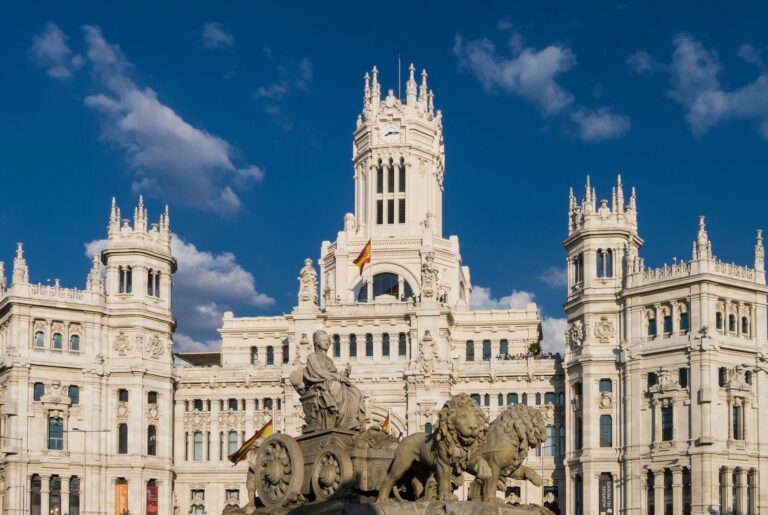
- Madrid: The capital, with fantastic museums, interesting architecture, great food and nightlife.
- Barcelona: The second city, full of modernist buildings, festivals and beaches.
- Seville: The cultural centre of Andalusia, with a huge cathedral.
- Granada: Home of the Alhambra, below the Sierra Nevada.
- Córdoba: The city of the Mezquita, the great mosque.
- Valencia: The home of paella, with a good beach.
- Málaga: The gateway to the Costa del Sol.
- Bilbao: The main Basque city, home to the Guggenheim Museum.
- Santiago de Compostela: A city in Galicia with one of the main airports.
Beyond the cities
- Sagrada Família (site): Barcelona's basilica, under construction since 1882.
- Ronda (town): A town on steep cliffs with a bridge over a gorge and the oldest bullring in Spain.
- Mallorca (island): The largest Balearic island, with beaches and nightlife.
- Ibiza (island): A Balearic island famous for its clubs.
- Tenerife (island): Forests, volcanoes, deserts and beaches in the Canaries.
- Gran Canaria (island): "A continent in miniature" of varied climates and landscapes.
- Sierra Nevada (mountain): The highest mountains of the Iberian peninsula, for walking and skiing.
- Costa Brava (coast): A rugged coast with many resorts.
- Costa del Sol (coast): The sunny southern coast.
Regions
- Central Spain: Madrid and the interior.
- Andalusia: Seville, Granada, Córdoba, Málaga and the Costa del Sol.
- Eastern Spain: One of the mainland regions.
- Green Spain: One of the mainland regions.
- Northern Spain: One of the mainland regions.
- Balearic Islands: Mallorca, Ibiza and their beaches.
- Canary Islands: Tenerife, Gran Canaria and other Atlantic islands.
- Spanish North Africa: The cities of Ceuta and Melilla.
Things to do
See
- The Alhambra Granada: The palace on a hill above Granada.
- The Mezquita Córdoba: Red-and-white striped arches in the great mosque.
- Art museums in Madrid Madrid: The capital's fantastic museums.
- Sagrada Família Barcelona: The famous basilica; beware of pickpockets around it.
Do
- Semana Santa: Easter processions, above all in Andalusia; book well ahead.
- Hiking: Sierra Nevada, the Central Cordillera and the Pyrenees.
- Beaches: The Mediterranean coast, the Balearics and the Canaries.
Eat
- Tapas: Small dishes in bars, the best way to meet people.
- Menú del día: A fixed-price lunch, often with water or wine included, usually a bargain.
After dark
- Nightlife: People go out from 23:00 or later, and clubs fill up around 03:00.
Itineraries
Andalusia in 8 days (8 days)
- Seville (3 nights): The cathedral and old town.
- Córdoba (1 night): The Mezquita.
- Granada (2 nights): The Alhambra.
- Ronda (1 night): The town on the cliffs.
- Málaga (1 night): The Costa del Sol and flights home.
Madrid and Barcelona in 7 days (7 days)
- Madrid (3 nights): Museums and late dinners.
- Barcelona (4 nights): By high-speed train; modernist buildings and beaches.
Climate and best time to visit
| Jan | Feb | Mar | Apr | May | Jun | Jul | Aug | Sep | Oct | Nov | Dec | |
|---|---|---|---|---|---|---|---|---|---|---|---|---|
| Max °C | 10 | 12 | 16 | 18 | 22 | 28 | 32 | 31 | 26 | 19 | 14 | 10 |
| Min °C | 3 | 4 | 6 | 8 | 11 | 16 | 19 | 19 | 15 | 11 | 6 | 4 |
| Rain mm | 33 | 35 | 25 | 45 | 51 | 21 | 12 | 10 | 22 | 60 | 58 | 51 |
The table is for Madrid, in the centre: hot, dry summers with an average maximum of about 32 °C in July and August and almost no rain, and cool winters, with an average maximum of about 10 °C in January and cold nights. Spain can be cold in winter in the centre and the north, and some places are rainy even in summer.
Spring and autumn (April to June, September and October) are best for cities. In summer, avoid long sun exposure and drink plenty of water.
Holidays and events
- 1 January 2026 · New Year's Day
- 6 January 2026 · Epiphany
- 3 April 2026 · Good Friday
- 1 May 2026 · Labour Day
- 15 August 2026 · Assumption
- 12 October 2026 · National Day of Spain
- 1 November 2026 · All Saints Day
- 6 December 2026 · Constitution Day
- 8 December 2026 · Immaculate Conception
- 25 December 2026 · Christmas Day
Getting there and around
| Main airports | MAD, BCN, AGP, PMI, SVQ, VLC, BIO, ALC |
|---|
Getting there
By air: Madrid Barajas (MAD), Barcelona El Prat (BCN) and Málaga (AGP) have the most international flights; the islands have their own airports, and low-cost airlines fly from all over Europe. Iberia and Renfe sell combined air and rail tickets.
Getting around
Trains: Spain has one of the longest high-speed networks in the world. AVE, Iryo, Avlo and Ouigo trains link Madrid with Barcelona, Andalusia, Valencia and other regions; buy long-distance tickets in advance, as prices rise. Buses can be easier for some cross-country trips. Driving in big cities is expensive and stressful, with parking fines from €85 as listed on Wikivoyage in October 2026; many motorways (autopistas) are tolled. The UK says a UK photocard licence is valid, while a provisional licence is not. Canada says vehicles must carry a V16 emergency beacon in the glove compartment, a reflective jacket inside the car, a spare tyre and repair kit, spare bulbs and, in adverse winter conditions, snow chains; you may be fined on the spot if you do not. Canada also says you can drive for up to 6 months with a valid Canadian licence and an international driving permit. Be wary of people who flag you down claiming a problem with your car, and of fake plain-clothes police: on the road officers are usually in uniform, and genuine police never ask for your bag or wallet.
Flying to Spain? PartnerCompare fares and find the cheapest datesSearch flightsWhere to stay
- Hotels: Plentiful in every category, from package resorts to city hotels.
- Casas rurales: Rural B&Bs in almost every province.
- Hostels, apartments and campsites: Also available across the country.
Check whether VAT (IVA) is included: leaving it out of the price is a common trick in mid-range guesthouses and hotels, so read the small print. Hotels must register your passport: wait until they have done so rather than leaving it at reception. Do not take risks on balconies: there have been fatal falls.
Eat and drink
Dishes to try
- Paella: The rice dish born in Valencia.
- Tapas: Small plates served in bars.
- Pulpo a la gallega: Boiled octopus with paprika, salt and olive oil, from Galicia.
- Gambas al ajillo: Garlic prawns.
- Ibérico pork: Prized cuts such as secreto and presa ibérica.
Drinks
- Wine and beer: Wine is often included with the menú del día.
| Meal times | Light breakfast, lunch from 13:30 to 15:00, dinner from 21:00; many restaurants close in between. |
|---|---|
| Tipping | Not expected. In mid-range and upscale restaurants 5 to 10% for exemplary service, in cash. |
Spanish food uses few spices and relies on good ingredients; the best seafood is on the coast, especially in Galicia. Avoid tourist-trap restaurants in the busiest areas. The drinking age is 18, drinking in the street is banned in many places, and supermarkets stop selling alcohol at 22:00. Tap water is safe, though very mineral in some southern areas.
Entry requirements and visas
| Passport validity | Issued less than 10 years before you arrive, and valid at least 3 months after you leave the Schengen area |
|---|
| Passport | Entry | Max stay | Notes |
|---|---|---|---|
| EU / EEA | Freedom of movement | EU free movement rules apply. | |
| United Kingdom | Visa free | 90 days | 90 days in any 180-day period across the whole Schengen area. |
| Canada | Visa free | 90 days | 90 days in any 180-day period across the whole Schengen area. |
| United States | Visa free | 90 days | 90 days in any 180-day period across the whole Schengen area. |
| Australia | Visa free | 90 days | 90 days in any 180-day period across the whole Schengen area. |
Other nationalities: check the official source below.
- EES (Entry/Exit System): fingerprints and photo at the border, free
- ETIAS (travel authorisation, EUR 20): not in operation yet
Spain is part of the Schengen area. Visitors from the UK, the US, Canada and Australia can stay up to 90 days in any 180-day period without a visa, counting the days spent in other Schengen countries. Non-EU visitors register fingerprints and a photo in the EU's Entry/Exit System (EES) on their first entry: allow extra time at the border, and at the airport when you leave.
At the border you may be asked for a return ticket, travel insurance, enough money and proof of accommodation, or an invitation letter (carta de invitación) if you stay with friends. If you use an e-gate, make sure your passport is stamped. You cannot bring meat or milk products into the EU.
ETIAS, the online travel authorisation for visa-free visitors, is not in operation yet. Rules depend on your passport and can change: check the official link before you book.
Money and payments
| Currency | Euro (EUR) |
|---|
Spain uses the euro (EUR). Cards are widely accepted, though shops may ask for ID with card payments. Bills do not include a service charge; if you tip, leave it in cash. Change money only at banks or official exchange offices: unofficial changers may give you counterfeit notes, and having them is a serious crime. If you carry €10,000 or more in cash or equivalents, you must declare it to customs when you enter or leave the EU.
Costs and budget
According to Eurostat, in 2024 the general price level in Spain was about 90% of the EU average, food in shops about 95% and restaurants and hotels about 84%.
The menú del día, a fixed-price lunch, is often a bargain.
Health
| Recommended vaccines | Routine vaccines, including measles (MMR), Hepatitis B, for unvaccinated travellers under 60, Hepatitis A: consider it, Rabies, only if you will work with wildlife, Mpox, for travellers at risk of sexual exposure |
|---|---|
| Tap water | Safe |
Tap water is safe, though very mineral in some southern areas. Protect yourself from the summer sun and heat, and from mosquito bites: Canada reports a sporadic risk of dengue. Medicines are sold only in pharmacies (green cross); every town has a duty pharmacy. Healthcare is excellent; a European (EHIC) or UK (GHIC) card covers medically necessary state healthcare but not private hospitals. Dial 112.
This is general information, not medical advice: check with a travel health professional before you go.
Safety
- United States: Level 2: Exercise Increased Caution (2026-10-20)
- Canada: Exercise a high degree of caution (2026-10-20)
- United Kingdom: No advice against travel (2026-10-20)
Canada advises a high degree of caution because of the threat of terrorism. Pickpocketing and bag-snatching are common in Madrid and Barcelona: in Barcelona on Las Ramblas, at the Sagrada Família, Park Güell, Plaça de Catalunya and on the airport bus; in Madrid at Puerta del Sol, Plaza Mayor, Gran Vía, Atocha station and the Retiro. Thieves work in teams and use distractions. Fake police may ask to see your wallet: real officers never do.
On the road, "highway pirates" target hire cars and caravans by faking a problem. Drinks can be spiked in nightlife areas. In resorts on Mallorca and Ibiza, laws limit alcohol sales and ban pub crawls. You must show photo ID if police ask.
Demonstrations and strikes happen regularly and can disrupt transport. Since the beginning of October 2026, Canada reports riots, looting, arson and violent clashes in Spanish cities, sometimes around authorised demonstrations: avoid large gatherings and follow local authorities.
Customs and etiquette
Spaniards are open and expressive; interrupting and talking loudly are normal, and people will happily give you advice. Avoid criticising anyone's family. Spain is largely secular but religious festivals matter. Regional identities are strong: Catalan, Basque and Galician are co-official in their regions.
Drinking in the street is illegal in some areas, with on-the-spot fines, and there are strict controls on drinking and sexual activity in public places, including on beaches. Some municipalities, including Barcelona, fine people for wearing beachwear away from the beach, and photographing military installations is illegal. Ignoring a police officer's direct request can count as disobedience, a criminal offence. Illegal drugs, including cannabis, carry severe penalties, and even a small quantity can lead to arrest.
Language
| Official languages | Spanish, Catalan, Basque, Galician |
|---|---|
| English | Common |
| Hello | Hola OH-lah |
|---|---|
| Please | Por favor POHR fah-BOHR |
| Thank you | Gracias GRAH-syahs |
| Excuse me | Perdone pehr-DOHN-eh |
| Goodbye | Adiós / Hasta luego ah-DYOHS / AHS-tah LWEH-goh |
| Do you speak English? | ¿Habla usted inglés? AH-blah oos-TEHD een-GLEHS |
What to pack
- Photo ID: Police can ask for it, and shops may for card payments.
- A copy of your passport photo page: Thieves target passports in tourist areas.
- Sun cream and a hat: Summer heat and sun are intense.
- Warm clothes in winter: The centre and the north can be cold.
Quick reference
Country facts
| Capital | Madrid |
|---|---|
| Population | 49,355,143 (2025) |
| Area | 499,686 km² |
| Time zone | Europe/Madrid (UTC+1), Africa/Ceuta (UTC+1), Atlantic/Canary (UTC+0) |
| Calling code | +34 |
| Driving side | right |
Staying connected
| SIM and eSIM | Networks include Vodafone, Movistar, Orange and Yoigo; prepaid SIMs and phones are sold in operator shops, usually with ID. |
|---|---|
| Roaming | With an EU SIM card you pay home prices for calls, texts and data (roam like at home). Others should check their provider's rates. |
Emergency numbers
| Emergency | 112 |
|---|
Frequently asked questions
Do I need a visa for Spain?
Not for short trips with an EU, UK, US, Canadian or Australian passport: Spain is in the Schengen area, so you can stay up to 90 days in any 180-day period. Check the official EU link before you book.
What time do Spaniards eat?
Lunch from about 14:00 and dinner from 21:00 or later; many restaurants close in between.
Do I need to tip in Spain?
No; for exemplary service in a good restaurant, 5 to 10% in cash.
Can I drink the tap water?
Yes, though it is very mineral in some southern areas.
Is it safe?
Generally yes, but pickpocketing is common in Madrid and Barcelona, and Canada advises a high degree of caution because of terrorism.
When is the best time to visit?
Spring and autumn for cities; summer for beaches, when the interior is very hot.
More Travel Stories from Spain
 Spain
Sources This guide was last checked on · 20 sources
- Wikivoyage: Spain · Overview, Places to visit, Things to do, Itineraries, Climate and best time to visit, Getting there and around, Where to stay, Eat and drink, Money and payments, Costs and budget, Health, Safety, Customs and etiquette, Language, What to pack, Staying connected, Frequently asked questions
- Wikidata: Spain · Places to visit, Money and payments, Country facts
- WMO World Weather Information Service: Madrid · Climate and best time to visit, Frequently asked questions
- Nager.Date: public holidays in Spain, 2026 · Holidays and events
- UK FCDO: Spain safety and security · Getting there and around, Where to stay, Money and payments, Safety, Customs and etiquette, What to pack
- Government of Canada: Spain travel advice (updated 13 August 2026) · Getting there and around, Entry requirements and visas, Money and payments, Health, Safety, Customs and etiquette, Frequently asked questions
- UK FCDO: Spain entry requirements · Entry requirements and visas, Frequently asked questions
- European Union: ETIAS official website · Entry requirements and visas
- ISO 4217 (SIX), published 2026-09-17 · Money and payments
- Eurostat: price level indices, 2024 (EU27 = 100) · Costs and budget
- UK FCDO: Spain health · Health
- CDC Travelers' Health: Spain · Health
- US Department of State: Spain travel advisory · Safety
- UK FCDO: Spain travel advice · Safety
- Wikivoyage: Spanish phrasebook · Language
- World Bank, SP.POP.TOTL · Country facts
- World Bank, AG.LND.TOTL.K2 · Country facts
- IANA Time Zone Database, zone.tab · Country facts
- Your Europe: mobile roaming costs · Staying connected
- UK FCDO: Spain getting help · Emergency numbers
Suggest an update
Travel rules, prices and timetables change. If something in this guide is out of date, tell us: we check every suggestion against an official source before changing the page.