

- Local time
- 12:37
- Currency
- Swiss Franc (CHF)
- Capital
- Bern
- Calling code
- +41
- Drive on the
- right
Overview
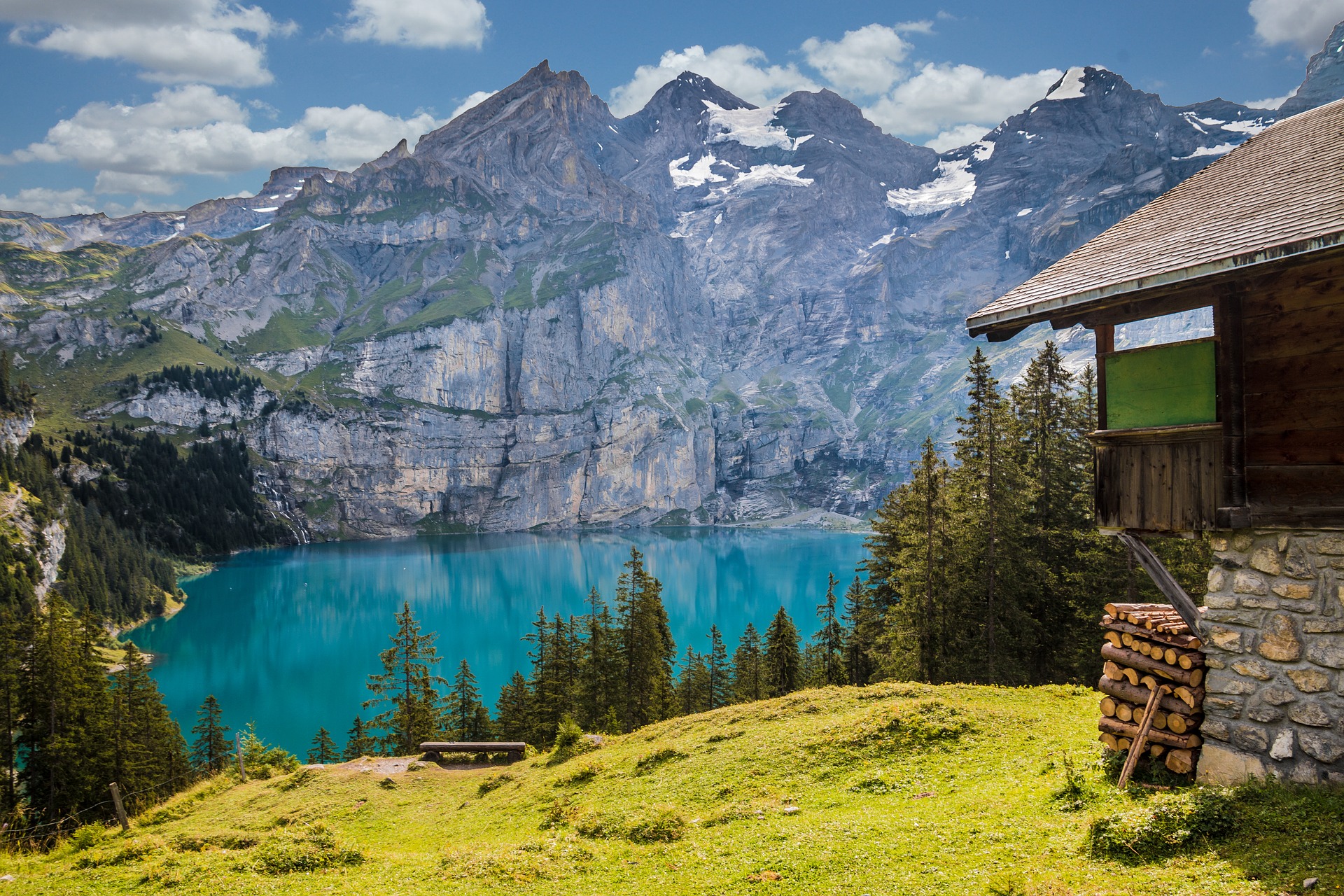
The Matterhorn and the Eiger, lakes, superb trains and postbuses, four languages and cheese fondue. Expensive, safe and in Schengen.
Switzerland packs the Alps, lakes and historic towns into a small, multilingual country: German, French, Italian and Romansh are all official. Zermatt sits below the Matterhorn, Grindelwald below the Eiger, and the Jungfrau-Aletsch area protects the largest glaciated area of the Alps. In the lowlands, Bern has a beautifully preserved arcaded old town, Lucerne and Lugano lie on lakes, and Geneva, Zurich and Basel mix culture and finance.
Getting around is easy: trains and postbuses reach almost everywhere, and hiking trails are well marked and maintained. Skiing is the top draw in winter, hiking and mountain biking in summer. Switzerland is expensive and uses the Swiss franc (CHF), though euro notes are often accepted. It is not in the EU but is part of the Schengen area.
- Zermatt and the Matterhorn: The famous resort at the base of the mountain.
- Jungfrau region: Grindelwald below the Eiger, and the Jungfraujoch station at 3,500 m.
- Lucerne: A lake city linked by water to the sites of early Swiss history.
- Bern: A well-preserved old town with arcades along almost every street.
- Lavaux and Lake Geneva: UNESCO-listed terraced vineyards above the lake, and Chillon castle near Montreux.
- Scenic railways: Including the Landwasser viaduct between Chur and St. Moritz.
Places to visit
- City
- Town
- Park
- Historic site
- Area
Cities
- Zurich: The largest city, a centre of banking and culture with a lakeside setting and nightlife.
- Geneva: An international city of arts and culture, home to around 200 organisations.
- Bern: The federal city, with a beautifully preserved arcaded old town.
- Lucerne: The main city of central Switzerland, on the lake.
- Basel: An exceptional medieval centre on a bend of the Rhine.
- Lausanne: Lake scenery, dining, boating and the wine country.
- Lugano: A lovely old town on a lake, with Italian flair.
- Interlaken: The capital of outdoor and action sports.
- St. Gallen: The main city of the north-east, with its UNESCO-listed abbey.
Beyond the cities
- Zermatt (town): The resort at the base of the Matterhorn.
- Grindelwald (town): The classic resort at the foot of the Eiger.
- Jungfrau-Aletsch (park): The largest glaciated area of the Alps, a UNESCO natural site.
- Lavaux (area): Terraced vineyards on Lake Geneva, a UNESCO site.
- St. Moritz (town): A glamorous ski resort in the Engadin.
- Davos (town): A large ski resort.
- Chillon Castle (site): A castle on the lake near Montreux.
- Castles of Bellinzona (site): Castles in the southern canton of Ticino.
- Jungfraujoch (site): The Top of Europe and Sphinx observatory, at 3,500 m above Wengen.
Regions
- Western Switzerland: Geneva, Lausanne and the French-speaking west.
- Bern Region: The federal city and its surroundings.
- Bernese Highlands: The Alpine part of the canton of Bern.
- Central Switzerland: Lucerne and the lakes of early Swiss history.
- Northwestern Switzerland: One of the ten travel regions.
- Zurich (region): The largest city and its lake.
- Eastern Switzerland: St. Gallen and the north-east.
- Valais: One of the ten travel regions, partly French-speaking.
- Graubünden: One of the ten travel regions.
- Ticino: The Italian-speaking south: Lugano and Bellinzona.
Things to do
See
- Jungfraujoch Jungfraujoch: A station and observatory at 3,500 m, reached by rail.
- Chillon Castle Chillon Castle: The castle on Lake Geneva near Montreux.
- Bern's old town Bern: Arcades along almost every street.
- Watch the Matterhorn Zermatt: From Zermatt, the Gornergrat or the Schwarzsee.
Do
- Skiing: The top draw in winter, from Zermatt and Grindelwald to St. Moritz and Davos.
- Hiking: Well-marked trails across the Alps, some used for centuries.
- Adventure sports Interlaken: Skydiving, bungee jumping, rafting and canyoning.
Eat
- Fondue and raclette: Melted-cheese classics, best in the mountains in winter.
Drink
- Lavaux vineyards Lavaux: Terraced vineyards and wine villages above the lake.
Itineraries
Classic Switzerland in 8 days (8 days)
- Zurich (1 night): Arrive and explore the old town and lake.
- Lucerne (2 nights): The lake and Pilatus.
- Interlaken (2 nights): Grindelwald, Lauterbrunnen and the Jungfraujoch.
- Zermatt (2 nights): Views of the Matterhorn.
- Geneva (1 night): The international city on Lake Geneva.
Climate and best time to visit
| Jan | Feb | Mar | Apr | May | Jun | Jul | Aug | Sep | Oct | Nov | Dec | |
|---|---|---|---|---|---|---|---|---|---|---|---|---|
| Max °C | 4 | 6 | 10 | 14 | 18 | 22 | 25 | 24 | 21 | 15 | 8 | 5 |
| Min °C | -2 | -1 | 1 | 4 | 8 | 11 | 13 | 13 | 10 | 7 | 2 | -1 |
| Rain mm | 69 | 70 | 68 | 56 | 66 | 77 | 58 | 68 | 70 | 66 | 79 | 75 |
Switzerland has four distinct seasons, but the climate varies with altitude: it gets about 6.5 °C colder for every 1,000 m. In Geneva the average maximum is about 4 °C in January and 25 °C in July, with 55 to 80 mm of rain every month. Winters are cold, rainy or snowy, summers moderately warm with very changeable weather, especially in the mountains, and autumn is often dry but foggy in the lowlands.
June to September is best for hiking and lakes; December to March for skiing. In the mountains the weather can change within minutes.
Holidays and events
- 1 January 2026 · New Year's Day
- 14 May 2026 · Ascension Day
- 1 August 2026 · Swiss National Day
- 25 December 2026 · Christmas Day
Getting around
| Main airports | ZRH, GVA, BSL, LUG, BRN |
|---|
Getting around is quick and easy, if not cheap. Trains reach most places and the yellow postbuses (PostAuto) cover the rest, with connections closely integrated. Driving: you need a motorway vignette (CHF 40 a year), headlights or daytime lights must always be on, and speed limits are strictly enforced: serious speeding can mean prison. Limits are 120 km/h on motorways, 80 km/h outside towns and 50 km/h in towns. Mountain roads are narrow and winding and can quickly deteriorate in rain or snow; use winter tyres and chains. A UK photocard licence is valid, and a Canadian one for up to 12 months.
Flying to Switzerland? PartnerCompare fares and find the cheapest datesSearch flightsWhere to stay
- Hotels: Among the most expensive in Europe, especially in ski resorts and big cities.
- Youth hostels and campsites: Cheaper options across the country.
- Mountain huts and farm stays: Including "sleeping in the hay" on farms.
Booking directly with the hotel is often easier and cheaper, and local tourist offices can book for a small fee.
Eat and drink
Dishes to try
- Fondue: Melted cheese, often half Gruyère and half Vacherin, with wine and kirsch, eaten with bread.
- Raclette: Another melted-cheese classic.
- Swiss cheeses: Gruyère, Emmentaler, Appenzeller and hundreds more.
Drinks
- Tap water: Excellent, and free from many public fountains.
- Rivella: A local soft drink made from milk whey.
- Swiss wine: From regions such as Lavaux on Lake Geneva.
Eating out is expensive; supermarkets are a cheaper option. The drinking age is 16 for beer and wine (18 in Ticino) and 18 for spirits; drinking in public is legal.
Entry requirements and visas
| Passport validity | Issued less than 10 years before you arrive, and valid at least 3 months after you leave the Schengen area |
|---|
| Passport | Entry | Max stay | Notes |
|---|---|---|---|
| EU / EEA | Freedom of movement | EU/EEA citizens can enter with an ID card or passport. | |
| United Kingdom | Visa free | 90 days | 90 days in any 180-day period across the whole Schengen area. |
| Canada | Visa free | 90 days | 90 days in any 180-day period across the whole Schengen area. |
| United States | Visa free | 90 days | 90 days in any 180-day period across the whole Schengen area. |
| Australia | Visa free | 90 days | 90 days in any 180-day period across the whole Schengen area. |
Other nationalities: check the official source below.
- EES (Entry/Exit System): fingerprints and photo at the border, free
- ETIAS (travel authorisation, EUR 20): not in operation yet
Switzerland is part of the Schengen area. Visitors from the UK, the US, Canada and Australia can stay up to 90 days in any 180-day period without a visa, counting the days spent in other Schengen countries. Non-EU visitors register fingerprints and a photo in the EU's Entry/Exit System (EES) on their first entry: allow extra time at the border, and at the airport when you leave.
Switzerland is not in the EU. At the border you may be asked for proof of accommodation and travel insurance, a return ticket and enough money for your stay, around CHF 100 a day according to the UK government.
ETIAS, the online travel authorisation for visa-free visitors, is not in operation yet. Rules depend on your passport and can change: check the official link before you book.
Money and payments
| Currency | Swiss Franc (CHF) |
|---|
The currency is the Swiss franc (CHF). Many supermarkets, restaurants, hotels, railways and ticket machines also take euro notes (not coins), giving change in francs. Switzerland is more cash-oriented than many European countries, but cards are common and all ATMs accept foreign cards. Medical costs are high and payment is usually required upfront.
Costs and budget
- Motorway vignette, one year: CHF 40
- 4-star hotel, per person per night (Wikivoyage, read in 2026): from about CHF 180
According to Eurostat, in 2024 the general price level in Switzerland was about 160% of the EU average, food in shops about 158% and restaurants and hotels about 171%.
Accommodation is among the most expensive in Europe; soft drinks in supermarkets are one of the few things that cost about the same as elsewhere.
Health
| Recommended vaccines | Routine vaccines, including measles (MMR), Hepatitis B, Tick-borne encephalitis, if you will spend time in forests between April and October, Hepatitis A: consider it, Rabies, only if you will work with wildlife |
|---|---|
| Tap water | Safe |
Tap water is excellent almost everywhere, except where signs say "Kein Trinkwasser" or "Non potable". Altitude sickness is possible in high resorts such as Zermatt, Saas-Fee and St. Moritz, and ticks are active from April to October. Healthcare is very expensive; a European (EHIC) or UK (GHIC) card covers medically necessary state treatment, but get insurance that includes mountain rescue and helicopter costs. Dial 144 or 112.
This is general information, not medical advice: check with a travel health professional before you go.
Safety
- United States: Level 1: Exercise Normal Precautions (2026-10-20)
- Canada: Take normal security precautions (2026-10-20)
- United Kingdom: No advice against travel (2026-10-20)
Serious crime is rare, but pickpockets and bag thieves work at airports, stations and on trains, especially to and from Geneva, and in big cities; cars are broken into at service areas. Follow rules and instructions from officials: the Swiss take them seriously.
Visitors die every year in the Alps. Check weather and avalanche warnings, carry a map, GPS and charged phone, do not hike alone, and make sure your insurance covers off-piste skiing, climbing or paragliding if you do them. Covering your face in public is illegal: Canada says across Switzerland, while the FCDO names Ticino and St Gallen.
Customs and etiquette
Switzerland values order and rules: comply with signs and with officials. In the German-speaking part, greet people with Grüezi.
Language
| Official languages | German, French, Italian, Romansh |
|---|---|
| English | Common |
| Hello (Swiss German) | Grüezi GREW-tsee |
|---|---|
| Good day | Guten Tag GOO-ten tahk |
| Please | Bitte BEE-tuh |
| Thank you | Danke schön DAN-kuh shurn |
| Goodbye | Auf Wiedersehen owf VEE-dur-zane |
What to pack
- Travel insurance with mountain rescue: Healthcare and helicopter rescue are very expensive.
- Layers and rain gear: Mountain weather changes within minutes.
- Some francs or euro notes: Cash is still widely used.
- Refillable water bottle: Tap water and fountains are excellent.
Quick reference
Country facts
| Capital | Bern |
|---|---|
| Population | 9,092,436 (2025) |
| Area | 39,510 km² |
| Time zone | Europe/Zurich (UTC+1) |
| Calling code | +41 |
| Driving side | right |
Staying connected
| Wi-Fi | Free Wi-Fi in large SBB stations after SMS verification, and in some shopping centres and cities. |
|---|
Emergency numbers
| Emergency | 112 |
|---|---|
| Police | 117 |
| Ambulance | 144 |
| Fire | 118 |
Frequently asked questions
Do I need a visa for Switzerland?
Not for short trips with an EU, UK, US, Canadian or Australian passport: Switzerland is in the Schengen area, so you can stay up to 90 days in any 180-day period. Check the official EU link before you book.
Can I pay in euros?
Often, with euro notes in supermarkets, restaurants, hotels and railways; change comes in francs.
Do I need a vignette to drive?
Yes, a CHF 40 annual vignette for motorways and expressways.
Can I drink the tap water?
Yes, it is excellent, and public fountains are everywhere.
Is Switzerland expensive?
Yes, especially hotels and restaurants; supermarkets and youth hostels help.
When is the best time to visit?
June to September for hiking and lakes; winter for skiing.
More Travel Stories from Europe
 Portugal
Sources This guide was last checked on · 20 sources
- Wikivoyage: Switzerland · Overview, Places to visit, Things to do, Itineraries, Climate and best time to visit, Getting around, Where to stay, Eat and drink, Money and payments, Costs and budget, Health, Safety, Customs and etiquette, Language, What to pack, Staying connected, Frequently asked questions
- Wikidata: Switzerland · Places to visit, Money and payments, Country facts
- WMO World Weather Information Service: Geneva · Climate and best time to visit, Frequently asked questions
- Nager.Date: public holidays in Switzerland, 2026 · Holidays and events
- UK FCDO: Switzerland safety and security · Getting around, Safety, What to pack
- Government of Canada: Switzerland travel advice (updated 13 October 2026) · Getting around, Entry requirements and visas, Money and payments, Health, Safety, Frequently asked questions
- Wikidata: Rivella · Eat and drink
- UK FCDO: Switzerland entry requirements · Entry requirements and visas, Frequently asked questions
- European Union: ETIAS official website · Entry requirements and visas
- ISO 4217 (SIX), published 2026-09-17 · Money and payments
- Eurostat: price level indices, 2024 (EU27 = 100) · Costs and budget
- UK FCDO: Switzerland health · Health
- US CDC: Travelers' health, Switzerland · Health
- US Department of State: Switzerland travel advisory · Safety
- UK FCDO: Switzerland travel advice · Safety
- Wikivoyage: German phrasebook · Language
- World Bank, SP.POP.TOTL · Country facts
- World Bank, AG.LND.TOTL.K2 · Country facts
- IANA Time Zone Database, zone.tab · Country facts
- UK FCDO: Switzerland getting help · Emergency numbers
Suggest an update
Travel rules, prices and timetables change. If something in this guide is out of date, tell us: we check every suggestion against an official source before changing the page.