

- Local time
- 00:02
- Currency
- Icelandic Króna (ISK)
- Capital
- Reykjavík
- Calling code
- +354
- Drive on the
- right
Overview
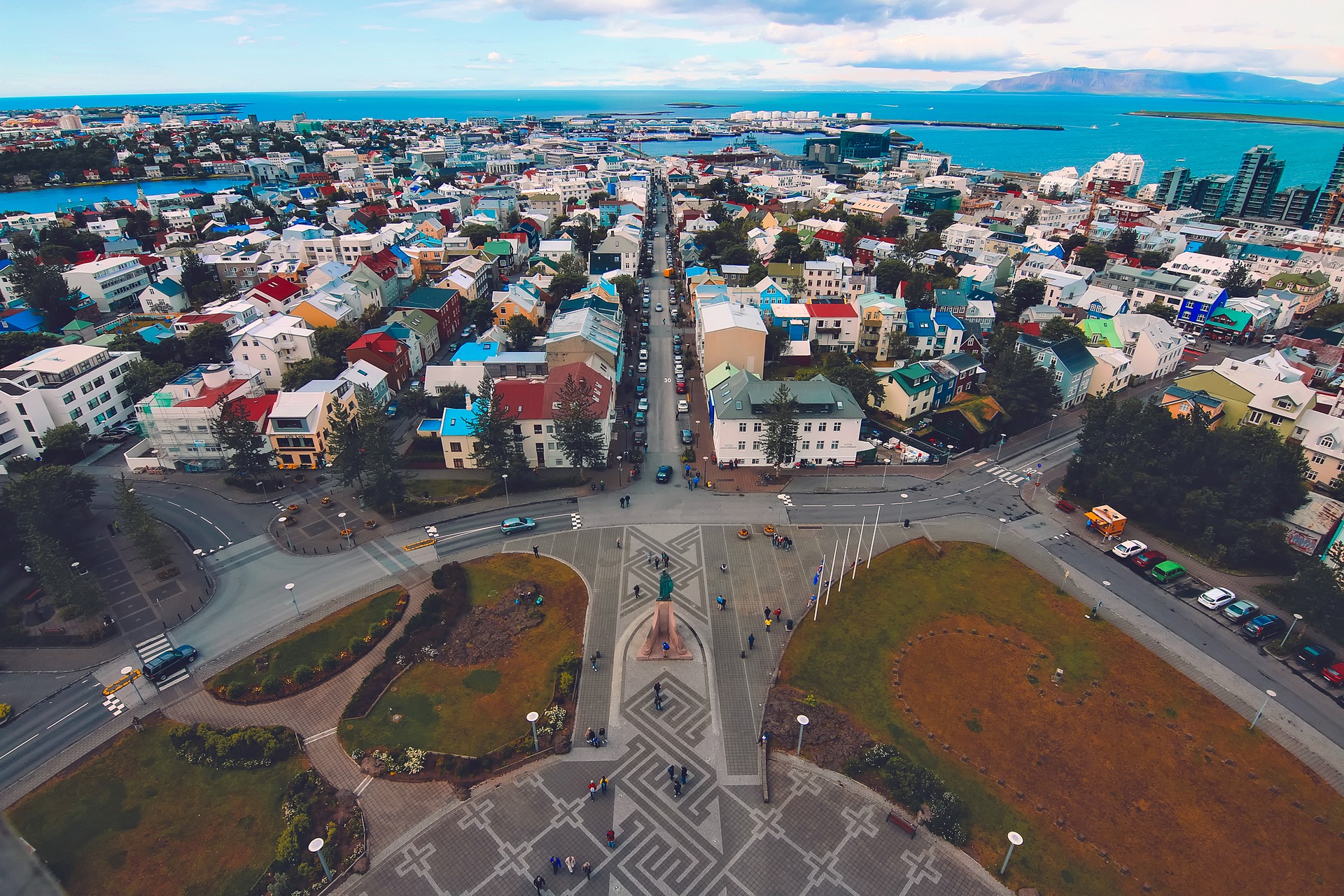
Iceland is a volcanic island of glaciers, waterfalls, geysers and lava fields: Reykjavík, the Golden Circle and the south coast, the north around Akureyri and Mývatn, whale watching, hot pools and, from September to April, the northern lights.
Iceland is a volcanic island in the North Atlantic, sparsely populated and dominated by nature: glaciers, waterfalls, geothermal areas, lava fields and fjords. Much of the population lives in the south-west around Reykjavík, the capital and the main point of arrival. The most popular sights, including the Golden Circle of Þingvellir, Geysir and Gullfoss, are in the south, while the north has Akureyri and the lake region of Mývatn.
Winters are mild for the latitude thanks to the Gulf Stream, and summers are cool, but the weather changes very quickly. In summer there is almost no darkness; from September to April the northern lights can often be seen away from city lights. English is widely spoken. Iceland is very expensive, and its nature can be dangerous: follow local safety advice.
- The Golden Circle: Þingvellir National Park, the Geysir hot spring area and the Gullfoss waterfall.
- Jökulsárlón: The glacier lagoon of south-east Iceland, beside Route 1.
- Mývatn: A lake region in the north with an unearthly volcanic landscape.
- Northern lights: Often visible from September to April, away from city lights.
- Whale watching: All year from Reykjavík, and in summer from Húsavík.
- Hot pools: The Blue Lagoon, the Mývatn Nature Baths and local pools around the country.
Places to visit
- City
- Park
- Historic site
- Area
Cities
- Reykjavík: The capital and largest city, in the south-west.
- Akureyri: The capital of the north and the largest town outside the south-west.
- Hafnarfjörður: A cosy town on the edge of the capital region.
- Selfoss: South Iceland's largest town, hub of the main farming region.
- Höfn: The main town on the south-east coast.
- Húsavík: A northern town known for whale watching in summer.
- Egilsstaðir: The main town in the east, with some of the best weather in Iceland.
- Ísafjörður: The largest town in the Westfjords.
- Stykkishólmur: The main town of the Snæfellsnes peninsula, gateway to the islands of Breiðafjörður.
Beyond the cities
- Þingvellir National Park (park): A UNESCO World Heritage site of lava fields, seat of Iceland's parliament from 930 AD.
- Geysir (site): The geothermal area that gave geysers their name; its neighbour Strokkur erupts every few minutes.
- Gullfoss (site): The Golden Falls, where the river Hvítá drops in a double cascade.
- Jökulsárlón (site): A glacial lagoon near Höfn on Route 1.
- Vatnajökull National Park (park): A vast park around Europe's largest glacier, covering about 12% of Iceland.
- Snæfellsjökull National Park (park): At the tip of the Snæfellsnes peninsula, around an ice-covered volcano.
- Mývatn (area): A lake region near Akureyri with unusual volcanic craters.
- Landmannalaugar (area): A beautiful area of the uninhabited Interior, reached by bus or 4x4 in summer.
- Blue Lagoon (site): A popular geothermal spa near Grindavík on the Reykjanes peninsula, an area affected by volcanic eruptions since 2023: check local advice before you go.
Regions
- Southwest Iceland: Home of Reykjavík and most of the population, and the main point of arrival.
- South Iceland: The most popular sights, including the Golden Circle.
- West Iceland: Snæfellsjökull, the islands of Breiðafjörður and more.
- Westfjords: Sparsely populated and rugged, with dozens of fjords below steep hills.
- North Iceland: Dramatic lava fields and turbulent waterfalls.
- East Iceland: More fjords and the only international passenger ferry terminal.
- Interior: Glaciers and mountains that are hard to reach.
Things to do
See
- The Golden Circle Þingvellir National Park: Þingvellir, Geysir and Gullfoss, on a day trip from Reykjavík.
- The glacier lagoon Jökulsárlón: Icebergs from Vatnajökull, beside Route 1 in the south-east.
- Northern lights: From September to April on dark, clear nights away from city lights.
Do
- Whale watching Húsavík: All year from Reykjavík and in summer from Húsavík.
- Glacier hiking: Popular around Skaftafell in the south-east; go with a guide and proper equipment.
- Geothermal baths Mývatn: The Mývatn Nature Baths, the Blue Lagoon and local hot pots, though not all are safe.
- Hiking in the Interior Landmannalaugar: A taste of the uninhabited highlands, reached by summer bus or 4x4.
- Skiing Akureyri: A small ski area, and ski touring in the mountains of the Troll Peninsula.
Eat
- Skyr and smoked lamb: Traditional foods based on lamb and fish, and modern Nordic cooking in Reykjavík.
Itineraries
The Golden Circle and the south coast in 6 days (6 days)
- Reykjavík (2 nights): The capital, and a day on the Golden Circle.
- Selfoss (1 night): The hub of the south.
- Höfn (2 nights): Jökulsárlón and Vatnajökull National Park.
- Reykjavík (1 night): Back to the capital.
The north in 5 days (5 days)
- Akureyri (2 nights): The capital of the north.
- Mývatn (1 night): Volcanic craters and the Nature Baths.
- Húsavík (2 nights): Whale watching in summer.
Snæfellsnes in 4 days (4 days)
- Reykjavík (1 night): Start in the capital.
- Stykkishólmur (3 nights): Snæfellsjökull National Park and the islands of Breiðafjörður.
Climate and best time to visit
| Jan | Feb | Mar | Apr | May | Jun | Jul | Aug | Sep | Oct | Nov | Dec | |
|---|---|---|---|---|---|---|---|---|---|---|---|---|
| Max °C | 2 | 3 | 3 | 6 | 9 | 12 | 13 | 13 | 10 | 7 | 3 | 2 |
| Min °C | -3 | -2 | -2 | 0 | 4 | 7 | 8 | 8 | 5 | 2 | -1 | -3 |
| Rain mm | 76 | 72 | 82 | 58 | 44 | 50 | 52 | 62 | 67 | 86 | 73 | 79 |
In Reykjavík, average highs go from about 2 °C in January to 13 °C in July, and winter nights average a few degrees below freezing. Rain falls all year, most in October and least in May. Winters are mild for the latitude thanks to the Gulf Stream, though the winds can be bitter, and summers are cool: 20–25 °C counts as warm. The weather changes very fast, and you can be rained on and sunburned on the same day.
July and August are the high season. Most mountain roads stay closed until the end of June or later, and tours to the Interior run only in summer, when there is almost no darkness. From September to April the long nights give the best chance of seeing the northern lights. Around Christmas and New Year almost everything, including public transport, closes.
Holidays and events
- 1 January 2026 · New Year's Day
- 2 April 2026 · Maundy Thursday
- 3 April 2026 · Good Friday
- 5 April 2026 · Easter Sunday
- 6 April 2026 · Easter Monday
- 23 April 2026 · First Day of Summer
- 1 May 2026 · May Day
- 14 May 2026 · Ascension Day
- 24 May 2026 · Pentecost
- 25 May 2026 · Whit Monday
- 17 June 2026 · Icelandic National Day
- 3 August 2026 · Commerce Day
- 24 December 2026 · Christmas Eve
- 25 December 2026 · Christmas Day
- 26 December 2026 · St. Stephen's Day
- 31 December 2026 · New Year's Eve
Getting there and around
| Main airports | KEF |
|---|
Getting there
By air: Keflavík Airport, in the south-west, is the main international airport, served by Icelandair and some low-cost airlines; buses link it with the capital region. All arriving passengers, including from EU countries, go through customs. By sea: the Smyril Line ferry Norröna sails once or twice a week from Hirtshals in Denmark, via Tórshavn in the Faroe Islands, to Seyðisfjörður on the east coast. It carries cars but is more expensive than flying.
Getting around
There are no trains. Domestic flights leave from Reykjavík Airport, close to the city. Long-distance buses run around the country but only a few times a day and can cost more than flying; local buses run mainly in and around Reykjavík. Summer buses and tours in 4x4 buses reach the Interior, and many operators run Golden Circle day tours from Reykjavík.
A car gives the most freedom, but hire is expensive: book early. You can use a UK photocard licence for up to 30 days, according to the FCDO, and hire companies often set stricter rules, such as a year of driving experience, a higher minimum age or an International Driving Permit. You can use a Canadian licence for up to 6 months, and Canada says you should also carry an international driving permit. Driving is on the right, with headlights and seat belts on at all times. Route 1, the Ring Road, circles the country, but many roads are gravel, narrow or have single-lane bridges, and towns are far apart. Roads marked F, in the highlands, need a 4x4 and open only in summer; cross rivers slowly, as levels change quickly. Off-road driving is strictly forbidden, with heavy fines. Wind can throw sand and ash at hire cars, damage that insurance may not cover. The drink-drive limit is lower than in the UK, and the same law applies to riding an electric scooter after drinking alcohol. Canada says winter tyres are mandatory from November to April, with exact dates depending on the weather. Check road and weather conditions every day.
Flying to Iceland? PartnerCompare fares and find the cheapest datesSearch flightsWhere to stay
- Hotels: Clean, often fairly basic and expensive; chains include Fosshotels and the Edda summer hotels.
- Guesthouses: Between hotels and hostels in price, often with shared bathrooms.
- Farm stays: Rooms, cottages, sleeping-bag places and camping on farms, some with horse riding or fishing.
- Hostels: Found all over the country; bring bed linen or a sleeping bag to avoid extra costs.
In July and August, and even in September, book a month or more ahead to find affordable rooms. In summer there is no real darkness, so an eye mask helps. Farm stays are best booked in advance in summer. Canada warns that it is illegal to camp outside organised campsites or urban areas unless the landowner has explicitly given permission, and that campers, including those in camper vans, must dispose of human waste at designated sites.
Eat and drink
Dishes to try
- Skyr: A yoghurt-like cheese, low in fat and high in protein, sold everywhere.
- Hangikjöt: Smoked lamb.
- Harðfiskur: Dried fish eaten as a snack with butter.
- Rúgbrauð: A sweet rye bread baked underground with geothermal heat.
- Slátur: Sheep offal sausages, one of them with blood.
- Þorramatur: Traditional foods eaten in the Þorri season, from late January to early February.
Drinks
- Tap water: Clean and safe to drink.
- Icelandic beer: Local brands include Egils, Víking, Thule and Kaldi.
- Brennivín: A strong local spirit: pace yourself.
| Tipping | Not practised, and occasionally seen as insulting: thank the staff instead. |
|---|
Traditional food is simple and based on lamb and fish, while Reykjavík has well-regarded restaurants in the New Nordic style. Vegetarians will find several restaurants in Reykjavík and vegetarian dishes elsewhere. Food is expensive: the Bónus, Netto and Krónan supermarkets are much cheaper than others.
Alcohol is very expensive in bars. Outside bars and restaurants it is sold only by the state shops, Vínbúðin, where the same beer costs much less.
Entry requirements and visas
| Passport validity | Issued less than 10 years before you arrive, and valid at least 3 months after you leave the Schengen area |
|---|
| Passport | Entry | Max stay | Notes |
|---|---|---|---|
| EU / EEA | Freedom of movement | Free movement with a valid passport or national ID card. | |
| United Kingdom | Visa free | 90 days | 90 days in any 180-day period across the whole Schengen area. |
| Canada | Visa free | 90 days | Up to 90 days in any 180-day period in the Schengen area. |
Other nationalities: check the official source below.
Iceland is in the Schengen area but not in the EU, so everyone arriving, including EU citizens, goes through customs. UK and Canadian visitors can stay up to 90 days in any 180-day period without a visa, counting days in other Schengen countries; the FCDO warns that overstaying can lead to a ban of up to 3 years. You may be asked for a return or onward ticket and proof of enough money. Non-EU visitors are registered in the EU Entry/Exit System; Canada notes that the ETIAS travel authorisation is not yet open for applications.
You cannot bring in meat, milk or products containing them, and cash of €10,000 or more must be declared. It is illegal to take whale products from Iceland into the UK. Rules depend on your passport: check the official link before you book.
Money and payments
| Currency | Icelandic Króna (ISK) |
|---|---|
| Cards | Widespread |
Iceland uses the króna (kr, ISK). Almost every business takes credit cards, including taxis, petrol stations and remote guesthouses, so you do not need much cash. You get a better exchange rate buying króna in Iceland, usually at banks in Reykjavík.
Iceland is very expensive, partly because of import duties and 24% VAT: budget at least as much as for Norway or Switzerland. Discount supermarkets and the Reykjavík City Card help keep costs down.
Costs and budget
According to Eurostat, in 2024 the general price level in Iceland was about 153% of the EU average, food in shops about 144% and restaurants and hotels about 167%.
Health
| Recommended vaccines | Routine vaccines, including measles (MMR), Hepatitis A: consider it, Hepatitis B, Mpox, for travellers at risk of sexual exposure |
|---|---|
| Malaria | None |
| Tap water | Safe |
Rabid dogs are not commonly found. The biggest health risks are accidents and the weather: warm, waterproof clothing matters. In geothermal areas, ground that looks solid can break into boiling water: take extra care. With a European (EHIC) or UK (GHIC) health card you get medically necessary state healthcare; it does not replace travel insurance. Call 112 for an ambulance.
Tap water is excellent and always drinkable; hot tap water smells slightly of sulphur because it is geothermally heated, but it is safe. Emergency medical help and search and rescue may be limited in remote areas.
This is general information, not medical advice: check with a travel health professional before you go.
Safety
- United States: Level 1: Exercise Normal Precautions (2026-10-20)
- Canada: Take normal security precautions (2026-10-20)
- United Kingdom: No advice against travel (2026-10-20)
All three governments advise normal precautions, and crime is low. Petty theft and antisocial behaviour happen around the bars of downtown Reykjavík, and Canada notes rare violent incidents near nightlife venues; tourists are usually not targeted. You do not have to carry your passport, but carry some ID. Drug penalties are severe.
Nature is the main danger. Volcanic eruptions and earthquakes are common: since December 2023 a series of eruptions on the Reykjanes peninsula has affected the town of Grindavík and its surroundings, but not Reykjavík or Keflavík Airport. Further eruptions could start at any time and without warning. Follow the authorities' advice near eruption sites and never walk on new lava. Volcanic gas can drift far from an eruption, even to Reykjavík, so watch air quality alerts. Keep away from glacier fronts, large waterfalls, cliff edges and waves on the shore, and go on glaciers only with proper training and equipment or on a guided tour. Leave your travel plans with Safe Travel Iceland or your hotel before hiking. Emergency number 112.
Customs and etiquette
Iceland is egalitarian: service staff expect to be treated as equals, and showing off is frowned upon. Icelanders often ask visitors how they like Iceland; just be polite. Do not call the Icelandic horse a pony. Icelanders use patronyms rather than surnames: a person's name is followed by a parent's first name.
Whaling is a sensitive subject, as is the banking collapse of the Great Recession. Some Icelanders respect the old belief in the hidden people, the huldufólk. Tipping is not practised. Smoking and e-cigarettes are banned in restaurants, bars, public transport and public buildings. Canada warns that removing and exporting fossils and certain rocks is illegal without a permit, and that you need permission from the Environment Agency of Iceland to fly a drone in several protected areas.
Language
| Official languages | Icelandic |
|---|---|
| English | Widespread |
| Hello | Halló |
|---|---|
| Thank you | Þakka þér fyrir |
| Excuse me | Afsakið |
| Goodbye | Bless |
| Yes / No | Já / Nei |
| Do you speak English? | Talarðu ensku? |
| Cheers! | Skál! |
What to pack
- Warm, waterproof layers: The weather changes fast, and the right clothing can be a matter of life and death.
- Sturdy walking boots: Off the paths the ground is rough lava rock or moss with hidden holes.
- Eye mask: In summer there is no real darkness.
- Sleeping bag or bed linen: Hostels may charge extra for linen.
- Photo ID: You need not carry your passport, but some ID is sensible.
Quick reference
Country facts
| Capital | Reykjavík |
|---|---|
| Population | 392,404 (2025) |
| Area | 100,830 km² |
| Time zone | Atlantic/Reykjavik (UTC+0) |
| Calling code | +354 |
| Driving side | right |
Staying connected
| SIM and eSIM | The three networks, Icelandic Telecom, Sýn and Nova, all have 4G covering most of the country and sell prepaid plans. A SIM from another EU or EEA country can be used under 'roam like at home' terms, depending on your provider. |
|---|---|
| Wi-Fi | Restaurants, cafés and airports have Wi-Fi, free for customers. |
Emergency numbers
| Emergency | 112 |
|---|
Frequently asked questions
Do I need a visa for Iceland?
Not for UK or Canadian citizens staying up to 90 days in any 180-day period in the Schengen area. Check the official link before you book.
When can I see the northern lights?
From September to April, on dark, clear nights away from city lights. Summer nights are too light.
Do I need a 4x4?
Only for the Interior and the F roads, which open in summer. Route 1 and the main roads can be driven in a normal car.
Is it safe to visit during volcanic eruptions?
Reykjavík, Keflavík Airport and most of Iceland were not affected by the recent eruptions on the Reykjanes peninsula. Further eruptions are likely, and volcanic gas can drift far from an eruption site: follow the authorities' advice, local news and air quality alerts.
Do I need cash?
Hardly ever: almost everywhere takes cards, even taxis and remote guesthouses.
Should I tip in Iceland?
No, tipping is not practised.
More Travel Stories from Europe
 Romania
 Svalbard +1
Sources This guide was last checked on · 19 sources
- Wikivoyage: Iceland · Overview, Places to visit, Things to do, Itineraries, Climate and best time to visit, Getting there and around, Where to stay, Eat and drink, Entry requirements and visas, Money and payments, Health, Safety, Customs and etiquette, Language, What to pack, Staying connected, Frequently asked questions
- Wikidata: Iceland · Overview, Places to visit, Things to do, Money and payments, Country facts
- WMO World Weather Information Service: Reykjavik · Climate and best time to visit
- Nager.Date: public holidays in Iceland, 2026 · Holidays and events
- UK FCDO: Iceland safety and security · Getting there and around, Safety, Customs and etiquette, What to pack, Frequently asked questions
- Government of Canada: Iceland travel advice (updated 11 August 2026) · Getting there and around, Where to stay, Entry requirements and visas, Safety, Customs and etiquette, Frequently asked questions
- UK FCDO: Iceland entry requirements · Entry requirements and visas, Frequently asked questions
- Your Europe (EU): Travel documents for EU nationals · Entry requirements and visas
- ISO 4217 (SIX), published 2026-09-17 · Money and payments
- Eurostat: price level indices, 2024 (EU27 = 100) · Costs and budget
- CDC Travelers' Health: Iceland · Health, Frequently asked questions
- UK FCDO: Iceland health · Health
- US Department of State: Iceland travel advisory · Safety
- UK FCDO: Iceland travel advice · Safety
- Wikivoyage: Icelandic phrasebook · Language
- World Bank, SP.POP.TOTL · Country facts
- World Bank, AG.LND.TOTL.K2 · Country facts
- IANA Time Zone Database, zone.tab · Country facts
- UK FCDO: Iceland getting help · Emergency numbers
Suggest an update
Travel rules, prices and timetables change. If something in this guide is out of date, tell us: we check every suggestion against an official source before changing the page.