

- Local time
- 09:10
- Currency
- Euro (EUR)
- Capital
- Vienna
- Calling code
- +43
- Drive on the
- right
Overview
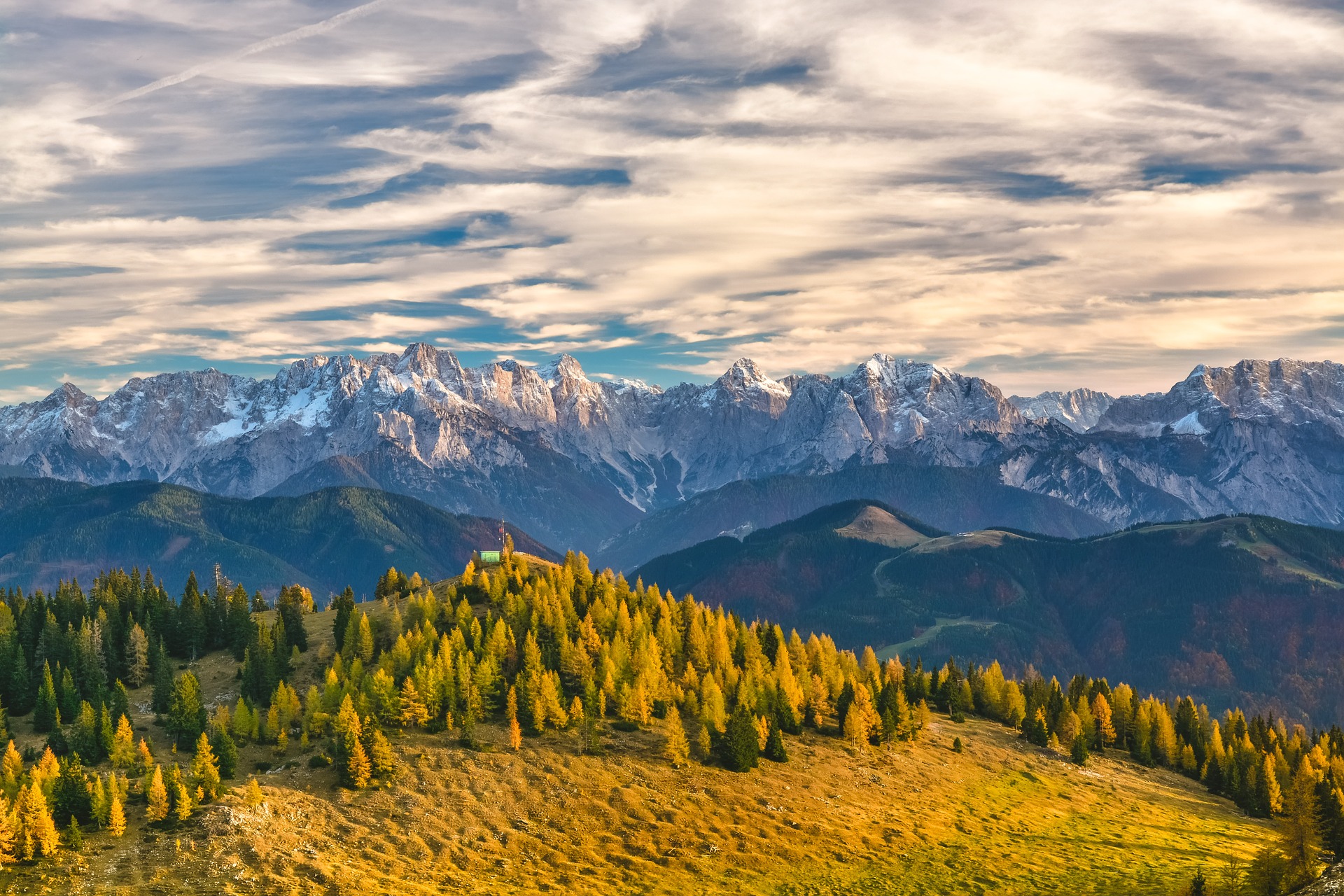
Austria pairs imperial Vienna and Mozart's Salzburg with the Alps, lakes and the Danube valley: skiing in winter, hiking, cycling and music festivals in summer, all linked by excellent trains.
Austria was the core of the Austro-Hungarian Empire, and Vienna still shows it: palaces such as Schönbrunn, St Stephen's Cathedral, world-famous museums, opera and coffee houses. Salzburg, Mozart's birthplace, adds a preserved old town under the mountains, and Graz, Linz and Innsbruck are lively regional capitals.
About 62% of the country lies above 500 m. In winter the Alps make Austria one of Europe's main centres for skiing; in summer the same valleys fill with walkers, using a dense network of marked trails and mountain huts. The lakes of the Salzkammergut and Carinthia, the Grossglockner High Alpine Road and the vineyards of the Wachau along the Danube complete the picture. Trains and buses reach almost everywhere, and German is the language, with English widely spoken.
- Vienna: The capital: Schönbrunn Palace, St Stephen's Cathedral, museums, opera and coffee houses.
- Salzburg: Mozart's birthplace, with a preserved old town and an Alpine backdrop.
- Innsbruck and Tyrol: A city in the heart of the Alps, in the skiing west of the country.
- Salzkammergut: An area of mountains and lakes, rich in culture.
- Grossglockner High Alpine Road: The scenic road below Austria's highest peak.
- Wachau: A protected Danube valley known for its vineyards.
Places to visit
- City
- Town
- Mountain
- Historic site
- Area
Cities
- Vienna: The largest city and Austria's cultural, economic and political centre.
- Salzburg: Mozart's birthplace, a cultural city with a historic centre and an Alpine backdrop.
- Innsbruck: The main city of western Austria, right in the heart of the Alps.
- Graz: A student city known as Austria's culinary capital.
- Linz: A music and arts scene and a historic core on the Danube.
- Bregenz: On Lake Constance, home of the Bregenzer Festspiele summer music festival.
- Klagenfurt: A pleasant town next to the Wörthersee.
- Villach: An old town surrounded by the Alps and lakes.
- Eisenstadt: Former seat of the Esterházy family, with their baroque palace.
Beyond the cities
- Salzkammergut (area): Mountains and lakes such as the Wolfgangsee and Attersee.
- Zell am See (town): One of the main Alpine resort towns, next to Kaprun.
- Wörthersee (area): One of Austria's warmest lakes, in Carinthia.
- Grossglockner (mountain): Austria's highest mountain, with the High Alpine Road below it.
- Wachau (area): A protected stretch of the Danube valley with famous vineyards.
- Schönbrunn Palace (site): The palace in Vienna, with 1,441 rooms and the world's oldest zoo.
- Semmering (site): Home of one of the oldest mountain railways, on the line from Vienna to Graz.
- Thermenland (area): The spas of Styria, a day trip from Graz or Vienna.
Regions
- Vienna: The capital, a federal state of its own.
- Lower Austria: The Danube valley, with the Wachau vineyards.
- Burgenland: The easternmost state: Eisenstadt and the Neusiedler See.
- Upper Austria: Linz, on the Danube.
- Salzburg (state): Salzburg city, Mozart's birthplace, and the Alps.
- Tyrol: Innsbruck, in the heart of the Alps.
- Vorarlberg: The far west on Lake Constance, where Alemannic dialect is spoken.
- Styria: Graz and the spa region, in the dry, sunny south-east.
- Carinthia: Klagenfurt, Villach and the Wörthersee, in the dry, sunny south.
Things to do
See
- Schönbrunn Palace Vienna: A palace of 1,441 rooms, with the oldest zoo in the world.
- St Stephen's Cathedral Vienna: The 12th-century cathedral at the heart of the city.
- Grossglockner High Alpine Road: A panoramic drive below Austria's highest mountain.
Do
- Opera and classical music Vienna and Salzburg: High-standard performances at moderate prices, plus summer festivals such as the Salzburg Festival.
- Skiing and snowboarding Tyrol and Salzburg: Winter sports are part of local identity, especially in western Austria.
- Hiking hut to hut: Marked trails and Alpine Club huts across the Alps; book huts ahead in August.
- Danube cycle path Passau to Vienna: Flat and family-friendly, one of Europe's most popular cycle routes.
- Lakes: Swim in clean lakes such as the Wörthersee, Wolfgangsee and Attersee.
Eat
- Coffee houses Vienna: Coffee, hot chocolate and pastries, including Sachertorte.
Drink
- Heurigen Vienna: Wine taverns in the suburbs serving local wine, often as a Spritzer.
Itineraries
Vienna, Salzburg and Innsbruck in 8 days (8 days)
- Vienna (3 nights): Palaces, museums and coffee houses.
- Salzburg (2 nights): Trains from Vienna run every 30 minutes or more often.
- Salzkammergut (1 night): Lakes and mountains east of Salzburg.
- Innsbruck (2 nights): The Alps at the edge of the city.
Vienna and the south in 6 days (6 days)
- Vienna (2 nights): Start in the capital.
- Graz (2 nights): By train over the Semmering mountain railway.
- Klagenfurt (2 nights): Swimming in the Wörthersee in summer.
Climate and best time to visit
| Jan | Feb | Mar | Apr | May | Jun | Jul | Aug | Sep | Oct | Nov | Dec | |
|---|---|---|---|---|---|---|---|---|---|---|---|---|
| Max °C | 3 | 5 | 10 | 15 | 21 | 23 | 26 | 25 | 20 | 14 | 8 | 4 |
| Min °C | -2 | -1 | 2 | 6 | 11 | 14 | 15 | 15 | 12 | 7 | 2 | -1 |
| Rain mm | 37 | 39 | 46 | 52 | 62 | 70 | 68 | 58 | 54 | 40 | 50 | 44 |
Austria has a temperate continental climate. Summer runs from early June to mid-September: in Vienna July averages highs of about 26 °C, though days above 30 °C happen, and June and July are also the wettest months. Winter lasts from December to March, longer in the mountains, with averages around freezing in Vienna and much colder weather in the Alps. The northern Alps are wetter than the rest of the country, while the south-east (Styria and Carinthia) is dry and sunny.
For cities and walking, May, June and September are the most comfortable; for skiing, December to March. In the mountains nights are cool even in summer, afternoon thunderstorms are common, and avalanches are a risk in early and late winter. Heavy rain in spring and summer can cause floods and landslides.
Holidays and events
- 1 January 2026 · New Year's Day
- 6 January 2026 · Epiphany
- 5 April 2026 · Easter Sunday
- 6 April 2026 · Easter Monday
- 1 May 2026 · National Holiday
- 14 May 2026 · Ascension Day
- 24 May 2026 · Pentecost
- 25 May 2026 · Whit Monday
- 4 June 2026 · Corpus Christi
- 15 August 2026 · Assumption Day
- 26 October 2026 · National Holiday
- 1 November 2026 · All Saints' Day
- 8 December 2026 · Immaculate Conception
- 25 December 2026 · Christmas Day
- 26 December 2026 · St. Stephen's Day
Getting around
| Main airports | VIE, SZG, INN, GRZ, LNZ, KLU |
|---|---|
| International driving permit | Recommended |
Trains are the best way around: trains between Vienna, Linz and Salzburg run every 30 minutes or more often, and Graz, Innsbruck and Bregenz at least hourly. Buy tickets on the ÖBB website or app or at the machines; on regional trains you must have a ticket before boarding. Validate local transport tickets before you travel, or face an on-the-spot fine of €100 to €500. The ÖBB Scotty app plans all public transport.
Driving: motorways and expressways need a vignette, bought online or at petrol stations; some tunnels and passes charge extra. Winter tyres are mandatory from 1 November to 15 April, and you must carry a first-aid kit, a warning triangle and high-visibility vests. Headlights stay on at all times. A UK photocard licence is valid; Canadians need an International Driving Permit or a German translation. The alcohol limit is 0.05%.
Flying to Austria? PartnerCompare fares and find the cheapest datesSearch flightsWhere to stay
- Hotels: Found even in small towns, but expensive, especially in the big cities.
- Pensions and private rooms: Look for "Pension" or "Zimmer frei" signs in smaller towns.
- Farm stays: Many farmers rent rooms in the countryside.
- Youth hostels: The cheaper option in the cities.
- Campsites: Very clean, some open all year, a little pricier than elsewhere in Central Europe.
- Mountain huts: Basic shelters on Alpine trails; bring a thin sleeping bag.
Everyone staying overnight must be registered, even at a campsite, so hotels will ask for your passport. If you stay in private accommodation for more than about two weeks, get a registration form (Meldezettel) from the town hall.
Eat and drink
Dishes to try
- Wiener Schnitzel: Breaded, fried veal escalope, something of a national dish.
- Tafelspitz: Boiled beef with potatoes and horseradish, a Viennese Sunday classic.
- Knödel: Dumplings, sweet or savoury.
- Kaiserschmarren: Torn fluffy pancake with fruit compote, often eaten as a main course.
- Apfelstrudel: The best-known of Austria's pastries.
- Sachertorte: Chocolate cake with apricot jam, served with whipped cream.
- Kasnudel: Pasta parcels similar to ravioli, a safe meat-free choice.
Drinks
- Wine: Mostly whites; reds from Zweigelt and Blaufränkisch. Drink it as a Spritzer at a Heuriger.
- Märzen lager: The standard beer, best from the regional breweries.
- Schnaps: Fruit brandy after a meal; farmhouse versions can be 50% or stronger.
- Almdudler: A herbal lemonade, the national soft drink.
| Tipping | Expected in restaurants: round up or add 5 to 10%, saying the total when you pay. |
|---|
A Gasthaus or Gasthof serves traditional food at fair prices, often with a set lunch of soup and main course. In restaurants you ask for the bill ("zahlen, bitte"). Most restaurants have something without meat, but traditional rural places may not: ask, as even soups can contain meat. Beer and wine can be bought from 16, spirits from 18.
Entry requirements and visas
| Passport validity | Issued less than 10 years before you arrive, and valid at least 3 months after you leave the Schengen area |
|---|
| Passport | Entry | Max stay | Notes |
|---|---|---|---|
| EU / EEA | Freedom of movement | A valid ID card or passport is enough. | |
| United Kingdom | Visa free | 90 days | 90 days in any 180-day period across the whole Schengen area. |
| Canada | Visa free | 90 days | 90 days in any 180-day period; a bilateral agreement allows a further 3 months in Austria only. |
Other nationalities: check the official source below.
Austria is in the Schengen area. UK and Canadian visitors can stay up to 90 days in any 180-day period without a visa, counting days spent in other Schengen countries. At the border you may be asked for proof of accommodation, travel insurance, a return ticket and enough money. Non-EU visitors register fingerprints and a photo in the EU Entry/Exit System: allow extra time.
You cannot bring meat or milk products into the EU, and cash of €10,000 or more must be declared. Rules depend on your passport: check the official link before you book.
Money and payments
| Currency | Euro (EUR) |
|---|---|
| Cards | Common |
Austria uses the euro (€). It is a cash-oriented country: cards are taken in main hotels, bigger shops and petrol stations, but many smaller shops and places take only cash. ATMs (Bankomat) are everywhere, even in villages, and most charge no fee, though Euronet machines do. Prices are similar to Germany's and higher in Tyrol, Vienna, Salzburg and Zell am See; B&Bs and country inns are cheaper.
Costs and budget
According to Eurostat, in 2024 the general price level in Austria was about 115% of the EU average, food in shops about 110% and restaurants and hotels about 110%.
Health
| Recommended vaccines | Routine vaccines, including measles (MMR), Hepatitis B, Tick-borne encephalitis, if you will spend a lot of time outdoors where ticks live |
|---|---|
| Malaria | None |
Ticks carry tick-borne encephalitis: ask a travel health professional about the vaccine if you will hike or camp. Altitude sickness is a risk in parts of the Alps.
With a European (EHIC) or UK (GHIC) health card you get medically necessary state healthcare, but take travel insurance too, with mountain rescue and helicopter cover if you ski, climb or hike. Dial 144 for an ambulance, or 112.
This is general information, not medical advice: check with a travel health professional before you go.
Safety
- United States: Level 1: Exercise Normal Precautions (2026-10-20)
- Canada: Take normal security precautions (2026-10-20)
- United Kingdom: No advice against travel (2026-10-20)
Crime is low, but pickpockets work in city centres, around St Stephen's Cathedral and the main stations in Vienna, and on international trains. Austria's terrorism threat level is "high" (4 of 5), so stay alert in crowded places. Card and ATM fraud happens, mostly in Vienna.
In the mountains, stay on marked trails, check the weather and avalanche bulletins, and do not ski off-piste without a guide: it is dangerous and can void your insurance. Covering your face in public is illegal, and drug penalties are severe.
Customs and etiquette
Carry your passport or be able to get it quickly: a UK driving licence is not accepted as ID. Shops close on Sundays, apart from those in stations and petrol stations. In restaurants, ask for the bill and say the total you want to pay, tip included.
Never litter, least of all in the mountains. Mountain huts are shelters, not hotels: expect basic comforts. Do not try to tip a government employee: it can be taken as a bribe.
Language
| Official languages | German |
|---|---|
| English | Widespread |
| Hello (in Austria) | Grüß Gott / Servus GREWSS gott / SAIR-vus |
|---|---|
| Please | Bitte BIT-tuh |
| Thank you | Danke DAN-kuh |
| Excuse me | Entschuldigung en-TSHOOL-dee-goong |
| Goodbye | Auf Wiedersehen owf VEE-dur-zane |
| Do you speak English? | Sprechen Sie Englisch? SHPREKH-un zee ENG-leesh |
| The bill, please | Zahlen, bitte TSAH-len BIT-tuh |
What to pack
- Passport: You must be able to show ID; hotels and campsites register every guest.
- Cash: Many smaller shops and restaurants take only cash.
- EHIC or GHIC and travel insurance: Include mountain rescue if you plan winter sports or hiking.
- Thin sleeping bag: Required in Alpine huts.
- Layers and rain gear: Nights are cool in the mountains and storms are common in summer afternoons.
- Plug adapter: Austria uses plug types C and F.
Quick reference
Country facts
| Capital | Vienna |
|---|---|
| Population | 9,208,163 (2025) |
| Area | 82,520 km² |
| Time zone | Europe/Vienna (UTC+1) |
| Calling code | +43 |
| Driving side | right |
Electricity and plugs
| Plug types | C, F |
|---|---|
| Voltage | 230 V |
| Frequency | 50 Hz |
Staying connected
| Roaming | With an EU SIM card you roam at home prices; other visitors should check their provider's rates. |
|---|
Useful apps
- ÖBB Scotty: Journey planner for all public transport
- ÖBB: Train tickets
- Uber, Bolt, Free Now: Ride-hailing
Frequently asked questions
Do I need a visa for Austria?
Not for short stays with a UK or Canadian passport: up to 90 days in any 180-day period in the Schengen area. Check the official EU link before you book.
Do I need a vignette to drive in Austria?
Yes, on motorways and expressways. Buy it online or at petrol stations; some tunnels and passes charge an extra toll.
Can I pay by card everywhere?
No. Austria still prefers cash, and many smaller shops and restaurants do not take cards.
Should I tip in Austria?
Yes, in restaurants: round up or add 5 to 10%, telling the server the total when you pay.
Are shops open on Sunday?
Mostly not: only shops in stations, petrol stations and restaurants open.
When is the best time to visit?
May, June and September for cities and hiking; December to March for skiing.
More Travel Stories from Austria
Sources This guide was last checked on · 17 sources
- Wikivoyage: Austria · Overview, Places to visit, Things to do, Itineraries, Climate and best time to visit, Getting around, Where to stay, Eat and drink, Entry requirements and visas, Money and payments, Health, Safety, Customs and etiquette, Language, What to pack, Electricity and plugs, Staying connected, Frequently asked questions
- Wikidata: Austria · Overview, Places to visit, Money and payments, What to pack, Country facts, Electricity and plugs
- WMO World Weather Information Service: Vienna · Climate and best time to visit
- Government of Canada: Austria travel advice (updated 13 October 2026) · Climate and best time to visit, Getting around, Entry requirements and visas, Money and payments, Health, Safety, What to pack, Frequently asked questions
- Nager.Date: public holidays in Austria, 2026 · Holidays and events
- UK FCDO: Austria safety and security (updated 11 August 2026) · Getting around, Where to stay, Safety, Customs and etiquette, What to pack, Frequently asked questions
- UK FCDO: Austria entry requirements · Entry requirements and visas, What to pack, Frequently asked questions
- ISO 4217 (SIX), published 2026-09-17 · Money and payments
- Eurostat: price level indices, 2024 (EU27 = 100) · Costs and budget
- CDC Travelers' Health: Austria · Health
- UK FCDO: Austria health · Health
- US Department of State: Austria travel advisory · Safety
- UK FCDO: Austria travel advice · Safety
- Wikivoyage: German phrasebook · Language
- World Bank, SP.POP.TOTL · Country facts
- World Bank, AG.LND.TOTL.K2 · Country facts
- IANA Time Zone Database, zone.tab · Country facts
Suggest an update
Travel rules, prices and timetables change. If something in this guide is out of date, tell us: we check every suggestion against an official source before changing the page.