

- Local time
- 09:10
- Currency
- Euro (EUR)
- Capital
- Bratislava
- Calling code
- +421
- Drive on the
- right
Overview
Countless castles, the High Tatras, caves and marked trails, medieval mining towns and Bratislava on the Danube. Euro and Schengen.
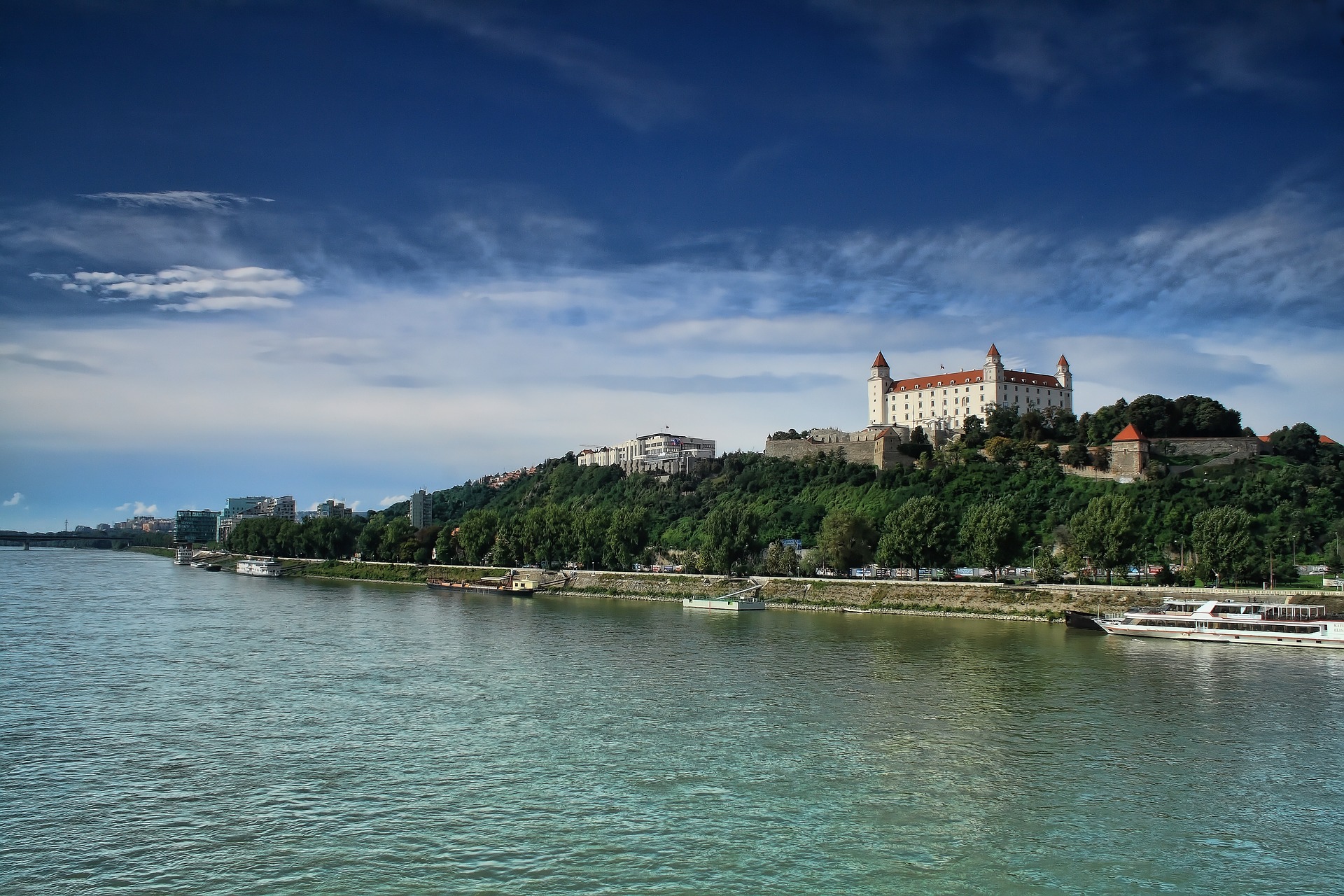
Slovakia packs a grand European history and a lot of nature into a small country. Bratislava, the capital, is compact, with a lovely old town, a castle and cafés along the Danube, and Vienna's airport is only 37 km away. Beyond the capital the country is covered with castles, from ruins in the forest to Spiš, one of the largest castle sites in Europe, and Bojnice, the most visited.
The High Tatras are the centre of hiking and winter sports, and well-marked trails cover the whole country, through national parks such as Slovak Paradise. Caves, many of them UNESCO-listed, are easy to visit. Medieval towns such as Banská Štiavnica, Levoča and Bardejov, and the wooden village of Vlkolínec, complete the picture. Slovakia uses the euro and is part of the Schengen area.
- Bratislava: A restored old town, the castle and riverside cafés on the Danube.
- High Tatras: The largest national park, for hiking and winter sports.
- Spiš Castle: One of the largest castle sites in Europe, a UNESCO site.
- Banská Štiavnica: A beautifully preserved medieval silver-mining town, listed by UNESCO.
- Slovak Paradise: Deep ravines and canyons with waterfalls through the limestone.
- Caves: Dobšinská Ice Cave and the caves of the Slovak Karst, many listed by UNESCO.
Places to visit
- City
- Town
- Park
- Mountain
- Historic site
Cities
- Bratislava: The capital, with a restored centre of Gothic, Baroque and Renaissance buildings.
- Košice: The second city and metropolis of the east, with a Gothic cathedral.
- Banská Štiavnica: A medieval mining town and UNESCO World Heritage Site.
- Levoča: A walled medieval town in the Spiš region with a Renaissance town hall.
- Bardejov: A spa town with an intact medieval centre, in the north-east.
- Trenčín: A castle above the old town and the river Váh.
- Banská Bystrica: An old mining town with a restored square, churches and museums.
- Poprad: The gateway to the High Tatras.
Beyond the cities
- High Tatras (mountain): The biggest national park, a centre for hiking and winter sports.
- Slovak Paradise National Park (park): Ravines and canyons carved by waterfalls through limestone.
- Slovak Karst National Park (park): Cave systems that are part of a UNESCO World Heritage Site.
- Spiš Castle (site): One of the largest castles in Europe, above Spišské Podhradie.
- Bojnice Castle (site): The most visited castle in Slovakia, with preserved interiors.
- Orava Castle (site): A castle high on a rock above the Orava river.
- Devín Castle (site): Castle ruins on the Danube at Bratislava, reached by river boat.
- Vlkolínec (town): A UNESCO-listed traditional Carpathian village.
- Piešťany (town): The most famous spa town in Slovakia.
Regions
- Western Slovakia: The capital, Bratislava, and the west of the country.
- Central Slovakia: The centre of the country, with its old mining towns and castles.
- Eastern Slovakia: Košice, the metropolis of the east, and the north-east around Bardejov.
Things to do
See
- Bratislava old town and castle Bratislava: Coffee in a street café by the Danube, then a boat to Devín Castle.
- Caves: Dobšinská Ice Cave and the Ochtinská, Domica, Jasovská and Gombasecká caves, all UNESCO-listed.
- Castles: Spiš, Bojnice and Orava are the most impressive; many offer guided tours.
- Wooden churches: Unique to the region, best reached by car.
- Kremnica: A medieval gold-mining town with the oldest working mint in the world.
Do
- Hiking: Hundreds of miles of well-marked trails, especially in the national parks.
- Skiing High Tatras: In the High and Low Tatras.
- Spa towns Piešťany: Spa hotels often include treatments in the price.
- Local festivals: Fašiangy carnival in early spring, harvest festivals in the wine regions and Christmas markets.
Eat
- Bryndzové halušky at a salaš: The national dish at a sheep farm restaurant in the north.
Itineraries
Bratislava to the Tatras in 7 days (7 days)
- Bratislava (2 nights): The old town and a boat to Devín Castle.
- Banská Štiavnica (1 night): The UNESCO mining town.
- Poprad (2 nights): Hiking or skiing in the High Tatras.
- Levoča (1 night): With Spiš Castle and Slovak Paradise nearby.
- Košice (1 night): The eastern metropolis; flights home or trains back by InterCity.
Climate and best time to visit
| Jan | Feb | Mar | Apr | May | Jun | Jul | Aug | Sep | Oct | Nov | Dec | |
|---|---|---|---|---|---|---|---|---|---|---|---|---|
| Max °C | 3 | 6 | 11 | 17 | 22 | 26 | 28 | 28 | 22 | 16 | 9 | 4 |
| Min °C | -3 | -2 | 2 | 6 | 11 | 14 | 16 | 16 | 12 | 7 | 3 | -2 |
| Rain mm | 37 | 33 | 37 | 36 | 59 | 59 | 62 | 61 | 59 | 44 | 46 | 43 |
Slovakia has a continental climate with four seasons: sunny, hot summers and cold, cloudy, snowy winters. In Bratislava the average maximum is about 3 °C in January and 28 °C in July and August, and rain is spread through the year. The south and the lowlands are warmer, while the mountains rarely pass 25 °C in summer and can fall to -20 °C in winter.
May to September is best for cities and hiking; winter is for skiing. In the mountains the weather can change within minutes, with rain or snow even in summer.
Holidays and events
- 1 January 2026 · Day of the Establishment of the Slovak Republic
- 6 January 2026 · Epiphany
- 3 April 2026 · Good Friday
- 6 April 2026 · Easter Monday
- 1 May 2026 · International Workers' Day
- 8 May 2026 · Day of victory over fascism
- 5 July 2026 · St. Cyril and Methodius Day
- 29 August 2026 · Slovak National Uprising anniversary
- 1 September 2026 · Day of the Constitution of the Slovak Republic
- 15 September 2026 · Day of Our Lady of the Seven Sorrows
- 1 November 2026 · All Saints’ Day
- 17 November 2026 · Struggle for Freedom and Democracy Day
- 24 December 2026 · Christmas Eve
- 25 December 2026 · Christmas Day
- 26 December 2026 · St. Stephen's Day
Getting around
| Main airports | BTS, KSC, TAT |
|---|
Trains are the best way to cross the country: frequent fast trains link the main cities, InterCity trains (with compulsory reservation) run between Bratislava, Žilina, the High Tatras and Košice, and fares are cheap by Western standards. Buses are better for local trips. Watch for pickpockets at big stations and on overnight trains. The CP website and app list all trains and buses.
Driving: you need a motorway vignette, headlights must be on at all times, and there is zero tolerance for alcohol, with fines up to €1,300. Many main roads have one lane each way and some drivers overtake aggressively; winter tyres are needed in snow. A UK photocard licence is valid for 6 months. Never leave your passport as a deposit, and be wary of strangers "helping" after a puncture at a petrol station.
Flying to Slovakia? PartnerCompare fares and find the cheapest datesSearch flightsWhere to stay
- Hotels: At least one in every town; the best are in Bratislava, Košice, the High Tatras and spa towns.
- Hostels: Mostly in the big cities.
- Private rooms: Look for "Zimmer frei" signs in tourist areas; breakfast is usually not included.
- Mountain huts and cabins: Cheap beds on trails in the national parks; book ahead in high season.
Visitors must report their address to the Foreigners Police: hotels do it, but in private accommodation you must notify the police within 3 working days.
Eat and drink
Dishes to try
- Bryndzové halušky: The national dish: potato dumplings with bryndza sheep's cheese, usually topped with bacon.
- Strapačky: The same dumplings with sauerkraut instead of cheese.
- Sheep's cheeses: Bryndza, parenica and korbáčiky, sold at salaš sheep farms.
Drinks
- Beer: Zlatý Bažant, Smädný Mních, Topvar and Šariš, similar to Czech beers.
- Wine: Riesling-style whites from the southern wine regions.
- Spirits: Strong local spirits; a standard shot is 50 ml.
| Tipping | Not compulsory, but rounding up or about 10% is common in cafés and restaurants; tell the waiter the total when you pay. |
|---|
Slovak food is simple and hearty, rooted in the cooking of the northern villages. Alcohol is cheap and sold in any shop to over-18s, but being visibly drunk is frowned upon. In Bratislava's old town drinking in the street is illegal.
Entry requirements and visas
| Passport validity | Issued less than 10 years before you arrive, and valid at least 3 months after you leave the Schengen area |
|---|
| Passport | Entry | Max stay | Notes |
|---|---|---|---|
| EU / EEA | Freedom of movement | EU free movement rules apply. | |
| United Kingdom | Visa free | 90 days | 90 days in any 180-day period across the whole Schengen area. |
| Canada | Visa free | 90 days | 90 days in any 180-day period across the whole Schengen area. |
| United States | Visa free | 90 days | 90 days in any 180-day period across the whole Schengen area. |
| Australia | Visa free | 90 days | 90 days in any 180-day period across the whole Schengen area. |
Other nationalities: check the official source below.
- EES (Entry/Exit System): fingerprints and photo at the border, free
- ETIAS (travel authorisation, EUR 20): not in operation yet
Slovakia is part of the Schengen area. Visitors from the UK, the US, Canada and Australia can stay up to 90 days in any 180-day period without a visa, counting the days spent in other Schengen countries. Non-EU visitors register fingerprints and a photo in the EU's Entry/Exit System (EES) on their first entry: allow extra time at the border, and at the airport when you leave.
Border staff may ask for a return or onward ticket, proof of accommodation and enough money. You must report where you stay to the Foreigners Police (hotels do it; otherwise within 3 working days). Overstaying can cost up to €1,600. Cash of €10,000 or more must be declared.
ETIAS, the online travel authorisation for visa-free visitors, is not in operation yet. Rules depend on your passport and can change: check the official link before you book.
Money and payments
| Currency | Euro (EUR) |
|---|
Slovakia uses the euro (EUR) since 2009. ATMs are everywhere except small villages, and cards are widely accepted in towns, but in 2026 some small museums, cafés and churches still took only cash. Keep sight of your card when paying, and check prices before ordering in nightlife areas: some bars overcharge.
Costs and budget
According to Eurostat, in 2024 the general price level in Slovakia was about 80% of the EU average, food in shops about 83% and restaurants and hotels about 91%.
Trains and alcohol are cheap by Western European standards; hotels in the capital and the spa towns charge Western prices.
Health
| Recommended vaccines | Routine vaccines, including measles (MMR), Hepatitis A, Hepatitis B, Tick-borne encephalitis, if you will spend time in the countryside or forests, Rabies, only if you will work with wildlife |
|---|---|
| Tap water | Safe |
Tap water is drinkable everywhere. Ticks in forests and some parks can carry encephalitis, especially from April to October. Healthcare is fairly good, but few doctors speak English outside big hospitals. A European (EHIC) or UK (GHIC) card gives access to medically necessary state healthcare. Mountain rescue can cost up to €1,000, so check your insurance. Dial 155 for an ambulance or 112.
This is general information, not medical advice: check with a travel health professional before you go.
Safety
- United States: Level 1: Exercise Normal Precautions (2026-10-20)
- Canada: Take normal security precautions (2026-10-20)
- United Kingdom: No advice against travel (2026-10-20)
Slovakia is very safe and violent crime is uncommon. Pickpockets work in Bratislava's old town, at Christmas markets, in bars and at major stations, and drinks have been spiked in clubs around the old town. Rowdy behaviour, popular with stag parties, is illegal and fined, especially at night.
In the Tatras, storms, lightning and avalanches are real risks: follow the Mountain Rescue Service rules. Do not jump into unknown water. Always carry your passport: not showing ID can cost up to €1,600.
Customs and etiquette
Slovaks are hospitable. If invited home, bring a small gift such as wine, chocolates or flowers (never money), take your shoes off at the door and expect a big meal; lunch is traditionally the main meal. People may greet with a kiss on the cheek, though not usually between men.
Language
| Official languages | Slovak |
|---|---|
| English | Common |
| Hello, good day | Dobrý deň DOH-bree deñ |
|---|---|
| Good morning | Dobré ráno DOH-breh RAA-noh |
| Please | Prosím PROH-seem |
| Thank you | Ďakujem JAH-koo-yehm |
| Excuse me | Prepáčte PREH-paach-tyeh |
| Goodbye | Do videnia doh VEE-deh-nyah |
| Do you speak English? | Hovoríte po anglicky? HOH-voh-ree-teh poh AHN-glits-kih |
What to pack
- Passport: You must carry it; failing to show ID can be fined.
- Rain gear and warm layers: Mountain weather changes within minutes.
- Tick repellent: Ticks are common in forests from spring to autumn.
- Some cash: Small museums, cafés and churches may not take cards.
- Insurance with mountain rescue: Rescue can cost up to €1,000.
Quick reference
Country facts
| Capital | Bratislava |
|---|---|
| Population | 5,413,813 (2025) |
| Area | 48,080 km² |
| Time zone | Europe/Bratislava (UTC+1) |
| Calling code | +421 |
| Driving side | right |
Staying connected
| Roaming | With an EU SIM card you pay home prices for calls, texts and data (roam like at home). Others should check their provider's rates. |
|---|
Emergency numbers
| Police | 158 |
|---|---|
| Ambulance | 155 |
| Fire | 150 |
Frequently asked questions
Do I need a visa for Slovakia?
Not for short trips with an EU, UK, US, Canadian or Australian passport: Slovakia is in the Schengen area, so you can stay up to 90 days in any 180-day period. Check the official EU link before you book.
Which airport is best for Bratislava?
Vienna, 37 km away, with hourly buses; Bratislava's own airport has few flights.
Can I drink the tap water?
Yes, everywhere.
Do I need to tip?
It is common to round up or leave about 10% in cafés and restaurants, but not compulsory.
What is the national dish?
Bryndzové halušky: potato dumplings with sheep's cheese and bacon.
When is the best time to visit?
May to September for cities and hiking; winter for skiing in the Tatras.
More Travel Stories from Europe
 Portugal
Sources This guide was last checked on · 20 sources
- Wikivoyage: Slovakia · Overview, Places to visit, Things to do, Itineraries, Climate and best time to visit, Getting around, Where to stay, Eat and drink, Money and payments, Costs and budget, Health, Safety, Customs and etiquette, Language, What to pack, Frequently asked questions
- Wikidata: Slovakia · Places to visit, Money and payments, Country facts
- WMO World Weather Information Service: Bratislava · Climate and best time to visit, Frequently asked questions
- Nager.Date: public holidays in Slovakia, 2026 · Holidays and events
- UK FCDO: Slovakia safety and security · Getting around, Money and payments, Safety, What to pack
- Government of Canada: Slovakia travel advice (updated 11 August 2026) · Getting around, Entry requirements and visas, Health, Safety, Frequently asked questions
- UK FCDO: Slovakia entry requirements · Where to stay, Entry requirements and visas, Frequently asked questions
- European Union: ETIAS official website · Entry requirements and visas
- ISO 4217 (SIX), published 2026-09-17 · Money and payments
- Eurostat: price level indices, 2024 (EU27 = 100) · Costs and budget
- UK FCDO: Slovakia health · Health
- US CDC: Travelers' health, Slovakia · Health
- US Department of State: Slovakia travel advisory · Safety
- UK FCDO: Slovakia travel advice · Safety
- Wikivoyage: Slovak phrasebook · Language
- World Bank, SP.POP.TOTL · Country facts
- World Bank, AG.LND.TOTL.K2 · Country facts
- IANA Time Zone Database, zone.tab · Country facts
- Your Europe: mobile roaming costs · Staying connected
- UK FCDO: Slovakia getting help · Emergency numbers
Suggest an update
Travel rules, prices and timetables change. If something in this guide is out of date, tell us: we check every suggestion against an official source before changing the page.