

- Local time
- 10:10
- Currency
- Euro (EUR)
- Capital
- Helsinki
- Calling code
- +358
- Drive on the
- right
Overview
Finland is a land of forests, tens of thousands of lakes and saunas: Helsinki and the old capital Turku, the castles and wooden towns of the south, the Lakeland and the Archipelago Sea, and Lapland's fells, reindeer and northern lights.
Finland lies between Sweden, Norway and Russia, with a long coast on the Baltic Sea. Most visitors head for Helsinki, the capital, for Lapland, for the Lakeland of the east or for the Archipelago Sea, the thousands of islands off the south-west coast. Finland was part of Sweden until the 19th century, and both Finnish and Swedish are national languages; almost everyone also speaks English.
The sauna is part of everyday life, and nature is open to all: parks and beaches are unfenced and free. Summer is short, bright and usually the best time to visit, with the midnight sun in the north. Winter is long and dark, with snow, skiing and, in Lapland, a good chance of seeing the northern lights. Travel is expensive, but public transport is comfortable and well organised.
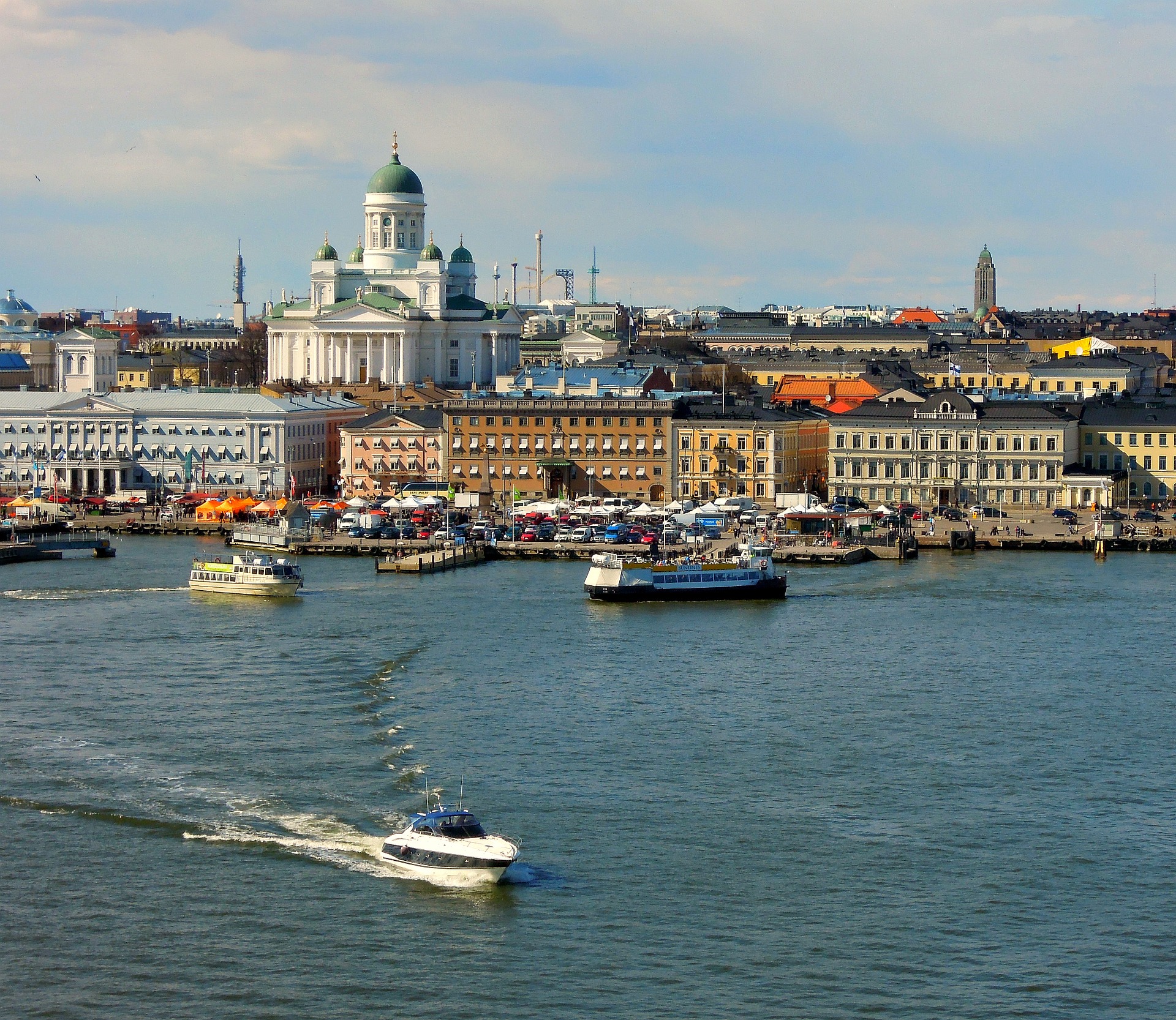
- Helsinki: The "Daughter of the Baltic", best on a warm, sunny summer day.
- Suomenlinna: An 18th-century sea fortress on islands, a ferry ride from Helsinki.
- Lapland: Fells, reindeer, winter sports and the northern lights.
- The Lakeland: Forests and lakes in the east, including Lake Saimaa.
- Sauna: An essential part of Finnish life, in homes, cottages and hotels.
- Olavinlinna Castle: The castle of Savonlinna, home of a popular opera festival.
Places to visit
- City
- Town
- Island
- Park
- Mountain
- Historic site
- Area
Cities
- Helsinki: The capital and by far the largest city, on the Gulf of Finland.
- Turku: The former capital on the south-west coast, with a medieval castle and cathedral.
- Tampere: A former industrial city turned home of culture, music, art and museums.
- Porvoo: Finland's second-oldest town, with picturesque wooden houses, near Helsinki.
- Rauma: The largest wooden old town in the Nordic countries, a UNESCO World Heritage site.
- Savonlinna: A small lakeside town with a big castle and a popular opera festival.
- Jyväskylä: A university town in Central Finland, set between lakes and ridges.
- Vaasa: A west-coast town with strong Swedish influences, by the Kvarken Archipelago.
- Oulu: A technology city at the end of the Gulf of Bothnia.
- Rovaniemi: The gateway to Lapland and home of Santa Claus Village.
Beyond the cities
- Suomenlinna (site): An 18th-century fortress on islands off Helsinki, reached by ferry.
- Archipelago Sea (island): Hundreds of islands between the mainland and Åland.
- Lake Saimaa (area): The great lake of the Lakeland, one of the largest natural lakes in Europe.
- Koli National Park (park): A scenic park in eastern Finland, a symbol of Finnish nature.
- Nuuksio National Park (park): A small, pretty national park close to Helsinki.
- Lemmenjoki National Park (park): Gold-digging grounds in Lapland and one of the largest wilderness areas in Europe.
- Kilpisjärvi (mountain): "The Arm of Finland", with the highest hills in the country and wide views.
- Levi (mountain): A popular winter sports resort in Lapland.
- Inari (town): In the far north, where the chance of northern lights is highest.
Regions
- Southern Finland: The southern coast up to the Russian border, with the capital Helsinki.
- West Coast: The south-western coast with Turku, and southern Ostrobothnia, home to half of the Swedish-speaking Finns.
- Finnish Lakeland: Forests and lakes from Tampere to the Russian border, with Savonia, Finnish Karelia and Lake Saimaa.
- Northern Finland: The sparsely inhabited north, with Oulu and Rovaniemi, reindeer, fells, winter sports and long hikes.
- Åland: Self-governing, Swedish-speaking islands off the south-west coast, centred on Mariehamn.
Things to do
See
- Suomenlinna by ferry Helsinki: The sea fortress on islands just off the capital.
- Olavinlinna and the Opera Festival Savonlinna: Finland's most atmospheric castle, at its best during the yearly opera festival.
- Wooden towns Porvoo: Old wooden houses in Porvoo, and the UNESCO-listed old town of Rauma.
- Turku and the archipelago Turku: The castle and cathedral, then the islands of the Archipelago Sea by boat or by the Archipelago Trail.
Do
- Northern lights Inari: From September to April in the far north: stay several nights for a good chance.
- Sauna: Heated to 70–120 °C, for relaxing and quiet conversation; being invited is an honour.
- Lakes in summer Lake Saimaa: Swimming, canoeing, rowing and lake cruises, many on historic steamboats.
- Hiking and winter sports Levi: Ski resorts and week-long hikes in the fells of Lapland.
Eat
- Lunch like a local: Set weekday lunches with salad and bread buffet for about €8–15.
Shop
- Market halls and berries: Farm cheeses, fish and, in summer, fresh berries at open-air markets and market halls.
Itineraries
Helsinki, Turku and the Lakeland in 9 days (9 days)
- Helsinki (3 nights): The capital, Suomenlinna and a day trip to Porvoo or Nuuksio.
- Turku (2 nights): The old capital and a taste of the Archipelago Sea.
- Tampere (2 nights): Museums, music and art.
- Savonlinna (2 nights): Olavinlinna Castle and Lake Saimaa.
Lapland in winter in 7 days (7 days)
- Rovaniemi (2 nights): The gateway to Lapland and Santa Claus Village.
- Levi (2 nights): Skiing and other winter sports.
- Inari (3 nights): Several nights in the far north for the northern lights.
The west coast in 6 days (6 days)
- Turku (2 nights): Castle, cathedral and archipelago.
- Rauma (1 night): The wooden old town.
- Vaasa (3 nights): Strong Swedish influences and the Kvarken Archipelago.
Climate and best time to visit
| Jan | Feb | Mar | Apr | May | Jun | Jul | Aug | Sep | Oct | Nov | Dec | |
|---|---|---|---|---|---|---|---|---|---|---|---|---|
| Max °C | -3 | -3 | 1 | 8 | 16 | 20 | 22 | 20 | 14 | 8 | 3 | -1 |
| Min °C | -9 | -9 | -6 | -1 | 4 | 9 | 12 | 11 | 6 | 2 | -2 | -7 |
| Rain mm | 44 | 34 | 35 | 36 | 35 | 49 | 69 | 78 | 69 | 75 | 69 | 57 |
At Helsinki-Vantaa, average highs range from about −3 °C in February to 22 °C in July, and February nights average −9 °C. Rain and snow fall all year, least in February and most in August and October. Finland has four distinct seasons. Winter is dark; snow cover is common but not guaranteed in the south, and the north gets much colder. The seasons differ between the coast and the inland and north: winter slush in Helsinki often turns to snow by Tampere.
The short summer is usually the best time to visit, with daytime temperatures of about 15–25 °C and the midnight sun near the solstice. In Lapland, September is popular for its autumn colours, after the frosts have ended the mosquito season, and March and April are the months for skiing in the north. October to December, wet, dark and slushy, is the worst time to visit. The northern lights season runs from September to April.
Holidays and events
- 1 January 2026 · New Year's Day
- 6 January 2026 · Epiphany
- 3 April 2026 · Good Friday
- 5 April 2026 · Easter Sunday
- 6 April 2026 · Easter Monday
- 1 May 2026 · May Day
- 14 May 2026 · Ascension Day
- 24 May 2026 · Pentecost
- 19 June 2026 · Midsummer Eve
- 20 June 2026 · Midsummer Day
- 31 October 2026 · All Saints' Day
- 6 December 2026 · Independence Day
- 24 December 2026 · Christmas Eve
- 25 December 2026 · Christmas Day
- 26 December 2026 · St. Stephen's Day
Getting around
| Main airports | HEL |
|---|
Trains run by VR are the most comfortable and fastest way between cities, with roughly hourly departures from Helsinki to Tampere, Turku and other main towns. Buy tickets online, early if you can, as advance fares are often much cheaper; few stations are staffed, but most have card ticket machines. Coaches reach practically every part of the country and are the only public transport in most of Lapland; Onnibus sells cheap fares if you book early. Domestic flights from Helsinki save time on long trips, especially if booked in advance. Taxis are expensive.
Driving is on the right, with headlights on at all times, priority to the right unless signed, and no turning right on red. Speed limits are 50 km/h in towns and 80 km/h elsewhere unless signed. Winter tyres are compulsory from 1 November to 31 March. Roads can be icy, winter days are very short, and wildlife on the roads is a danger. The drink-drive limit is much lower than in England.
Flying to Finland? PartnerCompare fares and find the cheapest datesSearch flightsWhere to stay
- Hotels: Typically about €100 a night or more; mostly Finnish chains such as Scandic and Sokos, often cheaper at weekends and in summer.
- Self-service hotels: Chains such as Omena: you book online and get a code for your room, with no check-in.
- Cottages (mökki): Thousands on lake and sea shores and near Lapland ski resorts; many lack running water.
- Hostels and budget hotels: The cheapest hotels start at about €50 a night without breakfast.
- Campsites: Usually €10–20 per tent or caravan, plus a small charge per person.
With budget options and outside the cities, check whether breakfast and bed linen are included. Many cottages are closed in winter, and you are usually expected to clean before you leave. Free Wi-Fi is almost universal, except in remote cottages.
Eat and drink
Dishes to try
- Baltic herring (silakka): Served in many ways; coastal towns hold herring fairs in September and October.
- Vendace (muikku): A small, sardine-like lake fish sold at markets and festivals.
- Kalakukko: A rye pie from Savonia filled with small whole fish.
- Local fish: Zander, pike, perch and smoked salmon, best freshly caught from lakes or the archipelago.
- Rye bread: Darker, heavier and chewier than American or Swedish-style bread; bread comes with every meal.
- Berries and kiisseli: Fresh berries in summer, and all year as jam, soup or a clear berry pudding.
- Salmiakki: Strong salty liquorice, an acquired taste.
Drinks
- Coffee: Mildly roasted filter coffee; Finns drink 3–4 cups a day on average.
- Milk and piimä: Adults often drink milk or buttermilk with meals.
- Lonkero: A pre-mixed gin and grapefruit long drink.
- Koskenkorva: The national spirit, a clear 38% drink.
- Cloudberry liqueur: A sweet berry liqueur, usually served with dessert.
- Glögi: Spiced mulled wine, with or without alcohol, at Christmas time.
| Tipping | Never necessary: service is included in restaurant bills. Taxi fares are sometimes rounded up, and cloakrooms charge a fixed fee, usually €2. |
|---|
Finns eat out a lot at lunch: on weekdays from about 11:00 to 14:00, most restaurants and cafeterias offer a set lunch with a main course, salad bar, bread and a drink for €8–15, and university cafeterias open to all are good value. Vegetarian options are almost everywhere, and menus mark lactose-free (L) and gluten-free (G) dishes.
Alcohol is expensive. Beer and cider are sold in supermarkets from 09:00 to 21:00, but anything over 8% comes only from the state shops, Alko. You must be 18 to buy alcohol and 20 to buy spirits. Smoking is generally banned in restaurants and bars, including outdoor seating.
Entry requirements and visas
| Passport validity | Issued less than 10 years before you arrive, and valid at least 3 months after you leave the Schengen area |
|---|
| Passport | Entry | Max stay | Notes |
|---|---|---|---|
| EU / EEA | Freedom of movement | Free movement within the EU. | |
| United Kingdom | Visa free | 90 days | 90 days in any 180-day period across the whole Schengen area. |
| Canada | Visa free | 90 days | Up to 90 days in any 180-day period in the Schengen area. |
Other nationalities: check the official source below.
Finland is in the Schengen area. UK and Canadian visitors can stay up to 90 days in any 180-day period without a visa, counting days in other Schengen countries. At the border you may be asked for proof of accommodation, a return or onward ticket and enough money for your stay. Non-EU visitors are registered in the EU Entry/Exit System; Canada notes that the ETIAS travel authorisation is not yet open for applications. Children travelling with an adult who is not their parent or guardian need a letter of consent.
All land border crossings with Russia are closed, and a permit is needed to enter the border zone. Cash of €10,000 or more must be declared, and meat and milk products cannot be brought into the EU. Rules depend on your passport: check the official link before you book.
Money and payments
| Currency | Euro (EUR) |
|---|---|
| Cards | Widespread |
Finland uses the euro. Most payments are electronic: Visa and Mastercard are widely accepted, contactless payment is commonplace and some businesses take only cards. Have a card with chip and PIN, as staff are not used to signatures. Small businesses such as market stalls, craft workshops and small lodgings may take only cash. ATMs are common in towns but harder to find in the countryside.
Cash payments are rounded to the nearest 5 cents, and ATMs do not give out €100, €200 or €500 notes. Prices often use a comma for decimals: 5,50 means €5.50.
Costs and budget
According to Eurostat, in 2024 the general price level in Finland was about 120% of the EU average, food in shops about 110% and restaurants and hotels about 127%.
Health
| Recommended vaccines | Routine vaccines, including measles (MMR), Hepatitis A: consider it, Hepatitis B, Tick-borne encephalitis, for extensive time outdoors where ticks are found |
|---|---|
| Malaria | None |
| Tap water | Safe |
Ticks can carry Lyme disease and tick-borne encephalitis; they are most common in coastal areas and are active once it is above 5 °C. Mosquitoes and blackflies are a serious nuisance in summer, especially in Lapland. Rabid dogs are not commonly found. With a European (EHIC) or UK (GHIC) health card you get medically necessary state healthcare; it does not replace travel insurance. Call 112 for an ambulance.
Medicines are strictly regulated: most are sold only in pharmacies, and antibiotics need a prescription. Bring your own in the original packaging with the prescription. Tap water is always drinkable, except on trains, where there are warnings. In remote areas emergency help and search and rescue are limited.
This is general information, not medical advice: check with a travel health professional before you go.
Safety
- United States: Level 1: Exercise Normal Precautions (2026-10-20)
- Canada: Take normal security precautions (2026-10-20)
- United Kingdom: No advice against travel (2026-10-20)
All three governments advise normal precautions, and crime is low. Pickpockets target tourists in crowded places in the summer season; Canada mentions Helsinki's main railway stations and Esplanadi park. Never leave phones, laptops or wallets unattended, even at hotel breakfast, and always lock your bike. Drug laws are strict, including for cannabis. Canada notes that drones and other objects from the war in Ukraine have entered Finnish airspace and can disrupt flights and ferries: the free 112 Suomi app gives official alerts.
The main natural danger is the cold, especially in winter and at sea; nights are often much colder than the forecast daytime figure. People walk, skate and even drive on the frozen lakes and sea in winter, but fatal accidents happen. In the wilderness, go well equipped and tell someone your plans. Forest fires are most common from April to September. Emergency number 112.
Customs and etiquette
Finns are relaxed about manners and dress, and you are unlikely to offend by accident. They are famously reserved: small talk is rare, silence is a normal part of conversation, and loud talk or laughter can irritate. Finnish has no word for "please", so its absence in English is not rude.
The sauna is a place for relaxation and quiet conversation, not for romance; drinks usually come afterwards, outside. Being invited to a sauna in a Finnish home or cottage is an honour. Tipping is not expected, and tipping public employees can be seen as a bribe.
Language
| Official languages | Finnish, Swedish |
|---|---|
| English | Widespread |
| Hello | Hei / Moi hay / moy |
|---|---|
| Thank you | Kiitos KEE-toss |
| Excuse me | Anteeksi AHN-tek-see |
| Goodbye | Näkemiin NAK-em-een |
| Yes / No | Kyllä / Ei KUUL-la / ay |
| Do you speak English? | Puhutko englantia? POO-hoot-kaw ENG-lahn-tee-ah |
| Cheers! | Kippis! KEEP-peess |
What to pack
- Warm layers, hat and gloves: Nights can be 10–15 °C colder than the daytime forecast, and winter is cold.
- Reflector: Pedestrians on unlit roads must wear one in the dark.
- Insect repellent: Mosquitoes and blackflies swarm in summer, especially in Lapland.
- Card with chip and PIN: Most payments are by card, and signatures cause problems.
- EHIC or GHIC health card: It gives access to medically necessary state healthcare.
Quick reference
Country facts
| Capital | Helsinki |
|---|---|
| Population | 5,646,436 (2025) |
| Area | 304,000 km² |
| Time zone | Europe/Helsinki (UTC+2) |
| Calling code | +358 |
| Driving side | right |
Electricity and plugs
| Plug types | C, F |
|---|---|
| Voltage | 230 V |
| Frequency | 50 Hz |
Staying connected
| SIM and eSIM | 4G and 5G networks cover the country, with weak signal in parts of Lapland and the outer archipelago. Prepaid packages from about €5 are sold in convenience stores. If you use a Finnish SIM in other countries, check the roaming terms: Finland has an exception to the EU roaming rules. |
|---|---|
| Wi-Fi | Almost all accommodation has free Wi-Fi, hotspots are common in cafés and on public transport, and nearly every public library has free Wi-Fi and computers. |
Emergency numbers
| Emergency | 112 |
|---|
Frequently asked questions
Do I need a visa for Finland?
Not for UK or Canadian citizens staying up to 90 days in any 180-day period in the Schengen area. Check the official link before you book.
When can I see the northern lights?
From September to April, in the far north of Lapland. Stay several nights, ideally a week, to have a good chance.
When is the best time to visit Finland?
Summer for most trips; September for autumn colours in Lapland; winter for snow, skiing and northern lights.
Can I drink the tap water?
Yes, it is always drinkable, except on trains, where there are warnings.
Do I need cash?
Rarely: cards and contactless are accepted almost everywhere, but carry a little cash for markets and small businesses.
Should I tip in Finland?
No. Service is included; at most, people round up taxi fares.
More Travel Stories from Finland
Sources This guide was last checked on · 18 sources
- Wikivoyage: Finland · Overview, Places to visit, Things to do, Itineraries, Climate and best time to visit, Getting around, Where to stay, Eat and drink, Entry requirements and visas, Money and payments, Health, Safety, Customs and etiquette, Language, What to pack, Electricity and plugs, Staying connected, Frequently asked questions
- Wikidata: Finland · Overview, Places to visit, Things to do, Money and payments, Country facts, Electricity and plugs
- WMO World Weather Information Service: Helsinki-Vantaa · Climate and best time to visit
- Nager.Date: public holidays in Finland, 2026 · Holidays and events
- UK FCDO: Finland safety and security · Getting around, Safety
- UK FCDO: Finland entry requirements · Getting around, Entry requirements and visas, Frequently asked questions
- Government of Canada: Finland travel advice (updated 11 August 2026) · Getting around, Entry requirements and visas, Health, Safety, Frequently asked questions
- ISO 4217 (SIX), published 2026-09-17 · Money and payments
- Eurostat: price level indices, 2024 (EU27 = 100) · Costs and budget
- CDC Travelers' Health: Finland · Health, Frequently asked questions
- UK FCDO: Finland health · Health, What to pack
- US Department of State: Finland travel advisory · Safety
- UK FCDO: Finland travel advice · Safety
- Wikivoyage: Finnish phrasebook · Language
- World Bank, SP.POP.TOTL · Country facts
- World Bank, AG.LND.TOTL.K2 · Country facts
- IANA Time Zone Database, zone.tab · Country facts
- UK FCDO: Finland getting help · Emergency numbers
Suggest an update
Travel rules, prices and timetables change. If something in this guide is out of date, tell us: we check every suggestion against an official source before changing the page.