

- Local time
- 09:10 (capital)
- Currency
- Euro (EUR)
- Capital
- Berlin
- Calling code
- +49
- Drive on the
- right
Overview
Germany ranges from Berlin's history and nightlife to Bavaria's Alps and Neuschwanstein, the Rhine's vineyards, Hamburg's harbour, rebuilt Dresden and the islands of the North Sea and Baltic, with beer, wine and trains to almost everywhere.
Germany is a federation of 16 states, each with its own culture: the beer, lederhosen and Alpine hats that many visitors expect belong mostly to Bavaria. Berlin, the reunified capital, mixes landmarks such as the Brandenburg Gate, the Berlin Wall and the Holocaust Memorial with galleries, clubs and restaurants. Hamburg has its harbour and the Elbphilharmonie, Munich the Oktoberfest, Cologne its cathedral and Roman past, and Dresden its rebuilt baroque centre.
Outside the cities, the Middle Rhine Valley is a UNESCO-listed stretch of the river famous for its wines, the Romantic Road links castles and picturesque villages, and the Bavarian Alps offer skiing, hiking and Neuschwanstein Castle. In the north, the North Sea and Baltic coasts and the Frisian islands are summer favourites. Trains and motorways reach everywhere; English is widely understood, especially in the big cities.
- Berlin: The capital: the Wall, the Brandenburg Gate, museums and nightlife.
- Munich and Bavaria: The Oktoberfest, beer gardens and the Bavarian Alps.
- Neuschwanstein Castle: The fairy-tale castle in the Bavarian Alps.
- Middle Rhine Valley: A UNESCO stretch of the Rhine, famous for its wines.
- Hamburg: Harbour, canals, the Speicherstadt and the Elbphilharmonie.
- Dresden: The rebuilt Frauenkirche and historic old town on the Elbe.
Places to visit
- City
- Coast
- Island
- Mountain
- Area
Cities
- Berlin: The reunified capital, a diverse metropolis known for its clubs, galleries and restaurants.
- Munich: The capital of Bavaria: the Oktoberfest, the Hofbräuhaus, opera, museums and nightlife.
- Hamburg: Germany's second city: the harbour, canals, the Speicherstadt and the Elbphilharmonie.
- Cologne: Founded by the Romans, known for its huge cathedral and Romanesque churches.
- Frankfurt: A skyline of towers, a finance and transport hub and seat of the European Central Bank.
- Dresden: "Florence on the Elbe", with the rebuilt Frauenkirche and historic Altstadt.
- Düsseldorf: Shopping, modern architecture and nightlife in the Altstadt and along the Rhine.
- Nuremberg: A former imperial city with a medieval old town, partly rebuilt after the war.
- Bremen: The old market, the Schnoor quarter, the Böttcherstrasse and a maritime feel.
Beyond the cities
- Bavarian Alps (mountain): Skiing in winter, hiking in summer, and Neuschwanstein Castle.
- Black Forest (area): Forested hills known for cuckoo clocks, cherry pie and game dishes.
- Middle Rhine Valley (area): A UNESCO stretch of the Rhine between Bingen/Rüdesheim and Koblenz, famous for wine.
- Lake Constance (area): Germany's largest lake, with Alpine views and water sports.
- Harz (mountain): Hills once split by the German border, now known for hiking.
- Franconian Switzerland (area): A karst region known for climbing.
- East Frisian Islands (island): Largely car-free islands in the Wadden Sea, popular in summer.
- North Frisian Islands (island): Calm North Sea islands and resorts, including Sylt.
- Baltic Sea Coast (coast): Old seaside resorts once favoured by royalty, cut off during the Cold War.
Regions
- Northern Germany: Windswept hills and the holiday coasts of the North Sea and the Baltic.
- Western Germany: Wine country and modern cities along the Middle Rhine and Moselle valleys.
- Central Germany: The green heart of the country, with major cities and the Thuringian Forest.
- Eastern Germany: Berlin, the capital, and baroque Dresden.
- Southern Germany: Alpine foothills and Bavarian tradition, but also industry and art.
Things to do
See
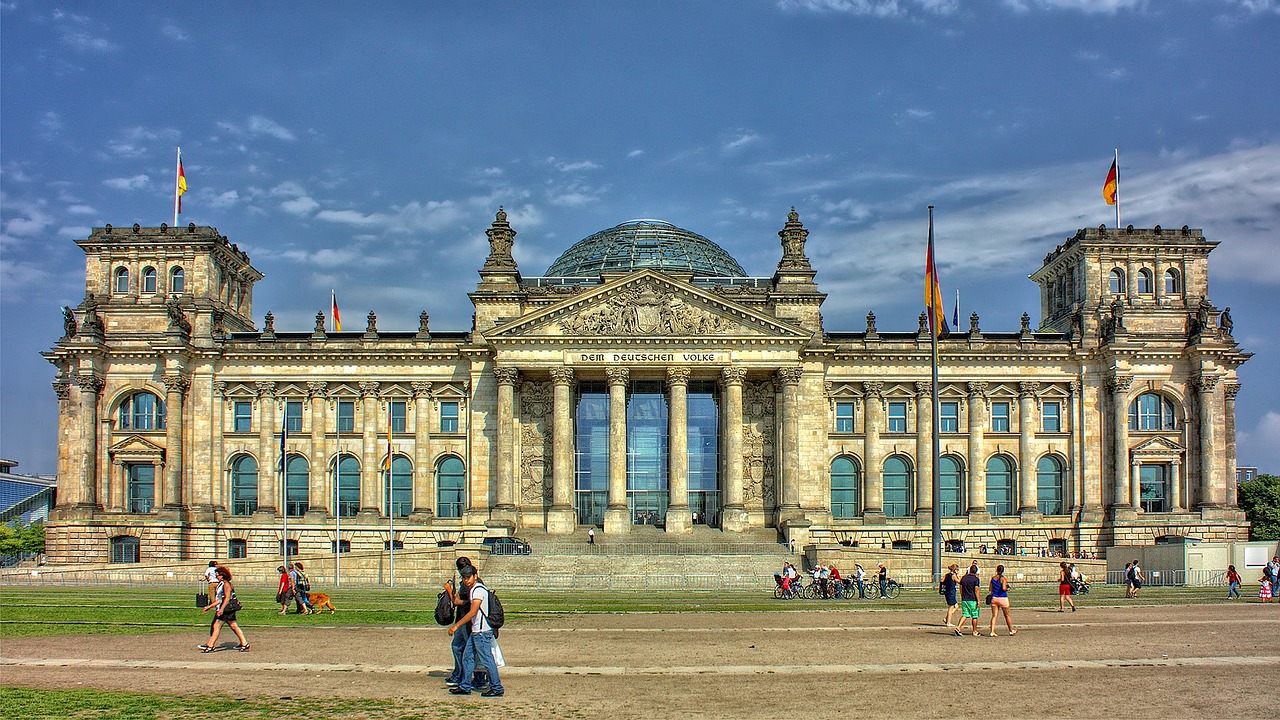
- Berlin's landmarks Berlin: The Berlin Wall, Brandenburg Gate, Bundestag, Checkpoint Charlie and Holocaust Memorial.
- Neuschwanstein Castle Bavarian Alps: The most iconic of German castles, with a fairy-tale look.
- Cologne Cathedral Cologne: The huge Gothic cathedral of a city founded by the Romans.
- Frauenkirche Dresden: The rebuilt baroque church at the heart of the Altstadt.
- Middle Rhine Valley: The UNESCO stretch of the Rhine; the railway along it is especially scenic.
Do
- Romantic Road Bavaria: A scenic route of romantic castles and picturesque villages.
- Zugspitze Bavarian Alps: Germany's highest mountain, reached by lifts or on foot.
- Oktoberfest Munich: The famous beer festival, held around the end of September.
- Christmas markets Nuremberg, Dresden, Bremen and other cities: December markets where you drink Glühwein to keep out the cold.
Drink
- Local beer: Bars serve local beers that change from town to town, more varied in the south.
Itineraries
Berlin and Dresden in 6 days (6 days)
- Berlin (4 nights): The Wall, the museums and the nightlife.
- Dresden (2 nights): The Frauenkirche and the old town.
Bavaria in 7 days (7 days)
- Munich (3 nights): Beer halls, museums and, in late September, the Oktoberfest.
- Nuremberg (2 nights): The medieval old town.
- Bavarian Alps (2 nights): Neuschwanstein Castle and mountain walks.
Along the Rhine in 6 days (6 days)
- Cologne (2 nights): The cathedral and Romanesque churches.
- Middle Rhine Valley (2 nights): Vineyards and a scenic train ride along the river.
- Frankfurt (2 nights): The skyline, and the main airport for the way home.
Climate and best time to visit
| Jan | Feb | Mar | Apr | May | Jun | Jul | Aug | Sep | Oct | Nov | Dec | |
|---|---|---|---|---|---|---|---|---|---|---|---|---|
| Max °C | 3 | 4 | 9 | 13 | 19 | 22 | 24 | 24 | 19 | 13 | 7 | 4 |
| Min °C | -2 | -2 | 1 | 4 | 9 | 12 | 14 | 14 | 11 | 6 | 2 | -0 |
| Rain mm | 42 | 33 | 41 | 37 | 54 | 69 | 56 | 58 | 45 | 37 | 44 | 55 |
In Berlin, average highs go from about 3 °C in January to 24 °C in July and August, and nights in January and February average below freezing. Rain falls all year, most in June. The north coast is flat and windy, with cool temperatures, while the Bavarian Alps in the south get snow for skiing in winter and are good for hiking in summer.
June to August are the warmest months, the best for the coast, the islands and the mountains; May and September are milder. In the Alps, check the weather and avalanche warnings before winter sports.
Holidays and events
- 1 January 2026 · New Year's Day
- 3 April 2026 · Good Friday
- 6 April 2026 · Easter Monday
- 1 May 2026 · Labour Day
- 14 May 2026 · Ascension Day
- 25 May 2026 · Whit Monday
- 3 October 2026 · German Unity Day
- 25 December 2026 · Christmas Day
- 26 December 2026 · St. Stephen's Day
Getting around
| Main airports | FRA, MUC, BER, DUS, HAM, CGN, STR |
|---|
Trains reach almost everywhere, but long-distance trains are often late or cancelled: leave slack in your plans. Tickets can be booked up to 180 days ahead, and early fares can be surprisingly cheap. If your long-distance train is cancelled or more than 20 minutes late at your departure station, you can take any other train to your destination. The Deutschlandticket covers all regional trains and local public transport in the country. Domestic flights rarely save time over the train.
Driving: traffic drives on the right. The Autobahn network has no tolls for cars, and some stretches have no speed limit. Check that your licence is valid in Germany: a UK photocard licence is valid for up to 6 months. Some inner-city areas are low-emission zones (Umweltzone) open only to vehicles that meet set exhaust standards. Always stop at red lights; a green arrow sign lets you turn right only after a full stop.
Flying to Germany? PartnerCompare fares and find the cheapest datesSearch flightsWhere to stay
- Hotels: Rated 1 to 5 stars; prices include VAT and are usually per room. Munich and Frankfurt are the most expensive.
- Budget chains: Motel One and Ibis in most cities; Ibis Budget near the motorways.
- Youth hostels: Over 600 Jugendherbergen of the DJH; you must be a Hostelling International member.
- Independent hostels: Simple shared rooms in the cities.
- Campsites: Countless sites of every standard.
Wild camping is illegal without the landowner's permission, except in Mecklenburg-Vorpommern. Stay clear of hunting areas and military training grounds.
Eat and drink
Dishes to try
- Rinderroulade: Thin beef rolled around bacon and pickled cucumber, with red cabbage, potato dumplings and gravy.
- Schnitzel: A thin, usually breaded slice of pork, often served with fries (Pommes).
- Rehrücken mit Spätzle: Venison with egg noodles, best around the Black Forest.
Drinks
- Beer: Local lagers that vary from town to town, brewed under the old purity law.
- Wine: Mostly fresh, fruity whites such as Riesling, from the south and the Rhine.
- Glühwein: Spiced wine served very hot at the Christmas markets in December.
| Tipping | Common in restaurants, bars and taxis: round the bill up, rarely more than 10%, and tell the server the total when you pay. |
|---|
In most restaurants you choose a free table yourself; tables marked Reserviert are booked. Once seated, the table is yours until you leave. Smoking is banned inside restaurants, cafés and pubs.
Bottles and cans carry a deposit (Pfand) of 8 to 25 cents, refunded when you return them to a shop.
Entry requirements and visas
| Passport validity | Issued less than 10 years before you arrive, and valid at least 3 months after you leave the Schengen area |
|---|
| Passport | Entry | Max stay | Notes |
|---|---|---|---|
| EU / EEA | Freedom of movement | Free movement within the EU. | |
| United Kingdom | Visa free | 90 days | 90 days in any 180-day period across the whole Schengen area. |
| Canada | Visa free | 90 days | 90 days in any 180-day period in the Schengen area. |
Other nationalities: check the official source below.
Germany is in the Schengen area. UK and Canadian visitors can stay up to 90 days in any 180-day period without a visa, counting days spent in other Schengen countries; overstaying can lead to a ban of up to 3 years. At the border you may be asked for a return or onward ticket and proof of enough money.
Non-EU visitors register fingerprints and a photo in the EU Entry/Exit System on their first entry: allow extra time. Rules depend on your passport: check the official link before you book.
Money and payments
| Currency | Euro (EUR) |
|---|---|
| Cards | Common |
Germany uses the euro (€), and Germans still prefer to pay in cash. The German girocard is accepted almost everywhere, but credit cards and foreign debit cards are less widely accepted than in neighbouring countries: carry cash. Notes above €100 are rarely seen and often refused, and small shops and some ticket machines do not take €50 notes or larger.
Change money only at banks, ATMs or official exchange offices, and check your change. Shops close on Sundays and public holidays almost everywhere, and even pharmacies keep only an emergency rota.
Costs and budget
According to Eurostat, in 2024 the general price level in Germany was about 112% of the EU average, food in shops about 103% and restaurants and hotels about 112%.
Health
| Recommended vaccines | Routine vaccines, including measles (MMR), Hepatitis A: consider it, Hepatitis B, Polio: a single adult booster, if you were vaccinated as a child, Tick-borne encephalitis, for long stays or time outdoors in forests and countryside |
|---|---|
| Malaria | None |
| Tap water | Safe |
The CDC reports that poliovirus has been found in Germany in the past year: adults vaccinated as children may get one booster dose. With a European (EHIC) or UK (GHIC) health card you get medically necessary state healthcare; others should check their insurance, as German healthcare is expensive. Ambulances come via 112 whatever your insurance. Altitude sickness is a risk in the mountains.
Tap water is of excellent quality. In some regions it has high nitrate levels and should not be drunk for long periods in early pregnancy. Non-drinkable taps are marked kein Trinkwasser.
This is general information, not medical advice: check with a travel health professional before you go.
Safety
- United States: Level 2: Exercise Increased Caution (2026-10-20)
- Canada: Exercise a high degree of caution (2026-10-20)
- United Kingdom: No advice against travel (2026-10-20)
Canada advises a high degree of caution because of the threat of terrorism, and the FCDO says attacks are very likely, including at markets, events, religious sites and crowded places: stay alert. Crime is similar to the UK. Organised pickpockets work in big cities, stations, public transport, tourist sites and Christmas markets, and passport thefts on trains rise in the summer and winter holidays. Change money only at banks or ATMs: people have been arrested for paying with counterfeit notes.
Carrying ID is not compulsory, but if you cannot show it the police may take you to fetch your passport. Drug penalties are severe. In the mountains, check the weather and avalanche warnings, do not ski off-piste without a guide, and make sure your insurance covers mountain rescue. Emergency number 112, police 110.
Customs and etiquette
Germans value punctuality: arrive on time, and call ahead if you will be late. Shops are closed on Sundays and public holidays. Behave respectfully in places of worship and at memorials such as the former concentration camps and the Holocaust Memorial. Aggressive or noisy behaviour can bring a fine, drunk or sober.
Smoking is banned indoors unless explicitly allowed, and on public transport including platforms, except in marked Raucherbereich areas. In restaurants it is fine to step outside for a smoke before paying: tell the staff.
Language
| Official languages | German |
|---|---|
| English | Common |
| Hello | Hallo / Guten Tag HAH-loh / GOO-ten tahk |
|---|---|
| Please | Bitte BIT-tuh |
| Thank you | Danke DAN-kuh |
| Excuse me | Entschuldigung en-TSHOOL-dee-goong |
| Goodbye | Auf Wiedersehen owf VEE-dur-zane |
| Do you speak English? | Sprechen Sie Englisch? SHPREKH-un zee ENG-leesh |
| The bill, please | Zahlen, bitte TSAH-len BIT-tuh |
What to pack
- Cash: Credit cards and foreign debit cards are not accepted everywhere.
- Passport: Not compulsory to carry, but police may ask for ID.
- EHIC or GHIC and travel insurance: German healthcare is expensive; include mountain rescue for winter sports.
- Plug adapter: Germany uses types C and F.
Quick reference
Country facts
| Capital | Berlin |
|---|---|
| Population | 83,491,249 (2025) |
| Area | 349,430 km² |
| Time zone | Europe/Berlin (UTC+1), Europe/Busingen (UTC+1) |
| Calling code | +49 |
| Driving side | right |
Electricity and plugs
| Plug types | C, F |
|---|---|
| Voltage | 230 V |
| Frequency | 50 Hz |
Staying connected
| SIM and eSIM | Prepaid SIM cards must be registered with your passport; PostIdent at Deutsche Post branches is the easiest way for visitors. |
|---|---|
| Wi-Fi | Free Wi-Fi (WLAN) is common in shops, cafés, restaurants and large supermarket and fast-food chains. |
Emergency numbers
| Police | 110 |
|---|---|
| Ambulance | 112 |
| Fire | 112 |
Frequently asked questions
Do I need a visa for Germany?
Not for short stays with a UK or Canadian passport: up to 90 days in any 180-day period in the Schengen area. Check the official link before you book.
Can I pay by card everywhere?
No. Germans prefer cash, and credit cards are less widely accepted than in neighbouring countries.
Should I tip in Germany?
Yes, in restaurants, bars and taxis: round up, rarely more than 10%.
Are German motorways free?
Yes, the Autobahn has no tolls for cars, and some stretches have no speed limit.
Are shops open on Sunday?
Almost never: shops close on Sundays and public holidays.
Can I drink the tap water?
Yes, it is of excellent quality.
More Travel Stories from Germany
Sources This guide was last checked on · 18 sources
- Wikivoyage: Germany · Overview, Places to visit, Things to do, Itineraries, Climate and best time to visit, Getting around, Where to stay, Eat and drink, Entry requirements and visas, Money and payments, Health, Safety, Customs and etiquette, Language, What to pack, Electricity and plugs, Staying connected, Frequently asked questions
- Wikidata: Germany · Overview, Places to visit, Money and payments, Country facts, Electricity and plugs
- WMO World Weather Information Service: Berlin · Climate and best time to visit
- UK FCDO: Germany safety and security (updated 11 August 2026) · Climate and best time to visit, Getting around, Money and payments, Safety, What to pack
- Nager.Date: public holidays in Germany, 2026 · Holidays and events
- UK FCDO: Germany entry requirements · Entry requirements and visas, Frequently asked questions
- Government of Canada: Germany travel advice (updated 11 August 2026) · Entry requirements and visas, Safety, Frequently asked questions
- ISO 4217 (SIX), published 2026-09-17 · Money and payments
- Eurostat: price level indices, 2024 (EU27 = 100) · Costs and budget
- CDC Travelers' Health: Germany · Health
- UK FCDO: Germany health · Health
- US Department of State: Germany travel advisory · Safety
- UK FCDO: Germany travel advice · Safety
- Wikivoyage: German phrasebook · Language
- World Bank, SP.POP.TOTL · Country facts
- World Bank, AG.LND.TOTL.K2 · Country facts
- IANA Time Zone Database, zone.tab · Country facts
- UK FCDO: Germany getting help · Emergency numbers
Suggest an update
Travel rules, prices and timetables change. If something in this guide is out of date, tell us: we check every suggestion against an official source before changing the page.