

- Local time
- 12:37
- Currency
- Euro (EUR)
- Capital
- Amsterdam
- Calling code
- +31
- Drive on the
- right
Overview
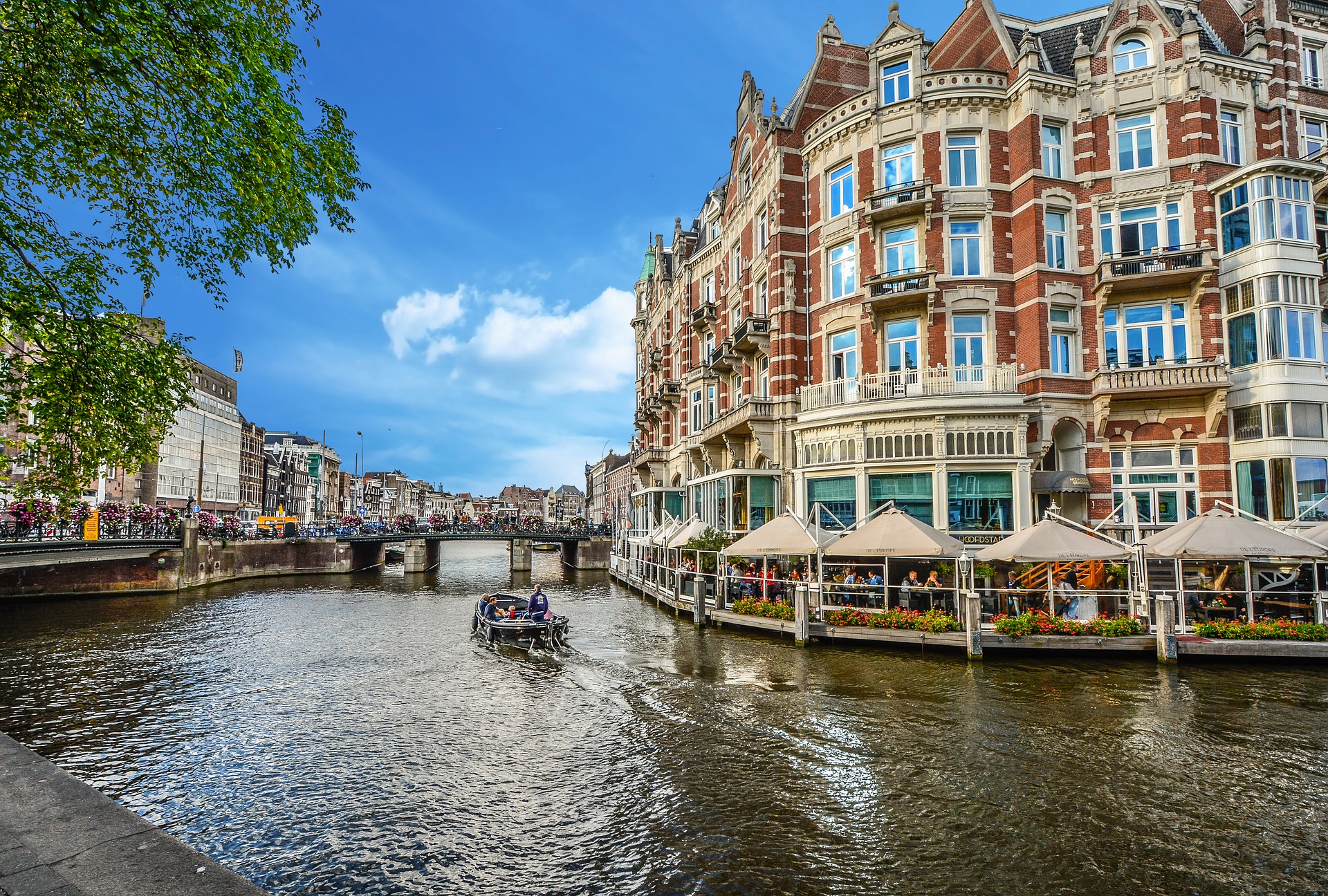
Amsterdam's canals and Golden Age art, historic towns, windmills, tulip fields and flat land made for cycling, a short train ride apart.
The Netherlands is a small, densely populated country in the low river delta of north-west Europe, much of it flat and at or below sea level, and about a fifth of it reclaimed from the sea, lakes and marshes. Amsterdam, with its canals and hundreds of 17th-century monuments, is the obvious start, but towns such as Utrecht, Leiden, Delft, Haarlem and Maastricht have historic centres of their own. The museums hold works by Rembrandt, Vermeer and Van Gogh, and the Museumkaart opens the doors of more than 500 of them.
Outside the cities you find the classic images: the windmills of Kinderdijk and the Zaanse Schans, polders, villages and, in spring, tulip fields and the Keukenhof gardens. Trains are frequent and distances short, and cycling is the national way to travel, on about 22,000 km of cycle paths. Most Dutch people speak English well. The Netherlands uses the euro and is part of the Schengen area.
- Amsterdam: Canals, 17th-century houses and world-class museums.
- Kinderdijk: A network of 19 windmills that once drained the surrounding polder.
- Keukenhof: The famous flower gardens near Lisse, open only from March to May.
- Utrecht and Leiden: Medieval canals, old churches and the country's oldest university.
- Maastricht and South Limburg: A southern city with ancient monuments, and rolling hills with castles.
- Hoge Veluwe National Park: Heath, sand dunes and woodland, ideal by bike.
Places to visit
- City
- Town
- Island
- Park
- Historic site
- Area
Cities
- Amsterdam: The capital: canals, impressive architecture, museums and a famously liberal attitude.
- Rotterdam: Modern architecture, a busy port, good nightlife and an active art scene.
- The Hague: The seat of government and the royal family, with the Peace Palace and the Binnenhof.
- Utrecht: A medieval centre with wharf-level canals, old churches and the Rietveld Schröder House.
- Leiden: Rembrandt's birthplace, with the oldest university in the country and three national museums.
- Delft: A historic town known for its blue and white pottery.
- Maastricht: A fortified medieval city with a southern, "Burgundian" atmosphere.
- Groningen: A relaxed student city in the north with late nightlife.
- Nijmegen: The oldest city in the country, home of the Four Days Marches.
Beyond the cities
- Kinderdijk (site): Windmills in a classic Dutch landscape.
- Zaanse Schans (site): An open-air museum of windmills, crafts and wooden Zaan houses.
- Keukenhof (park): Flower gardens at Lisse, open from March to May.
- Hoge Veluwe National Park (park): Heathland, sand dunes and woodland.
- Texel (island): The largest island, for cycling, birdwatching, walking and beaches.
- South Limburg (area): Rolling green hills with villages, castles and orchards; Valkenburg is the best-known town.
- Haarlem (town): A town with a beautiful old centre.
- Schokland (site): A former island evacuated in 1859, now a ghost village.
- Efteling (site): A big fairy-tale theme park.
Regions
- Western Netherlands: Polders, historic towns and the busiest cities in the country.
- Northern Netherlands: The Frisian lakes and the West Frisian Islands.
- Eastern Netherlands: Gelderland's castles and the woods and heaths of the Veluwe.
- Southern Netherlands: North Brabant and Limburg, with carnival before Lent and the hills of South Limburg.
Things to do
See
- Amsterdam's canals and museums Amsterdam: Walk the canal ring and see the Golden Age masters, Rembrandt and Vermeer, and Van Gogh.
- Windmills at Kinderdijk Kinderdijk: 19 windmills that once drained the polder.
- Keukenhof and the bulb fields Keukenhof: Flower gardens open only from March to May; the tulip fields around are best seen by bike.
- Open-air museums: The Zuiderzeemuseum in Enkhuizen and the Openluchtmuseum in Arnhem show traditional Dutch life, and are less crowded than the Zaanse Schans.
Do
- Museumkaart: A year's entry to more than 500 museums; buy it at a museum or online, and allow time for the full card to be posted.
- Cycling: About 22,000 km of cycle paths and numbered junction routes; try the Green Heart, the Hoge Veluwe, South Limburg or the Zaanstreek.
- Beaches: Scheveningen gets very crowded on hot days; Zandvoort, Noordwijk and the islands are calmer.
- King's Day Amsterdam: On 27 April the whole country holds street markets and parties; wear orange.
- Carnival in the south Maastricht: Parades before Lent in Maastricht, Breda and 's-Hertogenbosch.
After dark
- Nightlife: Neighbourhood bars in Amsterdam, clubs in Rotterdam, student nightlife in Groningen, Leiden and Utrecht.
Itineraries
Amsterdam and the historic west in 7 days (7 days)
- Amsterdam (3 nights): Canals and museums, with a trip to the Zaanse Schans.
- Haarlem (1 night): One of the finest old centres in the country.
- Leiden (1 night): Museums, canals and narrow streets.
- Delft (1 night): Blue and white pottery, and a day in The Hague.
- Rotterdam (1 night): Modern architecture and a trip to Kinderdijk.
Utrecht to Maastricht in 5 days (5 days)
- Utrecht (1 night): The medieval canals.
- Nijmegen (2 nights): The oldest city in the country.
- Maastricht (2 nights): The old city and the hills of South Limburg.
Climate and best time to visit
| Jan | Feb | Mar | Apr | May | Jun | Jul | Aug | Sep | Oct | Nov | Dec | |
|---|---|---|---|---|---|---|---|---|---|---|---|---|
| Max °C | 5 | 6 | 9 | 12 | 17 | 19 | 21 | 22 | 18 | 14 | 9 | 7 |
| Min °C | 1 | 0 | 2 | 4 | 8 | 10 | 13 | 12 | 10 | 7 | 4 | 2 |
| Rain mm | 62 | 43 | 59 | 41 | 48 | 68 | 66 | 61 | 82 | 85 | 89 | 75 |
The Netherlands has a temperate climate with cool summers, mild winters and rain in every month. In Amsterdam the average maximum is about 5 to 6 °C in January and February and about 21 to 22 °C in July and August; a few days above 30 °C happen most summers. Autumn is the wettest season (more than 80 mm a month from September to November), and April is the driest month.
May to September is the best time to go, and April and October can also be mild and sunny. Spring brings the tulips. Winter is grey and cold, and a few days of frost send everyone onto the frozen canals with their skates.
Holidays and events
- 1 January 2026 · New Year's Day
- 3 April 2026 · Good Friday
- 5 April 2026 · Easter Sunday
- 6 April 2026 · Easter Monday
- 27 April 2026 · King's Day
- 5 May 2026 · Liberation Day
- 14 May 2026 · Ascension Day
- 24 May 2026 · Pentecost
- 25 May 2026 · Whit Monday
- 25 December 2026 · Christmas Day
- 26 December 2026 · St. Stephen's Day
Getting around
| Main airports | AMS, EIN, RTM, MST, GRQ |
|---|
Trains are the quickest and cheapest way around: most lines run every 15 minutes, and Groningen to Maastricht takes about 4 hours. Pay by tapping a contactless bank card (OVpay) at the gates or readers when you start and end each journey, using the same card; check out and in again when you change operator. Many trains split en route, so check which part goes where, and from Schiphol make sure you board for Amsterdam Centraal, not Zuid. Buses and trams take only cards, not cash.
Cycling is how the Dutch travel: rent a bike at or near stations, use two locks, and use guarded bike parks, because theft is common. Cycle paths are compulsory for cyclists and are not for pedestrians. Driving: motorways are busy at peak hours; traffic from the right has priority, trams usually have priority, and cyclists and mopeds are everywhere. Speed cameras are common and fines are paid on the spot. You can drive on a UK licence; Canada advises carrying an International Driving Permit.
Flying to Netherlands? PartnerCompare fares and find the cheapest datesSearch flightsWhere to stay
- Hotels: Plentiful and relatively affordable for Western Europe; a decent hotel can cost €80 or less a night.
- Campsites: All over the country; book ahead for caravans and family tents in summer, and many offer simple cabins (trekkershut).
| Tourist tax | Charged per night by many municipalities and usually included in the price; the rate varies by town, type of accommodation and season. |
|---|
Wild camping is not allowed. Thanks to fast public transport, staying outside a city centre, or in another town, is an easy way to save money.
Eat and drink
Dishes to try
- Stamppot: The national dish: potatoes mashed with vegetables, often served with smoked sausage.
- Haring: Soused herring with chopped onion, sometimes in a bun.
- Dutch cheese: Gouda, Edam, Leerdammer and Beemster.
- Pannenkoeken and poffertjes: Sweet or savoury pancakes, and small puffed pancakes with butter and sugar.
- Stroopwafels: Thin waffles with syrup, made fresh at markets.
- Rijsttafel: A spread of small Indonesian dishes, a legacy of colonial ties.
Drinks
- Beer: Big brands such as Heineken, Grolsch and Amstel, plus wheat beers and abbey beers from the south.
- Jenever: Dutch gin, in old (oude) and young (jonge) styles.
- Coffee: Strong; koffie verkeerd is half coffee, half milk.
| Tipping | Service is included by law. Tips are appreciated: round up small bills, and 5 to 10% is generous in a restaurant. |
|---|
Restaurants are good but relatively expensive, with much of the profit made on drinks and desserts. Dinner out is a long, social occasion, while lunch is usually a simple sandwich, so some small-town restaurants close at midday. The drinking age is 18, and smoking is banned in all bars and restaurants. Tap water is excellent.
Entry requirements and visas
| Passport validity | Issued less than 10 years before you arrive, and valid at least 3 months after you leave the Schengen area |
|---|
| Passport | Entry | Max stay | Notes |
|---|---|---|---|
| EU / EEA | Freedom of movement | EU free movement rules apply. | |
| United Kingdom | Visa free | 90 days | 90 days in any 180-day period across the whole Schengen area. |
| Canada | Visa free | 90 days | 90 days in any 180-day period across the whole Schengen area. |
| United States | Visa free | 90 days | 90 days in any 180-day period across the whole Schengen area. |
| Australia | Visa free | 90 days | 90 days in any 180-day period across the whole Schengen area. |
Other nationalities: check the official source below.
- EES (Entry/Exit System): fingerprints and photo at the border, free
- ETIAS (travel authorisation, EUR 20): not in operation yet
The Netherlands is part of the Schengen area. Visitors from the UK, the US, Canada and Australia can stay up to 90 days in any 180-day period without a visa, counting the days spent in other Schengen countries. Non-EU visitors register fingerprints and a photo in the EU's Entry/Exit System (EES) on their first entry: allow extra time at the border, and at the airport when you leave.
Border staff may ask for a return or onward ticket and proof that you have enough money for your stay. You cannot bring meat or milk products into the EU, and cash of €10,000 or more must be declared. Anyone aged 14 or over must be able to show ID; British visitors should carry their passport. The Dutch Caribbean islands are not part of Schengen and have their own rules.
ETIAS, the online travel authorisation for visa-free visitors, is not in operation yet. Rules depend on your passport and can change: check the official link before you book.
Money and payments
| Currency | Euro (EUR) |
|---|
The Netherlands uses the euro (EUR). Debit cards are the norm and contactless payment is everywhere; some shops are card-only, while others block EU credit cards, and Canada warns that credit cards are not accepted everywhere, so carry a debit card and some cash. Many shops refuse €100 and larger notes, and totals are rounded to the nearest 5 cents. Bottles and cans carry a deposit, refunded at large supermarkets.
Costs and budget
- Museumkaart, adult, one year (Wikivoyage, read in 2026): €75
- Holland Travel Ticket, 1 day, all public transport (May 2023): €48
- Bike on the train, day ticket (Wikivoyage, read in 2026): €6
- Decent hotel, per night (Wikivoyage, read in 2026): €80 or less
According to Eurostat, in 2024 the general price level in the Netherlands was about 117% of the EU average, food in shops about 99% and restaurants and hotels about 125%.
Restaurants cost more than in neighbouring countries, but hotels can be good value by Western European standards.
Health
| Recommended vaccines | Routine vaccines, including measles (MMR), Hepatitis A: consider it, Tick-borne encephalitis, for long stays or time outdoors in forests and countryside, Rabies, only if you will work with wildlife |
|---|---|
| Tap water | Safe |
Tap water is excellent, and many stations have free water taps. Ticks in forests and dunes can carry Lyme disease: cover your legs and see a doctor if a red ring appears. In summer, some lakes have toxic blue algae; look for warning signs ("blauwalg").
Healthcare is good and staff speak English. In a life-threatening emergency dial 112; otherwise call a GP (huisarts) or the out-of-hours GP service, because emergency departments will not see you without a referral. A European (EHIC) or UK (GHIC) card gives access to medically necessary state healthcare, but does not replace travel insurance.
This is general information, not medical advice: check with a travel health professional before you go.
Safety
- United States: Level 2: Exercise Increased Caution (2026-10-20)
- Canada: Exercise a high degree of caution (2026-10-20)
- United Kingdom: No advice against travel (2026-10-20)
Violent crime is rare, but pickpockets and bag thieves are common in central Amsterdam, around Centraal station and on trains and trams to and from Schiphol, often working in teams that distract you. Do not hang bags on chairs or fall asleep on public transport. Beware of fake police officers asking to check your cash or cards; real Dutch police rarely do this. Bike theft is widespread.
People drown in canals every year, mostly after drinking or smoking cannabis; swimming in Amsterdam's canals is fined. Cannabis sold here is often strong, so take care with space cakes, and never buy drugs on the street. Watch for cyclists and trams when crossing roads.
Customs and etiquette
The Dutch are informal and direct: frankness is not meant as rudeness. Asking about someone's wealth is vulgar, and service staff expect to be treated as equals. Among friends, women and mixed pairs often greet with three kisses on the cheek, while men shake hands. Do not walk on cycle paths, and do not call the whole country "Holland", which is only two of its twelve provinces.
Cannabis is tolerated only in licensed coffee shops (18+, up to 5 g); smoking it in public is illegal. Urinating in canals is fined.
Language
| Official languages | Dutch, Western Frisian |
|---|---|
| English | Widespread |
| Hello | Hallo HAH-low |
|---|---|
| Good morning | Goedemorgen GOO-duh-MORE-gun |
| Please | Alstublieft AHL-stuu-BLEEFT |
| Thank you | Dank u DAHNK uu |
| Sorry, excuse me | Sorry SOH-ree |
| Goodbye | Tot ziens TOT seens |
| Do you speak English? | Spreekt u Engels? SPRAYKT uu ENG-uls |
What to pack
- Passport or EU/EEA ID card: Anyone aged 14 or over must be able to show ID.
- A contactless debit card: Used to pay for trains, buses and trams, which do not take cash.
- Rain jacket: It rains in every month of the year.
- Bike lock: If you bring or buy a bike: theft is common, and two locks are better than one.
- EHIC or GHIC and travel insurance: The card covers only medically necessary state healthcare.
Quick reference
Country facts
| Capital | Amsterdam |
|---|---|
| Population | 18,087,633 (2025) |
| Area | 33,670 km² |
| Time zone | Europe/Amsterdam (UTC+1) |
| Calling code | +31 |
| Driving side | right |
Staying connected
| SIM and eSIM | Three networks: KPN, VodafoneZiggo and Odido, with 4G almost everywhere and 5G close behind. Prepaid SIM cards are sold widely; Lyca and Lebara specialise in cheap international calls. |
|---|---|
| Roaming | With an EU SIM card you pay home prices for calls, texts and data (roam like at home). Others should check their provider's rates. |
| Wi-Fi | Free in many pubs, restaurants, large stations and trains; in hotels it can be free or costly. |
Emergency numbers
| Emergency | 112 |
|---|
Frequently asked questions
Do I need a visa for the Netherlands?
Not for short trips with an EU, UK, US, Canadian or Australian passport: the Netherlands is in the Schengen area, so you can stay up to 90 days in any 180-day period. Check the official EU link before you book.
How do I pay for trains and trams?
Tap a contactless bank card on the gate or reader at the start and end of each journey (OVpay). Buses and trams do not accept cash.
Do I need to tip in the Netherlands?
No, service is included, but tips are appreciated: round up, or leave 5 to 10% for good service in a restaurant.
Can I drink the tap water?
Yes, Dutch tap water is excellent.
Is cannabis legal in the Netherlands?
It is tolerated in licensed coffee shops for adults (up to 5 g), but smoking it in public and buying on the street are illegal.
When is the best time to visit?
May to September; spring is tulip season, and Keukenhof opens only from March to May.
More Travel Stories from Europe

 Portugal
Sources This guide was last checked on · 20 sources
- Wikivoyage: Netherlands · Overview, Places to visit, Things to do, Itineraries, Climate and best time to visit, Getting around, Where to stay, Eat and drink, Entry requirements and visas, Money and payments, Costs and budget, Health, Safety, Customs and etiquette, Language, What to pack, Staying connected, Frequently asked questions
- Wikidata: Netherlands · Places to visit, Money and payments, Country facts
- WMO World Weather Information Service: Amsterdam · Climate and best time to visit, Frequently asked questions
- Nager.Date: public holidays in Netherlands, 2026 · Holidays and events
- UK FCDO: Netherlands safety and security · Getting around, Safety, Customs and etiquette, What to pack
- Government of Canada: Netherlands travel advice (updated 11 August 2026) · Getting around, Entry requirements and visas, Money and payments, Health, Safety, Frequently asked questions
- UK FCDO: Netherlands entry requirements · Getting around, Entry requirements and visas, What to pack, Frequently asked questions
- European Union: ETIAS official website · Entry requirements and visas
- ISO 4217 (SIX), published 2026-09-17 · Money and payments
- Eurostat: price level indices, 2024 (EU27 = 100) · Costs and budget
- UK FCDO: Netherlands health · Health
- US CDC: Travelers' health, Netherlands · Health
- US Department of State: Netherlands travel advisory · Safety
- UK FCDO: Netherlands travel advice · Safety
- Wikivoyage: Dutch phrasebook · Language
- World Bank, SP.POP.TOTL · Country facts
- World Bank, AG.LND.TOTL.K2 · Country facts
- IANA Time Zone Database, zone.tab · Country facts
- Your Europe: mobile roaming costs · Staying connected
- UK FCDO: Netherlands getting help · Emergency numbers
Suggest an update
Travel rules, prices and timetables change. If something in this guide is out of date, tell us: we check every suggestion against an official source before changing the page.