

- Local time
- 22:50
- Currency
- Albanian Lek (ALL)
- Capital
- Tirana
- Calling code
- +355
- Drive on the
- right
Overview
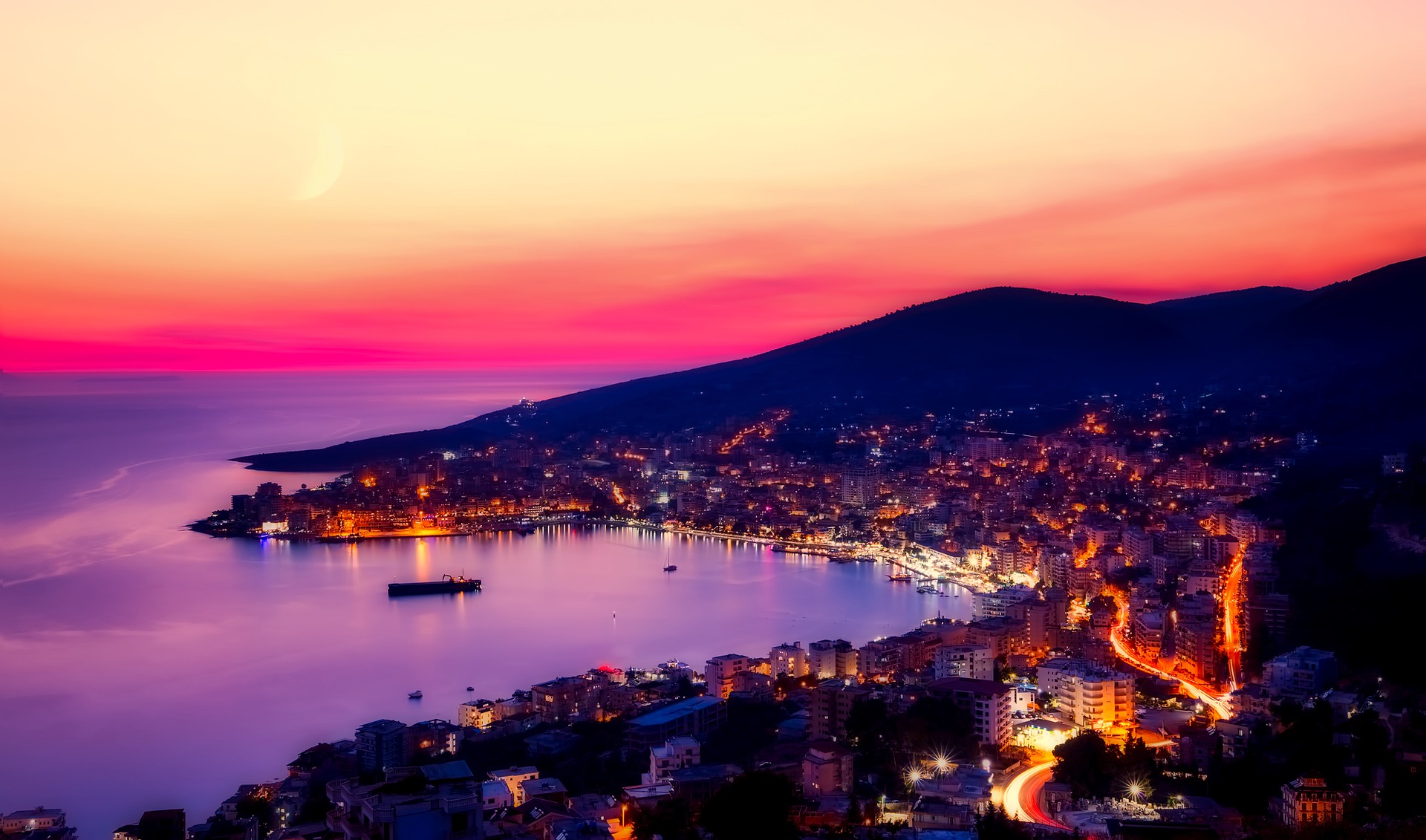
Albania mixes Ottoman towns, castles and ancient ruins with mountains and a long coast on two seas. Prices are low, the hiking in the north is a draw, and the Riviera's water is clear.
Albania sits in the Balkans between Montenegro, Kosovo, North Macedonia and Greece, with a coast on the Adriatic and the Ionian seas. It was part of Ancient Greece, the Roman Empire and the Ottoman Empire, and it shows: ancient ruins at Butrint and Apollonia, Ottoman-era towns such as Berat and Gjirokastër, both on the UNESCO list, and castles in many cities. Thousands of bunkers from the communist era still dot towns and countryside.
Almost two-thirds of the country is hills or mountains. The Albanian Alps in the north, around Thethi and Valbona, are the main hiking area, while the Riviera south of Vlorë has rocky beaches and clear water. Hospitality to guests is a strong tradition. Albania is a poor country by European standards and travel is cheap, but roads and services outside the main routes can be rough.
- Tirana: The capital, with Mount Dajti above it for a view over the city.
- Berat: The "city of 1001 windows", with a castle where people still live inside the walls.
- Gjirokastër: A UNESCO-listed Ottoman town in the south, with a large hilltop castle.
- Butrint: The largest Greek-era archaeological site in Albania, near the Greek border.
- The Albanian Riviera: Rocky beaches and clear water on the Ionian coast between Vlorë and Saranda.
- Thethi and the Albanian Alps: Albania's most popular hiking area, in the mountains on the border with Montenegro.
Places to visit
- City
- Coast
- Park
- Mountain
- Historic site
Cities
- Tirana: The capital, ringed by trees and mountains; take the trip up Mount Dajti for the view.
- Durrës: Second city and largest port, with historic ruins, beaches and ferries from Italy.
- Berat: One of the oldest towns in Albania, a UNESCO site with a castle that is still lived in.
- Gjirokastër: UNESCO-listed Ottoman town with a hilltop castle that now holds a military museum.
- Shkodër: The largest town of the north, with Rozafa Castle; the gateway to the Alps and Montenegro.
- Krujë: Skanderbeg's town, with his castle-museum and an old bazaar known for carpets.
- Korçë: A lively southeastern town near Greece, home to the Korça brewery and its August beer festival.
- Vlorë: Seaside city with beaches to the south and ferries to Italy; the start of the Riviera.
Beyond the cities
- Albanian Riviera (coast): The Ionian coast south of Vlorë: rocky beaches, clear water and villages.
- Dhërmi (coast): One of the best beaches on the coastal road between Vlorë and Saranda, with camping.
- Butrint (site): UNESCO-listed ruins at the southern tip of the country, near the Greek border.
- Thethi (park): Village and national park in the north, the most popular base for hiking.
- Albanian Alps (mountain): The northern range on the border with Montenegro, with peaks up to about 2,700 m.
- Lura National Park (park): High mountains, wide meadows and glacial lakes.
- Tomorr National Park (park): A mountain ridge near Berat with a Bektashi monastery on top and a few days of ridge hiking.
Regions
- Coastal Albania: Sandy Adriatic beaches in the north, the rocky Ionian Riviera in the south, and Durrës, Vlorë and Saranda.
- Northeastern Albania: Tirana, Shkodër, Krujë and the Albanian Alps.
- Southeastern Albania: Berat, Gjirokastër, Korçë and the mountains towards Greece and North Macedonia.
Things to do
See
- Castles: Rozafa in Shkodër, the inhabited castle of Berat, Skanderbeg's castle in Krujë and Petrela near Tirana.
- Butrint and Apollonia: Ancient ruins: Butrint near Saranda, and the Illyrian city of Apollonia about 8 km from Fier.
- Llogara Pass Riviera: A mountain pass with a view over the Riviera from above, on the Vlorë to Saranda road.
Do
- Hiking in the north Thethi: The most popular hiking region, with many places to stay; also trails around Peshkopi, Përmet and Dhërmi.
- Beaches: Sandy and shallow on the Adriatic, rocky and clear on the Ionian; beaches are public, loungers are paid.
- Thermal springs: Spa towns near Elbasan and the thermal river pools of Benjë near Përmet.
Eat
- Byrek: Flaky pies with spinach, cheese or meat, sold in bakeries all over the country.
Drink
- Raki and mountain tea: Grape or mulberry raki, and çaj mali, the herbal tea of the Balkan mountains.
Shop
- Bazaars: Crafts in the old bazaars of Krujë, Korçë, Berat, Shkodër, Gjirokastër and Tirana: carved wood, ceramics, embroidery, copper.
Itineraries
Tirana and the Ottoman towns in 6 days (6 days)
- Tirana (2 nights): The capital and Mount Dajti; a day trip to Krujë.
- Berat (2 nights): By bus or furgon from Tirana.
- Gjirokastër (2 nights): Furgons south tend to leave early in the morning.
The Riviera and Butrint in 6 days (6 days)
- Vlorë (1 night): The start of the Ionian coast.
- Dhërmi (3 nights): Beaches along the coastal road, over the Llogara Pass.
- Butrint (2 nights): Stay near Saranda to visit the ruins.
Shkodër and the Alps in 5 days (5 days)
- Shkodër (2 nights): Rozafa Castle and the north's largest town.
- Thethi (3 nights): Hiking; the last stretch of road is steep and unpaved.
Climate and best time to visit
Albania has many climates for its size. The coastal lowlands are Mediterranean, with mild winters averaging about 7 °C and summers averaging 24 °C, and the south is warmer than the north. The mountains have colder winters, and inland valleys get very hot by day but cool at night. Rain is heavy, especially in the central uplands, often with thunderstorms.
The beach season on the Adriatic starts in the first weeks of May. July and August are crowded with locals and visitors; from September the beaches empty while the sea stays warm. From December to February severe weather can bring floods, especially in the north, and heavy snow in the mountains. Wildfires are common from April to October.
Holidays and events
- 1 January 2026 · New Year's Day
- 2 January 2026 · New Year's Day (second day)
- 16 March 2026 · Summer Day
- 23 March 2026 · Nowruz
- 5 April 2026 · Easter Sunday (Catholic)
- 6 April 2026 · Easter Monday (Catholic)
- 12 April 2026 · Easter Sunday (Orthodox)
- 13 April 2026 · Easter Monday (Orthodox)
- 1 May 2026 · May Day
- 7 September 2026 · Mother Teresa Day
- 30 November 2026 · Independence Day
- 30 November 2026 · Liberation Day
- 8 December 2026 · Youth Day
- 25 December 2026 · Christmas Day
Getting there and around
| Main airports | TIA |
|---|---|
| International driving permit | Required |
Getting there
By air: Tirana's Mother Teresa International Airport, about 15 minutes' drive from the city, has flights from many European carriers, including low-cost airlines. For the southern Riviera you can also fly to Corfu and take the hydrofoil to Saranda.
By sea: ferries reach Durrës from Bari, Ancona and Trieste, Vlorë from Brindisi, Shëngjin from Brindisi and Saranda from Corfu. Strong winds can delay or cancel sailings. By bus: coaches reach Tirana from Greece, North Macedonia, Kosovo, Montenegro, Turkey, Bulgaria, Italy and Germany. There are no international passenger trains. Drivers need a Green Card valid for Albania, the registration papers and, for a car that is not theirs, the owner's authorisation.
Getting around
Buses and furgons (minibuses) are the usual way between towns; many leave Tirana each day for Shkodër, Durrës, Berat and other cities. Google Maps shows most intercity routes, but do not count on the last bus of the day, and expect fewer buses out of season. Canada says buses, minibuses and trains between most major cities are unreliable, with generally poor safety standards and common petty crime; Wikivoyage reports that passenger trains have been suspended. Use only official, marked taxis and agree the fare or ask for the meter.
Driving is demanding: road deaths are among the highest in Europe, drivers can be aggressive, and minor roads are poor, with livestock and carts. Outside towns, even the major routes have no street lighting. A 4x4 is more practical away from the main roads, and the last stretch to Thethi is steep and unpaved. The alcohol limit is 0.01%. Canada says you must carry an International Driving Permit; the UK says a 1968 permit may be useful and that the 1949 one is no longer accepted. If you have an accident, wait for the police.
Flying to Albania? PartnerCompare fares and find the cheapest datesSearch flightsWhere to stay
- Hotels: Plentiful in the cities; staff in the main cities often speak English or Italian.
- Hostels: In the cities.
- Guesthouses: Thethi, the most popular hiking area, has many places to stay.
- Villas, B&Bs and campsites: Along the Riviera, from Vlorë to about Qeparo.
Hotels are cheap by European standards, and some in places like Gjirokastër are excellent value. Outside the big cities hotels are fewer. Camping on public land is allowed; on private land ask the owner first.
Eat and drink
Dishes to try
- Tavë kosi: Baked lamb and rice in a yoghurt sauce, sometimes called the national dish.
- Fërgesë: Baked cheese, peppers and eggs, from Tirana.
- Byrek: Layered pastry filled with spinach, cheese or meat.
- Qifqi: Fried rice balls, a vegetarian speciality of Gjirokastër.
- Tasqebap: Lamb stew with tomatoes and onions.
- Japrak: Vine leaves stuffed with lamb, rice and herbs; dolma is the meatless version.
Drinks
- Raki: Fruit brandy, often home-made: rakí rushi from grapes, rakí mani from mulberries.
- Çaj mali: Mountain tea, often with honey and lemon.
- Boza: A sweet Balkan drink made from maize and wheat.
| Tipping | Not a custom and not expected; in a western-style restaurant in Tirana you can round up. |
|---|
Albanian cooking has a strong Turkish influence from four centuries of Ottoman rule, with Italian touches since the 1990s. Avoid restaurants with no menu or no prices: they are a known way to overcharge, and asking for a receipt helps. Drink bottled water.
Entry requirements and visas
| Passport validity | Valid at least 3 months after the day you leave Albania |
|---|
| Passport | Entry | Max stay | Notes |
|---|---|---|---|
| United Kingdom | Visa free | 90 days | 90 days in any 180-day period, for tourism or business. |
| Canada | Visa free | 90 days | 90 days in any 180-day period. |
Other nationalities: check the official source below.
Albania is not in the EU or the Schengen area. UK and Canadian visitors can stay up to 90 days in any 180-day period without a visa. Your passport must be valid for at least 3 months after you leave.
Children under 18 may leave Albania only with both parents or with their consent, notarised by the Albanian authorities. A yellow fever certificate is required if you arrive from a country with a risk of yellow fever. Declare goods that may be prohibited or taxed. Rules depend on your passport and can change: check with the Albanian embassy before you book.
Money and payments
| Currency | Albanian Lek (ALL) |
|---|---|
| Cards | Common |
The currency is the lek (ALL). Many people still count in "old lek", ten times the real figure, so if a price sounds very high, check. Cards are widely accepted in supermarket chains, but many cafés, small shops and stalls take only cash, so always carry some. ATMs are common in the cities, all charge a fee, and you should decline dynamic currency conversion. Euros are widely accepted, and exchange offices in Tirana give fair rates. You must declare more than €10,000, or the equivalent in other currencies, to customs when you enter or leave, counting cash, cheques and other convertible assets.
Costs and budget
According to Eurostat, in 2024 the general price level in Albania was about 62% of the EU average, food in shops about 100% and restaurants and hotels about 52%.
Health
| Required vaccines | Yellow fever certificate, only if you arrive from a country with a risk of yellow fever |
|---|---|
| Recommended vaccines | Routine vaccines, including measles (MMR), Hepatitis A, Hepatitis B, Rabies, only for some travellers: ask a travel clinic, Mpox, for travellers at risk of sexual exposure |
| Malaria | None |
| Tap water | Not safe |
Do not drink the tap water: drink bottled water. Check your vaccinations with a travel health professional at least 8 weeks before you go. Medical facilities are poor, especially outside Tirana, so take travel insurance that covers evacuation. Call 127 for an ambulance.
Stray dogs can be a problem, also on hiking trails. Ask a travel clinic whether a rabies vaccination makes sense for your trip. Use insect repellent in summer, especially in the western lowlands, and watch for sea urchins and broken glass on the sea floor.
This is general information, not medical advice: check with a travel health professional before you go.
Safety
- United States: Level 2: Exercise Increased Caution (2026-10-20)
- Canada: Take normal security precautions (2026-10-20)
- United Kingdom: No advice against travel (2026-10-20)
Crime aimed at foreigners is rare, but pickpockets and bag thieves work in tourist areas, on buses and at transport hubs. Demonstrations have been held in central Tirana since October 2026, some of them violent: stay away from them and follow local media. In taxis, use official cabs and agree the fare first.
Unexploded landmines remain in some remote areas along the north-eastern border with Kosovo: stay on marked paths and follow signs. Mountain trails are not always marked and the weather changes fast. Earth tremors are common, wildfires are frequent from April to October, and causing one is a crime. Rented jet skis and boats may lack safety equipment: use licensed centres.
Customs and etiquette
Albanians are very hospitable, and guests are expected to show respect in return, especially to older men. Shake hands, and avoid arguing about religion and politics. Most people are Muslim or Christian, but the country is largely secular; during Ramadan life goes on, but check with your company before eating or drinking in public. Use the formal "you" when you first meet people.
Carry ID: the police can ask for it at any time, and hotels and car rental firms need your passport. Ask before photographing military sites or critical infrastructure. Drug penalties are severe. Same-sex relationships are legal, but Canada notes that LGBTQI+ travellers may face discrimination.
Language
| Official languages | Albanian |
|---|---|
| English | Limited |
| Hello | Tungjatjeta toon-jah-TYEH-tah |
|---|---|
| Good morning | Mirëmëngjes meer-muhn-JEHS |
| Please | Ju lutem yoo LOO-tehm |
| Thank you | Faleminderit fah-lehm-meen-DEH-reet |
| Excuse me | Më falni mah FAHL-nee |
| Goodbye | Mirupafshim mee-roo-PAHF-sheem |
| Do you speak English? | A flisni anglisht? ah FLEES-nee ahn-GLEESHT |
What to pack
- Passport, plus a photocopy: Valid 3 months beyond departure; police and hotels can ask for ID.
- International Driving Permit: Canada says drivers must carry one; the UK advises the 1968 permit, as the 1949 one is no longer accepted.
- Cash in lek or euros: Many cafés and small shops do not take cards.
- Torch and power bank: Power cuts happen, including in Tirana.
- Insect repellent: Mosquitoes are active in summer in the lowlands.
- Plug adapter: Albania uses plug types C and F at 220 V.
- Water shoes: Sea urchins and broken glass are common on the sea floor.
Quick reference
Country facts
| Capital | Tirana |
|---|---|
| Population | 2,349,580 (2025) |
| Area | 27,400 km² |
| Time zone | Europe/Tirane (UTC+1) |
| Calling code | +355 |
| Driving side | right |
Electricity and plugs
| Plug types | C, F |
|---|---|
| Voltage | 220 V |
| Frequency | 50 Hz |
Staying connected
| SIM and eSIM | Vodafone and One sell prepaid SIM cards in their shops and are the usual choice for travellers; you need your passport. |
|---|---|
| Roaming | Albania is outside the EU. Some Albanian SIM cards include roaming in neighbouring Balkan countries: a One SIM works in North Macedonia and Kosovo. |
| Wi-Fi | Many bars and restaurants have Wi-Fi: ask for the password. |
Emergency numbers
| Police | 112 |
|---|---|
| Ambulance | 127 |
| Fire | 128 |
Frequently asked questions
Do I need a visa for Albania?
Not for short stays with a UK or Canadian passport: you can stay 90 days in any 180-day period. Check with the Albanian embassy before you book.
Can I drink the tap water in Albania?
No. The UK government advises drinking only bottled water.
Can I pay by card in Albania?
In supermarket chains and in the major cities, yes, but many cafés and small shops take only cash. Carry lek or euros.
Is it easy to drive in Albania?
Main roads are passable, but driving can be aggressive, minor roads are poor and roads outside towns are unlit. Use a 4x4 for the mountains and carry an International Driving Permit.
Do I tip in Albania?
Tipping is not expected. In a western-style restaurant in Tirana you can round up the bill.
When is the best time for the beaches?
The season starts in May; July and August are crowded, while in September the beaches empty and the sea is still warm.
More Travel Stories from Europe
 Svalbard +1
Sources This guide was last checked on · 17 sources
- Wikivoyage: Albania · Overview, Places to visit, Things to do, Itineraries, Climate and best time to visit, Getting there and around, Where to stay, Eat and drink, Entry requirements and visas, Money and payments, Health, Safety, Customs and etiquette, Language, What to pack, Electricity and plugs, Staying connected, Frequently asked questions
- Wikidata: Albania · Overview, Places to visit, Money and payments, What to pack, Country facts, Electricity and plugs
- UK FCDO: Albania safety and security (updated 15 October 2026) · Climate and best time to visit, Getting there and around, Safety, Customs and etiquette
- Nager.Date: public holidays in Albania, 2026 · Holidays and events
- Government of Canada: Albania travel advice (updated 15 October 2026) · Getting there and around, Entry requirements and visas, Money and payments, Health, Safety, Customs and etiquette, What to pack, Frequently asked questions
- UK FCDO: Albania entry requirements · Entry requirements and visas, What to pack, Frequently asked questions
- ISO 4217 (SIX), published 2026-09-17 · Money and payments
- Eurostat: price level indices, 2024 (EU27 = 100) · Costs and budget
- CDC Travelers' Health: Albania · Health
- UK FCDO: Albania health · Health, What to pack, Frequently asked questions
- US Department of State: Albania travel advisory · Safety
- UK FCDO: Albania travel advice · Safety
- Wikivoyage: Albanian phrasebook · Language
- World Bank, SP.POP.TOTL · Country facts
- World Bank, AG.LND.TOTL.K2 · Country facts
- IANA Time Zone Database, zone.tab · Country facts
- UK FCDO: Albania getting help · Emergency numbers
Suggest an update
Travel rules, prices and timetables change. If something in this guide is out of date, tell us: we check every suggestion against an official source before changing the page.