

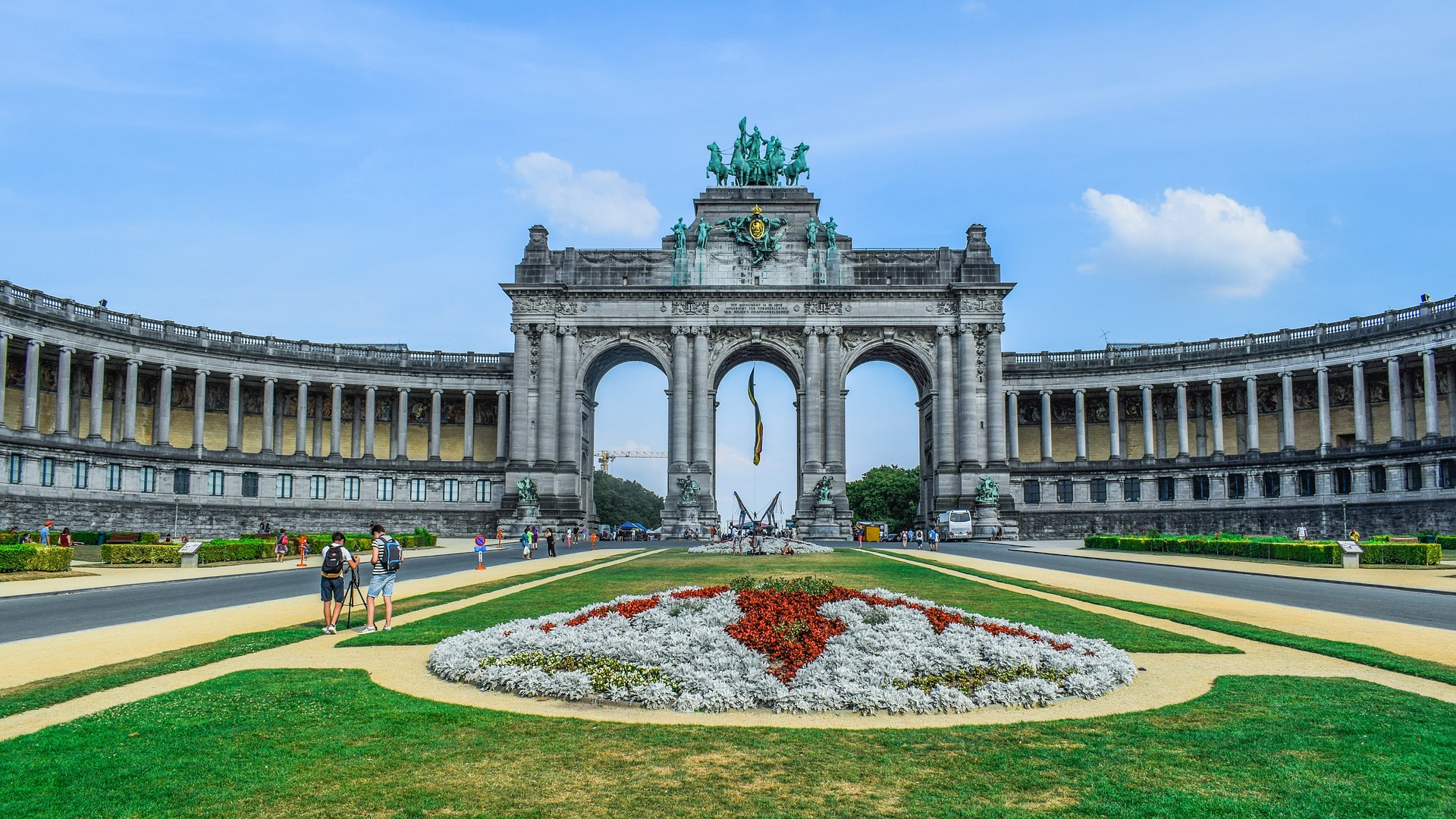
- Local time
- 12:37
- Currency
- Euro (EUR)
- Capital
- Brussels
- Calling code
- +32
- Drive on the
- right
Overview
Small, dense and easy to cross by train, Belgium packs medieval Bruges and Ghent, Art Nouveau Brussels, the Ardennes forests and the First World War sites of Flanders, with beer, chocolate and fries to match.
Belgium sits between France, the Netherlands, Germany and Luxembourg, and nowhere is more than about 300 km away. Brussels, the capital and home of the EU's headquarters, combines the Grand-Place and the Atomium with a large European quarter. A short train ride away are Bruges, Ghent and Antwerp, with medieval centres, belfries and great art museums, and smaller cities such as Leuven, Mechelen and Mons.
The country is split by language: Dutch-speaking Flanders in the north, French-speaking Wallonia in the south, and a small German-speaking area in the east. The north-west is flat, with a coast served by a tram from France to the Netherlands; Wallonia rises into the wooded Ardennes, good for hiking, caves and castles. Food is taken seriously, from mussels and fries to waffles, chocolate and hundreds of beers.
- Bruges: A medieval centre on the UNESCO list, with a 13th-century belfry.
- Brussels: The Grand-Place, the Atomium, the Manneken Pis and over 80 museums.
- Ghent: Canals, a belfry and medieval architecture, plus a large student population.
- Antwerp: A huge cathedral, art museums and a fashion and diamond scene.
- The Ardennes: Forested hills with caves, castles and outdoor sports, best reached from Namur.
- Ypres: Rebuilt after the First World War, surrounded by memorials and cemeteries.
Places to visit
- City
- Town
- Historic site
- Area
Cities
- Brussels: The capital and unofficial capital of the EU, with a historic centre and many museums.
- Bruges: Medieval, touristy and quiet at night, with small guesthouses rather than chains.
- Ghent: A city of canals and medieval buildings with a lively student population.
- Antwerp: Second city, with a giant cathedral, artistic heritage and fashion.
- Leuven: A small university city with a historic centre and lively nightlife.
- Liège: An industrial city on a wide river with a strong character and good nightlife.
- Namur: Capital of Wallonia, where the Sambre meets the Meuse, below its citadel.
- Mons: Home to a UNESCO belfry, the Neolithic flint mines of Spiennes and the Doudou festival.
- Mechelen: A small medieval city around its cathedral, with trains everywhere every 30 minutes.
Beyond the cities
- Grand-Place (site): Brussels' UNESCO-listed square of guildhouses and the Gothic town hall.
- Atomium (site): The steel landmark of the 1958 World's Fair in Brussels.
- Ypres (town): A First World War town, rebuilt, ringed by memorials and military cemeteries.
- Dinant (town): A small town in a striking setting, popular for canoeing and rock climbing.
- Caves of Han-sur-Lesse (site): Impressive caves in the Ardennes.
- Spa (town): The spa town that gave its name to all spas, visited for centuries.
- Pajottenland (area): Green hills, villages and castles west of Brussels, home of Geuze beer.
Regions
- Flanders: The Dutch-speaking north: Bruges, Ghent, Antwerp, Leuven, Mechelen and the coast.
- Brussels: The bilingual capital region.
- Wallonia: The French-speaking south: Liège, Namur, Mons and the Ardennes, with a German-speaking area in the east.
Things to do
See
- Grand-Place and Manneken Pis Brussels: The guildhall square and the tiny bronze fountain nearby.
- Bruges belfry Bruges: The 13th-century tower where the carillon is still played daily.
- Ghent's beguinages and belfry Ghent: World Heritage sites in a city as rich in medieval architecture as Bruges.
- Fine arts museums Brussels and Antwerp: The Royal Museums of Fine Arts in Brussels and the Royal Museum in Antwerp.
- First World War sites Ypres: Memorials, museums and cemeteries; stay on footpaths, as old shells still turn up.
Do
- Ardennes: Hiking, cycling, camping and caves, with Namur as a base.
- Kusttram: The tram along almost the whole Flemish coast, best in summer.
- Cycling in Flanders: Lots of cycling infrastructure, and bikes for rent almost everywhere.
Eat
- Mussels and fries: Moules-frites, best from September to April.
Drink
- Belgian beer: Trappist ales, lambics, white beers and kriek in any café.
Itineraries
Brussels, Ghent and Bruges in 5 days (5 days)
- Brussels (2 nights): The Grand-Place, museums and the Atomium.
- Ghent (1 night): Frequent trains from Brussels.
- Bruges (2 nights): 25 minutes from Ghent on an InterCity train.
Brussels and Wallonia in 5 days (5 days)
- Brussels (1 night): Start in the capital.
- Namur (2 nights): The citadel, and the gateway to the Ardennes.
- Dinant (1 night): Canoeing and climbing on the Meuse.
- Liège (1 night): Lively city, with Spa nearby.
Climate and best time to visit
| Jan | Feb | Mar | Apr | May | Jun | Jul | Aug | Sep | Oct | Nov | Dec | |
|---|---|---|---|---|---|---|---|---|---|---|---|---|
| Max °C | 6 | 6 | 10 | 13 | 18 | 20 | 22 | 23 | 19 | 14 | 9 | 7 |
| Min °C | 1 | 1 | 3 | 5 | 9 | 12 | 14 | 13 | 11 | 8 | 4 | 2 |
| Rain mm | 71 | 53 | 73 | 54 | 70 | 78 | 69 | 64 | 63 | 68 | 79 | 79 |
Belgium has a temperate climate with mild winters and cool summers, and little difference from region to region. It is often rainy and cloudy: in Brussels every month brings 50 to 80 mm of rain. July and August average highs of about 22 °C, and January about 6 °C.
May to September is the most comfortable time for cities, the coast and the Ardennes. Heavy rain in spring and summer can cause floods, especially near major rivers.
Holidays and events
- 1 January 2026 · New Year's Day
- 3 April 2026 · Good Friday (banks closed, not a public holiday)
- 5 April 2026 · Easter Sunday
- 6 April 2026 · Easter Monday
- 1 May 2026 · Labour Day
- 14 May 2026 · Ascension Day
- 15 May 2026 · Day after Ascension Day (banks closed, not a public holiday)
- 25 May 2026 · Whit Monday
- 21 July 2026 · Belgian National Day
- 15 August 2026 · Assumption Day
- 1 November 2026 · All Saints' Day
- 11 November 2026 · Armistice Day
- 25 December 2026 · Christmas Day
- 26 December 2026 · St. Stephen's Day (banks closed, not a public holiday)
Getting around
| Main airports | BRU, CRL, LGG, ANR |
|---|---|
| International driving permit | Recommended |
Trains are punctual, frequent and the easiest way between cities; nowhere is more than a couple of hours away. Use InterCity trains where you can. Brussels makes a good base for day trips to Antwerp, Ghent, Bruges, Namur and Leuven. City buses, trams and metros are run by STIB/MIVB in Brussels, De Lijn in Flanders and TEC in Wallonia, and their tickets are not interchangeable.
Driving: motorways are toll-free, but signs use only the local language, so Mons may appear as Bergen and Liège as Luik. Give way to traffic from the right unless signs say otherwise. Speed cameras are everywhere. Brussels, Ghent and Antwerp have low-emission zones: register foreign cars online first. Canada advises an International Driving Permit. Strikes often disrupt transport at short notice.
Flying to Belgium? PartnerCompare fares and find the cheapest datesSearch flightsWhere to stay
- Hotels: Plentiful; Brussels has many business hotels whose prices rise during big EU events.
- Guesthouses: In Bruges, small guesthouses outnumber chain hotels.
- Hostels: Hostelling International runs about 30 hostels in Flanders, Wallonia and Brussels.
- Cyclists' B&Bs: The Vrienden op de fiets network has private homes for cyclists and walkers in Flanders.
Eat and drink
Dishes to try
- Moules-frites: Mussels cooked in white wine or with onion and celery, with fries; best from September to April.
- Stoofvlees (carbonade flamande): A traditional beef stew, served with fries.
- Stoemp: Mashed potatoes and carrots with bacon and sausages, from Brussels.
- Chicons au gratin: Chicory wrapped in ham under a cheese sauce.
- Fries: From a frituur, with mayonnaise and a choice of sauces.
- Waffles: Light Brussels waffles with toppings, or dense, sweet Liège waffles eaten plain.
Drinks
- Trappist ales: Chimay, Orval, Rochefort, Westmalle, Westvleteren and Achel.
- Lambic and geuze: Sour, spontaneously fermented beers, often fruit-flavoured, such as kriek.
- Jenever: A strong spirit in many flavours, the speciality of Hasselt.
| Tipping | Not expected: service is included. Rounding up is a sign of appreciation. |
|---|
Skip the restaurants with touts on streets like Rue des Bouchers in Brussels, and ask locals for tips. Tap water is safe, but restaurants rarely serve it. About one restaurant in ten does not allow young children, so check first. Beer and wine can be bought from 16, spirits from 18, and smoking is banned in pubs.
Entry requirements and visas
| Passport validity | Issued less than 10 years before you arrive, and valid at least 3 months after you leave the Schengen area |
|---|
| Passport | Entry | Max stay | Notes |
|---|---|---|---|
| EU / EEA | Freedom of movement | EU free movement rules apply. | |
| United Kingdom | Visa free | 90 days | 90 days in any 180-day period across the whole Schengen area. |
| Canada | Visa free | 90 days | 90 days in any 180-day period; Canada also mentions travel health insurance of at least €30,000. |
Other nationalities: check the official source below.
Belgium is in the Schengen area. UK and Canadian visitors can stay up to 90 days in any 180-day period without a visa, counting days in other Schengen countries. You may be asked for a return ticket and proof of funds, and non-EU visitors register fingerprints and a photo in the EU Entry/Exit System. Adults travelling with children may need to prove their relationship.
You must carry your passport at all times in Belgium. Meat and milk products cannot be brought into the EU, and cash of €10,000 or more must be declared. Check the official link before you book.
Money and payments
| Currency | Euro (EUR) |
|---|
Belgium uses the euro (€). Service is included in restaurant bills. Good buys are chocolate, lace in Bruges, fashion and jewellery in Antwerp, beer and comic-book merchandise in Brussels.
Costs and budget
According to Eurostat, in 2024 the general price level in Belgium was about 112% of the EU average, food in shops about 105% and restaurants and hotels about 124%.
Health
| Recommended vaccines | Routine vaccines, including measles (MMR), Hepatitis A: consider it for most travellers, Hepatitis B, Tick-borne encephalitis, for long stays or time outdoors in forests and countryside |
|---|---|
| Malaria | None |
| Tap water | Safe |
No vaccinations are required. Tap water is safe everywhere. With a European (EHIC) or UK (GHIC) health card you get medically necessary state healthcare, but non-emergency consultations and prescriptions are charged, and the card does not replace travel insurance. Dial 112 for an ambulance.
This is general information, not medical advice: check with a travel health professional before you go.
Safety
- United States: Level 2: Exercise Increased Caution (2026-10-20)
- Canada: Exercise a high degree of caution (2026-10-20)
- United Kingdom: No advice against travel (2026-10-20)
Pickpockets and bag thieves are common in crowded places, especially at Brussels-Midi (the Eurostar terminal), Brussels-Nord and Brussels-Central stations, around the Grand-Place and on international trains, where luggage disappears from racks just before the doors close. The terrorism threat level is 3, "serious". Gang violence linked to drug trafficking affects parts of Brussels and Antwerp; bystanders are rarely targeted.
Strikes and demonstrations are frequent, often around stations and the EU quarter, and general strikes can stop transport nationwide: check before you travel. Use only licensed taxis. On First World War battlefields, keep to footpaths and report anything that looks like a shell.
Customs and etiquette
Language is a sensitive subject. Do not speak French in Flanders or Dutch in Wallonia: start in English if you are unsure. Do not call Walloons French or Flemings Dutch, and avoid discussing the Flemish-Walloon divide. Belgians can seem reserved at first, and salary, politics and religion are not small talk.
Covering your face in public is illegal, with fines of up to €137. You must carry your passport. Smoking is banned in pubs.
Language
| Official languages | Dutch, French, German |
|---|---|
| English | Common |
| Hello (Dutch / French) | Hallo / Bonjour HAH-low / bawn-ZHOOR |
|---|---|
| Please | Alstublieft / S'il vous plaît AHL-stuu-BLEEFT / seel voo PLEH |
| Thank you | Dank u / Merci DAHNK uu / merr-SEE |
| Excuse me | Pardon pahr-DOHN |
| Goodbye | Tot ziens / Au revoir TOT seens / oh ruh-VWAHR |
| Do you speak English? | Spreekt u Engels? / Parlez-vous anglais? SPRAYKT uu ENG-uls |
What to pack
- Passport: You must carry it at all times in Belgium.
- EHIC or GHIC and travel insurance: Non-emergency care and prescriptions are charged.
- Rain jacket: It rains in every month of the year.
- Plug adapter: Belgium uses plug types C and E.
- Birth certificate for children: Adults travelling with children may need to prove their relationship.
Quick reference
Country facts
| Capital | Brussels |
|---|---|
| Population | 11,941,781 (2025) |
| Area | 30,494 km² |
| Time zone | Europe/Brussels (UTC+1) |
| Calling code | +32 |
| Driving side | right |
Electricity and plugs
| Plug types | C, E |
|---|---|
| Voltage | 230 V |
| Frequency | 50 Hz |
Staying connected
| SIM and eSIM | Proximus, Orange and Base are the main networks, with near-total coverage, 4G almost everywhere and 5G in most cities. Prepaid SIMs require registration with your name and address. |
|---|---|
| Roaming | With an EU SIM card you roam at home prices; other visitors should check their provider's rates. |
| Wi-Fi | Free in many cafés, libraries, train stations and motorway restaurants. |
Emergency numbers
| Emergency | 112 |
|---|
Frequently asked questions
Do I need a visa for Belgium?
Not for short stays with a UK or Canadian passport: up to 90 days in any 180-day period in the Schengen area. Check the official EU link before you book.
Do I need to carry my passport?
Yes. In Belgium you must carry your passport at all times.
Should I speak French or Dutch?
Dutch in Flanders, French in Wallonia, either in Brussels. If unsure, start in English: speaking the wrong language can cause offence.
Do I tip in Belgium?
Not necessarily: service is included. Rounding up is a sign you were happy.
Is the tap water safe?
Yes, everywhere, though restaurants usually serve bottled water.
What is the best way to get around?
By train: services are frequent and punctual, and Brussels is a good base for day trips to Bruges, Ghent and Antwerp.
More Travel Stories from Europe
 Portugal
Sources This guide was last checked on · 21 sources
- Wikivoyage: Belgium · Overview, Places to visit, Things to do, Itineraries, Climate and best time to visit, Getting around, Where to stay, Eat and drink, Money and payments, Health, Safety, Customs and etiquette, Language, What to pack, Electricity and plugs, Staying connected, Frequently asked questions
- Wikidata: Belgium · Overview, Places to visit, Money and payments, What to pack, Country facts, Electricity and plugs
- WMO World Weather Information Service: Brussels · Climate and best time to visit
- Government of Canada: Belgium travel advice (updated 11 August 2026) · Climate and best time to visit, Getting around, Entry requirements and visas, Safety, Frequently asked questions
- Nager.Date: public holidays in Belgium, 2026 · Holidays and events
- UK FCDO: Belgium safety and security · Getting around, Safety, Customs and etiquette, What to pack, Frequently asked questions
- UK FCDO: Belgium entry requirements · Entry requirements and visas, What to pack, Frequently asked questions
- European Union: Entry/Exit System · Entry requirements and visas
- ISO 4217 (SIX), published 2026-09-17 · Money and payments
- Eurostat: price level indices, 2024 (EU27 = 100) · Costs and budget
- CDC Travelers' Health: Belgium · Health
- UK FCDO: Belgium health · Health, What to pack
- US Department of State: Belgium travel advisory · Safety
- UK FCDO: Belgium travel advice · Safety
- UK FCDO: Belgium warnings and insurance (updated 17 October 2026) · Safety
- Wikivoyage: Dutch phrasebook · Language
- Wikivoyage: French phrasebook · Language
- World Bank, SP.POP.TOTL · Country facts
- World Bank, AG.LND.TOTL.K2 · Country facts
- IANA Time Zone Database, zone.tab · Country facts
- UK FCDO: Belgium getting help · Emergency numbers
Suggest an update
Travel rules, prices and timetables change. If something in this guide is out of date, tell us: we check every suggestion against an official source before changing the page.