

- Local time
- 10:01
- Currency
- Serbian Dinar (RSD)
- Capital
- Belgrade
- Calling code
- +381
- Drive on the
- right
Overview
Belgrade's riverside nightlife and fortress, Novi Sad's Petrovaradin, monasteries, spas, mountain ski resorts and the Danube's Iron Gate, at low prices.
Serbia is a Balkan country at a crossroads of cultures, with the plains of Vojvodina in the north and mountains, lakes and national parks further south. Belgrade, where the Sava meets the Danube, is the lively capital, with the huge Kalemegdan fortress, cafés and riverside restaurants. Novi Sad, the second city, has the Petrovaradin fortress and the monasteries and vineyards of Fruška Gora nearby, and Subotica and Palić in the far north have Art Nouveau buildings.
In summer visitors fill Belgrade; in winter they head for the ski resorts of Kopaonik and Zlatibor. There are many spa towns, such as Sokobanja, and the Danube cuts through the Iron Gate gorge in Đerdap National Park. Prices are low outside Belgrade. Serbia is not in the EU or Schengen and uses the dinar (RSD). Canada advises a high degree of caution near the border with Kosovo.
- Belgrade: Kalemegdan fortress, Knez Mihailova Street, Skadarlija's restaurants and the Ada Ciganlija lake beach.
- Novi Sad: The Petrovaradin fortress, with Fruška Gora and Sremski Karlovci nearby.
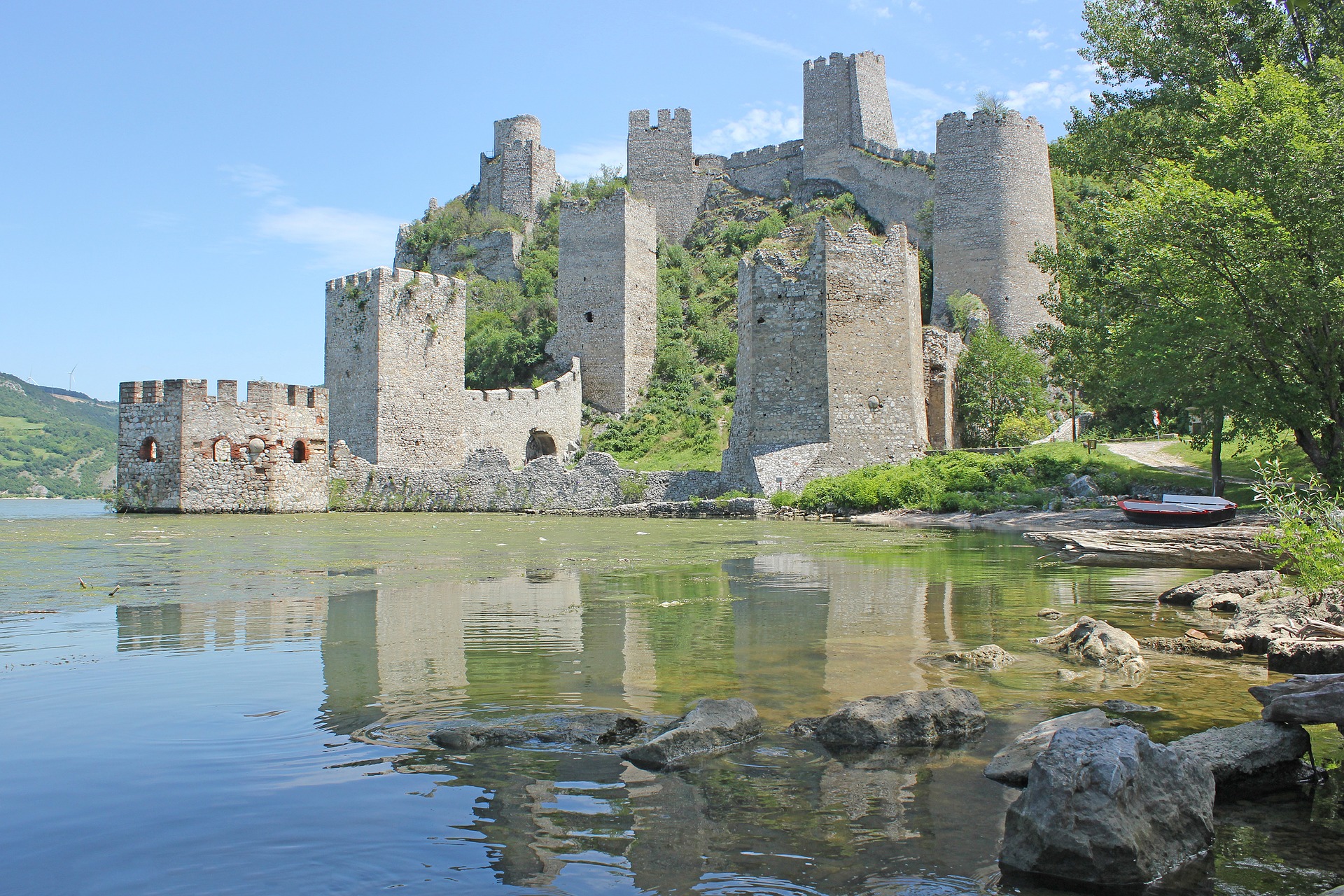
- Đerdap and the Iron Gate: The Danube gorge from Golubac fortress, in a national park.
- Kopaonik and Zlatibor: Mountain resorts for skiing in winter and walks in summer.
- Subotica and Palić: Art Nouveau architecture and a lakeside resort in the north.
- Tara National Park: Forests, cliffs and ravines above the Drina in western Serbia.
Places to visit
- City
- Park
- Mountain
- Historic site
- Area
Cities
- Belgrade: The capital on the Sava and Danube, with the Kalemegdan fortress and a lively café and nightlife scene.
- Novi Sad: The "Serbian Athens" on the Danube, capital of Vojvodina, with the Petrovaradin fortress.
- Niš: The third city, birthplace of Constantine the Great, with the spa of Niška Banja nearby.
- Subotica: One of the most beautiful cities, in the far north, close to Lake Palić.
- Kragujevac: The first capital of modern Serbia, in Šumadija.
- Kraljevo: A town on the Ibar near the Žiča monastery and two spas.
- Vršac: A pretty town among vineyards, near the Romanian border.
- Sremski Karlovci: A small historic town near Novi Sad with churches, museums and wine cellars.
Beyond the cities
- Petrovaradin Fortress (site): One of the best-preserved 18th-century fortresses in Europe.
- Belgrade Fortress (Kalemegdan) (site): A fortress rebuilt over 2,000 years, now Belgrade's central park.
- Smederevo Fortress (site): A large lowland medieval fortress on the Danube, 50 km from Belgrade.
- Đerdap National Park (park): The Iron Gate gorge of the Danube.
- Fruška Gora National Park (park): Hills of vineyards and more than 16 Orthodox monasteries.
- Kopaonik National Park (park): Serbia's main ski resort, with 23 lifts.
- Zlatibor (mountain): A popular mountain resort near Užice, on the way to Montenegro.
- Tara National Park (park): Forested mountain with deep ravines above the Drina.
- Palić (area): A lake resort with baroque parks and Art Nouveau buildings.
Regions
- Belgrade: The capital and its surroundings.
- Vojvodina: The fertile northern plains: Novi Sad, Subotica, Palić and Fruška Gora.
- Šumadija: Central Serbia, around Kragujevac.
- Podrinje: The west, along the Drina, with Tara and Zlatibor.
- Southern and Eastern Serbia: Niš, Sokobanja, Kopaonik and the Iron Gate.
Things to do
See
- Kalemegdan Belgrade: The fortress park with a zoo, a military museum, churches and views over the rivers.
- Petrovaradin Fortress Novi Sad: The main sight of Novi Sad, above the Danube.
- Fruška Gora monasteries and wine Fruška Gora National Park: Orthodox monasteries and the wine cellars of Sremski Karlovci.
- Iron Gate Đerdap National Park: The Danube gorge from Golubac fortress, with Trajan's Roman road nearby.
Do
- Ada Ciganlija Belgrade: An island lake with an 8 km gravel beach and sports grounds, the "sea of Belgrade".
- Skiing Kopaonik National Park: Kopaonik and Zlatibor are the best-known resorts.
- Spas: Sokobanja, Niška Banja and others, with thermal springs.
Eat
- Skadarlija Belgrade: A street of traditional restaurants.
Drink
- Café culture Belgrade: Coffee bars on almost every corner, busy all day.
- Rakija: Fruit brandies, above all šljivovica (plum).
Itineraries
Belgrade and Vojvodina in 5 days (5 days)
- Belgrade (3 nights): Kalemegdan, Skadarlija, Zemun and Ada Ciganlija; a day trip to Smederevo.
- Novi Sad (2 nights): About 80 km from Belgrade; Petrovaradin, Sremski Karlovci and Fruška Gora.
Mountains of the south and west in 5 days (5 days)
- Kraljevo (1 night): The Žiča monastery nearby.
- Kopaonik National Park (2 nights): Skiing in winter, walks in summer.
- Zlatibor (2 nights): Mountain villages, with Tara National Park nearby.
Climate and best time to visit
| Jan | Feb | Mar | Apr | May | Jun | Jul | Aug | Sep | Oct | Nov | Dec | |
|---|---|---|---|---|---|---|---|---|---|---|---|---|
| Max °C | 4 | 6 | 12 | 18 | 23 | 25 | 27 | 27 | 24 | 18 | 11 | 5 |
| Min °C | -2 | -0 | 3 | 8 | 12 | 15 | 16 | 16 | 13 | 8 | 4 | -0 |
| Rain mm | 49 | 44 | 50 | 59 | 71 | 90 | 66 | 51 | 51 | 40 | 54 | 58 |
The north has a continental climate, with cold winters and hot, humid summers; the south has hot, dry summers and autumns and cold winters with heavy snow. In Belgrade the average maximum is about 3 to 4 °C in January and 27 °C in July and August. June is the wettest month (about 90 mm), and rain is spread through the year.
May, June and September are the most comfortable months. Winter is the season for Kopaonik and Zlatibor. Floods are common in spring and autumn in the river basins.
Holidays and events
- 1 January 2026 · New Year's Day
- 2 January 2026 · New Year's Day
- 7 January 2026 · Christmas Day
- 16 February 2026 · Statehood Day
- 17 February 2026 · Statehood Day
- 10 April 2026 · Good Friday
- 12 April 2026 · Easter Sunday
- 13 April 2026 · Easter Monday
- 1 May 2026 · Labour Day
- 2 May 2026 · Labour Day
- 11 November 2026 · Armistice Day
Getting around
| Main airports | BEG, INI |
|---|
Buses are the most common way around. Trains are slower than buses on most routes, except Belgrade to Novi Sad, but cheaper and more punctual; lock your berth on overnight trains. In Belgrade, buses, trams and trolleybuses cover the city well. Taxis: use registered taxis with a municipal number, or call a radio taxi.
Driving: a UK photocard licence is valid for up to 6 months, and Canada advises an International Driving Permit. Roads vary, and the Ibarska Magistrala from Belgrade towards Montenegro is particularly dangerous. Many rental firms do not allow their cars into Kosovo, Albania or Bulgaria. Cars must carry a first aid kit, warning triangle, tow rope, spare tyre and reflective vest.
Flying to Serbia? PartnerCompare fares and find the cheapest datesSearch flightsWhere to stay
- Hotels: Most have internet; hotels register you with the police automatically.
You must register with the police within 24 hours of arrival. Hotels do it for you; in private accommodation, make sure it is done, or you risk a fine.
Eat and drink
Dishes to try
- Ćevapčići: Small grilled sausages of minced meat, with onion, in flatbread.
- Pljeskavica: The Serbian burger.
- Roštilj: A big plate of grilled meats, found in most restaurants.
- Kajmak: Something between cream cheese and butter.
- Ajvar: A spread of roasted red peppers.
- Burek and bakery pastries: From the ubiquitous pekara, some open 24 hours.
Drinks
- Šljivovica: Plum rakija, the national brandy.
- Wine: From Syrmia (Sremski Karlovci), Župa, Smederevo and Negotin.
- Beer: Jelen and Lav are the most popular.
Food is hearty and meat-heavy, but vegetables are widely used and salads and grilled vegetables are easy to find. Main dishes cost roughly 600 to 2,400 dinars (Wikivoyage, read in 2026). Smoking in restaurants is still common.
Entry requirements and visas
| Passport validity | UK passports: valid at least 90 days after you leave. Canadian passports: valid for your stay |
|---|
| Passport | Entry | Max stay | Notes |
|---|---|---|---|
| EU / EEA | Visa free | 90 days | 90 days in 6 months; many EU citizens can use their ID card. |
| United Kingdom | Visa free | 90 days | 90 days within a 6-month period. |
| Canada | Visa free | 90 days | Up to 90 days. |
| United States | Visa free | 90 days | 90 days in 6 months. |
| Australia | Visa free | 90 days | 90 days in 6 months. |
Other nationalities: check the official source below.
Serbia is not in the EU or Schengen. Get your passport stamped on entry, and register with the police within 24 hours (hotels do it). Declare valuable items such as cameras and computers, and cash over €10,000; you can take only limited amounts of dinars in or out. Rules depend on your passport and can change: check the official link before you book.
Money and payments
| Currency | Serbian Dinar (RSD) |
|---|
Serbia uses the dinar (RSD). Exchange offices (menjačnica) often give better rates than banks; never use street dealers, and bring notes in good condition. ATMs are everywhere and Visa and Mastercard are widely accepted. Taxis and small shops rarely have change for big notes. Change leftover dinars before you leave, as they are hard to exchange abroad.
Costs and budget
- Main dish in a restaurant (Wikivoyage, read in 2026): 600 to 2,400 dinars
- Minibus ride in Belgrade (Wikivoyage, read in 2026): about €2
- Prepaid SIM card (Wikivoyage, read in 2026): 200 to 300 dinars
According to Eurostat, in 2024 the general price level in Serbia was about 61% of the EU average, food in shops about 96% and restaurants and hotels about 68%.
Belgrade costs about as much as many European cities, but prices outside the capital are much lower.
Health
| Recommended vaccines | Routine vaccines, including measles (MMR), Hepatitis A, Hepatitis B, Tick-borne encephalitis, if you will hike or camp in forests between April and November, Rabies, only if you will work with wildlife |
|---|---|
| Tap water | Varies |
Tap water is generally safe, though heavily chlorinated in places; in parts of Vojvodina, such as Kikinda and Zrenjanin, it is polluted and not drinkable. Emergency care is free, but public healthcare is below Western European standards and private clinics are costly; most EU cards are not recognised, so get travel insurance. UK visitors can get free emergency treatment under a reciprocal agreement with the right documents. Dial 194 for an ambulance.
This is general information, not medical advice: check with a travel health professional before you go.
Safety
- United States: Level 2: Exercise Increased Caution (2026-10-20)
- Canada: Take normal security precautions (2026-10-20)
- United Kingdom: No advice against travel (2026-10-20)
Serbia is generally safe, but pickpockets work in tourist areas, on public transport and at motorway service stations, and four-wheel-drive and luxury cars are targeted. Demonstrations take place in Belgrade and other cities and have sometimes turned violent: stay away. Football derbies between Red Star and Partizan can be violent.
Canada advises a high degree of caution within 10 km of the border with Kosovo, where unexploded mines remain; keep to marked roads in the mountains north and east of Kosovo and in the Pčinja district. For emergencies dial 192 (police), 193 (fire) or 194 (ambulance): 112 reaches only the police.
Customs and etiquette
Serbs are warm and hospitable. Bring a small gift when first invited to a home, take off your shoes in rural houses and offer your seat to older people on buses. Avoid strong opinions on the 1990s wars, the 1999 bombing and Kosovo. Serbia does not like being called Eastern Europe.
Always carry your passport. Do not photograph military or police sites. Public attitudes to same-sex couples are often hostile.
Language
| Official languages | Serbian |
|---|---|
| English | Common |
| Hello | Zdravo (Здраво) ZDRAH-voh |
|---|---|
| Good morning | Dobro jutro (Добро јутро) DOH-broh YOO-troh |
| Please | Molim (Молим) MOH-leem |
| Thank you | Hvala (Хвала) HVAH-lah |
| Excuse me | Izvinite (Извините) eez-VEE-nee-teh |
| Goodbye | Doviđenja (Довиђења) doh vee-JEH-nyah |
| Do you speak English? | Govorite li engleski? GOH-voh-ree-teh lee ENG-lehs-kee |
What to pack
- Passport: You must carry it at all times, and it must be stamped on entry.
- Proof of police registration: Hotels give it; private hosts must arrange it.
- Travel insurance: Most foreign health cards are not recognised.
- Euros in good condition: Easy to exchange; worn notes may be refused.
Quick reference
Country facts
| Capital | Belgrade |
|---|---|
| Population | 6,549,143 (2025) |
| Area | 87,589 km² |
| Time zone | Europe/Belgrade (UTC+1) |
| Calling code | +381 |
| Driving side | right |
Staying connected
| SIM and eSIM | Three networks: mts, Yettel and A1, with good coverage even in rural areas. Prepaid SIMs (200 to 300 dinars) must be registered with your passport: buy them in official phone shops. |
|---|---|
| Roaming | Serbia is not covered by EU roaming rules, and roaming can be very expensive: check your provider's rates. Serbian SIMs roam free in neighbouring Western Balkan countries. |
| Wi-Fi | Most hotels and many restaurants. |
Emergency numbers
| Police | 192 |
|---|---|
| Ambulance | 194 |
| Fire | 193 |
Frequently asked questions
Do I need a visa for Serbia?
Not for stays of up to 90 days with an EU, UK, US, Canadian or Australian passport. Check the official link before you book.
Do I need to register with the police?
Yes, within 24 hours; hotels do it automatically.
Can I travel from Kosovo to Serbia?
Only if you already have a Serbian entry stamp; otherwise you are likely to be refused entry.
Which currency is used?
The Serbian dinar (RSD); euros are sometimes accepted at worse prices.
What number do I call in an emergency?
192 for police, 193 for fire and 194 for an ambulance.
When is the best time to visit?
May, June and September; winter for skiing at Kopaonik and Zlatibor.
More Travel Stories from Europe
 Portugal
Sources This guide was last checked on · 18 sources
- Wikivoyage: Serbia · Overview, Places to visit, Things to do, Itineraries, Climate and best time to visit, Getting around, Where to stay, Eat and drink, Entry requirements and visas, Money and payments, Costs and budget, Health, Safety, Customs and etiquette, Language, What to pack, Staying connected, Frequently asked questions
- Wikidata: Serbia · Places to visit, Money and payments, Country facts
- WMO World Weather Information Service: Belgrade · Climate and best time to visit, Frequently asked questions
- Nager.Date: public holidays in Serbia, 2026 · Holidays and events
- UK FCDO: Serbia safety and security · Getting around, Safety, Customs and etiquette, What to pack
- Government of Canada: Serbia travel advice (updated 26 May 2026) · Getting around, Entry requirements and visas, Health, Safety, Frequently asked questions
- UK FCDO: Serbia entry requirements · Where to stay, Entry requirements and visas, Money and payments, What to pack, Frequently asked questions
- ISO 4217 (SIX), published 2026-09-17 · Money and payments
- Eurostat: price level indices, 2024 (EU27 = 100) · Costs and budget
- UK FCDO: Serbia health · Health
- US CDC: Travelers' health, Serbia · Health
- US Department of State: Serbia travel advisory · Safety
- UK FCDO: Serbia travel advice · Safety
- Wikivoyage: Serbian phrasebook · Language
- World Bank, SP.POP.TOTL · Country facts
- World Bank, AG.LND.TOTL.K2 · Country facts
- IANA Time Zone Database, zone.tab · Country facts
- UK FCDO: Serbia getting help · Emergency numbers
Suggest an update
Travel rules, prices and timetables change. If something in this guide is out of date, tell us: we check every suggestion against an official source before changing the page.