

- Local time
- 20:05
- Currency
- ZWG
- Capital
- Harare
- Calling code
- +263
- Drive on the
- left
Overview
Victoria Falls, elephant herds in Hwange, canoe safaris at Mana Pools and the stone city of Great Zimbabwe, in a country where US dollars still do most of the work.
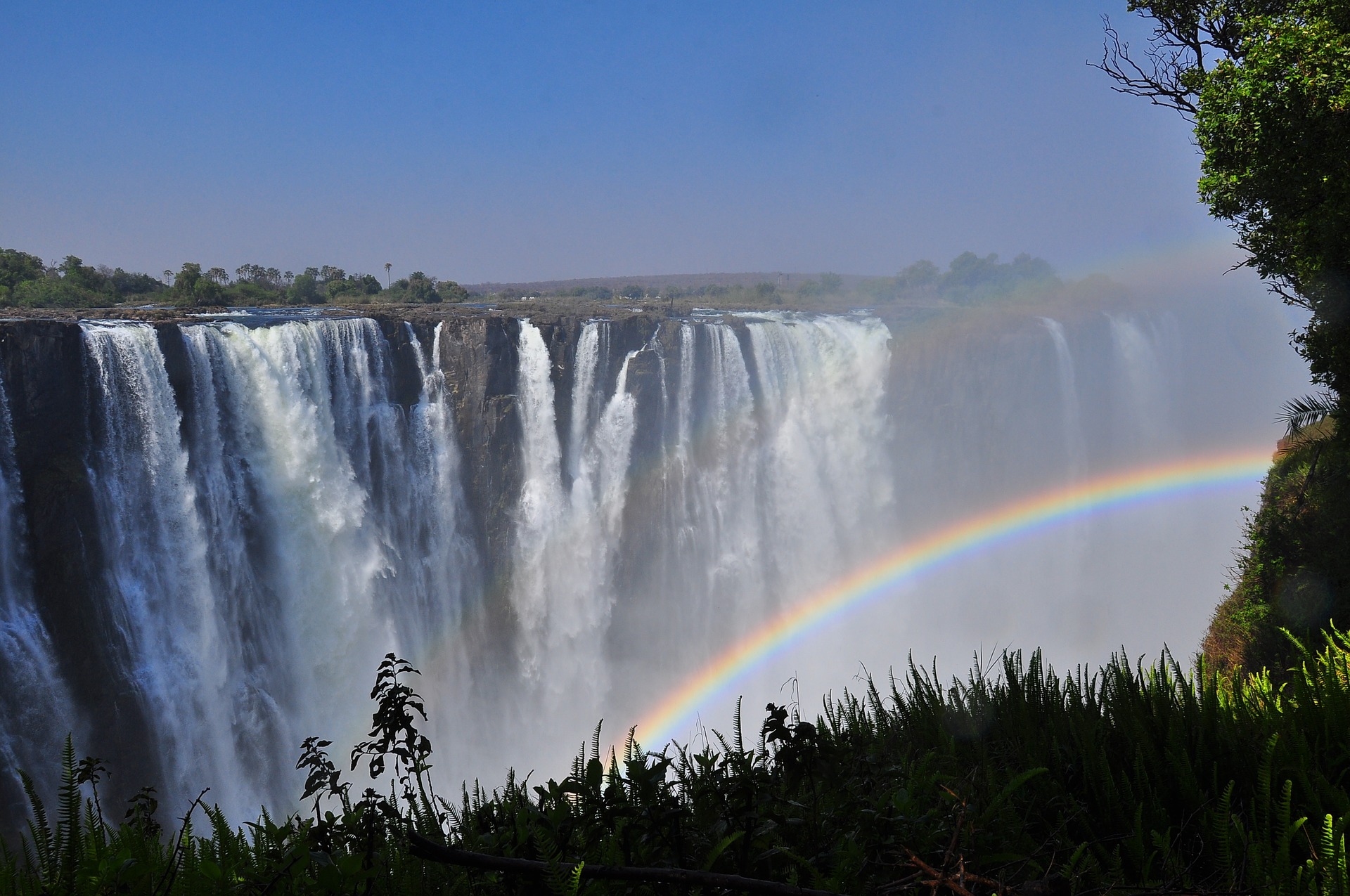
Zimbabwe is a landlocked country in Southern Africa, mostly high plateau, with mountains along the eastern border with Mozambique. The Zambezi River forms the border with Zambia and drops over Victoria Falls, a major tourist attraction. Hwange National Park, between the falls and Bulawayo, has more than 30,000 elephants, and Mana Pools, on the Zambezi in the north, is a UNESCO World Heritage Site visited on game drives, walks and canoe trips.
The country takes its name from Great Zimbabwe, a city of stone that was the capital of a large empire; its ruins stand near Masvingo. Around Bulawayo, the Matobo Hills have balancing granite rocks and ancient San cave paintings, while the Eastern Highlands around Mutare and Chimanimani are walking country. English is widely spoken, alongside Shona and Ndebele.
The US rates Zimbabwe Level 2 (exercise increased caution) and Canada advises a high degree of caution because of crime; the UK does not advise against travel. Power cuts, water rationing and shortages of US dollar cash are part of daily life, so plan your money before you go.
- Victoria Falls: The Zambezi drops over the falls on the border with Zambia, and the spray waters a rainforest.
- Hwange National Park: More than 100 animal species, over 400 bird species and more than 30,000 elephants.
- Mana Pools National Park: A remote UNESCO-listed park on the Zambezi with elephants, hippos and lions, seen on foot or by canoe.
- Great Zimbabwe: The stone ruins of the city that gave the country its name, near Masvingo.
- Matobo National Park: Balancing granite rocks and San cave paintings close to Bulawayo, a UNESCO World Heritage Site since 2003.
- Lake Kariba: A large lake on the Zambezi where you can rent a houseboat and watch wildlife from the water.
Places to visit
- City
- Park
- Historic site
Cities
- Harare: The capital and largest city, with garden suburbs such as Avondale and Mount Pleasant, the National Gallery and the Museum of Human Sciences.
- Bulawayo: The second city, relaxed, with broad avenues and Victorian buildings, close to the Matobo Hills and the Khami Ruins.
- Mutare: The main town of the Eastern Highlands, on Christmas Pass, and a base for hiking.
- Masvingo: A town named after the nearby Great Zimbabwe ruins (masvingo means ruins), and the gateway to them.
- Gweru: The capital of the Midlands, in the centre of the country, near the Danangombe ruins and Antelope Park.
- Kariba: A lakeshore resort on the border with Zambia and a starting point for Mana Pools National Park.
- Chimanimani: A small town in the Chimanimani mountains, popular with walkers.
Beyond the cities
- Victoria Falls (site): The falls of the Zambezi in the far west, with a rainforest fed by their spray and bungee jumps from the bridge.
- Hwange National Park (park): Between Victoria Falls and Bulawayo, with more than 30,000 elephants and over 400 bird species.
- Mana Pools National Park (park): A remote UNESCO-listed park south of the Zambezi, with walking and canoe safaris and over 350 bird species.
- Great Zimbabwe (site): The granite ruins of the capital of an Iron Age kingdom, spread over about 7 km².
- Matobo National Park (park): Balancing rocks, San cave paintings, sable antelope and the grave of Cecil Rhodes, south-west of Bulawayo.
- Gonarezhou National Park (park): A park in an isolated corner of the country, much of it untouched wilderness.
- Eastern Highlands (mountain): Green, cloud-hung mountains along the border with Mozambique, for walking, cycling in the Vumba and views.
- Chinhoyi Caves (site): Water-filled caves more than 120 m deep, about 120 km from Harare; diving here needs technical cave skills.
- Mutoroshanga Ethel Mine (site): A flooded asbestos quarry 120 km by road from Harare, the only site for recreational divers.
Regions
- Matabeleland
- Lake Kariba-Lower Zambezi
- Mashonaland
- Eastern Highlands
- Southeastern Zimbabwe
Things to do
See
- Victoria Falls Victoria Falls: The Zambezi drops over the falls, and the spray waters a rainforest.
- Safari in Hwange Hwange National Park: Game drives among more than 30,000 elephants and over 100 animal species.
- Great Zimbabwe Masvingo: The granite ruins of a kingdom that dominated the region between about 1100 and 1450 AD.
- Matobo Hills Bulawayo: Balancing rocks and San paintings in the caves of Bambata, Inanke, Nswatugi and Pomongwe.
Do
- Bungee jump from the Victoria Falls bridge Victoria Falls: A 111 m jump from the bridge over the Zambezi.
- Walking and canoe safaris Mana Pools National Park: Remote safaris on foot or by canoe along the Zambezi.
- Houseboat on Lake Kariba Kariba: A few days on the lake with friends or family, watching wildlife from the water.
- Harare International Festival of Arts Harare: Music, theatre and a craft market at the end of April, with some events in Bulawayo.
Eat
- Sadza and stew: Thick maize porridge with a meat or vegetable stew, eaten by most Zimbabweans almost every day.
Drink
- Sundowners: A light drink at sunset before dinner, a Southern African tradition.
Itineraries
Victoria Falls and Hwange in 5 days (5 days)
- Victoria Falls (3 nights): The falls, the rainforest and the bridge; daily flights from Johannesburg.
- Hwange National Park (2 nights): On the way between Victoria Falls and Bulawayo.
From Victoria Falls to the Eastern Highlands in 12 days (12 days)
- Victoria Falls (2 nights): Start in the far west.
- Hwange National Park (2 nights): Elephants on the road to Bulawayo.
- Bulawayo (2 nights): With a day in the Matobo Hills.
- Masvingo (2 nights): For the ruins of Great Zimbabwe.
- Mutare (2 nights): Base for the Eastern Highlands.
- Chimanimani (2 nights): Walks in the mountains.
Harare, Lake Kariba and Mana Pools in 7 days (7 days)
- Harare (2 nights): Galleries, cafés and markets; Air Zimbabwe flies on to Kariba.
- Kariba (2 nights): The lake, ideally from a houseboat.
- Mana Pools National Park (3 nights): Walking and canoe safaris along the Zambezi.
Climate and best time to visit
| Jan | Feb | Mar | Apr | May | Jun | Jul | Aug | Sep | Oct | Nov | Dec | |
|---|---|---|---|---|---|---|---|---|---|---|---|---|
| Max °C | 26 | 26 | 26 | 26 | 24 | 22 | 22 | 24 | 28 | 29 | 28 | 26 |
| Min °C | 16 | 16 | 15 | 13 | 9 | 7 | 7 | 9 | 12 | 15 | 16 | 16 |
| Rain mm | 191 | 176 | 99 | 37 | 7 | 2 | 2 | 3 | 7 | 40 | 93 | 183 |
Altitude keeps Zimbabwe's climate mild. In Harare the average maximum ranges from about 22 °C in June and July to 29 °C in October, the hottest month, and winter nights fall to about 7 °C. The rains come in summer: Wikivoyage puts them from November to March and the UK from November to April. December and January are the wettest months in Harare, with 180 to 190 mm each.
May to September is almost completely dry, with mild days and cool nights; winter nights can drop below 5 °C. The low-lying areas, such as the Zambezi valley, are hotter than the plateau. Heavy rain can damage roads or make them impassable in some areas.
Holidays and events
- 1 January 2026 · New Year's Day
- 21 February 2026 · Robert Mugabe National Youth Day
- 3 April 2026 · Good Friday
- 4 April 2026 · Holy Saturday
- 6 April 2026 · Easter Monday
- 18 April 2026 · Independence Day
- 1 May 2026 · Worker's Day
- 25 May 2026 · Africa Day
- 10 August 2026 · Heroes' Day
- 11 August 2026 · Defence Forces Day
- 22 December 2026 · Unity Day
- 25 December 2026 · Christmas Day
- 26 December 2026 · St. Stephen's Day
Getting around
Air Zimbabwe flies from Harare to Victoria Falls, Bulawayo and Kariba. Between cities, Wikivoyage mentions coaches such as Pathfinder and Citilink, but Canada advises against intercity buses and the UK reports serious accidents on long-distance buses at night. Avoid the minibus taxis (combis). Taxis are only found in the big cities and rarely go more than 20 km outside them: book through your hotel.
You drive on the left. A UK licence is valid for up to 12 months. Roads range from newly resurfaced to badly potholed; Wikivoyage describes the roads from Victoria Falls to Bulawayo, Masvingo and Mutare as relatively good. Avoid driving at night outside the towns. Stop at every roadblock and ask for a receipt or ticket if you are fined. Police can also fine you for missing reflectors, warning triangles, a spare tyre or a fire extinguisher. Fuel is sometimes unavailable and almost no fuel station takes cards, so carry spare fuel and cash. If you see the President's motorcade, pull off the road.
Flying to Zimbabwe? PartnerCompare fares and find the cheapest datesSearch flightsWhere to stay
- Hotels and guest houses: From luxury hotels to simple guest houses in the cities.
- Lodges: Often in quiet settings on the edge of the cities or near game reserves.
- Safari camps: Tented camps, chalets and campsites in most safari areas.
- Backpacker hostels: Found in most places.
- Houseboats: On Lake Kariba, for a few days on the water.
Matobo National Park has self-catering chalets and campsites. Power cuts and water rationing are frequent, so ask your hotel or tour operator how they cope. Make sure your accommodation is secure, as the UK reports occasional armed robberies of foreign residents.
Eat and drink
Dishes to try
- Sadza: A thick maize porridge, like firm polenta, served with stew or relish at lunch and dinner.
- Sadza nedovi: Sadza with vegetables in peanut sauce.
- Braai: A Southern African barbecue of steaks, short ribs and sausages over a wood fire.
- Peri-peri chicken: A Portuguese and Mozambican influence.
- Boerewors and vetkoek: Spicy farmer's sausage and fried dough, both South African in origin.
- Meat pies: A cheap snack sold in supermarkets and bakeries.
Drinks
- Mazoe orange crush: A bright orange cordial diluted with water, found almost everywhere.
- Zambezi lager: A pilsner-style beer.
- Chibuku: A traditional sorghum and maize beer sold in plastic containers.
- Tea: Usually drunk with milk, as in the UK.
| Tipping | Not obligatory. Some nicer restaurants add a 10% service charge; otherwise about 10% is a polite tip in restaurants and cafés, often expected in cash. Taxi drivers do not expect a tip. |
|---|
City food follows British habits, from pies to an English breakfast, and Harare and Bulawayo have a good choice of restaurants and cafés. Beef is a speciality, as the country has long raised cattle. Drink bottled water, which is good and affordable, and stock up before travelling to remote areas.
Entry requirements and visas
| Passport validity | At least 6 months after the date you arrive, with 3 blank pages (UK); Canada asks for 6 months beyond the date you leave and 2 blank pages |
|---|
| Passport | Entry | Max stay | Notes |
|---|---|---|---|
| United Kingdom | Visa on arrival | 30 days | Usually granted for 30 days on arrival; pay in US dollars, in small notes. An e-visa (single or double entry) is also available. |
| Canada | Visa on arrival | 30 days | Single-entry tourist visa valid for 30 days at the port of entry or an embassy; up to 2 extensions, to 90 days in total. |
| United States | Visa on arrival | Listed by Wikivoyage among the nationalities that get a visa on arrival; confirm with the embassy. | |
| Australia | Visa on arrival | Listed by Wikivoyage among the nationalities that get a visa on arrival; confirm with the embassy. |
Other nationalities: check the official source below.
Most visitors get a visa on arrival, usually for 30 days; bring US dollars in small notes for the fee. You can also apply for an e-visa before you go. The KAZA Univisa (USD 50, 30 days) covers Zimbabwe and Zambia and day trips into Botswana; you can get it at Harare, Bulawayo and Victoria Falls airports and at the Victoria Falls and Kazungula land borders. Visas are no longer issued by the embassy in London.
You need a yellow fever certificate only if you arrive from a country with yellow fever risk, including airport transits of more than 12 hours there. Declare cash of USD 10,000 or more, and do not leave with more than USD 2,000 in cash. Do not carry gemstones without paperwork or any pornographic material. Volunteering and missionary work need a work permit, and journalists need accreditation before they travel. Rules depend on your passport: check the official e-visa site and the embassy before you book.
Money and payments
| Currency | ZWG |
|---|---|
| Cards | Limited |
Zimbabwe uses several currencies, and the US dollar covers most transactions, from street vendors to hotels. Zimbabwe Gold (ZiG, ZWG) was introduced in April 2024 and is mostly what you get as change for amounts under one dollar. Change only at banks or licensed bureaux de change; any other exchange is illegal.
US dollar cash is short, and withdrawals with a foreign card are not always possible; ATMs that work tend to give USD 100 notes, which shops struggle to break. Bring small, clean US dollar notes and refuse torn ones in change. A growing number of businesses take Visa and Mastercard, especially chains, but some, including some medical providers and almost all fuel stations, do not. Ask how you can pay before you book a hotel or tour.
Health
| Required vaccines | Yellow fever: required for travellers aged 9 months or older arriving from a country with risk of yellow fever, including airport transits of more than 12 hours there |
|---|---|
| Recommended vaccines | Routine vaccines, including measles (MMR) and polio (Canada recommends one adult booster), Hepatitis A, Hepatitis B, Typhoid, for rural areas, stays of a month or more or visits to friends and relatives, Cholera, to be considered for areas with active transmission: Manicaland, Mashonaland Central, Mashonaland East and Midlands, Rabies, for some travellers: rabid dogs are common |
| Malaria | Widespread |
| Tap water | Not safe |
The CDC lists malaria throughout Zimbabwe and recommends preventive medicine for all travellers; Wikivoyage notes that the risk is highest in the lower areas in summer. Sleep under a net, use repellent and cover up in the evening. See a travel health professional at least a month before you go. Boil tap water or drink bottled water, and ask before swimming in lakes, as some carry bilharzia.
Healthcare varies and can be very poor outside the big cities, with shortages of drugs and staff. Private clinics want payment first, often in large amounts of US dollar cash, even if you are insured. For an ambulance dial 112 from a mobile (114 on NetOne), but emergency response is limited and you may need to arrange your own transport. Get insurance that covers evacuation.
This is general information, not medical advice: check with a travel health professional before you go.
Safety
- United States: Level 2: Exercise Increased Caution (2026-10-20)
- Canada: Exercise a high degree of caution (2026-10-20)
- United Kingdom: No advice against travel (2026-10-20)
The UK does not advise against travel, Canada advises a high degree of caution because of crime and the US rates Zimbabwe Level 2. Mugging, pickpocketing and bag snatching are common in city centres, especially after dark, and street lighting is poor. Smash-and-grab robberies from cars happen at junctions on the road to Harare's airport, on Liberation Legacy Way (Borrowdale Road) and Churchill Road in Harare, and on the Masvingo to Beitbridge road: keep doors locked and windows up. Canada also urges care at Victoria Falls, the Honde Valley waterfalls and the safari camps of Hwange and Mana Pools. Take care leaving banks and ATMs.
Avoid demonstrations and political gatherings, and do not discuss politics in public or online; insulting the President is illegal. Around State House in Harare, roads close from 6pm to 6am, photography is banned and you should not use GPS navigation. Mining areas, including the Marange diamond fields near Mutare, are restricted. Power cuts and water rationing are frequent, and traffic lights may not work during blackouts.
On safari, use licensed operators (the Safari Operators Association of Zimbabwe can confirm), keep a safe distance from animals and check that your insurance covers walking or canoe safaris.
Customs and etiquette
Carry a copy of your passport and visa at all times. Do not photograph government buildings, airports, the police, soldiers or demonstrations. Wearing camouflage clothing is illegal for civilians. Buying or trading parts of protected animals can bring a prison sentence of up to 9 years. Drug penalties are severe. Sex between men is illegal, and public affection can attract unwanted attention. The government defines journalism broadly, so think carefully before posting interviews, photos or videos online.
Respect for older people matters: avoid contradicting them in public. In small towns, greet people as you pass, and greet others when you enter a room. In rural areas people often support their right forearm with the left hand when shaking hands or handing something over; a firm, polite handshake is fine for visitors. People are generally punctual. Most Zimbabweans avoid talking about politics, and visitors should do the same.
Language
| Official languages | English, Shona, North Ndebele |
|---|---|
| English | Widespread |
What to pack
- Passport with 6 months' validity and 3 blank pages: Required by the UK advice, in case you leave through a neighbouring country.
- Small US dollar notes, clean and untorn: Needed for the visa fee and for most payments, as change is scarce.
- A copy of your passport and visa: You must carry them at all times.
- Repellent and a mosquito net: Malaria is present throughout the country.
- Torch and power bank: Power cuts are frequent.
- Warm layer: Winter nights can drop below 5 °C on the plateau.
- Boots and long trousers for the bush: Snakes are common in long grass.
Quick reference
Country facts
| Capital | Harare |
|---|---|
| Population | 16,950,795 (2025) |
| Area | 386,850 km² |
| Time zone | Africa/Harare (UTC+2) |
| Calling code | +263 |
| Driving side | left |
Staying connected
| SIM and eSIM | The main networks include Econet and NetOne. You need ID to buy an Econet SIM, which also lets you register for EcoCash mobile payments. The UK describes mobile and landline networks as unreliable, and power cuts can affect them. |
|---|
Emergency numbers
| Emergency | 112 |
|---|
Frequently asked questions
Do I need a visa for Zimbabwe?
Yes, but most visitors get one on arrival, usually for 30 days, paid in US dollars. The KAZA Univisa also covers Zambia. Check the official e-visa site and the embassy before you book.
What currency should I bring to Zimbabwe?
US dollars in small, clean notes. The dollar covers most transactions, cash is scarce at ATMs and change is hard to find.
Is Zimbabwe safe for tourists?
The UK does not advise against travel; Canada advises a high degree of caution because of crime and the US rates it Level 2. Take care in city centres after dark and keep car doors locked.
When is the best time to visit Zimbabwe?
May to September is dry, with mild days and cool nights. The rains run from about November to March or April.
Do I need malaria tablets for Zimbabwe?
The CDC recommends preventive medicine for all travellers to Zimbabwe. Ask a travel health professional before you go.
Can I drink the tap water in Zimbabwe?
Boil it first, or drink bottled water, which is good and affordable.
More Travel Stories from Africa
 Kenya
Sources This guide was last checked on · 17 sources
- Wikivoyage: Zimbabwe · Overview, Places to visit, Things to do, Itineraries, Climate and best time to visit, Getting around, Where to stay, Eat and drink, Entry requirements and visas, Money and payments, Health, Safety, Customs and etiquette, Language, What to pack, Staying connected, Frequently asked questions
- Wikidata: Zimbabwe · Overview, Country facts
- Government of Canada: Zimbabwe travel advice (updated 13 October 2026) · Overview, Places to visit, Getting around, Entry requirements and visas, Health, Safety, Frequently asked questions
- UK FCDO: Zimbabwe safety and security · Overview, Climate and best time to visit, Getting around, Where to stay, Money and payments, Safety, Customs and etiquette, What to pack, Staying connected, Frequently asked questions
- WMO World Weather Information Service: Harare · Climate and best time to visit
- Nager.Date: public holidays in Zimbabwe, 2026 · Holidays and events
- UK FCDO: Zimbabwe entry requirements · Getting around, Entry requirements and visas, What to pack, Frequently asked questions
- CDC Travelers' Health: Zimbabwe · Entry requirements and visas, Health, What to pack, Frequently asked questions
- ISO 4217 (SIX), published 2026-09-17 · Money and payments
- UK FCDO: Zimbabwe health · Health
- UK FCDO: Zimbabwe getting help · Health, Staying connected, Emergency numbers
- US Department of State: Zimbabwe travel advisory · Safety
- UK FCDO: Zimbabwe travel advice · Safety
- UK FCDO: Zimbabwe regional risks · Safety
- World Bank, SP.POP.TOTL · Country facts
- World Bank, AG.LND.TOTL.K2 · Country facts
- IANA Time Zone Database, zone.tab · Country facts
Suggest an update
Travel rules, prices and timetables change. If something in this guide is out of date, tell us: we check every suggestion against an official source before changing the page.