

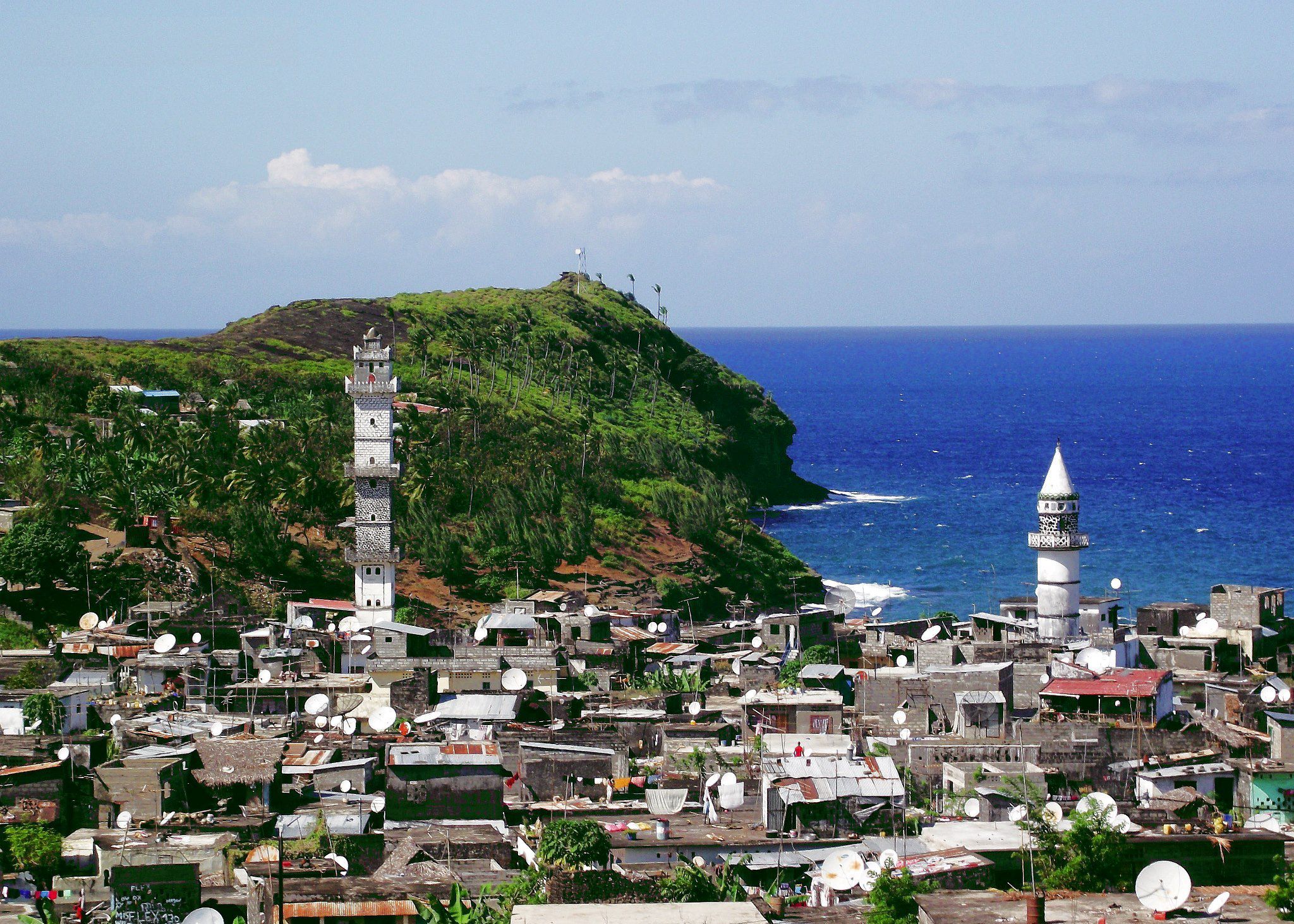
- Local time
- 21:02
- Currency
- Comorian Franc (KMF)
- Capital
- Moroni
- Calling code
- +269
- Drive on the
- right
Overview
Three volcanic islands between Mozambique and Madagascar: Karthala's crater, nesting turtles and manta rays, and very few tourists.
The Comoros are three volcanic islands in the Indian Ocean, between northern Mozambique and northern Madagascar. Grande Comore has the capital, Moroni, and the active volcano Karthala; Mohéli, the smallest, has the best beaches, sea turtles and Livingstone's fruit bats; Anjouan is the most mountainous and grows vanilla and ylang-ylang. The country also claims Mayotte, which France administers.
Very few foreign tourists come, and tourist facilities are minimal: transport between the islands is irregular, the economy runs on cash, and French is far more useful than English. In return you find white-sand beaches, Swahili-style towns and a marine reserve without crowds. Almost everyone is Muslim, so dress modestly. Canada asks for a high degree of caution because emergency services and medical care are limited, and the US for increased caution.
- Mount Karthala: An active volcano and the highest peak of the islands, climbed for its crater.
- Moroni medina: The old mosque and the narrow, maze-like lanes of the capital.
- Itsamia: A beach on Mohéli where giant sea turtles come ashore to lay eggs.
- Mohéli marine reserve: Small islands off Nioumachoua, with manta rays.
- Lac Salé: A salt lake next to the sea in the north of Grande Comore.
- Maloudja beach: The best-known white-sand beach of Grande Comore, at Mitsamiouli.
Places to visit
- City
- Town
- Coast
- Park
- Mountain
Cities
- Moroni: The capital, on Grande Comore, with the old mosque, the medina and Volo Volo market.
- Mutsamudu: The capital of Anjouan, linked to Moroni by flights and boats.
- Domoni: The second town and former capital of Anjouan.
- Fomboni: The capital of Mohéli, with the island's hospital.
- Nioumachoua: The second town of Mohéli, on the south coast, by the marine reserve.
Beyond the cities
- Mount Karthala (mountain): The active volcano above Moroni and the highest peak in the country, known for its crater.
- Mohéli National Park (park): The marine reserve off Nioumachoua, among small islands, with manta rays.
- Itsamia (coast): A village on Mohéli where giant sea turtles lay their eggs.
- Mitsamiouli (coast): Home of Maloudja, the most popular beach of Grande Comore.
- Iconi (town): A village just south of Moroni with the ruined Kaviridjeo palace of the sultans of Bambao.
- Lac Salé (site): A salt lake beside the beach at the north end of Grande Comore, with a path up the surrounding rocks.
Regions
- Grande Comore: The largest island, with Moroni and the Karthala volcano.
- Mohéli: The smallest and most natural island, with the best beaches, sea turtles and Livingstone's fruit bats.
- Anjouan: The most mountainous island, called the Isle of Perfumes for its vanilla and ylang-ylang.
Things to do
See
- Turtles at Itsamia Itsamia: Watch giant sea turtles come ashore to lay their eggs.
- Moroni medina and old mosque Moroni: Narrow lanes and Swahili-style arcades around the old mosque.
- Kaviridjeo palace Iconi: Ruins of the 16th-century palace of the sultans of Bambao, opposite a mosque with a tidal pool.
- Lac Salé Grande Comore: A salt lake next to the sea, with a trail up the rocks around it.
Do
- Karthala crater trek Mount Karthala: About 8 hours each way with a guide, as one long day or with a night at a basic camp; check volcanic activity first.
- Manta rays Nioumachoua: Trips organised by Laka Lodge in Nioumachoua; sightings are hit and miss.
- Swimming with dolphins Moroni: Trips leave from several places on Grande Comore, most often from Itsandra just north of Moroni.
- Maloudja beach Mitsamiouli: White sand in the north of Grande Comore; Ndroude, Bouni and Chomoni are other popular beaches.
- Turtle Island Grande Comore: Walk across to the islet off Ndroude at low tide; wear shoes, as the volcanic rock gets hot.
- Hike from Fomboni to Nioumachoua Mohéli: A long, demanding walk across Mohéli.
Eat
- Mabawa at night Moroni: Grilled marinated chicken wings from street stalls, especially around Volo Volo.
Shop
- Volo Volo market Moroni: Spices, essential oils such as ylang-ylang, and coconut products; many crafts here come from Madagascar.
Itineraries
Grande Comore in 5 days (5 days)
- Moroni (2 nights): The medina and old mosque, Volo Volo market, and the ruins at Iconi.
- Mount Karthala (1 night): The crater trek with a guide, sleeping at the basic camp; check volcanic activity first.
- Mitsamiouli (2 nights): Maloudja beach; Lac Salé and Turtle Island, off Ndroude, are also in the north of the island.
Mohéli in 4 days (4 days)
- Fomboni (1 night): Fly in from Moroni with Int'Air Îles.
- Nioumachoua (3 nights): The marine reserve and manta rays, and the turtles of Itsamia, also on Mohéli.
Climate and best time to visit
| Jan | Feb | Mar | Apr | May | Jun | Jul | Aug | Sep | Oct | Nov | Dec | |
|---|---|---|---|---|---|---|---|---|---|---|---|---|
| Max °C | 30 | 30 | 31 | 30 | 30 | 28 | 28 | 28 | 28 | 29 | 30 | 31 |
| Min °C | 23 | 23 | 23 | 23 | 21 | 20 | 19 | 18 | 19 | 20 | 22 | 23 |
| Rain mm | 364 | 293 | 279 | 316 | 256 | 266 | 244 | 150 | 108 | 97 | 108 | 219 |
The islands have a tropical maritime climate with two seasons. From December to April it is hot and humid, with the heaviest rain (more than 360 mm in January in Moroni) and the risk of cyclones, which the UK places between January and May. From May to November it is cooler and drier, and Wikivoyage names this the best time to visit. In Moroni maximums stay between about 28 °C and 31 °C all year.
Rain never stops completely: Moroni still averages around 250 mm a month from May to July, and the driest months are August to November. In the rainy season floods and landslides can close roads.
Holidays and events
- 1 January 2026 · New Year's Day
- 18 March 2026 · Cheikh Al Maarouf Day
- 1 May 2026 · Labour Day
- 6 July 2026 · National Day
- 12 November 2026 · Maore Day
Getting around
| Main airports | HAH |
|---|---|
| International driving permit | Recommended |
Between the islands, Int'Air Îles flies daily between Moroni, Anjouan and Mohéli. Boats also link the islands, but the UK and Canada warn that they can be overloaded, poorly maintained and without life jackets, and some have capsized with heavy loss of life: do not board a boat that looks overloaded, check for life jackets and avoid sea travel in bad weather. Small speedboats cross from Chindini on Grande Comore to Mohéli in about an hour; take them only on calm days.
On each island a main road runs around the coast. On Grande Comore it is in reasonable shape, but many other roads are poor, unlit and full of potholes, and Canada advises against driving after dark. Buses link each capital with the villages on the ring road, with no timetable, and stop well before sunset. Shared taxis are the usual transport in town: agree the fare first and carry small notes. You can rent a car on Grande Comore; on Mohéli there are no rental agencies, but your hotel may find a local willing to rent a car or motorbike. Canada says you must carry an International Driving Permit, while the UK says a photocard licence is valid for 3 months: get the permit before you go. Fuel is scarcer and dearer on Mohéli, so fill up when you can.
Flying to Comoros? PartnerCompare fares and find the cheapest datesSearch flightsWhere to stay
- Simple hotels and bungalows: The cheapest rooms in Moroni cost EUR 10-20 if you bargain, according to Wikivoyage in October 2026.
- Upmarket hotels: In Moroni a top hotel can cost hundreds of euros a night.
- Beach bungalows: Near popular beaches such as Ndroude, Bouni, Chomoni and Chindini on Grande Comore.
- Staying with a family: Locals sometimes offer a bed; ask whether they expect payment, since you may be treated as a guest.
Moroni is the most expensive place to sleep. The immigration form asks for an address for your stay. Keep your cash, valuables and documents in the hotel safe, and check in advance whether your hotel accepts cards.
Eat and drink
Dishes to try
- Fish and seafood: The main food of the islands; menus change with the day's catch.
- Mabawa: Marinated, grilled chicken wings, sold at night in Moroni and in the villages, with breadfruit, cassava or green banana and the hot sauce putu.
- Madaba: Pounded cassava leaves cooked with peppers and garlic and served with rice; on Grande Comore it often contains fish.
- Mkatre foutra: A small, round, savoury breakfast bread.
- Sambusa: The local samosa, filled with fish and spices.
- Trama: Grilled corn, mostly from January to April.
- Jackfruit: A large green fruit with a taste close to lychee.
Drinks
- Fresh juices: Tamarind, strawberry guava (ntsongoma), pineapple and guava.
- Bottled water: Cheap and sold everywhere.
- Beer and wine: Sold in Moroni by some merchants near Volo Volo market, in a few liquor stores and in higher-end restaurants.
Cheap restaurants called brochetteries serve fried meat with banana, cassava, taro or breadfruit, and there are European-style restaurants in Moroni and the larger villages. Eat only food that is cooked through. Most restaurants serve alcohol only if they cater to foreigners, and drinking alcohol or being drunk in public is illegal. During Ramadan check opening hours, and do not eat or drink in public in the daytime.
Entry requirements and visas
| Passport validity | At least 6 months: the UK counts from the date you arrive, Canada from the date you leave |
|---|
| Passport | Entry | Max stay | Notes |
|---|---|---|---|
| United Kingdom | Visa on arrival | EUR 30 at Hahaya airport or other points of entry. | |
| Canada | Visa on arrival | At the airport in Moroni or other points of entry; the fee can be paid in euros. | |
| United States | Visa on arrival | 45 days | Wikivoyage says every visitor gets a visa on arrival, valid 45 days. |
| EU / EEA | Visa on arrival | 45 days | Wikivoyage says every visitor gets a visa on arrival, valid 45 days. |
| Australia | Visa on arrival | 45 days | Wikivoyage says every visitor gets a visa on arrival, valid 45 days. |
Other nationalities: check the official source below.
Everyone needs a visa, but you get it on arrival. The UK puts the fee at EUR 30; Wikivoyage lists KMF 15,000, payable in Comorian francs, euros, US dollars or pounds, free for children under 10, and valid for 45 days. Bring the exact amount in cash, because change may not be given and the ATM at the airport may not work. You also need a return or onward ticket, and overstaying can lead to fines and arrest.
Customs officers may search your luggage, and you must declare anything that may be prohibited or taxed. No yellow fever certificate is required. Rules depend on your passport and can change: check with the Comoros embassy before you book.
Money and payments
| Currency | Comorian Franc (KMF) |
|---|---|
| Cards | Rare |
The Comoros run on cash. Most businesses do not take cards, and even where they do, connection problems can stop a payment, so always carry cash. There are only a few banks and ATMs: Moroni has four ATMs, which are often out of order, and banks can charge about 10% on withdrawals.
Bring euros in good condition, as even slightly torn notes are refused. Many shops change them, and some hotels and restaurants accept euros but give change in Comorian francs (KMF). Prices are often also quoted in euros at a round rate of EUR 1 = KMF 500.
Costs and budget
- Visa on arrival: KMF 15,000 (about EUR 30)
- Meal in a brochetterie, Grande Comore: up to KMF 1,500
- Meal in a brochetterie, Mohéli: from KMF 250
- Mkatre foutra (breakfast bread): KMF 100
- Bottled water, 1.5 litres: KMF 400
- Car rental on Grande Comore, per day: KMF 15,000-25,000
- Petrol, per litre: KMF 600-1,000
- Swimming with dolphins at Itsandra: KMF 10,000
Because the islands are isolated, prices are higher than in the rest of East Africa, especially for imported goods and for rooms in Moroni. Food is cheaper on Mohéli, and Wikivoyage reckons you can get by on KMF 6,000-10,000 a day for food and a simple room. The prices here are those listed on Wikivoyage when we read it in October 2026, and some may be older.
Health
| Recommended vaccines | Routine vaccines, including measles (MMR), Hepatitis A, Hepatitis B, Typhoid, Rabies, for some travellers: ask a travel clinic |
|---|---|
| Malaria | Widespread |
| Tap water | Not safe |
See a travel health professional at least 6 to 8 weeks before you go. The CDC recommends prescription medicine against malaria on all the islands: take it, and sleep under a treated mosquito net. If you get a fever, get tested for malaria, which you can do in most large towns. Rabid dogs are common, so avoid contact with animals. Do not drink tap water: bottled water is cheap.
Medical facilities on all three islands are basic and mostly private, and power and water cuts affect hospitals. Clinics usually ask for a cash deposit or a payment guarantee, and a serious emergency may mean evacuation abroad: get insurance that covers it. Grande Comore and Anjouan have the better facilities; Mohéli has a hospital in Fomboni. For an ambulance you call a hospital directly, for example El Maarouf on Grande Comore (+269 773 26 04).
This is general information, not medical advice: check with a travel health professional before you go.
Safety
- United States: Level 2: Exercise Increased Caution (2026-10-20)
- Canada: Exercise a high degree of caution (2026-10-20)
- United Kingdom: No advice against travel (2026-10-20)
The US advises increased caution and Canada a high degree of caution, because emergency services and medical facilities are limited; the UK does not advise against travel to any part of the islands. Crime is low. Pickpocketing, bag snatching and theft from unlocked cars happen, especially in markets and on beaches, and walking alone at night raises the risk.
Demonstrations can happen, especially around elections, on all three islands; in the past they have blocked roads in Moroni, including the road to the airport, and curfews can be declared at short notice. Stay away from crowds and follow the local news. Some demonstrations concern Mayotte, and there is some anti-French feeling.
The sea is the main natural risk. Riptides are common, beaches are not supervised and people drown every year. Boats between the islands can be overloaded and short of life jackets. Cyclones can strike from January to May, and Karthala is an active volcano: check the latest monitoring before you climb it. Women travelling alone may face harassment. For the police dial 117, for the fire service 113 or 114.
Customs and etiquette
The Comoros are a Muslim country. Clothes should loosely cover you from the shoulders to the knees; women should keep the stomach and back covered, but foreign women are not expected to cover their hair. On the beach, shorts and a T-shirt are more respectful than a bikini, and topless bathing is not acceptable. Avoid kissing or other affection in public. During Ramadan (the next one starts around 7 February 2027) do not eat, drink or smoke in public in the daytime.
Many Comorians do not want to be photographed: always ask first, and never photograph airports, ports, military sites or government buildings. Do not hand out sweets or money to children. Preaching another religion is illegal, and so is same-sex sexual activity, with prison sentences of up to 5 years. Drug offences carry long prison terms. Carry ID, or a copy of your passport photo page and visa stamp. To greet an older person, say kwesi.
Language
| Official languages | French, Arabic |
|---|---|
| English | Rare |
| Yes / No (Shikomori, Mohéli) | Ewa / A-a |
|---|---|
| Thank you (Shikomori, Mohéli) | Marahaba |
| Thank you very much (Shikomori, Mohéli) | Marahaba menji |
| Sorry, pardon me (Shikomori, Mohéli) | Swamahani |
| How are you? / Good (Shikomori, Grande Comore) | Yedje? / Ndjema |
| Greeting an elder (Shikomori) | Kwesi |
| Hello (French) | Bonjour bawn-ZHOOR |
| Do you speak English? (French) | Parlez-vous anglais ? par-lay VOO ahng-LEH |
| How much (is this)? (French) | Combien ça coûte ? COMM-bee-yan SAH coot |
What to pack
- Euros in cash, in good condition: For the visa on arrival and daily spending: ATMs are few and unreliable, and torn notes are refused.
- Return or onward ticket: You must show it at the border.
- Copies of your passport and visa stamp: Carry ID at all times; keep the original in the hotel safe.
- Malaria tablets and a mosquito net: The CDC recommends malaria medicine on all the islands.
- Clothes covering shoulders and knees: Expected everywhere, including on the beach.
- Shoes for hot volcanic rock: For beaches, Turtle Island and the Karthala trek.
- International Driving Permit: Canada says you must carry one to drive.
- Insurance with medical evacuation: Care is basic, and serious cases may need evacuation abroad.
Quick reference
Country facts
| Capital | Moroni |
|---|---|
| Population | 882,847 (2025) |
| Area | 1,870 km² |
| Time zone | Indian/Comoro (UTC+3) |
| Calling code | +269 |
| Driving side | right |
Emergency numbers
| Police | 117 |
|---|---|
| Fire | 113 or 114 |
Frequently asked questions
Do I need a visa for the Comoros?
Yes, but you get it on arrival: about EUR 30, paid in cash. Check the rules with the Comoros embassy before you book.
Can I use cards in the Comoros?
Rarely. Bring euros in cash in good condition: ATMs are few and often out of order.
Is it safe to travel to the Comoros?
Crime is low; the US asks for increased caution and Canada for a high degree of caution, mainly because medical and emergency services are limited. Read the safety section.
When is the best time to visit the Comoros?
The cooler, drier season from May to November; August to November is the driest. December to April is hot and humid, with a risk of cyclones.
Can I drink the tap water in the Comoros?
No. Drink bottled water, which is cheap and easy to find.
How do I travel between the islands?
Int'Air Îles flies daily between Moroni, Anjouan and Mohéli. Boats are cheaper but can be overloaded: avoid them in bad weather.
More Travel Stories from Africa
 Kenya
Sources This guide was last checked on · 18 sources
- Wikivoyage: Comoros · Overview, Places to visit, Things to do, Itineraries, Climate and best time to visit, Getting around, Where to stay, Eat and drink, Entry requirements and visas, Money and payments, Costs and budget, Health, Safety, Customs and etiquette, Language, What to pack, Frequently asked questions
- Wikidata: Comoros · Overview, Places to visit, Money and payments, Language, Country facts
- Government of Canada: Comoros travel advice (updated 26 May 2026) · Overview, Things to do, Climate and best time to visit, Getting around, Where to stay, Eat and drink, Entry requirements and visas, Money and payments, Health, Safety, Customs and etiquette, What to pack, Frequently asked questions
- US Department of State: Comoros travel advisory · Overview, Safety, Frequently asked questions
- UK FCDO: Comoros travel advice (updated 10 December 2025) · Overview, Safety
- UK FCDO: Comoros safety and security · Things to do, Climate and best time to visit, Getting around, Where to stay, Eat and drink, Money and payments, Safety, Customs and etiquette, What to pack
- WMO World Weather Information Service: Moroni · Climate and best time to visit
- Nager.Date: public holidays in Comoros, 2026 · Holidays and events
- Wikidata: Prince Said Ibrahim International Airport · Getting around
- UK FCDO: Comoros entry requirements · Entry requirements and visas, Costs and budget, What to pack, Frequently asked questions
- CDC Travelers' Health: Comoros · Entry requirements and visas, Health, What to pack, Frequently asked questions
- ISO 4217 (SIX), published 2026-09-17 · Money and payments
- UK FCDO: Comoros health · Health
- Wikivoyage: French phrasebook · Language
- World Bank, SP.POP.TOTL · Country facts
- World Bank, AG.LND.TOTL.K2 · Country facts
- IANA Time Zone Database, zone.tab · Country facts
- UK FCDO: Comoros getting help · Emergency numbers
Suggest an update
Travel rules, prices and timetables change. If something in this guide is out of date, tell us: we check every suggestion against an official source before changing the page.