

- Local time
- 18:04
- Currency
- West African CFA Franc (XOF)
- Capital
- Bissau
- Calling code
- +245
- Drive on the
- right
Overview
The Bijagós islands, with hippos on Orango and nesting turtles, and an old Portuguese colonial coast, far off the beaten path in West Africa.
Guinea-Bissau is a small former Portuguese colony on the west coast of Africa, independent since 1974 and well off the beaten path. Most travellers come for the Bijagós Archipelago, some twenty islands where you can see hippos on Orango and turtle nesting beaches on other islands, often staying at French-run fishing lodges. On the mainland, the old capital Bolama keeps fine colonial buildings, Bafatá has a colonial centre, Cacheu has a small fort from the time of the slave trade, and the forests of Cantanhez are home to chimpanzees.
Travel here takes patience. Tourist facilities are limited, power and water often run for only a few hours a day, the economy runs on cash, and Portuguese and the local Creole are far more useful than English. Canada advises a high degree of caution because of high crime rates and weak state infrastructure: read the safety section before you go.
- Bijagós Islands: Some twenty islands with hippos, turtle nesting grounds and few people.
- Bolama: The capital until 1941, with fine colonial architecture.
- Bafatá: A colonial town centre on the Rio Gêba and the house of Amílcar Cabral.
- Cacheu: A former slave-trading post with a small fort.
- Cantanhez forests: Forests around Jemberem where, with luck, you see chimpanzees.
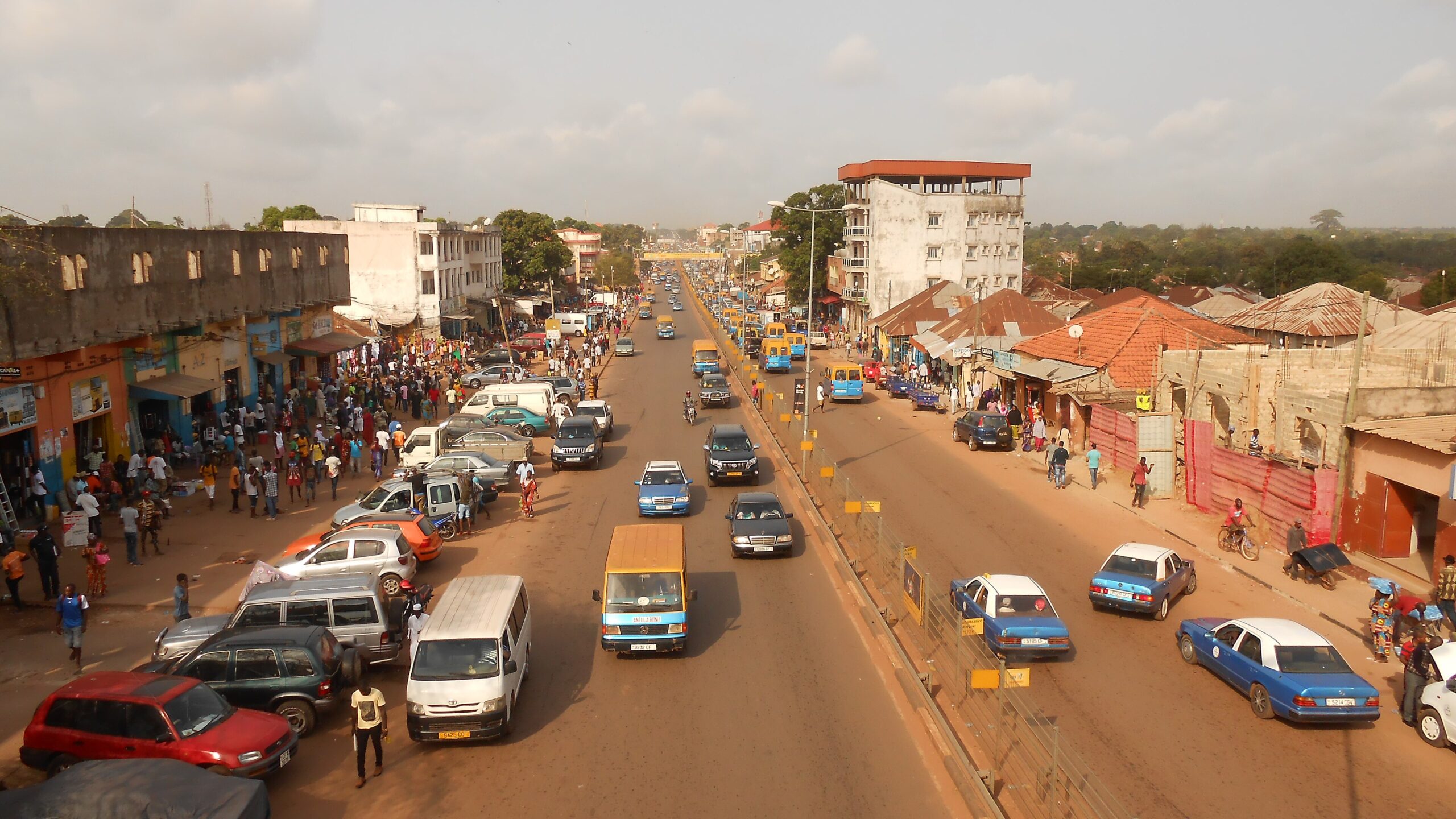
- Bandim Market: The largest market in the country, on the main road into Bissau.
Places to visit
- City
- Town
- Coast
- Island
- Park
Cities
- Bissau: The capital, with the only international airport, Bandim Market and the boats to the islands.
- Bubaque: The largest town of the Bijagós, with hotels and a harbour for boat trips to the other islands.
- Bafatá: A pleasant town on the Rio Gêba with a colonial centre, birthplace of Amílcar Cabral.
- Cacheu: Once an important slave-trading post, with a small fort still standing.
- Gabú: A busy, mostly Muslim market town on the roads to Senegal and Guinea.
- Buba: A town on the tidal Rio Grande de Buba, where the paved road to the south ends.
Beyond the cities
- Bijagós Islands (island): An archipelago of some twenty islands, many undeveloped, with fishing lodges and turtle nesting grounds.
- Orango (island): The Bijagós island where you can see hippos.
- Bolama (town): The capital until 1941, with fine colonial buildings that have been suggested for World Heritage status.
- Lagoas de Cufada Natural Park (park): The first protected area in the country and its largest freshwater reserve.
- Varela (coast): Beaches and pine forest by the Senegal border, at the end of a 50 km dirt road; inside the border zone where Canada advises against non-essential travel.
Things to do
See
- Hippos on Orango Orango: One of the few places to see hippos in the archipelago.
- Turtle nesting beaches Bijagós Islands: Several islands of the Bijagós are nesting grounds for sea turtles.
- Colonial Bolama Bolama: Walk among the buildings of the former capital.
- Amílcar Cabral's house Bafatá: Ask around near the old market to visit the house of the independence leader.
- Fort of Cacheu Cacheu: A small fort from the time of the slave trade.
- Chimpanzees in Cantanhez: The forests of Jemberem, in Cantanhez Natural Park, where with luck you see chimpanzees.
- Lagoas de Cufada Lagoas de Cufada Natural Park: Lakes and wetlands of the oldest protected area in the country.
Do
- Island hopping in the Bijagós Bubaque: Boat trips from Bubaque to undeveloped islands; book with a tour operator rather than a pirogue.
- Cycling: The country is flat and roads outside Bissau have little traffic; bikes can be bought locally.
Eat
- Rice with fish: The everyday meal, often with palm oil or peanut sauce.
Drink
- Warga and cashew wine: Sweet green tea, and the cashew or palm wine that non-Muslims drink.
Shop
- Bandim Market Bissau: The largest market in the country, with a pleasant atmosphere.
- Lumo markets: Big weekly markets in country towns where farmers and traders sell and swap goods.
Itineraries
Bissau and the Bijagós in 7 days (7 days)
- Bissau (2 nights): Bandim Market; check ferry times, which depend on tides and weather.
- Bubaque (4 nights): Boat trips to other islands, including Orango for the hippos.
- Bissau (1 night): Back by ferry or a lodge's boat for your flight.
The east by road in 5 days (5 days)
- Bissau (1 night): Shared taxis leave from the main bus station early in the morning.
- Bafatá (2 nights): The colonial centre on the Rio Gêba and Amílcar Cabral's house.
- Gabú (2 nights): The market town of the east.
Holidays and events
- 1 January 2026 · New Year's Day
- 20 January 2026 · National Heroes' Day
- 8 March 2026 · International Women's Day
- 3 April 2026 · Good Friday
- 5 April 2026 · Easter Sunday
- 1 May 2026 · Labour Day
- 24 September 2026 · Independence Day
- 2 November 2026 · All Souls' Day
- 24 December 2026 · Christmas Eve
- 25 December 2026 · Christmas Day
- 31 December 2026 · New Year's Evey
Getting around
In Bissau, minibuses called toca-toca and ordinary taxis cover the city. Between towns you travel by sept-place, the more comfortable choice, or by candonga, a large vehicle with ten to twenty passengers. There are no timetables: vehicles leave the main bus station on the airport road when they are full, mostly early in the morning, and finding transport late in the day can be hard. You can also hire a taxi to another town.
To the islands, Canada advises against pirogues, which are unsafe: use the Consulmar ferry from Bissau, the boats of the island lodges, a tour operator or a chartered flight. Ferry times depend on tides and weather. Driving: Canada recommends hiring a driver. Roads are poorly lit and maintained, also in Bissau, and the rainy season makes them harder. Avoid driving at night, keep doors locked, carry ID, and stay on paved roads outside Bissau because of landmines. Any alcohol in your blood is an offence. UK photocard licences are valid for 3 months, and Canada says Guinea-Bissau does not take part in the International Driving Permit scheme.
Flying to Guinea-Bissau? PartnerCompare fares and find the cheapest datesSearch flightsWhere to stay
- Hotels in Bissau: Generally overpriced for what you get.
- Island lodges: Mostly French-run fishing lodges on the Bijagós, recommended by Wikivoyage.
- Rooms in country towns: Most towns outside the capital have a hotel or rooms to rent.
Tourist facilities are limited, and electricity and water are often available for only a few hours a day. Burglaries are regularly reported and security is often inadequate; Wikivoyage advises against trusting hotel safes. There are no clinics or trained medical staff on the islands.
Eat and drink
Dishes to try
- Rice with fish: The staple meal, since fish is plentiful and rice cheap.
- Meat with palm oil or peanut sauce: Beef, goat, chicken or pork for more special meals, with vegetables.
- Street snacks: Sandwiches with egg, omelette, fish or beef, doughnuts and cake.
- Fruit: Mangoes, papayas, oranges, bananas and cashews in season, plus sour fole fruits.
Drinks
- Warga: A sweet green tea, drunk everywhere.
- Cashew wine and palm wine: Popular with non-Muslims.
- Baobab juice: Sumo de cabaceira, made from the fruit of the baobab.
Meals are often shared from a large bowl, and people will invite you to join them. Wild game such as monkey is sometimes served, but the animals are endangered: do not order it. Imported fruit, Portuguese beer, wine and soft drinks cost more. Drink only bottled, filtered or boiled water.
Entry requirements and visas
| Passport validity | At least 6 months after the date you arrive (UK); Canada asks for 3 months beyond the date you leave |
|---|
| Passport | Entry | Max stay | Notes |
|---|---|---|---|
| United Kingdom | Visa required | There is no embassy in the UK: contact the embassy in Paris, or embassies in neighbouring countries such as Senegal. | |
| Canada | Visa required | Tourist visa required. | |
| United States | Visa required | Wikivoyage reports a visa on arrival at Bissau airport since 2024, but the rules are not published: check before you travel. | |
| EU / EEA | Visa required | Wikivoyage reports a visa on arrival at Bissau airport since 2024, and visas from the embassy in Lisbon: check before you travel. |
Other nationalities: check the official source below.
Most visitors need a visa, and official information is hard to find, because the embassies have no websites. The UK points to the embassy in Paris (+33 1 48 74 36 39) and to embassies in neighbouring countries such as Senegal. Wikivoyage reports that the embassy in Lisbon issues tourist visas within a few hours, that the consulate in Ziguinchor, Senegal, issues 30-day visas quickly for XOF 20,000 (West African CFA francs), and that since 2024 EU and US citizens can apparently get a visa on arrival at Bissau airport, for EUR 60 to USD 120. Rules depend on your passport and can change: check with an embassy of Guinea-Bissau before you book.
You need a yellow fever vaccination certificate to enter. Declare foreign currency on arrival: you cannot take out more than you declared, and Canada says taking the local currency in or out is prohibited.
Money and payments
| Currency | West African CFA Franc (XOF) |
|---|---|
| Cards | Rare |
Guinea-Bissau runs on cash, and credit cards are rarely used. ATMs are few: Canada says there are none, while Wikivoyage reports Ecobank ATMs in Bissau that take Visa and Mastercard. Do not count on them, and bring enough euros for your stay. The West African CFA franc (XOF) is pegged to the euro (EUR 1 = XOF 655.957), so euros are easy to change; use an official bureau de change. Western Union has offices in Bissau and several towns, with a commission of about 10%.
Costs and budget
- Visa on arrival at Bissau airport (2024): EUR 60-USD 120
- 30-day visa at the consulate in Ziguinchor: XOF 20,000
- MTN SIM card: XOF 500
Local food is cheap, but hotels in Bissau are overpriced, and imported goods, from Portuguese beer to fruit, can cost more than in Europe. The prices here are those listed on Wikivoyage when we read it in October 2026.
Health
| Required vaccines | Yellow fever certificate, for all arriving travellers (from 1 year of age, according to the CDC) |
|---|---|
| Recommended vaccines | Routine vaccines, including measles (MMR), Hepatitis A, Hepatitis B, Typhoid, Meningococcal, for the meningitis belt during the dry season (roughly December to June), Rabies: discuss before you go, because vaccines after a bite are usually not available, Cholera, only for some travellers: ask a travel clinic |
| Malaria | Widespread |
| Tap water | Not safe |
Malaria is present throughout the country, and the CDC recommends prescription medicine to prevent it; dengue and Zika are also spread by mosquitoes. Drink only bottled, filtered or boiled water, avoid swimming in fresh water because of schistosomiasis, and keep away from dogs and monkeys. HIV is far more common than in the UK: always use condoms.
Medical facilities are extremely limited, also in Bissau, and hospitals are not fully operational. There are no clinics on the islands. Pharmacies are few and may lack supplies, so bring what you need. Get insurance that covers medical evacuation. For an ambulance, the UK lists 1313; Canada lists 119 for medical help.
This is general information, not medical advice: check with a travel health professional before you go.
Safety
- United States: Level 3: Reconsider Travel (2026-10-20)
- Canada: Exercise a high degree of caution (2026-10-20)
- United Kingdom: No advice against travel (2026-10-20)
Canada advises a high degree of caution because of high crime rates and weak state infrastructure, and advises against non-essential travel within 20 km of the border with Senegal, including the road from São Domingos to Mpack, where rebels are present and banditry is common. After the presidential election, the army seized power on 26 November 2025; calm has returned but the situation is uncertain. Avoid demonstrations, military sites and government buildings, and if in doubt stay in your hotel.
Road banditry and carjacking are a risk: avoid travelling after dark and keep doors locked. Pickpocketing and phone snatching are common in Bissau, at the airport and in markets, and burglaries are frequent. Be especially careful in remote areas, where there are few police. Landmines may remain outside Bissau, especially in the regions of Bafatá, Biombo, Oio, Quinara and Tombali: stay on paved roads and marked paths. To reach the Bijagós, avoid pirogues. Police: 117.
Customs and etiquette
People are welcoming, and you will often be asked to share a meal from the common bowl. Always ask before you take photos of people: some children will ask you to, while others get upset, especially at close-ups. Do not photograph military sites. Carry your passport or ID at all times, especially when driving or in a taxi, because police check often.
Same-sex relationships are legal, but society is conservative and public displays of affection attract negative attention. Drug penalties are severe and prisons are harsh. Around wildlife, keep your distance and never feed or touch animals.
Language
| Official languages | Portuguese |
|---|---|
| English | Rare |
| Hello (Portuguese) | Olá oh-LAH |
|---|---|
| Good morning (Portuguese) | Bom dia bohm DEE-uh |
| Please (Portuguese) | Por favor poor fuh-VOHR |
| Thank you (Portuguese) | Obrigado / Obrigada aw-bree-GAH-doo / aw-bree-GAH-duh |
| Do you speak English? (Portuguese) | Fala inglês? FAH-luh een-GLIHSH |
| What do you want? (Creole) | Ke ku bu misti? |
| I want it / I don't want it (Creole) | N mistil / N ka mistil |
What to pack
- Visa, passport and copies: Police check ID often, especially on the road.
- Yellow fever certificate: Required to enter.
- Euros in cash: There are few or no ATMs that take foreign cards, and the CFA franc is pegged to the euro.
- Malaria tablets, repellent and a first aid kit: Medical care is extremely limited and pharmacies lack supplies.
- Torch and power bank: Electricity is often available only a few hours a day.
- Insurance with medical evacuation: Serious cases must be treated abroad.
Quick reference
Country facts
| Capital | Bissau |
|---|---|
| Population | 2,249,515 (2025) |
| Area | 28,120 km² |
| Time zone | Africa/Bissau (UTC+0) |
| Calling code | +245 |
| Driving side | right |
Staying connected
| SIM and eSIM | Wikivoyage lists three networks, MTN, Orange and Guinétel, with prepaid SIM cards sold everywhere; calls between networks can be hard. Canada warns that telecommunications are expensive and unreliable. Internet cafés are found in central Bissau. |
|---|
Emergency numbers
| Police | 117 |
|---|---|
| Ambulance | 1313 |
| Fire | 1313 |
Frequently asked questions
Do I need a visa for Guinea-Bissau?
Yes, most visitors do. Wikivoyage reports a visa on arrival at Bissau airport, but official information is scarce: ask an embassy of Guinea-Bissau before you book.
Do I need a yellow fever vaccination for Guinea-Bissau?
Yes. A yellow fever certificate is required to enter.
Is it safe to travel to Guinea-Bissau?
The US, Canada and the UK all publish advice, and Canada advises against non-essential travel near the border with Senegal. Read the safety section and the official links before you plan your trip.
How do I get to the Bijagós Islands?
By the Consulmar ferry from Bissau, a lodge's boat, a tour operator or a chartered flight. Canada advises against pirogues, which are unsafe.
Can I drink the tap water in Guinea-Bissau?
No. Drink bottled, filtered or boiled water.
What language is spoken in Guinea-Bissau?
Portuguese is the official language, but most people speak a Portuguese Creole. English is rarely spoken.
More Travel Stories from Africa
 Kenya
Sources This guide was last checked on · 16 sources
- Wikivoyage: Guinea-Bissau · Overview, Places to visit, Things to do, Itineraries, Getting around, Where to stay, Eat and drink, Entry requirements and visas, Money and payments, Costs and budget, Health, Customs and etiquette, Language, What to pack, Staying connected, Frequently asked questions
- Wikidata: Guinea-Bissau · Overview, Places to visit, Money and payments, Country facts
- Government of Canada: Guinea-Bissau travel advice (updated 13 October 2026) · Overview, Things to do, Getting around, Where to stay, Entry requirements and visas, Money and payments, Health, Safety, Customs and etiquette, What to pack, Staying connected, Frequently asked questions
- Nager.Date: public holidays in Guinea-Bissau, 2026 · Holidays and events
- UK FCDO: Guinea-Bissau safety and security · Getting around, Where to stay, Money and payments, Safety, Customs and etiquette
- UK FCDO: Guinea-Bissau entry requirements · Entry requirements and visas, What to pack, Frequently asked questions
- CDC Travelers' Health: Guinea-Bissau · Entry requirements and visas, Health, What to pack, Frequently asked questions
- ISO 4217 (SIX), published 2026-09-17 · Money and payments
- UK FCDO: Guinea-Bissau health · Health
- UK FCDO: Guinea-Bissau getting help · Health, Safety, Emergency numbers
- US Department of State: Guinea-Bissau travel advisory · Safety
- UK FCDO: Guinea-Bissau travel advice · Safety
- Wikivoyage: Portuguese phrasebook · Language
- World Bank, SP.POP.TOTL · Country facts
- World Bank, AG.LND.TOTL.K2 · Country facts
- IANA Time Zone Database, zone.tab · Country facts
Suggest an update
Travel rules, prices and timetables change. If something in this guide is out of date, tell us: we check every suggestion against an official source before changing the page.