

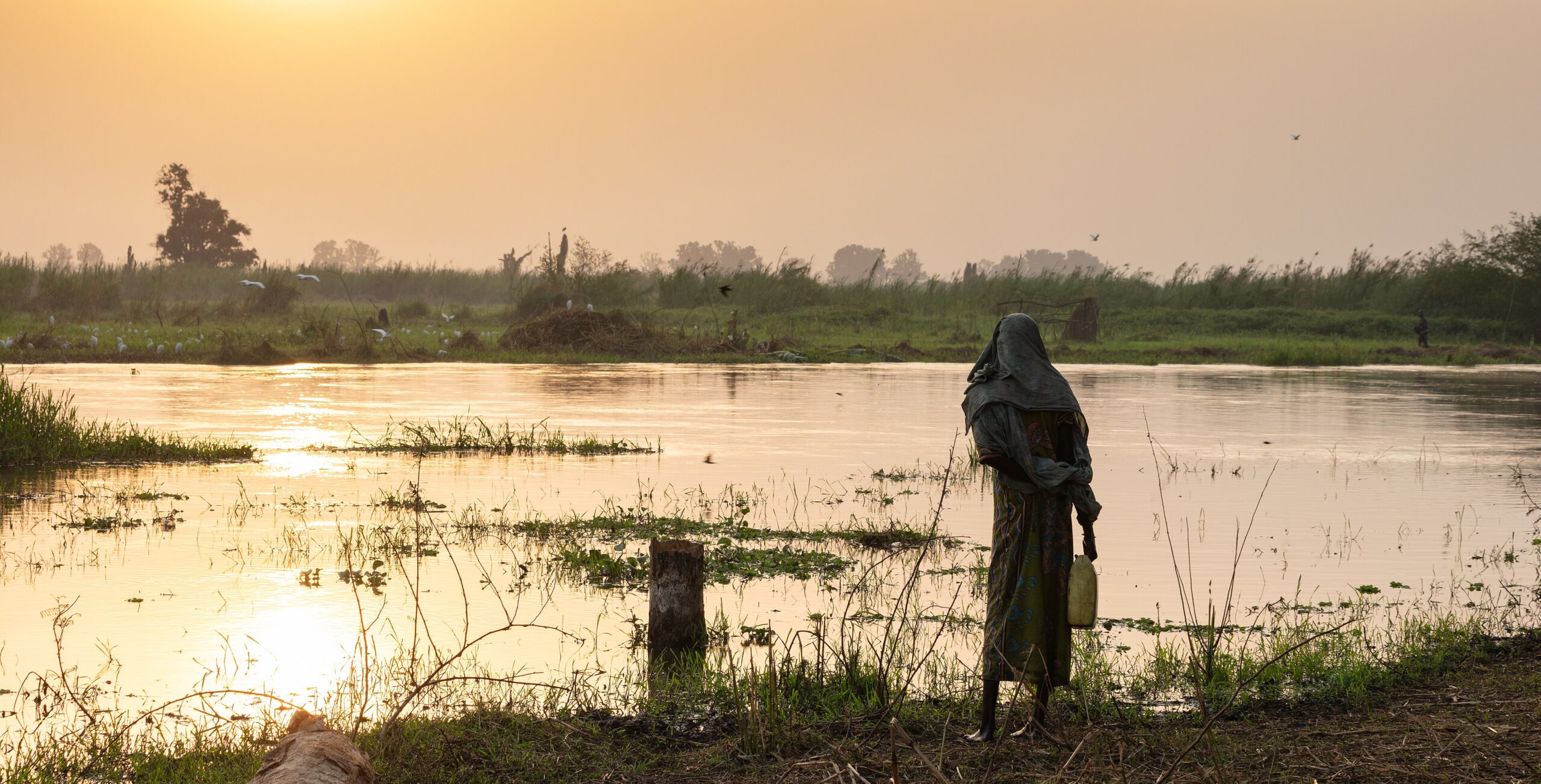
- Local time
- 20:04
- Currency
- South Sudanese Pound (SSP)
- Capital
- Juba
- Calling code
- +211
- Drive on the
- right
Overview
South Sudan, independent since 2011, has wildlife parks and the White Nile, but the UK, Canada and the US advise against all travel. Read the official advice first.
Before anything else: the UK and Canada advise against all travel to South Sudan and the US rates it Level 4 (do not travel). The reasons given are armed conflict, violent crime and a security situation that can change quickly. Travel insurance may not cover you if you go against this advice, and consular help is very limited. The section on safety below has the details.
South Sudan became independent from Sudan on 9 July 2011, after a long war and a referendum. It is landlocked, with more than 60 ethnic groups; the Dinka make up about 40% of the population. For visitors, Wikivoyage points to safaris in the national parks of Boma and Nimule and to the White Nile at Juba.
English and Arabic are the official languages, and Dinka is the most widely spoken. Roads are mostly unpaved and many become impassable in the rainy season.
- Nimule National Park: East African wildlife in a park along the White Nile.
- Boma National Park: Safaris by 4x4 or by air, with a large migration of mammals.
- The White Nile in Juba: Riverside restaurants such as Da Vinci and Afex look out over the river.
- Jebel Kujur: A rock 684 m high that you can climb for a view over the city.
- Freedom Square, Rumbek: A public square in the town of Rumbek.
Places to visit
- City
- Park
Cities
- Juba: The capital, with Juba International Airport, where most flights into the country land.
- Nimule: The end of the Juba-Nimule road, the main supply route from Uganda; the Angels of East Africa orphanage is here.
- Rumbek: A town with a central Freedom Square, where bars sell Kenyan and Ugandan beer.
- Wau: Where the country's only railway line, coming in from Sudan, ends; Wikivoyage reported no scheduled passenger trains in 2014.
- Malakal: A town that Canada names, with Juba, among the urban areas where a four-wheel drive is not always needed.
Beyond the cities
- Nimule National Park (park): A national park along the White Nile with East African wildlife.
- Boma National Park (park): A national park for safaris by 4x4 or by plane, known for a large migration of mammals.
- Bandingilo National Park (park): One of the four national parks that Wikivoyage lists for the country.
- Southern National Park (park): One of the four national parks that Wikivoyage lists for the country.
- Jebel Kujur (mountain): A rock 684 m high with a view over the city, crowded at weekends.
Regions
- Bahr el Ghazal
- Equatoria
- Greater Upper Nile
Things to do
See
- Wildlife in Nimule National Park Nimule: East African wildlife in a park along the White Nile.
- Freedom Square Rumbek: A public square in Rumbek, listed by Wikivoyage among the sights.
Do
- Safari in Boma National Park: Visits by 4x4 or by aircraft to see a large migration of mammals.
- Climb Jebel Kujur: A 684 m rock with a view of the city. It gets crowded at weekends; check the security situation before you go.
Eat
- Kisra: The national dish: a fermented sorghum pancake, sourer and rougher than Ethiopian injera.
Drink
- A drink by the White Nile Juba: Riverside restaurants such as Da Vinci and Afex look out over the river.
- Clove tea and ginger coffee: Both are served very sweet; ask for "sukar bara" to have the sugar on the side.
Shop
- Shea butter at the market: Unprocessed shea butter is sold in local markets. The Maasai Market in Juba sells crafts from Kenya and Uganda rather than local ones.
Climate and best time to visit
| Jan | Feb | Mar | Apr | May | Jun | Jul | Aug | Sep | Oct | Nov | Dec | |
|---|---|---|---|---|---|---|---|---|---|---|---|---|
| Max °C | 37 | 38 | 38 | 35 | 34 | 32 | 31 | 32 | 33 | 34 | 35 | 36 |
| Min °C | 20 | 22 | 24 | 23 | 23 | 22 | 21 | 21 | 21 | 21 | 21 | 20 |
| Rain mm | 5 | 11 | 37 | 112 | 130 | 118 | 145 | 128 | 104 | 115 | 43 | 8 |
South Sudan is hot all year, with a rainy season and a dry season. In Juba the average maximum stays between about 31 and 38 °C, and night-time lows are around 20 to 24 °C. The rain falls mostly from April to October, with 100 to 145 mm a month; July is the wettest month.
From December to February it hardly rains (5 to 11 mm a month), which makes these the easiest months to move around, but they are also among the hottest, with highs of 36 to 38 °C. During the rainy season, from April to November according to the UK, most roads outside Juba become impassable and floods can cut off whole areas.
Holidays and events
- 1 January 2026 · New Year's Day
- 3 April 2026 · Good Friday
- 4 April 2026 · Holy Saturday
- 5 April 2026 · Easter Sunday
- 6 April 2026 · Easter Monday
- 1 May 2026 · Labour Day
- 16 May 2026 · SPLA Day
- 9 July 2026 · Independence Day
- 30 July 2026 · Martyrs' Day
- 24 December 2026 · Christmas Eve
- 25 December 2026 · Christmas Day
- 26 December 2026 · St. Stephen's Day
Getting around
Very few roads are surfaced and maintained, especially outside Juba, and residential streets are usually dirt. Canada says you need a four-wheel drive except in some urban areas such as Juba and Malakal, especially in the rainy season. There is almost no street lighting at night and many vehicles have no lights. Checkpoints run by soldiers or other armed men are common, often after dark, and some demand money: do not travel after dark. Fuel shortages can stop you moving at short notice.
The UK describes public transport, including minibuses and motorbike taxis (boda-bodas), as extremely unsafe and advises you to avoid it. Canada notes a few old taxis in the towns. A UK photocard driving licence is accepted; with an old paper licence you may need an international driving permit.
Where to stay
- Hotels: Wikivoyage names a handful, among them the Radisson Blu, Pyramid Continental, Juba Grand, Palm Africa and Acacia.
Canada reports frequent armed break-ins at the compounds where international organisations house their staff, and the UK notes that most international organisations employ a security manager, so ask about security arrangements before you book.
Eat and drink
Dishes to try
- Kisra: The national dish, a fermented sorghum pancake, usually deep brown.
- Aseeda and wala-wala: Porridges of sorghum and of millet.
- Mahshi: Courgettes, tomatoes and peppers stuffed with minced meat and rice in tomato sauce.
- Kajaik: A fish stew.
- Shaiyyah: Pan-fried meat.
- Molokhia: Jew's mallow leaves cooked in a meat soup.
- Tamia and mandazi: Falafel, and square fried doughnuts.
Drinks
- Clove tea (chai): Sweet tea flavoured with cloves.
- Ginger coffee: Also very sweet; say "sukar bara" to get the sugar on the side.
- Fruit juices: Fresh juices everywhere, including tamarind (aradeab) and baobab.
- South Beer: From a new brewery that opened in 2024; Kenyan and Ugandan beers are sold in town bars at higher prices.
Food is based on grains, mostly maize and sorghum, with a strong Arab influence: mahshi, for example, is close to Middle Eastern dolma. Drink bottled water; if there is none, boil or treat it.
Entry requirements and visas
| Passport validity | At least 6 months after the day you arrive, with at least 2 blank pages (UK); Canada asks for 6 months beyond the date you leave |
|---|
| Passport | Entry | Max stay | Notes |
|---|---|---|---|
| United Kingdom | Visa required | Apply online or through the South Sudanese Embassy; you need a visa even to transit. | |
| Canada | Evisa | Get the e-visa online from the Ministry of the Interior portal before you leave. |
Other nationalities: check the official source below.
You need a visa. The UK and Canada both point to the online application, and Canada names the e-visa portal of the Ministry of the Interior. To extend a visa you go in person to the Ministry of the Interior on Airport Road in Juba. You must also show a yellow fever vaccination certificate to enter. If you stay 5 days or more, the UK says you must register at a local police station.
The UK reports that security staff at Juba airport have harassed, detained and expelled foreigners, including aid workers and journalists, often over yellow fever certificates, visas or work permits: make sure your papers are complete. Declare any goods that may be restricted or taxed. Because of the 2026 Ebola outbreak in neighbouring countries you may face health screening at the border, and some countries now screen or refuse travellers coming from South Sudan. Rules depend on your passport and change often: check the official e-visa portal and the South Sudanese embassy before you book.
Money and payments
| Currency | South Sudanese Pound (SSP) |
|---|---|
| Cards | Limited |
Plan to pay in cash. The UK says international cards are not widely accepted, although some newer hotels and supermarkets are starting to take them, ATMs are hard to find and often refuse foreign cards; in some supermarkets you can withdraw money with a card. Wikivoyage mentions Ecobank and Equity Bank ATMs that take Visa and Mastercard.
Bring large US dollar notes, clean and dated 2017 or later: dollars are accepted in many places, but shops and restaurants refuse marked notes. The local currency is the South Sudanese pound (SSP). Supermarkets in Juba such as Juba Mall, Lily's and Phoenicia accept dollars and give change in dollars or pounds. Street money changers work in some streets, but Wikivoyage advises caution with them.
Health
| Required vaccines | Yellow fever: proof of vaccination is required for all arriving travellers aged 9 months or older |
|---|---|
| Recommended vaccines | Routine vaccines, including measles (MMR) and polio (adults may need a single booster), Yellow fever, for all travellers aged 9 months or older, Hepatitis A, Hepatitis B, Typhoid, for most travellers, Meningococcal disease, for travel to the meningitis belt in the dry season (roughly December to June), Cholera, to be considered: transmission is widespread, Rabies, for some travellers: rabid dogs are common and vaccine may only be found in larger towns |
| Malaria | Widespread |
The CDC lists malaria in the whole country and recommends preventive medicine for all travellers; the UK rates the risk as high. Sleep under a mosquito net and use repellent. Proof of yellow fever vaccination is required at entry. If you stay longer than 4 weeks, Canada notes that you may need a polio dose 1 to 12 months before you leave. See a travel health professional at least a month before you go.
Other risks named by the CDC, Canada and the UK include cholera, dengue, schistosomiasis in fresh water, sleeping sickness from tsetse flies and altitude sickness in the mountains of Eastern Equatoria, above 3,000 m. In 2026 the Democratic Republic of the Congo and Uganda reported Ebola cases close to the border with Western Equatoria, and Canada requires its citizens and permanent residents arriving from South Sudan to quarantine for 21 days, a measure in place until 27 November 2026.
Health facilities are extremely limited: many problems need evacuation to Nairobi or Kampala, and in the rainy season flights can be held on the ground for hours. There is no public emergency medical number, and private ambulances only serve people registered with a private clinic. Get insurance that covers evacuation, and check that it is valid for South Sudan.
This is general information, not medical advice: check with a travel health professional before you go.
Safety
- United States: Level 4: Do Not Travel (2026-10-20)
- Canada: Avoid all travel (2026-10-20)
- United Kingdom: Advises against all travel (2026-10-20)
The UK and Canada advise against all travel to South Sudan, and the US rates it Level 4. Both describe a political and security situation that can deteriorate quickly, with armed clashes in several states and inter-communal violence. If things get worse, routes out of the country can close. Consular help is minimal: the British Embassy in Juba has no consular section and British nationals are helped from the High Commission in Nairobi.
Crime is serious, especially in Juba and at night. The UK and Canada report robbery, assault, carjacking, kidnapping for ransom and armed break-ins at compounds, and robbers on motorbikes. Do not show valuables or carry much cash, vary your routines and get professional security advice. Crime tends to rise before Christmas, New Year and Easter. Avoid demonstrations and large gatherings.
Landmines and unexploded weapons remain in parts of Central, Eastern and Western Equatoria, Jonglei, Lakes, Upper Nile and Warrap: never enter marked areas or touch suspicious objects. Keep a supply of water, food and medicine, keep your phone charged with backup power, and have a plan to leave or shelter in place that does not depend on your government.
Customs and etiquette
Photography is the rule most likely to get you into trouble. Wikivoyage says you need a permit from the Ministry of the Interior for any photography, and foreign tourists have been arrested for taking pictures. Never photograph government buildings, soldiers, police, airports, bridges, petrol stations or utilities, and never photograph people without asking them first. Plainclothes security officers work in Juba and across the country.
Carry a colour copy of your passport, as police can ask for ID. Penalties for drugs are severe and include the death penalty. Same-sex relations between men are illegal, with prison terms of up to 14 years. Reporting on the country without permission from the South Sudanese Media Authority is illegal, which also applies to bloggers.
Language
| Official languages | English, Arabic |
|---|---|
| English | Common |
| Sugar on the side, please | Sukar bara |
|---|
What to pack
- Passport, visa and yellow fever certificate: Airport officials check them closely, and missing papers have led to detentions.
- A colour copy of your passport: Police can ask for photo ID at any time.
- Clean US dollar notes dated 2017 or later: Cards are of limited use and marked notes are refused.
- Insurance that covers South Sudan and medical evacuation: Many medical problems need evacuation to Nairobi or Kampala.
- Mosquito net and repellent: Malaria is present in the whole country.
- An unlocked phone and a power bank: Foreign SIMs rarely work, you will need a local one, and power and networks are unreliable.
Quick reference
Country facts
| Capital | Juba |
|---|---|
| Population | 12,188,788 (2025) |
| Area | 631,930 km² |
| Time zone | Africa/Juba (UTC+2) |
| Calling code | +211 |
| Driving side | right |
Staying connected
| SIM and eSIM | Buy a SIM card from one of the local networks, Zain or MTN, and bring an unlocked phone. Canada describes telecommunications as unreliable, with no fixed telephone lines and no international postal service. |
|---|---|
| Roaming | Roaming with foreign phones and SIM cards does not usually work in South Sudan. |
Frequently asked questions
Is it safe to travel to South Sudan?
The UK and Canada advise against all travel and the US rates South Sudan Level 4 (do not travel), because of armed conflict, violent crime and an unpredictable situation. Read the official advice before making any plans.
Do I need a visa for South Sudan?
Yes. UK and Canadian travellers need a visa, which you can get online from the Ministry of the Interior. Check the official portal and the embassy before you book.
Do I need a yellow fever vaccination for South Sudan?
Yes. Proof of yellow fever vaccination is required for all arriving travellers aged 9 months or older, and missing certificates have caused problems at Juba airport.
Can I use my bank card in South Sudan?
Only in a few places. Cards are not widely accepted and ATMs are hard to find, so bring clean US dollar notes dated 2017 or later.
Can I take photos in South Sudan?
Be very careful. Do not photograph government buildings, soldiers, police, airports, bridges or petrol stations, and always ask people before you photograph them. Wikivoyage says a permit is needed for any photography.
Is there malaria in South Sudan?
Yes, in the whole country. The CDC recommends preventive medicine for all travellers; see a travel health professional before you go.
More Travel Stories from Africa
 Kenya
Sources This guide was last checked on · 16 sources
- Wikivoyage: South Sudan · Overview, Places to visit, Things to do, Climate and best time to visit, Getting around, Where to stay, Eat and drink, Entry requirements and visas, Money and payments, Health, Safety, Customs and etiquette, Language, What to pack, Staying connected, Frequently asked questions
- Wikidata: South Sudan · Overview, Money and payments, Country facts
- UK FCDO: South Sudan warnings and insurance (updated 25 August 2026) · Overview, Getting around, Safety, Frequently asked questions
- Government of Canada: South Sudan travel advice (updated 28 September 2026) · Overview, Places to visit, Getting around, Where to stay, Entry requirements and visas, Health, Safety, What to pack, Staying connected, Frequently asked questions
- UK FCDO: South Sudan safety and security · Places to visit, Climate and best time to visit, Getting around, Where to stay, Money and payments, Safety, Customs and etiquette, What to pack, Frequently asked questions
- WMO World Weather Information Service: Juba · Climate and best time to visit
- Nager.Date: public holidays in South Sudan, 2026 · Holidays and events
- UK FCDO: South Sudan entry requirements · Entry requirements and visas, Health, What to pack, Frequently asked questions
- CDC Travelers' Health: South Sudan · Entry requirements and visas, Health, Frequently asked questions
- ISO 4217 (SIX), published 2026-09-17 · Money and payments
- UK FCDO: South Sudan health · Health, What to pack
- US Department of State: South Sudan travel advisory · Safety
- UK FCDO: South Sudan travel advice · Safety
- World Bank, SP.POP.TOTL · Country facts
- World Bank, AG.LND.TOTL.K2 · Country facts
- IANA Time Zone Database, zone.tab · Country facts
Suggest an update
Travel rules, prices and timetables change. If something in this guide is out of date, tell us: we check every suggestion against an official source before changing the page.