

- Local time
- 19:02 (capital)
- Currency
- Congolese Franc (CDF)
- Capital
- Kinshasa
- Calling code
- +243
- Drive on the
- right
Overview
The US and Canada advise against all travel to the DR Congo, and the UK against travel to large areas. This page sums up their advice and the basics.
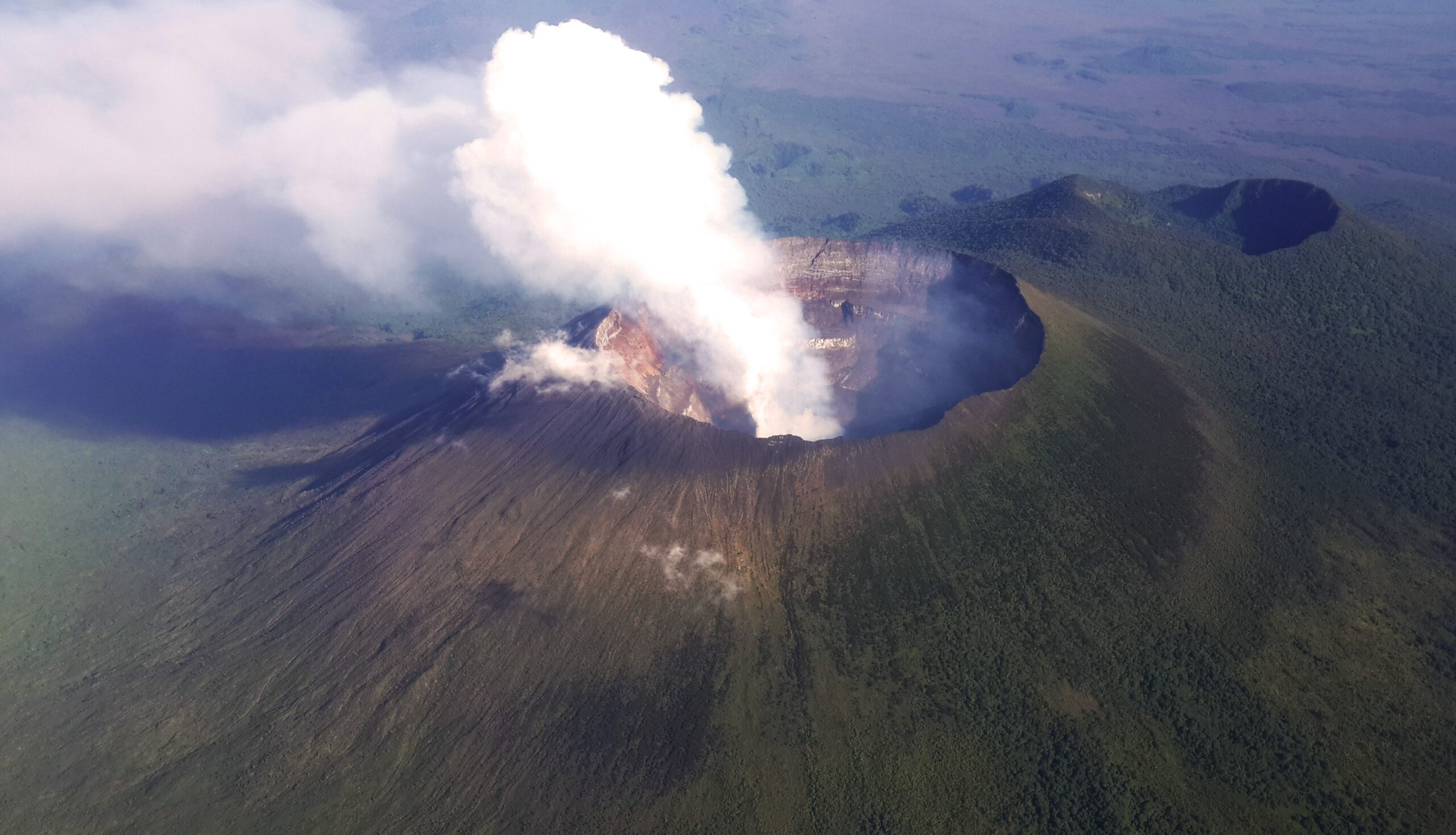
The Democratic Republic of the Congo, also called Congo-Kinshasa, is the largest country in Central Africa and the largest French-speaking country in the world. Most of it is covered by the second largest rainforest on Earth, crossed by the Congo River and its tributaries; the east rises to volcanoes and mountains along the Albertine Rift, and the south around Kasai is savannah. Kinshasa, the capital, faces Brazzaville across the river.
Official advice is against travel. The US says Do Not Travel (Level 4), and Canada says to avoid all travel because of the fragile security situation and an Ebola outbreak. The UK advises against all travel to the eastern provinces, including the cities of Goma and Bukavu, and to other areas, and against all but essential travel to parts of Kinshasa. Tourist facilities are very limited in Kinshasa and almost absent elsewhere, and UK help outside Kinshasa is severely limited.
- Kinshasa: The capital on the Congo River, the largest French-speaking city in the world, known for its music.
- Congo River: The river at the heart of the country, still its main transport route.
- Virunga National Park: Volcanoes and mountain forest in North Kivu. The UK and Canada advise against all travel to this area.
Places to visit
- City
- Park
Cities
- Kinshasa: The capital and main arrival point; Canada advises staying in the Gombe commune.
- Lubumbashi: The second city and mining hub, with an international airport.
- Matadi: A city linked to Kinshasa by a paved road and a railway.
- Kisangani: A city on the Congo River near Boyoma Falls; the UK advises against all but essential travel to its airport.
- Goma: A city in North Kivu, on the Rwandan border and below the Nyiragongo volcano. The UK and Canada advise against all travel to this area.
- Bukavu: The main city of South Kivu. The UK and Canada advise against all travel to this area.
Beyond the cities
- Virunga National Park (park): A park of volcanoes and mountain forest in North Kivu. The UK and Canada advise against all travel to this area.
- Garamba National Park (park): A park in the border region with South Sudan, the Central African Republic and Uganda, where Canada reports attacks by armed groups.
Regions
- Western DRC: Kinshasa, the only sea port, tropical forest and grazing land.
- Katanga: Fertile plateaus and much of the country's mineral wealth, around Lubumbashi.
- Kasai: Savannah and diamond mining in the south.
- Kivu: Volcanoes and mountain gorillas on the borders with Rwanda, Burundi and Uganda; the UK and Canada advise against all travel.
- Congo Basin: The central rainforest, most of the world's second largest jungle.
Holidays and events
- 1 January 2026 · New Year's Day
- 4 January 2026 · Martyrs Day
- 16 January 2026 · Laurent-Désiré Kabila Assassination
- 17 January 2026 · Patrice Lumumba Assassination
- 6 April 2026 · Kimbangu's Day
- 1 May 2026 · Labour Day
- 17 May 2026 · Liberation Day
- 30 June 2026 · Independence Day
- 1 August 2026 · Parents' Day
- 2 August 2026 · Congolese Genocide Day
- 25 December 2026 · Christmas Day
Getting around
| Main airports | FIH, FBM |
|---|---|
| International driving permit | Required |
Canada says public transport is neither reliable nor safe and advises against it, including taxis, especially after dark; use transport arranged by your hotel or a tour operator, or a car with a driver. Do not hail taxis in the street: robbers pose as drivers or passengers. To drive you need the 1968 International Driving Permit, but most rental companies only rent cars with a driver.
Roads are poor, mostly unpaved and often impassable in the rainy season; the road from Kinshasa to Matadi is paved but accidents are frequent. Travel in convoys of at least two vehicles on long journeys and never after dark. At roadblocks, show your documents through a closed window. Every day at about 7:30 and 18:00, traffic and pedestrians must stop while the national flag is raised and lowered, and you must pull over for official motorcades. Trains between Kinshasa and Matadi are infrequent and unreliable, and river boats are often overloaded and have had many accidents.
Where to stay
In Kinshasa, Canada advises choosing a hotel in the Gombe commune and taking extreme care outside it. There are a growing number of hotels in the capital, but tourist facilities elsewhere are almost absent, and rooms outside the big cities often have weak locks and unsafe windows. Use the hotel safe and keep copies of your documents apart from the originals. Foreigners are at risk of robbery near hotels and supermarkets in city centres.
Eat and drink
Dishes to try
- Moambe: The national dish, made with palm nuts, chicken, fish, peanuts, rice, cassava leaves, bananas and hot pepper sauce.
Drinks
- Soft drinks: Called sucré, sold almost everywhere; Vitalo is a local brand, and ginger beer is common.
- Beer: Primus, Skol and Castel in 75 cl bottles, and the dark Tembo and Doppel.
- Palm wine: Sweet and mildly alcoholic when fresh, found in rural areas.
Avoid local gin: some sellers mix in methanol, which can cause blindness. Do not drink tap water; bottled water is usually affordable but not always easy to find.
Entry requirements and visas
| Passport validity | At least 6 months: the UK counts from the date you arrive, Canada from the date you leave |
|---|
| Passport | Entry | Max stay | Notes |
|---|---|---|---|
| United Kingdom | Visa required | Apply through the DRC embassy in the UK and allow at least 2 to 3 weeks. | |
| Canada | Visa required | Apply to the DRC embassy in Ottawa before you leave; visas are not issued at the border. | |
| United States | Visa required | Wikivoyage says almost everyone needs a visa in advance; an e-visa exists. | |
| EU / EEA | Visa required | Wikivoyage says almost everyone needs a visa in advance; an e-visa exists. | |
| Australia | Visa required | Wikivoyage says almost everyone needs a visa in advance; an e-visa exists. |
Other nationalities: check the official source below.
You need a visa before you travel, usually from the DRC embassy in your country of residence. Wikivoyage reports an e-visa introduced in 2025 that takes 3-5 working days but cost USD 300 when we read it in October 2026. A Rwandan or Ugandan stamp in your passport can cause difficulties on arrival, and so can satellite phones, GPS receivers or military clothing in your luggage.
A yellow fever certificate is required for all travellers aged 9 months or more, and the UK says a polio certificate may also be needed. Because of the Ebola outbreak, expect health forms and temperature checks; Canada also requires travellers returning from the DRC to quarantine for 21 days until 27 November 2026. Declare more than USD 10,000 on arrival and all foreign currency when you leave. On departure you pay an airport tax at check-in: the UK quotes USD 55 for international flights and USD 10 for domestic ones, Canada USD 58; keep the receipt, called a Go Pass, to board. Rules can change: check with the DRC embassy before you book.
Money and payments
| Currency | Congolese Franc (CDF) |
|---|---|
| Cards | Rare |
The currency is the Congolese franc (CDF), but the economy runs on cash and US dollars are widely used. Dollar notes must be in good condition, without tears and recently printed (Canada says after 2009); small dollar notes and coins are hard to use, and change usually comes in francs. Francs are almost impossible to change outside the country.
Cards work only in some hotels, restaurants and department stores. A few ATMs in Kinshasa dispense US dollars, but they are not always working, and theft at and around ATMs is common. Outside the cities you need cash for everything.
Health
| Required vaccines | Yellow fever certificate for all arriving travellers aged 9 months or more, Polio vaccination certificate in some circumstances (UK government) |
|---|---|
| Recommended vaccines | Routine vaccines, including measles (MMR), Yellow fever, Hepatitis A, Hepatitis B, Typhoid, Polio: a single adult booster, Meningococcal, for the meningitis belt in the dry season (roughly December to June), Cholera may be considered: transmission is widespread, Rabies, for some travellers: ask a travel clinic |
| Malaria | Widespread |
| Tap water | Not safe |
See a travel health professional at least 6 to 8 weeks before you go. An Ebola outbreak is active, and on 17 May 2026 the WHO declared it a public health emergency of international concern: avoid anyone who is unwell, blood and body fluids, bushmeat, bats and other wild animals, and seek medical help at once if you develop fever or bleeding within 21 days. The CDC recommends malaria medicine for the whole country, cholera is widespread, poliovirus has been found in the past year, and mpox and rabies are present. Drink only bottled water.
Medical care is extremely limited: Kinshasa and Lubumbashi have the best facilities, the CPU clinic in Kinshasa can handle basic problems, and outside the capital Western-standard care barely exists. Doctors expect payment up front, and evacuation, for example to South Africa, can be necessary: get insurance that covers it. There is no general emergency number; in Kinshasa the police are on 112 and the fire service on 118.
This is general information, not medical advice: check with a travel health professional before you go.
Safety
- United States: Level 4: Do Not Travel (2026-10-20)
- Canada: Avoid all travel (2026-10-20)
- United Kingdom: Advises against all travel to parts of the country; Advises against all but essential travel to parts of the country (2026-10-20)
The US says Do Not Travel and Canada says avoid all travel to the Democratic Republic of the Congo. The UK advises against all travel to the provinces of North Kivu (including Goma), South Kivu (including Bukavu), Ituri, Haut-Uélé, Maniema, Tanganyika and Haut-Lomami, to within 50 km of the border with the Central African Republic, and to the Kwamouth territory of Mai-Ndombe. It advises against all but essential travel to Upemba National Park, to Kisangani airport, to the N1 road between Menkao and Kenge, and to the Kinshasa districts of N'Djili and Kimbanseke south of the airport road and Kasa-Vubu. Armed groups control Goma and Bukavu and their airports, and fighting continues in the east.
In Kinshasa, protests can turn violent with little warning, including outside embassies: stay away from them. Foreigners are targets of street robbery, scams such as cheap gold or diamonds, fake police officers and express kidnappings, in which victims are taken to ATMs; Canada says the risk is high in Gombe, and the UK mentions Limete. Do not walk alone at any time, avoid going out after dark, use transport arranged by your hotel, and do not resist an attack. Curfews can be imposed without notice, and phone and internet networks may be cut during unrest.
Do not wear military-style clothing. Carry a certified copy of your passport and visa, and keep the originals safe. The authorities rarely inform embassies when foreigners are detained. Floods are common in the rainy season, and the Nyiragongo volcano near Goma can erupt at any time.
Customs and etiquette
Congolese society is conservative: dress modestly, avoid kissing or holding hands in public, and show respect to elders and officials. Address people you do not know as Monsieur or Madame. Never photograph people without permission, especially women and children, and do not photograph government buildings, airports, military sites, borders or motorcades: you risk arrest. Stop for the flag ceremony every morning and evening.
The law forbids disrespecting the head of state. Same-sex relations are not illegal but are frowned upon, and LGBT+ people have been harassed and charged under other laws. Drug offences bring prison terms and heavy fines.
Language
| Official languages | French |
|---|
| Hello | Bonjour bawn-ZHOOR |
|---|---|
| Sir / Madam | Monsieur / Madame muh-SYUH / ma-DAHM |
| Please | S'il vous plaît seel voo PLEH |
| Thank you | Merci merr-SEE |
| Do you speak English? | Parlez-vous anglais ? par-lay VOO ahng-LEH |
| I don't understand | Je ne comprends pas zhuh nuh KOHM-prahn pah |
| I need a doctor | J'ai besoin d'un médecin zhay buh-ZWAHN duun may-TSAN |
| Help! | Au secours ! oh suh-KOOR |
What to pack
- Visa, passport and certified copies: The authorities can ask for your passport and visa at any time.
- Yellow fever certificate: Required at the border for everyone aged 9 months or more.
- Recent, undamaged US dollar notes: Cash is king, and worn or old notes are refused.
- Dollars for the departure tax: Paid at check-in before you fly out.
- 1968 International Driving Permit: Required to drive.
- Malaria tablets and insect repellent: The CDC recommends malaria medicine for the whole country.
- Your medicines in their original packaging: Some medicines are not available, and care is very limited.
- Insurance with medical evacuation: Check that it covers you when travelling against official advice.
Quick reference
Country facts
| Capital | Kinshasa |
|---|---|
| Population | 112,832,473 (2025) |
| Area | 2,267,050 km² |
| Time zone | Africa/Kinshasa (UTC+1), Africa/Lubumbashi (UTC+2) |
| Calling code | +243 |
| Driving side | right |
Staying connected
| SIM and eSIM | SIM cards and prepaid top-ups are sold in the street and at Kinshasa airport at reasonable prices. Coverage can be patchy, fixed lines barely exist, and the internet may be restricted during unrest; do not rely on your phone in an emergency outside the big cities. Satellite phones can cause problems at the border. |
|---|
Frequently asked questions
Is it safe to travel to the Democratic Republic of the Congo?
The US says Do Not Travel and Canada says avoid all travel; the UK advises against all travel to the east and other areas. Read the safety section and the official links.
Is there Ebola in the DR Congo?
Yes. An Ebola outbreak declared a public health emergency of international concern in May 2026 is active, and arrivals face health checks.
Do I need a visa for the DR Congo?
Yes, you need a visa before you travel, usually from the DRC embassy in your country of residence. Check the rules with the embassy before you book.
Can I pay in US dollars?
Yes, dollars are widely used, but only in clean, recent notes. Cards work in very few places.
Can I drink the tap water?
No. Drink bottled water.
What language is spoken in the DR Congo?
French is the official language and is understood almost everywhere; Lingala, Swahili, Kikongo and Tshiluba are widely spoken in their regions.
More Travel Stories from Africa
 Kenya
Sources This guide was last checked on · 18 sources
- US Department of State: Democratic Republic of the Congo travel advisory · Overview, Safety, Frequently asked questions
- Government of Canada: Democratic Republic of the Congo travel advice (updated 28 September 2026) · Overview, Places to visit, Getting around, Where to stay, Entry requirements and visas, Money and payments, Health, Safety, Customs and etiquette, What to pack, Staying connected, Frequently asked questions
- UK FCDO: DRC warnings and insurance · Overview, Getting around, Safety, Frequently asked questions
- Wikivoyage: Democratic Republic of the Congo · Overview, Places to visit, Getting around, Where to stay, Eat and drink, Entry requirements and visas, Money and payments, Health, Customs and etiquette, Language, What to pack, Staying connected, Frequently asked questions
- Wikidata: Democratic Republic of the Congo · Overview, Places to visit, Money and payments, Language, Country facts
- UK FCDO: DRC regional risks · Places to visit, Getting around, Safety
- Nager.Date: public holidays in DR Congo, 2026 · Holidays and events
- UK FCDO: DRC safety and security · Getting around, Where to stay, Money and payments, Safety, Customs and etiquette, What to pack
- UK FCDO: DRC entry requirements · Entry requirements and visas, Health, What to pack, Staying connected, Frequently asked questions
- CDC Travelers' Health: Democratic Republic of the Congo · Entry requirements and visas, Health, What to pack, Frequently asked questions
- ISO 4217 (SIX), published 2026-09-17 · Money and payments
- UK FCDO: DRC health · Health
- UK FCDO: DRC getting help · Health, Safety
- UK FCDO: DR Congo travel advice · Safety
- Wikivoyage: French phrasebook · Language
- World Bank, SP.POP.TOTL · Country facts
- World Bank, AG.LND.TOTL.K2 · Country facts
- IANA Time Zone Database, zone.tab · Country facts
Suggest an update
Travel rules, prices and timetables change. If something in this guide is out of date, tell us: we check every suggestion against an official source before changing the page.