

- Local time
- 19:04
- Currency
- Central African CFA Franc (XAF)
- Capital
- Brazzaville
- Calling code
- +242
- Drive on the
- right
Overview
Lowland gorillas, chimpanzees and the rainforest parks of Odzala and Nouabalé-Ndoki, with Brazzaville on the Congo River. A visa is needed in advance.
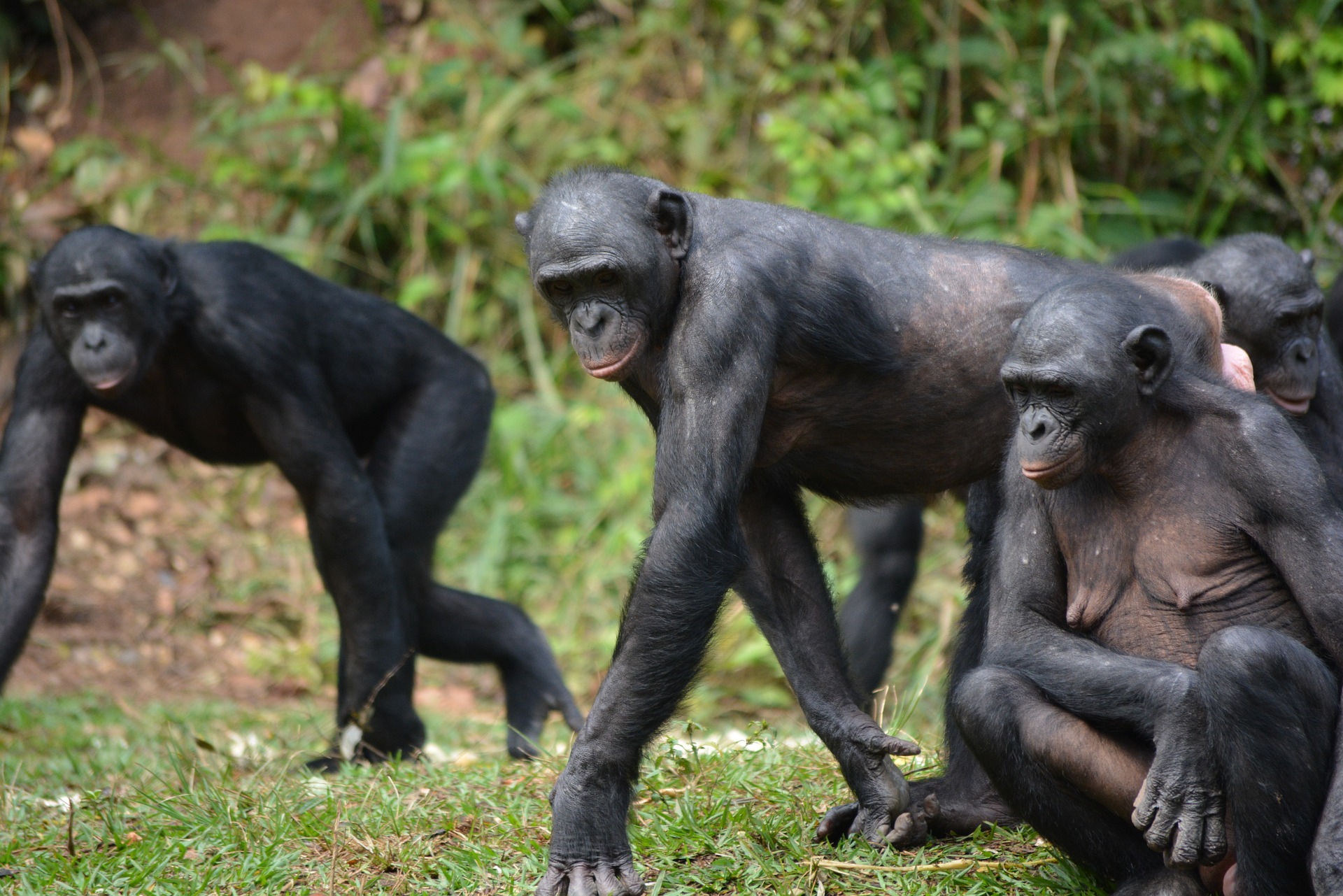
The Republic of the Congo, often called Congo-Brazzaville to tell it apart from its much larger neighbour, is a former French colony in Central Africa and one of the most thinly populated countries on the continent. Most people live in the south-west, in Brazzaville, Pointe-Noire and the towns along the railway between them, while the north is largely rainforest. The main draws are wildlife reserves: western lowland gorillas at Lesio-Louna, the chimpanzee sanctuary of Tchimpounga, and the remote national parks of Odzala-Kokoua and Nouabalé-Ndoki.
Few travellers come, tourist facilities outside the big cities are limited, and everything runs on cash and French. You need a visa arranged before you travel. Canada asks for a high degree of caution because of crime and insecurity in several neighbouring countries, the US for increased caution, and the UK and Canada advise against travel near the border with the Central African Republic.
- Lesio-Louna Gorilla Reserve: A reserve for endangered western lowland gorillas, bounded by three rivers.
- Odzala-Kokoua National Park: The country's best-known national park, on UNESCO's tentative list.
- Tchimpounga Sanctuary: A large sanctuary for chimpanzees.
- Conkouati-Douli: The park with the richest wildlife in the country, and its only marine protected area.
- Brazzaville: The capital on the Congo River, a UNESCO City of Music, with colonial and later architecture.
Places to visit
- City
- Island
- Park
Cities
- Brazzaville: The capital and main entry point, home to a third of the population and a UNESCO City of Music.
- Pointe-Noire: A port city and the centre of the oil industry.
- Dolisie: A busy logging town that few foreigners visit.
- Djambala: A base for the Léfini reserve, on the high Congolese Plateau.
- Owando: A town of the Cuvette region, in the north.
- Ouésso: A transit hub in the far north, near many Pygmy villages.
- Mossendjo: The main town of the mountainous Chaillu Massif.
Beyond the cities
- Lesio-Louna Gorilla Reserve (park): A special reserve for endangered western lowland gorillas, bounded by three rivers.
- Léfini Faunal Reserve (park): The best-known reserve in the country, just north of Lesio-Louna.
- Odzala-Kokoua National Park (park): The most famous national park, on UNESCO's tentative list.
- Nouabalé-Ndoki National Park (park): The largest and most remote park, in the far north next to Dzanga-Sangha in the Central African Republic; check the border advice.
- Conkouati-Douli National Park (park): The most biodiverse park, with the country's only marine protected area.
- Tchimpounga Sanctuary (park): A large chimpanzee sanctuary.
- Dimonika Biosphere Reserve (park): Lowland rainforest and savannah.
- Île Mbamou (island): A government-owned island about an hour from Brazzaville.
Regions
- Pool: The region of Brazzaville, the main entry point to the country.
- Coast and Mayombe: Pointe-Noire and the Kouilou department, the heart of the oil industry.
- Niari Valley: The Niari, Lékoumou and Bouenza departments, around Dolisie.
- Congolese Plateau: The highest part of the country, with reserves such as Léfini; main town Djambala.
- Cuvette: The region of Owando and of Odzala-Kokoua National Park.
- Sangha and Likouala: The northernmost departments, entirely forested, with a large Pygmy population.
Things to do
See
- Gorillas at Lesio-Louna Lesio-Louna Gorilla Reserve: Western lowland gorillas in a reserve set between three rivers.
- Odzala-Kokoua National Park Cuvette: The country's most famous national park, in the Cuvette region.
- Chimpanzees at Tchimpounga Tchimpounga Sanctuary: A large sanctuary for chimpanzees.
- Conkouati-Douli Coast and Mayombe: The most biodiverse park, with the country's only marine protected area.
- Sangha Trinational Sangha and Likouala: A forest shared with Cameroon and the Central African Republic and listed by UNESCO; the UK advises against all travel within 50 km of the Central African border in Likouala.
- Architecture of Brazzaville Brazzaville: Colonial and post-colonial buildings in the capital.
Do
- Goliath tigerfish: Fishing on the Congo River for a fish that can weigh more than 50 kg.
Eat
- Restaurants in Brazzaville Brazzaville: The capital has several good restaurants; most close on Sundays.
Shop
- Crafts market Brazzaville: Jewellery, masks and paintings at the artisans' market near the BDEAC building; arts and crafts carry an export tax.
Itineraries
Pointe-Noire and the Kouilou coast in 5 days (5 days)
- Pointe-Noire (3 nights): The port city and centre of the oil industry. Thefts happen on its beaches: avoid isolated stretches and do not walk after dark.
- Tchimpounga Sanctuary (0 nights): The largest chimpanzee sanctuary in Africa, visited from Pointe-Noire.
- Conkouati-Douli National Park (2 nights): The most biodiverse park in the country, with its only marine protected area.
Holidays and events
- 1 January 2026 · New Year's Day
- 5 April 2026 · Easter Sunday
- 6 April 2026 · Easter Monday
- 1 May 2026 · Labour Day
- 14 May 2026 · Ascension Day
- 25 May 2026 · Whit Monday
- 10 June 2026 · Reconciliation Day
- 15 August 2026 · National Day
- 1 November 2026 · All Saints' Day
- 28 November 2026 · Republic Day
- 25 December 2026 · Christmas Day
Getting around
| Main airports | BZV |
|---|---|
| International driving permit | Recommended |
Roads: the RN1 and RN2 are paved, secondary roads are not, and conditions get much worse in the rainy seasons. Outside the cities use a well-maintained 4x4 with supplies, travel by day and in convoy, and keep the tank at least half full. There are frequent, sometimes poorly marked checkpoints: if asked for documents, stay in your car and show them through a closed window. In the Pool department Canada advises staying on the RN1, not driving after dark and not stopping in isolated places. Self-drive rental cars are hard to find. To drive, Canada requires an International Driving Permit, while the UK accepts a photocard licence: get the permit before you go.
Train: the Congo-Ocean Railway between Brazzaville and Pointe-Noire reopened in April 2023, with a scheduled journey of 16 hours. The UK calls it slow and unreliable, and Canada says trains are overcrowded and unsafe.
In town: taxis have no meters, so agree the fare in French before you get in; use only official taxis, green and white in Brazzaville and blue and white in Pointe-Noire, and do not share them with strangers. When we read Wikivoyage it listed XAF 3,000 from Brazzaville airport to the centre and an official fare of XAF 700 in town. Ride-hailing apps work in the cities. Canada advises against buses and minibuses, which are overloaded and often involved in accidents.
Flying to Congo? PartnerCompare fares and find the cheapest datesSearch flightsWhere to stay
Hotels, restaurants and petrol stations are limited outside the major cities, so plan ahead and carry supplies when you leave Brazzaville or Pointe-Noire. Break-ins happen in both cities, and foreigners' homes have been targeted: choose accommodation with good security, keep doors and windows locked and valuables out of sight. Ask when you book whether your hotel takes cards.
Eat and drink
Dishes to try
- River fish: Dried fish is sold in the markets along the Congo, for example at Oyo.
Drinks
- Palm wine: The favourite drink in the villages.
- Local beers: N'Gok, Primus, Mützig, Guinness and Turbo King are brewed in the country; Heineken and Bavaria are imported.
- Boxed wine: The brique, a litre of imported wine, mostly Spanish, and a red wine from Gabon.
- Bottled water: Local and imported brands in 1.5-litre bottles.
Brazzaville has several good restaurants, and a taxi driver can take you to one; most close on Sundays. In Pointe-Noire Wikivoyage lists a Chinese restaurant where a meal cost USD 12-18 when we read it in October 2026. Beer prices vary widely with the bar and the district, and are high in restaurants. Do not drink tap water.
Entry requirements and visas
| Passport validity | Valid for your whole stay (UK); Canada asks for 6 months beyond the date you leave |
|---|
| Passport | Entry | Max stay | Notes |
|---|---|---|---|
| United Kingdom | Visa required | Apply to the Republic of the Congo embassy in London before you travel. | |
| Canada | Visa required | Apply to the embassy in Ottawa before you leave; visas are not issued on arrival. | |
| United States | Visa required | Apply to the embassy in the US before you travel. | |
| EU / EEA | Visa required | Wikivoyage lists no visa on arrival for EU passports. | |
| Australia | Visa required | Wikivoyage lists no visa on arrival for Australian passports. |
Other nationalities: check the official source below.
Almost everyone needs a visa arranged before travel. Canada says you can only apply at the embassy for your country of residence and cannot get a visa at the border. Applications usually ask for two forms, two photos, your flight tickets and itinerary, an invitation letter (a hotel booking normally works) and proof of yellow fever vaccination. Fees are high, USD 200 at the embassy in the US according to Wikivoyage in October 2026; apply about a month ahead, as processing takes 7-10 days.
At the border you must show certificates for yellow fever (all travellers aged 9 months or more) and, according to the UK, polio. Because of the Ebola outbreak centred in the Democratic Republic of the Congo, you may face extra health screening. Declare anything that may be prohibited or taxed. Rules depend on your passport and can change: check with the embassy of the Republic of the Congo before you book.
Money and payments
| Currency | Central African CFA Franc (XAF) |
|---|---|
| Cards | Limited |
The currency is the Central African CFA franc (XAF), fixed to the euro at EUR 1 = XAF 655.957. The economy runs on cash. Major hotels and shops in Brazzaville and Pointe-Noire usually take credit cards and sometimes euros or US dollars, but confirm first; elsewhere cards are rarely accepted. Ecobank ATMs take Mastercard and Visa.
Small change is scarce, so keep small notes, and refuse torn or taped banknotes. Arts and crafts carry an export tax that you pay before you leave, and exporting items of historical value, such as old wood carvings, sculptures and paintings, is illegal.
Costs and budget
- Taxi from Brazzaville airport to the centre: XAF 3,000
- Official taxi fare in Brazzaville: XAF 700
- Beer, depending on the bar: XAF 500-5,000
- Meal in a Chinese restaurant, Pointe-Noire: USD 12-18
- Ferry Brazzaville-Kinshasa, standard / VIP: USD 15 / USD 30
Local transport is cheap, and shared taxis and minibuses between towns cost very little. Visas are expensive, and restaurant drinks are marked up. The prices here are those listed on Wikivoyage when we read it in October 2026.
Health
| Required vaccines | Yellow fever certificate for all arriving travellers aged 9 months or more, Polio vaccination certificate (UK government) |
|---|---|
| Recommended vaccines | Routine vaccines, including measles (MMR), Yellow fever, Hepatitis A, Hepatitis B, Typhoid, Cholera may be considered for areas with active transmission, Rabies, for some travellers: ask a travel clinic |
| Malaria | Widespread |
| Tap water | Not safe |
See a travel health professional at least 6 to 8 weeks before you go. The CDC recommends prescription medicine against malaria for the whole country, and Wikivoyage stresses that the risk of malaria without it is very high. Cholera has been active in several departments, including Brazzaville, Plateaux and Likouala. Dengue, mpox and schistosomiasis are also present, and rabid dogs are common. Do not drink tap water.
Medical facilities are limited, especially in rural areas, and the UK says evacuation is likely for anything beyond basic treatment: get insurance that covers air ambulance costs. Hospitals usually ask for a cash deposit or payment guarantee. Bring enough of your medicines, in their original packaging with a copy of the prescription, and check expiry dates if you buy from a pharmacy. There is no central emergency number, so note the contacts of a clinic before you need one.
This is general information, not medical advice: check with a travel health professional before you go.
Safety
- United States: Level 2: Exercise Increased Caution (2026-10-20)
- Canada: Exercise a high degree of caution (2026-10-20)
- United Kingdom: Advises against all travel to parts of the country (2026-10-20)
The US asks for increased caution and Canada for a high degree of caution, because of crime and insecurity in several neighbouring countries. The UK advises against all travel within 50 km of the border with the Central African Republic in Likouala, and Canada against non-essential travel within 50 km of that border, because of armed gangs and militias. Canada also urges caution along the Ubangi River near the Democratic Republic of the Congo. In the Pool department a ceasefire has held since 2017, but clashes could restart with little warning, especially in the districts of Boko, Kindamba, Kinkala, Mayama and Mindouli.
Pickpocketing and bag snatching occur in Brazzaville and Pointe-Noire, armed robberies happen in isolated districts at night, and there are thefts on the beaches of Pointe-Noire. Do not walk after dark, avoid isolated areas and beaches, carry little cash and do not resist an attack. Criminals target cars, especially outside the cities and in the Pool department and Mouyondzi district: keep doors locked and windows closed. Demonstrations can turn violent: stay away.
Riptides make the sea dangerous and beaches are not supervised; the rapids of the Congo River are dangerous too. Carry a colour copy of your passport and visa stamp, as police may ask for ID. To report a crime to the police, the UK gives the number 06 665 4804; few police speak English.
Customs and etiquette
Most people are Christian, mainly Catholic. With officials it pays to stay calm, firm and polite, even at checkpoints. Always ask before you photograph people or official buildings; photos of government buildings, military sites, border crossings, ports, train stations and airports are illegal. If a police officer asks you to pay a traffic fine on the spot, ask for a written ticket that you can pay later at a court or police station.
Same-sex relations are not illegal, but they are not socially accepted, and LGBT+ travellers have faced harassment: avoid public displays of affection. Drug penalties are severe; pack your own luggage and never carry anything for someone else.
Language
| Official languages | French |
|---|
| Hello | Bonjour bawn-ZHOOR |
|---|---|
| Please | S'il vous plaît seel voo PLEH |
| Thank you | Merci merr-SEE |
| Excuse me | Excusez-moi ehk-SKEW-zay MWAH |
| Do you speak English? | Parlez-vous anglais ? par-lay VOO ahng-LEH |
| How much does it cost to get to ...? | Combien ça coûte d'aller à ... ? |
| I don't understand | Je ne comprends pas zhuh nuh KOHM-prahn pah |
| I need a doctor | J'ai besoin d'un médecin zhay buh-ZWAHN duun may-TSAN |
What to pack
- Visa, passport and colour copies: Police may ask for ID; carry a colour copy of your passport and visa stamp.
- Yellow fever and polio certificates: Checked at the border.
- Cash in small, undamaged notes: Cards work only in major hotels and shops, change is scarce, and torn notes are refused.
- Malaria tablets and insect repellent: The CDC recommends malaria medicine for the whole country.
- Your medicines and prescriptions: Some medicines are not available locally.
- International Driving Permit: Canada says you must have one to drive.
- Power bank: Power cuts are frequent, and coverage is weak outside the cities.
- Insurance with air ambulance cover: Evacuation is likely for any serious illness or injury.
Quick reference
Country facts
| Capital | Brazzaville |
|---|---|
| Population | 6,484,437 (2025) |
| Area | 341,500 km² |
| Time zone | Africa/Brazzaville (UTC+1) |
| Calling code | +242 |
| Driving side | right |
Staying connected
| SIM and eSIM | Local SIM cards from the mobile operators, MTN among them, give cheap local calls. Coverage is generally good in the big cities but can be limited outside them; in remote areas Canada suggests a satellite phone or VHF radio. |
|---|
Frequently asked questions
Do I need a visa for the Republic of the Congo?
Yes, almost everyone needs a visa arranged before travel, usually at the embassy for your country of residence. Check the rules with the embassy before you book.
Do I need a yellow fever vaccination?
Yes. A yellow fever certificate is required for all travellers aged 9 months or more, and the UK says you also need a polio certificate.
Is it safe to travel to the Republic of the Congo?
The US asks for increased caution and Canada for a high degree of caution; the UK and Canada advise against travel near the Central African border in Likouala. Read the safety section and the official links.
Can I use cards in the Republic of the Congo?
Only in major hotels and shops in Brazzaville and Pointe-Noire. Elsewhere bring cash in small, undamaged notes.
Can I drink the tap water?
No. Drink bottled water, sold in 1.5-litre bottles.
How do I get from Kinshasa to Brazzaville?
By ferry across the Congo River, several times a day except Sundays. You need a valid visa for both countries.
More Travel Stories from Africa
 Kenya
Sources This guide was last checked on · 18 sources
- Wikivoyage: Republic of the Congo · Overview, Places to visit, Things to do, Itineraries, Getting around, Where to stay, Eat and drink, Entry requirements and visas, Money and payments, Costs and budget, Health, Customs and etiquette, Language, What to pack, Staying connected, Frequently asked questions
- Wikidata: Republic of the Congo · Overview, Places to visit, Money and payments, Language, Country facts
- Government of Canada: Republic of the Congo travel advice (updated 8 September 2026) · Overview, Things to do, Getting around, Where to stay, Eat and drink, Entry requirements and visas, Money and payments, Health, Safety, Customs and etiquette, What to pack, Staying connected, Frequently asked questions
- US Department of State: Republic of the Congo travel advisory · Overview, Safety, Frequently asked questions
- UK FCDO: Republic of the Congo warnings and insurance · Overview, Safety, Frequently asked questions
- UK FCDO: Republic of the Congo regional risks · Places to visit, Things to do, Getting around, Safety
- UK FCDO: Republic of the Congo travel advice · Itineraries, Safety
- Nager.Date: public holidays in Congo, 2026 · Holidays and events
- UK FCDO: Republic of the Congo safety and security · Getting around, Safety, Customs and etiquette, What to pack
- UK FCDO: Republic of the Congo entry requirements · Entry requirements and visas, Health, What to pack, Frequently asked questions
- CDC Travelers' Health: Republic of the Congo · Entry requirements and visas, Health, What to pack, Frequently asked questions
- ISO 4217 (SIX), published 2026-09-17 · Money and payments
- UK FCDO: Republic of the Congo health · Health
- UK FCDO: Republic of the Congo getting help · Health, Safety
- Wikivoyage: French phrasebook · Language
- World Bank, SP.POP.TOTL · Country facts
- World Bank, AG.LND.TOTL.K2 · Country facts
- IANA Time Zone Database, zone.tab · Country facts
Suggest an update
Travel rules, prices and timetables change. If something in this guide is out of date, tell us: we check every suggestion against an official source before changing the page.