

- Local time
- 19:04
- Currency
- Angolan Kwanza (AOA)
- Capital
- Luanda
- Calling code
- +244
- Drive on the
- right
Overview
Waterfalls, giant black rocks, desert parks and Atlantic beaches in a country few tourists visit. Portuguese and good planning are essential.
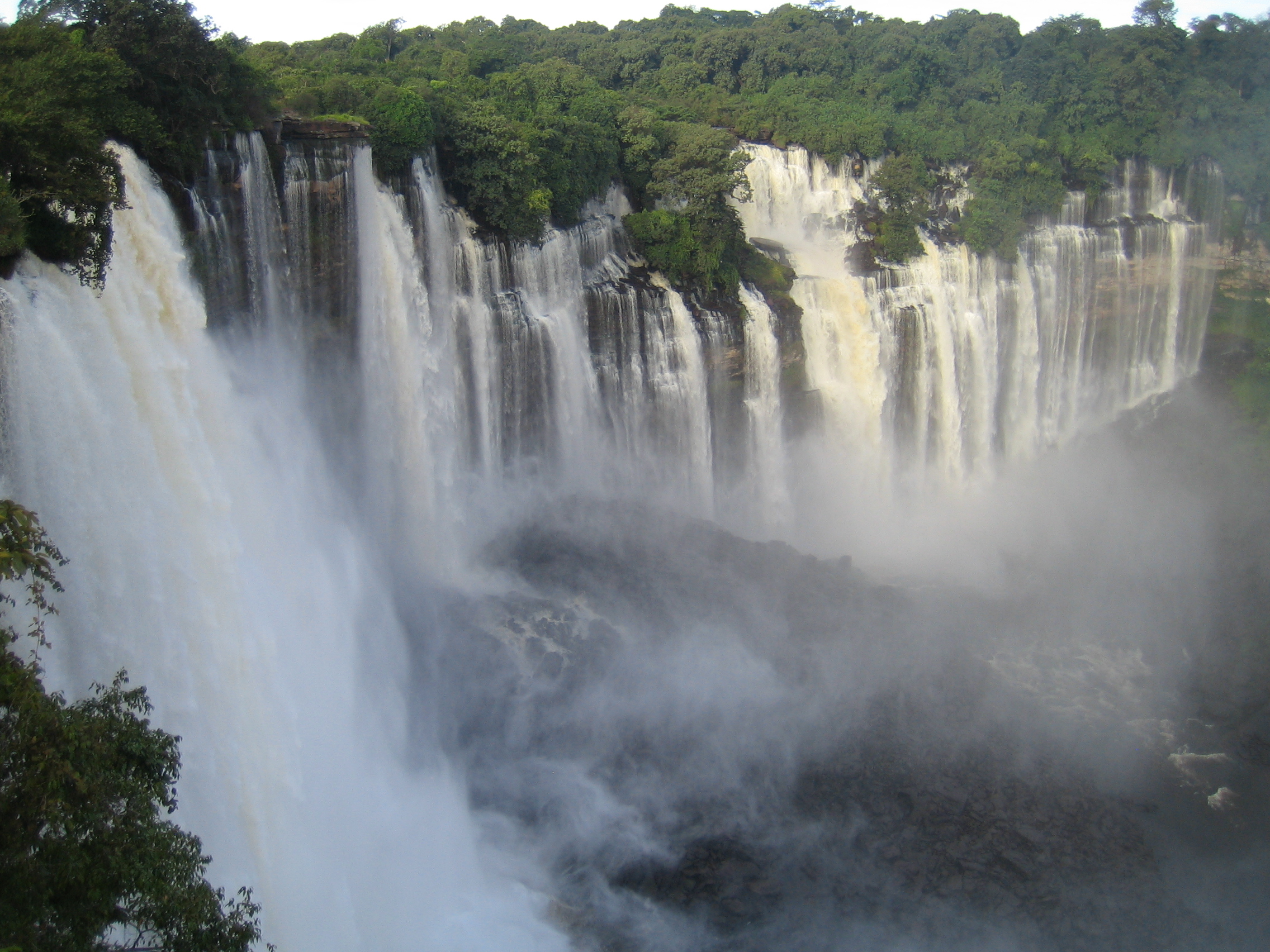
Angola sits on the Atlantic coast and borders Namibia, Zambia and the two Congos. Tourism is still young: the parks lost much of their wildlife to poaching during the civil war, which ended in 2002, and roads and hotels outside the capital are limited. What you come for is the land itself: Kalandula Falls and the black rocks of Pungo Andongo near Malanje, the steep Great Escarpment and the Tundavala Gap above Lubango, the desert of Iona National Park next to Namibia, and the beaches around Benguela and Lobito, where Carnival is a big event.
Luanda, the capital, is crowded and very expensive, with plenty of nightlife. Outside Luanda you need Portuguese, because little English is spoken. Many passports, including those of the UK, the US, Canada and the EU, can enter for up to 30 days for tourism without a visa. The UK and Canada advise against non-essential travel to the provinces of Cabinda and Lunda Norte: read the safety section before you plan a trip inland.
- Kalandula Falls: One of the best-known sights in Angola, near Malanje.
- Pungo Andongo: Huge black rock formations, within reach of Luanda or Malanje.
- The Tundavala Gap: The best-known view of the Great Escarpment, the steepest mountains in the country, in Huíla province.
- Kissama National Park: The easiest park to reach from Luanda, with places to stay.
- Benguela and Lobito: Beach towns with art deco buildings and a strong Carnival tradition.
- Iona National Park: Desert next to Namibia's Skeleton Coast, home to semi-nomadic peoples.
Places to visit
- City
- Coast
- Park
- Mountain
- Historic site
Cities
- Luanda: The capital: huge, crowded and very expensive, with plenty of nightlife and culture.
- Benguela: The easiest city for tourists, with an ocean front, art deco buildings and some of the country's best beaches.
- Lobito: A beach city next to Benguela and the centre of Carnival, with the Restinga peninsula.
- Huambo: One of the larger cities, centre of the Ovimbundu region, hit hard in the civil war.
- Lubango: The base for exploring the mountain escarpment of southern Angola.
- Malanje: The town for Kalandula Falls, Pungo Andongo and Cangandala National Park, linked to Luanda by train.
- Namibe (Moçâmedes): The beach town of the desert south-west and the starting point for Iona National Park.
- Menongue: A small city in the remote south-east, at the end of the railway from Namibe.
- M'banza-Kongo: The old capital of the Kingdom of Kongo, in the north.
Beyond the cities
- Kalandula Falls (site): Waterfalls near Malanje, one of the country's best-known sights.
- Pungo Andongo (site): Large black rock formations, easy to reach from Malanje.
- Cangandala National Park (park): A reserve created to protect the giant sable antelope, the national symbol.
- Kissama National Park (park): The most accessible park, near Luanda, with accommodation for visitors.
- Iona National Park (park): Thinly populated desert next to Namibia's Skeleton Coast, with little infrastructure.
- Tundavala Gap (mountain): A gorge in Huíla province with the most famous views of the Great Escarpment.
- Mussulo (coast): A strip of land south of Luanda with clean beaches, water sports and local food.
Regions
- Greater Luanda: The most populated area, around the capital Luanda.
- Northern Angola: Mostly along the border with the Democratic Republic of the Congo, with large areas of rainforest.
- Central Angola: High escarpments that drop steeply to the best beaches on the Atlantic coast.
- Southwest Angola: The driest region, with savanna and the northern end of the Namibian desert.
- Eastern Angola: The emptiest part of the country: savanna crossed by five great rivers.
- Cabinda: The northern exclave on the Atlantic, with oil and rainforest; read the official advice before you go.
Things to do
See
- Kalandula Falls Malanje: See one of Angola's best-known sights, near Malanje.
- Pungo Andongo Malanje: Walk among the huge black stones, reasonably easy to reach from Malanje or Luanda.
- Cangandala National Park Malanje: The reserve of the giant sable antelope, Angola's national symbol.
- The Tundavala Gap Lubango: Take in the views of the Great Escarpment; scenic drives in these mountains are for 4x4s only.
- Art deco Benguela Benguela: Walk past the art deco buildings of the city centre.
- Arco Lagoon Namibe (Moçâmedes): A lagoon in the desert province of Namibe, with beaches nearby.
Do
- Game viewing in Kissama Greater Luanda: Tours with local operators such as Eco Tur use special game-viewing vehicles.
- Beaches of Mussulo Luanda: Clean beaches and water sports on the strip of land south of the capital.
- Baía Azul Benguela: Beaches backed by desert near Benguela.
Eat
- Fresh seafood on the coast: Lobster straight from the fishing boats, and the beach restaurants of the Ilha de Luanda.
Drink
- Cuca beer in Lobito Lobito: Lobito is known for its ice-cold draught Cuca beer.
Shop
- Benfica craft market Luanda: Sculptures, paintings, jewellery and batik south of Luanda; bargaining is expected. The UK advises avoiding crowded places such as markets, so go with a trusted local guide.
Itineraries
Luanda and the falls of Malanje in 6 days (6 days)
- Luanda (2 nights): Mussulo and the Benfica market; use a car with a driver.
- Malanje (3 nights): By the daily train from Luanda; Kalandula Falls, Pungo Andongo and Cangandala National Park with a local driver.
- Luanda (1 night): Back by train before your flight home.
Benguela, Lobito and Huambo in 6 days (6 days)
- Benguela (3 nights): The beaches of Baía Azul, the art deco centre and a day in Lobito.
- Huambo (3 nights): By the train from Lobito; the Alto Hama hot springs are in the region.
Lubango and Namibe in 6 days (6 days)
- Lubango (3 nights): Fly from Luanda with TAAG; the Tundavala Gap and the escarpment in a 4x4, with a driver who knows the area.
- Namibe (Moçâmedes) (3 nights): By the train from Lubango; the Arco Lagoon, and Iona National Park only with people or organisations that know the area.
Climate and best time to visit
| Jan | Feb | Mar | Apr | May | Jun | Jul | Aug | Sep | Oct | Nov | Dec | |
|---|---|---|---|---|---|---|---|---|---|---|---|---|
| Max °C | 30 | 31 | 31 | 30 | 29 | 26 | 24 | 24 | 25 | 27 | 28 | 29 |
| Min °C | 24 | 25 | 25 | 24 | 23 | 20 | 19 | 19 | 20 | 22 | 23 | 23 |
| Rain mm |
Angola has a rainy and a dry season. In the north and the interior highlands the rains fall from November to April, and the cooler dry season runs from May to October; the coast has a short rainy season from February to April. The heaviest rain comes in April, with violent storms, and the far north and Cabinda get rain for much of the year. The coast is cooled by the Benguela Current and is semi-arid from Luanda to the south.
In Luanda the average maximum is about 30 °C from February to April and about 24 °C in July and August. In the rainy season sudden floods can damage roads and bridges, and the UK government warns that flooding can move landmines outside known minefields. May to October is the easier time to travel.
Holidays and events
- 1 January 2026 · New Year's Day
- 2 January 2026 · New Year's Day (Ponte)
- 4 February 2026 · Liberation Day
- 16 February 2026 · Carnival
- 8 March 2026 · International Women's Day
- 23 March 2026 · Day of the Liberation of Southern Africa
- 3 April 2026 · Good Friday
- 4 April 2026 · Peace Day
- 1 May 2026 · Labour Day
- 17 September 2026 · National Heroes' Day
- 18 September 2026 · National Heroes' Day (Ponte)
- 2 November 2026 · All Souls' Day
- 11 November 2026 · Independence Day
- 25 December 2026 · Christmas Day
Getting around
| Main airports | NBJ, LAD |
|---|---|
| International driving permit | Recommended |
Flying saves days on the road: TAAG flies from Luanda to Cabinda, Catumbela, Huambo, Lubango, Menongue, Moçâmedes, Ondjiva, Saurimo, Soyo and other cities. Trains run on three lines that do not connect: Luanda to Malanje, with daily departures and three classes; Lobito to Huambo, with some trains on to Luau; and Namibe to Lubango and Menongue. Bus companies such as Macon and Huambo Expresso link most big cities, but the UK considers local minibuses and coaches unsafe, and Canada advises against all public transport, including buses.
Taxis are scarce and expensive. Canada suggests hiring a car with a driver; the UK advises against taxi apps where possible, and if you use one, check that the driver and car match the app. Driving: outside Luanda and the provincial capitals roads are often poor, and landmines and unexploded weapons remain a danger on roads, verges and bridges. Avoid driving at night, travel outside towns in a convoy of at least two vehicles, ideally 4x4s, and keep doors locked and windows closed. Police checkpoints are frequent: carry your licence, an International Driving Permit and the car's papers. A UK photocard licence is valid for 30 days. Fuel can run short.
Flying to Angola? PartnerCompare fares and find the cheapest datesSearch flightsWhere to stay
- International-standard hotels: Wikivoyage lists the Tropico, the Alvalade, the Epic Sana, the Skyna and the Palm Beach among others; expect high prices.
- Park lodges: Kissama National Park, near Luanda, has accommodation for visitors.
- Rented houses: For longer stays, choose one with a generator: power cuts are frequent.
Outside Luanda, transport and accommodation are extremely limited, so travel with people or organisations that know the area. Power cuts are frequent and water and fuel can run short, so a place with its own generator is worth choosing. Keep valuables and cash in the hotel safe.
Eat and drink
Dishes to try
- Funge (pirão): A polenta of maize meal and cassava, also served as the main meal at home at Christmas.
- Muamba de galinha: Chicken muamba, one of the national dishes.
- Calulu: One of the signature dishes, served with funge de bombo.
- Mufete: Grilled fish with boiled sweet potato and a salsa of raw chopped onion, pepper and tomato, often with beans.
- Mufete de cacusso: Fish rubbed with fresh lemon and pepper.
- Seafood: Plentiful on the coast, including lobster bought straight from the fishing boats.
Drinks
- Cuca: A beer served ice-cold on draught in Lobito.
- Bottled water: Ask for bottled mineral water: tap water is not safe.
Eating out is not easy: restaurant food is expensive even in Luanda, and simpler places can have poor hygiene. Angolan cooking is based on fish, cassava and spicy stews, and the tropical fruit is very good. In Luanda the beach restaurants on the Ilha de Luanda cover every budget. The UK advises against walking between bars and restaurants on the Ilha do Cabo: go by car. Few restaurants take foreign cards, and not all accept US dollars, so ask before you order.
Entry requirements and visas
| Passport validity | At least 6 months beyond your stay, with 2 blank pages |
|---|
| Passport | Entry | Max stay | Notes |
|---|---|---|---|
| United Kingdom | Visa free | 30 days | For tourism. Work, study or business need a visa in advance. |
| Canada | Visa free | 30 days | Up to 30 days at a time and 90 days in a calendar year, for tourism. |
| United States | Visa free | 30 days | Up to 30 days per entry and 90 days a year, for tourism. |
| EU / EEA | Visa free | 30 days | Every EU country, Iceland and Norway are on the visa-free list; Liechtenstein is not listed. |
| Australia | Visa free | 30 days | Up to 30 days per entry and 90 days a year, for tourism. |
Other nationalities: check the official source below.
Since September 2023 many nationalities, including the UK, the US, Canada, Australia and the EU countries, can visit Angola for tourism without a visa for up to 30 days per entry and 90 days a year. For work, study or business you need a visa in advance, and arriving without the right visa can mean detention at the airport and deportation. Overstaying costs 15,000 kwanzas a day, and you may not be allowed to leave until the fine is paid. Officials may ask to see a return or onward ticket.
You need a yellow fever certificate: Angola asks for it from all arriving travellers aged 9 months or older. Dual nationals must enter and leave on their Angolan passport. The UK government says to declare cash or travellers' cheques worth USD 5,000 or more on arrival (Canada gives USD 15,000); the UK and Canada give different limits for taking money out, so check the money section. Rules depend on your passport and can change: check with the Angolan embassy or consulate before you book.
Money and payments
| Currency | Angolan Kwanza (AOA) |
|---|---|
| Cards | Rare |
Plan to pay in cash. Credit cards work only in a few of Luanda's largest hotels and restaurants, Visa most often, and most restaurants and small hotels take only Angolan cards. Debit cards do not work. ATMs give kwanzas only; some in Luanda accept Visa, but they often break down or run out of cash, and in 2024 the usual limit per withdrawal was Kz60,000 at BIC or Kz40,000 at BAI. Bring US dollars in newer notes, which are preferred because old ones are easier to fake, and change them at banks or the few exchange bureaus in Luanda.
Changing money on the black market can lead to arrest. You can be followed and robbed after using an ATM or a bank: go in a pre-arranged car. The kwanza cannot be exchanged abroad. The UK government says you can take out up to Kz50,000 in cash and no more than USD 5,000 in foreign currency, while Canada says kwanzas cannot be taken out at all: spend or change them before you leave. Watch out for old notes and coins.
Costs and budget
- Usual ATM withdrawal limit, BIC bank (2024): Kz60,000
- Usual ATM withdrawal limit, BAI bank (2024): Kz40,000
Angola is expensive for visitors. Luanda is very expensive, restaurant meals are expensive even there, door-to-door taxis are scarce and expensive, and medical treatment is very expensive and must be paid in advance. The kwanza lost two thirds of its value against other currencies in 2023, so prices you find in guides and online may be out of date. Wikivoyage did not list reliable current prices for meals or rooms when we read it in October 2026.
Health
| Required vaccines | Yellow fever certificate, for all arriving travellers aged 9 months or older |
|---|---|
| Recommended vaccines | Routine vaccines, including measles (MMR), Yellow fever, Hepatitis A, Hepatitis B, Typhoid, Polio: a single adult booster, Cholera, for some travellers: ask a travel clinic, Rabies, for some travellers: ask a travel clinic |
| Malaria | Widespread |
| Tap water | Not safe |
Malaria is present in the whole country, and the CDC recommends prescription medicine to prevent it: see a travel clinic at least 6 to 8 weeks before you go, and protect yourself from mosquitoes, which also spread dengue, Zika and chikungunya. Poliovirus has been found in Angola in the last year, so make sure your polio vaccination is up to date. Dogs with rabies are common, and rabies vaccine may only be available in the bigger towns. Do not drink tap water, and avoid swimming in lakes and rivers because of schistosomiasis.
Medical facilities are poor across the country. Luanda has some competent private clinics, which charge high fees in advance, but outside the capital care is very limited, and many staff speak only Portuguese. Serious emergencies are treated abroad, so get insurance that covers medical evacuation. For an ambulance, dial 112. Because of the Ebola outbreak in the Democratic Republic of the Congo, you may face extra health checks at borders in the region.
This is general information, not medical advice: check with a travel health professional before you go.
Safety
- United States: Level 2: Exercise Increased Caution (2026-10-20)
- Canada: Exercise a high degree of caution (2026-10-20)
- United Kingdom: Advises against all but essential travel to parts of the country (2026-10-20)
The UK advises against all but essential travel to Cabinda Province, except Cabinda city, and to within 1 km of the border with the Democratic Republic of the Congo in Lunda Norte, except at official crossings; it advises against going to the rest of Lunda Norte and Lunda Sul unless you must. Canada advises against non-essential travel to the provinces of Cabinda and Lunda Norte. Both mention attacks and kidnappings in Cabinda, and crime and banditry around the diamond areas of the Lundas.
Crime is high in Luanda, and some of it is violent: muggers can be armed. Do not walk around Luanda, especially alone or after dark, do not show phones or jewellery, and avoid markets and crowds. If you are threatened, hand over your money and valuables at once. In traffic, keep valuables out of sight and doors locked, and do not stop if someone signals you to pull over. Avoid demonstrations, which can turn violent.
Landmines and unexploded weapons remain in many areas, even on roads thought to be clear. Keep to well-used routes, and never step beyond the red and white HALO Trust posts that mark minefields. Always carry ID: a certified copy of your passport photo page in Luanda, and the originals outside Luanda and the provincial capitals; without ID you can be fined 15,000 kwanzas. Do not photograph government buildings, the police, the army, airports or bridges.
Customs and etiquette
Respect for older people matters. Greet the oldest person first when you visit a home, let older people go through a door before you, and give up your seat to them on transport; at a family meal, the oldest person starts eating first. Greet everyone politely as soon as you meet them: a simple "Bom dia" works. Angolans listen closely and find it rude to be interrupted. In rural areas, take time to greet the local chief, the soba. Few tourists come, so people may stare out of curiosity rather than hostility.
Avoid political talk in public and on social media: showing disrespect to officials can be punished. Do not photograph government or military sites, airports, bridges or the police, and be discreet with your camera in the street. Same-sex relationships are legal, but public displays of affection may attract negative attention. Buying ivory is illegal, and you cannot take ivory or turtle shells out of the country; some crafts of cultural value may be kept by customs.
Language
| Official languages | Portuguese |
|---|---|
| English | Limited |
| Good morning | Bom dia bohm DEE-uh |
|---|---|
| Hello | Olá oh-LAH |
| Please | Por favor poor fuh-VOHR |
| Thank you (said by a man / a woman) | Obrigado / Obrigada aw-bree-GAH-doo / aw-bree-GAH-duh |
| Yes / No | Sim / Não seem / nuhnw |
| Excuse me | Com licença kohm lee-SEHN-suh |
| Do you speak English? | Fala inglês? FAH-luh een-GLIHSH |
| How much is this? | Quanto custa isto? KWUHN-too KOOSH-tuh EESH-too |
What to pack
- Passport and certified copies of the photo page: You must carry ID at all times, and the originals outside Luanda and the provincial capitals.
- Yellow fever certificate: Required for all arriving travellers aged 9 months or older.
- Return or onward ticket: Officials may ask for it on arrival.
- US dollars in newer notes: Foreign cards rarely work, and newer notes are preferred.
- International Driving Permit: If you plan to drive; you must show your papers at frequent checkpoints.
- Antimalarial medicine, repellent and a mosquito net: Malaria is present in the whole country.
- Travel health kit: Medical care outside Luanda is very limited.
- Plug adapter: Only if your plugs are not type C, the European two-pin plug.
- Satellite phone: For breakdowns and emergencies on remote trips: phone networks are often overloaded.
Quick reference
Country facts
| Capital | Luanda |
|---|---|
| Population | 39,040,039 (2025) |
| Area | 1,246,700 km² |
| Time zone | Africa/Luanda (UTC+1) |
| Calling code | +244 |
| Driving side | right |
Electricity and plugs
| Plug types | C |
|---|---|
| Voltage | 220 V |
Staying connected
| SIM and eSIM | Phone networks are often overloaded and interruptions are common. Canada notes that most personal mobile phones must be reprogrammed to work in Angola, and that international calls are hard to make outside the capital. |
|---|---|
| Wi-Fi | Avoid public Wi-Fi: Canada warns that criminals use it to steal personal and banking data. |
Emergency numbers
| Police | 110 |
|---|---|
| Ambulance | 112 |
| Fire | 118 |
Frequently asked questions
Do I need a visa for Angola?
Not for tourism if you hold a UK, US, Canadian, Australian or EU passport: you can stay up to 30 days per entry and 90 days a year. Check the rules with the Angolan embassy before you book.
Do I need a yellow fever vaccination for Angola?
Yes. Angola asks all arriving travellers aged 9 months or older for a yellow fever certificate.
Can I use cards in Angola?
Rarely. Only a few large hotels and restaurants in Luanda take foreign credit cards, so bring US dollars in newer notes.
Is it safe to travel to Angola?
The US, Canada and the UK all publish advice for Angola, and the UK and Canada advise against travel to parts of Cabinda and Lunda Norte. Read the safety section and the official links before you go.
When is the best time to visit Angola?
The dry season, from May to October, is the easier time. From November to April rain and floods can cut roads.
Can I drink the tap water in Angola?
No. Drink bottled water.
What language is spoken in Angola?
Portuguese, which nearly everyone understands. English is not widely spoken, so learn some Portuguese if you travel outside Luanda.
More Travel Stories from Africa
 Kenya
Sources This guide was last checked on · 21 sources
- Wikivoyage: Angola · Overview, Places to visit, Things to do, Itineraries, Climate and best time to visit, Getting around, Where to stay, Eat and drink, Entry requirements and visas, Money and payments, Costs and budget, Health, Safety, Customs and etiquette, Language, What to pack, Electricity and plugs, Staying connected, Frequently asked questions
- Wikidata: Angola · Overview, Places to visit, Money and payments, What to pack, Country facts, Electricity and plugs
- UK FCDO: Angola entry requirements · Overview, Entry requirements and visas, Money and payments, What to pack, Frequently asked questions
- UK FCDO: Angola regional risks · Overview, Getting around, Where to stay, Safety
- Government of Canada: Angola travel advice (updated 14 October 2026) · Overview, Things to do, Itineraries, Climate and best time to visit, Getting around, Where to stay, Entry requirements and visas, Money and payments, Costs and budget, Health, Safety, Customs and etiquette, What to pack, Staying connected, Frequently asked questions
- UK FCDO: Angola safety and security · Things to do, Itineraries, Climate and best time to visit, Getting around, Eat and drink, Safety, Customs and etiquette, What to pack
- WMO World Weather Information Service: Luanda · Climate and best time to visit
- Nager.Date: public holidays in Angola, 2026 · Holidays and events
- Wikivoyage: Luanda · Getting around, Where to stay
- Wikidata: Dr. António Agostinho Neto International Airport · Getting around
- Wikidata: Quatro de Fevereiro Airport · Getting around
- CDC Travelers' Health: Angola · Entry requirements and visas, Health, What to pack, Frequently asked questions
- ISO 4217 (SIX), published 2026-09-17 · Money and payments
- UK FCDO: Angola health · Health
- UK FCDO: Angola getting help · Health, Emergency numbers
- US Department of State: Angola travel advisory · Safety
- UK FCDO: Angola travel advice · Safety
- Wikivoyage: Portuguese phrasebook · Language
- World Bank, SP.POP.TOTL · Country facts
- World Bank, AG.LND.TOTL.K2 · Country facts
- IANA Time Zone Database, zone.tab · Country facts
Suggest an update
Travel rules, prices and timetables change. If something in this guide is out of date, tell us: we check every suggestion against an official source before changing the page.