

- Local time
- 20:04
- Currency
- Swazi Lilangeni (SZL)
- Capital
- Lobamba / Mbabane
- Calling code
- +268
- Drive on the
- left
Overview
Rhinos and elephants on foot, royal ceremonies and highveld hikes, in a small kingdom you can cross by car in a day.
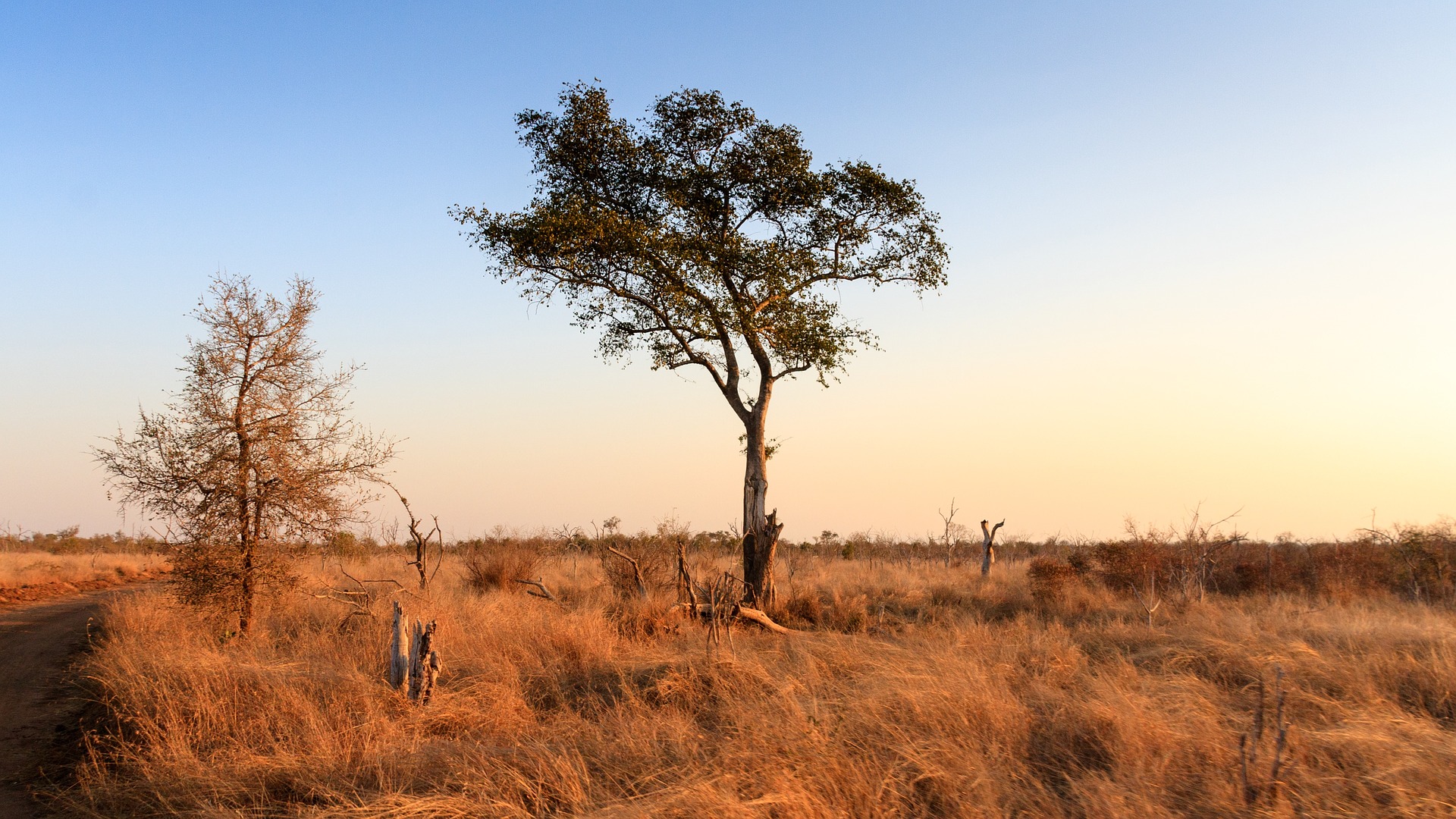
Eswatini, long known as Swaziland, is a small landlocked kingdom between South Africa and Mozambique, and one of the last absolute monarchies in the world. Its game parks and reserves are the main reason to come: at Hlane you can track elephants and rhinos on foot with a guide, Mkhaya protects black and white rhino, and Malolotja and Mlawula are walking country, in the mountains of the west and on the Lubombo ridge in the east. Traditional culture is still very much alive, from beehive huts to royal ceremonies such as the Umhlanga reed dance around August.
The country is easy to travel: the whole of it can be covered by car in a day, many nationalities need no visa, and the South African rand is accepted everywhere. The west is cooler highveld around Mbabane and the Ezulwini Valley, the east is hot lowveld with malaria in some areas. Canada advises a high degree of caution because of the risk of civil unrest: avoid protests and do not drive at night.
- Hlane Royal National Park: Guided walks to see elephants and rhinos on foot.
- Ezulwini Valley: The valley around Lobamba, with Mlilwane, Mantenga and the National Museum.
- Malolotja Nature Reserve: Mountain wilderness with waterfalls, gorges and a canopy zip line.
- Mantenga Cultural Village: A replica Swazi village with traditional dances twice a day.
- Sibebe Rock: A huge granite rock near Mbabane that you can hike to the top of.
Places to visit
- City
- Park
- Mountain
Cities
- Mbabane: The executive capital and largest city, in the Mdzimba Mountains, with a mild climate; few sights, but Sibebe Rock is close.
- Lobamba: The royal and legislative capital in the Ezulwini Valley, with the National Museum and the King Sobhuza II Memorial Park.
- Manzini: The second city, called the Hub, a business centre with a market for crafts and farm produce.
- Piggs Peak: The third town by size, in the north of the country.
- Nhlangano: The fourth town by size and capital of the southern Shiselweni region.
Beyond the cities
- Hlane Royal National Park (park): The only national park, a former private hunting ground, with elephants, rhinos and lions; guided bush walks.
- Mkhaya Game Reserve (park): A reserve founded in 1979 to save Nguni cattle, now protecting black and white rhino, elephant and rare antelope.
- Malolotja Nature Reserve (park): The largest protected area, a mountain reserve in the north-west with the Malolotja Falls.
- Mlilwane Wildlife Sanctuary (park): A sanctuary near Lobamba with zebra, wildebeest and antelope, hiking and nights in beehive huts.
- Mantenga Nature Reserve (park): Woodland in the Ezulwini Valley with the Mantenga Falls and a replica Swazi village.
- Mlawula Nature Reserve (park): A reserve in the north-east on the Lubombo mountains, with 50 km of self-guided walking trails.
- Sibebe Rock (mountain): A granite monolith near Mbabane, with a hiking trail to the top.
Regions
- Hhohho: The north-west of the country.
- Manzini: The centre-west of the country.
- Lubombo: The east, bordering Mozambique.
- Shiselweni: The south, with its capital Nhlangano.
Things to do
See
- Mantenga Cultural Village Lobamba: A replica 19th-century Swazi village with dances at 11:15 and 15:15 every day, and a walk to the Mantenga Falls.
- National Museum and King Sobhuza II Memorial Park Lobamba: Swazi tools and artefacts, and the memorial to the first king.
- Nsangwini rock art Piggs Peak: A guided tour of an old rock art site above the Komati River.
Do
- Walking safari at Hlane Hlane Royal National Park: A guided bush walk in the north of the park is the best way to get close to elephants and rhinos.
- Jeep safari at Mkhaya Mkhaya Game Reserve: Guided drives and walks to see rhinos; book everything before you arrive.
- Malolotja canopy tour Malolotja Nature Reserve: Three hours of zip lines over the mountain reserve.
- Trails of Mlawula Mlawula Nature Reserve: Self-guided walks from 1.5 hours to 2 days on the Lubombo mountains; carry all your water.
- Mlilwane Wildlife Sanctuary Lobamba: Game viewing, hiking and a night in a beehive hut.
- Sibebe Rock Mbabane: Hike to the top of the granite monolith near Mbabane.
Eat
- Chicken dust: Chicken grilled in the open with salad and maize pap, a cheap street meal.
Shop
- Manzini Market Manzini: Farm produce, ironwork, beads, baskets and herbs.
- Swazi candles Mbabane: Hand-made candles sold by workshops around Mbabane.
Itineraries
Mbabane and the Ezulwini Valley in 3 days (3 days)
- Mbabane (1 night): Hike up Sibebe Rock.
- Mlilwane Wildlife Sanctuary (2 nights): Sleep in a beehive hut; visit the Mantenga Cultural Village and the National Museum in Lobamba nearby.
The game reserves of the east in 4 days (4 days)
- Hlane Royal National Park (2 nights): Guided walks for elephants and rhinos.
- Mlawula Nature Reserve (1 night): Next to Hlane: hiking trails and a campsite in the Lubombo mountains.
- Mkhaya Game Reserve (1 night): Overnight guests get the guided drives and walks; book in advance.
Climate and best time to visit
| Jan | Feb | Mar | Apr | May | Jun | Jul | Aug | Sep | Oct | Nov | Dec | |
|---|---|---|---|---|---|---|---|---|---|---|---|---|
| Max °C | 29 | 28 | 27 | 26 | 24 | 22 | 23 | 24 | 26 | 26 | 27 | 28 |
| Min °C | 19 | 19 | 18 | 15 | 12 | 9 | 9 | 11 | 13 | 15 | 16 | 18 |
| Rain mm | 139 | 142 | 103 | 65 | 18 | 8 | 12 | 24 | 56 | 108 | 132 | 117 |
Rain falls mostly in summer, from about October or November to April, often as violent thunderstorms with lightning and hail, especially on the highveld in the west. In Manzini the average maximum is about 28 °C from December to February, with 120-140 mm of rain a month, and about 22 °C in June and July, which are almost dry. Winter is the dry season, and nights on the highveld can be cold: Mbabane averages about 11 °C in July.
The highveld is temperate and gets 1,000-2,000 mm of rain a year; the lowveld in the east is drier and can reach about 40 °C in summer. Fog is frequent on the highveld near Mbabane. May to September is the dry season, the easiest time for driving and walking; in the wet season, bring rain gear and shoes for mud.
Holidays and events
- 1 January 2026 · New Year's Day
- 3 April 2026 · Good Friday
- 6 April 2026 · Easter Monday
- 20 April 2026 · King's Birthday
- 25 April 2026 · National Flag Day
- 1 May 2026 · Workers' Day
- 14 May 2026 · Ascension Day
- 7 September 2026 · Independence Day
- 25 December 2026 · Christmas Day
- 26 December 2026 · St. Stephen's Day
Getting around
| Main airports | SHO |
|---|---|
| International driving permit | Required |
A car is the quickest way around: you can cross the whole country in a day. Traffic drives on the left. Main roads, including the highway between Mbabane and Manzini, are in fairly good condition, but secondary roads are mostly dirt and you need a 4x4 to see much of the interior. Cattle and goats graze by the roads, lorries overtake carelessly, and abandoned trailers stand unlit at night: do not drive on rural roads after dark. You need a 1949 International Driving Permit with your licence. The drink-driving limit is lower than in England, and police make random checks.
Minibuses (kombis) go everywhere and can be flagged down on main roads, but they are crowded and often driven recklessly; Canada advises against them and against trains. Watch your belongings at bus ranks and stay away from them at night. After dark the only option is a taxi: keep a driver's number if you stay near Mbabane or Manzini.
Flying to Eswatini? PartnerCompare fares and find the cheapest datesSearch flightsWhere to stay
- Backpackers: Dorms, private rooms and camping, for example in Mbabane.
- Resort hotels: The most sought-after hotels are in the Ezulwini Valley, between Mbabane and Manzini, some with casino and golf.
- Camps in the reserves: Beehive huts at Mlilwane, the main camp at Hlane and a campsite at Mlawula.
- Country clubs: Comfortable clubs at Manananga, Mhlume and Simunye, towards the Mozambique border.
Distances are short, so you can base yourself in one or two places. Book the reserves ahead, especially Mkhaya, where activities must be arranged before you arrive.
Eat and drink
Dishes to try
- Pap: Maize porridge, the staple.
- Chicken dust: Chicken grilled in the open, served with salad and pap; a cheap street meal.
- Wild meat: Dried and cooked antelope, common in tourist restaurants.
- Beans, groundnuts, pumpkin and sour milk: Everyday ingredients of Swazi cooking.
Drinks
- Marula: A home brew made from marula fruit, in season from December to March; ask locals where to find it.
Supermarkets sell most Western foods, and roadside sellers offer sweet bread, fruit and vegetables. Street food is cheap, but take the usual care with it. For an evening out, there are bars and nightclubs and traditional dance shows; House on Fire in the Malkerns area hosts local art, DJs and live acts.
Entry requirements and visas
| Passport validity | The UK says at least 3 months after the date you arrive, Canada at least 6 months after the date you leave; at least 2 blank pages, and 2 more if you also visit South Africa |
|---|
| Passport | Entry | Max stay | Notes |
|---|---|---|---|
| United Kingdom | Visa free | 30 days | Extensions of 30 days from the Ministry of Home Affairs. |
| Canada | Visa free | 30 days | |
| United States | Visa free | 30 days | According to Wikivoyage. |
| Australia | Visa free | 30 days | According to Wikivoyage. |
| EU / EEA | Visa free | 30 days | According to Wikivoyage, for most EU and EEA countries; Bulgaria, Romania, Slovakia and Liechtenstein are not on its list. |
Other nationalities: check the official source below.
Many nationalities, including UK, Canadian, US, Australian and most EU citizens, can visit for up to 30 days without a visa. You can extend once by 30 days at the Ministry of Home Affairs; for more than 60 days you need a residence permit. Check that the entry stamp in your passport has the right date: with a wrong date you can be refused re-entry for up to a year. Others need a visa from an Eswatini embassy; in South Africa, the embassy in Pretoria takes about two days.
You may have to fill in a health form on arrival. You need a yellow fever certificate if you arrive from a country with yellow fever risk, including airport transits of more than 12 hours there. If you are travelling with children through South Africa, check South Africa's document rules. Vehicles can be searched at the border. Rules depend on your passport and can change: check with the Eswatini embassy or high commission before you book.
Money and payments
| Currency | Swazi Lilangeni (SZL) |
|---|---|
| Cards | Limited |
The currency is the lilangeni (SZL, plural emalangeni, written E), tied at par to the South African rand. Rand notes are accepted everywhere, but rand coins often are not, and kombi drivers refuse them. Most major hotels and some restaurants take cards.
Emalangeni are not accepted in South Africa and cannot be changed at Johannesburg airport or in the UK. Before you leave, spend them or change them for rand at a bank in Mbabane or Manzini, with your ID.
Costs and budget
- Dorm bed in a backpackers: from E120
- Private room in a backpackers: from E200
- Camping, per night: from E70
- Guide for a bush walk at Hlane, per hour: E20
- Nsangwini rock art tour (April 2022): R50
- Road fund levy for a foreign car: E150
Backpackers, street food and minibuses are cheap; resort hotels in the Ezulwini Valley and imported goods in supermarkets cost more. Prices in emalangeni and rand are the same. The prices here are those listed on Wikivoyage when we read it in October 2026, most without a date, and the levy is from the UK government.
Health
| Required vaccines | Yellow fever certificate, only if you arrive from a country with yellow fever risk (from 9 months of age, including transits of more than 12 hours) |
|---|---|
| Recommended vaccines | Routine vaccines, including measles (MMR), Hepatitis A, Hepatitis B, Typhoid, for rural areas or long stays, Rabies, only for some travellers: ask a travel clinic |
| Malaria | Some areas |
| Tap water | Varies |
Malaria is a risk in the east, along the borders with Mozambique and South Africa: the whole Lubombo region and the eastern halves of Hhohho, Manzini and Shiselweni. The CDC recommends preventive tablets there; the parasite is resistant to chloroquine. Tap water is drinkable in the main towns but may not be in rural areas. Avoid swimming in streams because of bilharzia. Eswatini has one of the highest HIV rates in the world, so take the usual precautions.
Clinics in Mbabane can handle minor problems, but care is basic, common medicines can run short, and serious cases go to South Africa. Clinics ask for proof of insurance or payment up front: get insurance that covers evacuation to South Africa. For an ambulance, dial 977.
This is general information, not medical advice: check with a travel health professional before you go.
Safety
- United States: Level 2: Exercise Increased Caution (2026-10-20)
- Canada: Exercise a high degree of caution (2026-10-20)
- United Kingdom: No advice against travel (2026-10-20)
Canada advises a high degree of caution because of the risk of civil unrest; the UK does not advise against travel to any part of the country. Protests happen, mostly in Mbabane and Manzini, and security forces have used force to break them up: keep away from any demonstration. Crime is lower than in much of southern Africa, but theft, pickpocketing and muggings occur, especially at the edges of towns and at night. Avoid downtown Mbabane and Manzini after dark, keep jewellery and cash out of sight, and expect more crime before Christmas. Armed carjackings have happened on the main roads from South Africa and Mozambique: travel by road only in daylight, with doors locked.
In the reserves, keep your distance from animals and leave the vehicle only when a guide or ranger says it is safe. Hippos and crocodiles live in some rivers. Thunderstorms are violent in the wet season and lightning strikes are common: take shelter early. Book adventure activities such as zip-lining only with established, insured companies. Do not stray into the strip of no-man's land along the Mozambique border.
Customs and etiquette
The king is at the centre of national life, and insulting him or the royal family is a crime that can mean a long prison sentence: be careful what you say in public. Do not photograph government buildings, military sites, soldiers, royal residences or official ceremonies. Most Swazis are Christian, and modest dress is appreciated, though shorts and sleeveless tops are usually fine. Showing affection in public is frowned on, and same-sex sexual activity is illegal.
Many people consult a sangoma (a traditional healer) or an inyanga (a herbalist): never mock them or call them witch doctors. Drug offences bring heavy sentences, and possessing pornography is illegal. In poor rural areas, keep your money out of sight and avoid eating expensive food in front of children.
Language
| Official languages | English, Swati |
|---|---|
| English | Common |
| Hello | Sawubona |
|---|---|
| Hello (reply) / Yes | Yebo |
| Please | Ngiyacela |
| Thank you | Ngiyabonga |
| No | Cha |
| Goodbye (to someone staying) | Sala kahle |
What to pack
- Passport with at least 2 blank pages: Plus 2 more if you also visit South Africa.
- South African rand in notes: Accepted everywhere, and easier to use afterwards than emalangeni.
- International Driving Permit (1949): Needed with your licence if you drive.
- Rain gear and shoes for mud: For the wet season, from about October to April.
- Warm layer: Highveld nights are cold in winter.
- Malaria tablets and repellent: For the eastern lowveld and its reserves.
- Water for hikes: On the Mlawula trails you must carry all your water.
- Travel insurance with evacuation: Serious cases are treated in South Africa.
Quick reference
Country facts
| Capital | Lobamba / Mbabane |
|---|---|
| Population | 1,256,174 (2025) |
| Area | 17,200 km² |
| Time zone | Africa/Mbabane (UTC+2) |
| Calling code | +268 |
| Driving side | left |
Staying connected
| SIM and eSIM | Two networks, MTN and Eswatini Mobile; MTN has the better connection. MTN starter packs are sold at most fuel stations and grocery stores, with your passport. South African SIM cards do not work, except MTN on roaming, and starter SIMs expire after 30 days unused. |
|---|---|
| Wi-Fi | Free Wi-Fi at the international airport. Coverage reaches most reserves, though it can be weak, and calls and texts are not always reliable. |
Emergency numbers
| Police | 999 |
|---|---|
| Ambulance | 977 |
| Fire | 933 |
Frequently asked questions
Do I need a visa for Eswatini?
Not for stays of up to 30 days with a UK, Canadian, US, Australian or most EU passports. Check with the Eswatini embassy before you book.
Can I use South African rand in Eswatini?
Yes, rand notes are accepted everywhere at par, though coins often are not. Emalangeni are not accepted in South Africa.
Is there malaria in Eswatini?
Only in the east, near the borders with Mozambique and South Africa. Ask a doctor about tablets if you visit the eastern reserves.
When is the best time to visit Eswatini?
May to September, the dry winter season. Summer brings heavy thunderstorms, and highveld nights are cold in winter.
Can I drink the tap water in Eswatini?
In the main towns, yes; in rural areas it may not be safe.
Is it safe to travel to Eswatini?
The US, Canada and the UK publish advice for Eswatini, and Canada advises a high degree of caution because of possible unrest. Avoid protests and night driving, and read the official links before you go.
More Travel Stories from Africa
 Kenya
Sources This guide was last checked on · 26 sources
- Wikivoyage: Eswatini · Overview, Places to visit, Things to do, Itineraries, Climate and best time to visit, Getting around, Where to stay, Eat and drink, Entry requirements and visas, Money and payments, Costs and budget, Health, Safety, Customs and etiquette, Language, What to pack, Staying connected, Frequently asked questions
- Wikidata: Eswatini · Overview, Places to visit, Money and payments, Language, Country facts
- Wikivoyage: Hlane Royal National Park · Overview, Places to visit, Things to do, Itineraries, Where to stay, Costs and budget
- Wikivoyage: Lobamba · Overview, Places to visit, Things to do
- Government of Canada: Eswatini travel advice (updated 14 October 2026) · Overview, Climate and best time to visit, Getting around, Entry requirements and visas, Money and payments, Health, Safety, Customs and etiquette, What to pack, Frequently asked questions
- Wikivoyage: Mbabane · Places to visit, Things to do, Itineraries, Climate and best time to visit, Language
- Wikivoyage: Manzini · Places to visit, Things to do
- Wikivoyage: Mkhaya Game Reserve · Places to visit, Things to do, Itineraries
- Wikivoyage: Malolotja Nature Reserve · Places to visit, Things to do
- Wikivoyage: Mantenga Nature Reserve · Places to visit, Things to do
- Wikivoyage: Mlilwane Wildlife Sanctuary · Places to visit, Things to do, Itineraries, Where to stay
- Wikivoyage: Mlawula Nature Reserve · Places to visit, Things to do, Itineraries, Where to stay
- WMO World Weather Information Service: Manzini · Climate and best time to visit
- UK FCDO: Eswatini safety and security · Climate and best time to visit, Getting around, Safety, Customs and etiquette
- Nager.Date: public holidays in Eswatini, 2026 · Holidays and events
- UK FCDO: Eswatini entry requirements · Getting around, Entry requirements and visas, Costs and budget, What to pack, Frequently asked questions
- CDC Travelers' Health: Eswatini · Entry requirements and visas, Health, What to pack, Frequently asked questions
- ISO 4217 (SIX), published 2026-09-17 · Money and payments
- UK FCDO: Eswatini health · Health, What to pack
- UK FCDO: Eswatini getting help · Health, Safety, Emergency numbers
- US Department of State: Eswatini travel advisory · Safety
- UK FCDO: Eswatini travel advice · Safety
- Wikivoyage: Swazi phrasebook · Language
- World Bank, SP.POP.TOTL · Country facts
- World Bank, AG.LND.TOTL.K2 · Country facts
- IANA Time Zone Database, zone.tab · Country facts
Suggest an update
Travel rules, prices and timetables change. If something in this guide is out of date, tell us: we check every suggestion against an official source before changing the page.