For sea and sunshine between December and March without crossing to the Caribbean, Cabo Verde deserves a look. The archipelago lies about 570 km off Senegal, and its driest islands see almost no rain in those months. Most winter visitors fly straight to the resorts of Sal or Boa Vista. This guide starts on Santiago, the island of the capital, Praia: it is the least expensive island and a better base if towns, hiking and history matter as much as the beach.
The reason to look now is a new route. From 14 December 2026, TAAG Angola Airlines plans to fly Luanda, Dakar and Praia twice a week with an Airbus A220-300, Aeroroutes reported on 22 October 2026. That makes a few days in Senegal an easy add-on to an island trip.
The new Dakar to Praia flight
This is the schedule Aeroroutes published for the route, in local times:
- DT502, Mondays and Saturdays: Luanda 11:50, Dakar 16:40 to 17:50, Praia 18:15.
- DT503, Tuesdays and Sundays: Praia 11:55, Dakar 14:20 to 15:25, Luanda 22:15.
On paper, you could spend a weekend in Dakar, fly to Praia on a Monday evening and return on the Sunday six days later. Aeroroutes does not say whether TAAG will sell Dakar to Praia as a ticket of its own, and announced schedules can still change. Check the airline’s booking engine before you build a trip around it.
What the weather does from December to March
Winter here is warm rather than hot. The World Meteorological Organization’s climate normals for Sal (1961 to 1990) give average highs of 24°C in January, 24.1°C in February, 24.8°C in March and 25.2°C in December, with between 1.3 and 5.3 mm of rain a month and at most one rainy day. The WMO publishes no normals for Santiago, which is wetter.
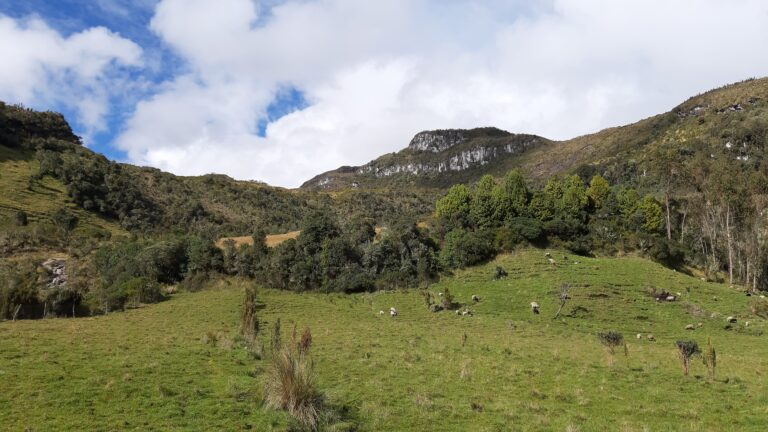
Wikivoyage notes that rain falls between June and February, peaking in September, and that Santiago, Fogo and Santo Antão receive the most, while Sal, Boa Vista and Maio see almost none. If dry days are your priority, March is the safest month on Santiago, and Maio is one of the driest islands within reach.
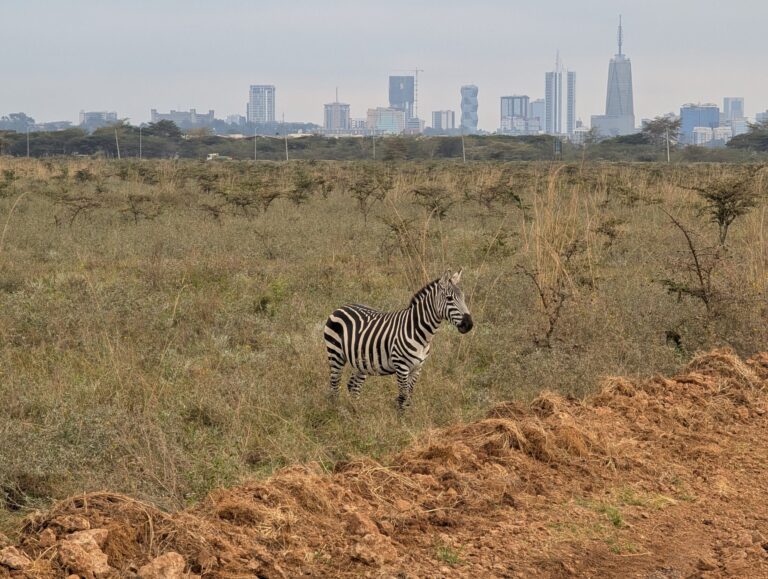
In Dakar, the WMO normals (1981 to 2010) show December to March highs of 24.8 to 27.2°C, lows of 17.8 to 20.5°C and under 2 mm of rain a month: pack a light layer for the evenings.
Santiago first, then one more island
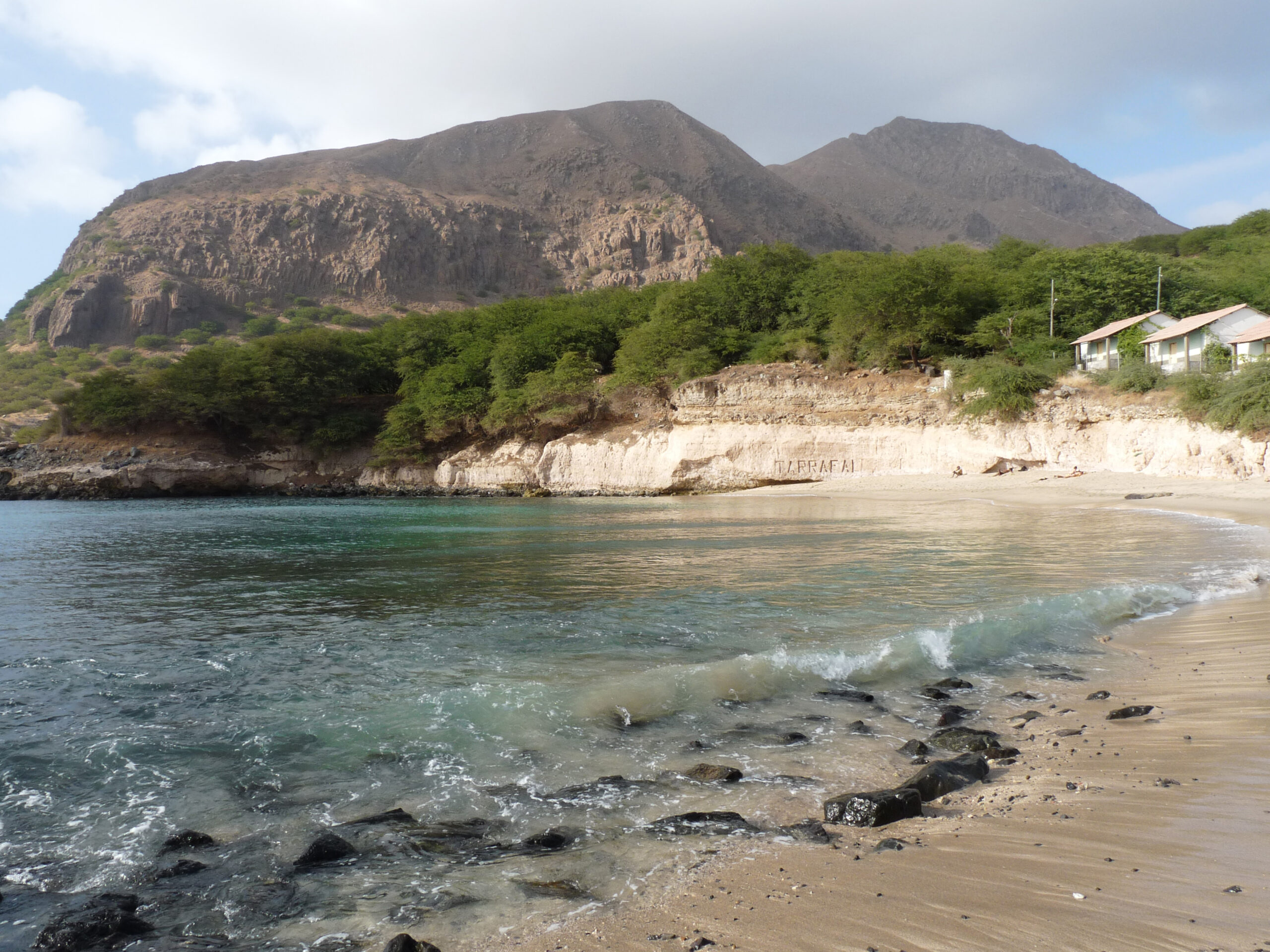
Praia has the international airport and an old centre with the cathedral, the town hall and the Palace of Justice. Cidade Velha, the original capital, was the first European city in the tropics and is now a UNESCO World Heritage Site. Tarrafal has one of the island’s most accessible sandy beaches for swimming, and the Serra Malagueta national park, between Tarrafal and Assomada, is more humid and the place for hikes. The Wikivoyage guide to Santiago is frank that this is not a resort island: the west coast beaches are black volcanic sand, and the appeal is the mix of mountains, coast and towns.
From Praia, three pairings work well:
- Maio: ferries from Praia take about 2.5 hours but do not sail every day. One cobblestone road loops the island, and it is one of the driest in the group.
- Fogo: reached by plane or ferry from Praia. Pico do Fogo rises to 2,829 m and last erupted in 2014 and 2015; the summit climb needs a guide and starts at sunrise, before the black rock heats up. Farmers grow vines for wine in the volcanic valley of Chã das Caldeiras. The UK Foreign Office lists altitude sickness as a risk on Fogo.
- Sal or Boa Vista: for a classic beach finish, with resort prices that Wikivoyage compares to the Caribbean.
According to Wikivoyage, CV Sky ran daily flights between most islands as of April 2026, and ferries are operated by CV Interilhas. Both can change at short notice: leave a spare day before your flight home.
Paperwork for Cabo Verde and Senegal
Entry rules depend on your passport. For British passport holders, the UK Foreign Office (advice still current on 26 October 2026) says:
- your passport must be valid for at least 6 months after the day you arrive;
- you can visit for up to 30 days without a visa;
- you must pre-register online and pay the airport security fee (TSA) at least 5 days before you arrive, and bring the confirmation. Since 1 July 2026, anyone who has not done so pays double the fee at the border;
- children aged 17 and under travelling without a parent or guardian need a letter of authorisation in Portuguese, with a notarised signature.
The Dakar stop adds one rule to watch. Cabo Verde requires a yellow fever certificate from travellers aged one and over who arrive from a country with yellow fever risk (we explained how the vaccine works in our yellow fever article), according to the CDC, and the FCDO’s Senegal page warns that the risk in Senegal can mean you need one for onward travel. If Dakar is on your route, see a travel clinic at least 8 weeks ahead, as the FCDO suggests for vaccines. For Senegal itself, British visitors need no visa for up to 3 months but must show proof of onward travel and of where they are staying. Other passports: confirm with each country’s embassy.
Before you book
The FCDO reports a raised dengue warning level on Santiago, Fogo and Brava, so pack insect repellent. The UK GHIC card is not accepted, and the FCDO advises insurance that covers local treatment and medical evacuation. The currency is the escudo (CVE), pegged at 110 to the euro; euros are common on Sal and Boa Vista, but elsewhere expect to pay in escudos.
If the TAAG timing suits you, check fares from mid-December and complete the Cabo Verde pre-registration at least 5 days before you fly. Sort the yellow fever certificate first, and read our Senegal guide for the mainland side of the trip.
Cover photo: Ji-Elle, CC BY-SA 3.0, via Wikimedia Commons