

- Local time
- 03:03
- Currency
- Tanzanian Shilling (TZS)
- Capital
- Dodoma
- Calling code
- +255
- Drive on the
- left
Overview
Safaris in the Serengeti and Ngorongoro, the climb up Kilimanjaro and the beaches and Stone Town of Zanzibar: Tanzania covers wildlife, mountains and the Indian Ocean.
Tanzania is the largest country in East Africa, formed on 26 April 1964 when mainland Tanganyika and Zanzibar merged. The safari parks fall into two circuits. The northern one takes in the Serengeti, with its wildebeest migration, the Ngorongoro Crater and Tarangire; the southern one, with Ruaha and Mikumi, sees fewer tourists. Mount Kilimanjaro, the highest peak in Africa, can be climbed with a guide.
Off the coast, Zanzibar has beaches, diving and the historic Stone Town, once the centre of the Arab slave trade; further south, the waters of Mafia Island draw whale sharks. Tanzanians belong to more than 120 ethnic groups, and Swahili is spoken almost everywhere, with English used mostly in business and higher education.
The US rates Tanzania Level 2 (exercise increased caution) and Canada advises a high degree of caution because of crime and the threat of terrorism. The UK advises against all but essential travel only within 20 km of the border with Mozambique's Cabo Delgado province. All visitors must buy the government's inbound travel insurance on arrival or online.
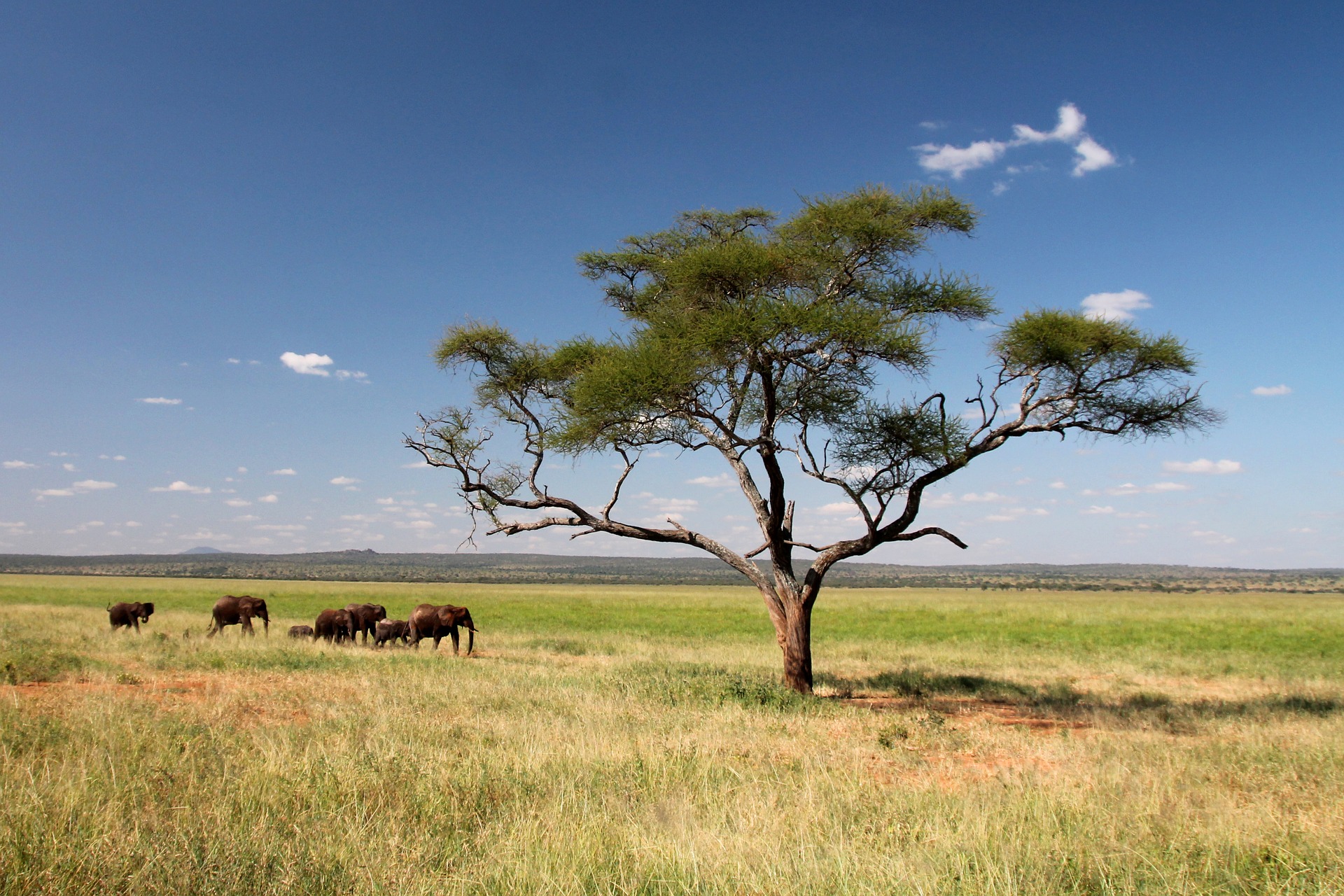
- Serengeti National Park: Lions, cheetahs, elephants and the wildebeest migration between the Serengeti and Kenya's Masai Mara.
- Ngorongoro Crater: A volcanic crater with high densities of wildlife and a small population of black rhino.
- Mount Kilimanjaro: The highest peak in Africa, climbed with a guide on organised treks.
- Stone Town, Zanzibar: The historic town of Zanzibar, where the former slave market is now a memorial.
- Ruaha National Park: A southern park with large herds of elephants and giraffes, lions and wild dogs, and fewer visitors.
- Mafia Island Marine Park: Diving and snorkelling, and one of the few places where whale sharks gather every year.
Places to visit
- City
- Park
- Mountain
- Area
- District
Cities
- Dar es Salaam: The largest city and main gateway, with African, colonial and Indian Ocean influences and ferries to Zanzibar.
- Arusha: A city at the foot of Mount Meru and a good base for Mount Meru and the Ngorongoro Crater.
- Moshi: A town in the Kilimanjaro region, with Kilimanjaro International Airport between it and Arusha.
- Dodoma: The capital, reached by road via the turn-off at Morogoro.
- Morogoro: A town on the main road west of Dar es Salaam, linked to the city by a regular electric train.
- Iringa: A good base for the southern circuit, near the turn-off for Ruaha National Park.
- Mbeya: A city in the south-west at the foot of Loleza Peak, between the Mbeya and Poroto mountain ranges.
- Mwanza: A city with domestic flights, visas on arrival at its airport and buses from Arusha.
- Kigoma: A city on Lake Tanganyika and the gateway to Gombe Stream National Park.
Beyond the cities
- Serengeti National Park (park): Lions, cheetahs, elephants, hippos and the wildebeest migration; you need a guide and a 4x4.
- Ngorongoro Conservation Area (area): The Ngorongoro Crater and Olduvai Gorge, with elephants in the highlands around the crater.
- Mount Kilimanjaro (mountain): The highest peak in Africa, at about 5,895 m, climbed with a guide.
- Tarangire National Park (park): About 2,600 km² on the northern circuit, with lots of wildlife in the dry season and over 570 bird species.
- Ruaha National Park (park): A southern park known for elephants, giraffes, large lion prides and wild dogs.
- Mikumi National Park (park): A park on the southern circuit, on the main road from Dar es Salaam to Iringa.
- Udzungwa Mountains National Park (park): Wilderness hiking, with gates and campsites on the Iringa side of the park.
- Stone Town (district): The historic capital of Zanzibar, with the former slave market and the Anglican cathedral.
- Zanzibar (island): Beaches, diving, snorkelling, spice tours and the red colobus monkeys of Jozani Forest; about 90 minutes by ferry from Dar es Salaam.
Regions
- Central Tanzania
- Northeast Tanzania
- Northwest Tanzania
- Pembwe and the Southeast
- Southern Highlands
- Zanzibar Province
Things to do
See
- The Serengeti migration Serengeti National Park: Herds of wildebeest, zebra and buffalo moving between the Serengeti and the Masai Mara; tell your tour company if the migration is your main goal.
- Ngorongoro Crater Ngorongoro Conservation Area: Wildlife at higher densities than in the Serengeti, and one of the few places to see black rhino.
- Ruaha and the southern parks Ruaha National Park: Fewer vehicles and lower prices than the northern circuit, with Iringa as a base.
- Stone Town Zanzibar: The old town of Zanzibar and the former slave market, now a memorial with the Anglican cathedral on the site.
- Bagamoyo: Historic sites of the slave trade in the town of Bagamoyo, north of Dar es Salaam.
Do
- Climb Kilimanjaro Mount Kilimanjaro: Organise the trek at home or in Arusha; choose a reputable company and stick to established routes.
- Diving and snorkelling Zanzibar: Dive sites around Zanzibar and Pemba, and whale sharks at Mafia Island Marine Park.
- Spice tours and Jozani Forest Zanzibar: Spice farm tours, and a forest with a small population of red colobus monkeys.
Eat
- Chipsi mayai: Chips cooked in an omelette, sold at almost every food stand, good with pili pili hot sauce.
Shop
- Tinga Tinga paintings Dar es Salaam: Colourful paintings in the style named after its originator, sold everywhere; the Tinga Tinga school in Dar es Salaam sells directly from the artists.
Itineraries
The northern safari circuit in 8 days (8 days)
- Arusha (1 night): Base for the northern parks; buses run from Nairobi.
- Tarangire National Park (1 night): Wildlife and birds, most concentrated in the dry season.
- Serengeti National Park (3 nights): Game drives with a guide and a 4x4.
- Ngorongoro Conservation Area (2 nights): The crater and its black rhino.
- Arusha (1 night): Back to the city to fly out from Kilimanjaro International Airport.
Dar es Salaam and Zanzibar in 6 days (6 days)
- Dar es Salaam (1 night): Arrival at Julius Nyerere International Airport.
- Stone Town (2 nights): About 90 minutes by ferry from Dar es Salaam.
- Zanzibar (3 nights): Beaches, snorkelling, a spice tour and Jozani Forest.
The southern circuit from Dar es Salaam in 8 days (8 days)
- Dar es Salaam (1 night): Start of the A7 road west.
- Mikumi National Park (1 night): On the main road beyond Morogoro.
- Udzungwa Mountains National Park (2 nights): Hiking, with campsites on the Iringa side.
- Iringa (1 night): Base for arranging safaris in the south.
- Ruaha National Park (3 nights): Elephants, giraffes and lions with few other vehicles.
Climate and best time to visit
| Jan | Feb | Mar | Apr | May | Jun | Jul | Aug | Sep | Oct | Nov | Dec | |
|---|---|---|---|---|---|---|---|---|---|---|---|---|
| Max °C | 29 | 29 | 29 | 29 | 28 | 27 | 27 | 27 | 29 | 31 | 30 | 30 |
| Min °C | 19 | 19 | 18 | 18 | 17 | 14 | 14 | 14 | 15 | 17 | 18 | 19 |
| Rain mm | 134 | 145 | 114 | 58 | 5 | 0 | 0 | 0 | 0 | 2 | 26 | 123 |
Tanzania has dry and rainy seasons rather than summer and winter. The UK puts the rains from the end of March to May and from October to mid-December; Wikivoyage calls them the long rains and the short rains. The figures here are for Dodoma, the capital, where the rain comes in a single season: highs stay between about 27 and 31 °C all year, nights drop to about 14 °C in July, and almost no rain falls from May to October, while December to March bring 110 to 145 mm a month.
June to August is the most comfortable time, warm by day and cool in the evening. For the Serengeti, Wikivoyage suggests January and February, when the herds migrate, though this is one of the hottest times of year. During the long rains many resorts on Zanzibar and Mafia Island close and many park trails become impassable. The coast is humid and hot: in Dar es Salaam the dry season can bring temperatures above 35 °C.
Holidays and events
- 1 January 2026 · New Year's Day
- 12 January 2026 · Zanzibar Revolution Day
- 3 April 2026 · Good Friday
- 6 April 2026 · Easter Monday
- 7 April 2026 · Karume Day
- 26 April 2026 · Union Day
- 1 May 2026 · International Workers' Day
- 7 July 2026 · Saba Saba Day
- 8 August 2026 · Nane Nane Day
- 14 October 2026 · Nyerere Day
- 9 December 2026 · Independence Day
- 25 December 2026 · Christmas Day
- 26 December 2026 · St. Stephen's Day
Getting there and around
| Main airports | DAR, JRO |
|---|
Getting there
By air: the two main airports are Julius Nyerere International in Dar es Salaam and Kilimanjaro International, halfway between Arusha and Moshi; you must be ready to show a return or onward ticket at the border. The UK Air Safety List bans all airlines certified in Tanzania from flying to the UK.
By land and sea: buses run from Nairobi to Arusha through the Namanga border, which you cross on foot; deal only with the immigration offices and banks, as scammers in the no man's land sell fake visa stamps and poor exchange rates. The TAZARA train links Dar es Salaam with Zambia. Ferries connect Dar es Salaam and Zanzibar in about 90 minutes, and Canada describes them as regular and reliable. The UK reports past ferry disasters on this route: do not board a boat that looks overloaded or unseaworthy.
Getting around
Buses are the most common way to travel, and nearly all routes pass through Dar es Salaam. Canada says intercity buses are usually safer than local minibuses (dala dalas), which it advises avoiding, along with motorbike taxis (boda bodas) and three-wheelers (bajaj). Take taxis booked through a hotel or from an official rank, agree the fare first and never share with strangers. The electric train between Dar es Salaam and Morogoro is regular and reliable, according to Canada. Domestic flights reach the main cities, Zanzibar and most national parks; Wikivoyage says they are often late but generally reliable.
You drive on the left. Roads are often poor, accidents are common and driving at night outside towns is best avoided. Park roads are mostly dirt tracks, and a 4x4 may be essential, especially after rain. A UK licence is valid for up to 6 months, after which you need an international driving permit, while Canada says Canadians need one alongside their licence from the start; in Zanzibar you also need a local permit, which the car hire company can arrange. At police checkpoints, a fine should come with a government control number for later payment, not a demand for cash.
Flying to Tanzania? PartnerCompare fares and find the cheapest datesSearch flightsWhere to stay
- Guest houses: Simple rooms, often with a private bathroom and a fan, even in small towns; rarely bookable online.
- Safari lodges and tented camps: From basic tented camps to luxury lodges in the Serengeti; Serena and Sopa have lodges across the northern circuit.
- Campsites: In and near the national parks; the UK advises using only official sites.
In the bigger cities, avoid touts, who add a commission to the room price. On Zanzibar, non-residents must pay hotels in foreign currency, while hotels on the mainland expect shillings. Choose accommodation with good security, as the UK and Canada report burglaries.
Eat and drink
Dishes to try
- Ugali: A polenta-style dish of corn flour, eaten with the hands alongside meat and stews; the nearest thing to a national dish.
- Chipsi mayai: Chips cooked in an omelette, with pili pili hot sauce.
- Mtori: Beef cooked with bananas.
- Mchicha: A vegetable stew with meat or fish.
- Mandazi: Sweet doughnuts made fresh in the morning.
- Grilled corn: Street food, roasted on the cob over an open fire.
Drinks
- Chai maziwa: Tea with milk and plenty of sugar; tea is more common than coffee.
- Konyagi: A gin-like spirit sold only in Tanzania.
- Local beers: Kilimanjaro, Serengeti, Safari and other western-style lagers.
- Stoney Tangawizi: A popular ginger soft drink.
- Mbege: A drink of ripe bananas and finger millet made by the Chagga in the Kilimanjaro region.
Street food is cheap and plentiful, and the large South Asian community means good Indian food, especially near the Hindu temples of Dar es Salaam. Make sure meat is cooked through, peel fruit and drink bottled water. During Ramadan, eat and drink in hotels or restaurants rather than in public.
Entry requirements and visas
| Passport validity | At least 6 months after the date you arrive, with at least one blank page (UK); Canada asks for 6 months beyond the date you leave |
|---|
| Passport | Entry | Max stay | Notes |
|---|---|---|---|
| United Kingdom | Evisa | Apply for the e-visa before you travel; a single-entry tourist visa is also available on arrival at the main ports of entry, but not a multiple-entry one. | |
| Canada | Visa on arrival | 90 days | A 3-month single-entry tourist visa on arrival at the main ports of entry; for longer stays or multiple entries apply for the e-visa before you travel. |
Other nationalities: check the official source below.
You need a visa, and the UK suggests getting the e-visa before you go. Everyone except residents must also buy the Tanzanian government's inbound travel insurance, valid for up to 92 days, even with a personal policy: from the National Insurance Corporation if you arrive on the mainland, or from the Zanzibar Insurance Corporation if you arrive in Zanzibar, online or on arrival. Wikivoyage gives a price of USD 44 per person in 2026. Keep a return or onward ticket ready.
You need a yellow fever certificate if you arrive from a country with yellow fever risk, including after an airport transit of more than 12 hours there. Because of Ebola in the Democratic Republic of the Congo and Uganda, every traveller is screened on arrival: fill in the Travellers Health Surveillance Form before you leave or on arrival, and expect temperature checks, also for mpox, at every entry point. Plastic bags are banned and are taken from you on arrival. Working or volunteering needs a work permit, and overstaying can lead to arrest and a fine. Rules depend on your passport: check the official e-visa site and the Tanzanian embassy before you book.
Money and payments
| Currency | Tanzanian Shilling (TZS) |
|---|---|
| Cards | Limited |
Shops and restaurants expect Tanzanian shillings (TZS), but US dollars are widely accepted in tourist areas, and safaris, Kilimanjaro treks and park entry fees for non-residents are priced in dollars. Most banks in the main cities have ATMs that take foreign cards, though they sometimes break down or run out of cash; use machines inside banks to reduce the risk of card cloning. Cards work in large supermarkets, malls, big hotels and resorts.
Bring recent, clean US dollar notes: larger and newer bills get better exchange rates, and notes with writing on them may be refused. Travellers' cheques are hard or impossible to use. The UK notes that cash ran short during the unrest after the October 2025 election, so keep some cash in reserve. Canada says you must declare currencies worth more than USD 10,000 when you arrive and when you leave.
Health
| Required vaccines | Yellow fever: required for travellers aged 1 year or older arriving from a country with risk of yellow fever, including airport transits of more than 12 hours there |
|---|---|
| Recommended vaccines | Routine vaccines, including measles (MMR) and polio (adults may need a single booster), Hepatitis A, Hepatitis B, for travellers under 60, Typhoid, for most travellers, Cholera, to be considered: transmission is widespread, Rabies, for some travellers: rabid dogs are common and vaccine may only be found in larger towns |
| Malaria | Some areas |
| Tap water | Not safe |
The CDC lists malaria in all areas below 1,800 m and recommends preventive medicine for travel there. Sleep under a treated net, cover up between sunset and sunrise and use repellent. The CDC generally does not recommend the yellow fever vaccine for Tanzania itself. See a travel health professional at least a month before you go. Do not drink the tap water: bottled water is cheap and easy to find.
Other risks named by the UK and Canada include dengue, cholera, mpox and altitude sickness, a real concern on Kilimanjaro. Medical facilities are limited, especially outside Dar es Salaam, and surgery or complex treatment may require evacuation to Kenya, South Africa or Europe, so check that your insurance covers it. For an ambulance, call 112.
This is general information, not medical advice: check with a travel health professional before you go.
Safety
- United States: Level 2: Exercise Increased Caution (2026-10-20)
- Canada: Exercise a high degree of caution (2026-10-20)
- United Kingdom: Advises against all but essential travel to parts of the country (2026-10-20)
The UK advises against all but essential travel within 20 km of the border with Mozambique's Cabo Delgado province, and Canada advises avoiding all travel within 10 km of that border and non-essential travel south of the A19 highway in Mtwara Region. Near the borders with Burundi and in Kigoma region there have been armed robberies: drive only in daylight. Avoid demonstrations; protests after the general election of 29 October 2025 led to deaths, and the authorities have limited internet access during unrest. Do not film or share images of protests, and expect that police may check your phone.
Crime is the main everyday risk. In Dar es Salaam take care in the city centre, at Coco Beach and along Toure Drive on the Masaki and Oyster Bay peninsula, and around Kariakoo market; in Zanzibar, in Stone Town and at beaches such as Nungwi, Paje and Jambiani. Bag snatching from motorbikes is common: carry bags loosely, not across your body, and walk facing the traffic. Tourists have been forced to withdraw cash in "express kidnappings", sometimes after getting into unlicensed taxis, so book taxis through your hotel. Do not leave drinks unattended and avoid walking alone at night. Burglary is a risk, including at hotels: keep doors and windows locked, especially at night.
On safari, follow park rules and wardens, and use only licensed operators; the Tanzania Association of Tour Operators keeps a list. Riptides are common and beaches have no lifeguards. Ferries on some routes have been overloaded, with fatal accidents: do not board a boat that looks overcrowded.
Customs and etiquette
Dress modestly, especially in Zanzibar and Pemba, which are largely Muslim: shorts or sleeveless tops away from the resorts, particularly in Stone Town, can offend, and Zanzibar's authorities can fine you USD 700 or more for clothing they find inappropriate. A kanga, the colourful wrap sold everywhere, makes an easy cover-up. During Ramadan avoid eating or drinking in public. Same-sex relations are illegal and can bring life imprisonment, and drug penalties are severe. Some products containing cannabidiol (CBD) are also illegal.
Carry copies of your passport and visa. Do not take animal skins, horns or even seashells out of the country without an export permit. Photographing military sites is forbidden, and people have been detained for photographing public buildings and structures. Always ask before photographing people; the Masai usually expect payment. Greet older people with "shikamoo", and refuse sellers politely with "asante" or "sihitaji" (I don't need it): "hapana" (no) sounds rude. Telling time in Swahili counts the hours from 6am, so 11am in English is "saa tano" in Swahili: confirm appointments in English.
Language
| Official languages | Swahili, English |
|---|---|
| English | Limited |
| Greeting to an older person | Shikamoo she ka moe |
|---|---|
| Reply to that greeting | Marahaba |
| Thank you | Asante |
| I don't need it | Sihitaji see-hih-tah-jee |
| No (firm) | Hapana |
| Let me off (on a minibus) | Shusha |
| Right | Kulia |
| Left | Kushoto |
| Straight on | Moja kwa moja |
| Stop | Simama |
What to pack
- Passport with 6 months' validity and a blank page: Required for entry, along with a return or onward ticket.
- Proof of the mandatory Tanzanian travel insurance: You can be refused entry without it.
- Recent, clean US dollar notes: Park fees and safaris are paid in dollars, and old or marked notes get poor rates or are refused.
- Yellow fever certificate, if you come from a risk country: Required at entry in that case.
- Repellent and long clothes for the evening: Malaria is present below 1,800 m.
- Modest clothing or a kanga: Expected in Zanzibar and Pemba, where fines apply.
- Reusable bags instead of plastic ones: Plastic bags are banned and taken away on arrival.
- Sunscreen: The coast can pass 35 °C in the dry season.
Quick reference
Country facts
| Capital | Dodoma |
|---|---|
| Population | 70,545,865 (2025) |
| Area | 884,000 km² |
| Time zone | Africa/Dar_es_Salaam (UTC+3) |
| Calling code | +255 |
| Driving side | left |
Staying connected
| SIM and eSIM | SIM cards are cheap, and the main networks cover most of the country, even some national parks, though service can drop. Canada notes good coverage in the cities and weaker coverage outside them; during unrest the authorities have restricted internet access, so save important numbers offline. |
|---|
Emergency numbers
| Emergency | 112 |
|---|
Frequently asked questions
Do I need a visa for Tanzania?
Yes. The UK suggests the e-visa before you travel; a single-entry tourist visa is also issued on arrival at the main ports of entry. Check the official e-visa site and the embassy before you book.
Is travel insurance compulsory in Tanzania?
Yes. All visitors except residents must buy the government's inbound travel insurance, from the National Insurance Corporation for the mainland or the Zanzibar Insurance Corporation for Zanzibar, online or on arrival.
Is Tanzania safe to visit?
The US rates it Level 2 and Canada advises a high degree of caution, mainly because of crime and terrorism. The UK advises against all but essential travel only near the border with Mozambique.
When is the best time to visit Tanzania?
June to August is the most comfortable time. For the wildebeest migration in the Serengeti, January and February are suggested, though they are hot. The long rains from late March to May close many trails and some resorts.
Do I need malaria tablets for Tanzania?
The CDC recommends preventive medicine for areas below 1,800 m. Ask a travel health professional before you leave.
Can I pay in US dollars in Tanzania?
Often, yes: dollars are widely accepted in tourist areas, and park fees and safaris are priced in them. Shops and restaurants usually expect shillings.
More Travel Stories from Africa
 Morocco
 Cabo Verde +1
 Colombia +1
Sources This guide was last checked on · 18 sources
- Wikivoyage: Tanzania · Overview, Places to visit, Things to do, Itineraries, Climate and best time to visit, Getting there and around, Where to stay, Eat and drink, Entry requirements and visas, Money and payments, Health, Customs and etiquette, Language, What to pack, Staying connected, Frequently asked questions
- Wikidata: Tanzania · Overview, Money and payments, Country facts
- UK FCDO: Tanzania warnings and insurance (updated 9 October 2026) · Overview, Safety, Frequently asked questions
- Government of Canada: Tanzania travel advice (updated 14 October 2026) · Overview, Places to visit, Getting there and around, Entry requirements and visas, Money and payments, Health, Safety, Customs and etiquette, Staying connected, Frequently asked questions
- UK FCDO: Tanzania entry requirements · Overview, Getting there and around, Entry requirements and visas, Customs and etiquette, What to pack, Frequently asked questions
- UK FCDO: Tanzania safety and security · Things to do, Climate and best time to visit, Getting there and around, Eat and drink, Money and payments, Safety, Customs and etiquette, What to pack, Staying connected
- WMO World Weather Information Service: Dodoma · Climate and best time to visit
- Nager.Date: public holidays in Tanzania, 2026 · Holidays and events
- UK FCDO: Tanzania regional risks · Where to stay, Safety
- CDC Travelers' Health: Tanzania · Entry requirements and visas, Health, What to pack, Frequently asked questions
- ISO 4217 (SIX), published 2026-09-17 · Money and payments
- UK FCDO: Tanzania health · Health
- US Department of State: Tanzania travel advisory · Safety
- UK FCDO: Tanzania travel advice · Safety
- World Bank, SP.POP.TOTL · Country facts
- World Bank, AG.LND.TOTL.K2 · Country facts
- IANA Time Zone Database, zone.tab · Country facts
- UK FCDO: Tanzania getting help · Emergency numbers
Suggest an update
Travel rules, prices and timetables change. If something in this guide is out of date, tell us: we check every suggestion against an official source before changing the page.