

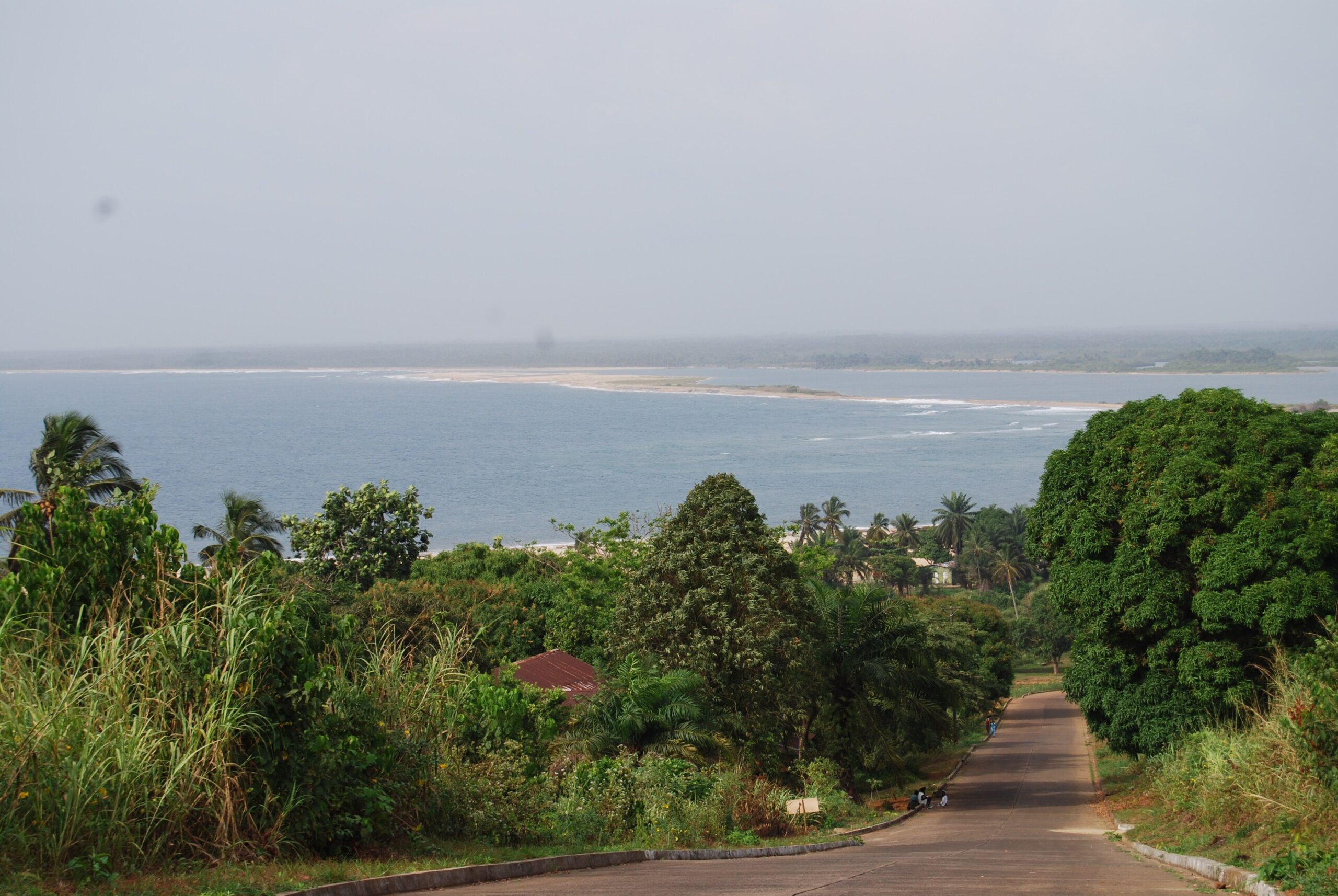
- Local time
- 21:24
- Currency
- Liberian Dollar (LRD)
- Capital
- Monrovia
- Calling code
- +231
- Drive on the
- right
Overview
Surf at Robertsport, beaches near Monrovia and live hip co music, in an English-speaking West African country that few tourists visit.
Liberia was founded in the 19th century by the American Colonization Society as a home for freed slaves from the United States, and declared independence on 26 July 1847; the capital, Monrovia, is named after James Monroe. Today it is a place to meet people and local culture rather than to tick off sights: hip co, a mix of hip hop and Liberian English, fills the music venues, especially in the dry season. Robertsport has surf, a holiday lodge and a beach campsite, and there are beaches close to Monrovia, the saltwater Lake Piso and Monkey Island, where chimpanzees once used for research live.
Tourism is barely developed. Outside Monrovia there are few decent hotels, many roads are unpaved and turn impassable in the rainy season, and travelling on your own is hard. The economy runs on cash, much of it in US dollars. British and Canadian citizens need a visa, and Canada advises a high degree of caution because of the potential for violence: read the safety section first.
- Robertsport: Surf, a holiday lodge and a beach campsite on clean beaches.
- Beaches near Monrovia: CeCe and ELWA beaches, with protected swimming areas.
- Providence Island: A small island in Monrovia where the first settlers lived between 1820 and 1822.
- Monkey Island: A mangrove island home to chimpanzees once used in research.
- Lake Piso: A saltwater lake open to the Atlantic, in Grand Cape Mount County.
- Hip co nights: Live Liberian music, from local clubs to venues such as 146 on Carey Street.
Places to visit
- City
- Island
- Park
- Area
Cities
- Monrovia: The capital and largest city, with about a million people; Sinkor has many of the hotels and restaurants.
- Robertsport: A coastal town with good surfing, a holiday lodge and a beach campsite.
- Buchanan: A port town several hours by car from Monrovia, with beaches, restaurants and guest houses.
- Greenville: A port town near Sapo National Park.
- Harper: A south-eastern town known for its beaches and old beach houses, now run down.
Beyond the cities
- Providence Island (island): A tiny island at the mouth of the Mesurado River, between downtown Monrovia and the Freeport, where the first settlers lived.
- Monkey Island (island): A mangrove island colonised by chimpanzees abandoned by a research laboratory.
- Lake Piso (area): A saltwater lake in Grand Cape Mount County with an open connection to the Atlantic.
- Sapo National Park (park): The only national park in Liberia; the UK advises being especially wary here, so check the security situation first.
Things to do
See
- Providence Island Providence Island: Where the settlers from the United States first lived, at the mouth of the Mesurado River.
- Monkey Island Monkey Island: See the chimpanzees that colonised this mangrove island after a research lab abandoned them.
- Lake Piso Lake Piso: A saltwater lake that opens to the ocean.
- Blue Lake: A natural lake 72 km from Monrovia.
Do
- Surfing at Robertsport Robertsport: Good waves and clean beaches; you can stay at the lodge or camp on the beach. Watch for strong tides.
- CeCe Beach Monrovia: Palm umbrellas, drinks, a buffet and a well protected swimming area.
- ELWA Beach Monrovia: A clean beach inside a compound with a marked safe swimming area, busy with families at weekends.
- Beaches of Buchanan Buchanan: Beaches, restaurants and guest houses a few hours from the capital.
Eat
- Palm butter and cassava leaf: Hearty local dishes in huge portions for a few US dollars.
Drink
- Club beer: The local beer, served everywhere.
Shop
- Masks and printed fabric Monrovia: Carved masks near hotels, and wax-print cloth sold in lappas of 2 yards; haggle.
After dark
- Hip co and live music Monrovia: Liberian music, freestyle sessions and concerts at venues such as 146 on Carey Street; criminals target nightclubs, so arrange your transport there and back.
Itineraries
Monrovia and Robertsport in 5 days (5 days)
- Monrovia (3 nights): Providence Island, CeCe or ELWA beach and a night of live music; arrange all transport in advance.
- Robertsport (2 nights): Surfing and the beach campsite or lodge.
Monrovia and Buchanan in 4 days (4 days)
- Monrovia (2 nights): Providence Island and the beaches.
- Buchanan (2 nights): Beaches and guest houses; the road from Monrovia is paved, but travel by day with a driver.
Holidays and events
- 1 January 2026 · New Year's Day
- 11 February 2026 · Armed Forces Day
- 11 March 2026 · National Decoration Day
- 15 March 2026 · Joseph Jenkins Roberts Birthday
- 10 April 2026 · Fast and Prayer Day
- 14 May 2026 · National Unification Day
- 26 July 2026 · Independence Day
- 24 August 2026 · National Flag Day
- 5 November 2026 · Thanksgiving Day
- 29 November 2026 · William V. S. Tubman's Birthday
- 25 December 2026 · Christmas Day
Getting there and around
| Main airports | ROB |
|---|---|
| International driving permit | Recommended |
Getting there
By air: the only international airport is Roberts International Airport (ROB), about 56 km from Monrovia. When we read Wikivoyage in October 2026 it listed flights from Addis Ababa, Casablanca, Brussels, Nairobi, Accra, Abidjan, Freetown and Lagos. Few flights arrive by day and public transport is unreliable, so arrange to be met at the airport; the road to Monrovia is under roadworks and can be congested. Some officials ask for bribes at customs: ask for a signed official receipt for any payment.
By land: paved roads run from Monrovia to the Sierra Leone border at Bo Waterside and to the Guinea border at Ganta. The UK reports occasional clashes in remote areas along the border with Côte d'Ivoire, in Grand Gedeh and River Gee counties: stay on the main roads there.
Getting around
Canada advises against using commercial taxis, buses, motorbike taxis, informal taxis and three-wheelers (kékés), because of poor maintenance, crime and dangerous driving: arrange private transport for your whole stay before you arrive. Most foreigners travelling outside Monrovia hire a car with a driver and, as the UK advises, travel in a convoy of at least two vehicles. Avoid canoes and fishing boats that offer passenger services, which are often overwhelmed by waves.
Driving: the roads from Monrovia to Buchanan, Bo Waterside and Ganta are mainly paved; most other roads are unpaved and unlit, and from May to November many become impassable, even in a 4x4. There are no working traffic lights, many vehicles have no lights, and fuel shortages are common. Do not drive after dark. Fuel is sold in US gallons, and distances and speed limits are in miles. If you are in an accident, crowds can quickly turn hostile. When a government convoy approaches, pull over and turn off your headlights. Canada advises carrying an International Driving Permit, and seat belts are mandatory.
Flying to Liberia? PartnerCompare fares and find the cheapest datesSearch flightsWhere to stay
- Hotels in Monrovia: Most international visitors stay in Mamba Point or Sinkor; hotels employ guards. Expect to pay in US dollars cash.
- Beach lodge and campsite: At Robertsport, on the beach.
- Guest houses: In Buchanan and other towns; decent hotels are rare outside Monrovia.
Stay only in reputable places with proper security, as the UK advises: muggings happen in Mamba Point and Sinkor, and armed break-ins are common in Monrovia and nearby towns. Power is missing in many parts of the capital at night. Be ready to settle the whole bill in cash, in US dollars.
Eat and drink
Dishes to try
- Palm butter: A Liberian classic, cheap and filling.
- Cassava leaf and potato greens: Two everyday Liberian dishes.
- Jollof rice and chock rice: Popular rice dishes.
- Fufu and soup: Fermented cassava dough with goat soup or pepper soup.
- Street snacks: Peanuts, plantain chips, roasted corn and freshly baked breads in the morning.
Drinks
- Club beer: The local lager, served everywhere.
- Local gin: Also widely available.
- Bottled water: Sold in supermarkets, restaurants and fuel stations; bagged water is not guaranteed safe.
Local food is filling and cheap, with huge portions; Wikivoyage listed a meal with a soft drink at USD 2-3 when we read it in October 2026. Western businesses in Monrovia charge in US dollars. Drink bottled water rather than the bagged water sold on street corners.
Entry requirements and visas
| Passport validity | At least 6 months beyond the date you leave Liberia (Canada) |
|---|
| Passport | Entry | Max stay | Notes |
|---|---|---|---|
| United Kingdom | Visa required | Apply through the Liberian Embassy in the UK, with a yellow fever certificate. | |
| Canada | Visa required | Tourist visa required before you travel. |
Other nationalities: check the official source below.
British and Canadian citizens need a visa, and you must get it before you travel from a Liberian embassy. You need a yellow fever vaccination certificate to apply, together with photos and the application form; some embassies also ask for a letter of invitation. In Liberia you can extend your visa by up to 60 days at the Immigration Office in Sinkor, Monrovia, for USD 25.
Arriving travellers face health screening for Ebola. Declare cash of USD 10,000 or more on arrival, and do not take more than USD 7,500 in cash out of the country. Smuggling diamonds or gold is illegal and punished with long prison sentences. Rules depend on your passport and can change: check with the Liberian embassy before you book.
Money and payments
| Currency | Liberian Dollar (LRD) |
|---|---|
| Cards | Rare |
Liberia runs on cash, and many prices are in US dollars, which most merchants accept. Cards work only in a few large hotels and supermarkets, and not when the internet is down. ATMs are scarce and found only in Monrovia; Canada says you can only withdraw with a Visa card, and machines often run out of money. Banks can run short of both US and Liberian dollars, so bring all the US dollars you need in cash. Liberian dollars (LRD) are used for small change under one US dollar. Western Union and MoneyGram have offices, mostly in Monrovia, and mobile money is accepted by some sellers.
Costs and budget
- Tourist visa, 3 months (US citizens / others): USD 131 / 100
- Visa extension in Monrovia: USD 25
- Local meal with a soft drink: USD 2-3
- Street snack or fruit: USD 0.10-0.30
- SIM card: USD 1
Liberia can be very cheap or very expensive, depending on the comfort you want: local food and snacks cost little, while Western businesses charge in US dollars. The prices here are those listed on Wikivoyage, and by the UK for the visa extension, when we read them in October 2026.
Health
| Required vaccines | Yellow fever certificate: needed for the visa application, and required on arrival from countries with yellow fever risk |
|---|---|
| Recommended vaccines | Routine vaccines, including measles (MMR), Hepatitis A, Hepatitis B, Typhoid, Polio: a single adult booster (Canada), Rabies, only for some travellers: ask a travel clinic, Cholera, only for some travellers: ask a travel clinic, Mpox, for travellers at risk of sexual exposure |
| Malaria | Widespread |
| Tap water | Not safe |
Malaria is present everywhere, and the CDC recommends prescription medicine to prevent it. Typhoid and worms are common: drink bottled water and clean your hands often. Lassa fever, spread by rats, has caused several confirmed cases in 2026. Avoid dogs, since rabies is common.
Hospitals are poorly equipped, blood supplies are unsafe, and quality medicines are scarce; there is no reliable ambulance service, so you must get to hospital yourself. Most providers take only cash, and serious cases need medical evacuation, which is very expensive: get insurance that covers it. Bring enough of your prescription medicines, allowing for flight delays, and a basic medical kit.
This is general information, not medical advice: check with a travel health professional before you go.
Safety
- United States: Level 2: Exercise Increased Caution (2026-10-20)
- Canada: Exercise a high degree of caution (2026-10-20)
- United Kingdom: No advice against travel (2026-10-20)
Canada advises a high degree of caution in Liberia because of the potential for violence; the UK has no areas it advises against, but asks you to check the situation before travelling anywhere outside Monrovia and to be especially wary around the Sinoe rubber plantation and Sapo National Park. There are occasional armed clashes in remote parts of Grand Gedeh and River Gee counties, near the border with Côte d'Ivoire. Demonstrations can start with little warning: avoid them.
Crime is high and criminals are often armed with knives, machetes or guns. Foreigners have been mugged in Mamba Point and Sinkor, where most visitors stay, and robbed in taxis, in nightclubs and on beaches. Crime rises at night, when much of Monrovia has no power: do not walk around after dark, avoid isolated places including beaches at night, keep car windows up in traffic and do not carry valuables. Rates of rape and sexual assault are high. Arrange all transport in advance, including airport transfers.
Rip tides make swimming dangerous on many beaches, and the sea in central Monrovia is dirty: ask locally before you swim. Officials sometimes ask for bribes; ask for a signed receipt. Emergency services are unreliable; the UK lists the police on +231 770 800 911, while Canada gives +231 777 800 911 or 911.
Customs and etiquette
Always greet people: Liberians take being ignored as rude. Be tactful rather than blunt, and avoid a direct "no": "later" or "I'll see what I can do" sounds more polite. Handshakes are the norm, and business cards are handed out at every event. The civil wars are a painful subject, so avoid bringing them up.
Carry photo ID at all times, such as a copy of your passport. Do not photograph military sites, airports, seaports, bridges or government buildings. Same-sex sexual activity is illegal, and so is pornography. Drug trafficking and gold or diamond smuggling bring long prison sentences in harsh conditions.
Language
| Official languages | English |
|---|---|
| English | Widespread |
What to pack
- Visa, passport and copies: Carry photo ID at all times; keep the originals safe.
- Yellow fever certificate: You need it for the visa application.
- US dollars in cash: Cards rarely work, ATMs are scarce and take only Visa, and hotels want cash.
- Malaria tablets and repellent: Malaria is present everywhere.
- Prescription medicines and a medical kit: Quality medicines are scarce and there is no ambulance service.
- Torch and power bank: Much of Monrovia has no power at night.
- Insurance with medical evacuation: Serious cases must be flown out, at high cost.
Quick reference
Country facts
| Capital | Monrovia |
|---|---|
| Population | 5,731,206 (2025) |
| Area | 96,320 km² |
| Time zone | Africa/Monrovia (UTC+0) |
| Calling code | +231 |
| Driving side | right |
Staying connected
| SIM and eSIM | Mobile networks work in Monrovia and the main towns, but many remote areas and roads between towns have no coverage, and there are no landlines. Wikivoyage lists Lonestar (MTN) and Cellcom among the operators; when we read it in October 2026 it gave about USD 1 as the price of a SIM card, which you top up with scratch cards. North American phones do not always work. |
|---|
Frequently asked questions
Do I need a visa for Liberia?
British and Canadian citizens need one. Get it before you travel from a Liberian embassy, with a yellow fever certificate, and check the rules for your passport before you book.
Is it safe to travel to Liberia?
The US, Canada and the UK all publish advice for Liberia, and Canada advises a high degree of caution. Read the safety section and the official links before you plan your trip.
Can I use cards in Liberia?
Rarely. Bring US dollars in cash: ATMs are few, only in Monrovia, and often empty.
Can I drink the tap water in Liberia?
No. Drink bottled water; the bagged water sold in the street is not guaranteed safe.
How do I get from the airport to Monrovia?
Arrange a transfer in advance: Roberts International Airport is about 56 km from the city and public transport is unreliable.
What language is spoken in Liberia?
English is the official language and most Liberians speak it; Kreyol, an English-based pidgin, is the common language in the interior.
More Travel Stories from Africa
 Morocco
 Cabo Verde +1
 Colombia +1
Sources This guide was last checked on · 16 sources
- Wikivoyage: Liberia · Overview, Places to visit, Things to do, Itineraries, Getting there and around, Where to stay, Eat and drink, Entry requirements and visas, Money and payments, Costs and budget, Health, Safety, Customs and etiquette, Language, What to pack, Staying connected, Frequently asked questions
- Wikidata: Liberia · Overview, Places to visit, Money and payments, Country facts
- Government of Canada: Liberia travel advice (updated 15 October 2026) · Overview, Getting there and around, Where to stay, Entry requirements and visas, Money and payments, Health, Safety, Customs and etiquette, What to pack, Staying connected, Frequently asked questions
- UK FCDO: Liberia safety and security · Overview, Things to do, Getting there and around, Where to stay, Money and payments, Safety, Customs and etiquette
- UK FCDO: Liberia regional risks · Things to do, Safety
- Nager.Date: public holidays in Liberia, 2026 · Holidays and events
- UK FCDO: Liberia entry requirements · Entry requirements and visas, Costs and budget, What to pack, Frequently asked questions
- CDC Travelers' Health: Liberia · Entry requirements and visas, Health, What to pack, Frequently asked questions
- ISO 4217 (SIX), published 2026-09-17 · Money and payments
- UK FCDO: Liberia health · Health
- UK FCDO: Liberia getting help · Health, Safety
- US Department of State: Liberia travel advisory · Safety
- UK FCDO: Liberia travel advice · Safety
- World Bank, SP.POP.TOTL · Country facts
- World Bank, AG.LND.TOTL.K2 · Country facts
- IANA Time Zone Database, zone.tab · Country facts
Suggest an update
Travel rules, prices and timetables change. If something in this guide is out of date, tell us: we check every suggestion against an official source before changing the page.