

- Local time
- 15:26
- Currency
- Ethiopian Birr (ETB)
- Capital
- Addis Ababa
- Calling code
- +251
- Drive on the
- right
Overview
Rock-hewn churches, coffee ceremonies and highland treks in Africa's oldest independent country. Large areas are off-limits: check the advice.
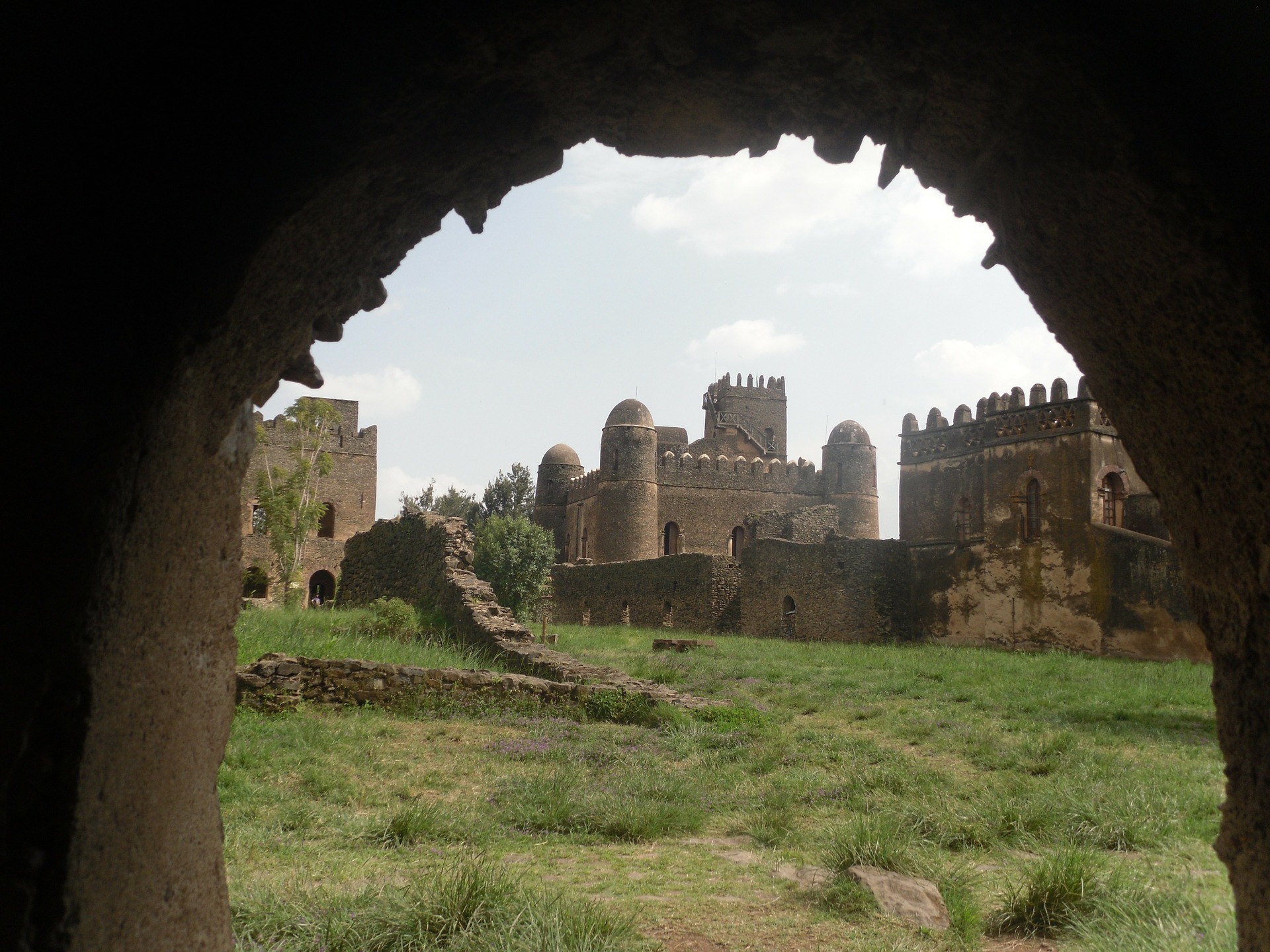
Ethiopia is a high plateau cut by the Great Rift Valley, and most of its towns sit at 2,000-2,500 metres, so the climate is milder than its latitude suggests. Wikivoyage describes it as a country in two halves: the north and east for history, with the rock-hewn churches of Lalibela, the castles of Gondar, the stelae of Axum and the walled city of Harar; the south for national parks, Rift Valley lakes and the peoples of the Omo Valley. It was never colonised apart from an Italian occupation from 1936 to 1941, it keeps its own calendar and clock, and it is the home of coffee.
Travel here now needs care. Canada advises against non-essential travel to the whole country except Addis Ababa, and the UK advises against all travel to the Amhara and Tigray regions, which include most of the historic north, and to several other areas. Fuel shortages, power cuts and internet shutdowns can disrupt plans. Read the safety section before you book anything outside the capital.
- Addis Ababa: The capital at 2,400 metres, with its churches, markets and coffee houses.
- Harar: An old walled city in the east, near Dire Dawa.
- Coffee ceremony: Beans roasted, ground and brewed in front of you, served in at least three cups.
- Lalibela: Eleven rock-hewn churches; currently in an area the UK advises against all travel to.
- Bale Mountains: Trekking in a highland national park in the south.
Places to visit
- City
- Town
- Park
- Area
Cities
- Addis Ababa: The capital, at about 2,400 metres in the foothills of Mount Entoto, and one of Africa's big shopping cities.
- Harar: An ancient walled city near Dire Dawa, where kitfo is also made with camel meat.
- Dire Dawa: The second city, in the east, with an international airport and the bus to Djibouti.
- Adama: Also called Nazret, a popular weekend escape from Addis Ababa; the UK reports recent kidnappings in the Adama special zone.
- Wolaita Sodo: The capital of the South Ethiopia region, north of Lake Abaya.
- Lalibela: A town in the Amhara region with 11 rock-hewn churches; the UK advises against all travel to the Amhara and Tigray regions, and Canada against all travel to the north: check before you plan.
- Gondar: A former capital with some of East Africa's only castles; the UK advises against all travel to the Amhara and Tigray regions, and Canada against all travel to the north: check before you plan.
- Bahir Dar: On Lake Tana, with island monasteries and the Blue Nile Falls nearby; the UK advises against all travel to the Amhara and Tigray regions, and Canada against all travel to the north: check before you plan.
- Axum: Ancient tombs and stelae fields in the far north; the UK advises against all travel to the Amhara and Tigray regions, and Canada against all travel to the north: check before you plan.
Beyond the cities
- Bale Mountains National Park (park): A national park in the southern highlands, for trekking.
- Abijatta-Shalla Lakes National Park (park): A national park named for its lakes, listed by Wikivoyage among the parks of Ethiopia.
- Omo Valley and Konso (area): The lands of the Omo Valley peoples, visited on guided trips; the UK advises against all travel within 10 km of the Kenyan border, including the shores of Lake Turkana, and Canada within 20 km of it.
- Sodere (town): A spa town built around hot springs.
- Simien National Park (park): The Simien Mountains, with Ras Dejen at 4,620 metres, the highest point in Ethiopia; treks start from Debark. The UK advises against all travel to the Amhara and Tigray regions, and Canada against all travel to the north: check before you plan.
- Danakil Depression (area): A salt desert below sea level with the volcanoes Erta Ale and Dallol; Canada advises against all travel to the Afar region.
Regions
- Central Ethiopia: The area traditionally called Shewa, around Addis Ababa.
- Northern Ethiopia: The historic heartland in the highlands, with Lalibela, Gondar, Bahir Dar and Axum; much of it is advised against by the UK and Canada.
- Eastern Ethiopia: Mainly Muslim areas, with the holy city of Harar and Dire Dawa.
- Southern Ethiopia: The Rift Valley, with savannah, lakes, national parks and many peoples.
- Western Ethiopia: The least visited part of the country, home to several ethnic groups.
Things to do
See
- Churches of Addis Ababa Addis Ababa: Many fine Orthodox churches across the capital.
- Old Harar Harar: The walled city, one of the historic sites of the east.
- Rock-hewn churches of Lalibela Lalibela: Eleven churches carved from the rock; the UK currently advises against all travel to the Amhara region.
- Castles of Gondar Gondar: Some of East Africa's only castles; in an area the UK and Canada advise against.
- Stelae of Axum Axum: Huge ancient obelisks; in the north, which the UK and Canada advise against.
Do
- Trekking in the Bale Mountains Bale Mountains National Park: Walks in the southern highlands; check conditions locally, as the UK reports protests in the Bale zone.
- Birdwatching on the Rift Valley lakes: Lakes for birds, water sports and resorts, popular with weekenders from Addis Ababa.
- Hot springs at Sodere Sodere: A spa town with hot springs, called filwoha.
- Omo Valley Omo Valley and Konso: Guided trips to the peoples of the lower Omo Valley, and white-water rafting on the Omo River.
Eat
- Injera and wat: Spongy teff bread with spiced stews, eaten with the right hand.
Drink
- Coffee ceremony: Being invited to one is an honour: beans roasted over charcoal, ground by hand and served with popcorn.
After dark
- Azmari bet: A bar where azmari musicians and singers perform.
Itineraries
Addis Ababa and Harar in 6 days (6 days)
- Addis Ababa (3 nights): Churches, markets, a coffee ceremony and an evening at an azmari bet.
- Dire Dawa (1 night): Fly from Addis Ababa: the UK reports attacks on the A1 road between Adama and Awash. Take a tuk-tuk after dark.
- Harar (2 nights): The walled old city; check the latest UK and Canadian advice for the east before you go.
Climate and best time to visit
| Jan | Feb | Mar | Apr | May | Jun | Jul | Aug | Sep | Oct | Nov | Dec | |
|---|---|---|---|---|---|---|---|---|---|---|---|---|
| Max °C | 24 | 24 | 25 | 24 | 25 | 23 | 21 | 21 | 22 | 23 | 23 | 23 |
| Min °C | 8 | 9 | 10 | 11 | 11 | 10 | 10 | 10 | 10 | 9 | 7 | 7 |
| Rain mm | 13 | 30 | 58 | 82 | 84 | 138 | 280 | 290 | 149 | 27 | 7 | 7 |
Most of Ethiopia is highland, so it is cooler than other places this close to the equator. Addis Ababa, at about 2,400 metres, has highs of 21-25 °C all year and nights of 7-11 °C, so bring a light jacket. Its seasons are set by the rain: dry from October to February, light rains from March to May, and heavy rains from June to September, with about 280-290 mm a month in July and August, when roads can flood and become impassable.
Most of the main towns and sites are at a similar height and have a similar climate. The lowlands, especially in the east, are much hotter and drier: Dallol, in the Danakil Depression, has one of the highest average temperatures in the world. October to February, the dry season, is the easiest time to travel.
Holidays and events
- 7 January 2026 · Christmas Day (Orthodox)
- 19 January 2026 · Epiphany (Orthodox)
- 2 March 2026 · Adwa Victory Day
- 10 April 2026 · Good Friday
- 12 April 2026 · Easter Sunday
- 1 May 2026 · International Workers' Day
- 5 May 2026 · Ethiopian Patriots' Victory Day
- 28 May 2026 · Downfall of the Derg
- 11 September 2026 · Enkutatash
- 27 September 2026 · Meskel (Orthodox)
Getting there and around
| Main airports | ADD, DIR |
|---|---|
| International driving permit | Not required |
Getting there
By air: the main gateway is Bole International Airport in Addis Ababa, the hub of Ethiopian Airlines, with direct flights from Europe, the United States, Asia and many African cities. The e-visa is accepted only at Bole. Dire Dawa, Mekele and Bahir Dar also have international airports. Use a taxi or bus organised by your hotel or tour operator from the airport.
By land: a train runs between Addis Ababa and Djibouti City in about 12 hours. The road from Kenya through Moyale is paved, but Canada warns of banditry around Moyale and the UK advises against all but essential travel to Moyale and the Addis Ababa to Moyale road, and against all travel to the rest of the area within 10 km of the Kenyan border. The UK advises against all travel within 20 km of the Sudanese border, and all crossings with Eritrea are closed.
Getting around
Domestic flights with Ethiopian Airlines are reasonably priced, and Wikivoyage says you get a large discount if you flew in with the airline. Flights are often overbooked, cancelled or rescheduled: reconfirm a day ahead and leave spare time before an international connection. Civilian flights to and from the Tigray region are suspended.
Canada says most public transport is unregulated and unsafe, and recommends private transport from a reliable source. Buses have been attacked when travelling between regions. Long-distance buses leave at dawn and do not run at night. Wikivoyage suggests hiring a car with a driver from a tour company. In Addis Ababa, take yellow or app-based taxis, not the blue and white ones; GPS is unreliable, so download offline maps.
Driving: the UK says you can drive on your UK licence for up to two weeks; after that you need an Ethiopian licence. Accidents are frequent, especially in Addis Ababa and on the road to Djibouti. If you have an accident, stay in the car and call the police. Do not drive after dark outside Addis Ababa, stop at every roadblock, and turn back at unattended ones. Fuel shortages are common: keep the tank at least half full and allow extra time.
Flying to Ethiopia? PartnerCompare fares and find the cheapest datesSearch flightsWhere to stay
- Guest houses: Bed and breakfasts in family homes or small hotels, cheaper than the chains; the best have a generator and internet.
- International hotels: In Addis Ababa, with fixed prices for foreigners.
- Local hotels: Cheap and basic; foreigners are often quoted far higher prices, so bargain.
- Lake resorts and camps: Resort hotels on Lake Langano; campgrounds or simple beds in the Omo Valley villages.
Many hotels quote foreigners much more than locals at first: you can bargain, except at the government-run Ghion chain and the more upmarket private chains, which have fixed prices. Power cuts are frequent, so a place with a generator helps. Canada advises choosing accommodation with adequate security. In the Omo Valley villages, hire a guard for your belongings if you camp.
Eat and drink
Dishes to try
- Injera with wat: Spongy, tangy teff bread under spiced stews such as doro wat (chicken), yebeg wat (lamb) and asa wat (fish).
- Shiro wat: A bean stew, the vegetarian staple of fasting days.
- Tibs: Beef or lamb fried in spiced butter, often with berbere, onions and peppers.
- Kitfo: Minced spiced meat, served raw, lightly cooked or cooked; raw meat carries a risk of parasites.
- Firfir: Shredded injera fried, with or without meat.
Drinks
- Coffee: Black and strong, or as a macchiato; Ethiopia is where coffee comes from.
- Tej: Honey wine, drunk in tej bars.
- Beer: St. George, Habesha, Dashen and Bedele are the local brands.
| Tipping | Common in hotels, restaurants and bars, and expected by car park attendants. |
|---|
Eat with your right hand only. Pork is rare, because both the Orthodox Church and Islam forbid it. On fasting days many Ethiopians eat vegetarian food, which is easy to find. Pasta is on menus almost everywhere, a legacy of the Italian occupation. Do not drink tap water, and avoid salads, ice and uncooked food washed in it, except in reputable international hotels.
Entry requirements and visas
| Passport validity | At least 6 months (the UK says after the date you arrive, Canada after the date you leave), machine-readable |
|---|
| Passport | Entry | Max stay | Notes |
|---|---|---|---|
| United Kingdom | Evisa | 30 days | 30-day single-entry tourist e-visa from the official platform. |
| Canada | Evisa | Visa required, available online. |
Other nationalities: check the official source below.
You need a visa. Apply for the e-visa only on the official site, evisa.gov.et: you upload a scan of your passport and a photo, and it is accepted only at Bole airport in Addis Ababa. The UK lists a 30-day single-entry tourist e-visa. Make sure your passport is stamped on arrival. You can extend at the Immigration and Citizenship Service head office in Addis Ababa before the visa expires; overstaying costs US$30 a day, and you cannot leave until you pay. You cannot work, even as a volunteer, on a tourist visa.
You need a yellow fever certificate if you arrive from a country with yellow fever risk, including transits of more than 12 hours there; some countries may ask for one when you travel on from Ethiopia. You can carry up to 3,000 birr in or out, and must declare cash over US$10,000 (over US$500 at a land border). Khat cannot be taken out of the country, ivory is illegal, antiques need an export certificate, and satellite phones, binoculars and drones need prior approval. Rules depend on your passport and can change: check with the Ethiopian embassy before you book.
Money and payments
| Currency | Ethiopian Birr (ETB) |
|---|---|
| Cards | Limited |
The currency is the birr (ETB). Ethiopia runs on cash. Cards are taken by large hotels, travel agencies and a few shops and restaurants in Addis Ababa, and rarely elsewhere. Wikivoyage says ATMs of Dashen Bank, the Commercial Bank of Ethiopia and Awash Bank take Visa and Mastercard, but outside the cities ATMs are few and can run out of cash: carry enough before you leave town, plus some US dollars for emergencies.
Change money only at banks or official exchange offices, and keep the receipts, which you need to change birr back. Changing on the black market is illegal and can lead to fines or detention. Banks may refuse US dollar notes printed before 2002 or worn ones. Most hotels in Addis Ababa and all airports accept US dollars.
Costs and budget
- Budget double room: Br 250-1,000
- Five-star hotel in a big city, per night (2020): about Br 3,000
- Daily budget for hotel, food and transport (2020): about Br 1,500, Br 2,500 in Addis Ababa
- 30-day unlimited data plan, Ethio Telecom (2025): Br 1,300
- Local beer: under US$1
- Self-drive SUV, per day: about US$100
Ethiopia is cheap compared with other African countries, though Addis Ababa, Dire Dawa and Adama cost the most. Hiring a car is expensive, and a car with a driver costs about the same as self-drive. The prices here are those listed on Wikivoyage when we read it in October 2026; several date from 2020 and are likely out of date.
Health
| Required vaccines | Yellow fever certificate, only if you arrive from a country with yellow fever risk (from 9 months of age, including transits of more than 12 hours) |
|---|---|
| Recommended vaccines | Routine vaccines, including measles (MMR), Yellow fever (from 9 months of age; not needed for trips limited to Afar or Somali regions), Hepatitis A, Hepatitis B, Typhoid, Meningococcal, for parts of the country in the dry season (December to June), Cholera, for travellers going to areas with active transmission, Polio: a single adult booster, if you were vaccinated as a child, Rabies, only for some travellers: ask a travel clinic |
| Malaria | Some areas |
| Tap water | Not safe |
Malaria: the CDC recommends preventive tablets for all areas below 2,500 metres, including Addis Ababa; the UK says malaria is common up to 2,000 metres. The risk is highest in the lakes and lowlands. Cholera is widespread, so drink only bottled or boiled water and skip ice. Bilharzia is present in most lakes: check before you swim. Altitude sickness is a risk, even in Addis Ababa: give yourself a few days to adjust.
Only private hospitals in Addis Ababa offer a reasonable standard for minor problems, and outside the capital care is extremely poor. Hospitals ask for a cash deposit or proof of insurance, and serious cases need evacuation abroad: get insurance that covers it. Carry a medical kit and enough of your own medicines, in their original containers, with the prescriptions. For an ambulance in Addis Ababa, dial 907.
This is general information, not medical advice: check with a travel health professional before you go.
Safety
- United States: Level 3: Reconsider Travel (2026-10-20)
- Canada: Avoid non-essential travel (2026-10-20)
- United Kingdom: Advises against all travel to parts of the country; Advises against all but essential travel to parts of the country (2026-10-20)
Canada advises against non-essential travel to Ethiopia, except Addis Ababa, where it advises a high degree of caution, and against all travel to the Afar, Amhara, Benishangul-Gumuz, Tigray and Gambella regions, several zones of Oromia and the border areas. The UK advises against all travel to the Tigray, Amhara and Gambela regions, to parts of Afar and Oromia (including the Wollega zones) and to strips along the borders with Sudan, South Sudan, Kenya, Somalia and Eritrea, and against all but essential travel to other parts of Afar, Oromia, Somali and Benishangul-Gumuz. Both report armed clashes, kidnappings for ransom and landmines in these areas. Unrest can start with no notice, roads can be blocked and phone and internet networks shut down.
In Addis Ababa, muggings are rising: the UK names Bole Medhanealem, Bole Atlas, Meskel Square, Yeka Hills and Entoto as areas to avoid walking alone, and warns of pickpockets around Bole airport and of thieves who distract you by begging, spitting or spilling drinks. Do not walk after dark, keep car doors locked and valuables out of sight, and hand them over if threatened. The UK reports attacks, possibly by drones, on military sites in several places, including Addis Ababa: stay away from military sites and do not touch debris. There is a threat of terrorism, so be alert in crowds at religious festivals such as Timket in January and Meskel in September.
Carry a paper copy of your passport and your embassy's number: arbitrary detentions have happened. Stay calm and polite at checkpoints. Fuel and power shortages are frequent, and earthquakes occur, with active volcanoes in Afar. In the Danakil Depression, armed groups have targeted foreigners; Canada says go only with a reputable guide and a security escort.
Customs and etiquette
Carry a copy of your passport photo page, visa and entry stamp. Do not photograph military sites or personnel, the Presidential Palace or anywhere with a no-photo sign; drones need permission. Writing about politics online, even before your trip, can lead to arrest. Same-sex acts are illegal and punished with prison. Drug offences carry 5 to 10 years; khat is legal but cannot be exported.
Many Ethiopians are devout: dress conservatively, especially at Orthodox churches outside Addis Ababa and during Ramadan, and avoid arguing about religion. Take off your shoes when you enter a home, and eat with your right hand. Men are expected to keep a formal distance from women. Ethiopia has its own calendar, about seven to eight years behind, with New Year around 11 September, and a clock that counts the hours from 6 a.m., so 6 o'clock is midnight or noon: check which one a time or date uses.
Language
| Official languages | Amharic |
|---|---|
| English | Limited |
| Hello (formal) | ጤና ይስጥልኝ tena yistilign |
|---|---|
| Hello (informal) | ሰላም selam |
| Please (to a man / a woman) | እባክህ / እባክሽ ebakih / ebakish |
| Thank you | አመሰግናለሁ ahmesugenalew |
| Yes / No | አዎ / አይ awo / aye |
| Excuse me | ይቅርታ yiqirta |
| Do you speak English? (to a man) | እንግሊዘኛ ትችላለህ? englizegna tichilaleh? |
| How much? | ስንት ነው sint new? |
What to pack
- Printed e-visa and copies of your passport: Carry the copies, with visa and entry stamp, at all times.
- US dollars in clean notes printed after 2002: For emergencies and for changing at banks.
- Light jacket: Highland evenings are cool all year.
- Malaria tablets and repellent: For areas below 2,500 metres.
- Medical kit and your own medicines: Care outside Addis Ababa is extremely poor.
- Power bank and offline maps: Power cuts and network shutdowns are common, and GPS is unreliable in Addis Ababa.
- Printed itinerary and emergency numbers: In case the internet is cut off.
- Dust mask: Air in the cities and along roads can be very polluted.
Quick reference
Country facts
| Capital | Addis Ababa |
|---|---|
| Population | 135,472,051 (2025) |
| Area | 1,122,135 km² |
| Time zone | Africa/Addis_Ababa (UTC+3) |
| Calling code | +251 |
| Driving side | right |
Staying connected
| SIM and eSIM | Roaming is very expensive and many travel eSIMs do not work, so buy a local SIM at an Ethio Telecom or Safaricom shop, both in the arrivals hall at Addis Ababa airport, with your passport. Safaricom covers the main cities, Ethio Telecom more small towns. Data is cheap: a 30-day unlimited plan cost Br 1,300 in 2025. |
|---|---|
| Wi-Fi | Fast internet in Addis Ababa and Dire Dawa, very limited elsewhere. Some websites and ordinary VPNs are blocked, and the authorities can shut down mobile and internet services without notice. |
Useful apps
- Feres: Ride-hailing
- Ride: Ride-hailing
- WhatsApp: Voice and video calls, which work well
Emergency numbers
| Emergency | 911 |
|---|---|
| Ambulance | 907 |
Frequently asked questions
Do I need a visa for Ethiopia?
Yes. Apply for the e-visa on the official site, evisa.gov.et, before you fly into Addis Ababa. Check with the Ethiopian embassy before you book.
Is it safe to travel to Ethiopia?
Canada advises against non-essential travel outside Addis Ababa, and the UK advises against all travel to Amhara, Tigray and other areas. Read the safety section and the official links before you plan.
Can I visit Lalibela and the historic north?
Not at the moment, according to the UK and Canada, which advise against all travel to the Amhara and Tigray regions. Check the official advice for changes.
Is there malaria in Ethiopia?
Yes, below 2,500 metres according to the CDC, which recommends tablets even for Addis Ababa. Ask a doctor before you go.
Can I use cards in Ethiopia?
Only in large hotels and a few places in Addis Ababa. Carry cash in birr and change money only at banks.
When is the best time to visit Ethiopia?
October to February, the dry season. The heavy rains fall from June to September.
More Travel Stories from Africa
 Morocco
 Cabo Verde +1
 Colombia +1
Sources This guide was last checked on · 19 sources
- Wikivoyage: Ethiopia · Overview, Places to visit, Things to do, Itineraries, Climate and best time to visit, Getting there and around, Where to stay, Eat and drink, Entry requirements and visas, Money and payments, Costs and budget, Health, Customs and etiquette, Language, What to pack, Staying connected, Frequently asked questions
- Wikidata: Ethiopia · Overview, Places to visit, Money and payments, Country facts
- UK FCDO: Ethiopia warnings and insurance · Overview, Getting there and around, Safety, Frequently asked questions
- Government of Canada: Ethiopia travel advice (updated 14 October 2026) · Overview, Places to visit, Things to do, Itineraries, Climate and best time to visit, Getting there and around, Where to stay, Entry requirements and visas, Money and payments, Health, Safety, Customs and etiquette, What to pack, Staying connected, Frequently asked questions
- UK FCDO: Ethiopia regional risks · Places to visit, Things to do, Itineraries, Getting there and around, Safety
- UK FCDO: Ethiopia safety and security · Places to visit, Getting there and around, Money and payments, Safety, Customs and etiquette, What to pack, Staying connected
- WMO World Weather Information Service: Addis Ababa · Climate and best time to visit
- Nager.Date: public holidays in Ethiopia, 2026 · Holidays and events
- UK FCDO: Ethiopia entry requirements · Getting there and around, Entry requirements and visas, Money and payments, What to pack, Frequently asked questions
- CDC Travelers' Health: Ethiopia · Entry requirements and visas, Health, Frequently asked questions
- ISO 4217 (SIX), published 2026-09-17 · Money and payments
- UK FCDO: Ethiopia health · Health, What to pack
- UK FCDO: Ethiopia getting help · Health, Safety, Emergency numbers
- US Department of State: Ethiopia travel advisory · Safety
- UK FCDO: Ethiopia travel advice · Safety
- Wikivoyage: Amharic phrasebook · Language
- World Bank, SP.POP.TOTL · Country facts
- World Bank, AG.LND.TOTL.K2 · Country facts
- IANA Time Zone Database, zone.tab · Country facts
Suggest an update
Travel rules, prices and timetables change. If something in this guide is out of date, tell us: we check every suggestion against an official source before changing the page.