

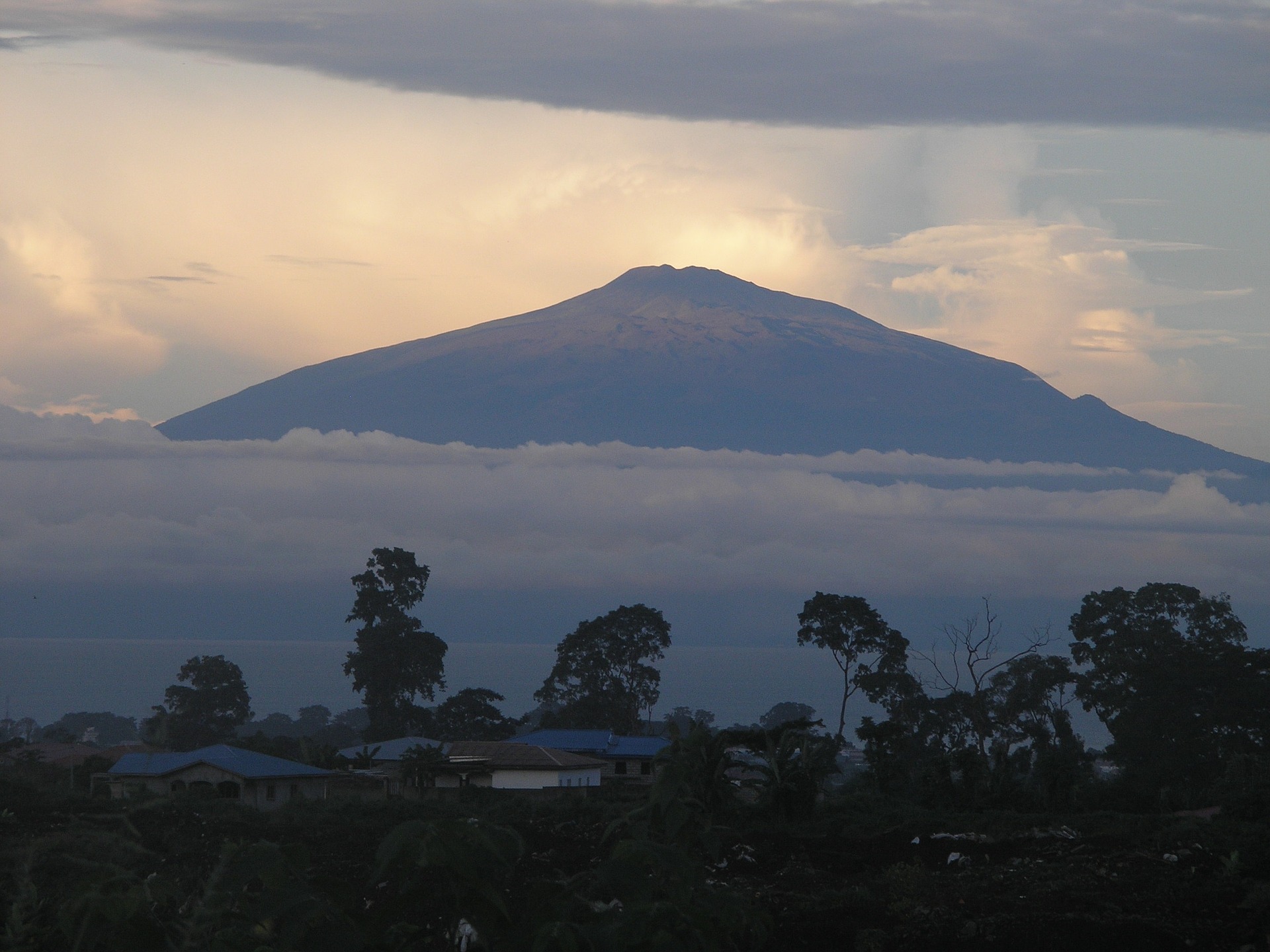
- Local time
- 13:30
- Currency
- Central African CFA Franc (XAF)
- Capital
- Yaoundé
- Calling code
- +237
- Drive on the
- right
Overview
Called Africa in miniature for its varied land and some 250 languages. The rainforest and coast of the south are open to visitors; large regions are not.
Cameroon is known as Africa in miniature for the variety of its land, its art and its peoples: some 250 languages are spoken here. Germany, France and the United Kingdom all ruled parts of it, and French and English are both official languages, with French far more widely understood. Yaoundé is the capital and Douala the port and business centre. In the south, the Dja Faunal Reserve, a UNESCO World Heritage site, and Campo Ma'an National Park protect large areas of almost untouched rainforest, and the coast has beaches.
This is not an easy country to visit. British and Canadian travellers need a visa, everyone needs a yellow fever certificate, malaria is present everywhere, and tourism infrastructure is limited outside the big cities. The UK and Canada advise against all travel to the North-West, South-West and Far North regions and to the border areas, and against non-essential travel to other parts of the north: read the safety section before you plan.
- Yaoundé: The capital, with the National Museum and the Benedictine Museum of Mont Fébé.
- Douala: The port city, with a craft market and early-morning fish and prawns at Youpwe.
- Dja Faunal Reserve: Rainforest on the Dja River with primates, amphibians and reptiles, listed by UNESCO.
- Campo Ma'an National Park: Untouched rainforest by the Atlantic where gorillas live, reached from Kribi.
Places to visit
- City
- Park
Cities
- Yaoundé: The capital and the main entry point for travellers; mostly French-speaking.
- Douala: The economic capital, which handles the country's international trade; mostly French-speaking.
- Kribi: A town on the southern coast and the starting point for Campo Ma'an National Park.
- Bafoussam: A French-speaking city in the west; the UK warns of armed robbery and mugging here.
Beyond the cities
- Dja Faunal Reserve (park): A biosphere reserve and UNESCO World Heritage site of almost untouched rainforest, with primates, amphibians and reptiles.
- Campo Ma'an National Park (park): Rainforest on the Atlantic near Equatorial Guinea, home to gorillas; reached by about 150 km of poor roads from Kribi, with little tourist infrastructure.
Regions
- South Cameroon Plateau: Home to the capital, Yaoundé, and the main entry point for travellers.
- Coastal Cameroon: Douala and the beaches; the UK and Canada advise against travel to the South-West Region, including Buea.
- Adamaoua: Highlands for mountain climbing; Canada advises against non-essential travel here.
- Northern Cameroon: A religiously mixed area; the UK and Canada advise against all travel to the Far North.
- Northwest Highlands: The English-speaking region, affected by armed conflict; the UK and Canada advise against all travel.
Things to do
See
- National Museum Yaoundé: The country's national museum, in the capital.
- Benedictine Museum of Mont Fébé Yaoundé: A museum on Mont Fébé, one of the main sights of the capital.
- Dja Faunal Reserve South Cameroon Plateau: Rainforest with many primate and monkey species; go with a reputable operator.
- Campo Ma'an National Park Kribi: Rainforest where gorillas live; the official fee was CFA 5,000 a person plus CFA 2,000 a vehicle, and agree guide prices in advance.
Eat
- Youpwe fish market Douala: Fresh fish and prawns in a village near Douala, early in the morning.
Drink
- Local beers: Light lagers such as Castel, Beaufort, Mützig and 33, or Castel Milk Stout.
Shop
- Marché des Fleurs Douala: Local handicrafts in the Bonapriso quarter; bargain for everything outside shops.
Itineraries
Yaoundé and Douala in 5 days (5 days)
- Yaoundé (3 nights): The National Museum and Mont Fébé.
- Douala (2 nights): By Camrail train; Canada reports armed attacks on the N3 road between the two cities.
Climate and best time to visit
| Jan | Feb | Mar | Apr | May | Jun | Jul | Aug | Sep | Oct | Nov | Dec | |
|---|---|---|---|---|---|---|---|---|---|---|---|---|
| Max °C | 29 | 31 | 33 | 30 | 29 | 28 | 28 | 26 | 27 | 28 | 28 | 28 |
| Min °C | 18 | 20 | 20 | 20 | 20 | 19 | 19 | 19 | 20 | 19 | 19 | 19 |
| Rain mm | 15 | 28 | 119 | 176 | 201 | 167 | 96 | 134 | 237 | 285 | 100 | 25 |
The climate varies with the terrain: tropical on the coast, semi-arid and hot in the north, and cool at night in the mountains. In Yaoundé the average maximum stays between 26 °C and 33 °C all year. In the centre and the south there are two rainy seasons, from mid-March to mid-June and from mid-September to mid-November: October is the wettest month in Yaoundé, with about 285 mm of rain. Floods can make roads impassable.
December to February are the driest months in Yaoundé. In the parts of the country in the African meningitis belt, the dry season, roughly December to June, is also the meningitis season.
Holidays and events
- 1 January 2026 · New Year's Day
- 11 February 2026 · Youth Day
- 3 April 2026 · Good Friday
- 1 May 2026 · Labour Day
- 14 May 2026 · Ascension Day
- 20 May 2026 · National Day
- 15 August 2026 · Assumption Day
- 25 December 2026 · Christmas Day
Getting there and around
| Main airports | DLA, NSI |
|---|---|
| International driving permit | Recommended |
Getting there
By air: the international airports are Douala (DLA) and Yaoundé Nsimalen (NSI), with flights from cities such as Paris, Brussels, Amsterdam, Istanbul, Casablanca, Addis Ababa and Nairobi. At the airport, people may offer to carry your bags and then ask for around FCFA 1,000, according to Wikivoyage in October 2026.
By land and sea: you need a visa issued by an embassy before you arrive, because the e-visa is not accepted at land or sea borders. The UK and Canada advise against travel to the border areas with Nigeria, Chad and the Central African Republic, and the ferry between Limbé or Tiko and Calabar in Nigeria crosses waters where pirates operate.
Getting around
Trains run by Camrail link Yaoundé with Douala and with Ngaoundéré in the north. Camair-Co flies between some cities, with frequent delays and cancellations; the UK advises against flights on the Xian MA-60 aircraft. Buses between the main cities are usually comfortable but leave only when full, so allow plenty of time. Canada advises against public transport in general, and against the motorcycle taxis known as okada or bend-skins.
In the cities, taxis pick up other passengers on the way and passengers have been robbed: do not hail one in the street, but book a trusted taxi through your hotel or restaurant. A car with a driver cost about USD 60 a day plus fuel, as listed on Wikivoyage in October 2026.
Driving: roads are often potholed and unlit, and armed robbers attack vehicles on some roads, including the N3 between Douala and Yaoundé. Avoid driving at night, keep doors locked and consider a 4x4 in the rainy season. At police checkpoints, show your documents; if asked for an on-the-spot fine, ask for a written ticket to pay at a court. A UK photocard licence is valid for 6 months, and Canada requires an International Driving Permit.
Flying to Cameroon? PartnerCompare fares and find the cheapest datesSearch flightsWhere to stay
- City hotels: From FCFA 7,500 to 50,000 a night in the big cities; Western standards only at the top end.
- Rural guesthouses: Prices vary widely; a comfortable room can cost FCFA 4,000-5,000.
- Camping: Possible, but best avoided because of the security situation.
Most hotels do not accept cards, and below four stars hot water is often missing: you can usually order a bucket of hot water for a small tip. Choose accommodation with good security, and keep doors and windows locked. Hotels can arrange laundry, washed by hand. Prices are those listed on Wikivoyage when we read it in October 2026.
Eat and drink
Dishes to try
- Ndolé: Slightly bitter vegetables with peanuts and fish, prawns or beef, often called the national dish.
- Poulet DG: Chicken in sauce.
- Poisson braisé: Fish cooked on the grill.
- Sauce arachide: Peanut sauce with rice and meat.
- Brochettes: Grilled skewers.
- Koki: Bean dumplings, often served on the side.
- Bobolo and miondo: Steamed cassava sticks, thick and thin.
- Plantains: Grilled, steamed or fried.
Drinks
- Beer: Bottled Guinness is everywhere, and light lagers such as Castel, Beaufort, Mützig and 33 are cheap; outside the cities they are often not cold.
- Top sodas: Local soft drinks, much sweeter than European ones.
People usually eat with their hands, and always with the right one. Check the best-before date when you buy a bottled drink, and do not drink tap water, even in restaurants. Bush meat is sold too, from monkeys to snakes.
Entry requirements and visas
| Passport validity | At least 6 months after you arrive (UK guidance) or after you leave (Canadian guidance) |
|---|
| Passport | Entry | Max stay | Notes |
|---|---|---|---|
| United Kingdom | Evisa | Apply online in good time; no visa on arrival at Yaoundé or Douala airport. | |
| Canada | Evisa | Visa required, plus an onward or return ticket; apply through the official e-visa service. |
Other nationalities: check the official source below.
British and Canadian citizens need a visa, and there is no visa on arrival at Yaoundé or Douala airport. Apply for the e-visa online well ahead, because the system can have technical problems; it usually takes up to a week. The e-visa is not valid at land or sea borders: if you arrive by road or boat, get a visa from a Cameroonian embassy first. Applications usually ask for your itinerary, hotel bookings, a bank statement and your yellow fever certificate. Make sure the border officer stamps your passport.
Every traveller needs a yellow fever vaccination certificate. If you stay longer than 4 weeks, you may need a polio vaccine dose recorded on the same international certificate before you leave. Rules depend on your passport and can change: check with the Cameroonian embassy or the official e-visa service before you book.
Money and payments
| Currency | Central African CFA Franc (XAF) |
|---|---|
| Cards | Rare |
The currency is the Central African CFA franc (XAF), fixed at 655.957 francs to the euro. Cameroon runs mostly on cash: cards are rarely accepted outside international hotels, and most hotels do not take them. Euros and US dollars are the easiest foreign currencies to change. Shops usually want small notes, which can be hard to find.
Visa and Mastercard work in many bank ATMs in the main cities, such as Ecobank and SGBC, but there are few ATMs outside large towns, fees are high and card fraud is common: use ATMs inside banks. In markets, bargain for everything.
Costs and budget
- Hotel in a big city, per night: FCFA 7,500-50,000
- Comfortable rural guesthouse, per night: FCFA 4,000-5,000
- Car with driver, per day, plus fuel: about USD 60
- Short-stay visa (2026): EUR 153
Wikivoyage says accommodation is only slightly cheaper than in Europe. Guides can ask far more than the official price, so agree it first. Prices are those listed on Wikivoyage when we read it in October 2026.
Health
| Required vaccines | Yellow fever certificate for all travellers (from 1 year of age) |
|---|---|
| Recommended vaccines | Routine vaccines, including measles (MMR), Hepatitis A, Hepatitis B, Typhoid, Polio: a single adult booster, Meningococcal, for the meningitis belt in the dry season, Cholera, for travellers going to areas with active transmission, Rabies, for some travellers: ask a travel clinic, Mpox, for travellers at risk of sexual exposure |
| Malaria | Widespread |
| Tap water | Not safe |
See a travel health professional at least 8 weeks before you go. Malaria is present throughout the country, and the CDC recommends preventive medicine: protect yourself from mosquitoes day and night. Poliovirus has been found in Cameroon in the last year, so make sure your polio vaccination is up to date. Rabid dogs are common, and treatment after a bite may be hard to find. Drink only bottled water.
Medical care is limited in Yaoundé and Douala and very limited elsewhere, and hospitals usually ask for a cash deposit or proof of insurance before treatment. For serious cases you will need evacuation to Europe, so get insurance that covers it. For an ambulance, dial 112 (UK advice); Canada lists 119 for medical assistance.
This is general information, not medical advice: check with a travel health professional before you go.
Safety
- United States: Level 2: Exercise Increased Caution (2026-10-20)
- Canada: Exercise a high degree of caution (2026-10-20)
- United Kingdom: Advises against all travel to parts of the country; Advises against all but essential travel to parts of the country (2026-10-20)
The UK advises against all travel to the North-West and South-West regions (except Limbé and the N3 road to the Littoral Region, where it advises against all but essential travel), to the Far North (except the area around Maroua), to the Bakassi Peninsula and to within 40 km of the borders with Nigeria, Chad and the Central African Republic. It advises against all but essential travel to the North Region, including Garoua, to the area around Maroua and to the part of the Adamawa Region within 20 km of the North Region. Canada advises against all travel to the North-West, South-West and Far North regions, the Mayo-Louti department and within 30 km of those borders, and against non-essential travel to the North and Adamaoua regions. Both warn of terrorism and kidnapping, and attacks could also happen in Yaoundé and Douala.
Violent crime is common in the cities, especially at night. In Yaoundé, take extra care around Mokolo market, Briqueterie, Mvog-Ada and Melen; in Douala, the UK names New Bell, Akwa and Bonaberi among the areas to avoid. Do not walk alone after dark, carry little cash, and use only taxis booked through your hotel. Armed robbers attack vehicles on some roads, including the N3 between Douala and Yaoundé. Avoid demonstrations, and expect curfews and disruption at short notice.
Mount Cameroon is an active volcano, and the lakes of Nyos and Monoun can release toxic gas. Riptides are common on the coast and beaches have no lifeguards. Power cuts can last more than 8 hours, and fuel shortages happen, especially in December and January.
Customs and etiquette
Greetings matter: say hello to people wherever you go, greet the oldest person first in a home, and let older people go first. Use your right hand to shake hands, give or receive things and eat. Lowering your head and avoiding direct eye contact is polite with someone senior. If you are invited to a home, bring something. Dress conservatively and do not kiss in public. Religion can be discussed, with respect, but the conflict in the English-speaking regions is a divisive subject.
The law requires you to carry ID: a copy of your passport and visa certified at a police station is the usual choice. Wearing camouflage or military-style clothing is illegal. Do not photograph airports, ports, military sites, government buildings or people in uniform, and ask before you photograph anyone; people may ask for money. Sexual acts between people of the same sex are illegal, with prison terms of up to 5 years, and buying products of protected animals is a crime. Penalties for using or possessing drugs are severe and usually include prison.
Language
| Official languages | French, English |
|---|---|
| English | Common |
| Hello (French) | Bonjour bawn-ZHOOR |
|---|---|
| Please | S'il vous plaît seel voo PLEH |
| Thank you | Merci merr-SEE |
| Yes / No | Oui / Non WEE / NOH |
| Excuse me | Excusez-moi ehk-SKEW-zay MWAH |
| Goodbye | Au revoir oh ruh-VWAHR |
| Do you speak English? | Parlez-vous anglais ? par-lay VOO ahng-LEH |
| How much is it? | Combien ça coûte ? COMM-bee-yan SAH coot |
What to pack
- Visa and yellow fever certificate: Both are required to enter; the certificate is checked for every traveller.
- Certified copy of your passport and visa: You must carry ID at all times.
- Euros or US dollars and small notes: Cards are rarely accepted and shops want small notes.
- Malaria tablets, repellent and a mosquito net: Malaria is present everywhere.
- Insurance with medical evacuation: Serious cases need evacuation to Europe.
- International Driving Permit: If you plan to drive; Canada requires it.
- Torch and power bank: Power cuts can last more than 8 hours.
- Plain clothes, not camouflage: Military-style clothing is illegal, and modest dress is expected.
Quick reference
Country facts
| Capital | Yaoundé |
|---|---|
| Population | 29,879,337 (2025) |
| Area | 472,710 km² |
| Time zone | Africa/Douala (UTC+1) |
| Calling code | +237 |
| Driving side | right |
Staying connected
| SIM and eSIM | MTN and Orange are the two main networks. Buy a prepaid SIM for local calls; 4G is neither fast nor stable, and data-only eSIMs from international providers also work. |
|---|---|
| Wi-Fi | Internet can be slow, and access in the west is intermittent. Use secure networks: public Wi-Fi can be compromised. Between cities mobile coverage is limited, so the UK suggests a satellite phone or VHF radio for road trips. |
Emergency numbers
| Police | 117 |
|---|---|
| Ambulance | 112 |
| Fire | 119 |
Frequently asked questions
Do I need a visa for Cameroon?
Yes, if you travel on a UK or Canadian passport. Apply for the e-visa online before you travel: there is no visa on arrival at Yaoundé or Douala, and the e-visa is not accepted at land borders. Check the rules for your passport before you book.
Do I need a yellow fever vaccination for Cameroon?
Yes, every traveller must show a yellow fever certificate. Malaria tablets are also recommended for the whole country.
Is it safe to travel to Cameroon?
The UK and Canada advise against all travel to the North-West, South-West and Far North regions and the border areas, and violent crime is common in cities. Read the safety section and the official links before you plan.
What currency is used in Cameroon?
The Central African CFA franc (XAF), fixed to the euro. Bring cash in euros or US dollars: cards are rarely accepted.
What language is spoken in Cameroon?
French and English are both official; French is understood by most people and will get you further.
When is the best time to visit Cameroon?
December to February are the driest months in Yaoundé; the main rains fall from mid-March to mid-June and from mid-September to mid-November.
More Travel Stories from Africa
 Morocco
 Cabo Verde +1
 Colombia +1
Sources This guide was last checked on · 19 sources
- Wikivoyage: Cameroon · Overview, Places to visit, Things to do, Itineraries, Climate and best time to visit, Getting there and around, Where to stay, Eat and drink, Entry requirements and visas, Money and payments, Costs and budget, Health, Customs and etiquette, Language, What to pack, Staying connected, Frequently asked questions
- Wikidata: Cameroon · Overview, Places to visit, Money and payments, Country facts
- Government of Canada: Cameroon travel advice (updated 14 October 2026) · Overview, Places to visit, Itineraries, Climate and best time to visit, Getting there and around, Where to stay, Entry requirements and visas, Money and payments, Health, Safety, Customs and etiquette, What to pack, Staying connected, Frequently asked questions
- UK FCDO: Cameroon warnings and insurance (updated 9 February 2026) · Overview, Safety
- UK FCDO: Cameroon safety and security · Places to visit, Getting there and around, Money and payments, Safety, Customs and etiquette, What to pack, Staying connected
- WMO World Weather Information Service: Yaounde · Climate and best time to visit
- CDC Travelers' Health: Cameroon · Climate and best time to visit, Entry requirements and visas, Health, What to pack, Frequently asked questions
- Nager.Date: public holidays in Cameroon, 2026 · Holidays and events
- UK FCDO: Cameroon entry requirements · Entry requirements and visas, What to pack, Frequently asked questions
- ISO 4217 (SIX), published 2026-09-17 · Money and payments
- UK FCDO: Cameroon health · Health
- US Department of State: Cameroon travel advisory · Safety
- UK FCDO: Cameroon travel advice · Safety
- UK FCDO: Cameroon regional risks · Safety
- Wikivoyage: French phrasebook · Language
- World Bank, SP.POP.TOTL · Country facts
- World Bank, AG.LND.TOTL.K2 · Country facts
- IANA Time Zone Database, zone.tab · Country facts
- UK FCDO: Cameroon getting help · Emergency numbers
Suggest an update
Travel rules, prices and timetables change. If something in this guide is out of date, tell us: we check every suggestion against an official source before changing the page.