

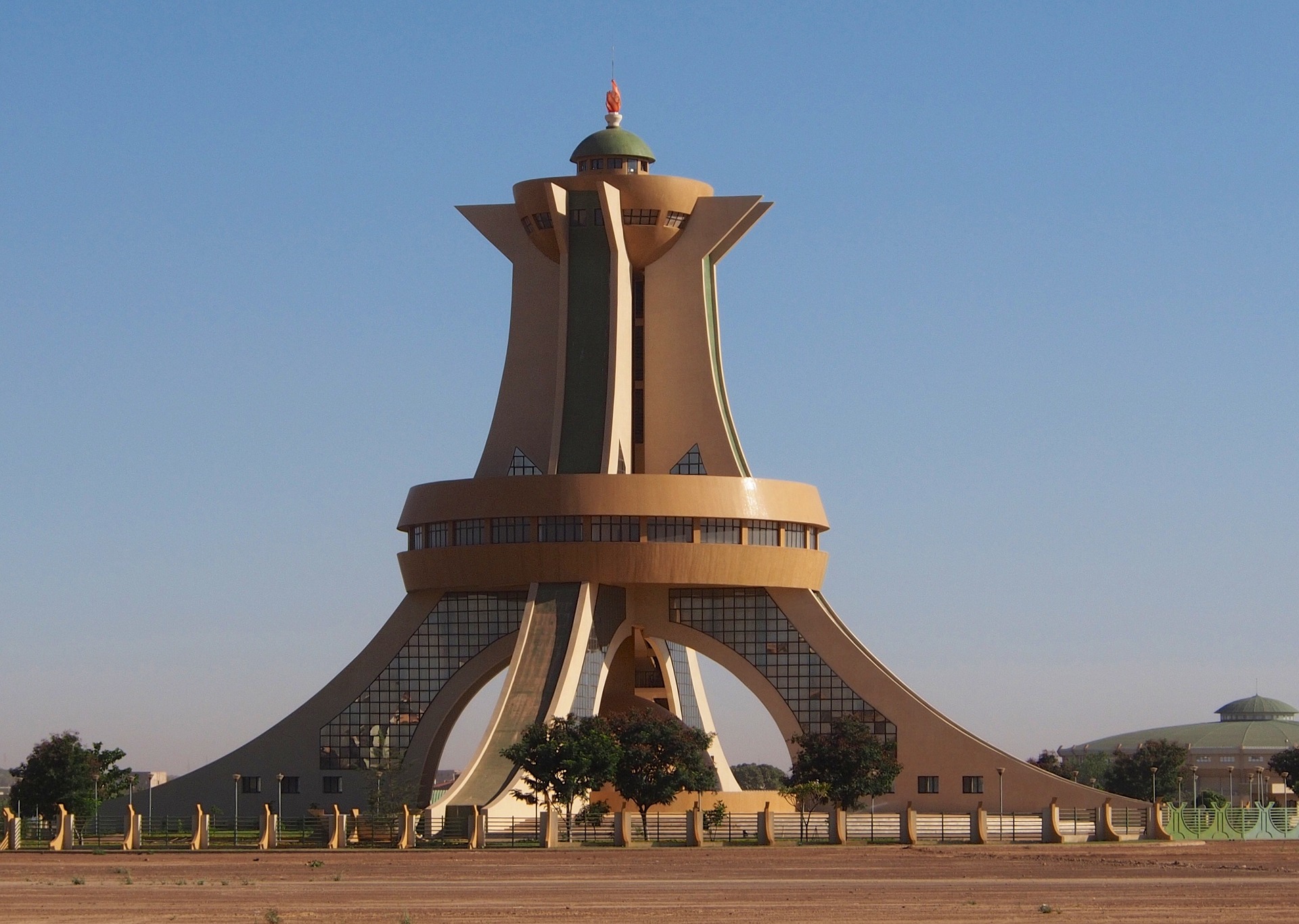
- Local time
- 12:22
- Currency
- West African CFA Franc (XOF)
- Capital
- Ouagadougou
- Calling code
- +226
- Drive on the
- right
Overview
Mask festivals, mud mosques, live music and Africa's largest film festival. The UK, Canada and the US advise against all travel here.
The UK, Canada and the United States all advise against any travel to Burkina Faso, because of the threat of terrorism and kidnapping across the country and an unstable political situation. There is no British embassy, and help in an emergency may not be possible. This guide describes the country for when it is safe to visit again; check the official advice before you make any plan.
Burkina Faso, known as Upper Volta until 1984, is a landlocked country in West Africa surrounded by six neighbours. Wikivoyage describes its people as among the friendliest in Africa. Its culture is the draw: mask dances, mud mosques such as the one in Bobo-Dioulasso, a strong music scene and FESPACO, the Panafrican film festival held in Ouagadougou in odd-numbered years. Around Banfora there are waterfalls, the needle-like Sindou Peaks and, near Gaoua, the Ruins of Loropéni, a UNESCO World Heritage site.
- FESPACO: Africa's largest film festival, in Ouagadougou in February or March of odd-numbered years.
- Bobo-Dioulasso: The second city, a centre of culture and music, with its mud mosque.
- Banfora and the Sindou Peaks: Waterfalls, a hippo lake and needle-like rock formations shaped by erosion.
- Ruins of Loropéni: Stone ruins near Gaoua, a UNESCO World Heritage site.
- Laongo: A park where blocks of granite have been carved into sculptures by local and foreign artists.
- FESTIMA in Dédougou: Hundreds of troupes of mask dancers from across West Africa, in March of even-numbered years.
Places to visit
- City
- Mountain
- Historic site
Cities
- Ouagadougou: The capital, known as Ouaga, with several museums and the FESPACO film festival.
- Bobo-Dioulasso: The second city, a major centre of culture and music and a good place to learn drumming.
- Banfora: Home to the Banfora waterfalls.
- Koudougou: Home of the Royal Palace of Issouka, an example of earthen architecture.
- Dédougou: Host of FESTIMA, the festival of masks held every two years.
- Gaoua: Not an attractive town, but close to the Ruins of Loropéni.
- Fada N'Gourma: Home of the Bantia botanical garden and the gateway to the parks of the south-east; the UK reports frequent attacks in the east.
Beyond the cities
- Ruins of Loropéni (site): Ancient ruins near Gaoua, on the UNESCO World Heritage List.
- Sindou Peaks (mountain): A narrow chain of soft rock eroded into needle-like peaks, west of Banfora.
- Laongo sculpture park (site): Scattered granite rocks turned into works of art by local and international sculptors.
- Grand Mosque of Bobo-Dioulasso (site): The mud mosque of Bobo-Dioulasso, visited with a guide.
Regions
- Volta Delta: The most populated area, home of the Mossi and the capital.
- Black Volta Region: The greenest and most culturally varied part of the country.
- East Burkina Faso: Dry, mostly Muslim, with the most visited national parks. The UK reports frequent attacks in the east and warns that national parks could be targeted.
- North Burkina Faso: The Sahel, home to the Fulani and Tuareg peoples. The UK reports frequent attacks near the borders with Mali and Niger.
Things to do
See
- FESPACO Ouagadougou: The Panafrican film festival, in February or March of odd-numbered years.
- FESTIMA Dédougou: Mask dancers from across West Africa, in March of even-numbered years.
- Grand Mosque of Bobo-Dioulasso Bobo-Dioulasso: Visit with a guide, remove your shoes and dress modestly.
- Hippos by pirogue Banfora: A boat trip on a small lake near Banfora; keep your distance, as hippos are dangerous.
- Laongo sculptures: Granite rocks carved by local and international artists.
Do
- Banfora waterfalls Banfora: A hike beside the falls; avoid long swims, as visitors sometimes catch schistosomiasis.
- Sindou Peaks Banfora: A short hike among needle-like rocks, with a guide who can explain Senoufo culture.
- Learn drumming Bobo-Dioulasso: Bobo-Dioulasso is the best-known place in the country to learn West African drumming.
Eat
- Poulet télévisé: Roast chicken, a speciality of Burkina Faso.
Shop
- A tailor-made outfit Ouagadougou: Buy fabric in the market and have a tailor make clothes from it.
Climate and best time to visit
| Jan | Feb | Mar | Apr | May | Jun | Jul | Aug | Sep | Oct | Nov | Dec | |
|---|---|---|---|---|---|---|---|---|---|---|---|---|
| Max °C | 33 | 36 | 38 | 39 | 38 | 35 | 32 | 31 | 33 | 36 | 36 | 33 |
| Min °C | 17 | 19 | 24 | 26 | 26 | 24 | 23 | 22 | 22 | 23 | 20 | 17 |
| Rain mm | 0 | 1 | 6 | 27 | 67 | 98 | 176 | 214 | 121 | 34 | 1 | 0 |
The rainy season runs from June to October, with most rain in July and August; torrential rain can cause floods, including in Ouagadougou, and make roads impassable. From March to May it is very hot: in Ouagadougou the average maximum is about 38-39 °C. From November to May the harmattan, a wind from the Sahara, brings sand and dust. November to February is dry and a little cooler, with maximums of about 33-36 °C.
Holidays and events
- 1 January 2026 · New Year's Day
- 3 January 2026 · Revolution Day
- 8 March 2026 · International Women’s Day
- 6 April 2026 · Easter Monday
- 1 May 2026 · Labour Day
- 14 May 2026 · Ascension Day
- 15 May 2026 · Day of Customs and Traditions
- 5 August 2026 · Independence Day
- 15 August 2026 · Assumption Day
- 31 October 2026 · Martyrs' Day
- 1 November 2026 · All Saints' Day
- 11 December 2026 · Proclamation of Independence Day
- 25 December 2026 · Christmas Day
Getting there and around
| International driving permit | Recommended |
|---|
Getting there
By air: Ouagadougou International Airport is just south of the city centre. Air Burkina flies to many West African capitals and to Paris, Brussels Airlines flies from Brussels, and Royal Air Maroc, Air Algérie and Turkish Airlines also serve the city. Air France suspended its Paris flights; in July 2025 it planned to restart them in January 2026 at the earliest. Before travelling, check whether flights are running and read the official advice.
By land: buses and a railway from Abidjan in Côte d'Ivoire have linked Burkina Faso with its neighbours, but the UK warns of armed attacks on all roads, including the routes to Côte d'Ivoire, Benin, Togo and Niger.
Getting around
The UK and Canada warn that attacks on roads are increasing, including with landmines and other explosive devices, and that criminals stop vehicles at illegal roadblocks; drivers who refused to stop have been shot at. If you must travel, go only by day, on main roads, in a convoy of at least two vehicles, and carry water and a satellite phone, as phone coverage is limited. Canada advises against public transport: buses are in poor condition and are robbed on the roads outside Ouagadougou. Use reputable taxis booked through your hotel; most have no meters.
Roads are in poor condition, even when paved, and can become impassable in the rainy season. Many vehicles have no working headlights and there is little street lighting, so never drive at night. You can drive on a UK photocard licence; Canada says you need an International Driving Permit.
Where to stay
- Hotels in Ouagadougou: From modern hotels with pools to guesthouses; choose one with good security.
- Guesthouses: Small places with a few rooms, some with guards, CCTV and airport pick-up.
Canada advises choosing accommodation with adequate security. The UK lists hotels among the places where attacks could happen, so stay alert. Many people rest from noon until about 15:00, and businesses often close then.
Eat and drink
Dishes to try
- Tô: A thick millet or maize paste eaten with a sauce of okra, peanut, baobab leaf or sorrel; break off a piece with your right hand and dip it.
- Riz gras: Rice cooked in tomato sauce and stock, often with onion.
- Foufou: Pounded boiled yam formed into a ball, served with a sauce, usually tomato.
- Poulet télévisé: Roast chicken, named because watching it turn is like watching TV.
- Brochettes: Grilled skewers of meat, liver or tripe.
- Alloco: Grilled plantains.
Drinks
- Bisap: A cold, sweet drink of hibiscus flowers, sometimes with mint or ginger.
- Gingembre: A sweet ginger drink.
- Dolo: Sorghum beer.
- Dégué: Sweet yoghurt with millet balls.
Most simple restaurants serve tô, rice dishes and sauces, and street snacks such as beignets, fried yam and grilled meat are everywhere. Eat and pass things with your right hand only. Do not drink tap water.
Entry requirements and visas
| Passport validity | Valid for your whole stay, with 2 blank pages |
|---|
| Passport | Entry | Max stay | Notes |
|---|---|---|---|
| United Kingdom | Visa required | Apply online or through the Embassy of Burkina Faso in Brussels; you cannot get a visa in the UK. | |
| Canada | Visa required | Apply online before you travel. | |
| United States | Visa required | Get the visa in advance, for example from the embassy in Washington. | |
| Australia | Visa required | Get the visa in advance. |
Other nationalities: check the official source below.
You need a visa to enter, obtained in advance. The UK says to apply online or through the embassy in Brussels, and there are embassies of Burkina Faso in the region, including in Accra and Abidjan. You need a yellow fever certificate to enter (from 9 months of age). Always carry your passport. The UK, Canada and the US advise against all travel to Burkina Faso, and travel insurance may not cover you if you go. Rules depend on your passport and can change: check with an embassy of Burkina Faso before you book.
Money and payments
| Currency | West African CFA Franc (XOF) |
|---|---|
| Cards | Rare |
The currency is the West African CFA franc (XOF), fixed to the euro at 655.957 francs. Bring cash: the UK says only a few of the larger hotels and restaurants in Ouagadougou accept credit cards, hardly anywhere outside the capital, and the few ATMs in Ouagadougou accept only Visa. US dollars in cash are the best option to exchange. Canada warns that robberies happen near cash points, including Orange Money withdrawal points.
Costs and budget
- Bisap or ginger drink: CFA 25-50
- Bicycle hire: about CFA 3,000
- Moped hire: about CFA 6,000
- Sindou Peaks entry: CFA 1,000
- Taxi to or from Ouagadougou airport: CFA 1,500-5,000
Day-to-day costs were low: street drinks and snacks cost very little, and a tailor-made outfit costs a few thousand francs. The prices here are those listed on Wikivoyage when we read it in October 2026; many date from before the security crisis and may have changed.
Health
| Required vaccines | Yellow fever certificate, for all arriving travellers aged 9 months or older |
|---|---|
| Recommended vaccines | Routine vaccines, including measles (MMR), Yellow fever, Hepatitis A, Hepatitis B, Typhoid, Meningococcal, for the meningitis belt in the dry season (roughly December to June), Rabies, for some travellers: ask a travel clinic, Mpox, for travellers at risk of sexual exposure |
| Malaria | Widespread |
| Tap water | Not safe |
Malaria is present in the whole country, and the CDC recommends prescription medicine to prevent it; dengue and Zika are also spread by mosquitoes. Do not drink tap water, especially outside the big cities, and avoid swimming in fresh water because of schistosomiasis. Dogs with rabies are common.
Medical care is very limited, even in Ouagadougou and Bobo-Dioulasso, and clinics often want cash. For serious treatment you need evacuation to Europe, so get insurance that covers it. In Ouagadougou dial 18 for an ambulance and 17 for the police; elsewhere try 112, but emergency services are unlikely to respond outside the capital.
This is general information, not medical advice: check with a travel health professional before you go.
Safety
- United States: Level 4: Do Not Travel (2026-10-20)
- Canada: Avoid all travel (2026-10-20)
- United Kingdom: Advises against all travel (2026-10-20)
The UK, Canada and the US advise against all travel to Burkina Faso. Terrorist groups operate across the country, increasingly also in Ouagadougou, and attacks are frequent, especially near the borders with Mali, Niger and Côte d'Ivoire and in the east. The UK warns that places visited by foreigners, such as hotels, restaurants, tourist sites, festivals, markets, places of worship and national parks, could be targeted. The risk of kidnapping of foreigners is very high. A state of emergency is in force in several regions, with frequent checkpoints, and protests can turn violent. There is no British embassy, and the UK may not be able to help you leave.
If you are in the country, travel only by day, vary your routes and times, avoid crowds and demonstrations, and carry your passport at all times. Since October 2026 the death penalty applies again to some offences, including terrorism, espionage and treason. Armed robbers stop vehicles and buses on the roads outside Ouagadougou. In the capital, thieves, often armed, snatch bags and phones, especially around the UN roundabout and the former central market: do not carry valuables and do not walk alone at night.
Customs and etiquette
Greetings matter a great deal: people greet everyone around them and ask after your health and family, and not greeting someone is considered very rude. Use only your right hand to shake hands, give or eat. In mosques, remove your shoes and dress modestly; women should be ready to cover their heads. During Ramadan, do not eat, drink or smoke in public in the daytime. Politics is a very sensitive subject: avoid it.
Ask before you photograph people, and never photograph military sites, government buildings, embassies, places of worship or airports. Same-sex relations are a criminal offence, with prison sentences of up to 5 years. Exporting masks, religious objects and antiquities is strictly controlled: ask the Ministry of Culture if you are unsure about a souvenir. Drug offences bring long prison sentences.
Language
| Official languages | Mossi, bib, Dyula, Fulah |
|---|
| Hello (daytime) | Bonjour bawn-ZHOOR |
|---|---|
| Good evening | Bonsoir bong-SWAHR |
| Please | S'il vous plaît seel voo PLEH |
| Thank you | Merci merr-SEE |
| Yes / No | Oui / Non WEE / NOH |
| Excuse me | Excusez-moi ehk-SKEW-zay MWAH |
| Do you speak English? | Parlez-vous anglais ? par-lay VOO ahng-LEH |
What to pack
- Visa and passport: A visa is required in advance, and you must carry your passport at all times.
- Yellow fever certificate: Required for everyone aged 9 months or older.
- US dollars in cash: Cards are rarely accepted and the few ATMs take only Visa.
- Antimalarial medicine and repellent: Malaria is present in the whole country.
- Satellite phone and drinking water: For road journeys, where phone coverage is limited.
- Modest clothes: Needed to visit mosques.
Quick reference
Country facts
| Capital | Ouagadougou |
|---|---|
| Population | 24,074,580 (2025) |
| Area | 273,600 km² |
| Time zone | Africa/Ouagadougou (UTC+0) |
| Calling code | +226 |
| Driving side | right |
Staying connected
| SIM and eSIM | Access to phone networks is limited; the UK suggests a satellite phone in case of a breakdown or another emergency on the road. |
|---|
Emergency numbers
| Emergency | 112 (outside Ouagadougou) |
|---|---|
| Police | 17 |
| Ambulance | 18 |
| Fire | 18 |
Frequently asked questions
Is it safe to travel to Burkina Faso?
No. The UK, Canada and the US all advise against any travel to Burkina Faso, because of terrorism, kidnapping and an unstable political situation.
Do I need a visa for Burkina Faso?
Yes, you need a visa arranged in advance, and a yellow fever certificate. Check with an embassy of Burkina Faso.
Can I use cards in Burkina Faso?
Rarely. Only a few large hotels and restaurants in Ouagadougou take cards; bring US dollars in cash.
Can I drink the tap water in Burkina Faso?
No. Drink bottled water.
What language is spoken in Burkina Faso?
Mooré, Bissa, Dyula and Fula are the official languages. French, official until 2023, is the common language between groups, though outside the big cities few people speak much of it.
More Travel Stories from Africa
 Morocco
 Cabo Verde +1
 Colombia +1
Sources This guide was last checked on · 20 sources
- Wikivoyage: Burkina Faso · Overview, Places to visit, Things to do, Climate and best time to visit, Getting there and around, Where to stay, Eat and drink, Entry requirements and visas, Money and payments, Costs and budget, Health, Customs and etiquette, Language, What to pack, Frequently asked questions
- Wikidata: Burkina Faso · Overview, Places to visit, Money and payments, Country facts
- UK FCDO: Burkina Faso warnings and insurance · Overview, Safety, Frequently asked questions
- Government of Canada: Burkina Faso travel advice (updated 14 October 2026) · Overview, Climate and best time to visit, Getting there and around, Where to stay, Entry requirements and visas, Money and payments, Health, Safety, Customs and etiquette, What to pack, Frequently asked questions
- UK FCDO: Burkina Faso safety and security · Places to visit, Things to do, Climate and best time to visit, Getting there and around, Where to stay, Money and payments, Safety, Customs and etiquette, What to pack, Staying connected
- WMO World Weather Information Service: Ouagadougou Aero · Climate and best time to visit
- Nager.Date: public holidays in Burkina Faso, 2026 · Holidays and events
- Wikivoyage: Ouagadougou · Getting there and around, Where to stay, Costs and budget
- AeroRoutes: Air France tentatively moves selected Central Africa service resumption to 1Q26 (24 July 2025) · Getting there and around
- UK FCDO: Burkina Faso entry requirements · Entry requirements and visas, What to pack, Frequently asked questions
- CDC Travelers' Health: Burkina Faso · Entry requirements and visas, Health, What to pack, Frequently asked questions
- ISO 4217 (SIX), published 2026-09-17 · Money and payments
- UK FCDO: Burkina Faso health · Health, Emergency numbers
- UK FCDO: Burkina Faso getting help · Health, Emergency numbers
- US Department of State: Burkina Faso travel advisory · Safety
- UK FCDO: Burkina Faso travel advice · Safety
- Wikivoyage: French phrasebook · Language
- World Bank, SP.POP.TOTL · Country facts
- World Bank, AG.LND.TOTL.K2 · Country facts
- IANA Time Zone Database, zone.tab · Country facts
Suggest an update
Travel rules, prices and timetables change. If something in this guide is out of date, tell us: we check every suggestion against an official source before changing the page.