

- Local time
- 19:27
- Currency
- Libyan Dinar (LYD)
- Capital
- Tripoli
- Calling code
- +218
- Drive on the
- right
Overview
Libya holds some of the best-preserved Roman and Greek ruins of the Mediterranean, Saharan oases and rock art, but the UK, Canada and the US currently advise against travel. Read the official advice first.
Before anything else: Canada advises against all travel to Libya, the US rates it Level 4 (do not travel) and the UK advises against all travel to most of the country and against all but essential travel to Tripoli, Benghazi and Misrata. Travel insurance may not cover you if you go against this advice. The section on safety below has the details.
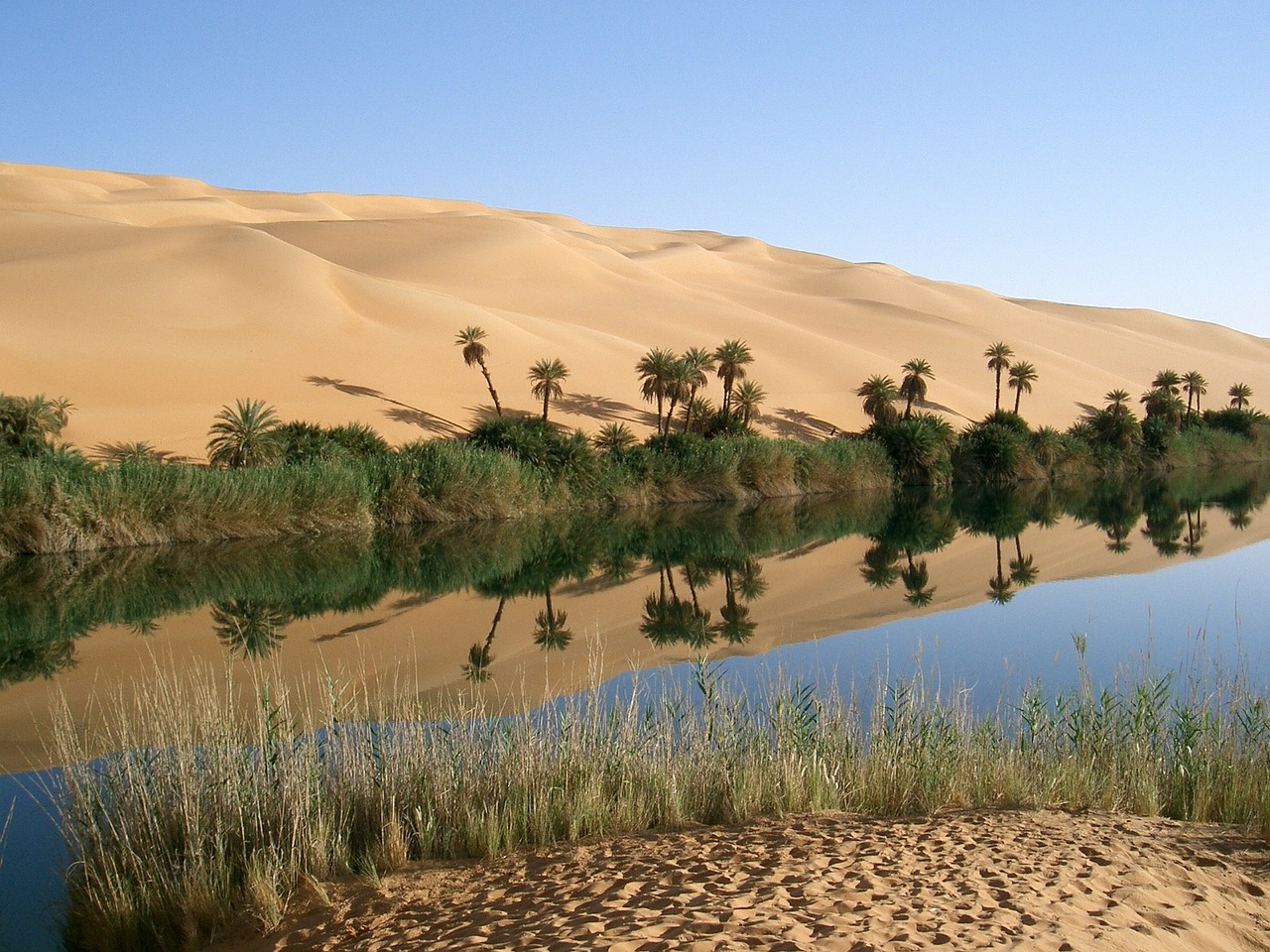
The country itself is huge, mostly Sahara desert, with most people living in the north, near the Mediterranean coast. Its history shows in the ruins left by Phoenicians, Greeks and Romans: Leptis Magna and Sabratha in the west, Cyrene near Shahhat in the east. Inland, the old town of Ghadames, an oasis with a large Berber population, and the rock paintings of the Acacus Mountains are both UNESCO World Heritage Sites.
Tripoli, the capital, keeps a walled medina and the Red Castle Museum. Arabic is the official language, and in the cities English gets you by, while Italian is now spoken mostly by older and well-educated people.
- Leptis Magna: Extensive Roman ruins on the coast at Al Khums, about 130 km from Tripoli.
- Cyrene: A Greek colony later ruled by Rome, now an archaeological site near Shahhat.
- Sabratha: A UNESCO-listed ancient city on the Mediterranean coast in the north-west.
- Ghadames: An oasis town whose old quarter is a UNESCO World Heritage Site.
- Tripoli medina: The walled old city of the capital and the Red Castle Museum.
- Acacus Mountains: Desert mountains with dunes, ravines and UNESCO-listed rock paintings.
Places to visit
- City
- Town
- Historic site
- Area
Cities
- Tripoli: The capital and largest city, the usual way in, with a walled medina.
- Benghazi: The second city of the country and the largest of Cyrenaica, in the east.
- Misrata: The country's commercial hub, with its own international airport.
- Ghadames: An oasis town with a large Berber population and a UNESCO-listed old town.
- Shahhat: The village next to the ancient city of Cyrene.
- Tobruk: A harbour town with Second World War cemeteries.
- Sabha: An oasis city about 640 km south of Tripoli.
Beyond the cities
- Leptis Magna (site): Extensive Roman ruins where the Wadi Lebda meets the sea.
- Sabratha (site): A UNESCO World Heritage Site on the coast in the north-west.
- Ghat (town): An ancient settlement in the south-west, near prehistoric rock paintings and demanding desert treks.
- Gaberoun (area): A former Bedouin village on an oasis, about 150 km west of Sabha.
Things to do
See
- Tripoli's medina and Red Castle Museum Tripoli: The walled old city, mosques and fountains of the Ottoman era, and a museum covering the whole region's history.
- Leptis Magna Al Khums: One of the great Roman cities of North Africa, on the coast about 130 km from the capital.
- Cyrene Shahhat: A city founded by Greek settlers in 630 BC and later ruled by Rome.
- Old Ghadames Ghadames: A UNESCO-listed oasis town with the ruins of a theatre, a church and temples.
- Rock art of the Acacus: Cave paintings of animals and people in a desert range of dunes and ravines.
Eat
- Seafood in the souq Tripoli: Seafood couscous and stuffed calamari, a local speciality.
Climate and best time to visit
| Jan | Feb | Mar | Apr | May | Jun | Jul | Aug | Sep | Oct | Nov | Dec | |
|---|---|---|---|---|---|---|---|---|---|---|---|---|
| Max °C | 18 | 19 | 21 | 24 | 27 | 30 | 32 | 33 | 31 | 28 | 23 | 19 |
| Min °C | 9 | 10 | 11 | 14 | 17 | 20 | 22 | 23 | 21 | 18 | 13 | 10 |
| Rain mm | 62 | 32 | 30 | 14 | 5 | 1 | 1 | 0 | 17 | 47 | 58 | 68 |
The coast has a Mediterranean climate: in Tripoli the average maximum is about 18 °C in January and around 31 to 33 °C from July to September, and almost no rain falls from May to August. Most of the year's rain comes between October and January. The highlands are cooler, with frost on the highest ground.
The desert interior has very hot summers, with temperatures that can reach 50 °C, and big differences between day and night. On the coast, spring and October are the mildest times, with average highs of about 20 to 28 °C.
Holidays and events
- 17 February 2026 · Revolution Day
- 1 May 2026 · Labour Day
- 16 September 2026 · Martyrs' Day
- 23 October 2026 · Liberation Day
- 24 December 2026 · Independence Day
Getting around
| Main airports | MJI, MRA, BEN |
|---|
There are no working railways. With huge distances, poor roads and the security situation, flying is the only quick way to cover the country, but routes and airports can close with little warning.
Roads: the UK and Canada describe road travel as highly dangerous, with risks of carjacking, robbery and unexploded mines off the road. Both single out the coastal road between Zawiyah and Tripoli. Road accidents are common, sandstorms reduce visibility in the desert and fuel can be hard to find. In towns, taxis and buses are the main transport: agree the fare in advance, pay in cash and never share a taxi with strangers.
Where to stay
- Hotels: The big cities range from basic hotels to a few international-standard ones in Tripoli.
- Youth hostels: Run by the Libyan Youth Hostel Association, a member of Hostelling International.
- Hospitality in private homes: A long tradition, especially in small towns and villages.
Eat and drink
Dishes to try
- Seafood couscous: A cheap favourite in the fish restaurants of Tripoli's souq.
- Stuffed calamari: A local speciality of the coast.
- Werata: A local fish, grilled or baked with herbs and spices.
Drinks
- Tea (shahee): Green or "red" tea in small, usually sweet cups, sometimes with mint after meals.
- Coffee: Traditionally Turkish style and strong; city cafés also make espresso.
Traditional Libyan restaurants are hard to find in Tripoli, where most places serve western, Turkish, Moroccan or Lebanese food. Alcohol is illegal, and penalties for buying or drinking it are severe. If you are invited into a home, expect plenty of tea, coffee and food: refusing can offend, and people eat with the right hand.
Entry requirements and visas
| Passport validity | At least 6 months beyond the date you leave Libya (Canada); a passport showing travel to Israel is refused |
|---|
| Passport | Entry | Max stay | Notes |
|---|---|---|---|
| United Kingdom | Visa required | Contact the Libyan Embassy in London; a visa issued abroad may not be recognised in some areas or at some ports of entry. | |
| Canada | Visa required | Apply in person at a Libyan embassy or consulate in your country of residence; it generally takes 20 working days. |
Other nationalities: check the official source below.
UK and Canadian citizens need a visa, and the rules change often and without warning. You may be refused entry if your passport shows an Israeli visa or stamp. All short-stay visitors must register with the police within a week of arrival; the company or travel agency you work with usually arranges this, and without it you can be fined when you leave.
If you carry more than USD 10,000 in cash, you must declare it on arrival and departure; taking Libyan dinars out of the country is illegal. Rules depend on your passport and can change: check with the Libyan embassy before you book.
Money and payments
| Currency | Libyan Dinar (LYD) |
|---|---|
| Cards | Rare |
Libya is a cash economy. The UK says you cannot use bank cards at banks, ATMs or hotels, and Canada notes that cards are rarely accepted and ATMs are rare. Cash is short and withdrawals are restricted across the country.
No bank will change money. Exchange offices approved by the Central Bank are legal but use black-market rates; informal exchange carries a risk of arrest. Bring enough foreign cash, declare it on arrival, and remember that you cannot take Libyan dinars (LYD) out of the country.
Health
| Recommended vaccines | Routine vaccines, including measles (MMR), Hepatitis A, Hepatitis B, Typhoid, for most travellers, Rabies, for some travellers: rabid dogs are common and vaccine may not be available after a bite |
|---|---|
| Malaria | None |
No vaccinations are required to enter Libya, and the CDC does not list yellow fever or malaria for the country. Ask a travel health professional about the recommended vaccines at least a month before you go. Other risks named by the CDC and the UK include leishmaniasis, spread by sand flies, and schistosomiasis in fresh water.
Healthcare is below western standards, with shortages of staff and medicines; there are private clinics in Tripoli, and serious cases may need evacuation to Malta or Europe. Carry enough of any prescription medicine in its original packaging. Get insurance that covers medical evacuation, and check that it is valid for Libya. For an ambulance, call 1415.
This is general information, not medical advice: check with a travel health professional before you go.
Safety
- United States: Level 4: Do Not Travel (2026-10-20)
- Canada: Avoid all travel (2026-10-20)
- United Kingdom: Advises against all travel to parts of the country; Advises against all but essential travel to parts of the country (2026-10-20)
The official advice is the starting point: Canada says to avoid all travel, the US rates Libya Level 4, and the UK advises against all travel except to Tripoli, Benghazi with the Jebel Akhdar area, and Misrata, where it advises against all but essential travel. Consular help is very limited: the UK and Canada serve their citizens from their embassies in Tunis.
The UK and Canada list a threat of terrorism and kidnapping, sudden clashes between armed groups, a high crime rate including carjacking and armed robbery, and landmines and unexploded ordnance. Women travelling alone may face harassment. Anyone who does travel should have robust security arrangements, keep a low profile and avoid driving at night.
Always carry your passport, as the law requires. Do not photograph military or government sites, and do not discuss or post about politics, even on social media. Power cuts and long queues for fuel are common.
Customs and etiquette
Libya follows Islamic law and custom closely. Dress conservatively and behave discreetly. During Ramadan do not eat, drink, smoke or chew gum in public during the day, even in your car. Alcohol and drugs are illegal, and so is trying to convert Muslims or carrying religious material for that purpose. Sex outside marriage and same-sex relations are illegal.
Use your right hand to greet, to give and receive and to eat. Respect for older people matters: greet them first and give up your seat. People tend to speak indirectly and avoid open criticism, so keep strong opinions to yourself, especially about politics, which can lead to arrest. Accept tea and food when you are a guest, and expect a relaxed attitude to time.
Language
| Official languages | Arabic |
|---|---|
| English | Limited |
| Slow down | Shweyah-shweyah |
|---|---|
| Tea | Shahee |
What to pack
- Passport and visa: The law requires you to carry your passport at all times.
- Enough foreign cash, declared on arrival: Cards and ATMs are of little use, and undeclared cash can be confiscated.
- Insurance that covers Libya and medical evacuation: Serious cases may need evacuation to Malta or Europe.
- Prescription medicines in their original packaging: Some medicines are hard to find, and shortages are common.
- Conservative clothes: Local custom and law expect modest dress.
Quick reference
Country facts
| Capital | Tripoli |
|---|---|
| Population | 7,458,555 (2025) |
| Area | 1,759,540 km² |
| Time zone | Africa/Tripoli (UTC+2) |
| Calling code | +218 |
| Driving side | right |
Emergency numbers
| Emergency | 1415 |
|---|
Frequently asked questions
Is it safe to travel to Libya?
Canada advises against all travel, the US rates Libya Level 4 (do not travel) and the UK advises against all or all but essential travel depending on the area. Read the official advice before making any plans.
Do I need a visa for Libya?
Yes, UK and Canadian citizens need a visa, and the rules change often. Check with the Libyan embassy before you book.
Can I use my bank card in Libya?
Hardly ever. Libya is a cash economy, ATMs are rare and cash withdrawals are restricted, so bring foreign cash and declare it.
Is alcohol allowed in Libya?
No. Alcohol is illegal and the penalties are severe.
What are the main sights of Libya?
The Roman ruins of Leptis Magna and Sabratha, the Greek city of Cyrene, the old town of Ghadames and the rock art of the Acacus Mountains.
More Travel Stories from Africa
 Colombia +1
 Kenya
Sources This guide was last checked on · 17 sources
- Wikivoyage: Libya · Overview, Places to visit, Things to do, Climate and best time to visit, Getting around, Where to stay, Eat and drink, Entry requirements and visas, Safety, Customs and etiquette, Language, Frequently asked questions
- Wikidata: Libya · Overview, Places to visit, Money and payments, Country facts
- UK FCDO: Libya warnings and insurance (updated 21 July 2026) · Overview, Frequently asked questions
- Government of Canada: Libya travel advice (updated 26 May 2026) · Overview, Getting around, Entry requirements and visas, Money and payments, Health, Safety, Customs and etiquette, What to pack, Frequently asked questions
- WMO World Weather Information Service: Tripoli · Climate and best time to visit
- Nager.Date: public holidays in Libya, 2026 · Holidays and events
- UK FCDO: Libya safety and security · Getting around, Eat and drink, Safety, Customs and etiquette, What to pack
- UK FCDO: Libya entry requirements · Entry requirements and visas, Money and payments, What to pack, Frequently asked questions
- ISO 4217 (SIX), published 2026-09-17 · Money and payments
- CDC Travelers' Health: Libya · Health
- UK FCDO: Libya health · Health, What to pack
- US Department of State: Libya travel advisory · Safety
- UK FCDO: Libya travel advice · Safety
- World Bank, SP.POP.TOTL · Country facts
- World Bank, AG.LND.TOTL.K2 · Country facts
- IANA Time Zone Database, zone.tab · Country facts
- UK FCDO: Libya getting help · Emergency numbers
Suggest an update
Travel rules, prices and timetables change. If something in this guide is out of date, tell us: we check every suggestion against an official source before changing the page.