

- Local time
- 18:55
- Currency
- South African Rand (ZAR), Lesotho Loti (LSL)
- Capital
- Maseru
- Calling code
- +266
- Drive on the
- left
Overview
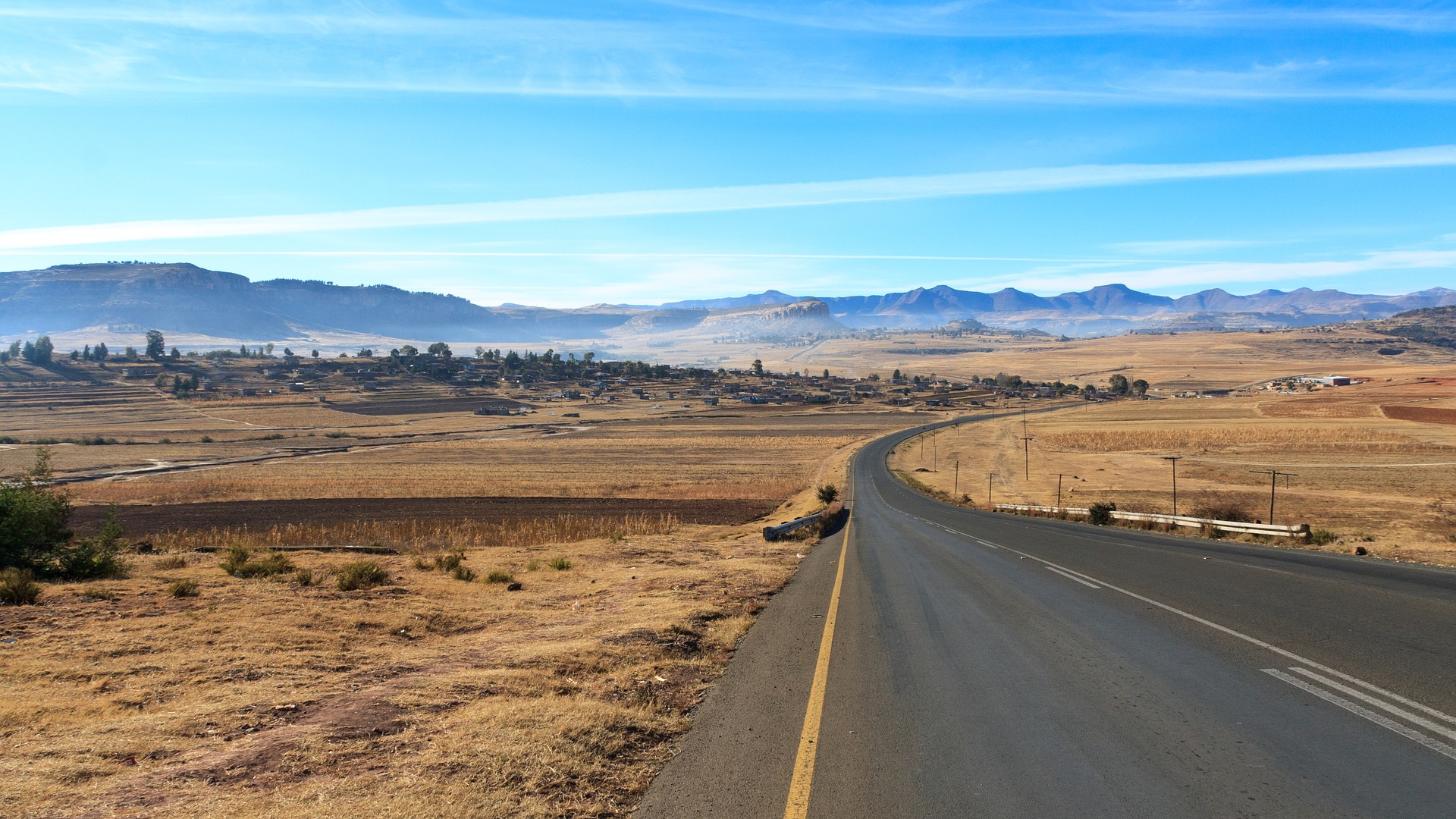
The Kingdom in the Sky: pony treks, high waterfalls, the Sani Pass and mountain villages, in a small country surrounded by South Africa.
Lesotho is a small mountain kingdom entirely surrounded by South Africa, and its nickname, the Kingdom in the Sky, is literal: its lowest point is 1,388 m above sea level, higher than that of any other country. It is a place for active travel. You ride sure-footed Basotho ponies between villages from Malealea or Semonkong, where the Maletsunyane Falls drop about 200 m in a single plunge, drive up the Sani Pass in a 4x4, hike in remote national parks with rock art, and even ski at Afriski in winter.
The Basotho are friendly and welcoming, and the wrapped Basotho blanket is everywhere. Roads to the main sights are mostly paved, but the mountains need care: weather changes fast, winters bring snow and freezing nights, and there is no reliable mountain rescue. Every visitor arrives through South Africa, so you must meet its entry rules too. Canada advises a high degree of caution because of crime, mainly in the towns.
- Maletsunyane Falls: A single drop of about 200 m near Semonkong, frozen in winter.
- Pony trekking: Ride Basotho ponies to remote villages from Malealea or Semonkong.
- Sani Pass: A steep 4x4 track up from South Africa, with a chalet and pub at the top.
- Thaba Bosiu: The mountain stronghold where King Moshoeshoe founded the kingdom.
- Sehlabathebe National Park: A remote mountain park with waterfalls, rare wildlife and ancient rock paintings.
- Afriski: One of the few ski resorts in Africa, open from June to September.
Places to visit
- City
- Town
- Park
- Mountain
- Historic site
Cities
- Maseru: The capital, with supermarkets, car hire and the main border crossing to South Africa.
- Teyateyaneng: Known as TY, the craft centre of Lesotho, with better and cheaper markets than Maseru.
- Hlotse (Leribe): A regional market town with good craft shopping.
- Quthing: A town with fine rock art nearby.
- Mokhotlong: A highland town at the end of the paved road from Maseru through Leribe.
Beyond the cities
- Semonkong (town): The base for the Maletsunyane Falls and for pony trekking.
- Malealea (town): A village known for pony trekking; the last 20 km are unpaved but fine for a normal car.
- Morija (town): A town with a museum and dinosaur footprints.
- Thaba Bosiu (site): The mountain stronghold where Moshoeshoe the Great founded the Kingdom of Lesotho.
- Katse Dam (site): A dam 185 m high in a narrow valley, also a base for pony trekking.
- Sani Pass (mountain): A steep 4x4-only road up from Underberg in South Africa, with lodging and activities at the top.
- Afriski (mountain): A ski resort at Oxbow in winter (June to September) and a base for mountain sports in summer.
- Sehlabathebe National Park (park): A remote mountain park for hiking, with rare wildlife, waterfalls and ancient rock paintings.
- Ts'ehlanyane National Park (park): A sub-alpine park with one of the last old che-che forests, hiking trails and rock pools.
Things to do
See
- Maletsunyane Falls Semonkong: A single 200 m plunge; you can swim in the pool below in summer, while in winter ice forms around the falls.
- Thaba Bosiu Thaba Bosiu: Visit the stronghold of Moshoeshoe the Great, where the kingdom was born.
- Morija Museum and dinosaur footprints Morija: A museum and some of the easiest dinosaur tracks to reach.
- Katse Dam Katse Dam: A 185 m dam wall in a narrow mountain valley.
- Rock art: Paintings are found across the country; the most impressive are in Liphofung Cave.
Do
- Pony trekking Malealea: Organised rides on Basotho ponies to villages and mountains you cannot reach by car, for beginners too; also from Semonkong.
- Drive the Sani Pass Sani Pass: A narrow, rocky climb in a high-clearance 4x4; once you start the final ascent there is no room to turn back.
- Hiking in the highlands: There are no marked trails: hire an experienced guide, and stay overnight in remote villages.
- Skiing at Afriski Afriski: Ski in Africa from June to September.
- Sehlabathebe Sehlabathebe National Park: Hike past waterfalls, stone shelters and ancient rock paintings in a remote park.
- Ts'ehlanyane Ts'ehlanyane National Park: Walk through old che-che forest to rivers and rock pools.
Drink
- A beer at Sani Top Sani Pass: The chalet at the top of the pass claims the highest pub in Africa; try a Maluti beer.
Shop
- Crafts in Teyateyaneng Teyateyaneng: Basotho hats (mokorotlo), rugs, sticks and the famous Basotho blankets.
Itineraries
Maseru and the southern highlands in 7 days (7 days)
- Maseru (1 night): Stock up at the supermarkets; a visit to Thaba Bosiu.
- Morija (1 night): The museum and the dinosaur footprints.
- Malealea (2 nights): Pony trekking to nearby villages.
- Semonkong (3 nights): The Maletsunyane Falls; ask locally whether you need a 4x4 for the road.
The north and the Sani Pass in 6 days (6 days)
- Teyateyaneng (1 night): Crafts and blankets on the way north.
- Afriski (2 nights): Skiing in winter, mountain sports in summer.
- Mokhotlong (1 night): The road from Oxbow is unpaved and potholed; fill up with fuel before the mountains.
- Sani Pass (2 nights): Stay at the top, then descend into South Africa only in a 4x4.
Climate and best time to visit
| Jan | Feb | Mar | Apr | May | Jun | Jul | Aug | Sep | Oct | Nov | Dec | |
|---|---|---|---|---|---|---|---|---|---|---|---|---|
| Max °C | 27 | 26 | 25 | 22 | 19 | 16 | 16 | 19 | 22 | 24 | 25 | 26 |
| Min °C | 14 | 13 | 11 | 7 | 3 | -0 | -1 | 2 | 6 | 10 | 11 | 13 |
| Rain mm | 122 | 98 | 87 | 48 | 24 | 16 | 5 | 22 | 21 | 61 | 77 | 85 |
Lesotho is high, sunny and dry, with about 300 days of sunshine. In Botha-Bothe, in the north, summer highs reach about 26 °C, while in winter nights often fall below freezing and highs stay around 16-19 °C. Most rain falls from October to April, often in violent thunderstorms, especially from November to February, and flash floods can follow in the valleys. In winter heavy snow can close mountain roads and passes, and snow can fall in any month on the high peaks.
April, May, September and October are drier than summer and milder than winter. Come in winter if you want to ski, and in any season pack warm clothes: the weather in the mountains changes fast, and houses have no central heating.
Holidays and events
- 1 January 2026 · New Year's Day
- 11 March 2026 · Moshoeshoe Day
- 3 April 2026 · Good Friday
- 6 April 2026 · Easter Monday
- 1 May 2026 · Workers' Day
- 14 May 2026 · Ascension Day
- 25 May 2026 · Africa Day/ Heroes' Day
- 17 July 2026 · King Letsie III's Birthday
- 4 October 2026 · Independence Day
- 25 December 2026 · Christmas Day
- 26 December 2026 · Boxing Day
Getting around
| International driving permit | Recommended |
|---|
The best way to get around is by car, as Canada advises. Main roads are paved and in decent condition, including Maseru to Mokhotlong and to Qacha's Nek, and the roads to Semonkong and Katse; rural roads are gravel or dirt, and some mountain areas need a 4x4. Drive on the left and avoid driving at night, when livestock wander on the roads. Fuel stations are few outside the towns, so fill up before the mountains, and carry warm clothes, a blanket and a torch in case of snow or a breakdown. The UK accepts a photocard licence for 3 months, while Canada says you must carry an International Driving Permit.
Minibus taxis and 4+1 shared taxis are cheap but often poorly maintained and uninsured, and both the UK and Canada advise avoiding them: use transport arranged by your accommodation or a tour operator. Car hire is available in Maseru and at the airport.
Flying to Lesotho? PartnerCompare fares and find the cheapest datesSearch flightsWhere to stay
- Hotels and lodges: Lesotho has dozens of hotels, lodges and guest houses; the widest choice is in Maseru.
- Mountain lodges: Places to stay at the top of the Sani Pass and at resorts such as Afriski.
- Village stays: On guided highland hikes you sleep in remote villages.
Choose places with good security, and use the hotel safe for valuables: burglaries rise before Christmas and Easter. Nights are cold for much of the year and houses have no central heating, so bring warm clothes. Tourist facilities are limited outside Maseru.
Eat and drink
Dishes to try
- Western food in Maseru: Maseru has many Western-style restaurants and supermarkets.
- Home cooking: For a traditional meal, the best way is to be invited by local people.
Drinks
- Maluti beer: The local beer, served even at Sani Top, near the highest point of the pass.
The supermarkets of Maseru are good for stocking up before you head into the mountains. Most restaurants do not accept cards. Avoid soft drinks sold by street vendors in reused glass bottles, and do not drink untreated tap water. Show respect for food: do not throw it around or eat while walking.
Entry requirements and visas
| Passport validity | At least 6 months beyond the date you leave (Canada); the UK asks for 90 days after arrival and at least 4 blank pages |
|---|
| Passport | Entry | Max stay | Notes |
|---|---|---|---|
| United Kingdom | Visa free | 90 days | Extensions at the Visa Application Centre in Maseru. |
| United States | Visa free | 90 days | According to Wikivoyage. |
| Canada | Visa free | 30 days | Canada says no visa for up to 30 days; apply early for any extension. Wikivoyage lists 14 days. |
| Australia | Visa free | 14 days | According to Wikivoyage. |
| EU / EEA | Visa free | 14 days | Wikivoyage lists 14 days for most western EU countries and Norway, 90 days for Ireland; other EU countries are not listed and may need a visa. |
Other nationalities: check the official source below.
Lesotho can only be reached through South Africa, so you must also meet South Africa's entry rules. Many visitors need no visa, but the time allowed depends on your passport, from 14 to 90 days. Get your passport stamped every time you cross, by both Lesotho and South African officers, and keep enough blank pages: the UK asks for 4. You may be asked for a return or onward ticket. To stay longer, apply for an extension in Maseru before your permit expires: overstaying can lead to detention and weekly fines.
No yellow fever certificate is required. Declare cash worth LSL 25,000 (Lesotho loti) or more on arrival, or it may be seized when you leave. Arriving travellers may face a quick health screening at the airport. Rules depend on your passport and can change: check with the Lesotho High Commission or embassy before you book.
Money and payments
| Currency | South African Rand (ZAR), Lesotho Loti (LSL) |
|---|---|
| Cards | Limited |
The loti (LSL) is pegged one to one to the South African rand (ZAR), and rand are accepted everywhere, so you do not need to change money. You may get change in maloti, which are hard to spend outside Lesotho: ask for rand. Cards are accepted in the main hotels, some shops and banks, but most restaurants do not take them. ATMs are found at banks in most towns, though not elsewhere, and foreign cards may not work in all of them: take enough cash before heading out of Maseru.
Costs and budget
- Flight Maseru-Johannesburg, typical: ZAR 1,400
- Taxi from the airport: ZAR 50-80
- Road toll driving into Maseru: ZAR 30
- Intercity minibus taxi, one way, up to: LSL 50
- Local SIM card, under: LSL 50
- Maluti beer at Sani Top Chalet: LSL 15
Public transport and local food are cheap, and prices are in maloti or rand at the same value. Hiring a car in South Africa is usually cheaper than in Lesotho, but rental companies charge very different fees for the letter you need to cross the border. The prices here are those listed on Wikivoyage when we read it in October 2026.
Health
| Recommended vaccines | Routine vaccines, including measles (MMR), Hepatitis A, Hepatitis B, Typhoid, for rural areas or longer stays, Rabies, only for some travellers: ask a travel clinic |
|---|---|
| Malaria | None |
| Tap water | Not safe |
There is no malaria or yellow fever in Lesotho. The main health risks come from altitude: drink plenty of water, cover up against the strong sun, and know the symptoms of altitude sickness, which can be serious on mountain treks. The air is cold and dry, so bring moisturiser. Do not drink untreated tap water. HIV is very common: always use condoms.
Medical facilities are basic, and outside Maseru healthcare is inadequate. Most foreign visitors use hospitals in Bloemfontein, South Africa, about 140 km and 90 minutes by car from Maseru. Ambulance services are unreliable, and you usually pay cash, so get insurance that covers evacuation and helicopter rescue. For emergencies call 112, or 80093030121 if 112 does not work.
This is general information, not medical advice: check with a travel health professional before you go.
Safety
- United States: Level 2: Exercise Increased Caution (2026-10-20)
- Canada: Exercise a high degree of caution (2026-10-20)
- United Kingdom: No advice against travel (2026-10-20)
Canada advises a high degree of caution in Lesotho because of crime; the UK has no areas it advises against. Crime is highest in the towns, especially Maseru, Leribe and Maputsoe, and armed robbery and break-ins often target foreigners, including around restaurants, hotels and the business district. Do not walk alone in isolated areas or after dark, keep valuables in the hotel safe, and do not resist if attacked. Carjackings happen: drive with doors locked and windows closed, do not stop for people flagging you down or give lifts, park in well-lit places and avoid driving at night. Be careful at scenic stops and at road blocks.
In the mountains, the weather changes quickly, thunderstorms are violent in summer and snow can close passes in winter. There are no marked hiking trails and no reliable mountain rescue: never hike alone, hire an experienced guide and leave your plans with someone. Demonstrations in Maseru are usually peaceful but should be avoided. Carry a copy of your passport photo page and entry stamp. For police, fire or ambulance call 112.
Customs and etiquette
Greetings matter: always answer people who greet you, as ignoring someone is very offensive, and address older people as Ntate (sir) or 'Me (madam). Learning a few words of Sesotho is much appreciated. Keep your temper, even with slow officials, because showing frustration easily offends. Give and receive things with both hands, and respect food: do not eat while walking.
Carry a copy of your passport and entry stamp, as officials may ask for it. Drug penalties are severe. Sex between men is illegal, though the UK is not aware of the law being enforced, and public displays of affection draw negative attention. If locals ask for money, give only to registered charities.
Language
| Official languages | Southern Sotho, English |
|---|---|
| English | Common |
| Hello | Dumela due-mela |
|---|---|
| Sir / Madam (to an elder) | Ntate / 'Me |
| Thank you | Kea leboha kia-lebh-oha |
| How are you? | U phela joang? O-phela-joang |
| I am well | Ke phela hantle |
| Goodbye (to someone staying) | Sala hantle |
| Goodbye (to someone leaving) | Tsamaea hantle |
What to pack
- Passport with plenty of blank pages: Both Lesotho and South Africa stamp it at every crossing.
- Warm jacket, layers and a hat: Nights freeze in winter, the mountains turn cold fast even in summer, and houses have no heating.
- Sunscreen, lip balm and moisturiser: The sun burns fast at altitude, and the air is dry.
- Rand in cash: Few places outside Maseru take cards.
- Car rental border letter: Needed to drive a South African rental car into Lesotho.
- Torch, blanket and phone charger in the car: In case of snow or a breakdown in the mountains.
- First aid kit: Medical facilities are basic outside Maseru.
Quick reference
Country facts
| Capital | Maseru |
|---|---|
| Population | 2,363,325 (2025) |
| Area | 30,360 km² |
| Time zone | Africa/Maseru (UTC+2) |
| Calling code | +266 |
| Driving side | left |
Staying connected
| SIM and eSIM | Two networks: Vodacom, with the widest coverage outside the towns, and Econet Telecom Lesotho, both with 4G. A prepaid SIM card costs under LSL 50 in Maseru. Coverage is fine in the towns but patchy in the countryside. A South African Vodacom SIM works in Lesotho with roaming on. |
|---|
Emergency numbers
| Emergency | 112 |
|---|
Frequently asked questions
Do I need a visa for Lesotho?
Many nationalities do not, but the stay allowed varies from 14 to 90 days by passport, and you must also meet South Africa's rules. Check with a Lesotho embassy before you book.
How do I get to Lesotho?
Only through South Africa: fly from Johannesburg to Maseru, or drive across one of the land borders, such as Maseru Bridge.
Is it safe to travel to Lesotho?
The US, Canada and the UK publish advice for Lesotho, and Canada advises a high degree of caution because of crime. Read the safety section and the official links before you plan your trip.
Can I drink the tap water in Lesotho?
No. Treat or boil it, or drink bottled water.
When is the best time to visit Lesotho?
April, May, September and October avoid the summer thunderstorms and the winter cold. Come from June to September if you want to ski.
Do I need a 4x4 in Lesotho?
Not for the main sights, which are on paved roads, but you do for the Sani Pass and some mountain roads.
More Travel Stories from Africa
 Kenya
Sources This guide was last checked on · 16 sources
- Wikivoyage: Lesotho · Overview, Places to visit, Things to do, Itineraries, Climate and best time to visit, Getting around, Where to stay, Eat and drink, Entry requirements and visas, Money and payments, Costs and budget, Health, Safety, Customs and etiquette, Language, What to pack, Staying connected, Frequently asked questions
- Wikidata: Lesotho · Overview, Places to visit, Money and payments, Country facts
- UK FCDO: Lesotho entry requirements · Overview, Getting around, Entry requirements and visas, Money and payments, What to pack, Frequently asked questions
- Government of Canada: Lesotho travel advice (updated 15 October 2026) · Overview, Things to do, Climate and best time to visit, Getting around, Where to stay, Entry requirements and visas, Money and payments, Health, Safety, Customs and etiquette, What to pack, Frequently asked questions
- WMO World Weather Information Service: Botha-Bothe · Climate and best time to visit
- Nager.Date: public holidays in Lesotho, 2026 · Holidays and events
- UK FCDO: Lesotho safety and security · Getting around, Where to stay, Safety, Customs and etiquette
- CDC Travelers' Health: Lesotho · Entry requirements and visas, Health, Frequently asked questions
- ISO 4217 (SIX), published 2026-09-17 · Money and payments
- UK FCDO: Lesotho health · Health
- UK FCDO: Lesotho getting help · Health, Safety, Emergency numbers
- US Department of State: Lesotho travel advisory · Safety
- UK FCDO: Lesotho travel advice · Safety
- World Bank, SP.POP.TOTL · Country facts
- World Bank, AG.LND.TOTL.K2 · Country facts
- IANA Time Zone Database, zone.tab · Country facts
Suggest an update
Travel rules, prices and timetables change. If something in this guide is out of date, tell us: we check every suggestion against an official source before changing the page.