

- Local time
- 23:03
- Currency
- Guinean Franc (GNF)
- Capital
- Conakry
- Calling code
- +224
- Drive on the
- right
Overview
Hiking in the Fouta Djallon highlands, islands off Conakry and Guinean music, for independent travellers ready for little infrastructure.
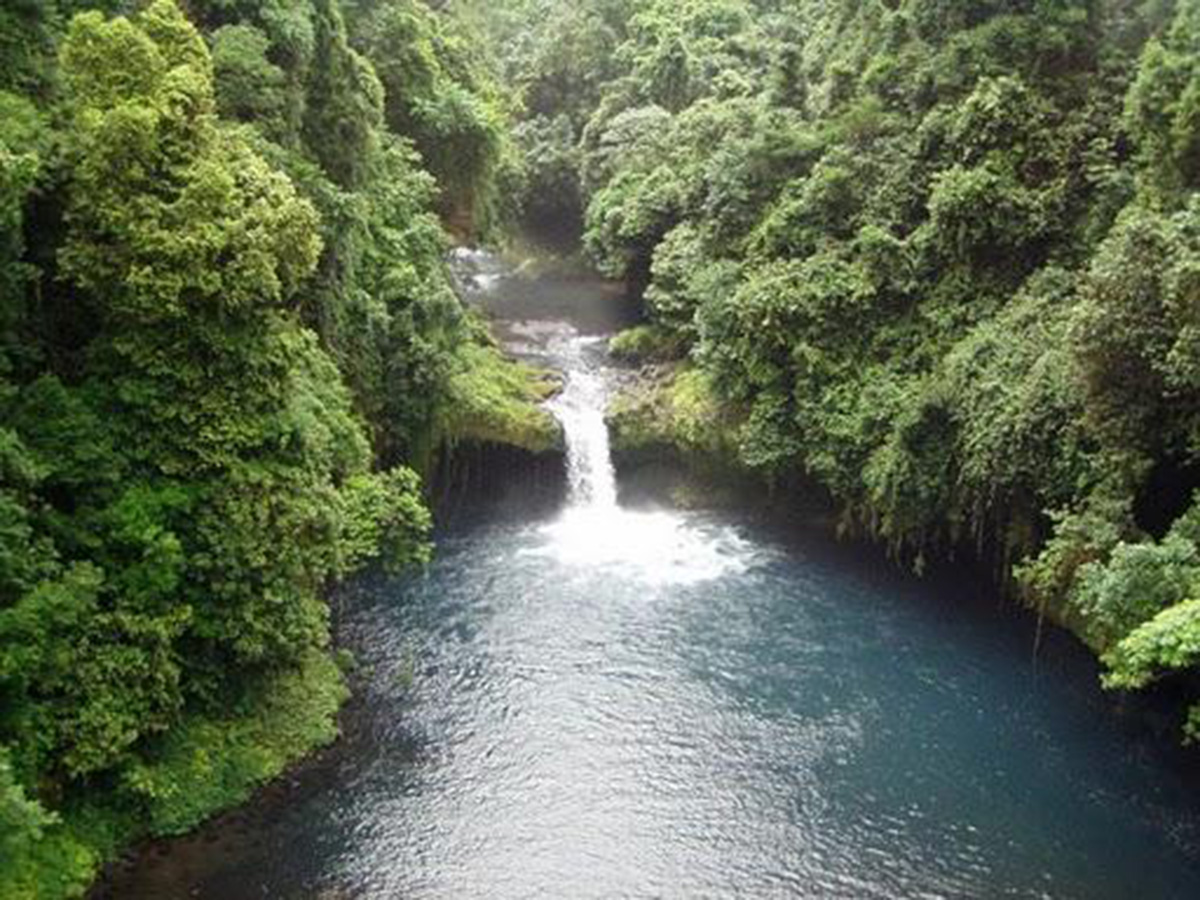
Guinea, sometimes called Guinea-Conakry to tell it apart from Guinea-Bissau and Equatorial Guinea, is a former French colony in West Africa, about the size of the United Kingdom. Its draw is the landscape: the hills, valleys and waterfalls of the Fouta Djallon, where you can trek from village to village, the rainforest of the south-east around Mount Nimba, the savannah of Badiar National Park and the headwaters of the Niger. From Conakry, boats run to the Îles de Los, a former slaving base with sandy beaches. Music is a big part of daily life, and some of the finest kora players come from here.
Guineans are warm and welcoming, but infrastructure is poor: roads, hotels and power are lacking outside the capital, few people speak English, and the economy runs on cash. You need a visa before you travel. Canada advises a high degree of caution because of political and social tensions: read the safety section before you plan your route.
- Fouta Djallon: Highlands of forests, cultivated valleys, cliffs and waterfalls, with treks between Fulani villages.
- Îles de Los: Forested islands with sandy beaches, a boat ride from the port of Conakry.
- Labé and Dalaba: The old capital of the Fouta and the town where chiefs met in 1958 before independence.
- Live music in Conakry: Kora players, bars with live bands and shows at the French-Guinean Cultural Centre.
- National Park of the Upper Niger: The headwaters of the Niger, with hippos, elephants and chimpanzees.
- Mount Nimba: A UNESCO World Heritage nature reserve shared with Côte d'Ivoire.
Places to visit
- City
- Island
- Park
- Mountain
- Area
Cities
- Conakry: The capital, with its government centre at the tip of a long, narrow peninsula; home of the National Museum and Madina market.
- Kankan: The second city, in the Malinke heartland of Haute Guinée.
- Labé: The historical capital of the Fouta Djallon, a busy city and a base for treks; known for navy-blue traditional cloth.
- Dalaba: A small town nicknamed the Switzerland of Guinea for its mild climate and scenery.
- Kindia: A town on the road inland from Conakry, with a lively produce market and wood carvers.
- Koundara: A town with cheap places to stay, the jumping-off point for Senegal and Guinea-Bissau.
Beyond the cities
- Fouta Djallon (area): Highlands of forests, valleys, cliffs and waterfalls, good for hiking through Fulani villages.
- Îles de Los (island): Forested islands with sandy beaches near Conakry, once a slaving base and now a weekend escape.
- Badiar National Park (park): Savannah along the border with Senegal, with antelope and monkeys, and lions and leopards in the dry season.
- Mount Nimba Strict Nature Reserve (mountain): A UNESCO World Heritage reserve shared with Côte d'Ivoire, around the highest peak in Guinea.
- National Park of the Upper Niger (park): The headwaters of the Niger River, home to hippos, elephants, buffaloes, chimpanzees and waterbuck.
Regions
- Guinée Maritime: The coast and the capital, home of the Susu people.
- Moyenne Guinée: The Fouta Djallon: hills and mountains with a cooler climate, home of the Pular (Peul) people.
- Haute Guinée: Sub-Sahelian plains along the border with Mali, crossed by the Niger, home of the Malinke.
- Guinée Forestière: The forested south-east bordering Liberia and Côte d'Ivoire, where the Toma, Kissi and others keep ancient rituals.
Things to do
See
- National Museum Conakry: Masks, traditional instruments and displays on the many ethnic groups of Guinea.
- Dalaba Dalaba: The old mansion where the chiefs met in 1958, and a ceremonial hut with carvings inside.
- Wildlife in Badiar Badiar National Park: Antelope and monkeys on the savannah, and big cats in the dry season.
- Upper Niger National Park of the Upper Niger: Look for hippos and chimpanzees where the Niger begins.
Do
- Boat to the Îles de Los Conakry: Take a boat from the main port, where fishermen land their catch, for a day or a night on the islands.
- Trekking in the Fouta Djallon Fouta Djallon: Three- to five-day hikes with Fouta Trekking, a local non-profit, sleeping in villages that share the income.
- Beaches north of Conakry: Bel Air beach, about two hours from Conakry on a paved road, and small eco-lodges nearby.
- Tristao archipelago: Isolated islands near the Guinea-Bissau border with manatees, turtles and birds; about four hours by local boat from Kamsar.
Drink
- Sunset at the Taouyah beach bar Conakry: Locals and expats meet here at sunset for a beer, fish or chicken, with music and football on the sand.
Shop
- Madina market Conakry: The largest market in Conakry, chaotic and full of everything; watch for pickpockets.
- Cloth in Labé Labé: Traditional cloth in shades of navy blue, in the old capital of the Fouta.
- Kindia market Kindia: Fruit, vegetables and wood carvings; pineapples are sold along the road nearby.
- Made-to-measure clothes: Tailors can make an outfit in about a day; haggle for masks, statues and djembe drums.
After dark
- Live music Conakry: Bars with live bands and kora players, and concerts, films and dance at the French-Guinean Cultural Centre.
Itineraries
Conakry and the Fouta Djallon in 9 days (9 days)
- Conakry (2 nights): The National Museum, Madina market and live music in the evening.
- Kindia (1 night): The market, on the road inland.
- Dalaba (2 nights): The 1958 mansion and the carved ceremonial hut.
- Labé (4 nights): A three- to five-day trek in the Fouta Djallon, sleeping in villages.
Conakry and the Îles de Los in 4 days (4 days)
- Conakry (2 nights): The museum, the port and a sunset at Taouyah.
- Îles de Los (2 nights): Beaches and forest, by boat from the main port.
Climate and best time to visit
| Jan | Feb | Mar | Apr | May | Jun | Jul | Aug | Sep | Oct | Nov | Dec | |
|---|---|---|---|---|---|---|---|---|---|---|---|---|
| Max °C | 32 | 32 | 32 | 32 | 32 | 30 | 29 | 28 | 30 | 30 | 31 | 32 |
| Min °C | 22 | 23 | 24 | 25 | 25 | 24 | 23 | 23 | 23 | 23 | 24 | 23 |
| Rain mm | 3 | 1 | 3 | 18 | 113 | 434 | 1083 | 1142 | 555 | 293 | 80 | 6 |
The coast is hot and humid all year, with highs of about 28 °C to 32 °C in Conakry. The rainy season is long and very wet: Conakry gets more than 1,000 mm of rain in each of July and August, and almost none from December to March. Sources give slightly different dates for the rains (April to November on Wikivoyage, May to September for Canada, May to October for the UK), and floods can make roads impassable, even in Conakry. The Fouta Djallon highlands are cooler, while Haute Guinée has a shorter rainy season and bigger differences between day and night.
December to April is the dry season, the easiest time for road travel and the time to see big cats in Badiar National Park.
Holidays and events
- 1 January 2026 · New Year's Day
- 6 April 2026 · Easter Monday
- 1 May 2026 · Labour Day
- 25 May 2026 · Africa Day
- 15 August 2026 · Assumption Day
- 2 October 2026 · Independence Day
- 25 December 2026 · Christmas Day
Getting around
| Main airports | CKY |
|---|---|
| International driving permit | Required |
Guinea has no official public transport. Domestic flights link Conakry with Kankan, Labé, N'Zérékoré and Siguiri: arrive early and bring cash for your ticket. Between towns most people use bush taxis, often old Peugeot 504s, which have no set departure times, so allow plenty of time. The UK advises against moto-taxis and shared taxis. Traffic in Conakry is heavy, because the government and business centre sits at the tip of a narrow peninsula reached by two roads.
Driving: you need an International Driving Permit (the 1949 version for UK drivers) and your licence. Most major hotels and travel agencies hire out cars with a driver. Roads are poorly maintained, many are unpaved and potholed, and in the rainy season they can flood. Fuel is not always available: carry a reserve. Canada advises travelling outside major centres only by day, in convoy, in a 4x4 with spare tyres, water, a first aid kit, a warning triangle and a fire extinguisher. There is no roadside assistance or ambulance service. Police and militia checkpoints are common and extortion happens: keep copies of your passport and visa, your vaccination record and the vehicle papers at hand.
Flying to Guinea? PartnerCompare fares and find the cheapest datesSearch flightsWhere to stay
- Hotels in Conakry: Choose one that is secure and has security guards.
- Basic guesthouses: Outside the capital places are simple, with limited electricity from generators.
- Village stays: On treks in the Fouta Djallon you sleep in villages that receive part of the fee.
- Beach huts: Small eco-lodges and huts run by villagers on the coast north of Conakry; bring your own food to the simplest.
Tourist facilities are limited outside the capital. The UK advises choosing accommodation that is secure and has security guards, because break-ins are common. Power cuts are frequent across the country, and fuel and water shortages happen in Conakry, so ask whether your hotel has a generator.
Eat and drink
Dishes to try
- Rice and sauce: Guinean-style rice with one of the four main sauces, sometimes with beef or fish; the everyday meal in local eateries.
- Beef: Good quality and widely recommended.
- Fresh fruit: Pineapples sold by the road around Kindia, and mangoes, oranges and bananas across the country, all cheap.
Drinks
- Guiluxe and Skol: Local lager beers; canned European beer is also sold.
- Coyah: The bottled water sold everywhere.
Local eateries outside Conakry serve a full plate of rice and sauce very cheaply, while the capital has international and Lebanese restaurants, some with European-style breakfasts. Pork is rarely served, because most Guineans are Muslim, though it is eaten in Guinée Forestière. Guineans often invite visitors to share a meal at home, where everyone eats from one big dish with the right hand. During Ramadan (expected to start around 7 February 2027) be discreet about eating, drinking and smoking in public in the daytime.
Entry requirements and visas
| Passport validity | At least 6 months after the date you arrive |
|---|
| Passport | Entry | Max stay | Notes |
|---|---|---|---|
| United Kingdom | Evisa | Apply online several days before you travel; the visa is issued at the border on your e-visa receipt. | |
| Canada | Visa required | Get your visa before you leave for Guinea. | |
| United States | Visa required | Apply online for an e-visa or at a Guinean embassy before you travel. | |
| EU / EEA | Visa required | Apply online for an e-visa or at a Guinean embassy before you travel. | |
| Australia | Visa required | Apply online for an e-visa or at a Guinean embassy before you travel. |
Other nationalities: check the official source below.
You need a visa, arranged before you travel: Wikivoyage says you cannot apply for a visa at the border or the airport. The e-visa costs USD 80 according to Wikivoyage. You apply online several days ahead, upload scanned documents including your yellow fever certificate, and show the registration receipt at the entry checkpoint, where the visa is issued. Make sure you apply for the right type of visa: the UK reports travellers refused entry with the wrong one. Canada says you may be refused entry without a return or onward ticket.
Carry a yellow fever certificate: the CDC says it is required for all travellers aged 9 months or more arriving at Conakry airport. There is no limit on foreign cash you bring in, but declare it on arrival, because you cannot take out more than you declared. The UK says you cannot leave with more than GNF 100,000 (Guinean francs) or USD 5,000, and Canada says taking Guinean francs in or out is prohibited. Precious stones need an export licence. Rules depend on your passport and can change: check with the Guinean embassy before you book.
Money and payments
| Currency | Guinean Franc (GNF) |
|---|---|
| Cards | Rare |
Guinea runs on cash. Credit cards are rarely accepted, and the few ATMs in Conakry that take foreign cards, such as those of Ecobank, give only small amounts and are unreliable. Banks in Conakry accept international cards and change money. Bring euros or US dollars and enough cash for your trip.
Changing money in the street is illegal: foreigners have been arrested and held in military custody for using unofficial money changers, even for small amounts and at the airport. Use banks only. Inflation is high, and prices can change quickly. When you shop, haggle: start at about half the opening price, and expect higher prices near the big hotels.
Costs and budget
- E-visa: USD 80
- Meal in a Conakry restaurant: GNF 20,000
- Plate of rice and sauce in a local eatery outside Conakry: GNF 3,000-6,000
- Bottled water, 1.5 litres: USD 0.50
- Ferry seat from Freetown: USD 100
Local food, fruit and taxis are cheap. Inflation is high, so these prices, listed on Wikivoyage when we read it in October 2026, are only a rough guide.
Health
| Required vaccines | Yellow fever certificate: required for all travellers aged 9 months or more arriving at Conakry airport, and for those arriving from countries with yellow fever risk |
|---|---|
| Recommended vaccines | Routine vaccines, including measles (MMR), Hepatitis A, Hepatitis B, Typhoid, Meningococcal, for the meningitis belt during the dry season (roughly December to June), Polio: a single adult booster (Canada), Rabies: discuss before you go, because vaccines after a bite are usually not available in Guinea, Cholera, only for some travellers: ask a travel clinic |
| Malaria | Widespread |
| Tap water | Not safe |
Malaria is present throughout the country, and the CDC recommends prescription medicine to prevent it; use repellent and cover up, especially in the evening and early morning. Do not drink tap water: drink sealed bottled water. Avoid fresh water because of schistosomiasis, and keep away from dogs. Ebola breaks out from time to time, most recently in 2021. Zika is present, so pregnant travellers should talk to a doctor first.
Medical care is poor and equipment is basic. There are no ambulance or emergency services: in Conakry, contact a private clinic such as Clinique Pasteur (+224 621 35 01 01). Serious cases need evacuation to Europe, so get insurance that covers it. Pharmacies are reasonably stocked in Conakry but scarce elsewhere, and counterfeit medicines circulate: bring all you need, and a first aid kit.
This is general information, not medical advice: check with a travel health professional before you go.
Safety
- United States: Level 2: Exercise Increased Caution (2026-10-20)
- Canada: Exercise a high degree of caution (2026-10-20)
- United Kingdom: No advice against travel (2026-10-20)
Canada advises a high degree of caution in Guinea because of political and social tensions, and the same near the borders with Côte d'Ivoire, Liberia, Mali and Sierra Leone. It also warns of a risk of inter-ethnic violence around N'Zérékoré, in Guinée Forestière. Demonstrations are banned but still happen, and can turn violent; curfews may be imposed and phone and internet services cut. Stay away from any gathering. Strikes can close shops for days, so keep food and water for three or four days.
Violent crime is common in Conakry and some rural areas, and is often carried out by men in military or police uniforms, especially at night. Carjackings happen in the outer suburbs of Conakry, and there are hold-ups on the roads to Mamou, Faranah, Kissidougou, Guékédou, Macenta and N'Zérékoré. Travel by day, keep doors locked and windows closed, and arrange airport transfers in advance. Pickpockets, often children, work the Madina, Niger and Taouyah markets. Keep phones and jewellery out of sight, do not walk alone at night, and take a pre-arranged taxi to the bank.
Police extortion at checkpoints is common. Scams around gold and diamonds can lead to kidnapping. There are no emergency services: to report a crime in Conakry, the UK lists the police Commissaire on +224 622 86 94 71.
Customs and etiquette
Greetings come first: before getting to the point, ask how people are, and about their family, health and work. Eat, greet and hand over money with your right hand. Islamic customs shape daily life, so dress conservatively: women should cover from the stomach to the knees (no shorts, mini skirts or see-through clothes), though a head scarf is not needed, and tattoos are best covered. If you cannot accept an invitation to eat, say "prochainement" (next time).
Do not photograph military sites, checkpoints, police stations, the presidential palace, airports or bridges: you could be arrested. Ask before you photograph people. Always carry photo ID. Same-sex sexual activity is illegal and can mean 6 months to 3 years in prison. Drug penalties are heavy, and exporting precious stones without a licence can mean a long prison sentence.
Language
| Official languages | French |
|---|---|
| English | Rare |
| Hello | Bonjour bawn-ZHOOR |
|---|---|
| How are you? | Ça va ? sah VAH |
| Please | S'il vous plaît seel voo PLEH |
| Thank you | Merci merr-SEE |
| Excuse me | Excusez-moi ehk-SKEW-zay MWAH |
| Do you speak English? | Parlez-vous anglais ? par-lay VOO ahng-LEH |
| Next time | Prochainement |
| How much is a ticket to ...? | Combien coûte le billet pour ... ? kom-BYAN koot luh bee-YEH poor |
What to pack
- Visa or e-visa receipt, passport and copies: Checkpoints ask for ID; keep copies apart from the originals.
- Yellow fever certificate: Required on arrival at Conakry airport.
- Return or onward ticket: You may be refused entry without one.
- Euros or US dollars in cash: Cards are rarely accepted and ATMs give only small amounts.
- International Driving Permit: Required if you plan to drive.
- Malaria tablets, repellent and a first aid kit: Medicines are scarce outside Conakry and fakes circulate.
- Torch and power bank: Power cuts are frequent.
- Modest clothes: Clothes that show the stomach or the legs above the knee are frowned upon.
Quick reference
Country facts
| Capital | Conakry |
|---|---|
| Population | 15,099,727 (2025) |
| Area | 245,720 km² |
| Time zone | Africa/Conakry (UTC+0) |
| Calling code | +224 |
| Driving side | right |
Frequently asked questions
Do I need a visa for Guinea?
Yes. Get it before you travel, online as an e-visa or at a Guinean embassy: visas are not issued on the spot. Check the rules before you book.
Do I need a yellow fever vaccination for Guinea?
Yes, carry the certificate: it is required for all travellers aged 9 months or more arriving at Conakry airport.
Is it safe to travel to Guinea?
The US, Canada and the UK all publish advice for Guinea, and Canada advises a high degree of caution. Read the safety section and the official links before you plan your trip.
Can I drink the tap water in Guinea?
No. Drink sealed bottled water, which is sold everywhere.
When is the best time to visit Guinea?
December to April, the dry season. In July and August Conakry gets more than 1,000 mm of rain a month and roads can flood.
Can I use cards in Guinea?
Rarely. Bring euros or US dollars in cash and change them only at banks: street exchange is illegal.
More Travel Stories from Africa
 Colombia +1
 Kenya
Sources This guide was last checked on · 17 sources
- Wikivoyage: Guinea · Overview, Places to visit, Things to do, Itineraries, Climate and best time to visit, Getting around, Where to stay, Eat and drink, Entry requirements and visas, Money and payments, Costs and budget, Health, Safety, Customs and etiquette, Language, What to pack, Frequently asked questions
- Wikidata: Guinea · Overview, Places to visit, Money and payments, Country facts
- Government of Canada: Guinea travel advice (updated 13 October 2026) · Overview, Things to do, Climate and best time to visit, Getting around, Where to stay, Eat and drink, Entry requirements and visas, Money and payments, Health, Safety, Customs and etiquette, What to pack, Frequently asked questions
- UK FCDO: Guinea safety and security · Things to do, Climate and best time to visit, Getting around, Where to stay, Money and payments, Safety, Customs and etiquette, What to pack
- WMO World Weather Information Service: Conakry · Climate and best time to visit
- Nager.Date: public holidays in Guinea, 2026 · Holidays and events
- UK FCDO: Guinea entry requirements · Entry requirements and visas, What to pack, Frequently asked questions
- CDC Travelers' Health: Guinea · Entry requirements and visas, Health, What to pack, Frequently asked questions
- ISO 4217 (SIX), published 2026-09-17 · Money and payments
- UK FCDO: Guinea health · Health
- UK FCDO: Guinea getting help · Health, Safety
- US Department of State: Guinea travel advisory · Safety
- UK FCDO: Guinea travel advice · Safety
- Wikivoyage: French phrasebook · Language
- World Bank, SP.POP.TOTL · Country facts
- World Bank, AG.LND.TOTL.K2 · Country facts
- IANA Time Zone Database, zone.tab · Country facts
Suggest an update
Travel rules, prices and timetables change. If something in this guide is out of date, tell us: we check every suggestion against an official source before changing the page.