

- Local time
- 21:00
- Currency
- Ugandan Shilling (UGX)
- Capital
- Kampala
- Calling code
- +256
- Drive on the
- left
Overview
Gorillas in Bwindi, chimpanzees in Kibale, the Nile at Jinja and Murchison Falls. The US and Canada advise against travel: read the advice first.
Before anything else: the US rates Uganda Level 4 (do not travel) and Canada advises against non-essential travel, because of the regional Ebola outbreak, the threat of terrorism and high crime. The UK does not advise against travel, but warns that terrorists are very likely to try to carry out attacks, including in national parks. The World Health Organization declared the Ugandan Ebola outbreak over on 27 August 2026, while the outbreak in the neighbouring DRC continues. The sections on safety and health below have the details.
Uganda is mostly plateau, with mountains and rainforest in the west, savanna in the north and the shores of Lake Victoria in the south. Its main draw is wildlife: about half of the world's mountain gorillas live here, mostly in Bwindi Impenetrable National Park, and Kibale Forest is known for chimpanzee tracking. Queen Elizabeth National Park has the tree-climbing lions and the hippos of the Kazinga Channel, Murchison Falls National Park has its waterfall on the Nile, and the Rwenzori Mountains rise to 5,109 m on the border with the DRC.
Kampala, the capital, and Entebbe, with the international airport on Lake Victoria, are about 35 km apart. At Jinja, where the Nile leaves Lake Victoria, you can go white-water rafting. English is widely spoken, Luganda is understood almost everywhere in Kampala and Swahili helps in the north and east.
- Bwindi Impenetrable National Park: A UNESCO-listed forest with about half of the world's mountain gorillas.
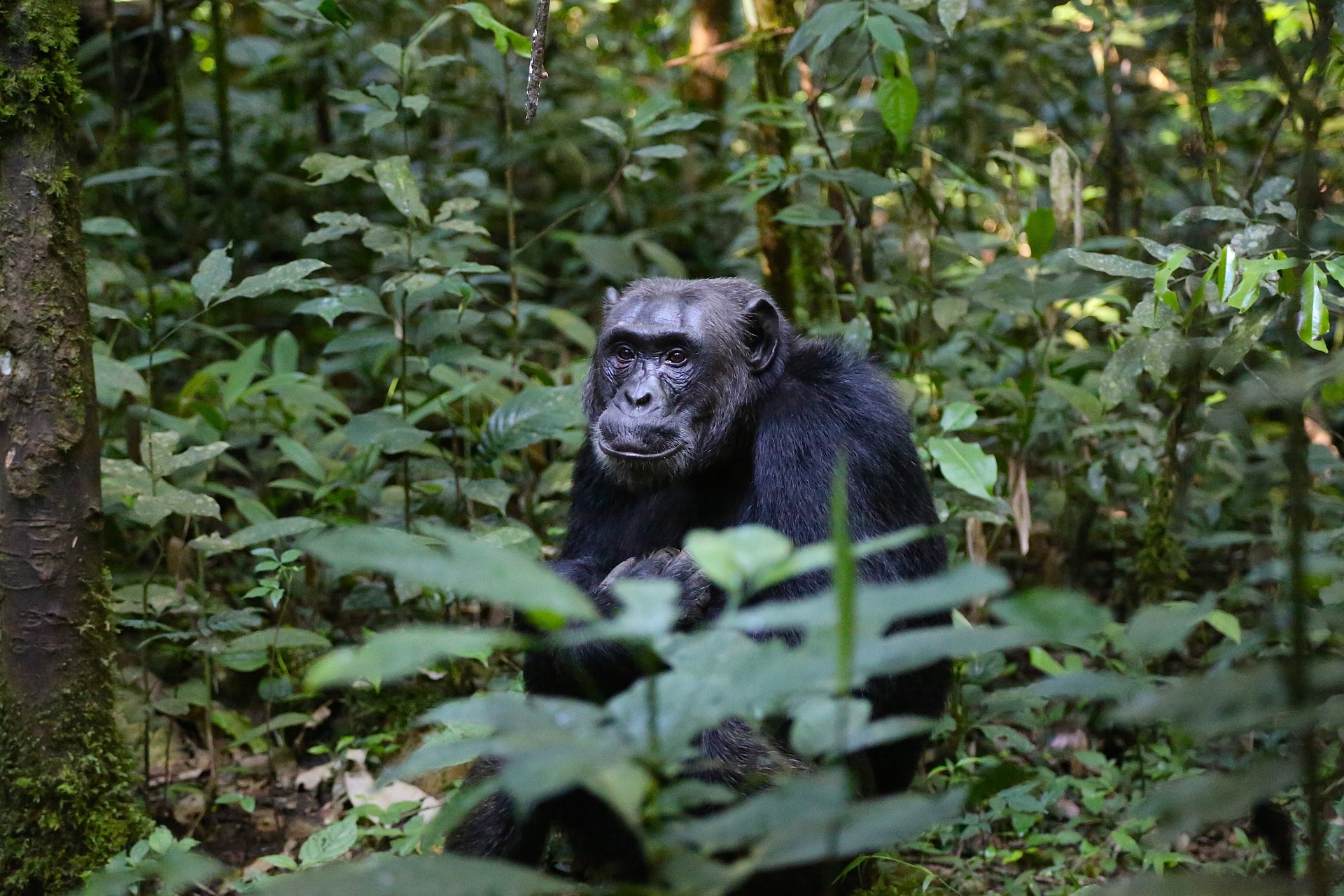
- Kibale Forest National Park: Chimpanzee tracking and some of the best birdwatching in central Africa, near Fort Portal.
- Queen Elizabeth National Park: Tree-climbing lions and the hippos of the Kazinga Channel.
- Murchison Falls National Park: Wildlife and birds along the Nile, and the powerful falls themselves.
- Rwenzori Mountains: A UNESCO-listed range with snow and glaciers, up to Mount Stanley at 5,109 m.
- Jinja and the source of the Nile: White-water rafting, from family trips to grade 5 rapids.
Places to visit
- City
- Island
- Park
- Mountain
- Area
Cities
- Kampala: The capital and the only true city, with the Kasubi Tombs and the National Museum.
- Entebbe: The former capital on Lake Victoria, with the international airport and botanical gardens.
- Jinja: A colonial-era town east of Kampala, where the Nile leaves Lake Victoria.
- Fort Portal: A highland town among tea plantations below the Rwenzori, seat of the Tooro Kingdom.
- Mbarara: A city in the south-west, on the way to several national parks.
- Kabale: A town in the far south, near Lake Bunyonyi.
- Kisoro: The nearest large town to the gorilla parks of Bwindi and Mgahinga, close to the Rwandan and DRC borders.
- Gulu: The main town of northern Uganda.
- Arua: A city in the West Nile region, near the Ajai Game Reserve.
Beyond the cities
- Bwindi Impenetrable National Park (park): The main place to see mountain gorillas, with about half of the world's population.
- Mgahinga Gorilla National Park (park): A park off the beaten track in the Virunga Mountains, with its own gorilla group.
- Kibale Forest National Park (park): Chimpanzee tracking and birdwatching near Fort Portal and the crater lakes.
- Queen Elizabeth National Park (park): The main section lies between Lake Edward and Lake George, along the Kazinga Channel.
- Murchison Falls National Park (park): A park along the Nile with wildlife, birds and a powerful waterfall.
- Rwenzori Mountains (mountain): The "Mountains of the Moon" on the DRC border, 120 km long, with glaciers on the highest peaks.
- Kidepo Valley National Park (park): A remote park in the far north-east, on the South Sudan border, with elephants, zebras and buffaloes.
- Lake Bunyonyi (area): A lake at 1,950 m with 29 islands and places to stay, from hostels up.
- Ssese Islands (island): Islands in Lake Victoria with quiet beaches and patches of forest, reached by ferry.
Regions
- Central Uganda: The capital and the shores of Lake Victoria.
- Eastern Uganda: Trekking near the Kenyan border, with more wildlife.
- Northern Uganda: An area rich in wildlife.
- Western Uganda: Gorilla tracking near the borders with Rwanda and the DRC.
Things to do
See
- Kazinga Channel Queen Elizabeth National Park: Go early in the morning, when animals gather on the plains around the channel; look out for the tree-climbing lions.
- Murchison Falls Murchison Falls National Park: The powerful falls, with wildlife and birds along the Nile.
- Kasubi Tombs and the National Museum Kampala: Two worthwhile sights in the capital; the tombs are damaged.
Do
- Gorilla tracking Bwindi Impenetrable National Park: One hour with a habituated gorilla family. Permits are sold by the Uganda Wildlife Authority (USD 700 in September 2023) and must be booked well ahead.
- Chimpanzee tracking Kibale Forest National Park: Follow chimpanzees in the forest near Fort Portal, which is also one of the best birding areas in central Africa.
- Rafting on the Nile Jinja: Trips from half a day to two days, from calm family runs to grade 5 rapids.
- Trekking in the Rwenzori Rwenzori Mountains: Jungle on the lower slopes, frozen moorland higher up and glaciers on the highest peaks.
- Sipi Falls: A hilltop village about an hour from Mbale, with hikes to waterfalls. Hire a local guide.
Eat
- Rolex: An omelette with onion and vegetables rolled up in a chapati, sold all over the country.
Drink
- Ugandan coffee Kampala: Hard to find outside Kampala, where tea is the everyday drink; look for local coffee houses in the capital and Jinja.
Itineraries
Gorillas and Lake Bunyonyi in 8 days (8 days)
- Entebbe (1 night): Arrival on Lake Victoria.
- Mbarara (1 night): A stop on the long road south-west; drive only in daylight.
- Lake Bunyonyi (2 nights): Islands and lakeside lodges near Kabale.
- Kisoro (3 nights): The base for gorilla tracking in Bwindi or Mgahinga; book the permit months ahead and avoid tours that cross into the DRC.
Chimpanzees and Queen Elizabeth in 7 days (7 days)
- Kampala (1 night): The Kasubi Tombs and the National Museum.
- Fort Portal (3 nights): Chimpanzee tracking in Kibale and the crater lakes.
- Queen Elizabeth National Park (2 nights): Early game drives around the Kazinga Channel, with a reputable operator.
Jinja and Murchison Falls in 7 days (7 days)
- Entebbe (1 night): The botanical gardens on the lake.
- Jinja (2 nights): Rafting at the source of the Nile.
- Murchison Falls National Park (2 nights): Game drives and the falls.
- Kampala (1 night): Back to the capital before your flight.
Climate and best time to visit
| Jan | Feb | Mar | Apr | May | Jun | Jul | Aug | Sep | Oct | Nov | Dec | |
|---|---|---|---|---|---|---|---|---|---|---|---|---|
| Max °C | 29 | 29 | 29 | 28 | 27 | 27 | 27 | 27 | 28 | 28 | 27 | 28 |
| Min °C | 18 | 18 | 18 | 18 | 18 | 18 | 17 | 17 | 17 | 17 | 18 | 18 |
| Rain mm | 68 | 63 | 132 | 169 | 118 | 69 | 63 | 96 | 108 | 138 | 149 | 92 |
Uganda is on the equator but high up, so Kampala stays warm rather than hot: the average maximum is between 27 °C and 29 °C all year, and nights are around 17 to 18 °C. Rain falls in every month. The wettest times are March to May, with about 170 mm in April, and October to November, with about 140 to 150 mm a month.
The drier months are January, February, June and July, with about 60 to 70 mm of rain a month in Kampala. The north has a real dry season from November to February, while the Rwenzori get heavy rain all year. In the rainy seasons, floods and landslides are common and some roads become hard to use.
Holidays and events
- 1 January 2026 · New Year's Day
- 26 January 2026 · Liberation Day
- 16 February 2026 · Archbishop Janani Luwum Day
- 8 March 2026 · International Women's Day
- 3 April 2026 · Good Friday
- 6 April 2026 · Easter Monday
- 1 May 2026 · Labour Day
- 3 June 2026 · Martyrs' Day
- 9 June 2026 · National Heroes' Day
- 9 October 2026 · Independence Day
- 25 December 2026 · Christmas Day
- 26 December 2026 · Boxing Day
Getting around
Public transport hardly reaches the national parks, so Wikivoyage suggests hiring a 4x4 with a driver. Main roads are tarmac but can be badly potholed; dirt roads get worse in the rains and may be impassable in the mountainous south-west. Plan on about 60 km/h, and do not drive outside the main towns after dark, except between Kampala and Entebbe airport. The Kampala-Jinja and Kampala-Masaka roads have frequent accidents.
The UK advises against matatus (minibus taxis on fixed routes) and boda-bodas (motorbike taxis), and Canada also advises against intercity and overnight buses: all are often involved in serious accidents. In towns, use licensed taxis booked through your hotel or a trusted ride-hailing app, and agree the fare first. On Lake Victoria and Lake Albert, use only reputable ferry companies and do not board an overloaded boat. The UK says you can drive on a UK licence for up to 3 months.
Where to stay
- Hotels: Many in the towns; the top end is expensive.
- Guesthouses, lodges and inns: Simple rooms, often with shared bathrooms.
- Backpackers' hostels: In Kampala, Entebbe, Jinja, Masaka, Fort Portal and Kabale, with dorms, camping, private rooms or safari tents.
- Uganda Wildlife Authority lodgings: Basic but inexpensive places to stay inside the national parks.
In the national parks, mid-range options are few and the luxury lodges cost a lot for what they offer. Wikivoyage suggests either the top end or the simple park lodgings, and spending the difference on a better vehicle. Lodges usually have rooms and meals for drivers.
Eat and drink
Dishes to try
- Luwombo: Meat or groundnut sauce steamed in banana leaves, served with a starch.
- Matooke: The plantain staple of the south.
- Posho: Ground maize, one of the common staples.
- Rolex: An omelette with onion and vegetables rolled in a chapati.
- Whole fried fish: Mostly found by the lake, usually with chips.
- Roast meat on a stick: Chicken or goat from roadside stands and markets.
Drinks
- Chai: Tea sold everywhere, best in the countryside near the plantations.
- Coffee: Grown in Uganda but hard to find brewed outside Kampala.
- Beer: Four main local brands; Wikivoyage prefers beer to the cheap wine in restaurants.
| Tipping | Not part of Ugandan culture and not expected, though it is appreciated. |
|---|
In Uganda "food" means the starch on the plate: matooke in the south, millet in the north, potatoes in the west, plus cassava, posho, sweet potatoes and rice. Markets and roadside stands sell cheap fruit and vegetables. Wash fresh produce well, avoid raw food in restaurants and drink only bottled or boiled water, without ice.
Entry requirements and visas
| Passport validity | At least 6 months from the date you arrive (UK); at least 6 months beyond the date you leave (Canada) |
|---|
| Passport | Entry | Max stay | Notes |
|---|---|---|---|
| United Kingdom | Evisa | Apply online; print the letter of authorisation and the visa is issued on arrival. The East African Tourist Visa (USD 100) also covers Kenya and Rwanda for 90 days. | |
| Canada | Evisa | Apply for an electronic visa before you travel; volunteer work is not allowed on a tourist visa. |
Other nationalities: check the official source below.
You need a visa, applied for online before you travel. The UK says you receive a letter of authorisation with a barcode, which you print and show on arrival, where officials issue the visa. The East African Tourist Visa cost USD 100 in 2026 and allows multiple entries into Kenya, Rwanda and Uganda over 90 days. You also need proof of yellow fever vaccination.
Because of Ebola, you may face health screening when you leave, and some countries screen or restrict travellers arriving from Uganda: until 27 November 2026, Canada requires travellers who have been in Uganda in the previous 21 days to quarantine for 21 days on arrival. Rules depend on your passport and can change: check the official link or the Ugandan embassy before you book.
Money and payments
| Currency | Ugandan Shilling (UGX) |
|---|---|
| Cards | Limited |
The Ugandan shilling (UGX, written USh) cannot be bought outside the country, so the easiest option is to withdraw cash from the ATMs at Entebbe airport. Most ATMs take Visa and Mastercard, but they can run out of cash. Use indoor ATMs, and watch for pickpockets around them.
Cards are accepted mainly in larger hotels, supermarkets, malls and by airlines, often with a surcharge of about 5%. Safaris, rafting and bigger hotels are often priced in US dollars (USD), so bringing dollars can help. Do not accept 1987-series banknotes, which are no longer valid. Bargain at markets and with street vendors.
Health
| Required vaccines | Yellow fever: proof of vaccination is required for all arriving travellers aged 1 year or older (CDC) |
|---|---|
| Recommended vaccines | Routine vaccines, including measles (MMR) and polio, Hepatitis A, Hepatitis B, for unvaccinated travellers under 60, Typhoid, for most travellers, Yellow fever, for travellers aged 9 months or older, Meningococcal, for the meningitis belt in the dry season, roughly December to June, Rabies, for some travellers: rabid dogs are common, Cholera, to consider for areas of active transmission |
| Malaria | Widespread |
| Tap water | Not safe |
You need a yellow fever certificate to enter, and malaria is present throughout the country: the CDC recommends prescription medicine to prevent it. See a travel health professional at least 6 to 8 weeks before you go. The CDC asks for enhanced precautions because of the Ebola outbreak in the region (notice of 28 August 2026); Marburg virus disease is also present, so stay out of caves where bats live. Avoid swimming or wading in lakes and rivers because of schistosomiasis.
Tap water is not treated: drink bottled or boiled water and skip ice. Medical care is limited, especially outside Kampala and at many tourist sites, and serious cases may need an air ambulance, so get insurance that covers it. Altitude sickness is a risk in parts of the country. For an ambulance, call 999.
This is general information, not medical advice: check with a travel health professional before you go.
Safety
- United States: Level 4: Do Not Travel (2026-10-20)
- Canada: Avoid non-essential travel (2026-10-20)
- United Kingdom: No advice against travel (2026-10-20)
Official advice: the US rates Uganda Level 4 and Canada advises against non-essential travel. Canada also advises against all travel within 50 km of the South Sudan border, except park visits with a reputable guide on well-travelled roads. The UK does not advise against travel, but says terrorists are very likely to try to attack places used by foreigners, including national parks. There have been attacks in western Uganda near the DRC border, including in Queen Elizabeth National Park, where tourists have been killed.
Parks: use reputable, registered tour operators and check with the Uganda Wildlife Authority before you go. Armed rangers accompany gorilla tracking in Bwindi and Mgahinga; do not take tours that cross into the DRC. Around Kisoro, an armed group controls border crossings on the DRC side. In Karamoja, in the north-east, cattle raids and robberies occur: avoid travelling at night.
Crime: theft and violent crime are common, especially in cities and after dark. Do not walk at night, use indoor ATMs, keep car doors locked in traffic and do not resist an armed robbery. Foreigners on boda-bodas have been mugged, and travellers have been drugged on buses and in bars: never accept food or drinks from strangers. Avoid demonstrations, which can turn violent, and consider not wearing red or yellow around political events.
Customs and etiquette
Uganda is a conservative, religious society, mostly Christian and Muslim. Outside tourist places, adults rarely wear shorts: light trousers help you blend in, and women usually wear skirts in rural areas, though dress in central Kampala is much like in any western city. A handshake is the usual greeting; offer your wrist if your hand is dirty. Children will shout muzungu (foreigner) at you: it is not an insult, so smile and wave. Ask before you photograph people.
Some laws catch visitors out. Same-sex relations carry life imprisonment, and the 2023 law punishes the "promotion" of homosexuality with up to 20 years. Wearing military-style or camouflage clothing is illegal. Smoking in public places is banned, and e-cigarettes and shisha are illegal. Do not photograph military or official sites, including the Owen Falls Dam at Jinja, and do not give money or food to street children in Kampala, which is an offence. On the last Saturday of each month, from 7 to 10 am, businesses close for national cleaning day; tourists are exempt from the movement ban but may be asked to explain themselves.
Language
| English | Widespread |
|---|
| How are you? | Oli otya? olio-tia |
|---|---|
| I am fine | Bulungi / gyendi bulunji / jiendi |
| OK | Kale kal-eh |
| Madam | Nyabo |
| Sir | Ssebo |
What to pack
- Passport valid 6 months, with the printed e-visa letter: You show the letter on arrival to get the visa.
- Yellow fever certificate: Required for all arriving travellers aged 1 year or older.
- Malaria tablets, repellent and a mosquito net: Malaria is present throughout the country.
- Gorilla permit, booked months ahead: Only a few visitors a day can visit each gorilla family.
- Light trousers or long skirts: Shorts are rarely worn outside tourist areas.
- A copy of your passport's photo page: Officials may ask for ID at any time.
- Insurance that covers air ambulance: Medical facilities are limited outside Kampala.
- No camouflage or military-style clothing: Wearing it is illegal.
Quick reference
Country facts
| Capital | Kampala |
|---|---|
| Population | 51,384,894 (2025) |
| Area | 200,520 km² |
| Time zone | Africa/Kampala (UTC+3) |
| Calling code | +256 |
| Driving side | left |
Staying connected
| SIM and eSIM | Cheap starter packs are sold everywhere, but must be registered with your passport, a photo and fingerprints. Networks named by Wikivoyage include MTN and Airtel; coverage reaches most of the country, but mountains can block it. |
|---|---|
| Wi-Fi | Mobile data is available in most places; internet access has been disrupted around elections. |
Emergency numbers
| Emergency | 999 |
|---|
Frequently asked questions
Is it safe to travel to Uganda?
The US rates Uganda Level 4 (do not travel) and Canada advises against non-essential travel; the UK does not advise against travel but warns of a high terrorist threat, including in national parks. Read the official advice before you plan.
Do I need a visa for Uganda?
Yes. UK and Canadian travellers apply online before they go; the East African Tourist Visa also covers Kenya and Rwanda. Check the official link or the Ugandan embassy before you book.
Do I need a yellow fever vaccination for Uganda?
Yes. Proof of vaccination is required for all arriving travellers aged 1 year or older.
How do I get a gorilla permit?
From the Uganda Wildlife Authority or through a tour operator, months ahead because numbers are limited. In September 2023 a permit cost USD 700.
Can I drink the tap water in Uganda?
No. Tap water is not treated: drink bottled or boiled water and avoid ice.
When is the best time to visit Uganda?
January, February, June and July are the drier months around Kampala. The rains peak from March to May and in October and November.
More Travel Stories from Africa
 Kenya
Sources This guide was last checked on · 17 sources
- Wikivoyage: Uganda · Overview, Places to visit, Things to do, Itineraries, Climate and best time to visit, Getting around, Where to stay, Eat and drink, Entry requirements and visas, Money and payments, Health, Customs and etiquette, Language, What to pack, Staying connected, Frequently asked questions
- Wikidata: Uganda · Overview, Places to visit, Money and payments, Country facts
- US Department of State: Uganda travel advisory · Overview, Safety, Frequently asked questions
- Government of Canada: Uganda travel advice (updated 13 October 2026) · Overview, Climate and best time to visit, Getting around, Entry requirements and visas, Money and payments, Health, Safety, Customs and etiquette, What to pack, Frequently asked questions
- UK FCDO: Uganda safety and security · Overview, Itineraries, Climate and best time to visit, Getting around, Money and payments, Safety, Customs and etiquette, What to pack, Staying connected, Frequently asked questions
- UK FCDO: Uganda health · Overview, Health
- UK FCDO: Uganda regional risks · Places to visit, Itineraries, Safety
- WMO World Weather Information Service: Kampala · Climate and best time to visit
- Nager.Date: public holidays in Uganda, 2026 · Holidays and events
- UK FCDO: Uganda entry requirements · Entry requirements and visas, What to pack, Frequently asked questions
- CDC Travelers' Health: Uganda · Entry requirements and visas, Health, What to pack, Frequently asked questions
- ISO 4217 (SIX), published 2026-09-17 · Money and payments
- UK FCDO: Uganda travel advice · Safety
- World Bank, SP.POP.TOTL · Country facts
- World Bank, AG.LND.TOTL.K2 · Country facts
- IANA Time Zone Database, zone.tab · Country facts
- UK FCDO: Uganda getting help · Emergency numbers
Suggest an update
Travel rules, prices and timetables change. If something in this guide is out of date, tell us: we check every suggestion against an official source before changing the page.