

- Local time
- 22:04
- Currency
- Euro (EUR)
- Capital
- Saint-Denis
- Calling code
- +262
- Drive on the
- right
Overview
A French island in the Indian Ocean for hikers: volcanic cirques, an active volcano and almost 1,000 km of trails, with beaches on the drier west coast.
Réunion is an overseas department of France, east of Madagascar and about 200 km south-west of Mauritius. It is part of the European Union and uses the euro, but it is not in the Schengen area, so it has its own entry rules. French is the official language and Creole is widely spoken. Canada advises normal security precautions, and the UK has no advice against travel.
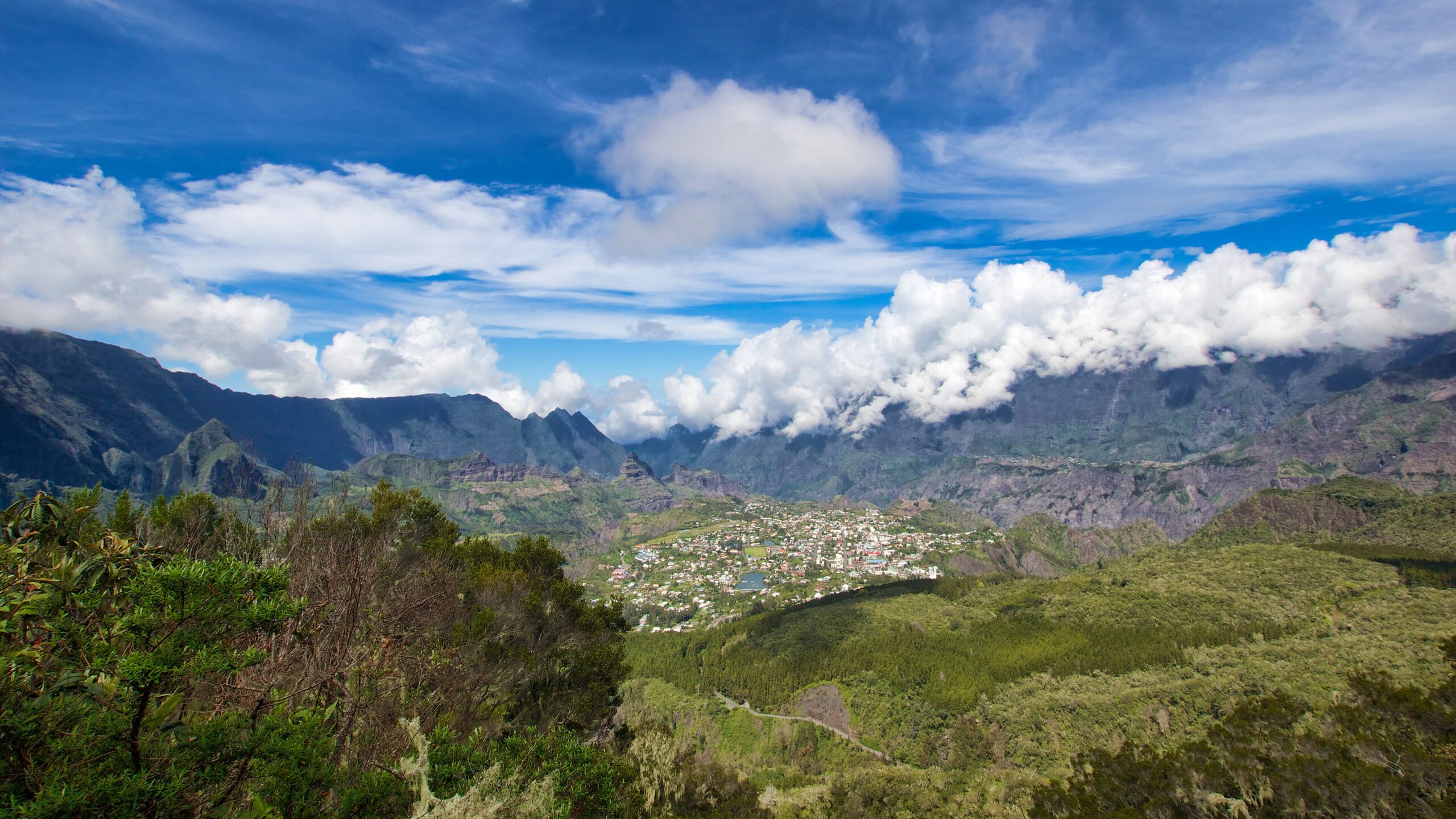
The island is all about its mountain scenery. Its peaks, cirques and cliffs, the "Pitons, cirques and remparts", are a UNESCO World Heritage Site covering more than 40% of the island, and a national park protects the cirques, plains and volcano. Piton de la Fournaise, in the south, is an active volcano, and the cirque of Mafate has no roads at all. The east, facing the moist ocean winds, is green and wet; the west, sheltered by the mountains, is drier and has the white sand beaches.
The Portuguese found the island uninhabited in 1513, and it became French in 1663. French settlers, Africans, Chinese, Malays and Indians from the Malabar coast shaped its people and its cooking. September to mid-December is the best time to go, when rain is rare and it is mild on both the coast and the hills; January to March is the rainy season, sometimes with cyclones.
- Piton de la Fournaise: An active volcano with guided hikes along the crater rim or down to the crater floor.
- Cirque de Mafate: A roadless cirque of about 800 people, reached only on foot or by helicopter.
- Cilaos: A mountain cirque for hiking, with its own sweet local wine.
- West coast beaches: White sand at Saint-Gilles and black volcanic sand at L'Étang-Salé.
- Vanilla country: The vanilla cooperative of Saint-Benoît and the growers of Bras-Panon.
- Saint-Paul market: Fruit, vegetables and traditional objects on Friday and on Saturday morning.
Places to visit
- City
- Town
- Park
- Mountain
- Area
Cities
- Saint-Denis: The capital, near Roland Garros airport, with restaurants and bars in the pedestrian streets around the cathedral.
- Saint-Pierre: The second town of the island, on the south coast, with a lively night life and the start of the road across the interior.
- Saint-Gilles: The main beach resort of the west coast, with white sand, bars and nightclubs.
- Saint-Leu: A well-established town known for surfing.
- L'Étang-Salé: A small west coast town with a beach of black volcanic sand.
- Petite-Île: A small town with a beach and a lookout.
- Saint-Benoît: A town with a vanilla cooperative factory.
- Bras-Panon: A big vanilla producer that hosts the island's largest agricultural show.
Beyond the cities
- Piton de la Fournaise (mountain): The active volcano in the south, with guided crater hikes and the Maison du Volcan.
- Cirque de Mafate (area): A cirque without roads, home to about 800 people and some of the best hiking.
- Cilaos (town): The village of the Cirque de Cilaos, with wine cellars and a youth hostel.
- Réunion National Park (park): The national park covering the cirques, plains and volcano.
- Takamaka (area): Site of the island's only hydroelectric power plant.
Things to do
See
- Maison du Volcan: The House of the Volcano shows footage of the last major eruptions: stop on the way back from the crater.
Do
- Hike Piton de la Fournaise Piton de la Fournaise: Walks of 4 to 5 hours along the rim or down into the crater. Go with a local guide, as Canada advises; when the volcano is active, sunset tours show the lava best.
- Trek in Mafate Cirque de Mafate: Multi-day walks in a cirque with no roads, sleeping in the lodgings at the main hiking spots.
- Scenic helicopter flight: Flights leave very early in the morning, before clouds settle on the peaks; some land at La Nouvelle in Mafate.
- Beaches of the west coast Saint-Gilles: Swim only where local authorities say it is safe, and respect the flags: there are shark attacks every year.
- Diving: There is good diving off the coast; the UK advises checking the operator's credentials and safety equipment first.
Drink
- Cilaos wine Cilaos: The traditional sweet cooked wine, and the modern wines of the Chais de Cilaos, whose cellars you can visit.
Shop
- Saint-Paul market: Fruit, vegetables and traditional objects on Friday and on Saturday morning.
After dark
- Séga and maloya nights Saint-Gilles: Bars and clubs in Saint-Gilles-les-Bains and Saint-Pierre where you can watch maloya and dance the séga.
Itineraries
Coast and cirques in 8 days (8 days)
- Saint-Denis (1 night): Arrive at Roland Garros airport; dinner around the cathedral.
- Saint-Gilles (3 nights): Beaches of the west coast, and the Saint-Paul market on Friday or Saturday morning.
- Cilaos (2 nights): Mountain roads with many bends and steep slopes; hiking and local wine.
- Saint-Pierre (2 nights): Base for a day at Piton de la Fournaise.
The volcano and the east in 4 days (4 days)
- Saint-Pierre (2 nights): Start early for the volcano, before the midday fog.
- Piton de la Fournaise (0 nights): A rim or crater walk of 4 to 5 hours; check conditions at the car park information stand.
- Saint-Benoît (2 nights): Across the interior on the route des plaines; the vanilla cooperative, and Bras-Panon.
Getting around
| Main airports | RUN |
|---|
Buses are safe, says Canada. The yellow Car Jaune buses run 13 intercity lines, mostly between 06:00 and 18:00; line B links Saint-Denis and Saint-Pierre along the coast about every 1½ hours. Taxis are safe but expensive: fares must be displayed, but agree the price before you set off.
Driving: car hire is available. A road runs around the island, mostly along the coast, and the route des plaines crosses the interior from Saint-Pierre to Saint-Benoît. Roads are good, but traffic jams are common on the west coast and in Saint-Denis, so avoid peak hours and do not underestimate driving times. Heavy rain can close the coastal road, the coast road between La Possession and Saint-Denis can be cut to two lanes in the rainy season, and lava can close the road in the east. Inland roads are narrow and winding, and Canada warns that night driving in the mountains is dangerous. French driving rules apply. Canada says you can drive with a Canadian licence for up to 6 months; the UK asks you to check with your car hire company whether you need an international driving permit. Many hire companies require drivers to be at least 25 with two years' experience.
Flying to Réunion? PartnerCompare fares and find the cheapest datesSearch flightsWhere to stay
- Hotels: Rates must be displayed outside.
- Gîtes d'étape: Privately run guesthouses, also found at the main hiking spots.
- Gîtes de montagne: Mountain lodges in the interior, run by the island's tourism board.
- Youth hostels: Five, at Hell-Bourg, Bernica, Entre-Deux, Saint-Denis and Cilaos.
In the cirques, and above all in Mafate, which has no roads, you sleep in the lodgings at the main hiking spots: plan each stage of your walk around them.
Eat and drink
Dishes to try
- Cari and rougail: Meat or fish cooked in a sauce and served with rice, the typical dishes of the island.
- Samosas and achards sandwiches: Cheap lunch from the snack bars; the spicy achards sandwich is the most balanced choice.
- Bonbons piments: Spicy, salty fritters.
- Piments farcis: Stuffed hot peppers.
- Bouchons: Meat or fish wrapped in rice dough, steamed and served with soy sauce.
- Gâteau patate and gâteau manioc: Thick, sweet cakes of sweet potato or cassava.
Drinks
- Rhum arrangé: Clear rum flavoured with fruit and spices: easy to drink, but strong.
- Rhum agricole: Better quality rum made from cane juice, clear or aged in oak.
- Cilaos wine: A very sweet cooked wine sold in the cirque and along the roads, not in supermarkets.
The cooking mixes French, Indian, Chinese and African traditions. It is spicy, but less so than much Indian food: ask if you prefer a milder dish. Tropical fruit changes with the season, from lychees in December to mangoes, bananas, papaya and the Victoria pineapple. Tap water is usually safe to drink, except at public taps marked "eau non potable".
Entry requirements and visas
| Passport validity | At least 3 months beyond the date you leave Réunion |
|---|
| Passport | Entry | Max stay | Notes |
|---|---|---|---|
| EU / EEA | Freedom of movement | EU, EEA and Swiss citizens can enter with a valid ID card and stay and work freely. | |
| United Kingdom | Visa free | 90 days | Up to 90 days for tourism or business; longer stays, work or study need a French visa. |
| Canada | Visa free | 90 days | Tourist visa not required for stays up to 90 days. |
Other nationalities: check the official source below.
Réunion is part of France and the EU, but not of the Schengen area: there are immigration checks even on flights from mainland France, and a Schengen visa is not valid here. UK and Canadian citizens can visit without a visa for up to 90 days; EU, EEA and Swiss citizens only need an ID card. Customs officials may ask for a return or onward ticket, proof of accommodation and enough money for your stay.
EU customs rules apply: you cannot bring in meat, milk or products containing them, with a few exceptions such as baby milk. Rules depend on your passport and can change: check with the French embassy or consulate before you book.
Money and payments
| Currency | Euro (EUR) |
|---|---|
| Cards | Common |
Réunion uses the euro (EUR). Most shops take Visa and Mastercard, though many ask for a minimum amount for card payments. There are plenty of ATMs, and they do not charge a fee to use them. Most businesses must post their prices in the window, and hotels and restaurants must show their rates outside.
Most shops close on Sunday; supermarkets usually open Monday to Saturday from 09:00 to 20:00, and some on Sunday morning.
Health
| Recommended vaccines | Routine vaccines, including measles (MMR), Hepatitis A, Hepatitis B, Typhoid, for some travellers: rural areas, long stays or visits to friends and relatives, Rabies, for some travellers, such as those working with wildlife |
|---|---|
| Malaria | None |
| Tap water | Safe |
No vaccinations are required to enter Réunion, and the CDC does not list malaria or yellow fever. Ask a travel health professional about the recommended vaccines at least a month before you go. The main risks are dengue and chikungunya, both spread by mosquitoes, so use repellent and cover up; Canada notes that a chikungunya vaccine is available, while the CDC does not generally recommend it. The UK also warns about altitude sickness in parts of the island. At altitude the sun burns even when the air feels cool.
Healthcare is good across the island, and clinics often expect payment in advance. UK visitors need a GHIC or EHIC, and EU visitors an EHIC, for state healthcare; others pay the full price. Get insurance that covers medical evacuation and, if you hike, helicopter rescue. In an emergency call 112, or 15 for an ambulance.
This is general information, not medical advice: check with a travel health professional before you go.
Safety
- Canada: Take normal security precautions (2026-10-20)
- United Kingdom: No advice against travel (2026-10-20)
Canada advises normal security precautions and the UK has no advice against travel. Crime is low, but petty theft such as bag snatching happens: keep your passport and valuables secure, and avoid walking alone at night.
At sea, both governments warn about sharks and currents. Shark attacks happen every year, some fatal: swim and surf only in supervised areas, respect the flags and follow local advice on which beaches are safe, as water sports are banned in dangerous zones. Riptides are common, and stonefish stings, though rare, can be fatal, so get medical help at once if stung. If you dive, check the operator's credentials and safety equipment.
In the mountains, Piton de la Fournaise is active and erupts without warning, and access is strictly regulated. Canada advises never hiking alone, going with a reputable guide, staying on marked trails and getting insurance that covers helicopter rescue. Fog can roll in within an hour at altitude and temperatures drop fast. The cyclone season runs from November or December to April: follow the local warnings, from "vigilance cyclonique" (watch) to "alerte orange" and "alerte rouge", when you must stay indoors. Earthquakes can also occur.
Customs and etiquette
Réunion is a French department, and drug penalties are severe. Islanders are proud of their home and of its history. The abolition of slavery, on 20 December 1848, is celebrated every year with the Fête Cafre, and the word "esclave" (slave) is a grave insult.
People from mainland France are nicknamed zoreilles ("ears"), from their habit of asking people to repeat themselves in Creole-accented French. Most shops close on Sunday, so plan your shopping.
Language
| Official languages | French |
|---|---|
| English | Rare |
| Water not drinkable | Eau non potable |
|---|---|
| Cyclone watch | Vigilance cyclonique |
| Cyclone expected within 24 hours | Alerte orange |
| Cyclone imminent: stay indoors | Alerte rouge |
| Market | Marché |
| Person from mainland France | Zoreille |
What to pack
- Sunscreen: The sun is strong at altitude, and sunscreen is expensive on the island.
- Layered clothing: In the mountains fog and cold can arrive within an hour.
- Proper hiking gear: Canada asks hikers to be properly equipped and informed about the weather.
- Insect repellent: Dengue and chikungunya are spread by mosquitoes.
- GHIC or EHIC: UK and EU visitors need it for state healthcare.
- Insurance with helicopter rescue: Canada recommends it for volcano and mountain hikes.
- Return ticket and booking confirmations: Customs may ask for proof of onward travel, accommodation and funds.
Quick reference
Country facts
| Capital | Saint-Denis |
|---|---|
| Population | 889,679 (2023) |
| Area | 2,512 km² |
| Time zone | Indian/Reunion (UTC+4) |
| Calling code | +262 |
| Driving side | right |
Staying connected
| SIM and eSIM | Three mobile networks: SFR (SRR), Orange Réunion and Free Réunion, which is by far the cheapest. Prepaid SIM cards are easy to buy. |
|---|---|
| Roaming | Many EU providers treat Réunion like mainland France, but they are not obliged to: check that your plan covers the overseas departments (DOM). Few non-EU providers offer roaming here. |
Emergency numbers
| Emergency | 112 |
|---|---|
| Police | 17 |
| Ambulance | 15 |
| Fire | 18 |
Frequently asked questions
Do I need a visa for Réunion?
Not for visits of up to 90 days with a UK or Canadian passport, and EU citizens only need an ID card. Réunion is not in the Schengen area, so a Schengen visa is not valid. Check with the French embassy before you book.
What currency is used in Réunion?
The euro. Most shops take Visa and Mastercard, and ATMs are easy to find.
When is the best time to visit Réunion?
September to mid-December, when rain is rare and it is mild on the coast and in the hills. January to March is the rainy season, sometimes with cyclones.
Is it safe to swim in Réunion?
Only where local authorities say so. Shark attacks happen every year: swim and surf in supervised areas and respect the flags.
Is there malaria in Réunion?
No. The CDC does not list malaria, but dengue and chikungunya are present, so protect yourself from mosquitoes.
Can I use my mobile phone in Réunion?
Many EU plans include it, but not all: check that yours covers the overseas departments. A local prepaid SIM from SFR, Orange or Free is an easy alternative.
More Travel Stories from Africa
 Kenya
Sources This guide was last checked on · 11 sources
- Wikivoyage: Réunion · Overview, Places to visit, Things to do, Itineraries, Getting around, Where to stay, Eat and drink, Entry requirements and visas, Money and payments, Health, Safety, Customs and etiquette, Language, What to pack, Staying connected, Frequently asked questions
- Wikidata: Réunion · Overview, Places to visit, Money and payments, Country facts
- Government of Canada: Réunion travel advice (updated 26 May 2026) · Overview, Things to do, Getting around, Entry requirements and visas, Money and payments, Health, Safety, Customs and etiquette, What to pack, Frequently asked questions
- UK FCDO: Réunion safety and security · Overview, Things to do, Getting around, Safety
- UK FCDO: Réunion entry requirements (updated 10 December 2025) · Entry requirements and visas, What to pack, Frequently asked questions
- ISO 4217 (SIX), published 2026-09-17 · Money and payments
- CDC Travelers' Health: Réunion · Health, Frequently asked questions
- UK FCDO: Réunion health · Health, What to pack
- UK FCDO: Réunion travel advice · Safety
- IANA Time Zone Database, zone.tab · Country facts
- UK FCDO: Réunion getting help · Emergency numbers
Suggest an update
Travel rules, prices and timetables change. If something in this guide is out of date, tell us: we check every suggestion against an official source before changing the page.