

- Local time
- 12:39
- Currency
- Gambian Dalasi (GMD)
- Capital
- Banjul
- Calling code
- +220
- Drive on the
- right
Overview
A narrow strip of land along the Gambia River, with Atlantic beaches, nature reserves full of birds and monkeys, and warm, dry winters.
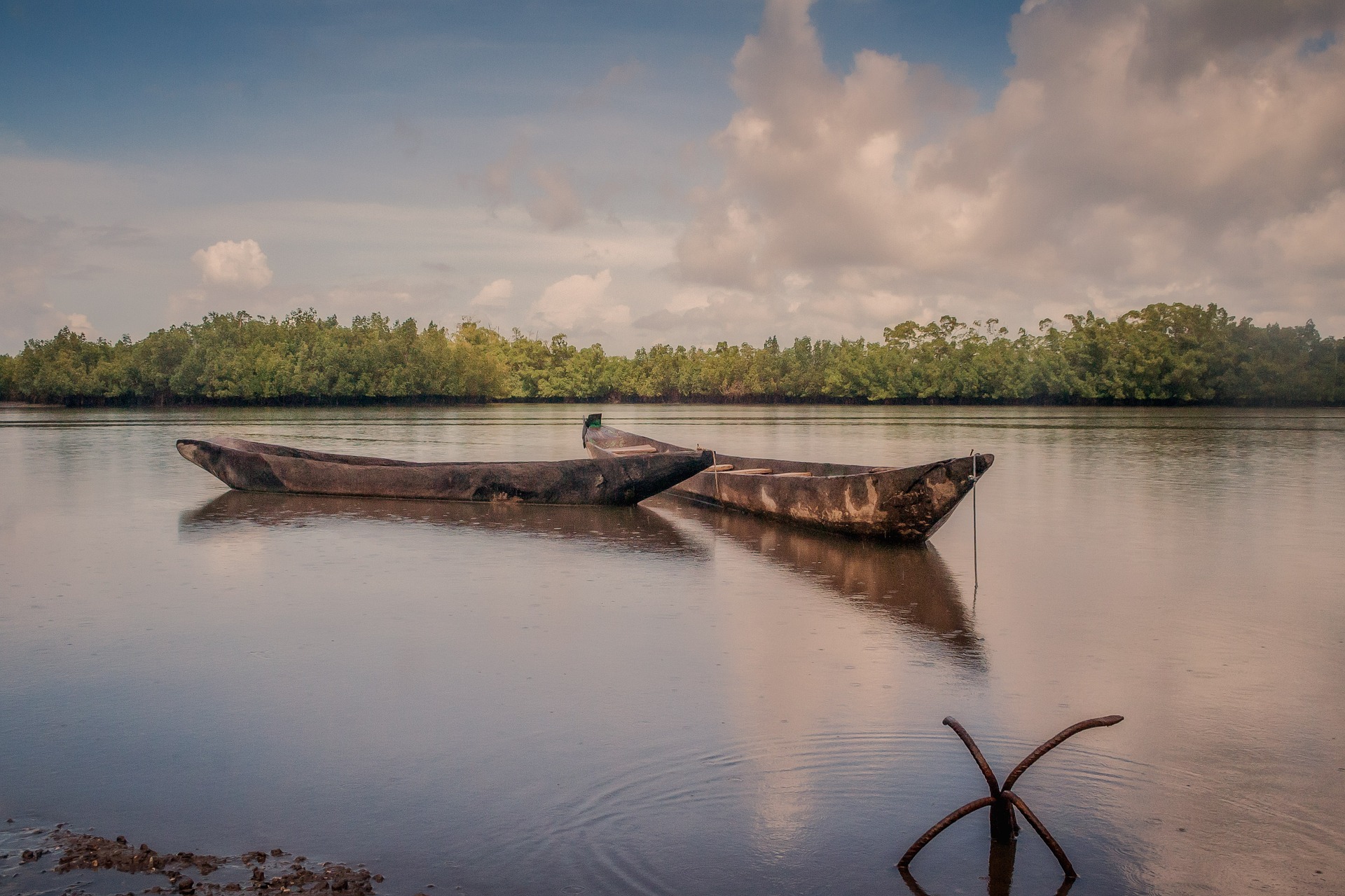
The Gambia is a small, narrow country that follows the Gambia River inland from the Atlantic, almost entirely surrounded by Senegal. It is less than 50 km across at its widest point, and its highest point is just 53 m above sea level. Known as the Smiling Coast, it is a winter holiday destination for many Northern Europeans: the dry season brings warm weather, and charter flights and beach resorts make it easy to reach.
On the coast around Banjul and Serekunda, small reserves such as Abuko and Bijilo are home to monkeys and hundreds of bird species. Up the river are Kunta Kinteh Island, a former slave-trade station listed by UNESCO, and the village of Juffureh, made famous by Alex Haley's Roots. Further inland, around Janjanbureh, boat trips go looking for chimpanzees, baboons and crocodiles. Away from the coast, tourist facilities are limited.
- Kunta Kinteh Island and Juffureh: A UNESCO-listed slave-trade site and the village of Roots, reached by boat up the river.
- Abuko Nature Reserve: A good first look at Gambian wildlife: monkeys, crocodiles and some 300 bird species.
- Makasutu Culture Forest: Mangroves, palm groves and savannah near Brikama, with baboons and monitor lizards.
- Sanyang Beach: One of the finest beaches on the Gambian coast, north of Gunjur.
- Gambia River National Park: Boat trips from Janjanbureh to see chimpanzees, baboons and crocodiles.
Places to visit
- City
- Island
- Park
- Historic site
Cities
- Banjul: The capital, linked by ferry to Barra on the north bank of the river.
- Serekunda: A town on the coastal strip; public transport leaves from here for Sanyang Beach.
- Brikama: A town with a big market, home to the Makasutu Culture Forest.
- Juffureh: The village made famous by Alex Haley's Roots, where pirogues leave for Kunta Kinteh Island.
- Janjanbureh: A town upriver, the base for Gambia River National Park.
Beyond the cities
- Kunta Kinteh Island (island): A remnant of the slave trade in the river, and a UNESCO World Heritage site.
- Abuko Nature Reserve (park): A small reserve near Lamin with monkeys, crocodiles and some 300 bird species.
- Bijilo Forest Park (park): A coastal forest with birds and monkeys.
- Makasutu Culture Forest (park): A 1,000-hectare reserve of mangroves, palm groves and savannah with baboons, monkeys, birds and monitor lizards.
- Kiang West National Park (park): One of the largest and most important wildlife reserves in the country.
- Bao Bolong Wetland Reserve (park): Forest and swamp known for migratory birds, and home to otters, antelope and hippos.
- Gambia River National Park (park): A park on the river below Janjanbureh, with boat tours to see chimpanzees, baboons, monkeys and crocodiles.
- Kachikally Crocodile Pool (site): A sacred crocodile pool in Bakau where you can touch the crocodiles.
- Wassu Stone Circles (site): Stone circles thought to be evidence of early settlement, though little is known about them.
Things to do
See
- The Roots trip Juffureh: Cruise up the river to Kunta Kinteh Island and Juffureh, or go by road along the north bank; expect people asking for money and for payment to appear in photos.
- Abuko Nature Reserve Lamin: Monkeys, crocodiles and some 300 bird species, close to the coast.
- Bijilo Forest Park Kololi: Walk among birds and monkeys in a coastal forest.
- Makasutu Culture Forest Brikama: Mangroves, palm groves and savannah, with baboons and monitor lizards.
- Kachikally Crocodile Pool Bakau: A sacred pool where you can touch West African crocodiles.
Do
- Gambia River National Park Janjanbureh: Boat tours to see chimpanzees, baboons, monkeys and crocodiles; the camp is expensive.
- Birdwatching at Bao Bolong: A wetland reserve of forest and swamp known for its migratory birds.
- Sanyang Beach Gunjur: A beautiful beach, reached by public transport from Serekunda and Brikama; watch the flags, as Atlantic currents can be strong.
Drink
- Julbrew: The local lager, in bottles or, less fizzy, on draught.
Shop
- Craft markets Brikama: Brikama's market and the craft market north of town for wood carvings, batik and masks; small koras make a good souvenir.
- Tailor-made clothes: Cheap clothes made to measure, in local batik and tie-dye fabric.
Itineraries
Coast, Roots and the river in 8 days (8 days)
- Banjul (2 nights): A boat trip up the river to Kunta Kinteh Island and Juffureh.
- Serekunda (3 nights): Abuko, Bijilo, the Kachikally crocodile pool and Sanyang Beach.
- Janjanbureh (3 nights): Boat tours in Gambia River National Park.
Climate and best time to visit
| Jan | Feb | Mar | Apr | May | Jun | Jul | Aug | Sep | Oct | Nov | Dec | |
|---|---|---|---|---|---|---|---|---|---|---|---|---|
| Max °C | 32 | 33 | 33 | 32 | 32 | 32 | 32 | 32 | 32 | 34 | 34 | 33 |
| Min °C | 18 | 18 | 20 | 20 | 21 | 22 | 23 | 23 | 23 | 24 | 22 | 20 |
| Rain mm | 1 | 1 | 0 | 0 | 3 | 44 | 189 | 287 | 235 | 62 | 1 | 0 |
The Gambia is hot all year: in Banjul the average maximum stays between 31 °C and 34 °C every month. The dry season, from November to May, is almost rainless and brings the warm winter weather the country is known for, with cooler nights in January and February (an average minimum of about 18 °C). The rainy season runs from June to October, and August is the wettest month in Banjul, with about 290 mm of rain. Heavy rain can flood roads and make some routes impassable.
November to March is the best time for most trips, and the main tourist season, with direct flights from Europe, runs from October to April. Most malaria cases are caught between June and December.
Holidays and events
- 1 January 2026 · New Year's Day
- 18 February 2026 · Independence Day
- 3 April 2026 · Good Friday
- 6 April 2026 · Easter Monday
- 1 May 2026 · Labour Day
- 25 May 2026 · Africa Day
- 22 July 2026 · Revolution Day
- 15 August 2026 · Assumption Day
- 25 December 2026 · Christmas Day
Getting around
| Main airports | BJL |
|---|---|
| International driving permit | Recommended |
Buses of the Gambia Transportation Service Company run along the main highways without a fixed timetable; they stop often and have no air conditioning or toilets. Taxis come in two kinds: green tourist taxis, more expensive and priced per trip, and yellow taxis, cheaper and shared, which in many tourist areas are not allowed to pick up tourists. Agree the price of motorcycle taxis before you get on. Official tourist guides can arrange transport, but always meet them at their offices, as there are false guides too.
The Banjul-Barra ferry is often overcrowded, lacks safety equipment and has been stranded on sandbanks: the UK suggests the Senegambia Bridge near Farafenni instead. If you take the ferry with a car, get out of the vehicle as soon as you park. Avoid wooden pirogues for long trips, and wear a life jacket.
Driving: most roads outside the capital are unpaved, and even main roads around Banjul are narrow, potholed and poorly lit. Rent a 4x4, avoid driving outside towns after dark, and stop at all security checkpoints. A UK photocard licence is valid for 3 months; Canada advises carrying an International Driving Permit. Do not hitchhike with your thumb, which is an obscene gesture here: wave instead.
Flying to Gambia? PartnerCompare fares and find the cheapest datesSearch flightsWhere to stay
- Beach resorts: Many four- and five-star resorts along the Atlantic coast.
- Eco camps and lodges: Inland, basic rooms in natural surroundings.
Tourist facilities are limited outside the Banjul area. Passports and valuables have been stolen from hotel rooms, so use the safe, and keep a copy of your passport and entry stamp apart.
Eat and drink
Dishes to try
- Benachin (jollof rice): Rice cooked with onions, spices and tomato, with meat, fish or vegetables.
- Chicken yassa: Chicken with onion, black pepper and lime or lemon.
- Domoda: Meat stew in a peanut butter sauce, served with rice.
- Fish: Excellent, and always worth ordering.
- Peanuts: The country's main crop, eaten everywhere.
Drinks
- Julbrew: The local lager, made by Banjul Breweries.
- Palm wine: Fermented palm sap, offered on some tours of the countryside.
- Baobab juice: A juice made from the fruit of the baobab.
In the tourist areas there are restaurants serving food from many countries, and well-known spirits are easy to find along the coast. During Ramadan, eat, drink and smoke discreetly in public in the daytime.
Entry requirements and visas
| Passport validity | Valid for the length of your stay |
|---|
| Passport | Entry | Max stay | Notes |
|---|---|---|---|
| United Kingdom | Visa free | 28 days | Entry stamp for 28 days, extendable twice by 28 days at the Immigration Office in Banjul or the tourist police. |
| Canada | Visa free | 30 days | For more than 30 days, apply for an extension at the Gambia Immigration Department. |
| Australia | Visa free | 90 days | Commonwealth citizens can stay up to 90 days without a visa, according to Wikivoyage. |
| United States | Visa required | A visa is needed unless you arrive as a tourist on a charter flight, according to Wikivoyage. |
Other nationalities: check the official source below.
Rules depend on your nationality. British and Canadian visitors do not need a visa for a short stay. According to Wikivoyage, most Commonwealth and many other nationals can stay up to 90 days without a visa, while US citizens and some European nationalities, including French, Spanish, Portuguese, Austrian, Swiss, Czech, Slovak, Slovenian, Romanian and Baltic citizens, need a visa unless they arrive as tourists on a charter flight. Visas are issued by the Gambian High Commission in Dakar, and in April 2023 also at the Karang border post for USD 100, in cash only.
Everyone pays a USD 20 Airport Security Fee on arrival and on departure. You need a yellow fever certificate if you arrive from a country with yellow fever risk, including after a transit of more than 12 hours there. Fill in a currency declaration form on arrival. Some medicines, such as those with codeine or diazepam, and creams containing hydrocortisone or hydroquinone are banned or restricted: carry prescriptions and check before you go. Rules can change: confirm with the Gambia Immigration Department or a Gambian embassy before you book.
Money and payments
| Currency | Gambian Dalasi (GMD) |
|---|---|
| Cards | Limited |
The currency is the dalasi (GMD). The Gambia is mainly a cash economy: more hotels and restaurants now accept Visa cards, but very few take credit cards. Euros, US dollars and CFA francs are widely accepted and are the best currencies to bring.
ATMs at GT Bank and Ecobank accept Visa and Mastercard, but outside the Senegambia tourist area there are few of them and they can be unreliable. Keep cash for the airport fee, for taxis and for the markets.
Costs and budget
- Airport Security Fee, on arrival and on departure: USD 20 each time
- Visa at the Karang border (April 2023): USD 100
- 1 GB mobile data (April 2023): D450
- Batik from a workshop in Bakau: from D1,000
Green tourist taxis cost much more than the shared yellow taxis, and the camp in Gambia River National Park is expensive. Clothes made by a tailor are cheap. Prices other than the airport fee are those listed on Wikivoyage when we read it in October 2026.
Health
| Required vaccines | Yellow fever certificate, only if you arrive from a country with yellow fever risk (from 9 months of age, including transits of more than 12 hours) |
|---|---|
| Recommended vaccines | Yellow fever, recommended by the CDC for all travellers from 9 months, Routine vaccines, including measles (MMR), Hepatitis A, Hepatitis B, Typhoid, Meningococcal, in the dry season (roughly December to June), Rabies, for some travellers: ask a travel clinic |
| Malaria | Widespread |
| Tap water | Varies |
See a travel health professional at least 8 weeks before you go. Malaria is present throughout the country and the CDC recommends preventive medicine; most cases are caught between June and December. Locals drink the tap water, but travellers are advised to drink bottled or boiled water. Bring insect repellent, sunscreen and any medicines you need, as they can be hard to find; most medicines are sold only in pharmacies, marked with a green cross.
Medical facilities are very limited, private clinics treat only paying patients, and medical evacuation is expensive: get insurance that covers it. There is no national emergency number like 999 or 112: police and fire stations have their own numbers, so ask at the nearest station for them when you arrive.
This is general information, not medical advice: check with a travel health professional before you go.
Safety
- United States: Level 2: Exercise Increased Caution (2026-10-20)
- Canada: Exercise a high degree of caution (2026-10-20)
- United Kingdom: No advice against travel (2026-10-20)
The UK does not advise against travel to any part of The Gambia, and Canada's advice is to take a high degree of caution because of petty crime. Pickpocketing and bag snatching happen in crowded markets and on ferries, and thefts from hotel rooms and cars are common. Leave valuables in the hotel, avoid isolated beaches, and be careful at night outside the main tourist areas.
Young men known as bumsters approach tourists, especially on the beach, offering help or tours and asking for money afterwards: decline politely but firmly. Do not go on tours into Senegal with them, as they are unlikely to follow immigration rules. Never accept drugs: entrapment cases are not uncommon and penalties are severe. You may be asked for bribes, including at border posts; do not pay.
Security checkpoints are common on main roads and around Banjul. Avoid demonstrations. On the beach, Atlantic currents can be strong: follow the red, yellow and green flags. Power cuts happen, so carry a torch and a power bank.
Customs and etiquette
Most Gambians are Muslim, and Islamic practice shapes customs and laws. Dress and behave with discretion, especially in religious areas and during Ramadan (the next one starts around 7 February 2027), when you should not eat, drink or smoke in public in the daytime. Always ask before you photograph anyone, and do not photograph airports, government buildings, military sites or embassies. To stop a car, wave: the thumbs-up is an obscene gesture.
Carry ID: the police usually accept a printed copy of your passport. Sexual acts between people of the same sex are illegal, with prison terms of up to 14 years, and men dressing as women can be jailed. Libel, sedition and slander are criminal offences.
Language
| Official languages | English |
|---|---|
| English | Common |
| Hello (Wolof) | Salamalekum / reply: Malekum salaam |
|---|---|
| How are you? | Na'nga def? |
| Fine, thank you | Mangi fi rekk |
| Thank you | Jere jef |
| Yes / No | Waaw / De det |
| Excuse me (sorry) | Baal ma |
| Goodbye (see you next time) | Be benen yoon |
| How much is it? | Ñaata la? |
What to pack
- Passport and a printed copy: You must carry ID; the police usually accept a copy.
- USD 20 in cash, twice: For the Airport Security Fee on arrival and departure; card machines often fail.
- Euros, US dollars or CFA francs: The Gambia runs mostly on cash, and ATMs are few outside Senegambia.
- Malaria tablets and insect repellent: Malaria is present everywhere, and repellent can be hard to find.
- Sunscreen: Hard to find in some areas.
- Prescriptions for your medicines: Some medicines are banned; keep them in their original packaging.
- Torch and power bank: Power cuts are common.
- Modest clothes: Most Gambians are Muslim; dress with discretion away from the beach.
Quick reference
Country facts
| Capital | Banjul |
|---|---|
| Population | 2,822,093 (2025) |
| Area | 10,120 km² |
| Time zone | Africa/Banjul (UTC+0) |
| Calling code | +220 |
| Driving side | right |
Staying connected
| SIM and eSIM | Africell is the main 4G network, with shops almost everywhere: bring your passport and you get an activated SIM card in minutes. Coverage is usually good in Banjul and the Senegambia beach area. |
|---|
Frequently asked questions
Do I need a visa for The Gambia?
British, Canadian and most Commonwealth visitors do not, but US citizens and some European nationalities do unless they arrive on a charter flight. Check with the Gambia Immigration Department before you book.
Is there an airport tax in The Gambia?
Yes: a USD 20 Airport Security Fee on arrival and again on departure, best paid in cash.
When is the best time to visit The Gambia?
November to March, in the dry season. The rains fall from June to October, with August the wettest month.
Do I need malaria tablets for The Gambia?
Yes, the CDC recommends them for the whole country. Ask a travel clinic at least 8 weeks before you go.
What are bumsters?
Young men who approach tourists, especially on the beach, offering help or tours and then asking for money. Decline politely but firmly.
What language is spoken in The Gambia?
English is the official language and is widely used in tourist areas; in the towns most people speak Wolof.
More Travel Stories from Africa
 Colombia +1
 Kenya
Sources This guide was last checked on · 17 sources
- Wikivoyage: The Gambia · Overview, Places to visit, Things to do, Itineraries, Climate and best time to visit, Getting around, Where to stay, Eat and drink, Entry requirements and visas, Money and payments, Costs and budget, Health, Safety, Customs and etiquette, Language, What to pack, Staying connected, Frequently asked questions
- Wikidata: The Gambia · Overview, Places to visit, Money and payments, Country facts
- UK FCDO: The Gambia safety and security (updated 7 July 2026) · Things to do, Climate and best time to visit, Getting around, Where to stay, Money and payments, Safety, Customs and etiquette, What to pack, Staying connected
- WMO World Weather Information Service: Banjul · Climate and best time to visit
- Government of Canada: The Gambia travel advice (updated 13 October 2026) · Climate and best time to visit, Getting around, Where to stay, Entry requirements and visas, Money and payments, Health, Safety, Customs and etiquette, What to pack, Frequently asked questions
- Nager.Date: public holidays in Gambia, 2026 · Holidays and events
- UK FCDO: The Gambia entry requirements · Getting around, Entry requirements and visas, Costs and budget, What to pack, Frequently asked questions
- CDC Travelers' Health: The Gambia · Entry requirements and visas, Health, What to pack, Frequently asked questions
- ISO 4217 (SIX), published 2026-09-17 · Money and payments
- UK FCDO: The Gambia health · Health, What to pack
- UK FCDO: The Gambia getting help · Health
- US Department of State: Gambia travel advisory · Safety
- UK FCDO: Gambia travel advice · Safety
- Wikivoyage: Wolof phrasebook · Language
- World Bank, SP.POP.TOTL · Country facts
- World Bank, AG.LND.TOTL.K2 · Country facts
- IANA Time Zone Database, zone.tab · Country facts
Suggest an update
Travel rules, prices and timetables change. If something in this guide is out of date, tell us: we check every suggestion against an official source before changing the page.