

- Local time
- 19:05
- Currency
- Central African CFA Franc (XAF)
- Capital
- Bangui
- Calling code
- +236
- Drive on the
- right
Overview
The US, the UK and Canada all advise against travel to the Central African Republic. This page sums up their advice and the practical basics.
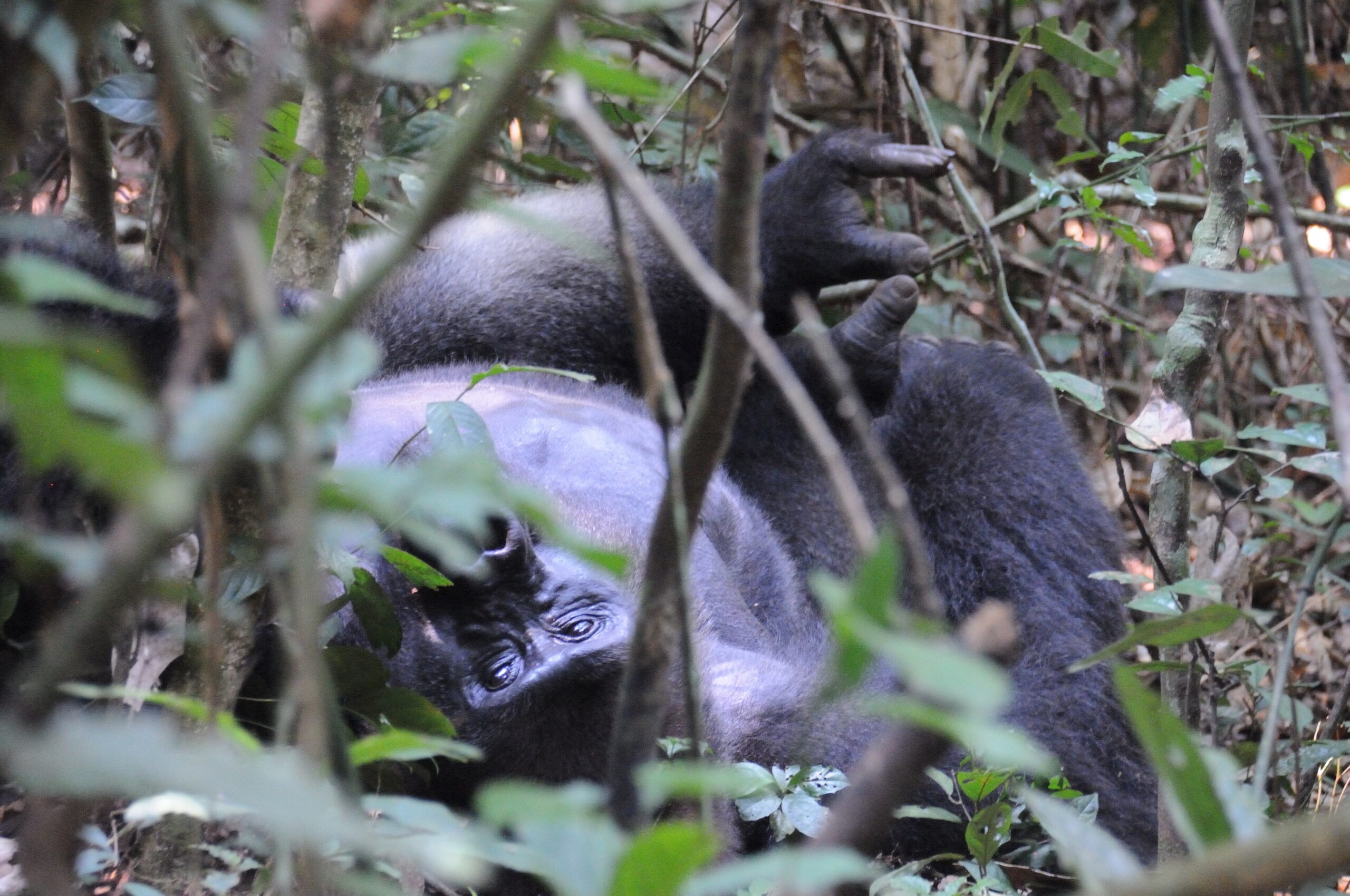
The Central African Republic is a former French colony in the heart of Africa, with borders on six countries. Much of it is tropical rainforest, and the Dzanga-Sangha reserve protects gorillas, forest elephants and chimpanzees; the north is swept by the hot, dusty harmattan wind, and the far north-east is Sahel. Bangui, the capital, stands on the Ubangi River.
Official advice is against travel. The US says Do Not Travel (Level 4) and Canada says to avoid all travel, because of unstable security conditions and violent crime. The UK advises against all travel to the whole country except Bangui, and against all but essential travel to Bangui itself, including its airport. Travelling against this advice can invalidate your insurance, and the UK, which has no embassy in the country, and Canada can give only very limited consular help. Outside Bangui and Dzanga-Sangha there is almost no tourist infrastructure.
- Bangui: The capital on the Ubangi River, home of the Barthélémy Boganda national museum.
- Dzanga-Sangha: A rainforest reserve with gorillas, forest elephants and chimpanzees.
- Bouar: A town known for megaliths set in concentric circles.
- Manovo-Gounda St Floris National Park: A UNESCO World Heritage site, in an insecure region without facilities.
Places to visit
- City
- Park
Cities
- Bangui: The capital and the starting point for most travel, with the national museum.
- Bambari: A market town and mining centre, the third largest city, known for prehistoric rock paintings.
- Bangassou: A town on the border with the Democratic Republic of the Congo, home of the Kembe Falls.
- Bouar: Known for its megaliths, arranged in concentric circles by the country's ancient peoples.
- Mbaïki: A small town close to Bangui with a large Pygmy community.
Beyond the cities
- Dzanga-Sangha Special Reserve (park): Rainforest with gorillas, forest elephants and chimpanzees, part of a protected area shared with Cameroon and the Republic of the Congo.
- Manovo-Gounda St. Floris National Park (park): A national park on the UNESCO World Heritage list, in an insecure region with no facilities.
- Boali waterfalls (site): A series of waterfalls about 2 hours from Bangui, at their strongest in the rainy season.
Holidays and events
- 1 January 2026 · New Year's Day
- 29 March 2026 · Barthelemy Boganda Day
- 6 April 2026 · Easter Monday
- 1 May 2026 · Labour Day
- 14 May 2026 · Ascension Day
- 25 May 2026 · Whit Monday
- 30 June 2026 · General Prayer Day
- 13 August 2026 · Independence Day
- 15 August 2026 · Assumption Day
- 1 November 2026 · All Saints Day
- 1 December 2026 · National Day
- 25 December 2026 · Christmas Day
Getting around
| Main airports | BGF |
|---|---|
| International driving permit | Required |
Canada advises against all road travel outside Bangui and against travelling at night, in Bangui too. Roads are in very poor condition: the only paved roads run from Bangui to Bossembélé, Sibut and Mbaïki, and in the rainy season (May to October according to Canada, May to November according to the UK) dirt roads can be impassable for days. Armed men run official and illegal roadblocks, where bribes are demanded. Fuel shortages are frequent: never let the tank fall below half, and carry your own fuel, food and water.
Canada describes public transport as limited and unsafe, and advises against it. Taxis in Bangui rarely have meters, so agree the fare before you set off, ask your hotel to call a registered taxi, make sure the driver picks up no other passengers, and carry small notes. To drive you need an International Driving Permit (the 1968 version, says the UK) with your licence, and Canada suggests hiring a driver. Keep your ID and vehicle papers with you, lock the doors and keep the windows closed.
Where to stay
Outside Bangui and the Dzanga-Sangha reserve there is almost no tourist infrastructure. Canada advises choosing accommodation with adequate security, keeping doors and windows locked at all times and leaving no valuables in sight, and the UK lists hotels among the places where you should take care. Only the major hotels in Bangui accept credit cards, so plan to pay in cash.
Eat and drink
Drinks
- Local beer: Brands such as 33, Mocaf and Crystal, priced much as in Europe or the US.
- Palm wine: Widely drunk.
- Bottled water: Made in Cameroon and in the country, and sold in supermarkets.
Bangui has Chinese, Lebanese, French and local restaurants. Places run by foreigners are expensive: a dish cost USD 10-20 or more according to Wikivoyage when we read it in October 2026. French bakeries in the city centre sell bread, pastries and meals at moderate prices, and food from markets and street sellers is cheaper than in supermarkets, but eat only food that is cooked or peeled. Many people eat with their hands: if you join them, use your right hand.
Entry requirements and visas
| Passport validity | At least 6 months: the UK counts from the date you arrive, Canada from the date you leave |
|---|
| Passport | Entry | Max stay | Notes |
|---|---|---|---|
| United Kingdom | Visa required | Apply through the embassy of the Central African Republic in Paris before you travel. | |
| Canada | Visa required | Tourist, business and student visas are all required. | |
| United States | Visa required | Apply to the embassy of the Central African Republic before you travel. | |
| EU / EEA | Visa required | Apply to an embassy of the Central African Republic before you travel. | |
| Australia | Visa required | Apply to an embassy of the Central African Republic before you travel. |
Other nationalities: check the official source below.
You need a visa, arranged in advance, and the country has few embassies abroad: the UK sends applicants to the embassy in Paris. When we read Wikivoyage in October 2026 it listed a short-stay visa at USD 150 at the embassy in the US and EUR 80 at the embassy in France. Applications usually ask for a copy of your passport, two photos, two forms, your itinerary, an invitation letter or hotel booking, and proof of yellow fever vaccination. Entering without a visa means a heavy fine.
A yellow fever certificate is required for every traveller aged 9 months or more. Because of the Ebola outbreak in the neighbouring Democratic Republic of the Congo, you may face extra health checks at borders in the region. At customs, declare anything that may be prohibited or taxed; cultural artefacts carry an export tax. Rules depend on your passport and can change at short notice: check with the embassy of the Central African Republic before you book.
Money and payments
| Currency | Central African CFA Franc (XAF) |
|---|---|
| Cards | Rare |
The currency is the Central African CFA franc (XAF), shared with five other countries of Central Africa and fixed to the euro at EUR 1 = XAF 655.957. The economy runs on cash. Only the major hotels in Bangui take credit cards, ATMs exist only in a few banks and hotels in Bangui, and you can change money only in Bangui and Berbérati. Euros are easier to change than US dollars, and banks change traveller's cheques.
Do not carry large sums or show signs of wealth. Buying diamonds or other precious stones is legal only through government-authorised agents.
Health
| Required vaccines | Yellow fever certificate for all arriving travellers aged 9 months or more |
|---|---|
| Recommended vaccines | Routine vaccines, including measles (MMR), Yellow fever, Hepatitis A, Hepatitis B, Typhoid, Polio: a single adult booster, Meningococcal, for the meningitis belt in the dry season (roughly December to June), Cholera may be considered: active transmission in Bangui, Rabies, for some travellers: ask a travel clinic |
| Malaria | Widespread |
| Tap water | Not safe |
See a travel health professional at least 6 to 8 weeks before you go. The CDC recommends prescription medicine against malaria for the whole country, and dengue, chikungunya, Zika, sleeping sickness and river blindness are also spread by insects, so protect yourself from bites at all times. Poliovirus has been found in the country in the past year, cholera is present in Bangui, and rabid dogs are common: avoid contact with animals. Do not swim or wade in fresh water, because of schistosomiasis. Drink bottled, boiled or filtered water: even in Bangui tap water is not reliable.
Healthcare is very limited and found only in Bangui, where facilities are very basic and hospitals lack supplies; you usually pay before treatment. Bring all the medicines you need in their original containers, and get insurance that covers evacuation by air ambulance. Emergency numbers (117, or 610600 for an ambulance) are unreliable, and services are unlikely to respond outside Bangui. The UK also lists mpox and Ebola among the risks, after an Ebola outbreak was announced on 15 May 2026 in the Ituri province of the Democratic Republic of the Congo.
This is general information, not medical advice: check with a travel health professional before you go.
Safety
- United States: Level 4: Do Not Travel (2026-10-20)
- Canada: Avoid all travel (2026-10-20)
- United Kingdom: Advises against all travel to parts of the country (2026-10-20)
The US says Do Not Travel and Canada says avoid all travel to the Central African Republic, because of unstable security conditions and violent crime. The UK advises against all travel to the whole country, including the areas of Bimbo, Begoua and Coline, except Bangui, and against all but essential travel to Bangui and its airport. Outside Bangui the UK describes security as extremely unstable: armed groups hold areas in the north and south-east, homicides, kidnappings, carjackings and looting are frequent, and there are unidentified improvised explosive devices in the north-west. Bangui is more stable, with a strong presence of security forces, but both governments warn that this could change rapidly.
Foreigners, humanitarian workers included, are targeted for kidnapping and robbery, especially outside Bangui. In the capital, armed gangs operate in the outer districts, especially PK5, and petty and violent crime is frequent. Canada reports a curfew from midnight to 5 am across the country except in Bangui. Armed patrols and roadblocks, official and illegal, operate everywhere, including in Bangui; bribes are demanded, and police and armed groups may search and detain people arbitrarily. Demonstrations can turn violent without warning: leave the area if one starts.
If you are in the country despite the advice, the UK and Canada recommend professional security advice, transport arranged with trusted operators, no travel at night, never walking alone, accommodation with good security and no jewellery or valuables on show. Do not resist an attack. Flooding is common in the rainy season, in Bangui too, and earthquakes are a risk.
Customs and etiquette
By law you must carry ID at all times, such as a certified copy of your passport, and the police can detain you without it. Photography is sensitive: it is illegal to photograph government buildings, military and police sites, the presidential palace, airports and power plants, and the UK says you often need permission to take photos in public places. Pictures the authorities think damage the country's image, such as street children, are not allowed. The Ministry of Tourism issues photography permits. Always ask before you photograph people.
Many people eat with their hands: use your right hand. Same-sex relations are not illegal but are not socially accepted, and LGBT+ travellers may be arrested for public displays of affection, under charges such as public indecency. Drug penalties are severe, and you need a government licence to buy or sell precious stones.
Language
| Official languages | French, Sango |
|---|---|
| English | Rare |
| Hello (Sango) | Balâo |
|---|---|
| Hello, in reply (Sango) | Balâo mïngï |
| Hello (French) | Bonjour bawn-ZHOOR |
| Please (French) | S'il vous plaît seel voo PLEH |
| Thank you (French) | Merci merr-SEE |
| Excuse me (French) | Excusez-moi ehk-SKEW-zay MWAH |
| I don't understand (French) | Je ne comprends pas zhuh nuh KOHM-prahn pah |
| I need a doctor (French) | J'ai besoin d'un médecin zhay buh-ZWAHN duun may-TSAN |
| Help! (French) | Au secours ! oh suh-KOOR |
What to pack
- Visa, passport and certified copies: You must carry ID at all times; keep copies of your passport and visa apart, and a digital copy too.
- Yellow fever certificate: Required at the border for everyone aged 9 months or more.
- Euros in cash: Cards and ATMs are almost absent, and euros are easier to change than dollars.
- Small notes: For taxis and everyday payments.
- Malaria tablets and insect repellent: The CDC recommends malaria medicine for the whole country.
- All your medicines and a copy of the prescriptions: Some medicines are not available, and healthcare is very limited.
- International Driving Permit: Required with your licence if you drive.
- Insurance with medical evacuation: Check that it covers you when travelling against official advice.
Quick reference
Country facts
| Capital | Bangui |
|---|---|
| Population | 5,513,282 (2025) |
| Area | 622,980 km² |
| Time zone | Africa/Bangui (UTC+1) |
| Calling code | +236 |
| Driving side | right |
Emergency numbers
| Emergency | 117 |
|---|---|
| Ambulance | 610600 |
| Fire | 118 |
Frequently asked questions
Is it safe to travel to the Central African Republic?
The US says Do Not Travel, Canada says avoid all travel, and the UK advises against all travel except to Bangui, and against all but essential travel there. Read the safety section and the official links.
Do I need a visa for the Central African Republic?
Yes, you need a visa arranged in advance at an embassy of the Central African Republic. Check the rules with the embassy before you book.
Do I need a yellow fever vaccination?
Yes. A yellow fever certificate is required for all arriving travellers aged 9 months or more.
Can I use cards in the Central African Republic?
Hardly ever: only the major hotels in Bangui take credit cards. Bring euros in cash.
Can I drink the tap water?
No. Drink bottled, boiled or filtered water, in Bangui too.
What language is spoken in the Central African Republic?
French and Sango are the official languages, and Sango is the language most people use. Almost nobody speaks English.
More Travel Stories from Africa
 Kenya
Sources This guide was last checked on · 17 sources
- US Department of State: Central African Republic travel advisory · Overview, Safety, Frequently asked questions
- Government of Canada: Central African Republic travel advice (updated 14 October 2026) · Overview, Getting around, Where to stay, Eat and drink, Entry requirements and visas, Money and payments, Health, Safety, Customs and etiquette, What to pack, Frequently asked questions
- UK FCDO: Central African Republic warnings and insurance · Overview, Getting around, Safety, Frequently asked questions
- Wikivoyage: Central African Republic · Overview, Places to visit, Getting around, Where to stay, Eat and drink, Entry requirements and visas, Money and payments, Health, Safety, Customs and etiquette, Language, What to pack, Frequently asked questions
- Wikidata: Central African Republic · Overview, Places to visit, Money and payments, Language, Country facts
- Nager.Date: public holidays in Central African Republic, 2026 · Holidays and events
- UK FCDO: Central African Republic safety and security · Getting around, Where to stay, Money and payments, Safety, Customs and etiquette, What to pack
- UK FCDO: Central African Republic entry requirements · Entry requirements and visas, What to pack, Frequently asked questions
- CDC Travelers' Health: Central African Republic · Entry requirements and visas, Health, What to pack, Frequently asked questions
- ISO 4217 (SIX), published 2026-09-17 · Money and payments
- UK FCDO: Central African Republic health · Health
- UK FCDO: Central African Republic getting help · Health, Emergency numbers
- UK FCDO: Central African Republic travel advice · Safety
- Wikivoyage: French phrasebook · Language
- World Bank, SP.POP.TOTL · Country facts
- World Bank, AG.LND.TOTL.K2 · Country facts
- IANA Time Zone Database, zone.tab · Country facts
Suggest an update
Travel rules, prices and timetables change. If something in this guide is out of date, tell us: we check every suggestion against an official source before changing the page.