

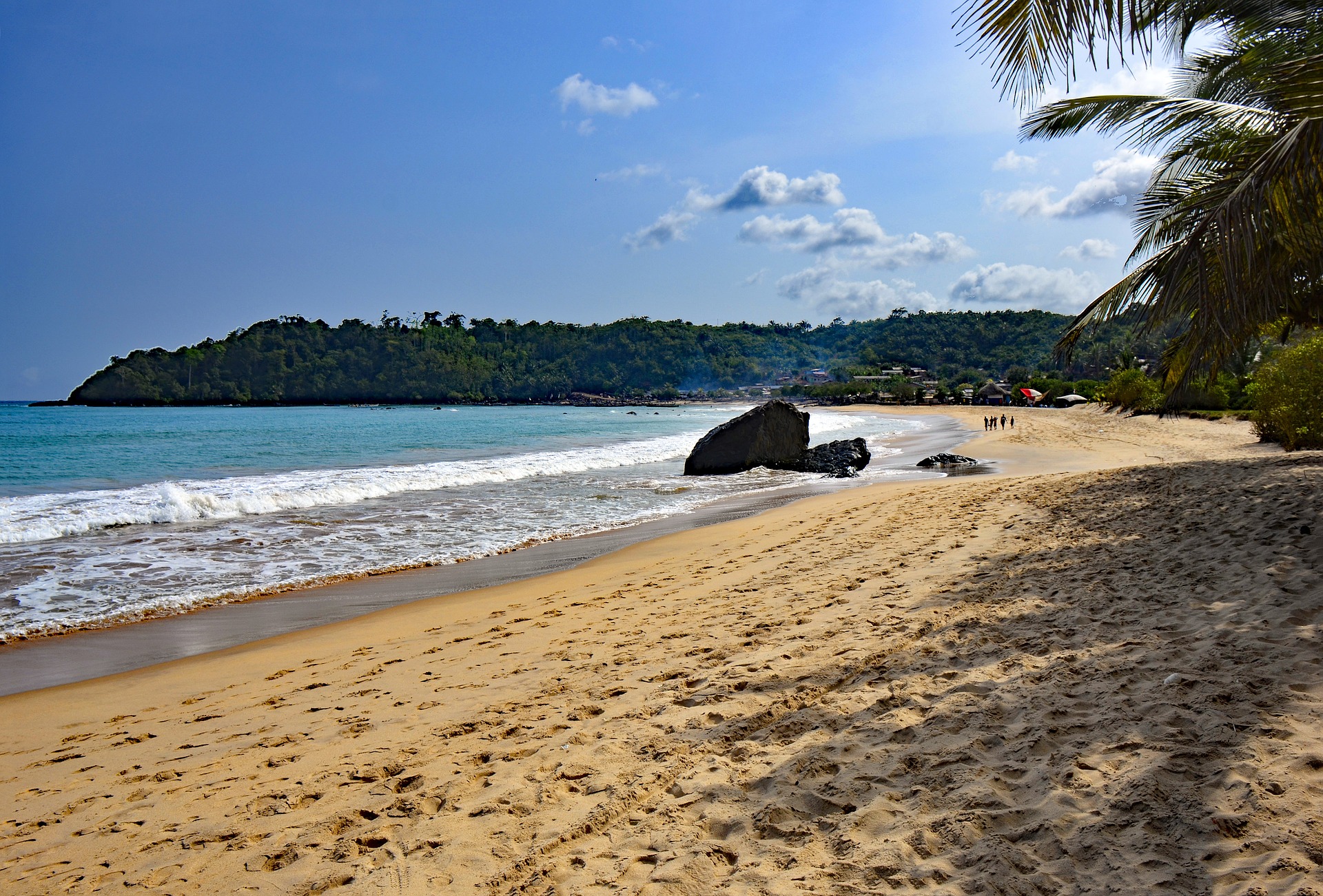
- Local time
- 12:30
- Currency
- Ghanaian Cedi (GHS)
- Capital
- Accra
- Calling code
- +233
- Drive on the
- right
Overview
Slave-trade castles on the coast, Ashanti culture in Kumasi and walking safaris at Mole, in an English-speaking country known as Africa for beginners.
Ghana is often called "Africa for beginners": the infrastructure is good, the country is stable and English is spoken everywhere, which makes it an easy first trip to West Africa. On the coast, the forts and castles built by European traders, among them Cape Coast and Elmina, are UNESCO World Heritage sites and tell the story of the slave trade. Inland, Kumasi was the capital of the Ashanti Empire and is still the place to see its palaces, crafts and kente weaving.
Nature is the other reason to go: the canopy walk of Kakum National Park in the rainforest, elephants and walking safaris in the savannah of Mole National Park, the crater lake of Bosumtwi and the Wli Falls near the border with Togo. Organised tourism is limited and things run at a relaxed pace, so plan for some waiting. UK and Canadian visitors need a visa in advance, and every visitor needs a yellow fever certificate to enter.
- Cape Coast and Elmina: Two coastal castles of the slave trade, part of a UNESCO World Heritage listing.
- Kumasi: The former Ashanti capital, with Manhyia Palace and craft villages nearby.
- Kakum National Park: A walk on rope bridges above the rainforest canopy.
- Mole National Park: Savannah with elephants, antelope and monkeys, on foot or by vehicle.
- Lake Bosumtwi: A crater lake made by a meteor impact, sacred to the Ashanti.
- Wli Falls: A waterfall in the Agumatsa Wildlife Sanctuary, near the Togo border.
Places to visit
- City
- Town
- Coast
- Park
- Historic site
- Area
Cities
- Accra: The capital and largest city, with Independence Square, the Nkrumah mausoleum and Makola market.
- Cape Coast: The first capital of the Gold Coast, with a slave castle listed by UNESCO.
- Elmina: A coastal town whose castle is part of the UNESCO listing of Ghana's forts and castles.
- Kumasi: The second city and former capital of the Ashanti Empire, known for its traditional buildings and crafts.
- Tamale: The largest city in the north and the gateway to Mole National Park.
- Sekondi-Takoradi: A port city known as the twin city or the oil city.
- Koforidua: The capital of the Eastern Region.
- Tema: An industrial port city on the Greenwich Meridian.
Beyond the cities
- Kakum National Park (park): Rainforest with a long canopy walk; you see birds and butterflies more often than larger animals.
- Mole National Park (park): Savannah with buffalo, antelope, monkeys and elephants, with driving and walking safaris. The park is in the Savannah Region: the FCDO reports tribal conflict in the west of the region and asks visitors in that region to keep informed, seek local advice and take precautions.
- Lake Bosumtwi (area): A meteor impact crater lake about 10.5 km across, near Kumasi and sacred to the Ashanti.
- Wli Falls (park): A waterfall in the Agumatsa Wildlife Sanctuary near the Togo border, close to the mountaintop village of Wli Todzi.
- Shai Hills Resource Reserve (park): A day trip from Accra for baboons, parrots and antelope, also on horseback.
- Boti Falls (site): A waterfall in the village of Boti, in the Eastern Region.
- Nzulezo (town): A village built on stilts, on the coastal plain.
- Kokrobite (coast): A beach near Accra with beach-front hotels and fishing boats.
- Aburi (town): A town outside Accra with extensive botanical gardens.
Regions
- Coastal Plain: The Gulf of Guinea coast: Accra, the forts of Cape Coast and Elmina, Kakum and the best-preserved rainforest.
- Ashanti-Kwahu: Forested hills and the old Ashanti kingdom, around Kumasi and Koforidua.
- Volta Basin: Lake Volta, the rivers that feed it and the border crossings to Togo, with Tamale.
- Northern Plains: Savannah plains on the old trade routes to Burkina Faso, with Mole National Park and Bolgatanga.
Things to do
See
- Cape Coast Castle Cape Coast: A slave castle on the UNESCO list, and a direct look at the history of the slave trade.
- Elmina Castle Elmina: Another fort of the slave trade, part of the same UNESCO listing.
- Independence Square and the Nkrumah mausoleum Accra: The historic sites of the capital, together with the W. E. B. Du Bois Centre and the National Theatre.
- Aburi Botanical Gardens Aburi: Extensive gardens just outside Accra.
- Manhyia Palace Kumasi: The sights of Ashanti history in Kumasi, with the palace and the Okomfo Anokye Sword.
- Lake Bosumtwi Lake Bosumtwi: A crater lake where, in Ashanti belief, the souls of the dead meet the god Twi.
- Larabanga Mosque Northern Region: A 15th-century mosque, one of the traces of the civilisations of the north before the Europeans came.
Do
- Canopy walk at Kakum Kakum National Park: Walk the rope bridges above the treetops; there is a small museum and a café at the entrance.
- Safari at Mole Mole National Park: Driving and walking safaris among elephants and antelope, with the option to camp on the savannah. Leave the vehicle only when the guide says it is safe.
- Wli Falls and Wli Todzi Wli Falls: Walk to the falls and up to the mountaintop village of Wli Todzi, in the rainforest.
Eat
- Fufu or banku at a chop bar: Try the national staples in a simple local eatery, where hygiene standards vary.
Drink
- A drink at a spot: A local bar marked by blue and white stripes, cheaper than expat bars, where you meet locals and hear the latest hip-life songs.
Shop
- Makola market Accra: The big market in the centre of Accra; bargaining is expected.
- Craft villages around Kumasi Kumasi: Wood carving at Ahwiaa, adinkra cloth at Ntonso and kente weaving at Bonwire. Ask what each design means before you buy.
Itineraries
Accra and the castle coast in 7 days (7 days)
- Accra (3 nights): Independence Square, the Nkrumah mausoleum and Makola market; a day out to Aburi or Shai Hills.
- Cape Coast (3 nights): Cape Coast Castle, Elmina Castle and the canopy walk at Kakum National Park.
- Accra (1 night): Back to the capital for your flight from Kotoka International Airport.
Kumasi and Mole in 8 days (8 days)
- Kumasi (3 nights): Manhyia Palace, the craft villages and a day at Lake Bosumtwi.
- Tamale (1 night): By bus or plane to the north.
- Mole National Park (3 nights): Walking and driving safaris, and a night camping on the savannah.
- Tamale (1 night): For the flight or bus back south.
Climate and best time to visit
| Jan | Feb | Mar | Apr | May | Jun | Jul | Aug | Sep | Oct | Nov | Dec | |
|---|---|---|---|---|---|---|---|---|---|---|---|---|
| Max °C | 32 | 33 | 33 | 33 | 32 | 30 | 28 | 28 | 30 | 31 | 32 | 32 |
| Min °C | 24 | 25 | 25 | 25 | 24 | 24 | 23 | 23 | 23 | 24 | 24 | 24 |
| Rain mm | 10 | 14 | 55 | 83 | 148 | 176 | 65 | 22 | 47 | 64 | 32 | 25 |
Ghana is hot and humid all year: in Accra the average maximum stays between about 28 °C and 33 °C. In the south the rain falls mainly from April to June, with a peak of about 175 mm in June in Accra, and again in September and October; the south-west is the wettest part of the country. In the north there is a single rainy season, from about April to October (Canada and the UK say March to November), and flooding is common there in those months.
From December to March the harmattan, a dry and dusty wind from the Sahara, lowers the humidity and can fill the air with a dusty haze; it can disrupt travel and is hard on people with breathing problems. December to February are the driest months in Accra and fall outside the rainy season in the north, but expect the harmattan haze.
Holidays and events
- 1 January 2026 · New Year's Day
- 7 January 2026 · Constitution Day
- 6 March 2026 · Independence Day
- 3 April 2026 · Good Friday
- 6 April 2026 · Easter Monday
- 1 May 2026 · May Day
- 1 July 2026 · Republic Day
- 21 September 2026 · Founders Day
- 4 December 2026 · Farmers' Day
- 25 December 2026 · Christmas Day
- 26 December 2026 · Boxing Day
Getting there and around
| Main airports | ACC |
|---|---|
| International driving permit | Required |
Getting there
By air: all international flights land at Kotoka International Airport in Accra (ACC). When we read Wikivoyage in October 2026 it listed flights from Lisbon, London Heathrow, Amsterdam, Brussels, Istanbul, Casablanca, Dubai, Addis Ababa and New York (JFK). At arrivals, accept help only from uniformed porters or staff with a photo ID card, and if a driver is meeting you, ask for his ID: impostors have robbed travellers by pretending to be their driver.
By land: the main crossings are Aflao on the border with Togo and Elubo on the border with Côte d'Ivoire. Keep your camera away at border posts, where guards may confiscate it. Canada advises against non-essential travel within 25 km of the border with Burkina Faso. There are no international trains and no authorised passenger boats to Ghana.
Getting around
Domestic flights link Accra with other main cities, but Wikivoyage's list of airlines and routes dates from 2019, so check what is flying now. Buses are the usual way between cities: the state company STC is the one that keeps to its timetable, private companies such as VIP often leave 1-3 hours late, and Metro Mass is the cheapest but can be several hours late. Tro-tros, shared minibuses on fixed routes, are cheap but overcrowded and have a high accident record; Canada says private intercity buses are better maintained and safer.
Taxis: always agree the fare before you get in. Canada advises against hailing taxis in the street: use officially marked taxis, make sure there is no other passenger, and limit taxi trips to daytime. If you use a ride-hailing app, check the driver's identity, and expect that he may want cash.
Driving: you need an International Driving Permit (the 1949 version, according to the UK), and you must carry it with your licence. Cars must carry insurance stickers, a first aid kit, a fire extinguisher and a warning triangle, and vehicles with temporary plates cannot be driven between 6 pm and 6 am. Roads are mostly good in the cities and poor in rural areas, where many are dirt tracks and you need a 4x4 in the north. Canada reports armed attacks on the Accra-Tema and Accra-Kumasi-Tamale highways. Avoid driving after dark, keep doors locked and windows closed, and do not give cash to police at checkpoints: people posing as police officers sometimes stop foreigners to ask for money.
Flying to Ghana? PartnerCompare fares and find the cheapest datesSearch flightsWhere to stay
- Hotels: From upmarket to rustic; high-end hotels cost more than comparable hotels in the United States.
- Beach hotels: Beach-front places at Kokrobite and Winneba.
- Camping in Mole National Park: You can spend a night on the savannah inside the park.
- House rentals: For stays of a few months, houses are advertised in local newspapers and expat meeting places.
Use the hotel safe for your passport and valuables: luggage thefts happen in hotels, and burglaries have hit areas popular with foreigners, such as Airport Residential, Cantonments, Ridge and Kokrobite, more often over the Christmas period. Lock doors and windows. Shortages of electricity and running water can happen, especially in the dry season from November to March.
Eat and drink
Dishes to try
- Fufu: Pounded yam, plantain or cassava, served with soup and meat or fish stew; the most widely served traditional dish.
- Banku with tilapia: Fermented corn dough, eaten with grilled tilapia or okra soup.
- Groundnut and palm nut soups: The usual soups served with fufu and banku.
- Jollof rice: Rice cooked with vegetables, pieces of meat and spices in a tomato sauce.
- Waakye: Rice and beans, usually served with gari, a powder of ground cassava.
- Kelewele: Spiced fried plantain, a popular snack.
Drinks
- Star and Club: Two of the popular local beers.
- Minerals: What Ghanaians call soft drinks; the glass bottle belongs to the bottler, so return it or pay a deposit.
- Sobolo, pito and asaana: Traditional local drinks; sobolo is also called bissap.
Simple local eateries are called chop bars: they are cheap but rarely meet high hygiene standards, while better restaurants cost more. Rice dishes from street vendors are very cheap. Western and Chinese restaurants are easiest to find in Osu, in Accra. For a drink with locals, look for a spot, a bar painted with blue and white stripes, where beer is cheaper than in expat bars. Smoking is banned in public areas, though some bars and restaurants allow it.
Entry requirements and visas
| Passport validity | At least 6 months beyond the date you plan to leave Ghana (Canada); the UK counts 6 months from the date you arrive |
|---|
| Passport | Entry | Max stay | Notes |
|---|---|---|---|
| United Kingdom | Visa required | Apply online on the Ghana High Commission website before you travel; processing takes 10 to 15 days. | |
| Canada | Visa required | Tourist visa required, arranged before you travel. |
Other nationalities: check the official source below.
UK and Canadian visitors need a visa, arranged before you travel. From the UK you apply online on the Ghana High Commission website, pay online, then post the printed form with hard copies of your documents, including a yellow fever certificate; it takes 10 to 15 days, or about 3 days with the express service in person in London. To extend your stay, go to the Ghana Immigration Service office on Independence Avenue in Accra.
You must show a yellow fever vaccination certificate on arrival: it is required for all travellers aged 9 months or more. Declare all foreign cash on the form you receive on arrival (Canada calls it the Exchange Control Form T-5) and keep it with your exchange receipts until you leave. Do not carry more than USD 10,000 in value: the authorities can confiscate the whole amount. Taking cedis out of the country is prohibited, and gold and diamonds can be exported only through licensed agents. Rules depend on your passport and can change: check with the Ghana High Commission or embassy before you book.
Money and payments
| Currency | Ghanaian Cedi (GHS) |
|---|---|
| Cards | Limited |
Plan to pay mostly in cash. Hotels, some shops, malls and airline offices accept cards, but markets and small sellers do not, and the UK government notes that Mastercard is not widely accepted, so a Visa card is the safer choice. ATMs of the main banks are common in large towns but may be missing in rural areas. Card and ATM fraud is widespread: use ATMs inside banks or in well-lit places, and keep your card in sight when you pay.
Euros, US dollars and pounds in cash are the easiest currencies to change, at banks and forex bureaux in Accra and the larger cities. Bring US dollar notes from 2009 or later, because older ones are refused. Canada warns that changing money with private individuals is illegal: use only banks and licensed bureaux, and record each exchange on your currency form. Ghanaians pay a lot with mobile money (MTN MoMo, Telecel Cash, AirtelTigo Money), which needs a local SIM card.
Costs and budget
- Single-entry eVisa (2026): USD 260
- 3-month visa from the London High Commission (2026): GBP 60
The visa is a large part of the cost of a short trip, as the prices above show. Most local prices on Wikivoyage, such as taxi fares, meals and hotel rates, were written years ago (some taxi rates date from December 2011), so we do not repeat them: check current rates locally. As a guide, Wikivoyage notes that street food and tro-tros are very cheap, while high-end hotels cost more than comparable hotels in the United States.
Health
| Required vaccines | Yellow fever certificate, for all arriving travellers aged 9 months or more |
|---|---|
| Recommended vaccines | Routine vaccines, including measles (MMR), Hepatitis A, Hepatitis B, Typhoid, Meningococcal, for the meningitis belt in the north during the dry season (roughly December to June), Polio: a single adult booster (Canada), Rabies, only for some travellers: ask a travel clinic, Cholera, only for some travellers to areas with active transmission, Mpox, for travellers at risk of sexual exposure |
| Malaria | Widespread |
| Tap water | Not safe |
Malaria is present everywhere in Ghana, and the CDC recommends prescription medicine to prevent it: talk to a doctor before you go, and protect yourself from mosquito bites, which also carry dengue. See a travel health professional at least 6 to 8 weeks before your trip. Do not drink tap water: bottled water is sold everywhere, so check that the seal is intact. Avoid swimming or wading in fresh water because of schistosomiasis, and stay away from dogs and other animals, since rabies is common.
Healthcare is poor outside the towns, and Canada describes it as inadequate outside Accra: serious cases need medical evacuation, and clinics usually ask for immediate payment in cash. Get insurance that covers evacuation and bring enough of any prescription medicine, in its original packaging. For an ambulance, call 999 or 112.
This is general information, not medical advice: check with a travel health professional before you go.
Safety
- United States: Level 2: Exercise Increased Caution (2026-10-20)
- Canada: Exercise a high degree of caution (2026-10-20)
- United Kingdom: Advises against all but essential travel to parts of the country (2026-10-20)
The UK advises against all but essential travel to the Bawku Municipal area in the Upper East region, because of violent incidents, and reports attacks on the Nasia-Walewale-Bolgatanga and Bolgatanga-Zebilla-Bawku-Pulmankom roads; it also asks visitors to the western part of the Savannah Region to seek local advice. Canada advises against non-essential travel within 25 km of the border with Burkina Faso, and notes that local conflicts happen most often in the Upper East, Upper West and Volta regions. Terrorist attacks cannot be ruled out, and curfews, usually from 7 pm to 5 am, can be imposed at short notice. Avoid demonstrations.
Crime has risen in the large cities, including Accra, Kumasi and Takoradi. Armed robbery and attacks on vehicles happen, and pickpocketing and bag snatching are common in markets, on beaches and in tourist areas. Do not carry large sums, use the hotel safe, avoid walking alone after dark and keep car windows up in traffic. Canada advises avoiding the Accra neighbourhoods of Agbogbloshie, Ashaiman, Avenor, Nima, Sowutuom and Sukura at night. Outside the cities, travel only in daylight. Do not visit beaches alone.
Swimming is dangerous on the southern coast because of rip tides, and drownings happen every year. Scams are common, from romance and fake business offers to cheap deals from fake tour operators: book through known agencies. Women travelling alone may face harassment. For police, fire or ambulance call 999 or 112.
Customs and etiquette
Greetings matter: always greet people before asking for anything, and ask how they are. The Ghanaian handshake ends with a snap of your middle finger against the other person's; locals will gladly show you how. Use your right hand to eat, give and receive. Dress modestly: shorts and t-shirts are fine, but avoid anything too revealing, and at funerals wear black or black and red. Wearing military or camouflage clothing is illegal. Bargaining is expected in markets.
Do not photograph military sites, government buildings, bridges or the airport, and ask before you photograph guarded buildings or people; ignore self-appointed officials who ask for fees to let you take pictures. Carry a copy of your passport. Drug penalties are severe, even for small amounts of cannabis. Ghana is a conservative, religious country: same-sex sexual acts can be punished with years in prison, and same-sex couples should avoid public displays of affection.
Language
| Official languages | English |
|---|---|
| English | Widespread |
| Welcome (the most common greeting) | Akwaaba |
|---|---|
| Good morning | Maakye MAA-chi |
| Please | Mepa wo kyɛw meh-paw-chow |
| Thank you | Meda wo ase / Medaase mih-daah-wah-sih |
| Yes | Aane ai-in |
| No | Dabi |
| Do you understand English? | Wote Borɔfo? |
| How much is this? | Wei yɛ sɛn? |
| Goodbye (literally: walk well) | Nante yie |
What to pack
- Visa, passport and copies: Carry a copy of the photo page and visa, and keep the original in the hotel safe.
- Yellow fever certificate: You must show it on arrival.
- Malaria tablets and insect repellent: Malaria is present throughout the country.
- Euros, US dollars or pounds in cash: Cards are accepted in few places; dollar notes must be from 2009 or later.
- A Visa card: Mastercard is not widely accepted.
- International Driving Permit: Required if you plan to drive.
- Modest clothes, and something dark for a funeral: Revealing clothes are out of place, and events have their own dress codes.
- Insurance with medical evacuation: Serious cases need evacuation, and clinics want cash up front.
Quick reference
Country facts
| Capital | Accra |
|---|---|
| Population | 35,064,272 (2025) |
| Area | 227,533 km² |
| Time zone | Africa/Accra (UTC+0) |
| Calling code | +233 |
| Driving side | right |
Staying connected
| SIM and eSIM | Three mobile networks: MTN, Telecel and AT; MTN has the widest coverage, with 4G in regional capitals and major cities. To activate a local SIM card you must register it with a Ghanaian ID card, so check at an operator's shop on arrival or plan to use roaming. |
|---|
Useful apps
- MTN MoMo: Mobile money payments, with a local SIM card
Emergency numbers
| Emergency | 999 or 112 |
|---|
Frequently asked questions
Do I need a visa for Ghana?
Yes, with a UK or Canadian passport. Get it before you travel from a Ghanaian embassy or online, and check the rules before you book.
Do I need a yellow fever vaccination for Ghana?
Yes. A yellow fever certificate is required for all arriving travellers aged 9 months or more.
Is it safe to travel to Ghana?
The US, Canada and the UK all publish advice for Ghana, and the UK and Canada advise against travel to parts of the north. Read the safety section and the official links before you plan your trip.
Can I drink the tap water in Ghana?
No. Drink bottled water, which is sold everywhere, and check that the seal is intact.
When is the best time to visit Ghana?
December to February are the driest months in Accra and fall outside the rainy season in the north. The harmattan brings dusty air from December to March.
What language is spoken in Ghana?
English is the official language and is spoken across the country. Twi, Ga, Ewe and many other local languages are also spoken.
More Travel Stories from Ghana
 Colombia +1
Sources This guide was last checked on · 18 sources
- Wikivoyage: Ghana · Overview, Places to visit, Things to do, Itineraries, Climate and best time to visit, Getting there and around, Where to stay, Eat and drink, Entry requirements and visas, Money and payments, Costs and budget, Health, Customs and etiquette, Language, What to pack, Staying connected, Frequently asked questions
- Wikidata: Ghana · Overview, Places to visit, Money and payments, Country facts
- UK FCDO: Ghana entry requirements · Overview, Entry requirements and visas, What to pack, Frequently asked questions
- UK FCDO: Ghana regional risks · Places to visit, Safety
- UK FCDO: Ghana safety and security · Things to do, Climate and best time to visit, Getting there and around, Where to stay, Money and payments, Safety, Customs and etiquette, What to pack
- Government of Canada: Ghana travel advice (updated 26 May 2026) · Things to do, Climate and best time to visit, Getting there and around, Where to stay, Eat and drink, Entry requirements and visas, Money and payments, Health, Safety, Customs and etiquette, What to pack, Frequently asked questions
- WMO World Weather Information Service: Accra · Climate and best time to visit
- Nager.Date: public holidays in Ghana, 2026 · Holidays and events
- CDC Travelers' Health: Ghana · Entry requirements and visas, Health, What to pack, Frequently asked questions
- ISO 4217 (SIX), published 2026-09-17 · Money and payments
- UK FCDO: Ghana health · Health
- US Department of State: Ghana travel advisory · Safety
- UK FCDO: Ghana travel advice · Safety
- UK FCDO: Ghana getting help · Safety, Emergency numbers
- Wikivoyage: Twi phrasebook · Language
- World Bank, SP.POP.TOTL · Country facts
- World Bank, AG.LND.TOTL.K2 · Country facts
- IANA Time Zone Database, zone.tab · Country facts
Suggest an update
Travel rules, prices and timetables change. If something in this guide is out of date, tell us: we check every suggestion against an official source before changing the page.