

- Local time
- 08:22
- Currency
- Nepalese Rupee (NPR)
- Capital
- Kathmandu
- Calling code
- +977
- Drive on the
- left
Overview
Everest and the Annapurnas, the temple cities of the Kathmandu Valley, Lumbini and jungle parks with rhinos. For trekkers and lovers of culture.
Nepal is a landlocked country in the Himalayas with eight of the world's ten highest peaks, Mount Everest among them, on the border with Tibet. It rises from the Tarai, lowland plains along the Indian border, through the Middle Hills to the high mountains, and each band has its own peoples, languages and food. On the tea-house treks of the Annapurna and Everest regions you walk for days from lodge to lodge, with no need to carry a tent or food.
The Kathmandu Valley, with Kathmandu, Patan and Bhaktapur, is a UNESCO World Heritage Site full of temples, pagodas, stupas, palaces and bazaars, and its Newar culture mixes Hindu and Buddhist traditions. In the Tarai you find Lumbini, the birthplace of the Buddha, and Chitwan National Park, where rhinos, tigers, crocodiles and birds can be seen. Roads are poor and the monsoon from June to September brings landslides, so travel takes time; October to December is the best season in the hills and mountains. After the floods of August 2026, Canada advises against non-essential travel to the Rasuwa and Nuwakot districts.
- Kathmandu Valley: Durbar squares, stupas and Newar towns in Kathmandu, Patan and Bhaktapur, a UNESCO World Heritage Site.
- The Everest region: Fly to Lukla and walk through the Sherpa villages of the Khumbu to Everest Base Camp.
- Annapurna: Tea-house treks north of Pokhara, from the short Poon Hill loop to the circuit of two to three weeks.
- Pokhara: A lakeside town with views of the Annapurna, adventure sports and live music.
- Chitwan National Park: Canoe trips, nature walks and rhino watching in the lowlands.
- Lumbini: The birthplace of the Buddha, a UNESCO World Heritage Site.
Places to visit
- City
- Town
- Park
- Mountain
- Historic site
- Area
Cities
- Kathmandu: The capital, with Hanumandhoka Durbar Square and the Boudhanath and Swayambhunath stupas; the Thamel area is popular with visitors.
- Patan: A historic city of the Kathmandu Valley whose Durbar Square was listed by UNESCO in 1979.
- Bhaktapur: A well-preserved historic city, a centre of pilgrimage and pottery, closed to motor vehicles.
- Pokhara: A lakeside town with views of the Annapurna, a base for treks, adventure sports and live music.
- Namche Bazaar: Known as the capital of the Sherpa lands, on the trail from Lukla to Everest.
- Janakpur: A historic religious centre in the Tarai, home to the Janaki Temple, about 500 years old.
- Biratnagar: Nepal's second-largest city, an agricultural and industrial centre in the east.
- Nepalgunj: The main hub of western Nepal, close to Bardiya and Banke national parks.
Beyond the cities
- Chitwan National Park (park): A UNESCO World Heritage Site south of Kathmandu, with rhinos, tigers, crocodiles, deer and birds.
- Bardiya National Park (park): A less visited national park in the western lowlands for jungle safaris.
- Lumbini (site): The birthplace of the Buddha and a UNESCO World Heritage Site.
- Annapurna (mountain): The trekking region north of Pokhara, with the Annapurna Circuit and the Annapurna Sanctuary.
- Khumbu and Mount Everest (area): The Everest region, reached on foot from Lukla or Jiri, with treks to Base Camp and the Gokyo lakes.
- Lukla (town): The starting point of the Everest treks if you fly in from Kathmandu.
- Jomsom (town): On the Kali Gandaki, where the Annapurna Circuit can end; the Jomsom trek stays below 3,000 m.
- Muktinath (site): Hindu temples on the Annapurna Circuit, reached after crossing the Thorung La.
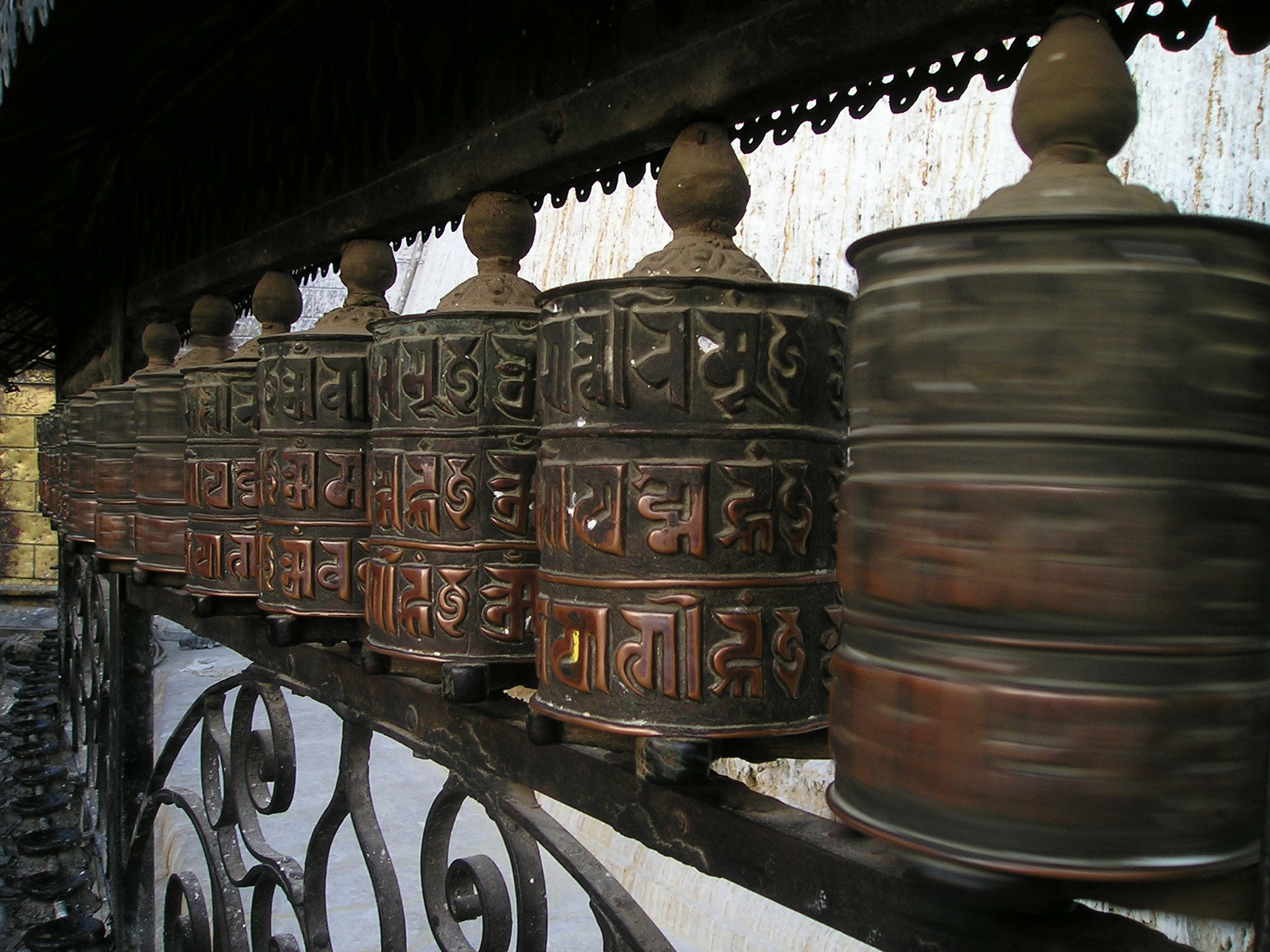
- Boudhanath (site): The Boudha Stupa in Kathmandu; walk around it clockwise, as at every Buddhist shrine.
- Swayambhunath (site): The stupa known as the Monkey Temple, in Kathmandu; keep your distance from the monkeys.
- Nagarkot (town): A hill station about an hour from Kathmandu with views of the Himalaya.
- Daman (town): A tiny mountain village with panoramic views of the Himalaya at sunrise and sunset.
- Tangting (town): A traditional Gurung village with views of the Annapurna range.
- Parping (site): Sacred caves linked to Padmasambhava, the founder of Tibetan Buddhism.
- Haleshi (site): A mountain cave, Maratika in Tibetan, where Padmasambhava is said to have attained a state beyond life and death.
Regions
- Himalayas: The high mountains, with Mount Everest, the Annapurna and the Great Himalaya Trail, for trekking and adventure sports.
- Kathmandu Valley: Kathmandu, Patan and Bhaktapur, a crossroads of cultures with many temples and monuments.
- Middle Hills: Hills mostly between 700 and 4,000 m, including the Pokhara Valley, a base for outdoor activities.
- Western Tarai: Lowlands with Chitwan and Bardiya national parks and Lumbini.
- Eastern Tarai: A populated lowland area around Biratnagar, Nepal's second-largest city.
Things to do
See
- Kathmandu Valley heritage Kathmandu, Patan and Bhaktapur: Hanumandhoka Durbar Square in Kathmandu, Patan Durbar Square and car-free Bhaktapur; the valley is a UNESCO World Heritage Site.
- Boudhanath and Swayambhunath Kathmandu: Walk clockwise around the stupas of Boudhanath and Swayambhunath, and keep away from the monkeys at Swayambhunath.
- Lumbini Lumbini: The birthplace of the Buddha, a UNESCO World Heritage Site and a place of pilgrimage.
Do
- Annapurna treks Annapurna: The circuit takes two to three weeks and crosses the Thorung La at 5,400 m; the shorter loop from Nayapul via Ghandruk and Ghorepani reaches Poon Hill for a dawn view of the Himalaya.
- Everest Base Camp trek Khumbu and Mount Everest: Fly to Lukla and walk up through Namche Bazaar; in November the Mani Rimdu festival takes place at Tengboche monastery.
- Jungle safari Chitwan National Park: Canoe trips, nature walks, bird watching and the chance to spot rhinos and tigers; Bardiya is less visited.
- Rafting and kayaking From Kathmandu and Pokhara: Trips of 1 to 10 days for every level on rivers such as the Kali Gandaki, Seti, Karnali and Sun Koshi; book only with reputable agencies.
Eat
- Dal bhat and momos: Rice with lentils and spiced vegetables, eaten twice a day in homes and tea houses, and momos, dumplings sold almost everywhere.
- Newari restaurants Kathmandu Valley: Newar cooking is one of the most varied in Nepal, and some restaurants serve it with a cultural show.
After dark
- Evenings in Pokhara Pokhara: Restaurants and live music by the lake; cocktails are found mainly in the tourist areas of Pokhara and Kathmandu.
Itineraries
Kathmandu Valley, Pokhara and Chitwan in 10 days (10 days)
- Kathmandu (3 nights): Durbar Square, Boudhanath and Swayambhunath, with a day trip to Patan.
- Bhaktapur (1 night): A car-free historic city known for its pottery.
- Nagarkot (1 night): Views of the Himalaya at dawn.
- Pokhara (3 nights): Annapurna views, a short trek or a rafting trip.
- Chitwan National Park (2 nights): Canoe trips and nature walks; tourist buses link it with Pokhara and Kathmandu.
Everest Base Camp trek in 14 days (14 days)
- Kathmandu (1 night): Arrange your permits, the TIMS card and a licensed guide.
- Lukla (1 night): Fly in from Kathmandu; mountain flights are often delayed by weather.
- Namche Bazaar (2 nights): Acclimatise: climb high by day and sleep no more than 300 m higher each night.
- Khumbu and Mount Everest (8 nights): Tea-house stages to Everest Base Camp and back, via Tengboche monastery.
- Kathmandu (2 nights): Keep a spare day in case flights out of Lukla are cancelled.
The lowlands: Chitwan, Lumbini and Bardiya in 8 days (8 days)
- Chitwan National Park (2 nights): Jungle walks and canoe trips.
- Lumbini (2 nights): The birthplace of the Buddha.
- Nepalgunj (1 night): The hub for the western parks.
- Bardiya National Park (3 nights): A quieter jungle safari; malaria occurs below 2,000 m, so protect yourself from mosquitoes.
Climate and best time to visit
| Jan | Feb | Mar | Apr | May | Jun | Jul | Aug | Sep | Oct | Nov | Dec | |
|---|---|---|---|---|---|---|---|---|---|---|---|---|
| Max °C | 18 | 20 | 24 | 27 | 28 | 28 | 28 | 28 | 27 | 26 | 23 | 19 |
| Min °C | 2 | 4 | 8 | 11 | 16 | 19 | 20 | 20 | 18 | 13 | 7 | 3 |
| Rain mm | 14 | 17 | 31 | 54 | 114 | 256 | 360 | 314 | 183 | 59 | 8 | 14 |
Nepal's climate changes with altitude. In Kathmandu the average maximum goes from 18 °C in January to about 28 °C from May to August, and January nights average about 2 °C, close to freezing. The monsoon, from June to September, brings most of the year's rain: July is the wettest month in Kathmandu, with about 360 mm, while November has under 10 mm. The UK notes that the monsoon can last into October. From April to June the Tarai lowlands can reach 40 °C or more, while at high passes and base camps it can be -10 °C even when the plains are warm.
October to December is the best season for the hills and mountains, with little dust in the air. April and May are the season of rhododendrons in bloom and of mountain expeditions. In the monsoon, rain in Kathmandu and Pokhara usually comes as an hour or two every two or three days, lodgings are cheaper and there are fewer visitors, but clouds often hide the peaks and landslides close roads. You can trek in winter, but in the Khumbu snow may stop you going above 4,000 to 4,500 m; the Jomsom trek stays below 3,000 m.
Getting there and around
| Main airports | KTM |
|---|---|
| International driving permit | Required |
Getting there
By air: international flights land at Tribhuvan International Airport (KTM) in Kathmandu. From Europe or North America you usually change planes in the Middle East or elsewhere in Asia, so expect a long journey. Airspace closures in the Middle East have disrupted flights in 2026: check with your airline before you travel.
By land from India: five crossings are open to tourists, with buses from the Indian side: Sunauli to Bhairahawa (from Varanasi), Raxaul to Birganj (from Patna and Kolkata), Panitanki to Kakarbhitta (from Siliguri and Darjeeling), Bahraich to Nepalgunj (from Lucknow) and Banbasa to Mahendranagar (from Delhi). Some land borders issue visas on arrival, and smaller posts such as Birgunj may accept only US dollars. The cross-border train from Raxaul is closed to foreigners other than Indians. From Tibet you need a permit and an organised tour: the Kodari crossing is open again, while Rasuwa Gadhi has been closed since the floods of August 2026. Floods, landslides and earthquakes can close these crossings at short notice; contact the Chinese embassy in Kathmandu for the current rules.
Getting around
Domestic flights by Nepal Airlines, Yeti Air, Tara Air and others link Kathmandu with Pokhara, Lukla, Jomsom, Biratnagar, Nepalgunj, Janakpur and more. Mountain flights are often delayed or cancelled by bad weather, so leave spare days and carry enough cash. The UK lists every Nepali airline on its Air Safety List, and plane and helicopter crashes have killed at least 100 people in the last five years. Tourist buses, booked a few days ahead through an agent or your hotel in Kathmandu or Pokhara, are more comfortable and safer than local buses, which are cheap but often overcrowded. Bus accidents are common: avoid overloaded buses and night journeys, and take care with microbuses, which are driven fast. Do not use public transport during a general strike (bandh).
Agree the fare before you get into a rickshaw; in taxis, offer the meter fare plus a tip. Hiring a car with a driver is easy if you haggle, while self-drive car rental is almost unknown. Traffic drives on the left, and to drive you need a 1968 International Driving Permit with your licence (the 1949 permit is no longer accepted). There is zero tolerance for drink driving, and motorbike riders must wear a helmet. Roads are poor, especially in the mountains and during the monsoon, when landslides block them, and fuel shortages sometimes disrupt plans. Rental motorbikes are rarely insured: check the bike for damage before you leave, and do not leave your passport as a deposit.
Flying to Nepal? PartnerCompare fares and find the cheapest datesSearch flightsWhere to stay
- Budget guesthouses: Cheap and negotiable, with big discounts for long stays; the cheapest rooms may have no sheets, blankets or towels, so look before you take one.
- Mid-range hotels: Three-star equivalents usually have air conditioning, a private bathroom, internet and satellite TV; prices are a little higher in Kathmandu.
- Top hotels: The best are comparable to four-star hotels in Western countries, with pools and no power cuts; prices are fixed, and some in Kathmandu have security checks at the door.
- Tea houses: Lodges along the main trekking routes, with showers and meals from dal bhat to pizza, so you need no tent or food.
- Camping: Needed for one or more nights on remote treks such as Kanchenjunga and Dolpa, arranged through a local agency.
Accommodation can easily be the cheapest part of a trip to Nepal. First prices are rarely fixed in budget places, so haggle politely. Building and fire standards are not always what you are used to: check the fire exits and whether there is a working fire alarm, watch for exposed wiring, and beware of carbon monoxide from fires, charcoal grills and badly installed gas equipment in rooms without ventilation. Hotels may ask you to scan a NepaliPort QR code (see Entry).
Eat and drink
Dishes to try
- Dal bhat tarkari: Spiced lentils poured over rice with cooked vegetables, often with yogurt and a very hot pickle; served twice a day in homes and tea houses, traditionally eaten with the right hand.
- Momos: Meat or vegetable dumplings of Tibetan origin, found almost everywhere in Kathmandu and other towns.
- Newari dishes: The cooking of the Newars of the Kathmandu Valley, more varied than most of Nepal thanks to the valley's vegetables.
- Rikikul: Sherpa potato pancakes, eaten hot off the griddle with butter or yak cheese.
- Tibetan bread: Puffy fried bread with honey, eaten for breakfast.
- Chiura: Beaten rice, eaten with yogurt, hot milk and sugar.
Drinks
- Milk tea and chai: Tea boiled with milk and sugar; chai may also have ginger and cardamom.
- Suja: Salty tea with milk and butter, found in Tibetan and Sherpa areas.
- Raksi: A clear spirit of about 45% alcohol, usually home-made, so the strength varies; the cheapest drink in the country.
- Jaand (chyaang): A cloudy rice beer often offered to guests; it is diluted with water, so ask whether the water was treated.
- Everest and Gorkha: The two popular local beers.
Beef is not part of traditional Nepali food, because Hindus hold cattle sacred, though some expensive restaurants serve it. Upper-caste Hindus do not eat pork, and some communities are vegetarian. The tourist districts of Kathmandu, Pokhara and Chitwan also have pizza and Mexican, Thai, Chinese and Middle Eastern food, but local dishes cost less. In small restaurants order one or two dishes, as the cook may have only one burner.
Do not drink tap water, treat salads with suspicion in the wet season, and choose food that is freshly cooked and protected from flies. The UK warns of methanol poisoning from alcoholic drinks in travel destinations and of drink spiking: never leave a drink unattended or accept one from a stranger.
Entry requirements and visas
| Passport validity | At least 6 months after the date you arrive (UK advice); Canada asks for 6 months beyond the date you leave |
|---|
| Passport | Entry | Max stay | Notes |
|---|---|---|---|
| United Kingdom | Visa on arrival | 90 days | Apply online up to 15 days before arrival and pay at the airport, or apply in advance at a Nepalese embassy. |
| Canada | Visa on arrival | 90 days | Tourist visa on arrival at Kathmandu airport and some land borders, or from a Nepalese embassy; bring a passport photo. |
Other nationalities: check the official source below.
UK and Canadian citizens need a visa and can buy a tourist visa of up to 90 days at Tribhuvan International Airport in Kathmandu, at some land borders, or in advance from a Nepalese embassy. You can fill in the online form up to 15 days before you arrive and pay at the airport, or use the forms and terminals there. Pay in cash, ideally US dollars, with a card as back-up, and bring a recent passport photo. In October 2026 Wikivoyage listed fees of US$30 for 15 days, US$50 for 30 days and US$125 for 90 days. You can extend the visa up to a total of 150 days in a year. Overstaying is a serious offence, with fines or detention and possibly a 7-year ban on returning.
Since 16 September 2025 every foreign visitor must register on arrival through the NepaliPort website or app, and hotels, airlines and other businesses may ask you to scan QR codes. Border officers may ask for travel insurance that covers medical costs and repatriation, and for a booking for your first night. You need a yellow fever certificate if you arrive from a country with yellow fever risk. Declare cash above US$5,000 and keep the certified form; gold jewellery is limited to 50 g and silver to 100 g. Rules depend on your passport and can change: check the official link before you book.
Money and payments
| Currency | Nepalese Rupee (NPR) |
|---|---|
| Cards | Limited |
The currency is the Nepalese rupee (NPR, written Rs or रु). Nepal runs largely on cash: cards are accepted in larger shops, hotels and restaurants, and there are ATMs in Kathmandu, Pokhara, Chitwan and other main cities, but they are not reliable outside the main tourist areas, so take enough cash before you trek. As listed on Wikivoyage in October 2026, every ATM charges a withdrawal fee of at least Rs500. Keep your exchange and ATM receipts, because the airport bank asks for them before changing rupees back.
Indian rupees are widely accepted in larger cities and tourist areas, but notes above 100 Indian rupees are banned. It is illegal to take Nepalese banknotes out of the country, so change them before you leave.
Health
| Required vaccines | Yellow fever, only if you arrive from a country with yellow fever risk (including airport transits of more than 12 hours), Polio, only if you arrive from certain countries with polio transmission (UK advice) |
|---|---|
| Recommended vaccines | Routine vaccines, including measles (MMR), Hepatitis A, Hepatitis B, Typhoid, for most travellers, Japanese encephalitis, for long stays or rural trips, Rabies, for some travellers: dogs with rabies are common, Cholera, to consider for areas of active transmission, Mpox, for travellers at risk of sexual exposure |
| Malaria | Some areas |
| Tap water | Not safe |
Ask a travel health professional about vaccines at least 6 to 8 weeks before you go. Malaria: the CDC recommends preventive medicine only below 2,000 m in Sudurpashchim and Karnali provinces; there are rare cases below 2,000 m elsewhere, and none in Kathmandu, Pokhara or on the usual Himalayan treks. Dengue and chikungunya, spread by mosquitoes, are also risks, so use repellent. Dogs with rabies are common and rabies vaccine may be available only in larger towns: keep away from dogs, and from the monkeys at Swayambhunath. Do not drink tap water unless it is boiled or treated; on the Annapurna Circuit you can buy safe water at refill stations.
Altitude sickness is a real risk on treks, where base camps and high passes are usually higher than Mont Blanc: climb slowly and sleep no more than 300 m higher each day. Healthcare is poor outside the Kathmandu Valley and Pokhara, Western clinics are expensive, and most hospitals ask for payment or proof of insurance before they treat you. Serious cases often need evacuation to Bangkok, New Delhi or Singapore, and a rescue helicopter costs £1,000 to £2,000 or more per flying hour, so get insurance that covers both. The UK says there is no central public ambulance service and advises calling the nearest hospital in an emergency; private ambulances run in the main cities. The UK and Canada still list 102 for medical emergencies. Air pollution is also a health risk.
This is general information, not medical advice: check with a travel health professional before you go.
Safety
- United States: Level 2: Exercise Increased Caution (2026-10-20)
- Canada: Exercise a high degree of caution (2026-10-20)
- United Kingdom: No advice against travel (2026-10-20)
After severe flash floods and mudslides on 26 August 2026, Canada advises against non-essential travel to the Rasuwa and Nuwakot districts, and the UK warns that Gorkha, Nuwakot and Dhading were also affected and that more floods and landslides are possible. Check the advice before you go. The government runs emergency hotlines on 1234 (in Nepali) and 1144. Earth tremors are common across Nepal, and the monsoon, normally June to October according to the UK, brings floods and landslides that can cut off roads and villages for days.
The rate of serious crime is low, but pickpockets and bag snatchers work in airports, on buses and in areas popular with visitors such as Thamel, Sanepa and Kupondol in Kathmandu, and thefts rise in the festival season from September to November. Avoid walking alone at night in poorly lit streets; women have been sexually assaulted in Thamel and Sanepa. Never accept drinks, food or cigarettes from new acquaintances or leave drinks unattended. Protests and general strikes (bandhs) are common and can turn violent at short notice: keep away, and expect curfews and transport disruption.
To trek you need a permit and a TIMS card, and independent trekkers must hire a licensed local guide or porter in national parks and protected areas. Never trek alone: armed robberies of solo trekkers occasionally occur, and in the mountains the weather can change suddenly at any time of year, with blizzards and avalanches. Beware of very cheap trekking deals: some guides take clients up too fast and then call expensive helicopter evacuations, so ask for a medical assessment first and make sure your insurance covers mountain rescue. Drug penalties are severe, even for small amounts of cannabis, and products containing CBD are illegal. Do not photograph military sites, checkpoints or personnel, and carry your passport.
Customs and etiquette
Greet people with namaste, palms together and fingers up, or the more formal namaskar for an older person; it serves for hello and goodbye, once per person per day. Feet are considered dirty: do not point your soles at people or religious images, and do not step over someone sitting or lying on the ground. Take your shoes off before entering a home and some holy places. Use your right hand to give, take and eat, as the left is considered unclean.
Walk clockwise around Buddhist stupas, monasteries and mani walls. Non-Hindus are not allowed into parts of some Hindu temples, and some strict Hindus prefer that you do not touch their water containers or food: let them pour for you, and wait to be invited before you enter a house. In temples do not wear shorts or sleeveless tops, women should dress conservatively in public, and public displays of affection, by any couple, are considered inappropriate. Same-sex relations are legal. When you haggle, keep it friendly and leave the seller a fair profit. It is illegal to try to convert people to another religion.
Language
| Official languages | Nepali |
|---|---|
| English | Common |
| Hello / Goodbye | नमस्ते (Namaste) |
|---|---|
| Thank you | धन्यवाद (Dhanyabad) |
| Please | कृपया (Kripaya) |
| Yes / No | हो / होइन (Ho / Hoina) |
| Excuse me / Sorry | माफ गर्नुहोस् (Maaf garnus) |
| See you again | फेरी भेटौँला (Pheri bhetaula) |
| I need your help | मलाई सहयोग गर्नुहोस् (Malaai sahayog garnuhos) |
What to pack
- Passport, and a copy kept apart: The UK advises carrying your passport with you.
- US dollars in cash: The preferred currency for the visa on arrival; smaller border posts may take only dollars.
- Passport photos: Needed for the visa on arrival and to buy a SIM card.
- Proof of travel insurance and of your first night's booking: Border officers may ask to see them.
- Warm clothes, rain gear, sunblock (SPF 20 or higher) and sunglasses: UK advice for treks, where the weather changes suddenly.
- Iodine or another water treatment: Tap water is unsafe, and on treks you treat your own.
- Medical and first aid kit: Healthcare is poor outside the Kathmandu Valley and Pokhara.
- A torch: Power cuts happen all year, and in the lowlands snakes are active at night.
- 1968 International Driving Permit: Needed to drive; UK drivers cannot get one outside the UK.
Quick reference
Country facts
| Capital | Kathmandu |
|---|---|
| Population | 29,618,118 (2025) |
| Area | 143,350 km² |
| Time zone | Asia/Kathmandu (UTC+5.75) |
| Calling code | +977 |
| Driving side | left |
Staying connected
| SIM and eSIM | NTC (Nepal Telecom) and Ncell sell SIM cards to tourists in Kathmandu and most large towns. Bring your passport, a passport photo and copies of your passport and visa pages. NTC has better coverage on the Annapurna, Everest and other trekking routes. |
|---|---|
| Roaming | Coverage is limited in remote areas, including long stretches of the Annapurna Circuit: consider renting a satellite phone, and tell your family when you will be out of contact. |
| Wi-Fi | Free in most hotels and lodges in Kathmandu and Pokhara, and in many restaurants; more and more village lodges have it, while in remote villages access may be by satellite and expensive. |
Useful apps
- NepaliPort: Compulsory registration on arrival; hotels and airlines may ask you to scan its QR codes.
Emergency numbers
| Police | 100 |
|---|---|
| Ambulance | 102 |
| Fire | 101 |
| Tourist police | 1144 |
Frequently asked questions
Do I need a visa for Nepal?
Yes. UK and Canadian citizens can get a tourist visa of up to 90 days on arrival at Kathmandu airport. Rules depend on your passport, so check the official link before you book.
When is the best time to visit Nepal?
October to December, when the air is clear in the hills and mountains, and April and May, when the rhododendrons bloom. The monsoon, from June to September, brings rain, cloud over the peaks and landslides.
Can I trek in Nepal without a guide?
Not in national parks and protected areas: independent trekkers must hire a licensed local guide or porter, and you need a permit and a TIMS card.
Can I drink the tap water in Nepal?
No. Drink water that has been boiled, filtered or treated, or sealed bottled water.
Is there malaria in Nepal?
Only in some areas below 2,000 m; there is none in Kathmandu, Pokhara or on the usual Himalayan treks. Ask a travel health professional before you go.
Can I pay by card in Nepal?
In larger hotels, shops and restaurants, yes, but Nepal runs mostly on cash, and ATMs are unreliable outside the main tourist areas.
More Travel Stories from Asia

 Laos
 Cambodia
From the original Tourist4Tourist guide, written by travellers. Not yet checked against current sources.
Outdoor activities
- A1 Excursion: Trekking in Nepal means watching the most spectacular sceneries and also follows the trails, which had been used for the purpose of communication and trade for centuries, walking through the heart of the Hills and Mountains. The best period for trekking in Nepal is in the autumn season which extends from early September to early December. – http://www.a1excursion.com
- Himalayan Responsible Travel: Offers excursions service. – http://www.himalayanrespotrek.com
Sources This guide was last checked on · 17 sources
- Wikivoyage: Nepal · Overview, Places to visit, Things to do, Itineraries, Climate and best time to visit, Getting there and around, Where to stay, Eat and drink, Entry requirements and visas, Money and payments, Health, Safety, Customs and etiquette, Language, What to pack, Staying connected, Frequently asked questions
- Wikidata: Nepal · Overview, Places to visit, Money and payments, Country facts
- Government of Canada: Nepal travel advice (updated 15 October 2026) · Overview, Climate and best time to visit, Getting there and around, Entry requirements and visas, Money and payments, Health, Safety, Customs and etiquette, What to pack, Staying connected, Frequently asked questions
- WMO World Weather Information Service: Kathmandu · Climate and best time to visit
- UK FCDO: Nepal safety and security · Climate and best time to visit, Getting there and around, Where to stay, Eat and drink, Safety, Customs and etiquette, What to pack, Staying connected, Frequently asked questions
- UK FCDO: Nepal warnings and insurance · Getting there and around, Safety
- UK FCDO: Nepal entry requirements (updated 1 October 2026) · Entry requirements and visas, Money and payments, Health, What to pack, Frequently asked questions
- ISO 4217 (SIX), published 2026-09-17 · Money and payments
- CDC Travelers' Health: Nepal · Health, Frequently asked questions
- UK FCDO: Nepal health · Health
- US Department of State: Nepal travel advisory · Safety
- UK FCDO: Nepal travel advice · Safety
- Wikivoyage: Nepali phrasebook · Language
- World Bank, SP.POP.TOTL · Country facts
- World Bank, AG.LND.TOTL.K2 · Country facts
- IANA Time Zone Database, zone.tab · Country facts
- UK FCDO: Nepal getting help · Emergency numbers
Suggest an update
Travel rules, prices and timetables change. If something in this guide is out of date, tell us: we check every suggestion against an official source before changing the page.