

- Local time
- 11:37
- Currency
- South Korean Won (KRW)
- Capital
- Seoul
- Calling code
- +82
- Drive on the
- right
Overview
Royal palaces, Buddhist temples, mountain trails and the volcanic island of Jeju, linked by fast trains. For lovers of food, history and city life.
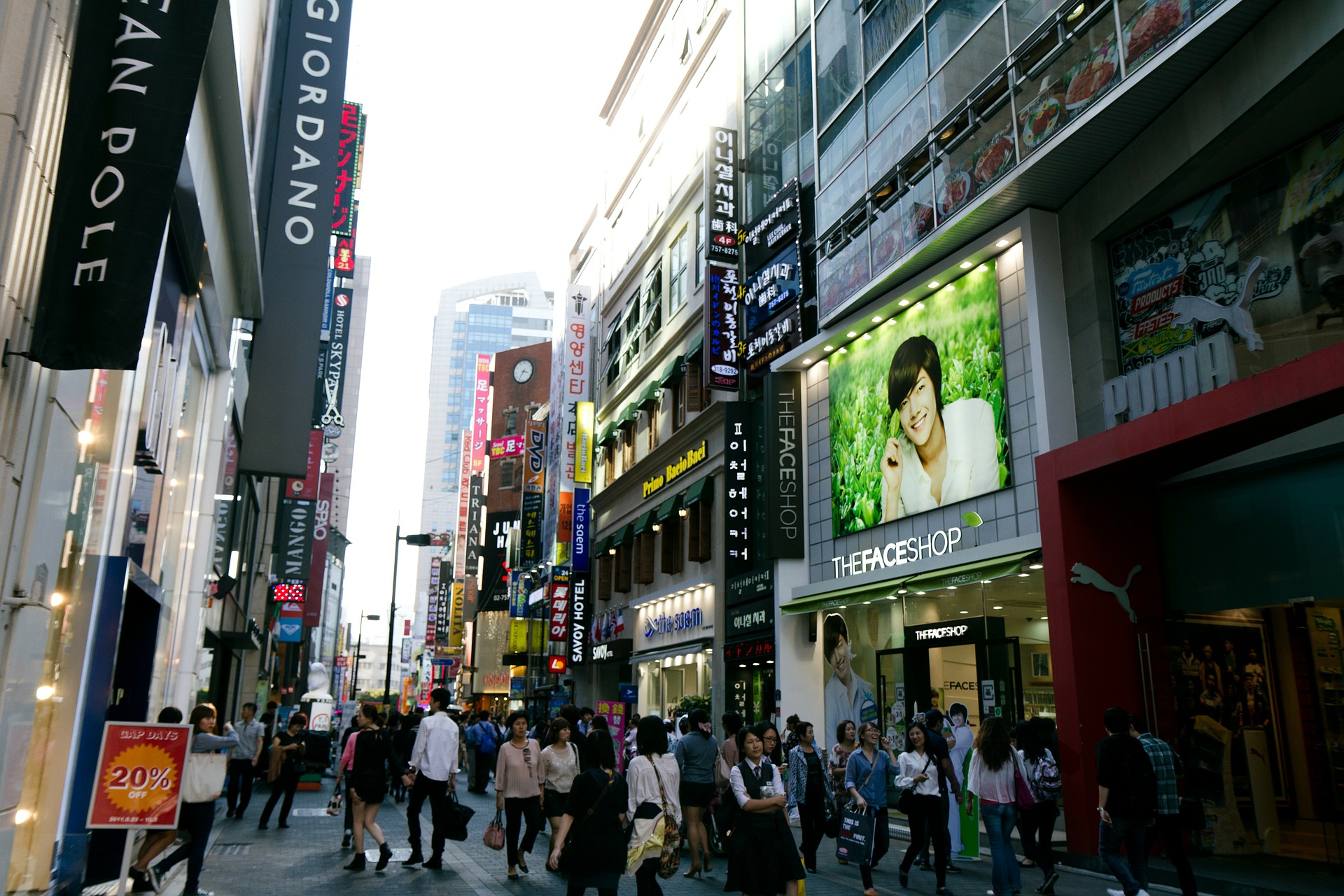
South Korea fills the southern part of the Korean Peninsula, and it packs a lot into a small space. Seoul, the capital, has the palaces of the Joseon dynasty, which ruled Korea from 1392 to 1910, next to shopping districts, nightlife and the music industry that gave birth to K-pop. Gyeongju was the capital of the Silla kingdom and has many royal burial sites, while Andong and Jeonju keep traditional villages and hanok houses.
Most of the country is mountainous, with more than 20 national parks and trails signposted in English, and the coast runs from the beaches of Busan to the small islands of the south. Getting around is easy: high-speed trains link Seoul with the main cities in a few hours, and buses reach every town. Plan around Lunar New Year and Chuseok, the two big family holidays, when transport is packed and many shops and restaurants close.
- Seoul: Palaces, the National Museum of Korea, teahouses in Insadong and the walk along the Cheonggyecheon stream.
- Gyeongju: The old capital of the Silla kingdom, with royal burial grounds and World Heritage sites.
- Busan: The second city and main port, known for Haeundae beach and its seafood.
- Jeju: A volcanic island with lava tubes, Seongsan Ilchubong and Hallasan, the highest mountain in South Korea.
- Seoraksan National Park: The country's best-known mountain park, in Gangwon province.
- Andong and Hahoe Folk Village: Confucian traditions and Hahoe, a living folk village.
Places to visit
- City
- Town
- Island
- Park
- Historic site
Cities
- Seoul: The capital, about 600 years old, with the Joseon palaces, many museums, nightlife and fine dining.
- Busan: The second city and main beach destination, with ferries to Japan.
- Incheon: A major port and the home of the country's largest international airport.
- Gyeongju: The ancient capital of the Silla kingdom, with royal tombs and World Heritage sites.
- Jeonju: A city of the arts with a hanok village, museums and old Buddhist temples.
- Daegu: A large city with old traditions and historic sights.
- Gwangju: The administrative and business centre of its area.
- Daejeon: A large city in South Chungcheong, where the main rail lines and highways meet.
- Chuncheon: The capital of Gangwon, surrounded by lakes and mountains and known for dakgalbi and makguksu.
Beyond the cities
- Seoraksan National Park (park): The country's best-known national park and mountain range, spread over four cities and counties.
- Jirisan National Park (park): A mountain park with hiking trails of one to three days.
- Jeju (island): A volcanic island and province, with lava tubes, Hallasan and a milder winter than the mainland.
- Andong (town): A centre of Confucian traditions, near the inhabited Hahoe Folk Village.
- Panmunjeom (site): The truce village in the Demilitarized Zone, visited on tours.
- Yeosu (town): A port on the south coast known for seafood, beaches and boat trips to the islands of Hallyeo Ocean Park.
- Jindo (island): Home of the Jindo dog and of a yearly festival to see the parting of the sea.
- Ulleungdo (island): A remote island off the east coast, reached by ferry.
- Pyeongchang (town): The host of the 2018 Winter Olympics, in Gangwon province.
Regions
- Gyeonggi: The province around Seoul, close to the Demilitarized Zone.
- Gangwon: Mountains, Seoraksan National Park, beaches and ski resorts.
- North Chungcheong: A landlocked province of mountains and national parks.
- South Chungcheong: Rice paddies in the centre-west, where the main rail lines and highways meet, known for hot springs.
- North Gyeongsang: The largest province and the richest in historic sites, with Andong, Gyeongju and Ulleungdo.
- South Gyeongsang: Seaside cities and the beaches where many Koreans spend their summer holidays.
- North Jeolla: Known for its food.
- South Jeolla: Small islands, seafood along the coast and good fishing.
- Jeju: The volcanic island, popular with honeymooners, with wildflowers and horse riding.
Things to do
See
- Joseon palaces Seoul: Gyeongbokgung, Changdeokgung and the Secret Garden in the old Joseon city, ringed by a fortress wall; Namdaemun is one of its eight gates.
- National Museum of Korea Seoul: The country's main collection of history and art: allow a full day.
- The DMZ and Panmunjeom Panmunjeom: A tour of the truce village on the border and the Third Tunnel, about 44 km from Seoul. Follow the instructions of the guides and the authorities.
- Royal tombs of Gyeongju Gyeongju: Royal burial grounds and World Heritage sites from the Silla kingdom.
- Folk villages Andong and Jeonju: Hahoe Folk Village near Andong and the Hanok Village in Jeonju; in Hahoe you can also sleep in a traditional house.
Do
- Hiking Bukhansan, Seoraksan, Jirisan and Hallasan: Trails of one to three days with English signs and mountain huts; spring and autumn are the best seasons.
- Lava tubes, Seongsan Ilchubong and Hallasan Jeju: Explore the lava tubes and climb Hallasan, at 1,950 m the highest mountain in South Korea.
- A night in a jjimjilbang: Public baths with saunas and a warm sleeping hall, found even in small towns; wash before you enter the baths.
- Temple stay: Spend one or more days in a Buddhist monastery, joining the monks in some of their rituals.
Eat
- Korean barbecue: Grill pork belly, bulgogi or galbi at the table and wrap the meat in lettuce with garlic and ssamjang.
Shop
- Insadong and Myeongdong Seoul: Traditional crafts and celadon in Insadong, fashion in Myeongdong and Dongdaemun; antiques over 50 years old cannot leave the country.
After dark
- Soju in a pojangmacha: Street tents serving soju with comfort food; order a dish with your drinks.
Itineraries
Seoul and the south-east in 9 days (9 days)
- Seoul (3 nights): Palaces, the National Museum and a day tour to Panmunjeom.
- Andong (1 night): Hahoe Folk Village and Andong soju.
- Gyeongju (2 nights): Royal tombs of the Silla kingdom.
- Busan (3 nights): Haeundae beach, seafood restaurants and the ferry to Japan if you continue.
Mountains of Gangwon in 5 days (5 days)
- Seoul (2 nights): Take the ITX-Cheongchun train to Chuncheon.
- Chuncheon (1 night): Lakes and dakgalbi, the local stir-fried chicken.
- Seoraksan National Park (2 nights): Day hikes, best in spring and autumn.
Jeonju, the south coast and Jeju in 8 days (8 days)
- Jeonju (2 nights): The Hanok Village, museums and temples.
- Yeosu (2 nights): Seafood and boat trips to the islands.
- Jeju (4 nights): Fly in from one of the many mainland airports; lava tubes, Seongsan Ilchubong and Hallasan.
Climate and best time to visit
| Jan | Feb | Mar | Apr | May | Jun | Jul | Aug | Sep | Oct | Nov | Dec | |
|---|---|---|---|---|---|---|---|---|---|---|---|---|
| Max °C | 2 | 5 | 11 | 18 | 24 | 28 | 29 | 30 | 26 | 20 | 12 | 4 |
| Min °C | -6 | -3 | 2 | 8 | 14 | 19 | 22 | 23 | 18 | 11 | 4 | -3 |
| Rain mm | 17 | 28 | 37 | 73 | 104 | 130 | 414 | 348 | 142 | 52 | 51 | 23 |
South Korea has four clear seasons. In Seoul the average maximum is about 2 °C in January, with nights around -5 °C, and Siberian winds make January and February bitterly cold; Busan and Jeju are milder. Summer starts with the rainy season in June and July, then turns hot and very humid, with highs that can reach 35 °C. July and August are by far the wettest months in Seoul, with more than 340 mm of rain each, and the typhoon season runs from June to November.
Spring (April and May) and autumn (from September) are the best times to visit. Spring is warm without too much rain, but yellow dust and air pollution are common, so check the air quality. Autumn brings fair days and the fall colours in the mountains. Winter suits skiing in Gangwon and hot springs.
Holidays and events
- 1 January 2026 · New Year's Day
- 16 February 2026 · Lunar New Year
- 17 February 2026 · Lunar New Year
- 18 February 2026 · Lunar New Year
- 2 March 2026 · Independence Movement Day
- 1 May 2026 · Labour Day
- 5 May 2026 · Children's Day
- 25 May 2026 · Buddha's Birthday
- 3 June 2026 · Local Election Day
- 6 June 2026 · Memorial Day
- 17 July 2026 · Constitution Day
- 17 August 2026 · Liberation Day
- 24 September 2026 · Chuseok
- 25 September 2026 · Chuseok
- 26 September 2026 · Chuseok
- 5 October 2026 · National Foundation Day
- 9 October 2026 · Hangul Day
- 25 December 2026 · Christmas Day
Getting there and around
| Main airports | ICN, GMP, PUS, CJU |
|---|---|
| International driving permit | Required |
Getting there
By air: most visitors land at Incheon International Airport (ICN), about an hour west of Seoul, with flights from Asia, Europe and North America. The AREX rail line links it to Gimpo Airport and Seoul Station, and buses leave from outside the arrivals hall for many cities. Seoul's Gimpo Airport (GMP) has domestic flights and short international routes to Tokyo Haneda, Beijing, Shanghai Hongqiao and Taipei Songshan. Busan's Gimhae Airport (PUS) and Jeju (CJU) have flights from other Asian cities.
By sea: ferries link Busan with Japan, including a daily service to Fukuoka that takes about 5.5 hours and overnight boats from Shimonoseki and Osaka, and Incheon with several Chinese ports. By land: you cannot enter South Korea overland, because the only border is with North Korea. Since March 2025 there are strict rules on power banks on flights to Korea: carry them in the cabin with the charging ports taped.
Getting around
Trains are the easiest way to travel. KTX and SRT high-speed trains connect Seoul with Busan, Daegu, Gwangju, Yeosu, Mokpo, Gangneung and Pyeongchang, and the fastest reach Busan in just over two hours. Book a day ahead for weekends, and expect crowds and delays around Lunar New Year and Chuseok. The Korail Pass gives unlimited travel to foreign visitors but must be bought at least five days before travel. Buses connect every city and town; express and intercity buses often use different terminals, so check which one you need. Domestic flights make sense mainly for Jeju.
In cities, a T-money card works on buses, subways and many taxis across the country; in 2025 it cost ₩5,000 and is topped up with cash. Google Maps does not give driving or walking directions here: use Naver Map or KakaoMap. Few taxi drivers speak English, so show your destination written in Korean, or book through an app. Driving: you need an International Driving Permit with your licence, and UK drivers need the 1949 permit, bought before they leave. The number of fatal road crashes is very high, vehicles often ignore pedestrian crossings, and drivers are presumed at fault in crashes with pedestrians, which can lead to criminal charges. The blood alcohol limit is 0.03%.
Flying to South Korea? PartnerCompare fares and find the cheapest datesSearch flightsWhere to stay
- Hotels: Full-service hotels in all larger towns; ask for discounts outside peak season. Some offer Korean-style ondol rooms with mattresses on a heated floor.
- Motels and yeogwan: Among the cheapest rooms, aimed at couples, found near stations and highway exits; they rarely appear on English-language booking sites.
- Hanok: Traditional houses run like B&Bs, from basic to luxury, in Bukchon in Seoul, Hahoe and Gyeongju.
- Hostels and guesthouses: A few dozen in Seoul and a handful in smaller cities.
- Minbak and pensions: Rooms in private homes in rural areas and near national parks; pensions are more comfortable bungalows with a kitchen.
- Jjimjilbang: Public bath houses with a sleeping hall, a cheap last resort when everything is full.
- Temple stays: Stay one or more nights in a Buddhist monastery.
There is accommodation for every budget, but rooms in Seoul cost about twice as much as in the rest of the country. In a jjimjilbang you leave your shoes in one locker and your clothes in another, and you must shower before entering the baths. Rural minbak and pensions cost more in the high season.
Eat and drink
Dishes to try
- Kimchi: Fermented cabbage with chilli, served with almost every meal; spicy versions usually contain salted shrimp.
- Korean barbecue: Bulgogi (thin marinated meat), galbi (ribs) and samgyeopsal (pork belly), grilled at the table and wrapped in lettuce.
- Bibimbap: Rice topped with vegetables, often meat and an egg, mixed with chilli paste; dolsot bibimbap comes in a hot stone bowl.
- Gimbap: Rice and vegetables rolled in seaweed, a snack or a whole meal that travels well.
- Tteokbokki: Rice cakes in a sweet chilli sauce, milder than it looks.
- Jjigae: Spicy, thick stews eaten with plenty of rice.
- Haemul pajeon: A pan-fried pancake with spring onions and seafood.
- Dakgalbi: Spicy stir-fried chicken with vegetables, a speciality of Chuncheon.
Drinks
- Soju: The national drink, a vodka-like spirit of about 20%; traditional versions such as Andong soju are stronger.
- Makgeolli: Cloudy rice wine, usually 4 to 6%.
- Tea: Green tea, cold barley tea (boricha) and yujacha, made with yuzu jam.
- Sikhye: A sweet, cold rice drink, a classic of the jjimjilbang.
| Meal times | Most restaurants and cafés open around 10:00, so breakfast is hard to find outside bakeries and takeaway coffee shops. |
|---|---|
| Tipping | Not expected anywhere. Many hotels and a few tourist restaurants add a 10% service charge. |
A Korean meal is built around rice and soup, with a meat or fish dish and many small side dishes called banchan. Food is spicy and often salty, and in barbecue restaurants meat is sold by the 100 g. Vegetarians have a hard time: stews often use anchovy stock and kimchi usually has seafood, so carry a written list of what you do not eat, or look for Buddhist temple cuisine, which uses no meat, eggs or dairy.
Wait for the eldest at the table to start, do not leave chopsticks standing in rice and do not lift bowls off the table. When drinking, never fill your own glass: fill others' and they will fill yours, using both hands. The drinking age is 19. Spring water at wells and temples is untreated: check the posted test certificate, in Korean, before you drink it.
Entry requirements and visas
| Passport validity | Valid for the whole stay: beyond the date you leave South Korea (UK and Canada advice) |
|---|
| Passport | Entry | Max stay | Notes |
|---|---|---|---|
| United Kingdom | Visa free | 90 days | Tourism or short business trips, with an onward or return ticket. K-ETA not needed until 31 December 2026. |
| Canada | Visa free | 180 days | Tourist visa not required for up to 180 days. K-ETA not needed until 31 December 2026. |
Other nationalities: check the official source below.
Visitors from many countries enter South Korea without a visa, but they normally need a K-ETA, an electronic travel authorisation, before they fly. Many nationalities, including UK and Canadian citizens, are exempt until 31 December 2026. If you do need one, apply only on the official K-ETA website, because other sites are generally scams, and allow up to 72 hours for approval. You cannot work, including as a teacher, while visiting visa-free.
All travellers fill in an arrival card: on paper on arrival, or online as a free e-Arrival card within 3 days before you land. At the border you give your fingerprints and a facial scan; children under 17 are exempt. Travellers from areas on the Korean quarantine lists may have to submit a Q-Code health questionnaire. Customs rules are strict: declare anything taxable or prohibited, do not bring foods with poppy seeds, and leave any North Korean books, stamps or souvenirs at home. Rules depend on your passport and can change: check the official link before you book.
Money and payments
| Currency | South Korean Won (KRW) |
|---|---|
| Cards | Widespread |
The currency is the South Korean won (KRW, ₩). Visa and Mastercard are accepted almost everywhere except the very cheapest restaurants and motels, even for a coffee. ATMs are everywhere, but many do not take foreign cards: look for global ATMs at airports, Shinhan Bank branches, some subway stations and Family Mart stores. Take cash before you head to the countryside, and bring your passport when you change money. T-money cards are usually topped up with cash only.
A price written as 3.5 means ₩3,500. Shops with a Tax Free or Tax Refund sign let visitors reclaim the 10% VAT: keep the receipt and claim at the refund counters when you leave, which must be within 3 months of the purchase. Bargaining is normal in outdoor markets, but ask for a cheaper price rather than naming a figure. Seoul is more expensive than the rest of the country.
Health
| Recommended vaccines | Routine vaccines, including measles (MMR), Hepatitis A, Hepatitis B, Japanese encephalitis, for long stays or rural trips, Typhoid, for rural areas, long stays or visiting friends and relatives, Tick-borne encephalitis, for long stays or time outdoors in forests and countryside, Rabies, for activities that bring you close to wild animals, Mpox, for travellers at risk of sexual exposure |
|---|---|
| Malaria | Some areas |
| Tap water | Safe |
No vaccinations are required to enter South Korea. See a doctor at least 8 weeks before you go about the recommended ones. There is a malaria risk from March to December in rural areas in the north of Incheon, Gangwon and Gyeonggi provinces, including the Demilitarized Zone; the CDC recommends preventive medicine for these areas, while Canada considers the risk very low for most travellers, so ask your doctor. Tick-borne encephalitis is present in some areas from April to November. Wikivoyage reports that tap water is safe to drink, although many locals boil or filter it to remove the chlorine smell.
Medical care is of a good standard but can be expensive, and nurses and other staff may not speak English. Hospitals expect payment when you are treated and do not bill insurers directly, so carry funds and insurance that covers hospital stays and evacuation. If you are admitted, the hospital may ask for a guardian to help with basic care. Seek help early if you feel seriously ill, as emergency departments can turn patients away. Bring medicines in your hand luggage with an English prescription; narcotic and psychotropic drugs need an import permit, applied for online before you arrive. Yellow dust and air pollution peak in spring. For an ambulance, call 119.
This is general information, not medical advice: check with a travel health professional before you go.
Safety
- United States: Level 1: Exercise Normal Precautions (2026-10-20)
- Canada: Take normal security precautions (2026-10-20)
- United Kingdom: No advice against travel (2026-10-20)
Crime against foreigners is rare. Watch your passport, cards and money in crowded areas, markets and places popular with foreigners such as Itaewon. Assaults, including sexual assaults, and harassment happen around bars and nightlife areas such as Itaewon, Gangnam and Hongdae: do not leave your drink unattended, do not accept snacks or drinks from new acquaintances, and use public transport or a taxi booked by app at night. Illegal taxis operate even at the airport, so use the official taxi rank. The police number is 112, with interpreters on the line, and the 1330 travel hotline helps in English from 7:00 to midnight.
The security situation on the Korean Peninsula can change with little notice, and tensions rise after missile tests by North Korea and during military exercises: follow local news and the instructions of the authorities, and take care near the Demilitarized Zone. Civil emergency drills happen several times a year, with sirens and traffic stopping; follow any instructions. Install the government's Emergency Ready app. Demonstrations are common: avoid them, as foreigners may not take part in political activities. Drug laws are severe, even for small amounts of cannabis, and people have been detained on the basis of a drug test alone. You must carry ID, and photographing military sites and government buildings is illegal. Men of Korean origin may be liable for military service. Typhoons can hit from June to November and heavy rain in June and July causes floods and landslides; for an English weather forecast, call 131.
Customs and etiquette
Koreans value respect for age and status. People bow when they meet and may shake hands; with someone older, support your right arm with your left hand. Use both hands to give or receive things, especially from older people, and offer your seat to older passengers on public transport. Take off your shoes in homes, many family-run restaurants and small clinics. Dress smartly: appearance matters. Communication is often indirect, so a yes may not mean yes, and a compliment is usually turned down out of modesty.
Keep your voice low in Buddhist temples and do not eat or drink there. If you wear a hanbok, wrap it left over right, as the opposite is done only for the dead. Personal questions are common, and you can answer them vaguely. Politics, North Korea and the history with Japan are sensitive subjects: if your hosts raise them, listen rather than debate. Each district has its own recycling rules. Wikivoyage reports that smoking is banned in public buildings, on public transport and in restaurants.
Language
| Official languages | Korean |
|---|---|
| English | Limited |
| Hello | 안녕하세요 (annyeonghaseyo) |
|---|---|
| Thank you | 감사합니다 (gamsahamnida) |
| Please | 부탁합니다 (butakamnida) |
| Yes / No | 네 / 아니요 (ne / aniyo) |
| Excuse me | 실례합니다 (sillyehamnida) |
| Sorry | 죄송합니다 (joesonghamnida) |
| Goodbye (said by the person leaving) | 안녕히 계십시오 (annyeonghi gyesipsio) |
| Is there someone here who speaks English? | 여기에 영어를 하시는 분 계십니까? (yeogie yeong-eoreul hasineun bun gyesimnikka?) |
| Help! | 도와주세요! (dowajuseyo!) |
| Cheaper, please | 싸게 주세요 (ssage juseyo) |
What to pack
- Passport: You must carry ID, and you need the passport to change money and for some tax-free shopping.
- International Driving Permit: Needed with your licence to drive; UK drivers need the 1949 permit, which cannot be bought outside the UK.
- Medicines in hand luggage, with an English prescription: Small amounts for personal use are allowed; some drugs need an import permit.
- Plug adapter: Sockets take the round two-pin European plugs, at 220 V and 60 Hz.
- Face masks: Yellow dust and air pollution are common, especially in spring.
- Your destinations written in Korean: Few taxi and bus drivers speak English.
- Rain gear in summer: June and July bring the rainy season.
Quick reference
Country facts
| Capital | Seoul |
|---|---|
| Population | 51,684,564 (2025) |
| Area | 97,600 km² |
| Time zone | Asia/Seoul (UTC+9) |
| Calling code | +82 |
| Driving side | right |
Electricity and plugs
| Plug types | C, F |
|---|---|
| Voltage | 220 V |
| Frequency | 60 Hz |
Staying connected
| SIM and eSIM | Buy a prepaid SIM at a KT Global store or an airport provider shop, even on the day you arrive; you need a compatible phone. |
|---|---|
| Roaming | Roaming works if your home provider offers it; SK Telecom and LG U+ also rent phones at Incheon, Gimpo and Gimhae airports. Coverage is excellent except in some remote mountains. |
| Wi-Fi | Free public Wi-Fi is widely available, including on public transport, and many coffee shops offer it without registration. |
Useful apps
- Naver Map or KakaoMap: Directions and search in English, since Google Maps does not give directions in South Korea.
- KakaoTalk: The messaging app most Koreans use.
- Kakao Taxi: Book a taxi without language problems.
- Emergency Ready: The government's app for emergency alerts, shelters and medical centres.
Emergency numbers
| Police | 112 |
|---|---|
| Ambulance | 119 |
| Fire | 119 |
Frequently asked questions
Do I need a visa or a K-ETA for South Korea?
Many visitors need no visa for a short trip: UK citizens can stay 90 days and Canadians 180. A K-ETA is normally needed, but many nationalities, including UK and Canadian citizens, are exempt until 31 December 2026. Check the official link before you book.
When is the best time to visit South Korea?
Spring (April and May) and autumn (from September). Summer is rainy, hot and humid, and January and February are very cold. Plan around Lunar New Year and Chuseok, when much closes.
Can I drink the tap water in South Korea?
Wikivoyage reports that tap water is safe to drink, although many locals boil or filter it.
Does Google Maps work in South Korea?
Not for directions. Use Naver Map or KakaoMap for walking, driving and public transport routes.
Can I pay by card in South Korea?
Yes, Visa and Mastercard are accepted almost everywhere. Carry some cash for the countryside and to top up a T-money card.
Do I need to tip in South Korea?
No, tipping is not expected. Some hotels and tourist restaurants add a 10% service charge.
More Travel Stories from Asia

 Laos
 Cambodia
Sources This guide was last checked on · 19 sources
- Wikivoyage: South Korea · Overview, Places to visit, Things to do, Itineraries, Climate and best time to visit, Getting there and around, Where to stay, Eat and drink, Entry requirements and visas, Money and payments, Health, Safety, Customs and etiquette, Language, What to pack, Electricity and plugs, Staying connected, Frequently asked questions
- Wikidata: South Korea · Overview, Places to visit, Money and payments, Country facts, Electricity and plugs
- Wikivoyage: Jeju · Places to visit, Things to do
- Wikivoyage: Jirisan National Park · Places to visit
- UK FCDO: South Korea safety and security · Things to do, Climate and best time to visit, Getting there and around, Safety, What to pack, Staying connected
- Government of Canada: South Korea travel advice (updated 15 October 2026) · Itineraries, Getting there and around, Entry requirements and visas, Health, Safety, What to pack, Staying connected, Frequently asked questions
- WMO World Weather Information Service: Seoul · Climate and best time to visit
- UK FCDO: South Korea health · Climate and best time to visit, Health, What to pack
- Nager.Date: public holidays in South Korea, 2026 · Holidays and events
- UK FCDO: South Korea entry requirements (updated 14 May 2026) · Entry requirements and visas, Frequently asked questions
- ISO 4217 (SIX), published 2026-09-17 · Money and payments
- CDC Travelers' Health: South Korea · Health, Frequently asked questions
- US Department of State: South Korea travel advisory · Safety
- UK FCDO: South Korea travel advice · Safety
- UK FCDO: South Korea getting help · Safety, Emergency numbers
- Wikivoyage: Korean phrasebook · Language
- World Bank, SP.POP.TOTL · Country facts
- World Bank, AG.LND.TOTL.K2 · Country facts
- IANA Time Zone Database, zone.tab · Country facts
Suggest an update
Travel rules, prices and timetables change. If something in this guide is out of date, tell us: we check every suggestion against an official source before changing the page.