

- Local time
- 20:24 (capital)
- Currency
- Mongolian Tugrik (MNT)
- Capital
- Ulaanbaatar
- Calling code
- +976
- Drive on the
- right
Overview
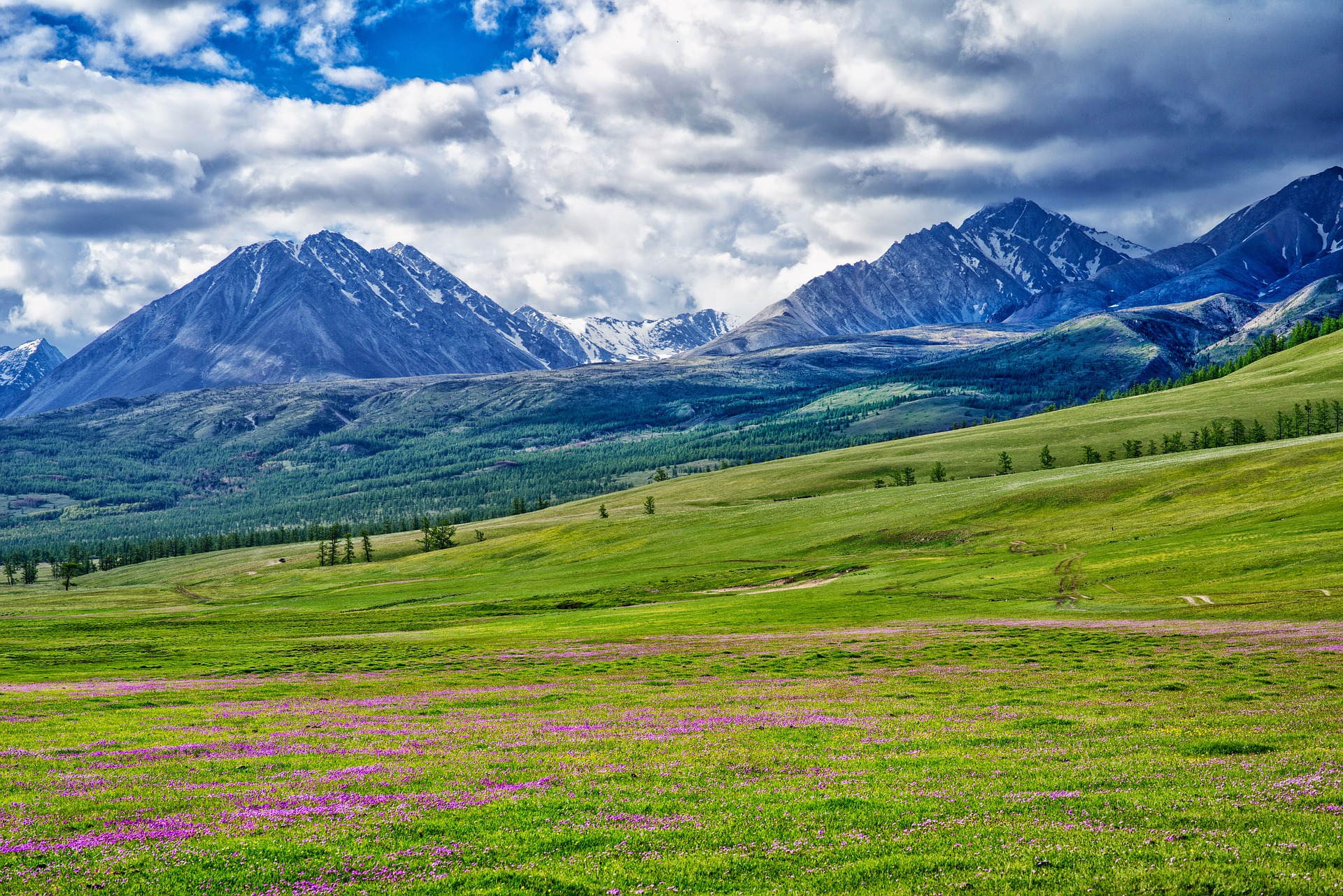
Steppe, the Gobi, the Altai and Lake Khövsgöl, with nomadic herders who still welcome guests in their gers. For travellers who want space and adventure.
Mongolia's appeal is its emptiness. It has the lowest population density of any independent country, about half of its people live in Ulaanbaatar, and outside the capital you can drive for days across steppe, desert and mountains with only the odd herder's camp in sight. Around a third of Mongolians still earn a living as semi-nomadic herders, and a meal or a night with a nomadic family is the experience most visitors remember.
History is here too, though little of it is built in stone: Karakorum, the capital of the Mongol Empire, the few monasteries that survived the religious purges, and thousands of stone monuments and rock drawings across the country. Travel is slow and often rough. Few roads are paved, vehicles break down, and distances are huge, so leave slack in your plans. Ulaanbaatar is often called the coldest capital in the world, and the travel season runs from May to September.
- Ulaanbaatar: The capital and the starting point for almost every trip, with the National Museum and Gandan Monastery.
- Kharkhorin and the Orkhon Valley: The site of Karakorum, the Erdene Zuu Monastery and the Orkhon inscriptions.
- The Gobi: Sand dunes, canyons and the Flaming Cliffs, known for dinosaur finds.
- Lake Khövsgöl: A large freshwater alpine lake in the forested north, near the reindeer herders of the Darhad Valley.
- Altai Tavan Bogd National Park: The highest mountain and largest glacier in Mongolia, with Kazakh eagle hunters nearby.
- Naadam: The July festival of wrestling, horse racing and archery.
Places to visit
- City
- Park
- Area
Cities
- Ulaanbaatar: The capital, home to half the population and the hub for flights, trains and tours.
- Kharkhorin (Karakorum): The ancient capital of the Mongol Empire, founded by Genghis Khan's son Ögedei.
- Tsetserleg: A provincial capital in a forested valley of the Khangai mountains.
- Mörön: The stopover for Lake Khövsgöl, with museums and deer stones outside town.
- Ölgii: The town in the far west for Altai Tavan Bogd and the Kazakh eagle hunters. Ölgii district is under foot and mouth disease controls, and Canada advises avoiding affected areas: check before you go.
- Hovd: A historic western city where Mongol and Kazakh cultures meet.
- Erdenet: The second city, built around a huge copper mine and known for its carpet factory.
- Choibalsan: A large industrial city in the east.
Beyond the cities
- Gorkhi-Terelj National Park (park): A national park about 70 km east of Ulaanbaatar.
- Khustain Nuruu National Park (park): Home of the takhi, the wild Przewalski's horses.
- Gobi Gurvan Saikhan National Park (park): Khongor sand dunes, Yol Canyon and the red Flaming Cliffs of Bayanzag.
- Lake Khövsgöl (area): A large freshwater alpine lake surrounded by forest in the north.
- Darhad Valley (area): West of Lake Khövsgöl, home to the reindeer-herding Tsaatan people; a border permit is needed.
- Altai Tavan Bogd National Park (park): Mongolia's highest mountain and largest glacier, with UNESCO-listed petroglyphs.
- Uvs Nuur (area): The largest lake in Mongolia, part of a UNESCO World Heritage Site.
- Gun-Galuut Nature Reserve (park): A nature reserve and ecotourism destination.
Regions
- Central Mongolia: Ulaanbaatar and the popular region of Arkhangai.
- Eastern Mongolia: The heart of the steppe and the birthplace of Genghis Khan.
- Gobi: The great desert of the south.
- Northern Mongolia: Forests and Lake Khövsgöl.
- Western Mongolia: Uvs Nuur, the Tavan Bogd mountains and the most varied mix of peoples, including the Kazakhs.
Things to do
See
- Naadam Ulaanbaatar and the provinces: Wrestling, horse racing and archery in July; the smaller provincial Naadams let you get closer to the action.
- Erdene Zuu and Gandan monasteries Kharkhorin and Ulaanbaatar: Active Buddhist monasteries with resident lamas, among the few that survived the purges.
- National Museum of Mongolia Ulaanbaatar: Collections from the Mongol Empire to the democratic revolution of 1990; see it before heading to the countryside.
- Orkhon inscriptions Orkhon Valley: Two stone stelae with the oldest written Turkic, about 40 minutes by car north of Kharkhorin, with a museum on site.
- Golden Eagle Festival Ölgii: A gathering of Kazakh eagle hunters in early October, with horseback games and a concert.
Do
- Stay with a nomadic family: Share a meal or a night in a herder's ger; it is the experience most visitors remember.
- Horse trekking Lake Khövsgöl and the Darhad Valley: Ride to the reindeer herders; tours need a border permit, which licensed operators can arrange in advance.
- Mountain climbing Altai mountains: Peaks over 4,000 m in the west; July and August are best, and the high peaks need gear and experienced guides.
Shop
- Cashmere and felt Ulaanbaatar: Cashmere garments and blankets, Kazakh embroidery from Ölgii; antiques need a special permit to leave the country.
After dark
- Throat singing: Listen to traditional Mongolian throat singing.
Itineraries
Ulaanbaatar and central Mongolia in 7 days (7 days)
- Ulaanbaatar (2 nights): National Museum and Gandan Monastery.
- Khustain Nuruu National Park (1 night): The wild takhi horses.
- Kharkhorin (Karakorum) (2 nights): Erdene Zuu Monastery and the Orkhon inscriptions.
- Tsetserleg (1 night): A forested valley in the Khangai mountains.
- Gorkhi-Terelj National Park (1 night): A last night in nature, 70 km east of the capital.
The north: Lake Khövsgöl in 8 days (8 days)
- Ulaanbaatar (1 night): Arrange the border permit for the Darhad Valley.
- Mörön (1 night): Museums and deer stones; the gateway to the lake.
- Lake Khövsgöl (3 nights): Hiking, fishing and riding.
- Darhad Valley (3 nights): Horse trek to the reindeer herders, with a licensed operator.
The far west in 9 days (9 days)
- Ölgii (3 nights): Kazakh culture; the eagle festival in early October. Foot and mouth disease controls apply in parts of Bayan-Ölgii: check the restrictions before you go.
- Altai Tavan Bogd National Park (4 nights): Glaciers, petroglyphs and the eagle hunters.
- Hovd (2 nights): A historic city on the way back.
Climate and best time to visit
| Jan | Feb | Mar | Apr | May | Jun | Jul | Aug | Sep | Oct | Nov | Dec | |
|---|---|---|---|---|---|---|---|---|---|---|---|---|
| Max °C | -16 | -10 | -1 | 10 | 18 | 23 | 25 | 22 | 17 | 8 | -5 | -14 |
| Min °C | -26 | -22 | -14 | -4 | 3 | 10 | 13 | 11 | 4 | -5 | -16 | -23 |
| Rain mm | 3 | 3 | 4 | 8 | 20 | 49 | 68 | 72 | 28 | 8 | 5 | 4 |
Mongolia has a long, very cold winter and a short summer. In Ulaanbaatar the average maximum is about -15 °C in January, with nights near -26 °C, and in parts of the country temperatures fall to -40 °C. July is the warmest month, with an average maximum of about 25 °C, but nights can be cool and weather changes quickly. Almost all the rain falls in summer: July and August are the wettest months, and heavy rain from mid-July to mid-September can cause floods and landslides that close roads.
June to September is the main travel season, with Naadam in July and August as the peak; September is quieter and still mild. Dust storms hit the Gobi in May and June. Winter trips are possible for Tsagaan Sar, the Lunar New Year, if you are equipped for extreme cold. Mongolia has about 250 sunny days a year, so bring sun protection in every season.
Holidays and events
- 1 January 2026 · New Year's Day
- 8 March 2026 · International Women's Day
- 1 June 2026 · Mothers' and Children's Day
- 11 July 2026 · Naadam Holiday
- 12 July 2026 · Naadam Holiday
- 13 July 2026 · Naadam Holiday
- 14 July 2026 · Naadam Holiday
- 15 July 2026 · Naadam Holiday
- 26 November 2026 · Republic Day
- 29 December 2026 · Independence Day
Getting there and around
| Main airports | UBN |
|---|---|
| International driving permit | Required |
Getting there
By air: Chinggis Khaan International Airport (UBN) near Ulaanbaatar is the main gateway, with flights from hubs in East Asia and from Istanbul and Frankfurt. By train: the Trans-Mongolian line links Ulaanbaatar with Russia and with Beijing. At the Chinese border the train stops for a few hours while the bogies are changed, because the two railways use different gauges.
By land: only a few crossings are open to foreigners, among them Zamiin-Üüd for China and Altanbulag, Sükhbaatar and Tsagaannuur for Russia. You cannot walk across: you must be in a vehicle. Visas for China or Russia are hard to get in Mongolia, so arrange them before you leave home. There are reports of fuel shortages, including aviation fuel, which may disrupt flights and road travel: check with your airline or transport provider.
Getting around
Domestic flights from Ulaanbaatar to the provincial centres are the easiest way to cover long distances. Buses link the provincial capitals with Ulaanbaatar; buy tickets at the station the day before, with your passport, and pay in cash. Shared minivans reach more places but leave only when full and are always overloaded. The railway is limited and slow. Many visitors hire a jeep with a driver, priced by the kilometre: it costs more but reaches remote sites.
Driving: you need a 1968 International Driving Permit with your licence. Accidents are common, only a small share of roads outside the capital are paved, signposting is minimal and traffic in Ulaanbaatar is heavily congested. For remote areas use a well-equipped four-wheel drive, carry water, fuel and a satellite phone, share your route and avoid driving after dark. In the city use licensed, metered taxis or the UBCab app, and ask your hotel to book a car at night.
Flying to Mongolia? PartnerCompare fares and find the cheapest datesSearch flightsWhere to stay
- Hotels: Western-style hotels in Ulaanbaatar at western prices; many hotels in the countryside are run-down Soviet-era buildings.
- Guesthouses: Cheap in Ulaanbaatar, but crowded and hard to get into in the tourist season.
- Tourist gers: Set up by local families, often with breakfast and dinner included.
- Ger camps: Run by tour companies, more expensive and out of the way; book through online portals.
- Camping: Outside the cities almost all land is public, so you can pitch a tent nearly anywhere, away from roads and nomad camps.
Hotels are graded from one to five stars by a national committee. Cheap guesthouses in Ulaanbaatar fill up in the tourist season, so book ahead in summer. If you travel independently or stay with friends, remember that you must register your stay with the immigration agency (see Entry).
Eat and drink
Dishes to try
- Buuz: Steamed meat dumplings, often called the national dish.
- Khuushuur: Deep-fried flatbread stuffed with meat and onion.
- Tsuivan: Fried noodles with meat and a few vegetables.
- Khorkhog: Mutton cooked with hot stones and vegetables in a sealed pot, a summer dish your guide can arrange.
- Dairy: Fresh cheese (byaslag), clotted cream (öröm) and hard dried curds (aaruul).
Drinks
- Salted milk tea (süütei tsai): Served first in every ger and with meals in restaurants.
- Airag: Fermented mare's milk, a summer drink; weaker than beer, but it can upset the stomach the first time.
- Arkhi: A strong spirit distilled from milk; Mongolian vodkas are also widely sold.
| Tipping | Rarely expected, except for tour guides. Some restaurants and hotels in the capital add a service charge, especially for groups. |
|---|
Mutton is at the centre of almost every meal, and vegetables and spices are scarce outside the capital. In the countryside the roadside guanz, a ger canteen, often serves only noodles and tea. Ulaanbaatar has international restaurants, including many Korean ones, and is the only place where vegetarians eat easily; tour operators can arrange vegetarian meals elsewhere with notice. Do not drink tap water. Alcohol is not sold on election days or on the 1st of each month.
Entry requirements and visas
| Passport validity | At least 6 months after the date you arrive (UK advice); Canada asks for 6 months beyond the date you leave |
|---|
| Passport | Entry | Max stay | Notes |
|---|---|---|---|
| United Kingdom | Visa free | 30 days | Tourism, until 31 December 2026. |
| Canada | Visa free | 30 days | Tourist visa not required for stays of up to 30 days. |
Other nationalities: check the official source below.
UK and Canadian citizens can visit Mongolia for tourism for up to 30 days without a visa; for UK citizens this runs until 31 December 2026. Make sure the border officer stamps your passport, or you may have problems when you leave. Your hotel registers your stay through an app; if you travel independently or stay with friends, you must register yourself with the Mongolian Immigration Agency (no visit in person needed), and Canada's advice says to do it within 48 hours if you stay more than 30 days.
Border areas, which can reach 100 km inside the border, need a permit from the State Frontier Guard Authority. Adults travelling with children who are not their own should carry a notarised letter from the parents. Strict customs rules apply: declare anything that may be taxed or prohibited. Rules depend on your passport and can change: check with the Mongolian embassy or the official link before you book.
Money and payments
| Currency | Mongolian Tugrik (MNT) |
|---|---|
| Cards | Limited |
The currency is the tögrög (MNT, ₮). US dollars and credit cards are accepted in hotels and some restaurants, mainly in Ulaanbaatar, and dollars are common for larger payments in the tourist industry, but not in the countryside: carry local cash when you leave the capital. Tögrög are very hard to exchange outside Mongolia, so do not change too much. Declare cash or travellers' cheques worth US$10,000 or more when you arrive and keep the certified declaration: without it, your money could be seized when you leave. Prices rise quickly, so expect figures you find online to be out of date.
Health
| Recommended vaccines | Routine vaccines, including measles (MMR), Hepatitis A, Hepatitis B, Rabies, for some travellers: dogs with rabies are common, Tick-borne encephalitis, for long periods outdoors in tick areas, Typhoid, for rural areas, long stays or visiting friends and relatives, Mpox, for travellers at risk of sexual exposure |
|---|---|
| Malaria | None |
| Tap water | Not safe |
No vaccinations are required to enter Mongolia. Ask a travel health professional about the recommended ones at least 8 weeks before you go. Do not drink tap water. Rabies is common in dogs, and treatment may be available only in larger cities, so avoid animals and get medical care at once after a bite or scratch.
Healthcare is limited outside Ulaanbaatar, and in remote areas the nearest clinic can be a long journey away. Hospitals ask for 80% of the cost in advance, so carry funds and get insurance that covers medical evacuation. Bring your prescription medicines and a first aid kit: pharmacies stock mainly Chinese and Russian products. Air pollution in Ulaanbaatar peaks in winter and can aggravate asthma and other breathing problems. Altitude sickness is a risk in the mountains. For an ambulance, call 103.
This is general information, not medical advice: check with a travel health professional before you go.
Safety
- United States: Level 1: Exercise Normal Precautions (2026-10-20)
- Canada: Take normal security precautions (2026-10-20)
- United Kingdom: No advice against travel (2026-10-20)
Pickpocketing and bag snatching happen in markets, on buses and at crowded sites in Ulaanbaatar, including the central post office, the State Department Store and Gandan Monastery, and the risk rises around Tsagaan Sar and Naadam. Keep your passport and phone in a secured bag. Violent incidents are rare, but foreigners have been assaulted and robbed in the capital: avoid walking alone after dark and use a licensed taxi booked by your hotel or through the UBCab app. People posing as police have robbed foreigners near Sükhbaatar Square; ask to see credentials. Thefts are frequent on the trains to Russia and China.
The biggest natural risk is the weather: from -40 °C in winter to +35 °C in summer, with blizzards, dust storms and floods. If you travel to remote areas or do adventure activities, use a reputable operator, carry backup communications and get insurance that covers helicopter rescue. Fuel shortages may disrupt travel. An outbreak of foot and mouth disease affects parts of western and southern Mongolia, including districts of Bayan-Ölgii, Khovd and Dundgovi provinces: movement controls and quarantine may apply, and Canada advises avoiding the affected areas. Avoid demonstrations. Always carry your passport: the police do not accept copies. It is illegal to photograph police or military personnel.
Customs and etiquette
Mongolian hospitality comes with its own etiquette. When you visit a ger, accept the invitation, taste at least a little of what you are offered and take things with your right hand, palm up. Hold a cup by the bottom, not the rim. Do not step on or lean over the threshold, lean on the support columns, whistle inside or turn your back to the altar. Fire and water are sacred: never put rubbish or water on a fire, and never urinate in a lake or river.
If you tap someone's foot with yours, shake their hand straight away. Do not touch other people's hats or point with your index finger. Speak respectfully of Genghis Khan, who is a national hero. In Buddhist monasteries ask before taking photos and do not touch sacred objects. Small talk comes before requests: ask about the family, the weather and, with herders, their animals.
Language
| Official languages | Mongolian |
|---|---|
| English | Limited |
| Hello | Сайн байна уу (Sain bain uu) |
|---|---|
| Thank you | Баярлалаа (Bayarlalaa) |
| Please | Гуйж байна (Guij baina) |
| Yes / No | Тийм / Үгүй (Tiim / Ugui) |
| Sorry | Уучлаарай (Uuchlaarai) |
| Goodbye | Баяртай (Bayartai) |
| Do you speak English? | Чи Англиар ярьдаг уу? (Chi angliar yardag uu?) |
| Help! | Туслаарай! (Tuslaarai!) |
What to pack
- Passport, and copies kept apart: Carry the original at all times: the police do not accept copies.
- 1968 International Driving Permit: Needed to drive, and it cannot be bought in Mongolia.
- Warm layers, even in summer: Nights are cool and the weather changes without warning.
- Sun protection: About 250 sunny days a year: protect your skin in summer and your eyes in winter.
- Prescription medicines and a first aid kit: Pharmacies stock mainly Chinese and Russian products.
- US dollars and tögrög in cash: Cards work mainly in Ulaanbaatar; the countryside runs on cash.
Quick reference
Country facts
| Capital | Ulaanbaatar |
|---|---|
| Population | 3,568,978 (2025) |
| Area | 1,558,501 km² |
| Time zone | Asia/Ulaanbaatar (UTC+8), Asia/Hovd (UTC+7) |
| Calling code | +976 |
| Driving side | right |
Staying connected
| SIM and eSIM | Mobicom and Unitel sell SIM cards in Ulaanbaatar; bring your passport. Mobicom has a shop at the airport, open only in business hours. |
|---|---|
| Roaming | Most UK networks work in the cities, but large rural areas have no coverage at all. |
| Wi-Fi | Widely available in hotels, restaurants and bars, especially in Ulaanbaatar. |
Useful apps
- UBCab: Trackable taxis in Ulaanbaatar.
Emergency numbers
| Police | 102 |
|---|---|
| Ambulance | 103 |
| Fire | 101 |
Frequently asked questions
Do I need a visa for Mongolia?
Not for short tourist trips if you are British or Canadian: UK citizens can stay 30 days without a visa until 31 December 2026, and Canadians up to 30 days. Rules depend on your passport and change often, so check with the Mongolian embassy before you book.
When is the best time to visit Mongolia?
June to September. July brings Naadam and the most visitors; September is quieter and still mild. Winters are extremely cold.
Can I drink the tap water in Mongolia?
No. Drink bottled or treated water.
Do I need to register when I arrive?
Your hotel registers you. If you travel independently or stay with friends, you must register yourself with the Mongolian Immigration Agency.
Can I pay by card in Mongolia?
In hotels and some restaurants in Ulaanbaatar, yes. In the countryside you need cash in tögrög.
Can I drive myself in Mongolia?
Yes, with a 1968 International Driving Permit, but roads outside the capital are mostly unpaved and accidents are common. Many visitors hire a jeep with a driver.
More Travel Stories from Asia
 Vietnam +1

 Laos
 Cambodia
Sources This guide was last checked on · 18 sources
- Wikivoyage: Mongolia · Overview, Places to visit, Things to do, Itineraries, Climate and best time to visit, Holidays and events, Getting there and around, Where to stay, Eat and drink, Entry requirements and visas, Money and payments, Health, Safety, Customs and etiquette, Language, What to pack, Staying connected, Frequently asked questions
- Wikidata: Mongolia · Overview, Places to visit, Money and payments, Country facts
- Government of Canada: Mongolia travel advice · Places to visit, Itineraries, Climate and best time to visit, Getting there and around, Entry requirements and visas, Money and payments, Health, Safety, What to pack, Frequently asked questions
- WMO World Weather Information Service: Ulaanbaatar · Climate and best time to visit
- Nager.Date: public holidays in Mongolia, 2026 · Holidays and events
- UK FCDO: Mongolia entry requirements (updated 7 August 2026) · Getting there and around, Entry requirements and visas, Money and payments, Frequently asked questions
- UK FCDO: Mongolia safety and security · Getting there and around, Safety, Customs and etiquette, What to pack, Staying connected
- UK FCDO: Mongolia warnings and insurance · Getting there and around, Safety
- ISO 4217 (SIX), published 2026-09-17 · Money and payments
- CDC Travelers' Health: Mongolia · Health, Frequently asked questions
- UK FCDO: Mongolia health · Health, What to pack
- US Department of State: Mongolia travel advisory · Safety
- UK FCDO: Mongolia travel advice · Safety
- Wikivoyage: Mongolian phrasebook · Language
- World Bank, SP.POP.TOTL · Country facts
- World Bank, AG.LND.TOTL.K2 · Country facts
- IANA Time Zone Database, zone.tab · Country facts
- UK FCDO: Mongolia getting help · Emergency numbers
Suggest an update
Travel rules, prices and timetables change. If something in this guide is out of date, tell us: we check every suggestion against an official source before changing the page.