


- Local time
- 08:37
- Currency
- Kyrgystani Som (KGS)
- Capital
- Bishkek
- Calling code
- +996
- Drive on the
- right
Overview
Kyrgyzstan is a land of mountains: the Tian Shan, the high lakes of Issyk Kul and Song Kul, alpine valleys and yurt camps, with horse treks, hiking and Osh's ancient bazaar, all within reach of Bishkek.
Kyrgyzstan is almost entirely mountainous, dominated by the Tian Shan, with glaciers, high peaks up to Jengish Chokusu (7,439 m) and alpine lakes, which is why it is often called the Switzerland of Central Asia. Issyk Kul, a huge high-altitude lake ringed by mountains, is the main summer destination; Song Kul, smaller and more remote, draws herders and their yurts in summer. Ala Archa National Park, with peaks over 4,000 m, is half an hour from Bishkek.
The Kyrgyz were nomads on horseback, and the culture still shows it: you can sleep in yurts, ride horses across the pastures, drink kymys and hear about the Epic of Manas. Bishkek, the capital, is busy and cosmopolitan but has few big sights, while Osh, the second city, is an ancient market town in the Ferghana Valley. Russian and Kyrgyz are spoken, and English is still rare.
- Issyk Kul: A huge high-altitude lake ringed by the Tian Shan.
- Song Kul: A remote mountain lake where herders camp in yurts in summer.
- Ala Archa National Park: Alpine scenery and hiking half an hour from Bishkek.
- Karakol: A base for hikes to hot springs and glacier lakes.
- Osh: An ancient Ferghana Valley market town with Sulaiman-Too, a World Heritage Site.
- Horse trekking: The classic way to see the country, from Kochkor to Song Kul.
Places to visit
- City
- Park
- Historic site
- Area
Cities
- Bishkek: The capital and cosmopolitan centre, with bazaars and Soviet monuments but few big sights.
- Osh: The second city, a 3,000-year-old Ferghana Valley market town.
- Karakol: An old Slavic settlement near Issyk Kul and a base for hiking and outdoor sports.
- Kochkor: A small village with an animal bazaar, the starting point for Song Kul and Tian Shan treks.
- Naryn: A city in the Tian Shan, gateway to the remote south-east.
- Arslanbob: A village in a valley famous for its walnut forest, popular with pilgrims and families.
- Jalal-Abad: An easy Ferghana Valley town to visit.
- Talas: A remote modern town near the Manas Ordo pilgrimage complex.
- Balykchy: A former fishing town at the western end of Issyk Kul.
Beyond the cities
- Issyk Kul (area): An enormous, crystal-blue alpine lake in the Tian Shan, for swimming, sailing and summer holidays.
- Song Kul (area): A remote high lake where herders and yurts gather in summer.
- Kol-Ukok (area): A mountain lake 20 km from Kochkor.
- Ala Archa National Park (park): High alpine landscapes close to Bishkek, for hiking and skiing.
- Altyn Arashan (area): Hot springs in the mountains near Karakol.
- Tash Rabat (site): A well-preserved 15th-century stone caravanserai in the Naryn Region.
- Burana Tower (site): A minaret on the steppe, all that is left of the Silk Road city of Balasagun.
- Sulaiman-Too (site): A mountain in Osh, one of the country's World Heritage Sites.
- Sary-Chelek Nature Reserve (park): A lake, mountains and rich wildlife, with excellent hiking.
- Suusamyr Valley (area): A colourful valley with yurts and mountains all around.
Regions
- Bishkek and the Northwest: Home to most of the population and to Ala Archa; the west is quiet and thinly populated.
- Issyk Kul and the Tian Shan: The great alpine lake and the mountains around it.
- Ferghana Valley: Hotter, lower and culturally diverse, a farming valley shared with Uzbekistan and Tajikistan.
- Naryn Region: The largest and most remote region, with alpine pastures and Song Kul.
Things to do
See
- Tash Rabat Tash Rabat: An old caravanserai, with yurt stays nearby.
- Sulaiman-Too and the bazaar Osh: The World Heritage mountain and the famous bazaar of Osh.
- Burana Tower Burana Tower: A lone minaret from the Silk Road city of Balasagun.
Do
- Issyk Kul Issyk Kul: Swim, sail and sunbathe at the high mountain lake.
- Life with herders at Song Kul Song Kul: Sleep in a yurt and see semi-nomadic life up close.
- Horse trekking Kochkor: Several days on horseback from Kochkor to Song Kul, or three days around Toktogul.
- Hiking Karakol: Ala Kul near Karakol, Altyn Arashan, the Alamedin Gorge and many more trails.
- Ala Archa Ala Archa National Park: Peaks over 4,000 m half an hour from Bishkek.
Eat
- Besh barmak and plov: Boiled meat with noodles, and rice pilaf, found all over the country.
Drink
- Kymys from roadside yurts: Fermented mare's milk, sold along the roads in summer.
Shop
- Osh Bazaar Bishkek: A traditional market selling everything from spices to dishwashers.
Itineraries
Bishkek and Issyk Kul in 7 days (7 days)
- Bishkek (2 nights): The capital, with a day in Ala Archa National Park.
- Karakol (2 nights): The eastern end of Issyk Kul and a base for hikes.
- Altyn Arashan (1 night): Hot springs in the mountains.
- Balykchy (1 night): The western shore of the lake.
Song Kul and the road south in 7 days (7 days)
- Bishkek (1 night): Start in the capital.
- Kochkor (1 night): The animal bazaar and the start of the Song Kul trail.
- Song Kul (2 nights): Yurts and herders at the high lake.
- Naryn (1 night): The gateway to the south-east.
- Tash Rabat (1 night): A night in a yurt by the caravanserai.
Osh and the walnut forests in 5 days (5 days)
- Osh (2 nights): The bazaar and Sulaiman-Too.
- Jalal-Abad (1 night): A Ferghana Valley town.
- Arslanbob (1 night): The walnut forest and village life.
Getting there and around
| Main airports | FRU, OSS |
|---|
Getting there
By air: Manas airport in Bishkek is the main hub, and Osh is increasingly well connected; both have regular flights to Istanbul and Moscow, plus Tashkent, Ürümqi and Dubai. If you change planes in Russia you need a Russian transit visa. By road: minibuses link Almaty and Bishkek in 4 to 5 hours. From China you cross at Irkeshtam towards Osh or Torugart towards Naryn, and a regular bus links Osh and Kashgar in about 18 hours; from Tajikistan the Pamir Highway reaches Osh from Khorugh. The Kegen–Karakol crossing from Kazakhstan opens only in summer. E-visa holders must arrive at Manas or Osh airports or the Ak-Jol checkpoint. By train: trains from Moscow take more than 3 days.
Getting around
Marshrutkas (minibuses) are very cheap and leave from every bus station and village centre, sometimes only when full; buy your ticket at the kassa to pay the fixed fare, and use the 2GIS app to find routes. Shared taxis fill the gaps, priced per seat: agree the fare first. Hitch-hiking is common, and drivers usually expect the minibus fare; locals signal with two or three fingers pointed at the road, not a thumb. The FCDO advises using pre-ordered licensed taxis rather than flagging cars down, and avoiding local minibuses where you can because of pickpockets. Canada advises avoiding public transport and shared taxis. There are daily flights between Bishkek and Osh, and a summer weekend train runs from Bishkek to Balykchy on Issyk Kul.
Driving is on the right, seat belts are compulsory for everyone, and the alcohol limit is zero. A UK licence is valid for 30 days, after which you need a 1968 international driving permit; third-party insurance is compulsory. Roads are poor and badly lit, often blocked by snow in winter and by landslides in spring, and petrol stations are few outside Bishkek and Osh. Avoid driving after dark, and pay fines at payment terminals, not in cash to officers.
Flying to Kyrgyzstan? PartnerCompare fares and find the cheapest datesSearch flightsWhere to stay
- Homestays: Arranged by Community Based Tourism (CBT) in most towns and villages; CBT says 80–90% of the price goes to the host family.
- Yurt stays: In the mountains and at lakes such as Song Kul; a yurt dorm in Bishkek starts around US$8.
- Camping: Possible almost anywhere away from villages; many yurt camps let you pitch a tent for a few som.
- Hotels and hostels: Hotels in most cities, very variable outside tourist areas; hostels are new and often overpriced.
- Rented flats: Many people rent out flats to visitors at low weekly rates.
CBT offices organise homestays, yurt stays, guides and treks. In rural guesthouses keep your cash well hidden or with you. If you stay more than 30 days you must register with the State Registration Service.
Eat and drink
Dishes to try
- Besh barmak: Boiled mutton or horse, the broth served first, then the meat with noodles; often eaten at weddings.
- Plov: Rice pilaf with carrots, onion and beef or mutton.
- Manti: Steamed dumplings of mutton or beef, occasionally pumpkin.
- Samsa: Meat, vegetable or cheese pies, flaky or baked in a tandoor.
- Lagman: Noodles with spiced vegetables and meat, usually as a soup.
- Shashlik: Grilled skewers served with onion, vinegar and bread.
- Lepeshka: Round bread that comes with almost every meal, torn by one person for all.
Drinks
- Tea: Green or black, brewed strong and served until you cover your cup.
- Kymys: Fermented mare's milk, sold from roadside yurts in summer; strong and smoky.
- Bozo: A winter millet brew, between yogurt and beer.
- Maxim and jarma: Spring grain brews; maxim is best served ice-cold.
- Kyrgyz cognac and beer: A sweet local cognac, and beers such as Arpa.
| Tipping | A service charge of 10–15% is added to the bill in almost every restaurant and teahouse. |
|---|
Kyrgyz food is built on meat, but you can ask for vegetarian dishes and markets are full of fruit, vegetables and fresh bread; wash vegetables before eating them. In villages without full-time electricity, choose food cooked the same day. To refuse more tea, cover your cup and say ichtym (I've drunk).
Being invited to drink is a sign of hospitality: plan to sit for a while. Drinking in public is prohibited and can bring a fine, and alcohol cannot be sold to anyone aged 18 or under.
Entry requirements and visas
| Passport validity | At least 6 months beyond your arrival date (FCDO); Canada says 6 months beyond the date you leave |
|---|
| Passport | Entry | Max stay | Notes |
|---|---|---|---|
| United Kingdom | Visa free | 30 days | Up to 30 days in each 60-day period; for longer stays apply for an e-visa. |
| Canada | Visa free | 30 days | Up to 30 days in a 60-day period; for longer stays get an e-visa before arrival and register. |
Other nationalities: check the official source below.
UK and Canadian visitors can stay up to 30 days in any 60 without a visa. For longer stays you need an e-visa from the official portal before you arrive, and you must register with the State Registration Service; without proof of registration you may be stopped from leaving until you pay a fine. Do not overstay, even by a day. E-visa holders must arrive through Manas or Osh airports or the Ak-Jol border post.
Bring a prescription for any medicine and declare it on the customs form, as some common medicines cause problems on entry. E-cigarettes and vapes cannot be brought in. Rules depend on your passport: check the official link before you book.
Money and payments
| Currency | Kyrgystani Som (KGS) |
|---|---|
| Cards | Common |
Kyrgyzstan uses the som (KGS), which is hard to get or exchange outside Central Asia: change back what you do not need before leaving. Cards are widely used in Bishkek and accepted in many places elsewhere, but Visa works far more often than Mastercard, QR-code payments are common, and the south and rural areas still run on cash. ATMs in cities give som or US dollars, sometimes with a fee or a limit of about 10,000 som.
US dollars are the easiest currency to exchange, at banks or the many exchange booths; notes that are torn, marked or older than 2007 are refused or charged extra. Prices in markets are usually fixed, so bargaining is uncommon.
Health
| Recommended vaccines | Routine vaccines, including measles (MMR), Hepatitis A, Hepatitis B, Typhoid: consider it for rural areas, long stays or visits to friends and relatives, Rabies: consider it for outdoor activities; vaccines may only be found in larger cities, Tick-borne encephalitis, for extensive time outdoors where ticks live |
|---|---|
| Malaria | None |
| Tap water | Varies |
The CDC lists no malaria and no yellow fever vaccine requirement. Rabid dogs are common: keep away from stray dogs. Canada notes that tick-borne encephalitis is a risk from April to November, highest for hikers and campers in forests. Altitude sickness is a risk in the mountains, and there have been cases of anthrax, mainly in the south. In winter Bishkek's air quality can be poor. Water quality varies by region: drink bottled, boiled or treated water, and do not drink untreated water from rivers or streams, however clean it looks.
Medical care is poor, often badly equipped and with a limited supply of drugs; the FCDO advises avoiding all but essential treatment. Have insurance that covers evacuation. Basic medicines are sold without a prescription, but bring your own and a translated prescription if you can. Ambulance 103.
This is general information, not medical advice: check with a travel health professional before you go.
Safety
- United States: Level 1: Exercise Normal Precautions (2026-10-20)
- Canada: Exercise a high degree of caution (2026-10-20)
- United Kingdom: No advice against travel (2026-10-20)
The US advises normal precautions and the UK does not advise against travel, while Canada advises a high degree of caution because of violent crime. Bag-snatching, muggings and pickpocketing happen, especially at night and around Osh Bazaar in Bishkek: do not walk alone at night downtown, use pre-arranged taxis after dark and do not flash cash. Drinks can be spiked in bars and clubs, where police also carry out drug raids. Keep money well hidden in rural guesthouses. Demonstrations happen in Bishkek and can turn violent: stay away from them.
Always carry your passport or a notarised copy. Do not photograph or fly drones near military sites, police stations or border posts. Be careful near the borders with Tajikistan and Uzbekistan: crossings can close suddenly, and there may be mines in the border areas of the Batken region. Same-sex relationships are legal, but showing affection in public can attract violence. Earthquakes are frequent, and avalanches and landslides block mountain roads, especially in spring. Trek with a reputable agency and never alone; the volunteer mountain rescue service has limited equipment (24-hour line +996 312 651 404). Power cuts are frequent in winter.
Customs and etiquette
Most Kyrgyz are Muslim in a secular state, and in Bishkek dress is Western. In the south, women should dress more conservatively to avoid unwanted attention. Be respectful at religious sites and during Ramadan. Covering your face in public places is illegal, with exceptions for weather, medical reasons or sport. Hospitality revolves around tea and the shared table: bread is torn for everyone by one person, and meals may end with a short prayer, a sweep of the hands over the face; follow your host.
Take care with what you post online: disrespectful images or comments about public buildings, the flag, national food or customs can bring fines or detention. Couchsurfing is little known, so ask before assuming a stay is free. When hitch-hiking, point two or three fingers at the road rather than raising a thumb.
Language
| Official languages | Kyrgyz, Russian |
|---|---|
| English | Rare |
| Hello | Здравствуйте (Zdravstvuyte) ZDRAHST-vooy-tyeh |
|---|---|
| Thank you | Спасибо (Spasibo) spuh-SEE-buh |
| Please | Пожалуйста (Pozhaluysta) pah-ZHAH-luh-stuh |
| Do you speak English? | Вы говорите по-английски? (Vy govorite po-angliyski?) vyh guh-vah-REE-tyeh pah ahn-GLEES-kee |
| Hello (Kyrgyz) | Salamatsyzby |
| Thank you (Kyrgyz) | Rakhmat |
| Goodbye (Kyrgyz) | Jakshuh kalgula |
| Too much (Russian) | Очень много (Ochen mnogo) |
What to pack
- Passport or a notarised copy: You must carry ID at all times.
- Clean US dollar notes printed after 2007: Damaged or older notes are refused or charged extra.
- Small som notes: Handy for minibuses and rides, where change is short.
- Offline maps (OpenStreetMap): Trails are remote and local maps are often out of date.
- Prescriptions for your medicines: You must declare medicines at customs.
- Warm layers and sun protection: Snow can fall at altitude even in summer, and sunburn is a risk.
Quick reference
Country facts
| Capital | Bishkek |
|---|---|
| Population | 7,343,064 (2025) |
| Area | 191,800 km² |
| Time zone | Asia/Bishkek (UTC+6) |
| Calling code | +996 |
| Driving side | right |
Staying connected
| SIM and eSIM | SIM cards from Beeline, O! and Megacom are easy to buy with your passport, cheapest at official stores: O! works best in the north, Megacom in the south and Beeline in the mountains. Coverage in remote mountain areas can be very limited. The country code is +996. |
|---|
Emergency numbers
| Emergency | 112 |
|---|---|
| Police | 102 |
| Ambulance | 103 |
| Fire | 101 |
| Tourist police | +996 705 00 91 02 (Issyk-Kul) |
Frequently asked questions
Do I need a visa for Kyrgyzstan?
UK and Canadian citizens can stay up to 30 days in any 60 without a visa; longer stays need an e-visa. Check the official link before you book.
When is the best time to visit?
June to September for the north and the mountains, April to June for flowers on the lower slopes, and March to October for the south. High passes can close from October.
Can I pay by card?
Often in Bishkek, mostly with Visa; Mastercard is less accepted. Carry cash for the south and rural areas.
Is it safe to trek on my own?
The FCDO advises not trekking alone: use a reputable agency, tell someone your plans and expect little phone signal.
How do I get around without a car?
By marshrutka minibus and shared taxi, which are cheap and go almost everywhere; buy tickets at the bus station kassa. Canada advises avoiding public transport and shared taxis, and the FCDO advises avoiding local minibuses where you can.
Can I drink the water?
Quality varies by region, so drink bottled, boiled or treated water, and do not drink untreated water from rivers or streams.
More Travel Stories from Asia

 Laos
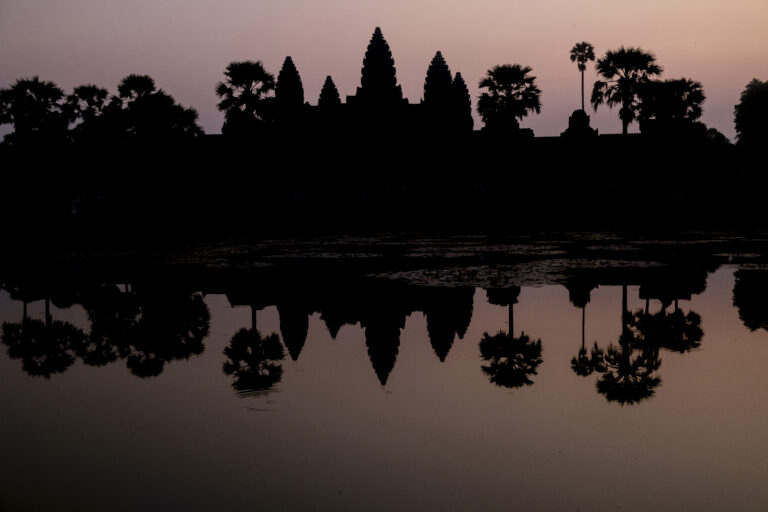
 Cambodia
Sources This guide was last checked on · 18 sources
- Wikivoyage: Kyrgyzstan · Overview, Places to visit, Things to do, Itineraries, Getting there and around, Where to stay, Eat and drink, Entry requirements and visas, Money and payments, Health, Safety, Customs and etiquette, Language, What to pack, Staying connected, Frequently asked questions
- Wikidata: Kyrgyzstan · Overview, Places to visit, Money and payments, Country facts
- Wikidata: Burana Tower · Overview, Places to visit
- UK FCDO: Kyrgyzstan safety and security · Getting there and around, Eat and drink, Money and payments, Safety, Customs and etiquette, What to pack, Staying connected
- Government of Canada: Kyrgyzstan travel advice (updated 15 October 2026) · Getting there and around, Entry requirements and visas, Health, Safety, Customs and etiquette, Frequently asked questions
- UK FCDO: Kyrgyzstan entry requirements · Where to stay, Entry requirements and visas, What to pack, Frequently asked questions
- ISO 4217 (SIX), published 2026-09-17 · Money and payments
- CDC Travelers' Health: Kyrgyzstan · Health, Frequently asked questions
- UK FCDO: Kyrgyzstan health · Health
- US Department of State: Kyrgyzstan travel advisory · Safety
- UK FCDO: Kyrgyzstan travel advice · Safety
- UK FCDO: Kyrgyzstan regional risks · Safety
- Wikivoyage: Russian phrasebook · Language
- Wikivoyage: Kyrgyz phrasebook · Language
- World Bank, SP.POP.TOTL · Country facts
- World Bank, AG.LND.TOTL.K2 · Country facts
- IANA Time Zone Database, zone.tab · Country facts
- UK FCDO: Kyrgyzstan getting help · Emergency numbers
Suggest an update
Travel rules, prices and timetables change. If something in this guide is out of date, tell us: we check every suggestion against an official source before changing the page.