

- Local time
- 10:37
- Currency
- Philippine Piso (PHP)
- Capital
- Manila
- Calling code
- +63
- Drive on the
- right
Overview
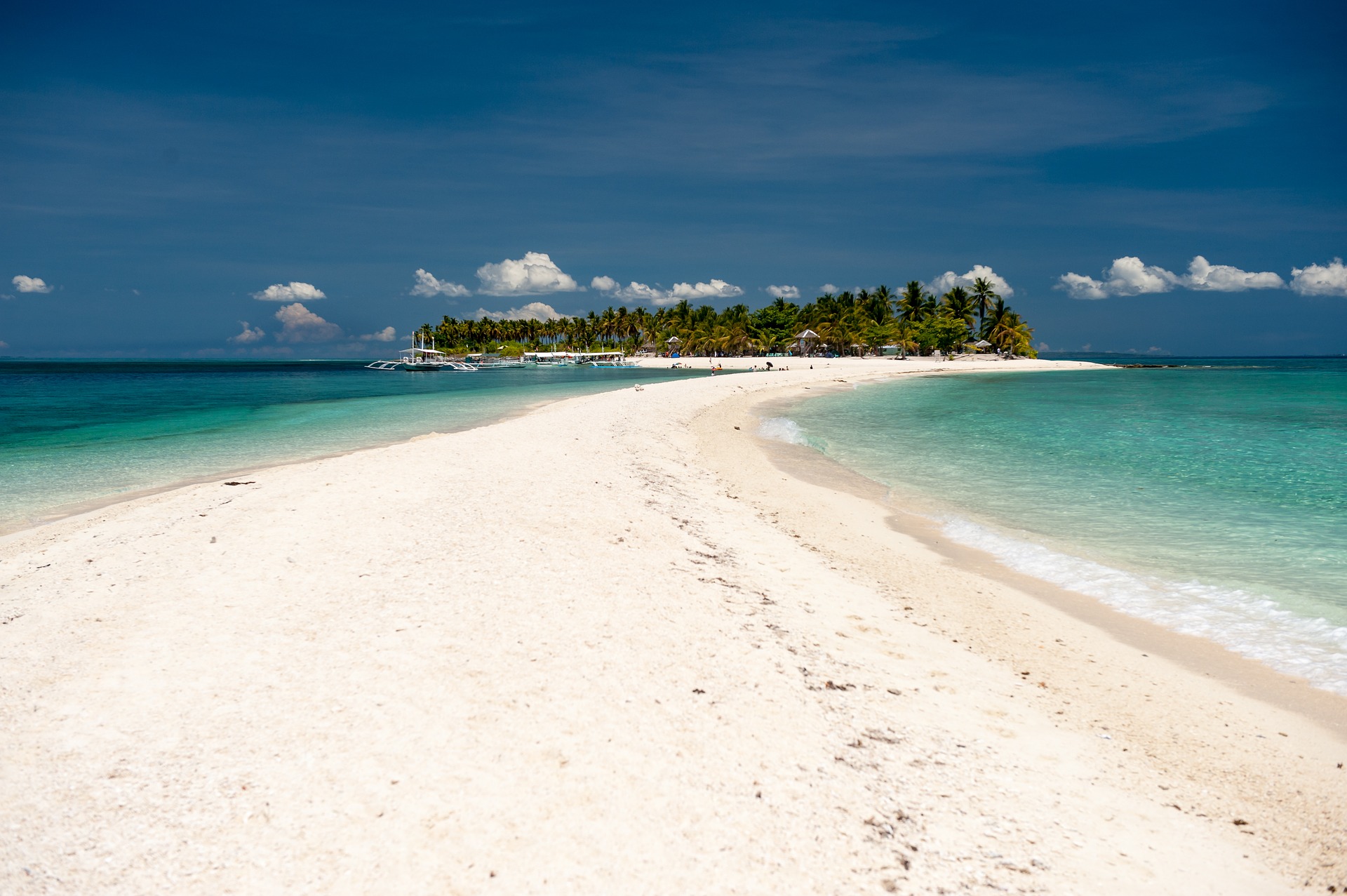
More than 7,100 islands of beaches, coral reefs, rice terraces and colonial towns, with English widely understood. Good value for divers and island-hoppers.
The Philippines is an archipelago of more than 7,100 islands with one of the longest coastlines in the world, so most trips are built around beaches, reefs and boats. Three centuries of Spanish rule left Baroque churches and old colonial towns such as Vigan, and the American period left English as an official language that many Filipinos speak well. Food and accommodation are cheap, and Filipinos are known for their hospitality.
Distances are bigger than they look on the map: between islands you fly or take a ferry, and short trips by road can take longer than you expect. The main areas for visitors are Luzon in the north, with Manila and the mountain rice terraces, the Visayas in the centre, with Cebu, Bohol and Boracay, and Palawan in the west. The UK and Canadian governments advise against all travel to western Mindanao and the Sulu archipelago in the south (the UK also to central Mindanao), and against non-essential travel to much of the rest of Mindanao: check the advice before you plan anything there.
- Manila and Intramuros: The oldest district of the capital, with Manila Cathedral and Fort Santiago, and the UNESCO-listed San Agustin Church in Manila.
- Vigan: A Spanish colonial town in northern Luzon with cobbled streets, listed by UNESCO.
- Banaue and the Cordillera rice terraces: Terraces built about 2,000 years ago in the cool northern highlands, also listed by UNESCO.
- Bohol: The Chocolate Hills, the tarsier sanctuary in Corella and the beaches of Panglao Island.
- El Nido and Coron: Limestone islands and lagoons in Palawan, and Coron's wreck diving.
- Boracay: The best-known beach resort in the country, with white sand and water sports.
Places to visit
- City
- Town
- Coast
- Island
- Mountain
- Area
Cities
- Metro Manila: The capital region and main gateway, from the walled Intramuros district to the business towers of Makati; known for its traffic.
- Cebu City: The first Spanish settlement, with Fort San Pedro and the Basilica of Santo Niño, and the base for the central islands.
- Vigan: A UNESCO-listed colonial town in Ilocos Sur, with Spanish and Chinese influences and cobbled streets.
- Baguio: The summer capital of Luzon, cool enough at night to need a jacket, and home of the Igorot peoples of the Cordilleras.
- Bacolod: The gateway to Negros, known for the MassKara Festival in October and for chicken inasal.
- Tagbilaran: The capital of Bohol, a major tourist area with the Chocolate Hills and Panglao Island.
- Puerto Princesa: The capital of Palawan, with an international airport and the boats to Tubbataha Reefs.
Beyond the cities
- Banaue (town): Rice terraces about 2,000 years old, built by the mountain peoples of northern Luzon.
- Sagada (town): A backpacker town in Mountain Province, known for its hanging coffins and limestone caves.
- Boracay (island): A 10 km island of white sand beaches with diving, kitesurfing and spas; access is restricted.
- El Nido (coast): Dozens of limestone islands, bays and lagoons in Palawan.
- Coron (area): Limestone islands in the Calamian group with wrecks of Japanese ships sunk in 1944.
- Panglao Island (island): Bohol's resort island, with Alona Beach and its choice of resorts.
- Malapascua (island): An island in Cebu province with white sand, coral gardens and diving with thresher sharks.
- Puerto Galera (coast): A diving area on Mindoro and a favourite Filipino getaway in Holy Week.
- Donsol (town): Known as the whale shark capital: you can dive and see whale sharks.
- Mayon (mountain): An active volcano with a near-perfect cone in Albay; a 6 km danger zone applies around the summit.
- Taal Volcano (mountain): A volcano with a lake in its crater inside a larger lake, usually reached via Tagaytay; entry to the volcano island is prohibited.
- Siargao (island): An island in the Caraga region of Mindanao, known as the country's surfing capital; excluded from the UK and Canadian advice against travel to Mindanao.
- Camiguin (island): A sparsely populated island off Mindanao with the White Island beach; excluded from the UK advice against travel to Mindanao.
Regions
- Luzon: The largest and most populous island, with Manila, the Cordillera highlands, Ilocos, Bicol and the outlying islands of Batanes and Mindoro.
- Visayas: The central islands, among them Cebu, Bohol, Negros, Panay, Leyte and Samar, with their own languages.
- Palawan: An archipelagic province in the west, the largest in the country by area, with the Calamian Islands; the capital is Puerto Princesa.
- Mindanao: The second largest island, in the south. The UK and Canada advise against all travel to its western parts and the Sulu archipelago, and against non-essential travel to much of the rest.
Things to do
See
- Intramuros and San Agustin Church Metro Manila: Manila's oldest district, with Manila Cathedral and Fort Santiago, and San Agustin Church, one of the UNESCO-listed Baroque churches of the Philippines.
- Vigan's colonial streets Vigan: Heritage houses and cobbled streets; some old homes are now museums or open for tours.
- Chocolate Hills and tarsiers Bohol: More than 1,200 grassy limestone domes that turn brown in the dry season, and a forest sanctuary in Corella where over 100 tarsiers live.
- Festivals Cebu, Kalibo, Baguio and Bacolod: Sinulog in Cebu and Ati-Atihan in Kalibo in January, Panagbenga in Baguio in February, MassKara in Bacolod in October.
Do
- Rice terraces and hanging coffins Banaue and Sagada: Walk the terraces of the Cordillera and visit Sagada's caves; bring a jacket for the cool highlands.
- Island hopping and wreck diving El Nido and Coron: Kayak among limestone islands and dive the Japanese wrecks of 1944 off Coron.
- Tubbataha Reefs Puerto Princesa: A UNESCO-listed reef park reached on live-aboard boats from Puerto Princesa.
- Diving with sharks Malapascua and Donsol: Thresher sharks off Malapascua and whale sharks at Donsol; check a dive operator's credentials and safety equipment before you book.
Eat
- Eat turo-turo style: Point at the dishes you want in a carinderia or turo-turo canteen, where mains cost little; choose places where the food is kept hot.
After dark
- Karaoke: Videoke is a national pastime, with karaoke boxes and coin machines in bars and restaurants.
Itineraries
Manila and the northern highlands in 9 days (9 days)
- Metro Manila (2 nights): Intramuros and San Agustin Church.
- Vigan (2 nights): The colonial town of Ilocos Sur.
- Baguio (1 night): The cool summer capital.
- Sagada (2 nights): Hanging coffins and caves.
- Banaue (2 nights): The rice terraces of the Cordillera.
Cebu and Bohol in 7 days (7 days)
- Cebu City (2 nights): Fort San Pedro and the Basilica of Santo Niño.
- Malapascua (2 nights): Diving with thresher sharks.
- Tagbilaran (1 night): The gateway to the Chocolate Hills and the tarsiers.
- Panglao Island (2 nights): Alona Beach and diving.
Palawan in 9 days (9 days)
- Puerto Princesa (2 nights): The capital of Palawan, with the international airport.
- El Nido (4 nights): Island hopping among limestone islands and lagoons.
- Coron (3 nights): Wreck diving and kayaking.
Climate and best time to visit
| Jan | Feb | Mar | Apr | May | Jun | Jul | Aug | Sep | Oct | Nov | Dec | |
|---|---|---|---|---|---|---|---|---|---|---|---|---|
| Max °C | 30 | 31 | 32 | 34 | 33 | 32 | 31 | 31 | 31 | 31 | 31 | 30 |
| Min °C | 24 | 24 | 25 | 26 | 27 | 26 | 26 | 26 | 26 | 26 | 25 | 24 |
| Rain mm | 19 | 8 | 11 | 21 | 165 | 265 | 420 | 486 | 330 | 271 | 129 | 75 |
The Philippines is tropical and humid all year. In Manila the average maximum stays between about 30 °C and 34 °C, with the hottest days in April and May, and average lows stay above 23 °C. From January to April the capital gets only 8 to 21 mm of rain a month, while in July and August it gets more than 400 mm. In the mountains it is cooler: Baguio drops below 20 °C at night.
November to February, the cool dry season, is the best time to visit, but flights, ferries and rooms are expensive and hard to find at Christmas and New Year. March to May is hot, up to 40 °C inland, good for beaches but tiring for sightseeing, and prices peak in Holy Week. The rainy season runs from about June to October, and around 20 typhoons hit the country each year, mostly between June and November: follow local advice and be ready to change plans. On the eastern islands of Bicol, Samar and Leyte the pattern is reversed, with the most rain from October to April. Canada notes that El Niño conditions in 2026 and 2027 may bring more droughts, floods and storms.
Holidays and events
- 1 January 2026 · New Year's Day
- 17 February 2026 · Chinese New Year
- 2 April 2026 · Maundy Thursday
- 3 April 2026 · Good Friday
- 4 April 2026 · Holy Saturday
- 9 April 2026 · Day of Valor
- 1 May 2026 · Labour Day
- 12 June 2026 · Independence Day
- 21 August 2026 · Ninoy Aquino Day
- 31 August 2026 · National Heroes Day
- 31 October 2026 · All Saints' Day Eve
- 1 November 2026 · All Saints' Day
- 30 November 2026 · Bonifacio Day
- 8 December 2026 · Feast of the Immaculate Conception of Mary
- 24 December 2026 · Christmas Eve
- 25 December 2026 · Christmas Day
- 30 December 2026 · Rizal Day
- 31 December 2026 · Last Day of The Year
Getting there and around
| Main airports | MNL, CEB, CRK, KLO, PPS, TAG |
|---|---|
| International driving permit | Recommended |
Getting there
By air: most visitors arrive by plane, and most of them land at Ninoy Aquino International Airport (MNL) in Metro Manila. Mactan-Cebu (CEB) is closer to the Visayas, and Clark (CRK), 85 km north of Manila, is a hub for low-cost carriers. Some regional airports also have international flights, among them Kalibo (KLO) near Boracay, Iloilo (ILO) and Puerto Princesa (PPS). Before you fly, register on the free eTravel system within the 72 hours before arrival and keep the QR code: some airlines will not let you board without it, and many ask for proof of onward travel.
If you leave from Cebu Mactan airport you pay a departure tax of ₱850 (Philippine pesos), or the equivalent in US dollars; there is no longer a departure tax at Manila. By sea: the only international ferry listed by Wikivoyage runs from Sandakan in Malaysia to Zamboanga, an area where the UK and Canada advise against all travel.
Getting around
Domestic flights are the easiest way between islands. Philippine Airlines, Cebu Pacific and AirAsia fly mostly through Manila, Cebu and Clark, and planes fill up at Christmas, Holy Week and All Saints' Day, so book early. Ferries and small outrigger boats (bancas) link the islands, but safety standards are poor: use reliable companies, do not board boats that look overloaded and make sure you can reach a life jacket. Services are suspended when a storm signal is raised, even in clear weather, and you can be stuck in port for days.
On land, buses cover much of the country; choose reputable companies and air-conditioned or luxury classes. Jeepneys and tricycles are cheap for short trips: agree the tricycle fare before you set off and avoid tricycles on country roads at night. Canada advises against habal-habal, the motorbike taxis. Use metered taxis from reliable companies, hotel or official airport transport, or the Grab app, rather than taxis hailed in the street.
Driving is on the right. You can drive on a UK or Canadian licence for up to 90 days, and Canada says you should carry an International Driving Permit. Accidents are frequent, traffic in Metro Manila is very heavy and scooter accidents involving tourists are common: avoid driving at night outside towns, rent scooters only with a helmet and expect security checkpoints.
Flying to Philippines? PartnerCompare fares and find the cheapest datesSearch flightsWhere to stay
- Pension houses and tourist inns: Basic and cheap, often with fans instead of air conditioning and a shared bathroom.
- Hostels: Found all over the country, with dorm beds from about ₱200 a night, as listed on Wikivoyage in October 2026.
- Homestays and bed and breakfasts: Common in provincial tourist towns, from basic family homes to houses with a pool.
- Hotels and resorts: The upper end, though even four-star rates are low by international standards.
- Condotels and apartelles: Furnished apartments for short or long stays.
Off the main routes the choice is thin, and in Manila, Cebu and the big resort areas prices are higher. Advertised rates usually exclude the 12% VAT and a service charge of about 8 to 10%. Many small hotels accept only cash or QR mobile wallets, and some do not take online bookings or cards. On Boracay access is restricted: you may need proof of a booking in an accredited hotel to be allowed onto the island. Book early for Christmas, New Year and Holy Week, when Filipinos travel home and prices rise.
Eat and drink
Dishes to try
- Adobo: One of the typical dishes of Tagalog cooking.
- Sinigang: Another typical Tagalog dish.
- Chicken inasal: Chicken barbecue, the speciality of Bacolod.
- Isaw and kwek-kwek: Popular street food: chicken intestines, and boiled duck eggs battered and deep-fried.
- Tropical fruit: Sold in supermarkets and in markets, which have better prices; buy fruit that has not been cut up.
Drinks
- Buko juice: Coconut water, safe if no local ice has been added.
- Local beer: Cheap and the most common drink in bars, usually with pulutan, small bar snacks.
- Rum and brandy: Local bottles cost little in supermarkets.
- Shakes and chilled drinks: Sold at stands, especially in shopping malls.
| Meal times | Lunch is the main meal, between 11:00 and 15:00, with a snack (merienda) in mid-morning or afternoon. |
|---|---|
| Tipping | Not always expected: restaurants and hotels usually add a service charge of 8 to 12%. Tips are becoming common in spas and salons; in taxis people add ₱20 to ₱50 or round up. |
Filipino food is possibly the least spicy in Southeast Asia: flavour comes from garlic, onion, ginger and vinegar, and dishes tend to be sweet, sour and salty. Rice is the staple, and meat is always cooked well done. For a cheap meal, try a carinderia or a turo-turo canteen, where you point at the dishes; eat where the food is kept hot over a flame. Every mall has fast food, including the national chains Jollibee and Mang Inasal. Street food is cheap, but hygiene in malls is better.
Vegetarians will struggle, because fish sauce and shrimp paste are everywhere, though some restaurants will leave them out if you ask. Halal and kosher food is hard to find outside Muslim areas and big cities, and awareness of allergies and coeliac disease is very limited. Drink bottled water bought in shops, not from roadside sellers.
Entry requirements and visas
| Passport validity | At least 6 months after the date you arrive (UK advice); Canada asks for 6 months beyond the date you expect to leave |
|---|
| Passport | Entry | Max stay | Notes |
|---|---|---|---|
| United Kingdom | Visa free | 30 days | Tourism or business; register on eTravel within 72 hours before arrival. |
| Canada | Visa free | 30 days | Tourist or business visa not required for stays of up to 30 days; register on eTravel. |
Other nationalities: check the official source below.
Many visitors can enter the Philippines without a visa for up to 30 days, but everyone must register on the free eTravel system within the 72 hours before arrival and show the QR code. Carry proof of return or onward travel: airlines and immigration officers may ask for it. You can extend your stay at the Bureau of Immigration before the 30 days run out; overstaying leads to fines, detention or deportation. Rules depend on your passport: check the official link before you book.
You need a yellow fever certificate if you arrive from a country with a risk of transmission, including airport transits of more than 12 hours, and a polio certificate if you come from certain countries. You cannot bring in more than ₱50,000 in pesos, and you must declare foreign currency worth more than US$10,000. Customs are strict on fruit, vegetables, meat, fish and other animal and plant products, which you must declare. Children under 15 travelling without their parents need a waiver to enter. If you stay 6 months or more, you must get an emigration clearance certificate before you leave.
Money and payments
| Currency | Philippine Piso (PHP) |
|---|---|
| Cards | Limited |
The currency is the Philippine peso (PHP, ₱), and it is the only currency for most payments. The Philippines runs mostly on cash. Cards (Visa, Mastercard and others) work in cities and tourist areas, often with a minimum spend, but small shops are cash only and in the countryside cards are rarely accepted. ATMs are common in cities and scarce in rural areas, so carry pesos when you head out. As listed on Wikivoyage in October 2026, most ATMs charge foreign cards a fee of about ₱250 and pay out ₱10,000 or less per withdrawal.
Carry coins and small notes: drivers and small shops often ask for coins in the morning. Change money at money changers in malls or tourist areas, not at street stalls, and watch for fake notes of ₱100 and above. ATM skimming and card fraud are frequent, so use machines inside banks or in well-lit places and cover the keypad. QR wallets such as GCash and Maya are spreading, but they need a Philippine number and a registered SIM.
Health
| Required vaccines | Yellow fever, only if you arrive from a country with a risk of transmission, Polio, if you arrive from certain countries with a risk of transmission |
|---|---|
| Recommended vaccines | Routine vaccines, including measles (MMR), Hepatitis A, Hepatitis B, Typhoid, for most travellers, Japanese encephalitis, for long stays or time in rural areas, Rabies, for some travellers: dogs with rabies are common, Cholera, for some travellers, Chikungunya, for stays of 6 months or more, Mpox, for travellers at risk of sexual exposure |
| Malaria | Some areas |
| Tap water | Not safe |
Ask a travel health professional about vaccines at least 8 weeks before you go. Malaria is present in Palawan province and the Mindanao island group, but not in Metro Manila or other urban areas: if you go to these areas, ask about preventive medicine. Dengue, chikungunya and Zika are spread by mosquitoes all year, with a higher dengue risk in the rainy season from June to October, so use repellent and cover up. Avoid swimming in fresh water because of schistosomiasis and leptospirosis, and keep away from stray dogs. Drink bottled water and avoid ice from the street.
Good medical care is available in the big cities but limited elsewhere, and many places, including some tourist destinations, have no easy access to emergency care. Hospitals usually ask for a down payment before treatment, and a day in intensive care in a private hospital can cost more than £1,000: get insurance that covers treatment and evacuation. Some medicines sold freely at home are illegal in the Philippines; carry yours in the original containers with a copy of the prescription. Air pollution can be severe in the big cities. For an ambulance, call 911.
This is general information, not medical advice: check with a travel health professional before you go.
Safety
- United States: Level 2: Exercise Increased Caution (2026-10-20)
- Canada: Exercise a high degree of caution (2026-10-20)
- United Kingdom: Advises against all travel to parts of the country (2026-10-20)
The UK FCDO advises against all travel to western and central Mindanao and the Sulu archipelago, and against all but essential travel to the rest of Mindanao, except Camiguin, Dinagat and Siargao islands. Canada advises against all travel to the provinces of western Mindanao and against non-essential travel to central and eastern Mindanao, except Davao City and Siargao. Check the advice before you go; travelling against it can invalidate your insurance. Both governments also warn of a threat of terrorism and kidnapping elsewhere, including Manila: be alert in malls, transport hubs, places of worship and at big events, and expect bag checks.
Street crime and robbery are common in big cities, and armed hold-ups happen on jeepneys and buses. Do not show cash or jewellery, keep bags away from the road because motorcyclists snatch them, and use reputable taxis or ride-hailing apps, including from the airport. Do not accept food, drinks or cigarettes from new acquaintances: tourists have been drugged and robbed. Sexual assaults have been reported in backpacker spots, including Coron and Siargao. Beware of online romance and business scams, and of people who befriend tourists and then threaten false accusations of abuse to extort money.
Penalties for drugs are severe, and possession of even a small amount means prison. Foreigners must not take part in demonstrations or political rallies, or they may be detained and deported. Carry ID or a printed copy of your passport photo page. Around 20 typhoons hit each year, mostly from June to November, and the country has earthquakes and many active volcanoes: Mayon is at alert level 3 and entry to Taal Volcano Island is prohibited. Beaches rarely have lifeguards, so ask locally before you swim, and check a dive operator's credentials and safety equipment.
Customs and etiquette
Filipinos are hospitable and polite, and much of their etiquette is about saving face. Do not shout or lose your temper, and if you need to point out a mistake, do it in private. Show respect to older people: address them as sir or ma'am, or tito and tita, and add the polite word po when you try some Tagalog. Take off your shoes when you enter a home unless your hosts tell you not to. At the table, wait for the host to invite you to start, use the serving spoon for shared dishes, never eat with your left hand and try not to refuse food you are offered.
To call someone over, use an open hand with the palm down: the palm-up gesture is for animals. Dress modestly in churches and government offices, and more conservatively in the Muslim-majority provinces; Wikivoyage reports that going topless in public is illegal. Kissing in public can draw stares and, under the law, can be treated as a grave scandal. Stand when the national anthem is played in cinemas or malls. Photographing official buildings or military sites for publication is prohibited. On Boracay, drinking alcohol and smoking in public places, including White Beach, are prohibited.
Language
| Official languages | Filipino, English |
|---|---|
| English | Common |
| Hello | Kumusta |
|---|---|
| Good morning | Magandang umaga (po) |
| Thank you | Salamat (po) |
| Please | Pakiusap (po) |
| Yes / No | Oo (Opo) / Hindi |
| Sorry | Pasensya na |
| Goodbye | Paalam |
| How much? | Magkano? |
| Do you speak English? | Marunong ka ba mag-Ingles? |
| Help! | Tulong! |
What to pack
- Passport, and a printed copy of the photo page: The police can ask for ID; carry the copy if your passport stays in the hotel safe.
- eTravel QR code and proof of onward travel: Airlines and immigration may ask for both.
- Insect repellent and long sleeves: Dengue and other mosquito-borne diseases are a risk all year.
- A light jacket: The Cordillera highlands are cool, and even the lowlands can drop below 20 °C in the cool season.
- Umbrella or raincoat: Rain can come in minutes, especially from June to October.
- Medicines in their original containers, with prescriptions: Some medicines legal at home are illegal in the Philippines.
- Pesos in coins and small notes: Small shops and drivers often have no change.
- Plug adapter for type A, B or C sockets: Older installations may take only A and B plugs; adapters are also sold locally.
Quick reference
Country facts
| Capital | Manila |
|---|---|
| Population | 116,786,962 (2025) |
| Area | 298,170 km² |
| Time zone | Asia/Manila (UTC+8) |
| Calling code | +63 |
| Driving side | right |
Electricity and plugs
| Plug types | A, B, C |
|---|
Staying connected
| SIM and eSIM | Globe and Smart are the main networks. Prepaid SIM cards are cheap but must be registered with photo ID: for most visitors a passport and the hotel address are enough, and shops do the registration for you. Tourist SIMs expire after 30 days. |
|---|---|
| Roaming | Roaming can be expensive; check whether your home provider has an agreement with a local network. |
| Wi-Fi | Free in most hotels and in SM and Ayala malls; avoid public networks for banking. |
Useful apps
- Grab: Taxis and ride-hailing in the major cities.
- eGovPH: Fill in the eTravel arrival form.
Emergency numbers
| Emergency | 911 |
|---|
Frequently asked questions
Do I need a visa for the Philippines?
Many visitors do not for stays of up to 30 days: UK and Canadian citizens can visit visa-free for tourism. Everyone must register on eTravel within 72 hours before arrival. Rules depend on your passport, so check the official link before you book.
When is the best time to visit the Philippines?
November to February, the cool dry season. It is also the busiest and most expensive time around Christmas and New Year. The rainy season runs from about June to October, with typhoons mostly between June and November.
Can I drink the tap water in the Philippines?
It is safer not to. Drink bottled water bought in shops and avoid ice sold on the street.
Is it safe to travel to Mindanao?
The UK and Canada advise against all travel to western Mindanao and the Sulu archipelago (the UK also to central Mindanao) and against non-essential travel to much of the rest. The islands of Siargao and Camiguin are excluded from the UK advice. Check the official advice before you plan.
Can I pay by card in the Philippines?
In cities and tourist areas, often with a minimum spend. Small shops and rural areas are mostly cash only, so carry pesos.
Do people speak English in the Philippines?
Yes, English is an official language and many Filipinos speak it well, though less so outside big cities and tourist areas.
More Travel Stories from Asia

 Laos
 Cambodia
From the original Tourist4Tourist guide, written by travellers. Not yet checked against current sources.
Moving around
Ships – Travel allong the many islands is easily to do with the regular, public boats. On the economy boats there are plenty beds on the open deks. Which means fresh air along the way. I felt totally save since I was the only tourist, everybody looked the way I act. As long may people were curious, nobody could touch my bags without beingnoticed. I did 5 trips from Negros to cebu to Mindanou, Palawan and back to Manilla. Fresh air, friendly people and beautifull ocean!!! Strongly recommended!
Sources This guide was last checked on · 19 sources
- Wikivoyage: Philippines · Overview, Places to visit, Things to do, Itineraries, Climate and best time to visit, Getting there and around, Where to stay, Eat and drink, Entry requirements and visas, Money and payments, Health, Safety, Customs and etiquette, Language, What to pack, Electricity and plugs, Staying connected, Frequently asked questions
- Wikidata: Philippines · Overview, Places to visit, Money and payments, Country facts, Electricity and plugs
- UK FCDO: Philippines warnings and insurance · Overview, Safety
- Government of Canada: Philippines travel advice (updated 15 October 2026) · Overview, Places to visit, Things to do, Climate and best time to visit, Getting there and around, Where to stay, Entry requirements and visas, Money and payments, Health, Safety, Customs and etiquette, What to pack, Frequently asked questions
- UK FCDO: Philippines travel advice · Overview, Safety, Frequently asked questions
- UK FCDO: Philippines safety and security · Places to visit, Things to do, Climate and best time to visit, Getting there and around, Safety, Customs and etiquette, What to pack
- Wikivoyage: Siargao · Places to visit
- WMO World Weather Information Service: Metro Manila · Climate and best time to visit
- Nager.Date: public holidays in Philippines, 2026 · Holidays and events
- UK FCDO: Philippines entry requirements (updated 15 July 2026) · Getting there and around, Entry requirements and visas, Money and payments, Health, What to pack, Frequently asked questions
- CDC Travelers' Health: Philippines · Entry requirements and visas, Health, Frequently asked questions
- ISO 4217 (SIX), published 2026-09-17 · Money and payments
- UK FCDO: Philippines health · Health, What to pack
- US Department of State: Philippines travel advisory · Safety
- Wikivoyage: Tagalog phrasebook · Language
- World Bank, SP.POP.TOTL · Country facts
- World Bank, AG.LND.TOTL.K2 · Country facts
- IANA Time Zone Database, zone.tab · Country facts
- UK FCDO: Philippines getting help · Emergency numbers
Suggest an update
Travel rules, prices and timetables change. If something in this guide is out of date, tell us: we check every suggestion against an official source before changing the page.