

- Local time
- 11:37
- Currency
- North Korean Won (KPW)
- Capital
- Pyongyang
- Calling code
- +850
- Drive on the
- right
Overview
Visits are possible only on guided tours, and the UK, US and Canada all advise against travel. Read the entry rules, laws and risks before you plan a trip.
North Korea, officially the Democratic People's Republic of Korea (DPRK), is on the northern part of the Korean Peninsula. Tourists can normally travel only on an organised tour, with guides who stay with you at all times and decide where you can go. The borders have been closed to general entry since 2020; the UK FCDO reports that some limited tourism has restarted, while Wikivoyage says that as of September 2026 tours are open only to Russian citizens, with sporting events such as the Pyongyang Marathon as the main exception.
The United States says do not travel, Canada advises against all travel and the UK advises against all but essential travel to North Korea. Consular help is very limited, foreign visitors have been detained, and acts that would be minor elsewhere can bring very severe penalties. Read the entry and safety sections before you consider a trip. Tours that do run concentrate on monuments and museums in Pyongyang, with excursions to places such as Kaesong, Panmunjom and Kumgangsan.
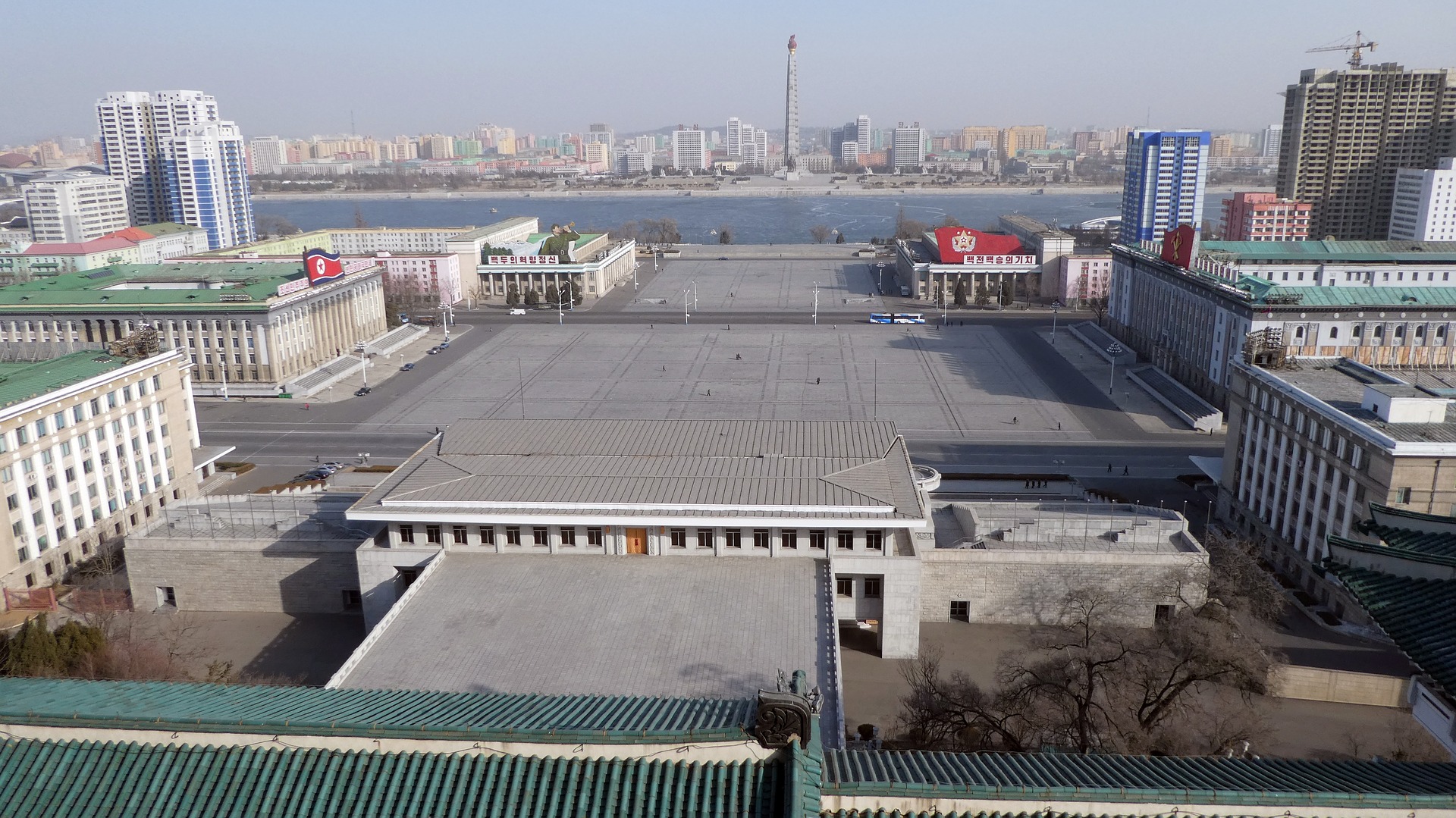
- Pyongyang: The capital and the starting point for most travel, with Kim Il-sung Square, the Grand People's Study House and the Korean National Art Gallery.
- Kaesong: The former capital of the Goryeo dynasty, with an old town and the UNESCO-listed tomb of King Kongmin.
- Panmunjom: The truce village in the Demilitarized Zone between the two Koreas.
- Kumgangsan: The Diamond Mountains, with waterfalls, lakes and old Buddhist temples.
- Myohyangsan: A mountain area known for hiking.
Places to visit
- City
- Mountain
- Historic site
Cities
- Pyongyang: The capital, once the capital of the Goguryeo kingdom, and the starting point for most tours.
- Kaesong: The capital of the Goryeo dynasty, not far from Panmunjom.
- Wonsan: An east coast port city, near Masikryong, the country's only ski resort.
- Nampho: An industrial city and port on the west coast.
- Kaechon: The town of the Songam Cavern.
- Sinuiju: An industrial city on the Chinese border, on the rail line from Beijing.
- Rason: A free trade zone on the Russian border.
- Hamhung: A northern city rarely included in official tours.
- Chongjin: An industrial city in the north-east, very rarely visited by tourists.
Beyond the cities
- Kumgangsan (mountain): The Diamond Mountains, with waterfalls, lakes and Buddhist temples.
- Myohyangsan (mountain): The Mysterious Fragrant Mountain, one of the main hiking areas.
- Baekdu Mountain (mountain): The highest mountain in Korea.
- Panmunjom (site): The truce village in the Demilitarized Zone; stay with your group and do not photograph military sites.
Regions
- Pyongan: The region of the capital, Pyongyang, and the starting point for most travel, with Nampho, Kaechon and Sinuiju.
- Hwanghae: North and South Hwanghae provinces and Kaesong.
- Donghae Coast: North and South Hamgyong and Kangwon provinces, with Chongjin, Hamhung, Rason and Kumgangsan.
- Baekdu Mountains: Ryanggang and Chagang provinces, around the Baekdu Mountains.
Climate and best time to visit
| Jan | Feb | Mar | Apr | May | Jun | Jul | Aug | Sep | Oct | Nov | Dec | |
|---|---|---|---|---|---|---|---|---|---|---|---|---|
| Max °C | -1 | 2 | 9 | 17 | 23 | 27 | 29 | 29 | 25 | 18 | 9 | 2 |
| Min °C | -11 | -8 | -2 | 5 | 11 | 17 | 21 | 21 | 14 | 7 | -0 | -7 |
| Rain mm | 12 | 11 | 25 | 50 | 72 | 90 | 275 | 213 | 100 | 40 | 35 | 17 |
North Korea has a continental climate with cold winters and warm, wet summers. In Pyongyang the average maximum stays below freezing in January (about -1 °C, with nights near -11 °C), and winter temperatures can fall as low as -30 °C. July and August are the warmest months, with average maximums of about 29 °C, and also the wettest: July brings about 275 mm of rain in Pyongyang.
The rainy season runs from late June to August, with floods and landslides that can disrupt travel, especially in rural areas, and typhoons can hit in August and September. April, May and October fall outside the winter cold, the rainy season and the typhoon months. Wikivoyage lists November to March as the low season for hotels.
Getting there and around
| Main airports | FNJ |
|---|
Getting there
You can enter North Korea only from China or Russia, by air or by train; you cannot cross from South Korea. By air: all international flights land at Pyongyang Sunan International Airport (FNJ). According to Wikivoyage, as of October 2026 the only airlines flying there are Air Koryo, Air China from Beijing (flights restarted in March 2026) and Nordwind Airlines from Moscow Sheremetyevo. The UK Air Safety List bans Air Koryo from flying to the UK, except for 2 Tupolev Tu-204 aircraft.
By train: train K27/K28 links Beijing and Pyongyang via Dandong and Sinuiju four times a week, with soft sleepers only; seats are hard to get, so your tour agency books them well in advance. A weekly through coach also runs from Moscow. The ferry from Japan is suspended, and the cruise and the bus from China are open only to Chinese citizens.
Getting around
Your tour company arranges all transport inside the country, mostly by bus, with occasional charter flights to remote sites. A guide accompanies you at all times. Foreigners are not allowed to use public transport on their own; most Pyongyang tours include a short ride on the metro. Hotel taxis exist, but drivers are reluctant to take you without a guide.
Driving: foreign visitors are not allowed to drive, and international driving permits are not valid. Major highways are in good condition, but rural roads can be hazardous and pedestrian road safety awareness is low. Checkpoints at the entry and exit of towns include ID checks. Flooding in July and August can close routes, so check that roads are passable before long journeys.
Where to stay
- Designated tourist hotels: The only places foreigners may stay, paid in hard currency, usually as part of your tour package.
You can stay only in hotels designated for tourists, and accommodation is usually the main cost of a tour, paid to your tour operator before you leave together with meals and transport. Lower-class rooms, group travel and the low season from November to March can bring the price down. How freely you can walk outside depends on the hotel: the Yanggakdo Hotel stands on an island in the Taedong River, while the Koryo Hotel is in the city centre.
If you stay more than 24 hours you must be registered with the Ministry of Foreign Affairs; most hotels do this for you. Some hotels ask for full payment in cash at check-in. Fire safety awareness may be low, so check the fire procedures at reception or with your tour operator.
Eat and drink
Drinks
- Insam-ju: Korean vodka infused with ginseng roots, the local speciality.
- Taedonggang beer: A locally brewed beer; imported beers are also sold.
- Soju: A Korean spirit; several kinds are sold.
| Tipping | Tips for your guides are one of the few expenses not paid in advance on a tour. |
|---|
Meals are arranged in advance as part of your tour, and the choice is limited, which can feel repetitive on longer trips. If you are vegetarian, have food allergies or do not eat common foods such as seafood or eggs, tell your tour operator before you leave. A few Western-style restaurants and a coffee house in Pyongyang can be visited if you arrange it with your guides, usually for an extra payment.
Drink only bottled or boiled water and avoid ice in drinks. Alcohol is cheap, but getting drunk or causing trouble can bring serious penalties for you and your guide.
Entry requirements and visas
| Passport validity | Valid for the whole stay (UK advice); Canada asks for at least 6 months beyond the date you leave |
|---|
| Passport | Entry | Max stay | Notes |
|---|---|---|---|
| United Kingdom | Visa required | Apply through the North Korean Embassy in the UK; tourists normally travel only on an organised tour. | |
| Canada | Visa required | Issued by a North Korean mission in a third country after approval from Pyongyang; the process can be very slow. |
Other nationalities: check the official source below.
British and Canadian citizens need a visa, and tourists can normally visit only on an organised tour; independent travellers need a sponsor and permission from the Ministry of Foreign Affairs. North Korea's borders have been closed to general entry since 2020. Journalists need special permission and cannot enter on a tourist visa. You need a yellow fever certificate if you arrive from a country with a risk of transmission.
At the border you must register a foreign phone, and you must leave GPS devices with customs until you leave; satellite phones and shortwave radios are confiscated and usually returned on departure. Do not bring books or other material in Korean, religious material, or anything printed in South Korea: customs confiscate material they consider political, religious or pornographic, and penalties can include prison. If you have South Korean citizenship, Korean family ties or Korean heritage, think carefully before you go. Rules change without warning: check the official link and the North Korean embassy before you book.
Money and payments
| Currency | North Korean Won (KPW) |
|---|---|
| Cards | Rare |
The currency is the North Korean won (KPW, ₩), but foreigners rarely handle it: it is illegal to bring won into or out of the country. Shops and restaurants list prices in won and charge foreigners in foreign currency at the official rate. The euro and the US dollar are the most widely accepted, and some places take Chinese yuan (renminbi). You can bring foreign currency in and out freely, but you must declare it at customs.
There are no ATMs, and credit cards and international mobile payments are not accepted, although some hotels take cards with advance notice. Change is often unavailable, so bring plenty of small notes. On a tour, hotels, meals and transport are paid in advance, and your main costs are water, drinks, souvenirs, laundry and tips. Canada lists currency exchange among the actions that can lead to fines, arrest or detention.
Health
| Required vaccines | Yellow fever, if you arrive from a country with a risk of yellow fever transmission (travellers aged 1 and over) |
|---|---|
| Recommended vaccines | Routine vaccines, including measles (MMR), Hepatitis A, Hepatitis B, Japanese encephalitis, for long stays or rural trips, Rabies, for some travellers: dogs with rabies are common, Typhoid, for rural areas, long stays or visiting friends and relatives |
| Malaria | Some areas |
| Tap water | Not safe |
Check vaccines with a travel health professional at least 8 weeks before you go. The CDC lists malaria risk in the southern provinces and recommends preventive medicine for those areas. Cholera occurs and all water is a potential risk: drink only boiled or bottled water and avoid ice. Japanese encephalitis occurs especially in summer, tuberculosis is common, and altitude sickness is a risk in parts of the country. Rabies is common in dogs and rabies vaccines are usually not available after a bite, so avoid animals.
Health facilities are poor: hospitals often lack heat and medicine, suffer power cuts and expect immediate payment in cash. Pyongyang Friendship Hospital, in the Munsu-dong district, has English-speaking staff. Basic medicines, including antibiotics, are sometimes unavailable, so bring what you need. Evacuation is likely for serious illness or injury but is very difficult to arrange and not guaranteed: get insurance that covers medical evacuation, which most tours require anyway.
This is general information, not medical advice: check with a travel health professional before you go.
Safety
- United States: Level 4: Do Not Travel (2026-10-20)
- Canada: Avoid all travel (2026-10-20)
- United Kingdom: Advises against all but essential travel (2026-10-20)
The US says do not travel to North Korea, Canada advises against all travel and the UK FCDO advises against all but essential travel; check the advice before you go. Your travel insurance could be invalidated if you travel against official advice. The security situation can change quickly and without warning. There is no British embassy and no Canadian office in Pyongyang; Sweden acts for Canada, and Wikivoyage says also for US and Australian travellers. Foreign visitors have been arrested and detained, and if you are arrested you are not guaranteed access to your government, your family or a lawyer.
Stay with your guide and follow the instructions of your guide and the authorities. Remain in permitted areas and move away at once if officials ask you to. Ask your guide before taking any photo, and do not photograph airports, roads, bridges, ports, rail stations or military personnel and sites. Treat images of the current and former leaders with care, and do not make jokes or remarks about the political system: offences that would be minor elsewhere can bring very severe penalties. Your movements, calls and devices may be monitored or searched. Crime against foreigners is rare, but petty theft happens, especially at Pyongyang Sunan airport. Food, electricity and clean water are in short supply, and Canada says there is no centralised number for emergency services.
Customs and etiquette
Your guide is responsible for you and is penalised if you misbehave, so follow their lead and ask when you are unsure. Avoid discussing politics, economic systems or human rights. Most tour groups are asked to bow and lay flowers at the statues of Kim Il-sung and Kim Jong-il on one or two occasions; Wikivoyage says that if you are not prepared to do this, you should not go. When you photograph these statues, include the whole figure, and dress formally at Mansudae and the Kumsusan Palace of the Sun. Do not crumple, damage or misuse newspapers, money, stamps or posters that carry the leaders' names or images.
Call the country the Democratic People's Republic of Korea (DPRK). Religious proselytising is strictly forbidden, and you should be careful even with personal religious rituals. Public displays of affection are frowned upon, and the authorities do not recognise same-sex relationships. Locals are often discouraged from talking to foreigners, and Canada warns that unauthorised conversations with locals, or buying in a shop not designated for foreigners, can lead to fines, arrest or detention. Small gifts for your guides, such as cigarettes or skin creams, are appreciated.
Language
| Official languages | Korean |
|---|---|
| English | Limited |
| Hello (formal) | 안녕하십니까 (annyeonghasimnikka) |
|---|---|
| Thank you | 감사합니다 (gamsahamnida) |
| Please | 부탁합니다 (butakamnida) |
| Yes / No | 예 / 아니요 (ye / aniyo) |
| Excuse me | 실례합니다 (sillye hamnida) |
| Sorry | 죄송합니다 (joesonghamnida) |
| Goodbye (when you leave) | 안녕히 계십시오 (annyeonghi gyesipsio) |
| Help! | 도와주십시오! (dowajusipsio!) |
What to pack
- Passport valid at least 6 months beyond your departure: Canada's advice; your guides may keep it for part of the stay.
- Euros, US dollars or yuan in small notes: There are no ATMs, cards are not accepted and change is often unavailable.
- Prescription and basic medicines: Basic medication, including antibiotics, is sometimes unavailable.
- Formal clothes: Expected at important monuments such as Mansudae and the Kumsusan Palace of the Sun.
- Warm layers in winter: Winter temperatures can fall to -30 °C, and train carriages can be as cold as 10 °C inside.
- Travel insurance with medical evacuation: Evacuation is likely for serious illness, and most tours require insurance.
Leave at home GPS devices, satellite phones, shortwave radios, books or media in Korean, religious material and anything printed in South Korea: they can be confiscated at the border, and some can lead to arrest.
Quick reference
Country facts
| Capital | Pyongyang |
|---|---|
| Population | 26,571,036 (2025) |
| Area | 120,410 km² |
| Time zone | Asia/Pyongyang (UTC+9) |
| Calling code | +850 |
| Driving side | right |
Staying connected
| SIM and eSIM | Only a local Koryolink SIM works, sold at the International Communication Center in Pyongyang, at the airport and in some hotels; it mainly allows international calls. |
|---|---|
| Roaming | None: foreign SIM cards cannot connect to any network in North Korea. You must register a foreign phone at the border. |
| Wi-Fi | There are no public internet cafés. Larger hotels can provide internet access if your tour operator applies some days in advance, and traffic is probably monitored. |
Frequently asked questions
Can tourists visit North Korea?
Only on an organised tour with guides, and the US, Canada and the UK all advise against travel.
Do I need a visa for North Korea?
Yes: the UK and Canada say their citizens need one. Tour agencies usually arrange it. Rules change without warning, so check with the North Korean embassy and the official advice before you book.
Can I travel around North Korea on my own?
No. A guide accompanies you at all times and decides where you go, and foreigners are not allowed to drive or to use public transport alone.
Can I use my phone in North Korea?
Not with your own SIM card: foreign SIMs cannot connect to any network. You must register your phone at the border, and only a local Koryolink SIM works.
Can I pay by card in North Korea?
No. There are no ATMs and cards are not accepted, apart from some hotels with advance notice. Bring euros, US dollars or yuan in small notes.
Can I drink the tap water in North Korea?
No. Drink only bottled or boiled water and avoid ice.
More Travel Stories from Asia

 Laos
 Cambodia
Sources This guide was last checked on · 17 sources
- Wikivoyage: North Korea · Overview, Places to visit, Climate and best time to visit, Getting there and around, Where to stay, Eat and drink, Entry requirements and visas, Money and payments, Health, Safety, Customs and etiquette, Language, What to pack, Staying connected, Frequently asked questions
- Wikidata: North Korea · Overview, Places to visit, Money and payments, Country facts
- UK FCDO: North Korea warnings and insurance · Overview, Safety, Staying connected, Frequently asked questions
- Government of Canada: North Korea travel advice (updated 15 October 2026) · Overview, Climate and best time to visit, Getting there and around, Entry requirements and visas, Money and payments, Health, Safety, Customs and etiquette, What to pack, Frequently asked questions
- US Department of State: North Korea travel advisory · Overview, Safety
- Wikidata: Baekdu Mountain (Q107635) · Places to visit
- WMO World Weather Information Service: Pyongyang · Climate and best time to visit
- UK FCDO: North Korea safety and security · Climate and best time to visit, Getting there and around, Where to stay, Safety, Customs and etiquette
- UK FCDO: North Korea entry requirements (updated 10 December 2025) · Where to stay, Entry requirements and visas, Money and payments, Health, Safety, What to pack, Staying connected, Frequently asked questions
- UK FCDO: North Korea health · Eat and drink, Health, What to pack
- ISO 4217 (SIX), published 2026-09-17 · Money and payments
- CDC Travelers' Health: North Korea · Health, Frequently asked questions
- UK FCDO: North Korea travel advice · Safety
- Wikivoyage: Korean phrasebook · Language
- World Bank, SP.POP.TOTL · Country facts
- World Bank, AG.LND.TOTL.K2 · Country facts
- IANA Time Zone Database, zone.tab · Country facts
Suggest an update
Travel rules, prices and timetables change. If something in this guide is out of date, tell us: we check every suggestion against an official source before changing the page.