

- Local time
- 07:37
- Currency
- Tajikistani Somoni (TJS)
- Capital
- Dushanbe
- Calling code
- +992
- Drive on the
- right
Overview
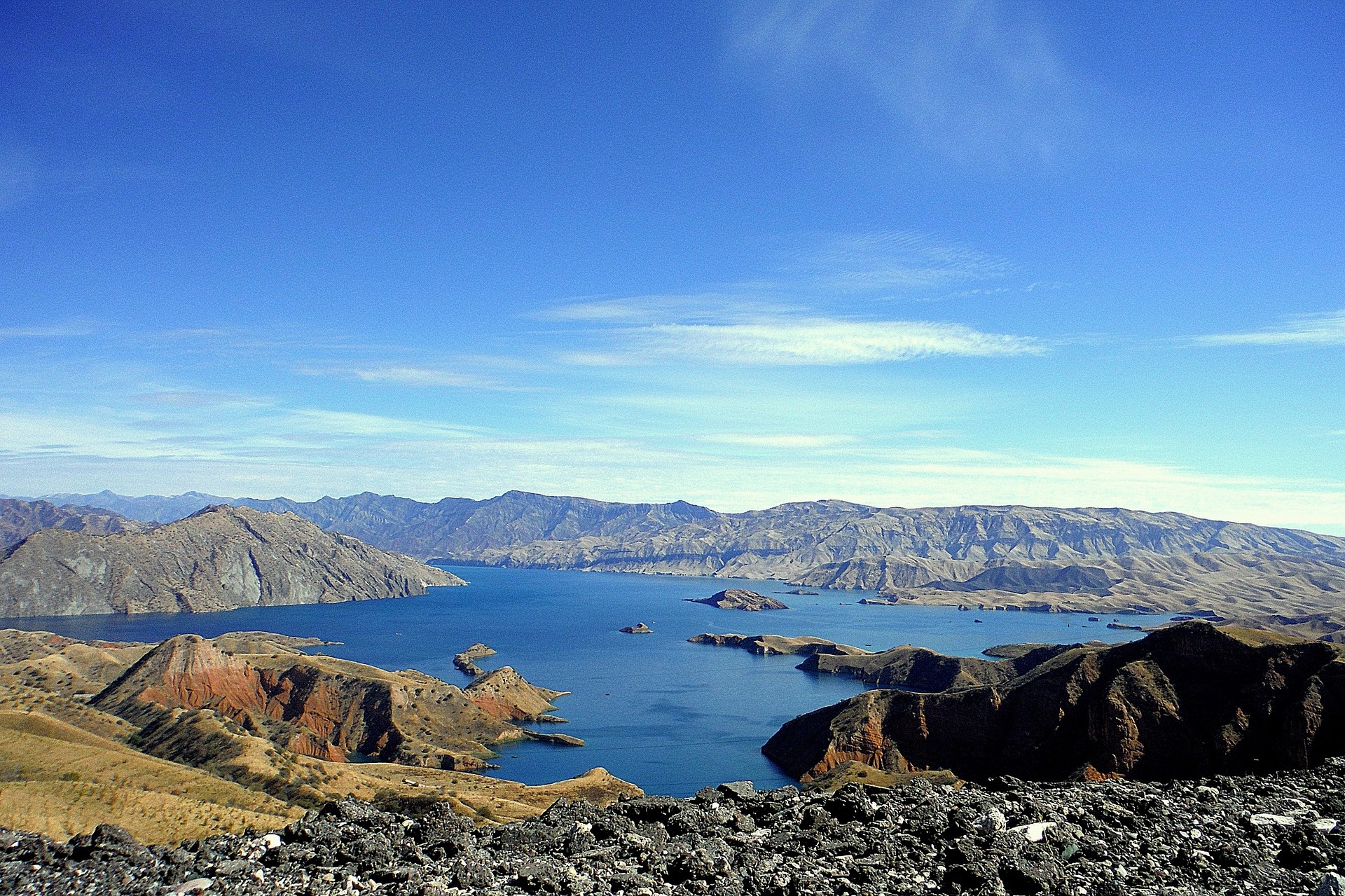
High mountains, turquoise lakes in the Fann Mountains and Silk Road ruins at Panjakent and Sarazm. For trekkers and travellers who like it remote.
Tajikistan is a country of mountains: 93% of it is mountainous, more than half lies above 3,000 m, and its highest peak, Ismoil Somoni (Qullai Ismoili Somoni), reaches 7,495 m. Unlike its Turkic-speaking neighbours, most people here speak Tajik, a form of Persian, and the region belonged to Persian empires for much of its history. The Silk Road left its mark in the north and west: Sarazm, near Panjakent, was inhabited from around 3900 BCE, the Zeravshan Valley keeps the ruins of the Sogdian city of ancient Panjakent, and Khujand, the second city, was probably founded by Alexander the Great. Sarazm and the Zeravshan Valley are both UNESCO World Heritage Sites.
Most visitors come for the outdoors. The Fann Mountains, easy to reach from Dushanbe, Khujand or Samarkand in Uzbekistan, offer treks between lakes such as Iskanderkul and the Seven Lakes. The Pamirs in the east are higher and more remote, but you need a separate permit for the Gorno-Badakhshan region and Canada advises against non-essential travel there, so check the official advice before you plan a trip (see Safety). Travel takes time: roads follow rivers and mountain passes, several passes close in winter, and very little English is spoken, so some Russian or Tajik helps a lot.
- Dushanbe: The capital, with the National Museum of Tajikistan and the Gurminj Museum of Musical Instruments.
- Fann Mountains: Treks past turquoise lakes below peaks over 5,000 m, with homestays and alpinist camps.
- Iskanderkul: A cold turquoise lake at nearly 2,200 m, with a 40 m waterfall a short walk away.
- Seven Lakes (Haft Kul): A chain of seven lakes, each a different colour, in a side valley south of Panjakent.
- Panjakent and Sarazm: The ruins of a Sogdian Silk Road city and one of the oldest settlements in Central Asia.
- Khujand and Istaravshan: The rebuilt fortress of Khujand and the blue-domed mosque of Istaravshan in the north.
Places to visit
- City
- Mountain
- Historic site
- Area
Cities
- Dushanbe: The capital and by far the largest city, at about 800 m in the Hisor Valley, with the main international airport.
- Khujand: The second city, on the Syr Darya in the Ferghana Valley, probably founded by Alexander the Great as Alexandria Eschate.
- Panjakent: The gateway to the Zeravshan Valley near the Uzbek border, with the ruins of a Sogdian city; the poet Rudaki was born here.
- Istaravshan: An old city of trade and crafts on the road from Khujand to Dushanbe, with the blue-domed Abdullatif Sultan mosque.
- Ayni: A crossroads town where the road from Panjakent meets the main road between Dushanbe and Khujand.
- Isfara: An ancient Silk Road town on the Kyrgyz border; check local conditions before travelling near the border (see Safety).
- Bokhtar: The largest city in Khatlon, formerly known as Qurghonteppa.
- Kulob: The country's third largest city, in the farming lowlands of the south-west.
- Khorugh: The largest town of the Pamirs, in Gorno-Badakhshan: you need a permit. The town lies on the Afghan border, and Canada advises against all travel within 10 km of it and against non-essential travel to the rest of Gorno-Badakhshan (see Safety).
Beyond the cities
- Fann Mountains (mountain): Meadows, juniper forests and turquoise lakes below peaks such as Chimtarga (5,489 m); one of Central Asia's most popular trekking areas.
- Iskanderkul (area): A mountain lake at nearly 2,200 m, about 25 km off the main road, with a 40 m waterfall nearby.
- Seven Lakes (Haft Kul) (area): Also called the Marguzor Lakes: a chain of seven lakes stretching for more than 20 km up a side valley south of Panjakent.
- Kulikalon Lakes (area): A group of lakes in the Fann Mountains, among those the Zeravshan Valley is known for.
- Sarazm (site): One of the oldest settlements in Central Asia, from the 4th millennium BCE, and a UNESCO World Heritage Site near Panjakent.
- Yaghnob Valley (area): A remote valley where descendants of the Sogdians still speak a language that comes from Sogdian.
- Hisor Fortress (site): A partly rebuilt Silk Road fortress not far from Dushanbe, with a madrasa and the foundations of a caravanserai.
- Kayrakkum Reservoir (area): The "Tajik Sea" east of Khujand, where locals swim and sunbathe in warm weather around the town of Guliston.
- Pamir Mountains (mountain): Very high mountains in the east, crossed by the Pamir Highway; a permit is needed. Canada advises against non-essential travel to Gorno-Badakhshan and against all travel within 10 km of the Afghan border (see Safety).
Regions
- Ferghana Valley: The north, with Khujand, the second city, and old Silk Road towns such as Isfara and Istaravshan.
- Karategin: The heartland around the capital, Dushanbe, with small hot springs in the mountains such as Gharm.
- Khatlon: The south-west, home to most of the country's ancient Buddhist sites; areas within 20 km of the Afghan border need a permit, and Canada advises against all travel within 10 km of it (see Safety).
- Pamirs: Some of the highest mountains in the world, with trekking, climbing and the Pamir Highway; a separate permit is needed, and Canada advises against non-essential travel to the region and against all travel within 10 km of the Afghan border (see Safety).
- Zeravshan Valley: Valleys and lakes of the Fann Mountains, with ancient ruins near Panjakent.
Things to do
See
- National Museum of Tajikistan Dushanbe: Four floors on the history of Tajikistan, told mainly through art; the giant Buddha in Nirvana statue found at Ajina-tepe is on the ground floor.
- Hisor Fortress Near Dushanbe: A partly rebuilt Silk Road fortress, with an unrestored madrasa and caravanserai across the square; entry cost С10 (somoni) in 2024.
- Ancient Panjakent and the Rudaki Museum Panjakent: The clay-brick ruins of a Sogdian trading city on a hill above the valley, and a museum with frescoes of banquets, battles and daily life.
- Sarazm Near Panjakent: A UNESCO-listed settlement more than 5,000 years old, with a museum and roofed excavations, close to the Uzbek border crossing.
- Khujand Fortress and the aerial tramway Khujand: The regional history museum inside the rebuilt fortress, then a ride over the Syr Darya between Kamoli Khujandi Park and Somoni Park.
- Old Istaravshan Istaravshan: The old quarters, mausoleums and the Abdullatif Sultan mosque, known as Kok-Gumbaz, the Blue Dome.
Do
- Trekking in the Fann Mountains Zeravshan Valley: Routes between lakes, with homestays, tents and alpinist camps at Artush and Alauddin; go with an accredited agency and never alone.
- Iskanderkul and its waterfall Fann Mountains: A lake where, legend says, Alexander the Great lost his horse; the water is very cold, and a 40 m waterfall is a 30-minute walk away.
- The Seven Lakes South of Panjakent: Seven lakes of different colours; the lowest is about 1 hour 30 minutes by car from Panjakent and the start of many treks, with donkeys for luggage.
Eat
- Qurutob: The national dish: flaky pastry and vegetables in a sauce of dried sour cheese, eaten by hand from a shared plate, and one of the few dishes without meat.
Itineraries
Dushanbe and the Fann Mountains in 8 days (8 days)
- Dushanbe (2 nights): The National Museum and the Gurminj Museum of Musical Instruments.
- Hisor Fortress (0 nights): A day trip from the capital.
- Iskanderkul (2 nights): Reached through the Anzob tunnel; walk to the waterfall, or on to the homestays of Sary-Tag.
- Seven Lakes (Haft Kul) (2 nights): Walk from lake to lake and sleep in a homestay or a tent.
- Panjakent (2 nights): Ancient Panjakent and the Rudaki Museum; Samarkand is about 60 km away if the border is open.
- Sarazm (0 nights): A short trip from Panjakent, near the border crossing.
Khujand and Istaravshan in 4 days (4 days)
- Khujand (3 nights): The fortress museum, the aerial tramway over the Syr Darya and the bazaars.
- Kayrakkum Reservoir (0 nights): A day by the water around Guliston, by marshrutka from the city.
- Istaravshan (1 night): The old city and the Blue Dome, on the road south towards Dushanbe.
Climate and best time to visit
| Jan | Feb | Mar | Apr | May | Jun | Jul | Aug | Sep | Oct | Nov | Dec | |
|---|---|---|---|---|---|---|---|---|---|---|---|---|
| Max °C | 8 | 9 | 15 | 22 | 27 | 33 | 36 | 34 | 30 | 23 | 17 | 11 |
| Min °C | -2 | -1 | 4 | 10 | 13 | 17 | 18 | 16 | 11 | 7 | 3 | 0 |
| Rain mm | 72 | 85 | 138 | 115 | 79 | 11 | 2 | 1 | 3 | 30 | 48 | 69 |
Tajikistan is hot, dry and sunny for much of the year, but most of the country is mountains, so altitude changes everything. In Dushanbe the average maximum is about 36 °C in July, with nights around 18 °C; in January days reach about 8 °C and nights fall to about -2 °C. Rain falls mainly from October to May, with March the wettest month in Dushanbe (about 138 mm), while from July to September it gets less than 3 mm a month. In the high mountains of the east, summer days can be very hot and nights drop to about 5 °C, and winter nights can reach -25 °C. Khujand and the north are slightly cooler than Dushanbe and often windy.
The most comfortable times are mid-May to early June and August to early September, according to Wikivoyage; April, May, September and October also bring rainy, cloudy and windy days. In the mountains, snow is possible at high altitude even in summer, and heavy rain or snow in autumn and winter can block roads and trekking routes. Snow closes the passes between Dushanbe and the north in winter, avalanches and landslides are a risk in spring, and melting glaciers can cause floods and mudslides in late spring and summer. Many interior roads are open only in the summer months.
Getting there and around
| Main airports | DYU, LBD |
|---|---|
| International driving permit | Required |
Getting there
By air: Dushanbe International Airport (DYU) has flights from many Russian cities and from Istanbul, Dubai, Almaty, Tashkent, Ürümqi and other cities, mostly with Somon Air and Tajik Air; many routes run only once a week. Khujand Airport (LBD), in the north, mainly serves Russian cities. The UK has sanctioned Aeroflot, Rossiya Airlines and Ural Airlines, so British nationals cannot legally buy tickets from them. Escalation in the Middle East has caused widespread flight disruption: check with your airline before you travel.
By land: Uzbekistan is the neighbour most travellers cross from. Shared taxis and minibuses run from Tashkent to Khujand in about two and a half hours via the Oybek crossing, and Samarkand is only 60 km from Panjakent, with a change of taxi at the border. The border with Kyrgyzstan reopened in March 2025, and Batken to Isfara is the easiest route, but some checkpoints remain closed or restricted. The land border with Afghanistan has been closed since 2021. Borders can close without notice, so check which crossings are open before you go. By train: the Moscow to Dushanbe train passes through Turkmenistan, which makes it all but impossible for most foreigners; the weekly Moscow to Khujand train crosses only Kazakhstan and Uzbekistan.
Getting around
Shared taxis and minivans are the main way between towns: you pay per seat, and drivers usually drop you at your address. In 2025 a seat from Dushanbe to Khujand cost about С120 to С150 (somoni). No buses link the cities, and the few trains are very slow; taking photos of stations and trains is forbidden. In towns, marshrutkas (minibuses on fixed routes) are fast and cheap, but Canada advises avoiding them because of reckless driving and overcrowding. For taxis, ask your hotel to order one, avoid unmarked cars or cars with other passengers, and agree the fare first.
Domestic flights link Dushanbe and Khujand in about 40 minutes, and in winter, when snow closes the passes, they are the only realistic way between north and south. Book at the airport or at an aviakassa (ticket office) in town and carry your passport, which is checked on domestic flights. Flights are cancelled in bad weather, and winter fog can delay them at Khujand.
Driving: you need an International Driving Permit with your licence (the 1968 version for UK drivers, whose licence is valid for 30 days), and a translation into Russian or Tajik helps at police checks, which are frequent. Seatbelts are compulsory, phones are banned at the wheel and the alcohol limit is zero. Outside Dushanbe and Khujand roads are often poor, unlit and passable only by four-wheel drive, petrol stations are rare and there are no breakdown services, so carry what you need and consider a satellite phone. The road from Dushanbe to Khujand goes through the Anzob tunnel and over passes above 3,000 m, and is dangerous in winter and spring. Avoid driving at night.
Flying to Tajikistan? PartnerCompare fares and find the cheapest datesSearch flightsWhere to stay
- Hotels: A few large hotels in Dushanbe; many date from the Soviet era and are overpriced for their condition, while a couple of newer ones offer Western standards.
- Homestays: Family homes around the main sights of the Zeravshan Valley, generally clean, with hot water and good food; Sary-Tag near Iskanderkul has several.
- Alpinist camps: Basic cottages at Artush and Alauddin in the Fann Mountains, and chalets by Iskanderkul that open only in the main season.
- Camping: Easy along the lakes and rivers of the Zeravshan Valley; tents can be rented locally.
- Apartments: Short-term rentals are listed on Somon.tj, which you can use only in Tajik or Russian.
In the Zeravshan Valley, local travel agencies in Panjakent can find you a homestay and arrange trips on the spot. Canada advises choosing accommodation with adequate security and keeping windows and doors locked. Power and water cuts often come together, even in Dushanbe, so keep a power bank charged and some bottled water in your room. If you enter without an e-visa and stay more than 10 days, you must register yourself, because hotels can no longer do it (see Entry).
Eat and drink
Dishes to try
- Osh (plov): Rice, beef or mutton and carrots fried together in a large cauldron and shared from one plate; ask for it "bé gusht" if you want it without meat.
- Qurutob: The national dish: flaky pastry and vegetables in a sauce of dried sour cheese, topped with fried onions, with no meat.
- Laghman: A noodle soup with vegetables and lamb or beef; Dushanbe also has stir-fried Uyghur versions.
- Sambusa: Baked pastries, similar to samosas.
- Mantu: Steamed meat dumplings served with sour cream and fried onions.
- Shurbo: Vegetable soup with lamb or beef, served with green onion and basil.
- Shashlik: Skewers of fish, liver, chicken, mutton or beef grilled over coals.
Drinks
- Green tea: The national drink, sweetened or not, drunk all day.
- Compote: A fruit punch.
Tajik food mixes Central Asian cooking with that of Afghanistan and Pakistan and a little Russian influence, and bread comes in many forms. Melons and watermelons are very cheap in the markets. In the Zeravshan Valley your homestay or one of the few restaurants in Panjakent are the best places to eat. Vegetarians can find qurutob easily, but it is almost the only dish without meat, and many dishes are cooked in animal fat; vegans will struggle. If you trek on your own, bring enough food, as village shops in the mountains may sell little more than bread.
Do not drink tap water or have ice, take care with street food, and wash and peel fruit and vegetables. The legal age to buy alcohol is 18, the police can fine or detain you if you appear drunk, and smoking on the street is illegal. During Ramadan cafés and restaurants may change their menus and are busy around iftar, the evening meal that breaks the fast.
Entry requirements and visas
| Passport validity | At least 6 months after the date you arrive, with 2 blank pages (UK advice); Canada asks for 6 months from the date you enter, with the passport in good condition |
|---|
| Passport | Entry | Max stay | Notes |
|---|---|---|---|
| United Kingdom | Evisa | Visa required: apply for an e-visa before you travel, or for a visa on arrival approved in advance. Tourist visas cannot be extended. | |
| Canada | Visa free | 30 days | Tourist visa not required for stays of up to 30 days. |
Other nationalities: check the official source below.
UK citizens need a visa: apply online for an e-visa from the Tajik Ministry of Foreign Affairs, or for a visa on arrival that must be approved in advance. Allow at least two weeks, note that an e-visa is valid for 60 days after approval, and you may be asked for hotel bookings or a letter of invitation. Canada's advice says Canadians do not need a tourist visa for stays of up to 30 days. Tourist visas cannot be extended, and if you overstay, even briefly, you can be fined and kept in the country until you get an exit visa, which is not sold at airports. Rules depend on your passport and can change: check the official link or the Tajik embassy before you book.
Permits and registration: the Gorno-Badakhshan Autonomous Region (the Pamirs) needs a separate permit on top of your visa, and the government sometimes stops issuing them at short notice. Areas within 20 km of the Afghan border in the Khatlon region, including Panj and Kumsangir, also need a permit from the Consular Department of the Ministry of Foreign Affairs in Dushanbe. If you enter without an e-visa and stay more than 10 days, you must register with the OVIR office at 5 Mirzo Tursunzoda Street in Dushanbe, and again at each new address: hotels can no longer do it for you, and travellers without registration have been detained at Dushanbe airport. For stays of more than 90 days you need a certificate showing you are HIV-free.
Customs: declare anything that may be prohibited or taxed. The UK FCDO says you can bring in up to US$10,000 and take out up to US$3,000 without declaring it, while Canada's advice says to declare any foreign currency worth more than US$3,000, so declare if in doubt and keep your entry form until you leave. Exporting somoni is prohibited. Unprocessed stones and metals and jewellery without a hallmark cannot be exported, and jewellery you buy must be declared when you leave, even with a receipt.
Money and payments
| Currency | Tajikistani Somoni (TJS) |
|---|---|
| Cards | Limited |
The currency is the Tajik somoni (TJS), which you can get only inside Tajikistan, and it is illegal to pay in anything else, so have some somoni with you as soon as you cross a land border. Tajikistan runs mainly on cash: very few businesses take cards, apart from some larger hotels, restaurants and cafés in the big cities, and travellers' cheques are not accepted. ATMs are found in Dushanbe and larger towns but not in rural areas, most accept only Visa, and some run out of cash, so withdraw what you need in Dushanbe before you head to the regions.
US dollars are the easiest currency to exchange, and euros and Russian roubles are also easy. Exchange booths refuse damaged or marked notes and dollars issued before 2013, so bring clean, recent notes, and change money only at banks and authorised exchange offices. Cashiers often round prices to the nearest note or coin; ask if you want exact change. Haggling is expected in bazaars but rare in shops: to ask a price, say "Chand pul ast?"
Health
| Recommended vaccines | Routine vaccines, including measles (MMR), Hepatitis A, Hepatitis B, Rabies, for some travellers: dogs with rabies are common, Typhoid, for rural areas, long stays or visiting friends and relatives, Mpox, for travellers at risk of sexual exposure |
|---|---|
| Malaria | None |
| Tap water | Not safe |
No vaccinations are required to enter Tajikistan, and yellow fever vaccination is not recommended. See a travel health professional about the recommended vaccines at least 8 weeks before you go. Do not drink tap water or have ice, and wash and peel fruit and vegetables. Rabies is common in dogs and treatment may be available only in larger cities, so avoid animals and get care at once after a bite or scratch. Ticks can spread Crimean-Congo haemorrhagic fever: cover up in the countryside and avoid contact with animal blood.
Medical care is generally poor and very basic outside Dushanbe, and serious cases will likely need evacuation, so get insurance that covers it. Bring enough of your medicines in their original containers with a copy of the prescription: some are hard to find, and Western brands may be counterfeit, so ask for the generic name. Air quality is often poor in Dushanbe and the Khatlon region during dust storms, and in winter coal heating adds to the pollution in the cities. Altitude sickness is a risk in the mountains. For an ambulance call 03, or 103 from a mobile; operators usually speak only Tajik and Russian.
The WHO certified Tajikistan malaria-free in 2023.
This is general information, not medical advice: check with a travel health professional before you go.
Safety
- United States: Level 2: Exercise Increased Caution (2026-10-20)
- Canada: Exercise a high degree of caution (2026-10-20)
- United Kingdom: No advice against travel (2026-10-20)
Canada advises against all travel within 10 km of the border with Afghanistan, and against non-essential travel to the Gorno-Badakhshan Autonomous Oblast (the Pamirs), citing the security situation, the threat of terrorism and the risk of civil unrest. The UK FCDO does not advise against travel, but it reports armed clashes and cross-border incursions near the Afghan border and a risk of unrest in Khorugh and other towns of Gorno-Badakhshan, where some roads are temporarily closed; check the advice before you go. Both regions need permits (see Entry), and border guards may ask to see them. Near the borders with Afghanistan, Kyrgyzstan and Uzbekistan, and in the mountains of the Tavildara region, there may be marked and unmarked minefields: stay on main roads and do not walk off-road. FCDO also asks you to take care near the Kyrgyz border, and borders can close without notice.
FCDO considers terrorist attacks likely, including in places foreigners visit, so take extra care around Nowruz, Independence Day and New Year, and avoid demonstrations. Pickpocketing is common in markets and on public transport, and there have been occasional muggings in Dushanbe: avoid walking alone at night, use pre-arranged taxis and do not leave drinks unattended. Officials at Dushanbe airport have harassed travellers over their documents, so check your papers with your hotel before you fly out. Women travelling alone may get unwanted attention.
You must carry your passport or a notarised copy at all times. Do not take photos or fly drones near military or security sites, border posts and police stations; drones need permission from the National Security Committee. Posting images or comments online that are seen as disrespectful to religion, culture or national symbols can lead to a fine or prison. Same-sex relations are legal but attitudes are conservative. Power cuts are frequent, especially in winter and in rural areas, earthquakes are a risk, and avalanches, landslides and floods often block mountain roads. For treks, use a reputable agency and never go alone; mountain rescue is limited. The Tourist Police answer 24 hours a day on +992 770 55 55 55, and Canada lists 112 for emergencies.
Customs and etiquette
Tajik society is conservative, especially outside Dushanbe, so dress modestly: women should cover their shoulders and avoid shorts or short skirts, and men in shorts draw disapproving looks even in the capital. A headscarf is not expected and the authorities discourage it, but carry one if you plan to visit a mosque. Most mosques admit only men, though some in the larger cities let women tourists in outside prayer times. When you talk with older people, place your right hand over your heart as a sign of respect.
Tajiks are welcoming, and young people may come up to you to practise their English. Men often walk hand in hand or arm in arm, and this has no romantic meaning. During Ramadan be aware of religious sensitivities, and expect areas around mosques to be busy at prayer times. Tajiks dislike having their country compared with Afghanistan, so avoid it. Possession of drugs is illegal and can bring a lengthy prison sentence, and the police may raid bars and nightclubs. The authorities may ask you not to photograph government buildings.
Language
| Official languages | Tajik |
|---|---|
| English | Rare |
| Hello | Ассалому алейкум (Assalomu aleykum); informal: Салом (Salom) |
|---|---|
| Thank you | Рахмат (Rahmat) |
| Please | Лутфан (Lutfan) |
| Yes / No | Ҳа / Не (Ha / Ne) |
| Excuse me / Sorry | Мебахшед (Mebakhshed) |
| Goodbye | Хайр (Khayr) |
| Do you speak English? | Шумо англиси гап мезанед? (Shumo anglisi gap mezaned?) |
| How much is it? | Чанд пул аст? (Chand pul ast?) |
| Help! | Ёри диҳед! (Yori dihed!) |
What to pack
- Passport, plus a notarised copy: You must carry one of them at all times, and the police can arrest you without ID.
- International Driving Permit: Needed with your licence; UK drivers must get the 1968 version before leaving.
- Clean US dollar notes issued in 2013 or later: Cards are rarely accepted, and older or damaged notes are refused at exchange booths.
- Medicines in their original containers, with prescriptions: Some medicines are hard to find, and Western brands may be counterfeit.
- A power bank: Power cuts are frequent, even in Dushanbe.
- Warm layers and sun protection for the mountains: Snow is possible at altitude even in summer, and sunstroke and sunburn can cause problems.
- An N95 mask: Air in the cities can be very polluted, especially in winter.
Quick reference
Country facts
| Capital | Dushanbe |
|---|---|
| Population | 10,786,734 (2025) |
| Area | 138,790 km² |
| Time zone | Asia/Dushanbe (UTC+5) |
| Calling code | +992 |
| Driving side | right |
Staying connected
| SIM and eSIM | Buy a local SIM card and top up in somoni at the orange payment kiosks found in towns and villages; data is charged by the amount you use and speeds vary from day to day. Wikivoyage reports that Megafon is the only network that works in the Pamirs. Access to the internet or to some sites can be restricted without warning. |
|---|---|
| Roaming | In remote areas mobile coverage is extremely limited, and most Tajik mobile phones have trouble connecting to satellite phones. |
Useful apps
- Somon.tj: Listings, including short-term apartment rentals; in Tajik or Russian.
Emergency numbers
| Emergency | 112 (Canada) |
|---|---|
| Police | 02 (102 from a mobile) |
| Ambulance | 03 (103 from a mobile) |
| Fire | 01 (101 from a mobile) |
| Tourist police | +992 770 55 55 55 |
Frequently asked questions
Do I need a visa for Tajikistan?
UK citizens do: apply for an e-visa before you travel, at least two weeks ahead. Canada's advice says Canadians can visit for up to 30 days without a tourist visa. Rules depend on your passport, so check the official link before you book.
Can I visit the Pamirs?
You need a separate permit for the Gorno-Badakhshan region, which the government sometimes stops issuing. Canada advises against non-essential travel there and against all travel within 10 km of the Afghan border, so check the official advice before you plan a trip.
When is the best time to visit Tajikistan?
Mid-May to early June and August to early September. July is very hot in Dushanbe, and in winter snow closes the passes between Dushanbe and the north.
Can I drink the tap water in Tajikistan?
No. Drink bottled water and avoid ice.
Can I pay by card in Tajikistan?
Rarely. The country runs on cash in somoni, and most ATMs, found mainly in Dushanbe and larger towns, accept only Visa. Bring clean US dollars issued in 2013 or later to exchange.
Do I need to register my stay?
If you enter without an e-visa and stay more than 10 days, yes: register yourself at the OVIR office in Dushanbe, because hotels can no longer do it for you.
More Travel Stories from Asia

 Laos
 Cambodia
Sources This guide was last checked on · 24 sources
- Wikivoyage: Tajikistan · Overview, Places to visit, Things to do, Itineraries, Climate and best time to visit, Getting there and around, Where to stay, Eat and drink, Entry requirements and visas, Money and payments, Health, Safety, Customs and etiquette, Language, What to pack, Staying connected, Frequently asked questions
- Wikivoyage: Zeravshan Valley · Overview, Places to visit, Things to do, Itineraries, Getting there and around, Where to stay, Eat and drink
- Wikivoyage: Panjakent · Overview, Places to visit, Things to do, Itineraries
- Wikivoyage: Khujand · Overview, Places to visit, Things to do, Itineraries, Getting there and around
- Government of Canada: Tajikistan travel advice (updated 14 October 2026) · Overview, Places to visit, Things to do, Climate and best time to visit, Getting there and around, Where to stay, Entry requirements and visas, Money and payments, Health, Safety, Customs and etiquette, What to pack, Emergency numbers, Frequently asked questions
- UK FCDO: Tajikistan entry requirements (updated 19 August 2026) · Overview, Where to stay, Entry requirements and visas, Safety, What to pack, Frequently asked questions
- Wikidata: Tajikistan · Overview, Places to visit, Money and payments, Country facts
- Wikivoyage: Istaravshan · Places to visit, Things to do
- Wikivoyage: Dushanbe · Places to visit, Things to do, Itineraries, Getting there and around, Where to stay
- UK FCDO: Tajikistan regional risks · Places to visit, Getting there and around, Safety
- WMO World Weather Information Service: Dushanbe · Climate and best time to visit
- UK FCDO: Tajikistan safety and security · Climate and best time to visit, Getting there and around, Eat and drink, Money and payments, Safety, Customs and etiquette, What to pack, Staying connected, Emergency numbers
- UK FCDO: Tajikistan warnings and insurance · Getting there and around
- ISO 4217 (SIX), published 2026-09-17 · Money and payments
- CDC Travelers' Health: Tajikistan · Health, Frequently asked questions
- UK FCDO: Tajikistan health · Health, What to pack
- WHO: Countries and territories certified malaria-free · Health
- US Department of State: Tajikistan travel advisory · Safety
- UK FCDO: Tajikistan travel advice · Safety
- UK FCDO: Tajikistan getting help · Safety, Emergency numbers
- Wikivoyage: Tajik phrasebook · Language
- World Bank, SP.POP.TOTL · Country facts
- World Bank, AG.LND.TOTL.K2 · Country facts
- IANA Time Zone Database, zone.tab · Country facts
Suggest an update
Travel rules, prices and timetables change. If something in this guide is out of date, tell us: we check every suggestion against an official source before changing the page.