

- Local time
- 10:37
- Currency
- New Taiwan Dollar (TWD)
- Capital
- Taipei
- Calling code
- +886
- Drive on the
- right
Overview
Night markets, temples, hot springs and high mountain trails, linked by fast trains. A good fit for food lovers and hikers.
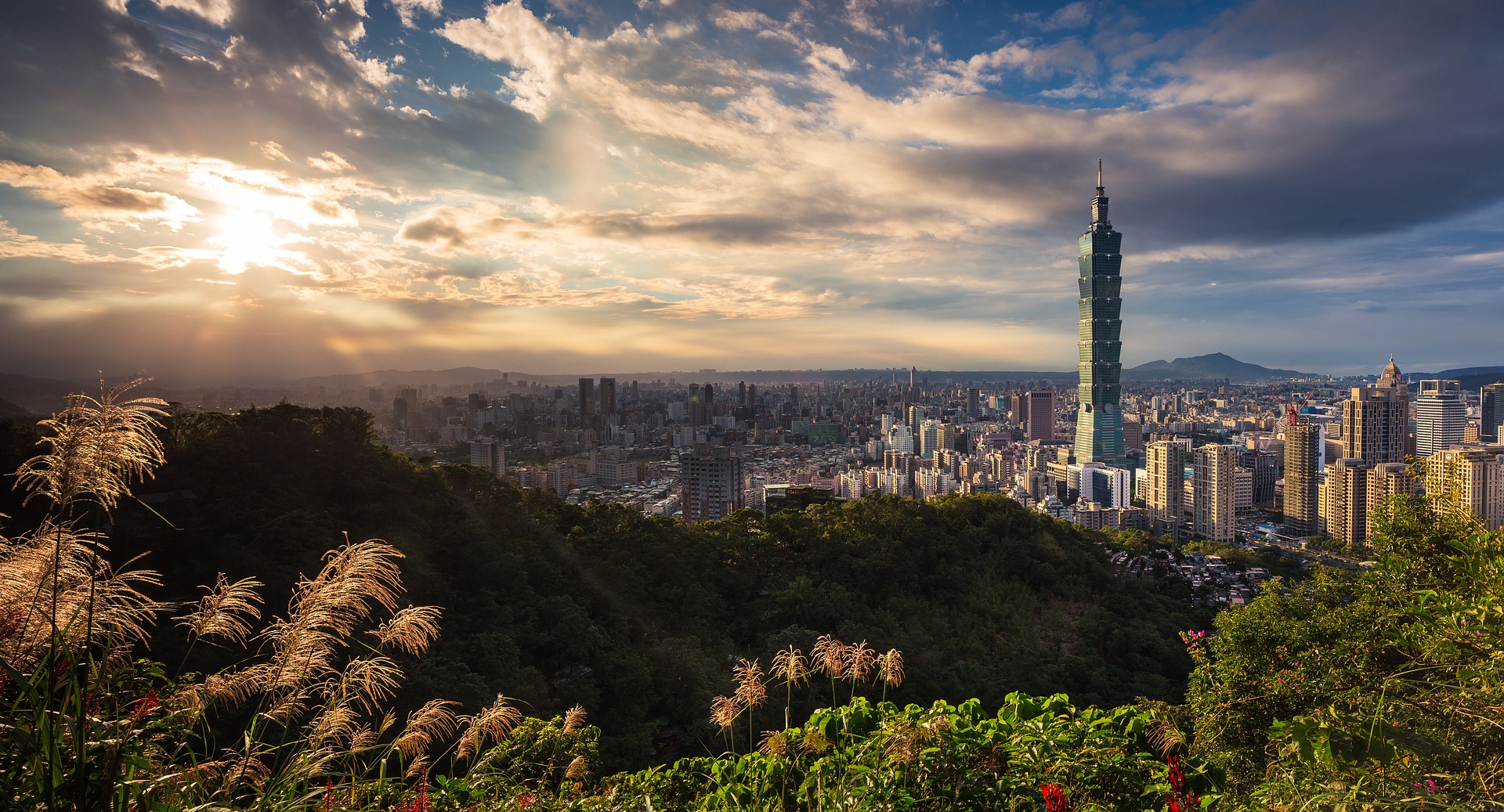
Taiwan fits a lot into a small island. Most people live in the crowded cities of the west coast, while a chain of mountains runs down the middle, with more than two hundred peaks over 3,000 m, and about 60% of the land is covered by forest. Taipei is the centre of culture and entertainment, with the National Palace Museum and Taipei 101; Tainan, the oldest city, is known for its historic buildings and its food. Every city has at least one night market, and hot springs are easy to reach from the capital.
The culture is rooted in Chinese traditions, especially those of Fujian, with a strong Japanese influence from 50 years of Japanese rule that shows in the food, in hot-spring bathing and in the love of baseball. Indigenous Austronesian peoples make up about 2% of the population, and the east coast around Hualien and Taitung is the main centre of their culture. Getting around is easy: the high-speed train links Taipei and Kaohsiung in as little as 95 minutes. Wikivoyage suggests October to December as the best time to visit; typhoons can strike from May to November, most often from July to September.
- Taipei: The capital, with the National Palace Museum, Taipei 101, temples and night markets.
- Taroko Gorge: A gorge near Hualien on the east coast, with trails and a side trip to the rocky shore at Shihtiping.
- Sun Moon Lake: A lake at 762 m in the mountains of Nantou County.
- Alishan: Misty forests of giant cypresses, reached on a narrow-gauge mountain railway.
- Tainan: The oldest city, with colonial buildings, Confucian temples and a reputation for food.
- Night markets: Street food, shopping and entertainment every night in the larger cities.
Places to visit
- City
- Park
- Mountain
- Area
Cities
- Taipei: The capital and the centre of commerce and culture, home to Ximending and Taipei 101.
- Jiufen: A former gold-mining town on the northeast coast, visited for its old streets and views.
- Miaoli: The main centre of Hakka culture in Taiwan.
- Taichung: The second city, in the centre-west, known for pastries such as sun cakes and pineapple cakes.
- Puli: At the geographical centre of the island, a base for the central mountains and Sun Moon Lake.
- Tainan: The oldest city and former capital, known for its historic buildings and as the unofficial food capital.
- Kaohsiung: The third city, with one of the busiest ports in the world and the second airport of the island.
- Taitung: A relaxed city on the southeast coast with a large indigenous population.
- Hualien: A pleasant east-coast city near Taroko Gorge.
Beyond the cities
- Taroko Gorge (park): A gorge in Taroko National Park, off the east coast near Hualien.
- Sun Moon Lake (area): A lake at 762 m in the mountains of Nantou County, known for its clear water.
- Alishan (mountain): Forests of giant cypresses and sunrise views, reached by a narrow-gauge railway from Chiayi.
- Yushan (mountain): Jade Mountain, at 3,952 m the highest peak in Taiwan.
- Kenting National Park (park): Beaches and lush vegetation at the southern tip of the island.
- Yangmingshan National Park (park): A mountain range overlooking Taipei, with hot springs and cherry blossom in spring.
- Shei-pa National Park (park): Mountains and rivers in Hsinchu County, with good hiking trails.
Regions
- Northern Taiwan: Taipei, the main airport and the technology hub of the island.
- Central Taiwan: Mountains, lakes and major national parks.
- Eastern Taiwan: Hualien and Taitung, cut off from the west by the central mountains, and the main centre of indigenous culture.
- Southern Taiwan: The tropical south, with beaches, palm trees and Kaohsiung.
- Outlying islands: Kinmen, Matsu, Penghu, Green Island and Orchid Island, popular getaways for locals.
Things to do
See
- National Palace Museum Taipei: One of the cultural sights of the capital, along with Taipei 101, Zhongshan Hall and the restored Bao'an Temple.
- Temples Tainan, Lukang and Sanxia: The Confucian temples of Tainan and Changhua, Longshan Temple in Lukang and Zushi Temple in Sanxia.
- Baseball: The most popular spectator sport in Taiwan; catch a game of the professional CPBL league.
Do
- Hot springs Beitou, Wulai and Yangmingshan: Traditional single-sex baths are nude, mixed ones need a swimsuit; always shower before you get in.
- Taroko Gorge Hualien: Walk in the gorge off the east coast, with a detour to the rocky shore at Shihtiping.
- Alishan Forest Railway Chiayi to Alishan: An 86 km narrow-gauge line built for logging in 1912: about 5 hours up and 4 hours down.
- Mountain hiking Yushan and Shei-pa National Park: Many high trails need a permit booked in advance, usually 7 days; plenty of day hikes need none.
- Cycling around the island: Taiwan Cycle Route No. 1 circles the main island for about 968 km; Giant stores rent bikes you can return elsewhere.
Eat
- Night markets Taipei and Kaohsiung: Graze on local dishes at places like Shilin Night Market in Taipei or Ruifeng in Kaohsiung; watch your wallet in the crowds.
Drink
- Tea houses: Taste high mountain oolong served in tiny cups; traditional tea houses may add a fee for the preparation.
Itineraries
Taipei and the northeast in 5 days (5 days)
- Taipei (3 nights): National Palace Museum, Taipei 101, temples and night markets.
- Yangmingshan National Park (0 nights): A day of hiking and hot springs above the city.
- Jiufen (1 night): Old mining streets and views of the northeast coast.
Around the island by train in 10 days (10 days)
- Taipei (2 nights): Start in the capital.
- Hualien (2 nights): Base for a full day in Taroko Gorge.
- Taitung (1 night): Down the quieter east coast.
- Kaohsiung (1 night): The port city of the south.
- Kenting National Park (1 night): Beaches at the southern tip, by bus from Kaohsiung.
- Tainan (2 nights): Historic sites and food before heading back north.
The central mountains in 6 days (6 days)
- Taichung (1 night): Known for sun cakes and pineapple cakes.
- Puli (1 night): The geographical centre of the island.
- Sun Moon Lake (1 night): A night by the lake.
- Alishan (2 nights): Cypress forests and sunrise; ride the forest railway from Chiayi.
Getting there and around
| Main airports | TPE, KHH, TSA |
|---|---|
| International driving permit | Required |
Getting there
By air: Taiwan Taoyuan International Airport (TPE), 40 km west of Taipei, is the main gateway, with good links to neighbouring countries and North America. A metro line runs from the airport to Taipei, and buses go to Taipei, Taichung and other cities. Kaohsiung International Airport (KHH) serves the south and has its own metro connection; Songshan Airport (TSA) in central Taipei handles mostly domestic flights plus some to Tokyo Haneda and Seoul Gimpo. The main Taiwanese airlines are EVA Air, China Airlines and Starlux, and Tigerair Taiwan is the low-cost carrier.
By sea: the ferry between Keelung and Ishigaki in Japan was suspended on 1 October 2026 until further notice, so check before you plan around it. Before you fly, fill in the online arrival card (see Entry).
Getting around
Trains are the easiest way to travel. The high-speed rail (THSR) runs down the west coast from Taipei to Kaohsiung in as little as 95 minutes, and Taiwan Railways runs a loop around the whole island, including the east coast. There is no line across the mountains, so going from Taichung to Hualien means driving, flying or a detour via Taipei or Kaohsiung. An EasyCard or iPass covers buses, metros and Taiwan Railways trains (not the high-speed rail) all over the island, often with a discount, and works in convenience stores. Taipei, Taoyuan, Taichung and Kaohsiung have metro systems, where eating, drinking and smoking are banned past the gates.
Buses are generally cheaper than trains for long trips, but on holidays journeys take longer and tickets sell out; on local routes you hail the bus as it comes. Taxis are metered and cheap, but drivers rarely speak English, so carry your destination written in Chinese. Domestic flights and ferries serve the outlying islands, including ferries from Kaohsiung to Penghu and from Taitung to Green Island and Orchid Island.
Driving: you need an International Driving Permit; UK licence holders need the 1949 version, validated at a local Motor Vehicles Office once in Taiwan. Traffic drives on the right and highways are good, but scooters weave through traffic and vehicles may not stop at pedestrian crossings. The UK FCDO says the drink-drive limit is about a quarter of England's, and Canada advises against riding motorcycles or scooters. To ride a scooter you need a licence or a permit that covers motorcycles.
Flying to Taiwan? PartnerCompare fares and find the cheapest datesSearch flightsWhere to stay
- Hostels: In Taipei and most sizeable cities; some operate without a licence.
- Hotels: From basic to luxury, including international and Asian chains; independent hotels vary widely, so read reviews first.
- Minsu: Small family-run guesthouses, often themed, with breakfast; mostly outside city centres and often advertised only in Chinese.
- Motels: In the suburbs and meant for couples, often lavish, with short daytime stays and late check-in.
- Camping: Possible in many areas, including national parks; official sites may charge a small fee.
- Temple stays: Some Buddhist temples host pilgrims; Fo Guang Shan Monastery near Kaohsiung has English-speaking monks and nuns.
Booking online is often cheaper than walking in, especially at larger hotels, and short-notice bookings can be good value on weekdays but not at weekends or on holidays. Carry the Chinese name of your hotel, since locals may not recognise the English one. Many small places are not staffed around the clock and leave a LINE contact at the door, so set up the app before you arrive. Since 2025 hotels may not put single-use toiletries such as toothbrushes and razors in rooms: bring your own.
Eat and drink
Dishes to try
- Beef noodle soup (niúròu miàn): Stewed beef in a dark, slightly spicy broth or a clear one.
- Braised pork rice (lǔ ròu fàn): Rice topped with pork belly stewed in soy sauce and spices.
- Oyster omelette: Eggs, oysters and sweet potato flour with a sweet red sauce.
- Three-cup chicken: Chicken cooked with soy sauce, rice wine and sesame oil.
- Stinky tofu: Fermented tofu with a strong smell and a mild taste, usually fried and sold at outdoor stalls.
- Pineapple cake: A buttery pastry filled with pineapple and winter melon paste.
- Railway bento: A boxed meal sold at major Taiwan Railways stations; the most popular comes with a braised pork cutlet.
Drinks
- Pearl milk tea: Milky tea with tapioca balls, invented in Taiwan.
- High mountain oolong: A light, fragrant tea, served the traditional way in a tiny teapot and cups.
- Taiwan Beer: The standard local beer, brewed with rice and served cold, usually in bottles.
- Kaoliang: A very strong grain spirit from Kinmen, often drunk neat.
- Soy milk: Sweet or savoury, often with fried dough sticks for breakfast.
| Tipping | Not expected. Most full-service restaurants add a 10% service charge; bellhops in upmarket hotels and airport porters expect about NT$50 a bag. |
|---|
Food is a big reason to come. The cooking draws on Fujian and other Chinese regions with a Japanese influence, and every town has its own speciality. Night market stalls and back-alley noodle shops are the cheapest places to eat: in 2026 Wikivoyage put a street-stall meal at around NT$50 to 75 (New Taiwan dollars). Self-service buffets charge by what you pick, and convenience stores sell bento boxes, tea eggs and sandwiches.
Vegetarians eat well: Buddhist vegetarian restaurants are found all over the island, often marked with the 卍 symbol, and usually leave out onion and garlic too. Awareness of food allergies is limited, and a serious soy allergy is hard to manage. Dishes are shared from the middle of the table; do not stand your chopsticks upright in rice. Water dispensers for refilling bottles are everywhere, and the legal drinking age is 18.
Entry requirements and visas
| Passport validity | At least 6 months after the date you arrive (UK advice); Canada asks for 6 months beyond the date you leave |
|---|
| Passport | Entry | Max stay | Notes |
|---|---|---|---|
| United Kingdom | Visa free | 90 days | Tourism, family visits and business meetings; can be extended by 90 days in Taiwan. |
| Canada | Visa free | 90 days | Tourism or business; can be extended by 90 days in Taiwan. |
Other nationalities: check the official source below.
UK and Canadian citizens can enter Taiwan without a visa for up to 90 days and can extend their stay once in Taiwan by another 90 days; for stays over 180 days you need a visa before you arrive, and overstaying brings a fine and the risk of deportation. Most visitors must fill in the free Taiwan Arrival Card (TWAC) online within 3 days before arrival; use the official site, since third-party websites may charge fees and misuse your data. Visitors aged 14 and over are fingerprinted and photographed at immigration, and officers may ask for a return or onward ticket and proof of funds.
Customs rules are strict. Strict rules cover meat, plants and animal products: do not bring animal products without authorisation, and note that pork products, including jerky and cup noodles with meat, are banned because of African swine fever, and fines are heavy. Declare cash over NT$100,000 or US$10,000. Bring the prescription for any medicines, and check the list of controlled drugs: some medicines legal at home are banned. Canada warns that men aged 18 to 36 who were born in Taiwan or hold or have held a Taiwanese passport may be liable for military service, even if they enter on another passport. Rules depend on your passport and can change: check the official link before you book.
Money and payments
| Currency | New Taiwan Dollar (TWD) |
|---|---|
| Cards | Common |
The currency is the New Taiwan dollar (TWD, written NT$). Most hotels and department stores take Visa, Mastercard and JCB, but many restaurants and most small shops take only cash, and small shops may add up to 8% if you pay by card. Most ATMs in 7-Eleven stores accept international cards; other ATMs may not, and machines in remote mountain areas can run out of cash, so stock up before you go. Wikivoyage reports a limit of NT$20,000 per withdrawal.
You usually get a better rate changing money at the airport on arrival than abroad; if you bring US dollars, bring recent, undamaged notes. Declare cash over NT$100,000 or US$10,000 when you enter or leave. Visitors can claim back VAT on purchases of at least NT$2,000 a day in participating stores: ask for the form and show it at the airport when you leave. Wikivoyage put a bare-bones budget at about NT$2,000 a day in 2026.
Health
| Recommended vaccines | Routine vaccines, including measles (MMR), Hepatitis A, Hepatitis B, Japanese encephalitis, for long stays or time in rural areas, Rabies, for some travellers working with animals or wildlife, Mpox, for travellers at risk of sexual exposure |
|---|---|
| Malaria | None |
| Tap water | Varies |
No vaccinations are required to enter Taiwan. Ask a travel health professional about the recommended ones at least 8 weeks before you go. Dengue is a risk, and the UK FCDO reports a significant increase in cases in the south, including Kaohsiung and Tainan: protect yourself from mosquito bites, especially when hiking in summer. Wikivoyage reports that, according to the water company, tap water is generally safe to drink, but most locals boil it, and older buildings can have poorly kept tanks and pipes; bottled water and metered water stations are the alternatives.
Healthcare is very good and available throughout Taiwan, and some staff speak English, but hospitals often ask for payment up front: get insurance that covers treatment and medical evacuation. For an ambulance call 119; crews do not usually include a paramedic. Bring a doctor's prescription for any medicine you carry, in the amount stated on it; cannabis-based medicines are banned even if prescribed at home. Altitude sickness is a risk in the high mountains, and air pollution can be high in the cities of the west coast.
This is general information, not medical advice: check with a travel health professional before you go.
Safety
- United States: Level 1: Exercise Normal Precautions (2026-10-20)
- Canada: Take normal security precautions (2026-10-20)
- United Kingdom: No advice against travel (2026-10-20)
Crime is low in Taiwan and violent crime is rare, but pickpockets work in crowds such as night markets and festivals: keep your passport and documents secure. Card and ATM fraud happens, so use machines inside banks or shops and cover the keypad. Scammers sometimes call or email foreigners pretending to be the authorities or a bank; never send money or personal details. Always carry ID: the police usually accept a printed copy of your passport photo page. Drug penalties are severe, up to the death penalty, and airports scan the luggage of transit passengers too. Demonstrations take place from time to time and can disrupt traffic: avoid them.
Natural hazards need more planning. Typhoons usually come between May and November, most often from July to September, and can close roads, cause landslides in central and southern Taiwan and cancel flights, trains and buses; follow the Central Weather Administration and the local authorities. Taiwan is in an active seismic zone: earthquakes are common and a tsunami can follow within minutes, so learn the evacuation plan if you stay on the coast. After heavy rain, watch for falling rocks on mountain roads. Traffic is the everyday hazard: look both ways even on one-way streets. During regular civil-defence drills, sirens sound for 30 minutes and you must follow the instructions of the police; drivers have to pull over and stop.
Customs and etiquette
Taiwanese people are generally warm and polite, with a strong respect for elders. Give and receive business cards with both hands. Take off your shoes when you enter a home, and do not sit in priority seats on public transport unless you need one. Avoid embarrassing people in public: if you must point out a mistake, do it in private. Some subjects bring bad luck: the number 4 sounds like the word for death, Chinese names are not written in red, and clocks, umbrellas, shoes for elderly people and knives make poor gifts.
In temples, dress and behave respectfully, enter by the right-hand door and leave by the left, step over the raised threshold, and never point at the statues of deities with your index finger: use your thumb or an open palm. The swastika you see in temples is a Buddhist symbol. Politics is a sensitive subject, so leave it out of conversation unless you know someone well. Defamation laws are strictly enforced, including for what you post online.
Language
| Official languages | Chinese, Min Nan Chinese, Hakka Chinese |
|---|---|
| English | Limited |
| Hello | 你好 (Nǐ hǎo) |
|---|---|
| Thank you | 謝謝 (Xièxie) |
| Please | 請 (Qǐng) |
| Excuse me | 請問 (Qǐng wèn) |
| Sorry | 對不起 (Duìbuqǐ) |
| Goodbye | 再見 (Zàijiàn) |
| Do you speak English? | 你會說英語嗎? (Nǐ huì shuō Yīngyǔ ma?) |
| Help! | 救命! (Jiùmìng!) |
What to pack
- Passport, plus a printed copy of the photo page: You must carry ID; the police usually accept the copy.
- International Driving Permit: Needed to drive; UK citizens need the 1949 version and cannot buy it outside the UK.
- Prescriptions for your medicines: You must show that medicines are for personal use, in the amounts prescribed.
- Insect repellent: Dengue is a risk, especially in the south and in summer.
- Your own toiletries: Hotels may no longer supply single-use items such as toothbrushes and razors.
- A refillable water bottle and a shopping bag: Water dispensers are everywhere, and shops charge for plastic bags.
- Plug adapter, if your devices need one: Sockets take Type A and B plugs, at 110 V.
Quick reference
Country facts
| Capital | Taipei |
|---|---|
| Population | 23,262,544 (2026) |
| Area | 36,193 km² |
| Time zone | Asia/Taipei (UTC+8) |
| Calling code | +886 |
| Driving side | right |
Electricity and plugs
| Plug types | A, B |
|---|---|
| Voltage | 110 V |
| Frequency | 60 Hz |
Staying connected
| SIM and eSIM | Chunghwa Telecom, Taiwan Mobile and Far EasTone sell prepaid SIM cards with unlimited data at their shops, including at all international airports; bring your passport and a second ID such as a driving licence. eSIMs can be bought in advance. |
|---|---|
| Roaming | Most international providers have roaming agreements with at least one Taiwanese network; check with yours before you leave. Taiwan's last 3G networks closed in February 2025, so phones that only support 3G will not work. |
| Wi-Fi | Free iTaiwan Wi-Fi works in stations, post offices and libraries without registration, and most cafés, malls and restaurants offer free Wi-Fi. |
Useful apps
- LINE: The main messaging app in Taiwan; many guesthouses use it to stay in touch with guests.
- Bus+: Bus routes and live schedules.
Emergency numbers
| Police | 110 |
|---|---|
| Ambulance | 119 |
| Fire | 119 |
Frequently asked questions
Do I need a visa for Taiwan?
UK and Canadian citizens can stay up to 90 days without a visa; rules depend on your passport. Most visitors must fill in the online Taiwan Arrival Card within 3 days before arrival. Check the official link before you book.
When is the best time to visit Taiwan?
Wikivoyage suggests October to December. Typhoons can strike from May to November, most often from July to September.
Can I drink the tap water in Taiwan?
Wikivoyage reports that the water company calls it generally safe, but most locals boil it and older buildings can have poor pipes. Bottled water is sold in every convenience store.
Can I pay by card in Taiwan?
In hotels and department stores, yes. Many restaurants and small shops take only cash; most 7-Eleven ATMs accept international cards.
What is the easiest way to get around Taiwan?
By train: the high-speed rail runs down the west coast and Taiwan Railways loops around the island. An EasyCard covers buses, metros and regular trains.
Can I drive in Taiwan with my licence?
You need an International Driving Permit; UK citizens need the 1949 version and must get it validated once in Taiwan.
More Travel Stories from Asia

 Laos
 Cambodia
Sources This guide was last checked on · 14 sources
- Wikivoyage: Taiwan · Overview, Places to visit, Things to do, Itineraries, Getting there and around, Where to stay, Eat and drink, Entry requirements and visas, Money and payments, Health, Safety, Customs and etiquette, Language, What to pack, Electricity and plugs, Staying connected, Frequently asked questions
- Wikidata: Taiwan · Overview, Places to visit, Money and payments, Country facts, Electricity and plugs
- UK FCDO: Taiwan safety and security · Getting there and around, Safety, What to pack
- UK FCDO: Taiwan warnings and insurance · Getting there and around, Safety
- Government of Canada: Taiwan travel advice (updated 14 October 2026) · Getting there and around, Entry requirements and visas, Money and payments, Health, Safety, Customs and etiquette, What to pack, Frequently asked questions
- UK FCDO: Taiwan entry requirements (updated 28 August 2026) · Entry requirements and visas, Money and payments, Frequently asked questions
- ISO 4217 (SIX), published 2026-09-17 · Money and payments
- CDC Travelers' Health: Taiwan · Health, Frequently asked questions
- UK FCDO: Taiwan health · Health, What to pack
- US Department of State: Taiwan travel advisory · Safety
- UK FCDO: Taiwan travel advice · Safety
- Wikivoyage: Chinese phrasebook · Language
- IANA Time Zone Database, zone.tab · Country facts
- UK FCDO: Taiwan getting help · Emergency numbers
Suggest an update
Travel rules, prices and timetables change. If something in this guide is out of date, tell us: we check every suggestion against an official source before changing the page.