

- Local time
- 10:37 (capital)
- Currency
- Chinese Yuan (CNY)
- Capital
- Beijing
- Calling code
- +86
- Drive on the
- right
Overview
China spans the Forbidden City, the Great Wall and the terracotta warriors, futuristic Shanghai, giant pandas and karst mountains, linked by the world's longest high-speed rail network.
China is one of the world's oldest civilisations, and its past is everywhere: the Forbidden City and the Summer Palace in Beijing, the Great Wall, the terracotta warriors of Xi'an, the Buddhist caves of Yungang and the giant Buddha of Leshan. The country has over 50 sites on the UNESCO World Heritage List. Its present is just as striking, from the skyline and colonial architecture of Shanghai to Guangzhou, the home of Cantonese cooking, and Chengdu, known for spicy food and giant pandas.
Distances are huge and the climate runs from tropical Hainan to the bitter winters of Harbin, but high-speed trains make the main cities easy to link. Visitors need to prepare more than elsewhere: many foreign websites and apps are blocked, payments are made almost entirely through phone apps, and English is rarely spoken outside the big cities. Until 31 December 2026 UK and Canadian citizens can visit for up to 30 days without a visa.
- Beijing: The Forbidden City, the Summer Palace and the gateway to the Great Wall.
- Xi'an: The ancient capital at the end of the Silk Road, home of the terracotta warriors.
- Shanghai: China's largest city: pre-war colonial buildings and ultramodern towers.
- Chengdu and Leshan: Sichuan food, giant pandas and the great cliff-carved Buddha.
- Guilin karst: Mountain landscapes that have long been the subject of Chinese paintings.
- Hangzhou: West Lake, a UNESCO site, at the southern end of the Grand Canal.
Places to visit
- City
- Island
- Park
- Mountain
- Historic site
- Area
Cities
- Beijing: The capital, with the Forbidden City, the Summer Palace and many other historic sites.
- Shanghai: The largest city and main business centre, with colonial architecture and modern skyscrapers.
- Xi'an: The ancient capital and terminus of the Silk Road, home of the terracotta warriors.
- Chengdu: The capital of Sichuan, known for its tingly-spicy food and giant pandas.
- Guangzhou: A prosperous southern city and the centre of Cantonese culture and cooking.
- Hangzhou: Built around West Lake, at the southern end of the Grand Canal.
- Nanjing: A former capital with many historic sites.
- Harbin: The northern city of the Ice and Snow Sculpture Festival, in bitterly cold winters.
- Kashgar: The centre of Uyghur culture, with a well-preserved old town and the Id Kah Mosque.
Beyond the cities
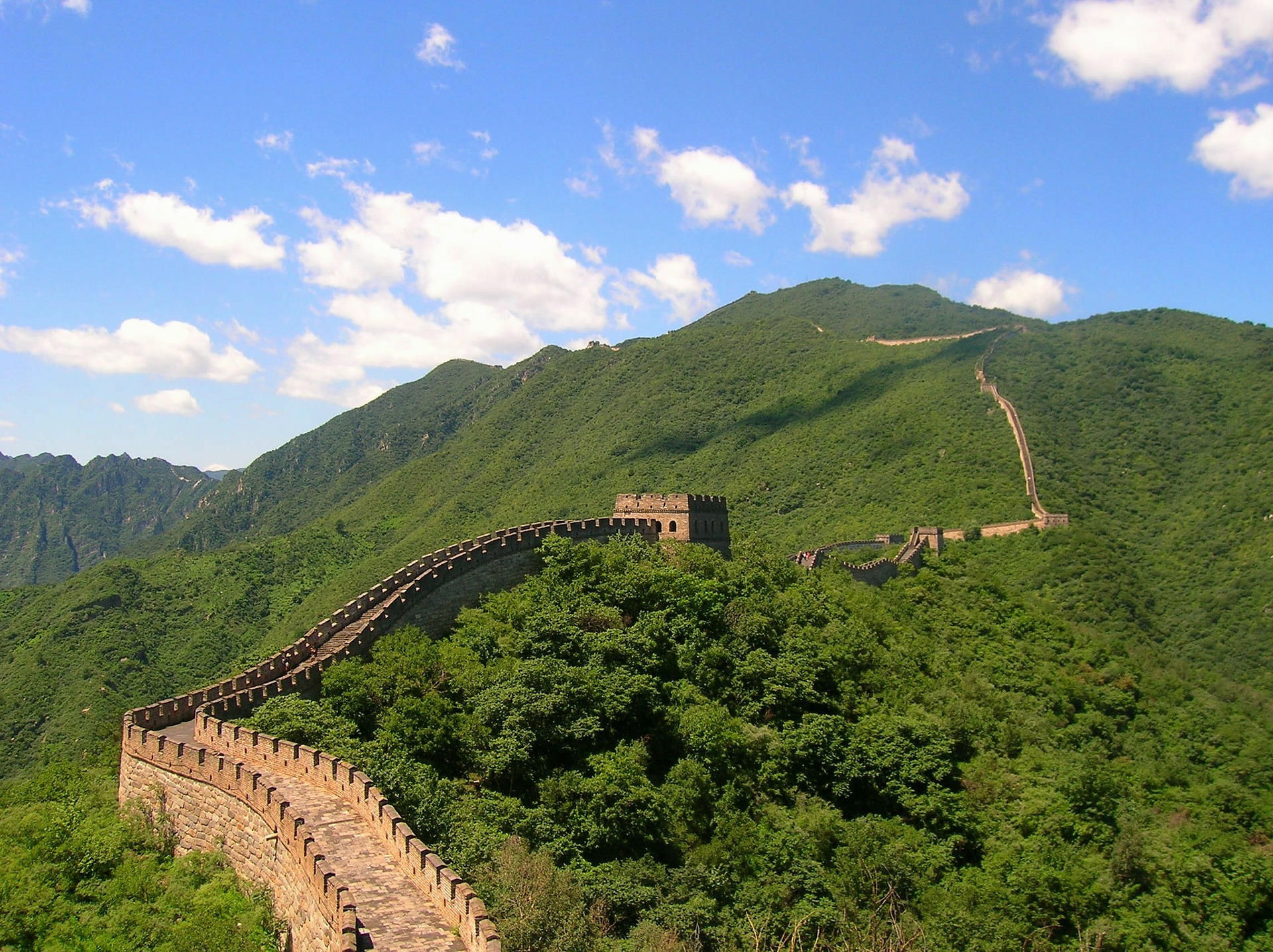
- Great Wall of China (site): More than 8,000 km long, the most recognisable landmark of China.
- Guilin karst (area): Limestone peaks long painted by Chinese artists.
- Jiuzhaigou (park): A nature reserve of terraced waterfalls and coloured lakes.
- Leshan (site): The huge riverside Buddha carved into a cliff, near Mount Emei.
- Mount Tai (mountain): One of the five sacred Taoist mountains and the most climbed in China.
- Yungang Grottoes (site): More than 50 caves holding about 51,000 Buddhist statues.
- Hainan (island): A tropical island with fast-growing beach resorts.
- Tibet (area): A Tibetan Buddhist highland; foreigners need a permit and an organised tour.
Regions
- North China: Beijing, the Great Wall, Mount Tai and the Yungang Grottoes.
- Northeast China: Harbin and the cold north-east.
- East China: Shanghai, Hangzhou and Nanjing, linked by high-speed rail.
- South China: Guangzhou, Guilin and Hainan.
- South-central China: The heartland along the middle Yangtze.
- Southwest China: Sichuan with Chengdu, Leshan and Jiuzhaigou, and Tibet.
- Northwest China: Xi'an, the Silk Road and Xinjiang with Kashgar.
Things to do
See
- The Forbidden City and the Summer Palace Beijing: The imperial palaces of the capital.
- The Great Wall North China: The ancient wall that has become the symbol of the country.
- The terracotta warriors Xi'an: The army of clay soldiers outside the old Silk Road capital.
- Colonial architecture and skyscrapers Shanghai: Pre-war French, British and American buildings next to 21st-century towers.
- West Lake Hangzhou: The UNESCO-listed lake at the heart of the city.
- The Leshan Giant Buddha Leshan: A huge Buddha carved into a riverside cliff, near Mount Emei.
- Ice and Snow Sculpture Festival Harbin: Giant ice sculptures in the depths of winter.
Do
- A high-speed train journey: The fast way between the big cities, on the world's longest high-speed network.
Eat
- Regional food: Dim sum in Guangzhou, mala dishes in Chengdu, hand-pulled noodles almost everywhere.
Drink
- A tea house: Taste green, oolong, white and aged pu'er teas; most tea shops let you try before you buy.
Itineraries
Beijing, Xi'an and Shanghai in 10 days (10 days)
- Beijing (4 nights): The Forbidden City, the Summer Palace and the historic sites of the capital.
- Xi'an (2 nights): By high-speed train: the terracotta warriors.
- Shanghai (4 nights): By high-speed train or plane.
Shanghai, Hangzhou and Nanjing in 6 days (6 days)
- Shanghai (3 nights): Start in the largest city.
- Hangzhou (2 nights): West Lake, a short high-speed ride away.
- Nanjing (1 night): The former capital, on the same rail corridor.
Sichuan in 6 days (6 days)
- Chengdu (3 nights): Giant pandas and Sichuan cooking.
- Leshan (1 night): The Giant Buddha and nearby Mount Emei.
- Jiuzhaigou (2 nights): Waterfalls and coloured lakes.
Climate and best time to visit
| Jan | Feb | Mar | Apr | May | Jun | Jul | Aug | Sep | Oct | Nov | Dec | |
|---|---|---|---|---|---|---|---|---|---|---|---|---|
| Max °C | 2 | 4 | 11 | 20 | 26 | 30 | 31 | 30 | 26 | 19 | 10 | 3 |
| Min °C | -9 | -7 | -1 | 7 | 13 | 18 | 22 | 20 | 14 | 7 | -0 | -7 |
| Rain mm | 3 | 6 | 9 | 26 | 29 | 71 | 176 | 182 | 49 | 19 | 6 | 2 |
China's climate ranges from tropical in the south to subarctic in the north. Beijing has four sharp seasons: in January the average maximum is about 2 °C and nights fall to about -9 °C, while in July the maximum is about 31 °C. Most of Beijing's rain falls in July and August; winter is very dry. The south is milder and wetter, and the north and west grow drier, up to the deserts and steppes of the north-west and the Tibetan highlands.
In Beijing, April, May, September and October are mild and fairly dry. Typhoons can hit the southern and eastern coasts from May to November. Avoid Chinese New Year and the "golden week" holidays, including the one around 1 October, if you can: transport is packed and flights are expensive. Many buildings south of the Yangtze have little heating, so bring warm layers in winter.
Holidays and events
- 1 January 2026 · New Year's Day
- 17 February 2026 · Chinese New Year (Spring Festival)
- 1 May 2026 · Labour Day
- 19 June 2026 · Dragon Boat Festival
- 25 September 2026 · Mid-Autumn Festival
- 1 October 2026 · National Day
Getting there and around
| Main airports | PEK, PKX, PVG, CAN, CTU, TFU, CKG, KMG, XIY, URC |
|---|
Getting there
By air: the main gateways are Beijing (Capital and Daxing), Shanghai Pudong and Guangzhou, with Chengdu, Chongqing, Kunming, Xi'an and Urumqi growing as hubs. Air China, China Eastern and China Southern are the largest airlines.
By land: high-speed trains link Hong Kong's West Kowloon station with Shenzhen, Guangzhou and cities across China, with both immigration checks in the station. Trains also run from Vientiane in Laos to Kunming, from Hanoi to Nanning, and from Ulaanbaatar in Mongolia, and there are road crossings from Vietnam, Laos, Central Asia and Macau.
Getting around
High-speed trains (CRH) are often the best way to travel: clean, punctual and fast. All tickets are electronic and tied to your passport, which is checked at departure and arrival, and gates close a few minutes before departure, so arrive 20 to 30 minutes early. Most big cities have modern metros with signs in English and a bag scanner at the entrance; buses and metros are increasingly paid by QR code through WeChat or Alipay.
Use only marked, metered taxis, insist on the meter and keep the receipt: there have been robberies and assaults in unmarked cabs. You cannot drive with a foreign licence: China requires a Chinese driving licence. Domestic flights are plentiful, but tickets are scarce and expensive around Chinese New Year and the golden weeks.
Flying to China? PartnerCompare fares and find the cheapest datesSearch flightsWhere to stay
- Hotels: From budget chains to 5-star luxury; booking through an English-language site helps find ones used to foreign guests.
- Hostels: Shared dorms in the main tourist cities.
- Sleeper trains: A practical way to cover long distances overnight.
Since 2024 every licensed hotel outside restricted areas must accept foreigners by law, but some cheaper or remote hotels still refuse. Reception will copy your passport and visa or entry stamp to register you with the police, a legal requirement for all foreign visitors; if you stay with family or friends, you must register yourself with the local police, or risk a fine or detention.
Eat and drink
Dishes to try
- Dim sum: Small dishes of Cantonese cuisine, the cooking of Guangdong.
- Siu mei: Cantonese roast meats such as roast duck and char siu pork.
- Mapo tofu and kung pao chicken: Sichuan classics, with the numbing heat of Sichuan pepper.
- Dandan noodles: Spicy Sichuan noodles with chilli oil.
- Lanzhou noodles: Hand-pulled noodles, served in halal restaurants across the country.
- Congee: Rice porridge, a common breakfast.
Drinks
- Tea: Green, jasmine and oolong are the most common, drunk without milk or sugar.
- Beer: Usually light, and the drink of choice for long rounds of toasts.
- Milk tea and bubble tea: Found in almost every city.
| Tipping | Not practised: waiters may even chase you to return money left on the table. |
|---|
Chinese food varies enormously between regions, and the many local cuisines are a reason to travel in themselves. At a meal, expect toasts: say "gānbēi" and empty your glass, or say "suíbiàn" to drink just a sip. Alcohol is sold almost everywhere. Do not drink tap water unless it has been boiled; hotels provide a kettle or bottled water, and ice is best avoided.
Entry requirements and visas
| Passport validity | At least 6 months after the date you arrive, with 2 blank pages |
|---|
| Passport | Entry | Max stay | Notes |
|---|---|---|---|
| United Kingdom | Visa free | 30 days | Until 31 December 2026, for tourism, business, family visits or transit. Work, study, journalism or longer stays need a visa. |
| Canada | Visa free | 30 days | Until 31 December 2026, for tourism, business, family visits or transit. |
Other nationalities: check the official source below.
Until 31 December 2026, British and Canadian citizens can visit mainland China for up to 30 days without a visa; check your eligibility with a Chinese embassy, as the rules are complex and conditions apply. Hong Kong and Macao have their own entry rules, and returning to the mainland from them counts as a new entry. Immigration may take your fingerprints and photo, and you may pass a temperature check.
Since 15 November 2025 you can fill in a digital arrival card online before arriving. Your accommodation must register you with the police. Visiting Tibet requires a special permit and an organised tour through an accredited agency. When you enter or leave, declare cash of ¥20,000 or USD 5,000 or more. You need a yellow fever certificate if you arrive from a country with yellow fever risk. Rules depend on your passport: check the official link before you book.
Money and payments
| Currency | Chinese Yuan (CNY) |
|---|---|
| Cards | Rare |
The currency is the renminbi (CNY), counted in yuan (¥). Payments run on phones: WeChat Pay and Alipay are almost universal and now accept foreign Visa and Mastercard cards, so set up both before you travel. Foreign cards are rarely accepted directly, and outside the big cities ATMs are limited. Carry some cash as a backup, and check notes carefully: the UK says counterfeit ¥100 notes are common, even from ATMs, and banks will not replace them, while Canada says fakes turn up mostly in small cash payments.
Health
| Required vaccines | Yellow fever: certificate if you arrive from or through a country with transmission risk |
|---|---|
| Recommended vaccines | Routine vaccines, including measles (MMR), Hepatitis A, Hepatitis B, Typhoid, Japanese encephalitis, for long stays or rural trips, Tick-borne encephalitis, for some rural stays, Rabies: ask a travel clinic, Mpox, for travellers at risk of sexual exposure |
| Malaria | None |
| Tap water | Not safe |
Check vaccines with a travel health professional at least 6 to 8 weeks before you go. Dengue occurs in Guangdong Province and some other parts of China, mainly from May to November, and altitude sickness is a risk in high areas. Avian influenza is present.
Healthcare is not free and can be very expensive, so get insurance that covers evacuation. Call 120 for an ambulance. Bring enough of any prescription medicine, as some are not available and others may not be allowed in. Tap water is generally not safe to drink, and the UK advises drinking only bottled water. Public toilets outside big cities can be basic: carry tissues.
The WHO certified China malaria-free in 2021.
This is general information, not medical advice: check with a travel health professional before you go.
Safety
- United States: Level 2: Exercise Increased Caution (2026-10-20)
- Canada: Exercise a high degree of caution (2026-10-20)
- United Kingdom: No advice against travel (2026-10-20)
Serious crime against foreigners is rare, but the UK government warns that national security laws have a broad scope and that people can be detained without intending to break the law. Always carry your passport: police make random checks and do not accept copies. Avoid demonstrations and do not photograph restricted military areas. Any fight, whoever started it, can lead to detention and compensation claims, and a business dispute can lead to an exit ban.
Watch out for the "tea tasting" or "massage" scam, where friendly strangers take you to a bar that demands a huge bill, and for QR-code phishing. Do not leave drinks unattended. Visiting Tibet needs a permit and an organised tour; Canada warns of heavy security measures, curfews and frequent checks in Xinjiang. Canada advises against non-essential travel to Gyirong County in Tibet, near the Nepal border, after the flash floods and mudslides of August 2026. Typhoons affect the south and east coasts from May to November, and China lies in an active earthquake zone.
Customs and etiquette
Greet people with a soft handshake; bowing survives only on formal occasions. Give and receive business cards and important papers with both hands. Personal space is limited, and being bumped in a crowd without apology is normal. Greet Buddhist monks and nuns with palms together at chest height. Tipping is not practised.
At meals, toasts are part of the ritual, and guests are expected to offer them as well as receive them. Only registered religious organisations may hold religious activities, preaching and handing out religious material are restricted, and religious events involving Chinese citizens need official approval. Photographing military sites or government buildings is prohibited and can lead to detention. Avoid political statements, which can be treated as illegal. Drug laws are strict for any drug, including cannabis: those caught face heavy fines, long prison sentences or the death penalty, and a positive drug test can be prosecuted even if you took the drug abroad. Same-sex relationships are legal, but public displays of affection may draw negative attention.
Language
| Official languages | Chinese |
|---|---|
| English | Rare |
What to pack
- Passport, always on you: Police make random ID checks and do not accept copies, and train tickets are tied to it.
- A phone with WeChat Pay and Alipay set up: Almost all payments, and many metro and bus fares, go through these apps.
- A translation app that works in China: English is rarely spoken, and many foreign apps are blocked.
- Tissues: Public toilets rarely provide paper.
- Warm layers in winter: Many buildings in central and southern China have little heating.
- Enough prescription medicine: Some medicines are not available in China.
Quick reference
Country facts
| Capital | Beijing |
|---|---|
| Population | 1,406,585,000 (2025) |
| Area | 9,388,210 km² |
| Time zone | Asia/Shanghai (UTC+8), Asia/Urumqi (UTC+6) |
| Calling code | +86 |
| Driving side | right |
Staying connected
| Roaming | Many foreign services, including Google, WhatsApp, Facebook, Instagram and YouTube, are blocked in mainland China. Wikivoyage notes that data roaming on a SIM from outside the mainland is another way to stay connected. |
|---|---|
| Wi-Fi | Free in most public places such as malls, restaurants and libraries. |
Useful apps
- WeChat: Messaging, payments and transit QR codes
- Alipay: Payments and transit QR codes
Emergency numbers
| Police | 110 |
|---|---|
| Ambulance | 120 |
| Fire | 119 |
Frequently asked questions
Do I need a visa for China?
UK and Canadian citizens can visit for up to 30 days without a visa until 31 December 2026. Other passports and longer stays may need a visa: check the official link before you book.
Can I pay by card in China?
Rarely. Set up WeChat Pay and Alipay, which accept foreign cards, and carry some cash as a backup.
Will Google and WhatsApp work in China?
No, these and many other foreign services are blocked on the mainland, so install the apps you need and plan how you will stay connected before you arrive.
Can I drink the tap water in China?
No. Tap water is generally not safe to drink, and the UK advises drinking only bottled water. Hotels usually provide it.
Is it easy to travel by train in China?
Yes: high-speed trains link the main cities. Tickets are electronic and tied to your passport, so arrive at the station at least 20 to 30 minutes early.
When is the best time to visit China?
In Beijing, spring and autumn are mild and fairly dry. Avoid Chinese New Year and the golden weeks, when transport is packed.
More Travel Stories from Asia

 Laos
 Cambodia
Sources This guide was last checked on · 18 sources
- Wikivoyage: China · Overview, Places to visit, Things to do, Itineraries, Climate and best time to visit, Getting there and around, Where to stay, Eat and drink, Entry requirements and visas, Money and payments, Health, Safety, Customs and etiquette, Language, What to pack, Staying connected, Frequently asked questions
- Wikidata: China · Overview, Places to visit, Money and payments, Country facts
- UK FCDO: China entry requirements · Overview, Entry requirements and visas, Health, Frequently asked questions
- WMO World Weather Information Service: Beijing · Climate and best time to visit, Frequently asked questions
- UK FCDO: China warnings and insurance (updated 27 August 2026) · Climate and best time to visit, Safety
- Nager.Date: public holidays in China, 2026 · Holidays and events
- UK FCDO: China safety and security · Getting there and around, Money and payments, Safety, Customs and etiquette, What to pack, Staying connected, Frequently asked questions
- Government of Canada: China travel advice · Where to stay, Entry requirements and visas, Money and payments, Health, Safety, Customs and etiquette, Frequently asked questions
- ISO 4217 (SIX), published 2026-09-17 · Money and payments
- UK FCDO: China health · Health, What to pack, Frequently asked questions
- US CDC: Travelers' health, China · Health
- WHO: Countries and territories certified malaria-free · Health
- US Department of State: China travel advisory · Safety
- UK FCDO: China travel advice · Safety
- World Bank, SP.POP.TOTL · Country facts
- World Bank, AG.LND.TOTL.K2 · Country facts
- IANA Time Zone Database, zone.tab · Country facts
- UK FCDO: China getting help · Emergency numbers
Suggest an update
Travel rules, prices and timetables change. If something in this guide is out of date, tell us: we check every suggestion against an official source before changing the page.